
Hail damage on a roof typically appears as dents, cracks, or missing granules on shingles. These signs can vary from small, barely visible pits to more severe damage like broken shingles or exposed underlayment. Recognizing these indicators early helps prevent costly repairs and potential leaks.
Hail impacts often leave circular or irregular marks, and the damage may be more noticeable after a storm. Different roofing materials show hail damage in distinct ways, but the presence of granule loss and shingle deformation is a common thread.
Knowing what hail damage looks like allows a homeowner or inspector to assess the severity quickly and decide if a professional evaluation is needed. This knowledge can be crucial for insurance claims and timely maintenance.
How to Identify Hail Damage on Roofs
Hail damage on roofs often appears as distinct marks and material loss. Recognizing these characteristics helps differentiate hail harm from other common roofing issues and focuses on signs specific to the roof material.
Typical Signs of Hail Impact
Hail typically leaves circular bruises or dents on roofing materials. These areas may look discolored or appear as small depressions.
Granules on asphalt shingles often loosen or break away, exposing the underlying mat. Metal roofs show dents or punctures, while wood shakes might crack or splinter from hail strikes.
Damage clustering in patterns consistent with hailstorms, rather than random wear, signals hail impact. Damaged areas often appear more concentrated on roof slopes facing the storm’s direction.
Differences Between Hail and Other Roof Damage
Hail damage differs from wind or age-related wear in shape and location. Wind damage usually involves lifted or torn shingles, while hail marks are more circular and localized.
Animal damage or foot traffic creates irregular tears or scratches, which do not resemble the round pits from hail. Water damage often affects interior ceilings but rarely causes the distinct surface bruising caused by hail.
Identifying hail damage requires distinguishing it from manufacturing defects, which generally show uniform wear or bubbles, not localized dents or granule loss.
Visual Clues on Asphalt Shingles
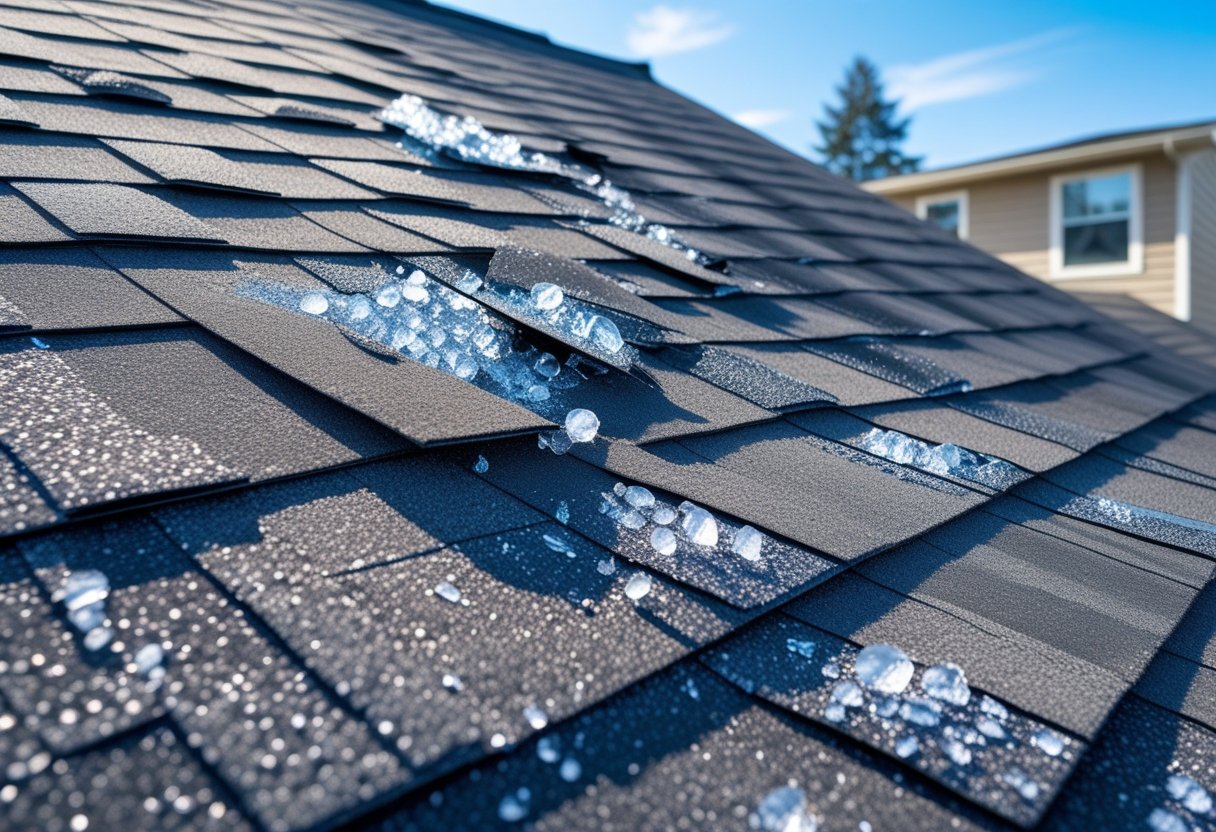
On asphalt shingles, hail damage appears as spots where granules are missing or embedded with impact marks. These spots look like dark, smooth areas contrasting with granular, textured surfaces.
The damage tends to be granular loss forming roughly circular “bald” spots. The granule loss exposes the shingle’s mat layer, increasing risk of water penetration.
Blistering or cracking near impact points confirms hail hits. Inspectors check for granule dispersal in gutters as a sign hail has worn off shingle protection.
Hail damage on a roof typically appears as dents or bruises on shingles, granule loss, cracks, or punctures. You may notice dark spots where granules have been knocked off, exposing the underlying material. Severe hail can cause cracked or broken shingles, leading to leaks. If you ask what does hail roof damage looks like then you are searching for irregular marks or damaged areas that help identify hail impact effectively.
Hail Size and Roof Damage Severity
Hail size directly impacts the extent of damage on a roof, with larger hail causing more significant harm.
What Size Hail Will Damage a Roof
Hail smaller than 1 inch typically causes little to no visible damage to most roofs. Once hail reaches a diameter of 1 inch, it can start to cause dents, bruises, or small cracks, especially on vulnerable materials.
Hail between 1.5 and 2 inches often results in noticeable damage, such as broken granules on asphalt shingles or dents on metal roofing. Hail larger than 2 inches is likely to cause severe damage, including shattered shingles and perforated metal panels.
Size measurement helps insurance adjusters determine damage severity and necessary repairs. Homeowners should note that hail size can vary within a storm, leading to uneven roof damage.
How Severity Differs by Roofing Material
Asphalt shingles show granular loss and surface bruising with hail of 1 inch or more, but deeper cracks appear with larger hail. Hail larger than 1.5 inches may cause shingle tearing or cracking.
Metal roofs dent easily from hail over 1 inch, but deep punctures are rare unless hail exceeds 2 inches. Damage is usually cosmetic unless hail is very large.
Tile roofs resist smaller hail but can crack or break with hail over 1.5 inches due to their brittleness. Slate roofs are similar but may show cracks with smaller hail impacts due to natural fragility.
Roofing materials vary in susceptibility; understanding this helps identify needed inspections or repairs.
Long-Term Effects of Hail Damage
Hail can cause visible damage initially, but its impact often worsens over time. This damage can weaken the roof’s structure and reduce its expected lifespan, leading to more frequent repairs or early replacement.
Structural Weakening Over Time
Hail dents and cracks create entry points for water. Even minor surface damage can allow moisture to seep under shingles, causing rot and mold in the underlying wood. This gradual decay compromises roof framing and sheathing strength.
Repeated exposure to hail-damaged areas accelerates material fatigue. Asphalt granules often erode, leaving the shingles less protected from UV rays and weathering. This thin, weakened surface becomes brittle and more prone to breaking under later stress.
If left untreated, structural damage can spread deeper into the roof deck. In severe cases, it can affect the home’s overall stability and increase the risk of leaks and interior damage.
Impact on Roof Lifespan
Hail damage reduces the roof’s durability by breaking down protective layers. Loss of granules and small fractures shorten the shingle’s effective life by years.
Manufacturers typically guarantee shingles for 20-30 years, but hail can cut this down significantly. Repeated storms may make the roof unsound in 10-15 years, requiring premature replacement.
Insurers might also view hail-damaged roofs as higher risk, raising premiums or denying coverage. Regular maintenance slows deterioration but cannot restore full lifespan.
Summary of damage impact:
Effect | Consequence |
|---|---|
Granule loss | Increased UV exposure, brittleness |
Cracks and dents | Water intrusion, wood rot |
Accelerated aging | Shortened roof lifespan |
Structural weakening | Higher repair costs, possible leaks |

Holding a Master’s in Construction Management from Purdue University, William Ray has dedicated more than two decades to studying and applying construction principles. His professional journey includes a tenure with a prominent construction firm, where he specialized in project management and building technologies. William brought his knowledge to our team, providing in-depth insights into practical construction techniques. As the leader of our beginner’s guide to building since 2019, he has a knack for breaking down intricate processes into easily digestible content. When not involved in writing or onsite consultations, William enjoys woodworking and volunteering in community building projects, which aligns with his passion for hands-on construction and community service.