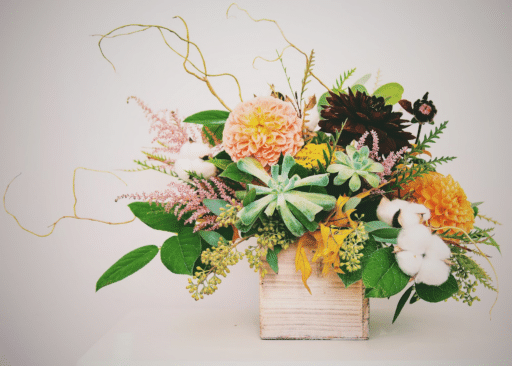
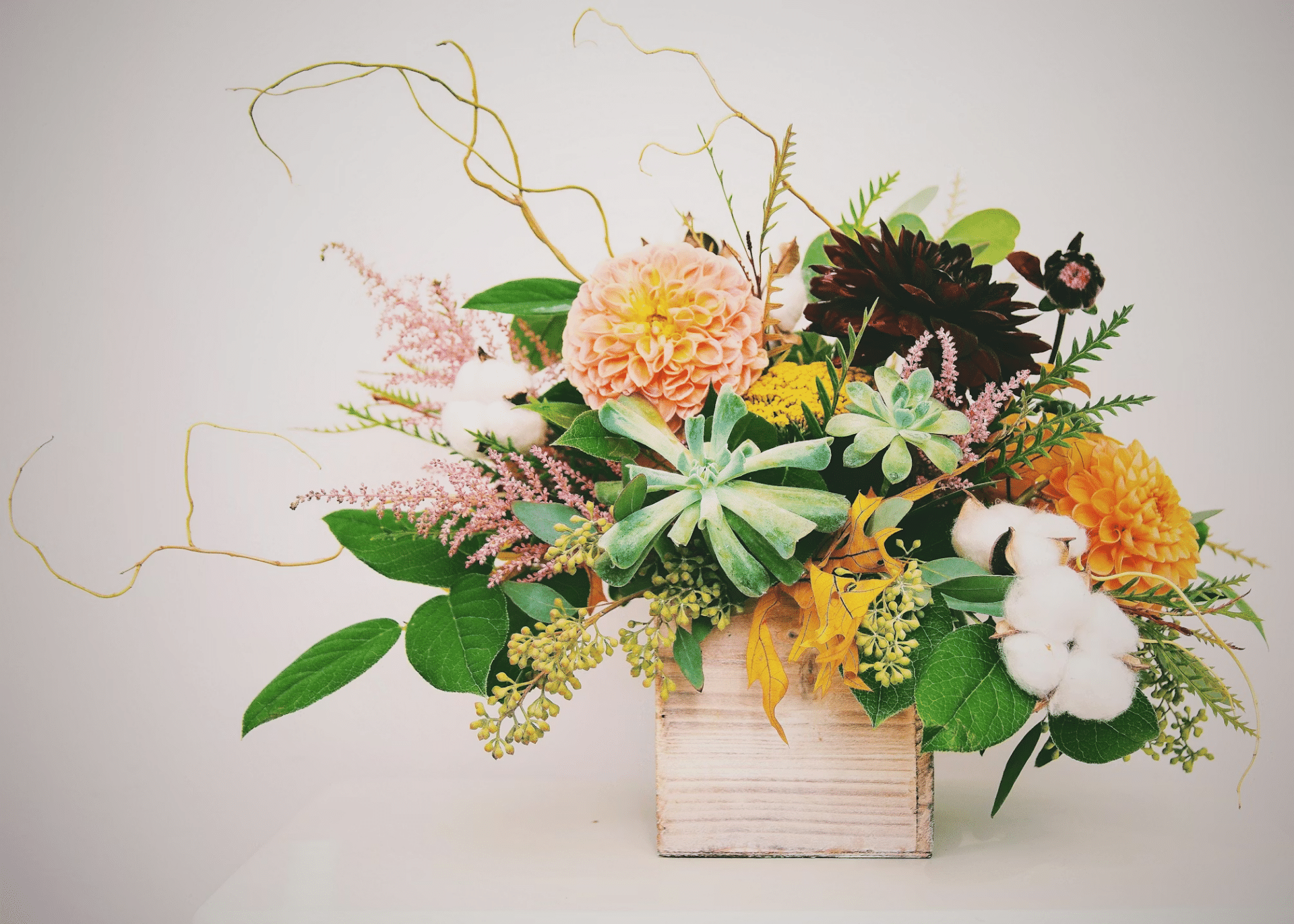

Living in a cozy apartment or working with limited surface area doesn’t mean you have to sacrifice the beauty of fresh flowers. In fact, small spaces offer unique opportunities to create stunning floral displays that pack a visual punch without overwhelming your room. Whether you’re decorating a studio apartment, a compact office, or just want to add life to a tiny corner, the right flower arrangement ideas can transform even the smallest nook into something special.
The secret to successful small-space florals isn’t about using fewer flowers – it’s about being smart with your choices. Think vertically instead of horizontally, embrace minimalism, and select blooms that offer maximum impact with a minimal footprint. A single statement flower can often speak louder than a crowded arrangement, and clever container choices can double as decor even when they’re not holding blooms.
Flowers on Table – Maximizing Miniature Impact
Table surfaces in small spaces are precious real estate, so any flowers in table arrangements need to earn their keep. The golden rule? Keep centerpieces low and tight. Nothing frustrates dinner guests more than peering around a towering vase to hold a conversation. Aim for arrangements that sit below eye level when people are seated – typically around 8 to 10 inches tall.
Bud vases are your best friend here. These slender containers hold just one to three stems and can be clustered in groups of three or five for visual interest without bulk. Try mixing different heights within the same color family, or use identical vases with different bloom types for a cohesive but varied look.
Consider these table-friendly approaches:
- Single stem showcase: Place one dramatic bloom like a peony, dahlia, or garden rose in a small vessel. This minimalist approach draws the eye and creates a focal point without clutter, letting the flower’s natural beauty shine.
- Floating flowers: Fill a shallow bowl with water and float flower heads on the surface. This works beautifully with roses, gardenias, or camellias. The arrangement sits flat against the table, taking up zero vertical space while creating an elegant, spa-like atmosphere.
- Herb garden arrangements: Mix flowering herbs like lavender or chamomile with traditional blooms. These fragrant additions serve double duty – they look beautiful and can be snipped for cooking. Rosemary sprigs add wonderful texture and fresh scent.
The container matters as much as the flowers. In tight spaces, transparent glass keeps things feeling open and airy, while textured ceramic adds personality without visual weight. Square or rectangular vases fit neatly against walls or in corners better than round ones.
Types of Flower Bouquets for Compact Living
Understanding different types of flower bouquets helps you select arrangements that naturally fit smaller environments. Not all bouquet styles translate well to limited square footage, so knowing what works saves you from buying beautiful flowers that just don’t fit your space.
Hand-tied bouquets are ideal for small homes because you control the final vessel. These loose, organic arrangements can be trimmed to fit whatever container you have available. Buy or make a hand-tied bouquet, then divide it into two or three smaller arrangements for different rooms.
Posy bouquets, those small, round clusters of flowers wrapped tightly together, are perfectly proportioned for compact spaces. Traditionally used as wedding bouquets, their 6 to 8-inch diameter makes them suitable for side tables, bathroom counters, or office desks.
For those seeking reliable quality in smaller arrangements, Rosaholics offers carefully curated bouquets designed with space efficiency in mind. Their compact designs deliver visual impact without overwhelming tight quarters, making them a practical choice for apartment dwellers.
Consider these space-smart bouquet styles:
- Monobotanical bundles: Arrangements of a single flower type in a single color create a clean, modern impact. A bunch of all-white tulips or all-pink ranunculus looks sophisticated and doesn’t compete visually with other decor in a small room.
- Cascading arrangements: These bouquets spill downward rather than outward, making them perfect for high shelves or mantels, where they can drape elegantly without taking up surface space. Trailing elements, such as jasmine vine, enhance this effect.
- Compact garden style: Small, loose arrangements that mimic wildflower meadows bring organic charm without formal structure. These work well in casual spaces and forgive imperfect placement since they’re meant to look naturally gathered.
Basic Flower Arrangement Designs – Small-Space Fundamentals
Mastering a few basic flower arrangement designs gives you a toolkit for tackling any small-space floral challenge. These fundamental approaches work across flower types and personal styles, offering structure when you’re staring at a bunch of stems, wondering where to start.
The triangle design is your foundation – literally. This classic shape uses three main elements to create a stable, pleasing composition: one tall central stem, two slightly shorter flanking stems, and filler material. In small spaces, scale this down to a mini triangle using a single tall bloom, such as a snapdragon, as your center, two roses at medium height, and baby’s breath to fill gaps.
Horizontal or linear arrangements stretch across a surface rather than rising upward, perfect for narrow console tables or shelves where height is restricted but length is available. Create this by establishing a central focal flower, then building outward in both directions with progressively smaller blooms.
Vertical designs maximize impact in tight footprints by going up instead of out. Choose a tall, narrow container and select flowers with strong upright stems – gladiolus, liatris, or stock work beautifully. These arrangements draw the eye upward, actually making a small room feel taller.
Here are essential design principles for small spaces:
- Odd numbers rule: Arrangements with 3, 5, or 7 flowers feel more natural and dynamic than even numbers. This applies to both bloom counts and vase groupings. Our brains find asymmetry more interesting while still registering it as balanced.
- Focal point strategy: In any arrangement, establish one star bloom that draws attention first. In small spaces, this becomes critical because you’re likely using fewer total flowers. Let one beautiful specimen do the heavy lifting.
- Negative space matters: Resist the urge to fill every gap in small arrangements. Strategic space makes the flowers you do include feel more essential and prevents the composition from looking cluttered. Sometimes five perfectly placed stems outshine fifteen crammed together.
Flower Styles – Choosing the Right Blooms
Different flower styles bring distinct personalities to your space, and some are simply better suited to compact living than others. Understanding these style categories helps you select flowers that align with both your aesthetic and your square footage.
Consider these style-specific selections:
- Wildflower meadow: Loose, unstructured arrangements of field flowers, such as cosmos, zinnias, and Queen Anne’s lace, create casual beauty. In small spaces, keep stems short and containers simple. The informal nature forgives imperfect placement.
- Japanese ikebana-inspired: This minimalist style emphasizes line, form, and space using very few materials. Three stems arranged according to ikebana principles create sophisticated simplicity, perfect for Zen-like small spaces.
- Rustic farmhouse: Sunflowers, daisies, and black-eyed Susans in mason jars epitomize this warm, accessible style. Scale down by using dwarf sunflower varieties or cutting regular sunflowers short for a less imposing presentation.
Form in Floral Design – Shaping Your Space
Form in floral design refers to the geometric shape your arrangement creates in three-dimensional space. In roomier environments, you can experiment with sprawling forms, but in compact quarters, you need more disciplined shapes that respect their boundaries while still delivering beauty.
The round or sphere form creates a pleasant, symmetrical ball shape that works from all viewing angles. This is your go-to for table centerpieces in small dining areas since everyone seated around the table gets an equally nice view. Keep the diameter contained – 6 to 8 inches suits most small tables.
Oval forms are elongated rounds that work well on rectangular surfaces like coffee tables or narrow console tables. They provide the same all-around appeal as rounds but fit rectangular spaces more naturally.
Inverted-T forms use a strong vertical element crossed by a horizontal line of flowers below. This structured shape suits contemporary spaces and efficiently uses vertical space while maintaining a narrow footprint.
Here’s how different forms solve specific small-space challenges:
- Crescent form: A curved, moon-shaped arrangement that works beautifully when you need something elegant but can only spare a slim profile. Position crescents at the edges of surfaces where they curve gracefully without protruding into pathways.
- Fan form: A half-circle shape where flowers radiate from a central point, best placed against walls or backgrounds. Fans use height efficiently while staying flat in profile, perfect for narrow windowsills or tight bathroom counters.
Small-space living requires thoughtfulness, but it doesn’t have to mean sacrificing the joy of fresh flowers. With the right flower arrangement ideas and attention to design principles, you can create displays that enhance rather than crowd your home.

Tommy Hardy, an alumnus of the Georgia Institute of Technology with a degree in Mechanical Engineering, has been a go-to figure in residential upkeep and innovation for over 18 years. His career commenced in a leading home appliance manufacturing company, where he mastered the intricacies of household systems. Joining our platform in 2020, Tommy quickly became a reader favorite for his practical and easy-to-follow guides. He took the helm of our DIY section in 2019, consistently delivering content that empowers homeowners. Beyond his professional pursuits, Tommy is a passionate gardener and enjoys woodworking, skills enhancing his hands-on approach to home care.