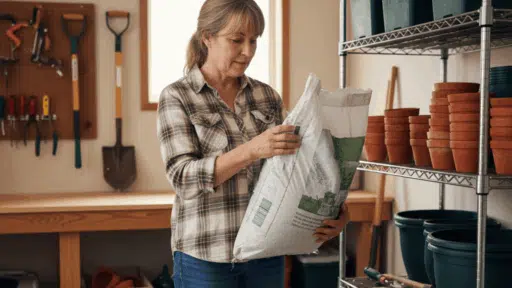
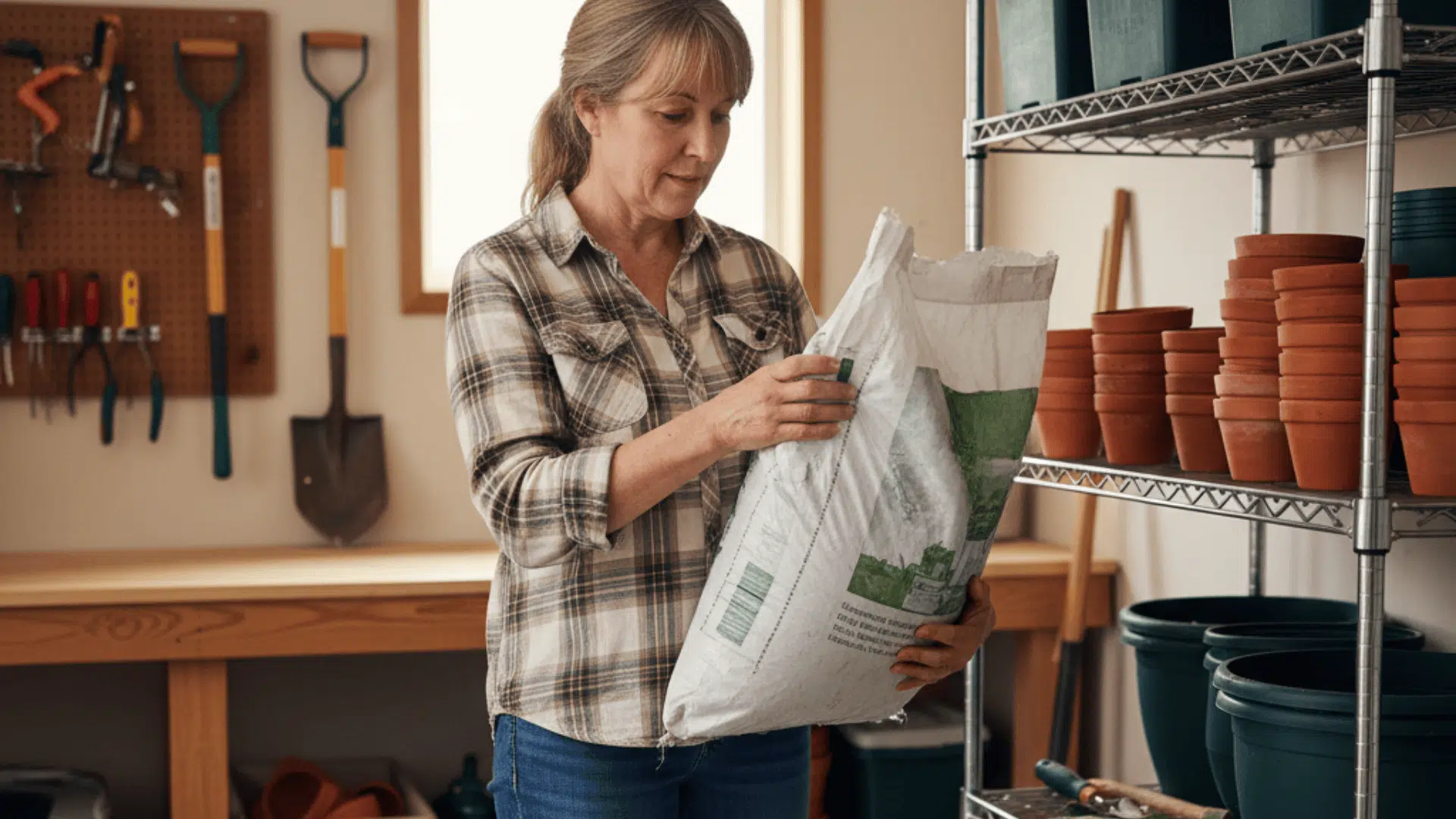

As a gardener, you can pull an old bag of potting soil from the garage, and the question will pop up instantly: Is it still safe to use?
The bag looks fine, but you cannot shake the doubts. Will it harm plants? Has it gone moldy inside? Is that sour smell normal?
These worries are everyday, especially when there’s no clear expiration date on the package.
The truth is that potting soil doesn’t expire like food, but it does change over time.
Understanding what happens to stored mix and when it’s still usable takes the guesswork out of deciding whether to use it or toss it.
To make the guessing game simpler and make you more confident, here are all the answers to your questions.
What Is Potting Soil, Really?
Most potting soil sold in bags is actually soilless, a lightweight mix designed to drain better than garden dirt.
The main ingredients include peat moss or coco coir as a water-holding base, bark or composted wood for structure and drainage, and perlite or vermiculite to create air pockets and prevent compaction.
Many mixes also contain slow-release fertilizer to feed plants for weeks or months, lime to balance pH, wetting agents to help the mix absorb water evenly, and sometimes compost or other organic matter for extra nutrition.
Because most of these ingredients are organic, they break down over time, which is why shelf life matters.
Does Potting Soil Go Bad?
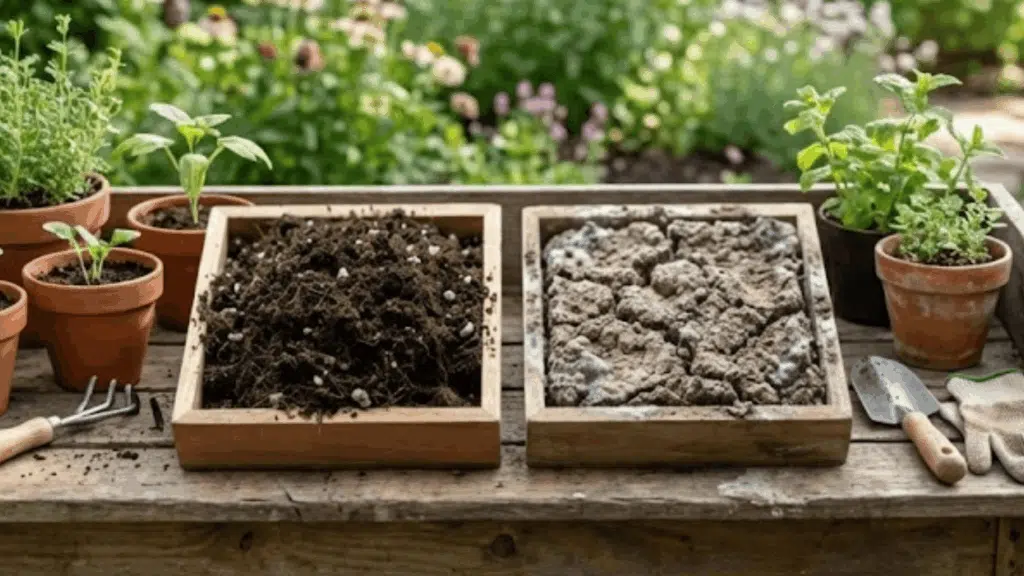
Potting soil doesn’t spoil like milk or bread, but it can lose the qualities that make it suitable for growing plants. Over time, it can compact and lose the air spaces that roots need.
It might become water-repellent and refuse to soak up moisture, or it could turn soggy and stay too wet. Nutrients disappear, and beneficial microbes die off without fresh food or air.
Factors that make potting soil degrade:
- Excess moisture: In the bag or storage container causes mold and compaction.
- Heat and UV light: Direct sun breaks down organic materials faster.
- Freeze-thaw cycles: Repeated freezing and thawing damage the structure.
- Long storage times: Especially harmful to mixes high in peat and compost.
Signs Your Potting Soil Has Gone “Off”
A gardener can usually tell when potting soil has passed its prime. A foul, sour, or moldy smell is the most obvious red flag.
Visible mold, fungus, or algae growing on the surface means the mix stayed too wet. Swarms of fungus gnats or other pests indicate organic matter breaking down in unhealthy ways.
The texture tells a story, too. Heavy, clumpy soil has lost its fluffiness and drainage. Very dusty or ashy soil has dried out and broken down too much.
Does Potting Soil Go Bad If The Bag Is Still Sealed?
A sealed bag of potting soil typically stays usable for about 1 to 2 years if stored in a cool, dry place.
Organic-heavy mixes start breaking down even inside the bag because decomposition doesn’t need outside air to start; it happens as long as there’s some moisture and warmth.
Even in a sealed bag, problems can develop. Moisture can sneak in through tiny holes or seams. Heat accelerates breakdown and can cause salts from fertilizers to concentrate.
Before using an old bag of potting soil, a gardener should give it a quick inspection.
Lift and squeeze the bag to feel for compaction. If it’s rock-hard instead of slightly springy, the structure may be damaged.
Open the bag and smell it. Fresh potting soil has an earthy, slightly sweet smell. Sour, rotten, or ammonia-like odors mean trouble.
Look inside for mold, insects, or mushy spots. White or green fuzz, tiny flying bugs, or sections that feel wet and heavy are all signs the mix has deteriorated. If it passes these tests, it’s probably fine to use.
How To Store Potting Soil Properly
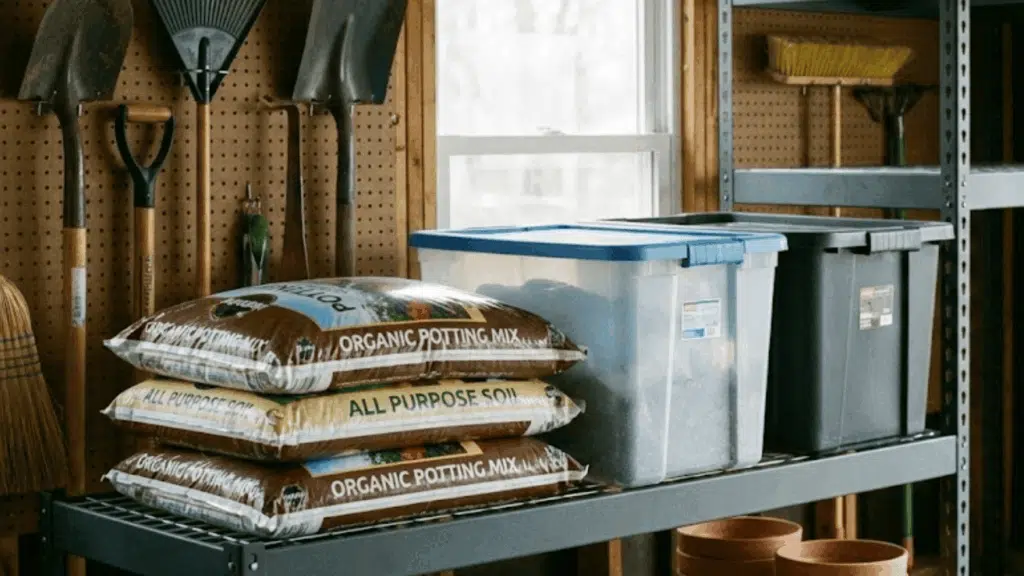
Proper storage can extend the life of potting soil by a year or more. The goal is to keep it dry, cool, and protected from pests and temperature swings.
1. Best Containers For Storage
The original bag works fine for short-term storage if it’s rolled tight and sealed with a clip or tape. For longer storage, transferring soil to a sturdy plastic bin with a tight-fitting lid keeps moisture and pests out better.
Heavy-duty contractor bags placed inside a tote offer double protection against humidity and bugs.
2. Ideal Storage Conditions
Potting soil stores best in a cool, dry location off the ground. A garage shelf, shed bench, or basement corner works well.
The spot should be away from direct sunlight, rain, and big temperature swings. Ground-level storage invites moisture to wick up from concrete or dirt floors.
3. Keeping Bugs, Mold, And Smells Away
Make sure the soil is dry before sealing it for storage. Damp soil in a closed container is an invitation for mold and fungus gnats.
Never store open bags outdoors where insects and rainwater can get in. If a bag develops a strong sour smell or shows heavy mold growth, it’s safest to toss it rather than try to salvage it.
How To Refresh Tired Potting Soil
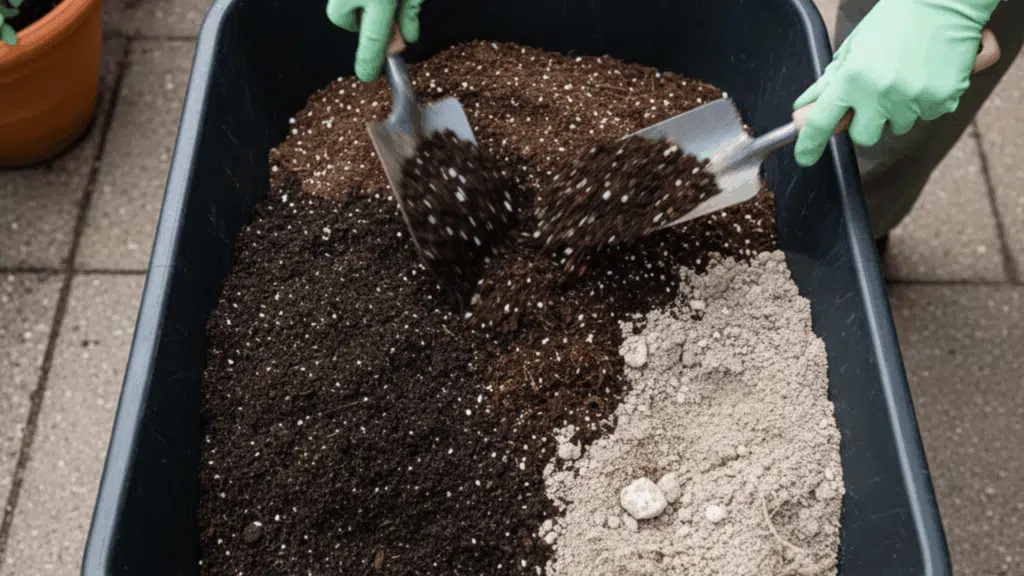
Old potting soil doesn’t always need to be thrown away. With a few simple steps, a gardener can bring a tired mix back to life and use it for another season.
1. Clean It Up First
Start by breaking up clumps with gloved hands or a trowel. Pull out old roots, sticks, stones, and dead plant pieces.
This debris can harbor pests and diseases, so removing it is an important first step before adding any amendments.
2. Sterilize If Needed
If pests or diseases were present, sterilize the soil to kill problem organisms. Seal it in clear or black plastic bags and leave in full sun for several weeks, or bake small batches in the oven at 180–200°F for 30 minutes. Sterilized soil needs beneficial microbes added back.
3. Rebuild Structure And Air Pockets
Mix in fresh potting soil, perlite, or bark chips to restore fluffiness and drainage. A 50-50 blend of old and new often works well.
The fresh materials open up the compacted structure and bring back the air spaces that roots need to grow.
4. Top Up Nutrients
Add compost, worm castings, or balanced slow-release fertilizer to replace lost nutrients. A handful of compost per gallon of soil is a good starting point.
Refreshed soil works fine for established plants, but save a fresh sterile mix for delicate seedlings.
Can You Reuse Old Potting Soil?
Old potting soil from healthy plants that had no pests or diseases is often safe to reuse. It works well for outdoor containers, raised beds, landscape fill, or mixing into garden soil to improve texture.
The key is making sure the soil comes from a clean source with no lingering problems.
Skip reusing soil that hosted serious pests like fungus gnats or root mealybugs, or plants that died from root diseases.
Very compacted or salty soil that’s been through many growing seasons isn’t worth the effort to fix. The energy spent trying to revive it could be better spent on a fresh mix.
Even soil that’s too worn out for containers still has value. Add it to a compost pile where it will break down further and enrich the finished compost.
Use it as mulch around trees and shrubs. Layer it at the bottom of deep containers or raised beds under a fresher mix, where it can improve drainage without needing to support roots directly.
Final Thoughts
Potting soil doesn’t last forever, but it also doesn’t need to be replaced after every growing season.
Proper storage keeps unopened bags usable for a year or two, and old soil from healthy plants can often be refreshed and reused.
The key is paying attention to smell, texture, and signs of pests or disease. With a bit of care, a gardener can get more value out of every bag and reduce waste in the process.
Has anyone successfully refreshed old potting soil, or found creative ways to use a mix that’s past its prime? Share tips and experiences in the comments below; other gardeners would love to hear what’s worked.
Frequently Asked Questions
Is It Safe To Use Old Potting Soil For Seed Starting?
Fresh, sterile potting mix is usually the better choice for starting seeds. Seedlings are fragile and prone to damping-off disease, which can lurk in old soil.
Can Garden Soil “Go Bad” Too?
Garden soil doesn’t expire in the same way potting soil does, but it can become compacted, depleted of nutrients, or waterlogged.
When Should Potting Soil Just Be Thrown Away?
A strong sour smell, heavy mold, visible sewage-like slime, or known chemical contamination are all good reasons to discard soil rather than try to reuse it.

With a Master’s in Landscape Architecture from the University of Virginia, Sophia Stephenson has dedicated the last 20 years to creating and maintaining vibrant outdoor spaces. Her professional journey started in landscape design, where she gained a reputation for innovative and sustainable approaches. Sophia became a part of our editorial team as a freelancer in 2019, offering a fresh perspective on outdoor living. Since 2020, she has been the chief for our outdoor design content, blending aesthetic appeal with environmental stewardship. In her leisure time, Sophia is a keen photographer, capturing the beauty of natural landscapes, a hobby that complements her professional expertise.