


Buying pillowcases that don’t fit, waking up half off the pillow, or seeing pillows look oddly sized on the bed usually comes down to one thing: dimensions.
Queen pillows sit in the middle of the lineup, longer than standard but easier to handle than king.
That extra length helps active sleepers stay supported and keeps a queen bed looking balanced.
Look at the exact size, how it compares with other pillow sizes, how to measure seam to seam, and how to choose the right size for your bed and sleep style without wasting money on returns.
What Are Queen Size Pillow Dimensions?
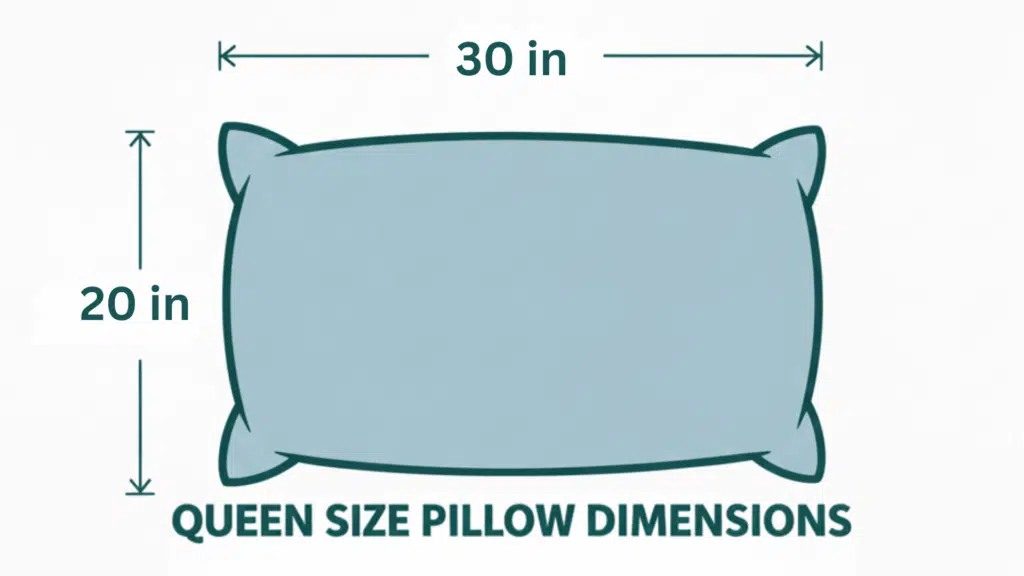
A queen pillow measures 20 inches by 30 inches (approximately 51 by 76 centimeters). This makes it four inches longer than a standard pillow while maintaining the same width.
Keep in mind that dimensions can vary slightly by brand and manufacturer, so always check specific product measurements before buying pillowcases or planning bed styling.
Visual Comparison (So You Can “See” 20″ × 30″)
Laid horizontally, a queen pillow is wide enough to cover most upper body width, creating a comfortable head and neck zone.
Laid vertically, it’s long enough to support the head and neck while leaving extra room for position shifts during sleep.
The length (30 inches) is about six inches shorter than a yardstick, which measures 36 inches.
Pillow Size Comparison Chart
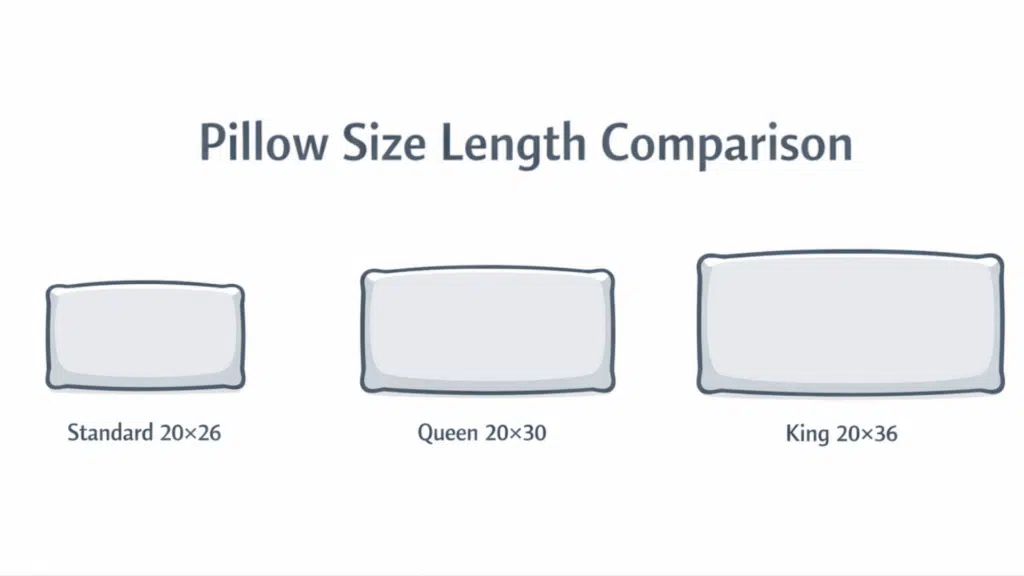
Seeing all pillow sizes side by side makes the differences clear and helps narrow down which dimensions work best for specific needs.
| Pillow Size | Dimensions | Best For |
|---|---|---|
| Standard | 20″ × 26″ | Twin and full beds, single sleepers who stay still |
| Super Standard | 20″ × 28″ | Between standard and queen, less common |
| Queen | 20″ × 30″ | Queen beds, combination sleepers, king beds (when preferred) |
| King | 20″ × 36″ | King and California king beds, side sleepers needing extra length |
| Euro | 26″ × 26″ | Decorative styling, back layers, sitting up in bed |
| Body Pillow | 20″ × 54″+ | Side sleepers, pregnancy support, full-body alignment |
The four-inch increments between standard, queen, and king pillows might seem small on paper, but they make a noticeable difference in real use. Most households need only one or two pillow sizes to cover all their beds and sleep preferences.
What Is a Queen Size Pillow Best For?
Queen pillows aren’t just for queen beds. Understanding when the 20″ × 30″ dimensions work best helps shoppers choose confidently across different bed sizes and sleep situations.
1. Queen Beds (And a Balanced Look)
Two queen pillows fit naturally on a queen mattress, providing proper proportion and coverage without overwhelming the bed.
The width of a queen mattress is 60 inches, so two 20-inch pillows fill the space appropriately while leaving room for pillowcases and styling.
2. Combination Sleepers and People Who Move at Night
The extra four inches of length compared to standard pillows helps when heads tend to “travel” during sleep.
Restless sleepers and those who shift between back, side, and stomach positions benefit from the additional real estate.
3. King Beds When You Don’t Want Oversized Pillows
Queen pillows make sense on king beds for several reasons. Some people find king pillows too long and prefer a more compact feel.
Smaller-framed sleepers may not need the full 36-inch length of a king pillow. Queen pillows are also easier to handle when changing pillowcases and fluffing. For couples with different size preferences, mixing pillow sizes on the same bed works perfectly fine.
4. Layered Bed Styling
Queen pillows work well as the back row in a layered pillow arrangement, with decorative shams or Euro pillows placed in front.
This creates a simple, hotel-style look without committing to the bulk of king pillows. The formula is straightforward: two queen sleeping pillows in back, then add decorative elements as desired.
How to Measure Your Pillow?
Measuring existing pillows ensures accurate replacements and proper pillowcase fit. Many people guess at pillow size and end up with cases that are too tight or too loose.
- Step 1: Lay the pillow completely flat on a table or bed surface, smoothing out any lumps or uneven filling.
- Step 2: Measure length and width from seam to seam, not from the outer edges of the fabric. Seam-to-seam measurements match industry standards and ensure accurate size identification.
- Step 3: Write down measurements in inches. If shopping internationally or from brands that use metric sizing, convert to centimeters as well (multiply inches by 2.54).
- Step 4: If the pillow has significant loft, gussets, or unusual thickness, note that fit may feel tighter even in the nominally correct size. Very puffy pillows sometimes need cases sized up for comfort.
How to Choose the Right Pillow Size for You

Choosing pillow size involves more than just matching it to the bed. Sleep style, body size, and personal preferences all play a role.
1. Start with Bed Size
Twin beds typically work with one standard pillow, though some people use two for a fuller look. Full beds accommodate two standard or two queen pillows, with queens creating slightly better proportions.
Queen beds look best with two queen pillows for proper balance. King and California king beds traditionally use two king pillows, but two or three queen pillows work depending on styling preferences and sleeper sizes.
2. Match Pillow Size to Sleep Style
Still sleepers who maintain one position throughout the night can often use standard pillows without issue since the head stays in place and shorter length doesn’t create problems.
Active sleepers who shift positions frequently benefit from queen pillows because the extra length accommodates head movement without waking up partially off the pillow, especially side sleepers who rotate between sides.
3. Consider These Before Buying
Pillow loft and firmness affect comfort as much as length, so a perfectly sized pillow that’s too firm or flat won’t sleep well.
Standard pillowcases fit queen pillows snugly but may bunch, while queen cases provide the best fit.
Find Your Perfect Fit
Pillow size affects sleep quality and bedroom appearance more than most people realize.
The right dimensions support the head and neck through position changes while creating visual harmony with the mattress and bedding.
Queen pillows occupy a practical middle ground, longer than standard but more manageable than king, making them the preferred choice for many sleepers.
Measure existing pillows before shopping for replacements, match pillow size to both bed dimensions and sleep habits, and invest in properly sized cases for the best results.
What pillow size works best in your bedroom? Share your experience in the comments below.
Frequently Asked Questions
Do Queen Pillows Fit Standard Pillowcases?
Yes, but the fit is very snug. A queen pillowcase is the better choice for comfort and less fabric strain.
How Many Queen Pillows Should You Use on a Queen Bed?
Two queen pillows are the standard for sleeping. Extra pillows can be added in front for style if desired.
What If My “Queen” Pillow Measures Slightly Differently?
Small size differences are normal across brands. If it’s within about an inch of 20″ × 30″, it’s still considered a queen pillow.

Millie Anderson, a graduate of Textile Design from the Fashion Institute of Technology, has carved her name in fabric and material finishes for over 16 years. Her career took flight in a renowned textile manufacturing company, where she mastered combining textures and patterns. Millie joined our team in 2018, becoming a cornerstone for readers interested in the latest trends in textiles. Since then, she has been the lead editor for our home decor fabrics section, blending her deep knowledge of materials with a flair for contemporary design. Beyond her professional achievements, Millie is an enthusiastic quilter and often participates in community arts and crafts workshops, further nurturing her passion for fabrics and design.