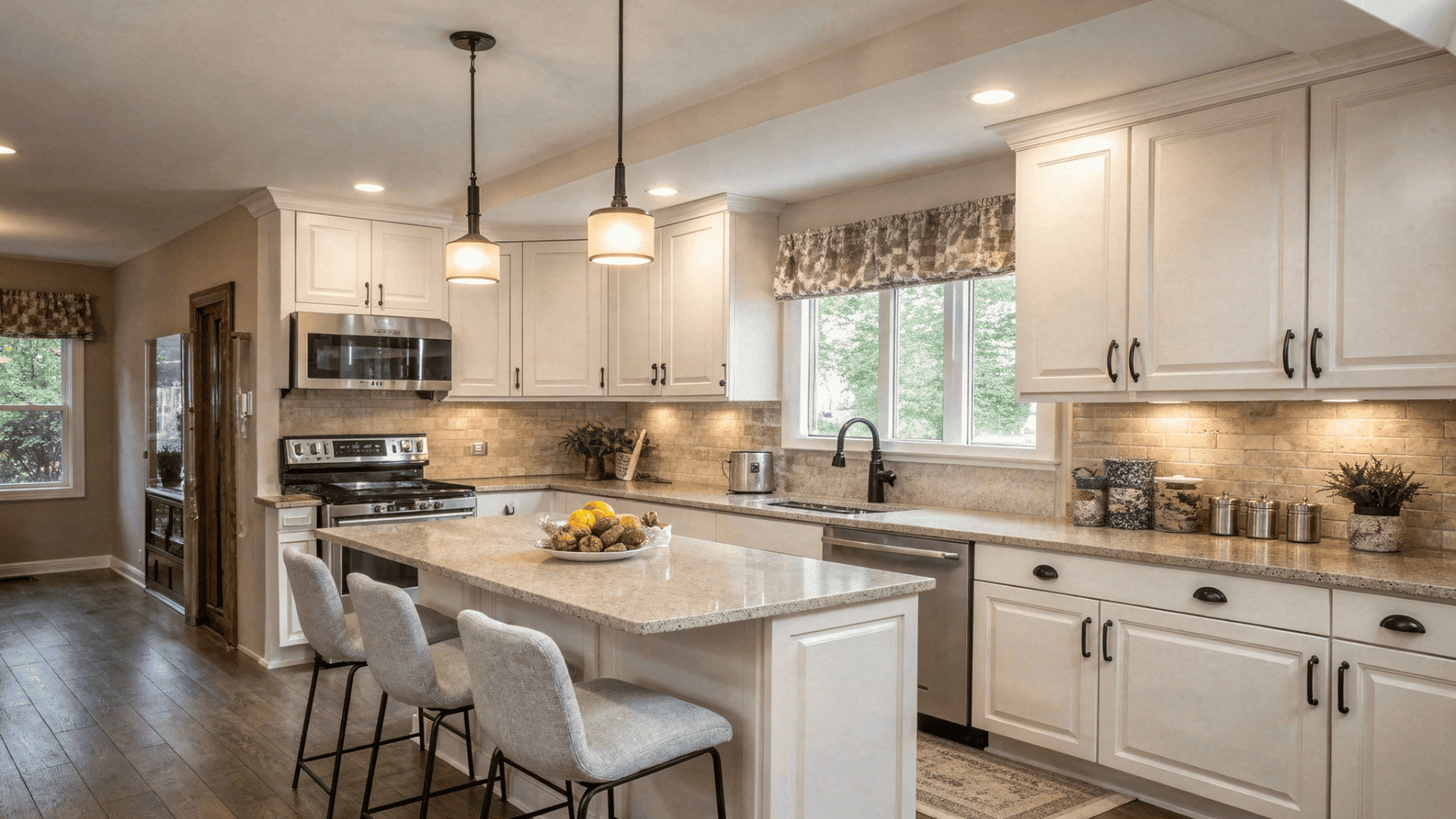

Kitchen makeovers often look simple on the surface, yet the numbers behind them can tell a very different story.
Kitchen renovation cost is shaped by more than cabinets and countertops, and small choices can quietly shift the budget in unexpected ways.
From layout decisions to material quality, every step plays a role in the final figure. Kitchen remodel cost also changes based on size, scope, and how much work happens behind the walls.
The sections ahead break down where money is usually spent, what influences pricing, and how different renovation types compare, helping clarify what truly drives kitchen renovation expenses.
Kitchen Renovation Cost Overview
Kitchen renovation cost generally falls within a broad range because no two projects follow the same scope.
A basic kitchen layout renovation may start at a few thousand dollars, while a complete remodel with structural changes and premium materials can reach well into five figures.
The final amount depends on renovation depth, material selection, labor requirements, and regional pricing differences.
Costs are commonly grouped into three categories:
- Low-range renovations focus on surface-level updates such as cabinet refacing, paint, lighting, and fixture replacement.
- Mid-range renovations include new cabinets, countertops, appliances, and limited layout adjustments.
- High-range renovations involve full layout changes, custom cabinetry, upgraded appliances, and extensive labor.
National averages provide a helpful reference point, but actual kitchen renovation cost is often higher or lower based on location, contractor rates, and permit requirements. Urban areas and regions with higher labor costs typically report higher overall renovation expenses than suburban or rural locations.
Where Kitchen Renovation Spending Occurs?
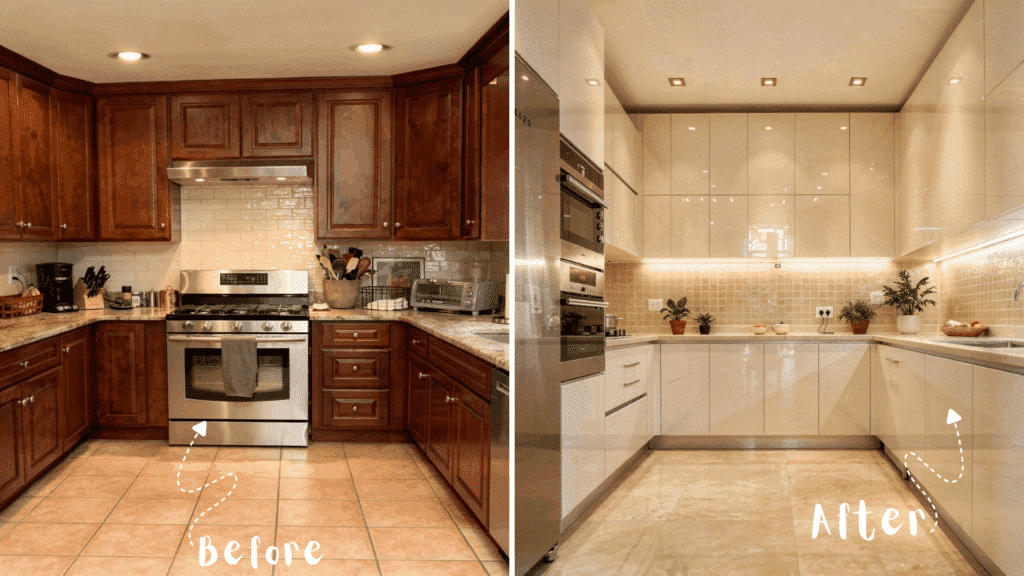
Kitchen renovation spending is distributed across several core areas, with some categories accounting for a larger share of the total budget than others.
While exact figures vary by project size and location, the sections below reflect common cost ranges seen in kitchen renovations.
Cabinets and Storage
Cabinetry often represents 25%–35% of total kitchen renovation spending.
- Stock cabinets generally fall in the lower range
- Semi-custom cabinets sit in the mid-range
- Custom cabinetry increases costs due to design and labor requirements
- Additional spending may include hardware, pull-out storage, and installation.
Countertops
Countertop materials typically account for 10%–15% of the renovation budget.
- Laminate remains one of the lowest-cost options
- Quartz and granite fall into mid-range pricing
- Natural stone and specialty surfaces increase material and fabrication costs
- Edge finishes and sink cutouts can raise final pricing.
Appliances
Appliances usually make up 10%–20% of total kitchen renovation cost.
- Standard appliance packages stay closer to the lower end
- Built-in or premium appliances increase both purchase and installation costs
- Delivery, setup, and removal of old units may add to expenses.
Labor and Installation
Labor commonly accounts for 20%–30% of overall spending.
This category includes:
- General contractor fees
- Electrical and plumbing work
- Carpentry, drywall, and finishing
Permit fees and inspections are often grouped into labor-related costs and vary by location.
Flooring, Lighting, and Backsplash
These finishing elements typically represent 10%–15% of renovation spending.
- Flooring costs depend on material type and subfloor condition
- Lighting expenses include fixtures, wiring, and labor
- Backsplash costs vary based on tile choice, layout complexity, and installation time
Together, these categories explain where most kitchen renovation spending occurs and why costs can increase quickly when multiple upgrades are combined within a single project.
Factors That Affect Kitchen Renovation Cost
Kitchen renovation cost is shaped by several practical factors.
Each one can raise or lower the final budget depending on project scope and planning choices.
- Kitchen size and layout: Larger kitchens require more materials and labor. Layout changes, such as moving sinks or walls, increase plumbing, electrical, and structural costs.
- Material selection: Cabinets, countertops, flooring, and fixtures vary widely in price. Higher-grade materials raise upfront cost but often increase lifespan.
- Labor rates and contractor fees: Labor pricing depends on location and contractor experience. Projects involving multiple trades usually cost more.
- Plumbing and electrical work: Relocating lines or upgrading old systems adds labor time and permit expenses, especially in older homes.
- Geographic location: Urban areas and high-cost regions typically have higher labor and permit fees than suburban or rural areas.
- Project timeline and complexity: Tight schedules, custom features, and detailed installations increase overall renovation cost.
Cost Variation by Size and Scope
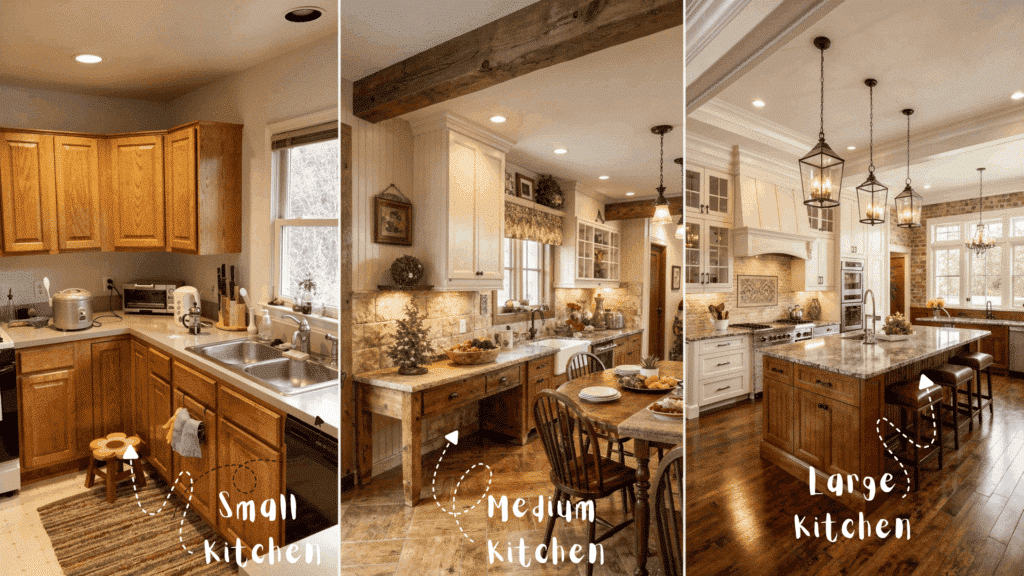
Kitchen renovation cost changes based on kitchen size and how much work is included.
Larger spaces increase material and labor needs, while broader renovation scope adds time, complexity, and permit requirements.
Small Kitchen Renovation
A small kitchen renovation usually covers spaces up to 70 square feet and focuses on efficiency rather than expansion.
With fewer cabinets and shorter countertops, material and labor costs stay lower.
Budgets commonly fall between $8,000 and $18,000, depending on finishes and appliance choices.
Medium Kitchen Renovation
A medium kitchen renovation typically applies to spaces between 70 and 150 square feet and allows for more cabinetry, countertop area, and appliance options.
Costs usually range from $15,000 to $35,000, influenced by material quality, appliance upgrades, and limited layout adjustments.
This size often offers the most flexibility for balancing budget and functionality without major structural work.
Large Kitchen Renovation
A large kitchen renovation generally involves spaces over 150 square feet and requires more cabinetry, longer countertops, and extended labor time.
Budgets often range from $30,000 to $70,000 or more, largely driven by material volume, installation complexity, and coordination of multiple trades.
Layout changes and custom features can further increase overall spending.
For more cost-controlled updates, see practical ideas in Affordable Kitchen Renovation Tips
Kitchen Remodel Cost by Type
The main difference between kitchen remodeling cost types is how much work is involved.
Minor updates focus on surface-level changes, mid-range remodels include partial upgrades, and major renovations involve full structural and layout changes.
The table below shows how scope and cost typically differ:
| Remodel Type | Scope of Work | Typical Updates Included |
|---|---|---|
Minor Kitchen Update | Cosmetic only, no layout changes | Cabinet refinishing or painting, new hardware, lighting, fixtures, minor appliance upgrades |
Mid-Range Kitchen Remodel | Partial renovation with limited layout changes | New cabinets, countertops, appliances, flooring, backsplash, lighting |
Major Kitchen Renovation | Full renovation with structural or layout changes | Custom cabinetry, layout redesign, plumbing and electrical relocation, premium appliances |
Ways to Manage Kitchen Renovation Budget
Kitchen renovation cost can be controlled with practical planning and clear priorities.
The points below focus on reducing unnecessary spending while maintaining functionality.
- Keep the existing layout: Reduces plumbing and electrical work
- Set clear priorities: Focus spending on essential upgrades
- Mix material price ranges: Balance cost with durability
- Compare contractor quotes: Avoid overpaying for labor
- Refinish instead of replacing: Lower cost than full upgrades
- Plan a budget buffer: Covers unexpected expenses
Conclusion
Kitchen renovation cost often comes down to how space, scope, and choices come together.
Cabinetry, labor, materials, and layout changes all shape the final budget in noticeable ways.
Smaller updates keep spending controlled, while full renovations raise costs through time and complexity.
Planning with realistic ranges helps avoid surprises and keeps expectations steady. Every kitchen has its own cost story, shaped by needs and priorities.
Share your renovation experience or favorite budgeting tip in the comments below.

Holding a Master’s in Architecture from the University of Texas at Austin, Emily Rodriguez has dedicated more than two decades to the art and science of building renovation. Starting her journey in historic preservation, she developed a profound respect for blending old with new in building design. Emily became a vital part of our team in 2019, renowned for her insightful and innovative renovation tips. She has been leading our DIY home improvement series since ever since, where she shares her wealth of knowledge in turning outdated spaces into modern havens. When not engaged in writing or consulting, Emily is a passionate advocate for heritage conservation and enjoys exploring vintage architecture, a hobby that complements her professional expertise.