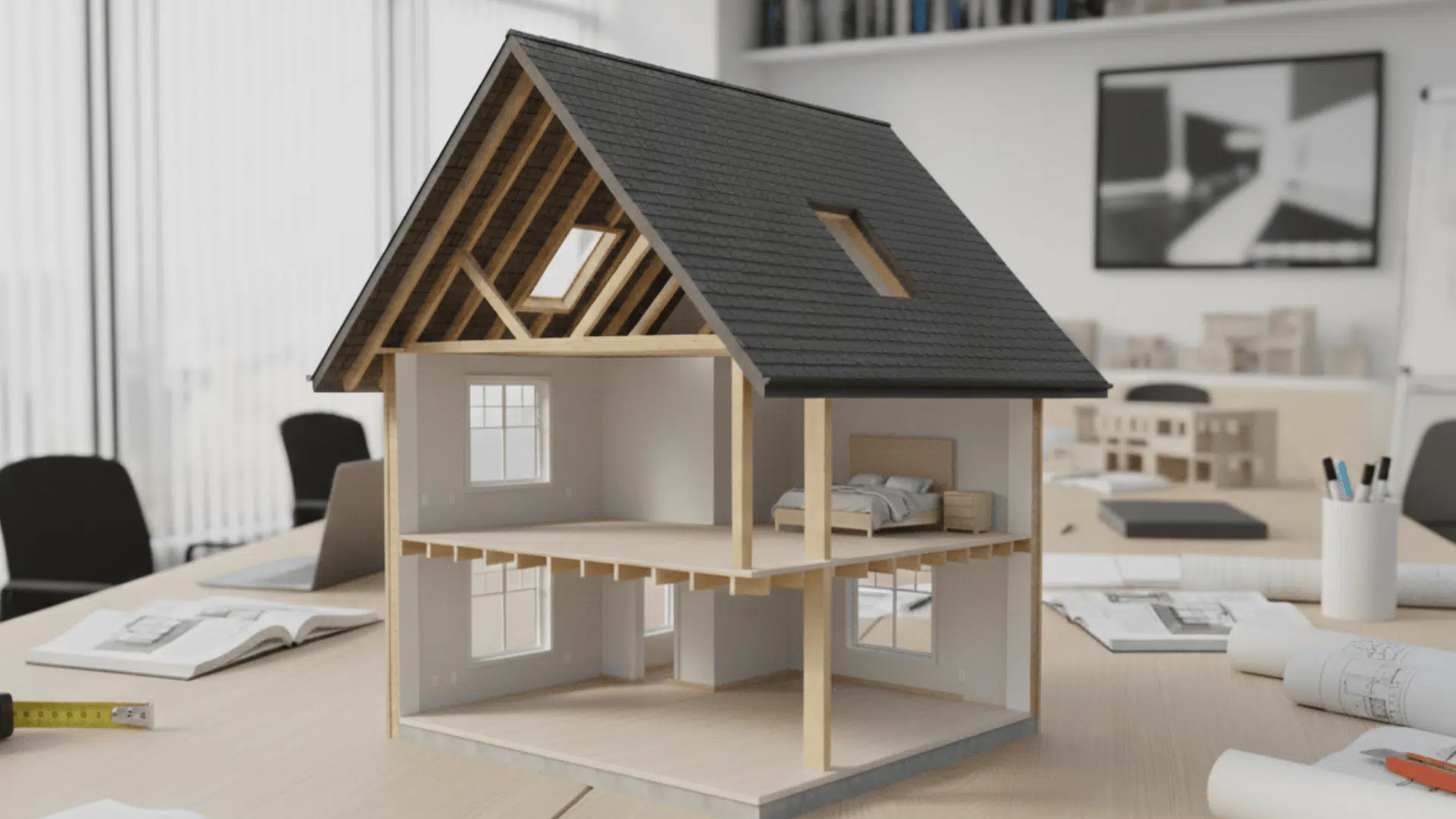

Two-story houses don’t come in a single, standard height. While most people assume all two-story homes measure roughly the same, the actual height varies based on ceiling choices, floor thickness, roof design, and local regulations.
Understanding these differences matters when you’re planning a build, checking compliance with neighborhood rules, or simply trying to figure out if that ladder will reach your second-floor windows.
The typical two-story house stands between 18 and 25 feet tall from ground to roof peak, but that range expands or contracts depending on architectural decisions and where you’re building.
So what determines a two-story home’s height? Why do those measurements matter, and how can you find the specific limits that apply to your property?
What Is the Typical Height of A Two-Story House?
Most two-story residential homes fall between 18 and 25 feet in overall height, measured from ground level to the highest point of the roof.
However, you’ll encounter two useful measurements when discussing house height.
Eave height measures from the ground to where the roof meets the exterior wall, typically ranging from 16 to 20 feet for a standard two-story.
Ridge height measures from the ground to the roof’s peak, which can add several feet depending on the roof pitch. A shallow-pitched roof might add only 3 to 4 feet above the eaves, while a steep pitch can add 8 to 10 feet or more.
This means two homes with identical first and second floors can have significantly different overall heights based purely on roof design.
What Makes Up the Height of a Two-Story House?
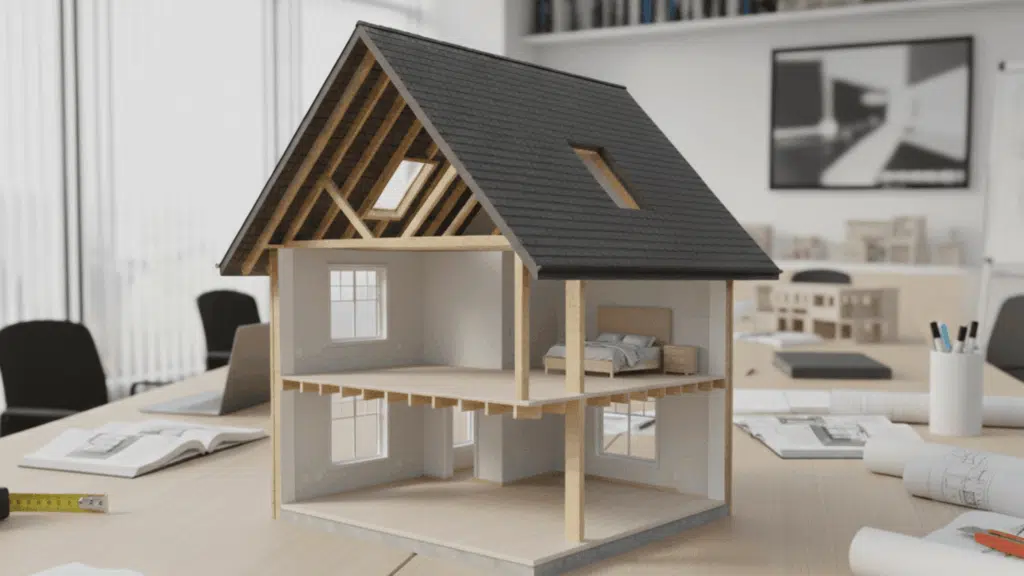
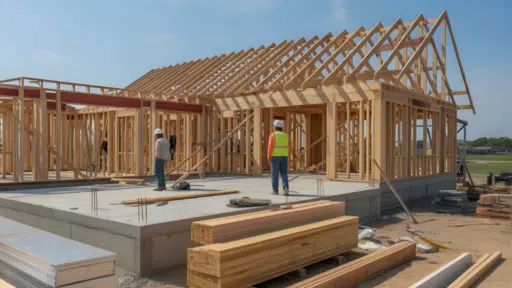
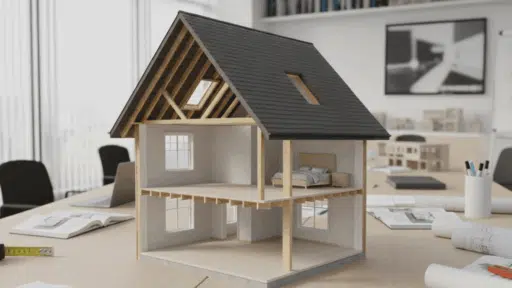
A two-story home’s total height isn’t just “two ceilings stacked.” It’s the combined impact of ceiling heights, floor thickness, roof pitch, and how the foundation meets the ground.
1. Ceiling Height
Interior ceiling height directly affects total building height. Standard ceilings measure 8 feet in older homes, while newer construction often features 9-foot ceilings on the first floor and 8 or 9 feet on the second.
Building codes establish minimum ceiling heights, usually 7 feet for habitable rooms, but these represent the floor, not the ceiling, of what’s possible.
2. Floor System Thickness
The space between your first-floor ceiling and second-floor surface isn’t just empty air. Floor joists or engineered I-joists typically measure 10 to 12 inches deep, with additional layers for subfloor, finished flooring above, and drywall below.
Add soundproofing or thicker assemblies for longer spans, and this “dead space” can easily reach 14 to 16 inches.
3. Roof Structure and Pitch
Roof design represents the biggest variable in a two-story house’s height. The pitch, expressed as rise over run, like 6:12determines how steeply the roof slopes.
Trusses or rafters create the structural framework, and the attic space they form can be minimal in a low-slope roof or substantial in a steep-pitched design.
A home with a 4:12 pitch might add only 4 feet from eave to ridge on a 24-foot-wide house, while a 12:12 pitch would add 12 feet.
4. Foundation and Site Conditions
Foundation type influences where “ground level” starts. A slab foundation sits close to grade, while a raised crawlspace or basement adds 1 to 3 feet of visible foundation wall.
Sloped lots complicate measurements further, since many municipalities measure height from the lowest point of grade around the building, making a house on a hillside technically taller than the same design on flat land.
Typical Heights by Common Two-Story Home Types
Two-story homes vary widely, even with similar square footage. Small design choices, like a steeper roof, taller first floor, or finished attic, can add several feet to the overall height.
1. Standard Two-Story
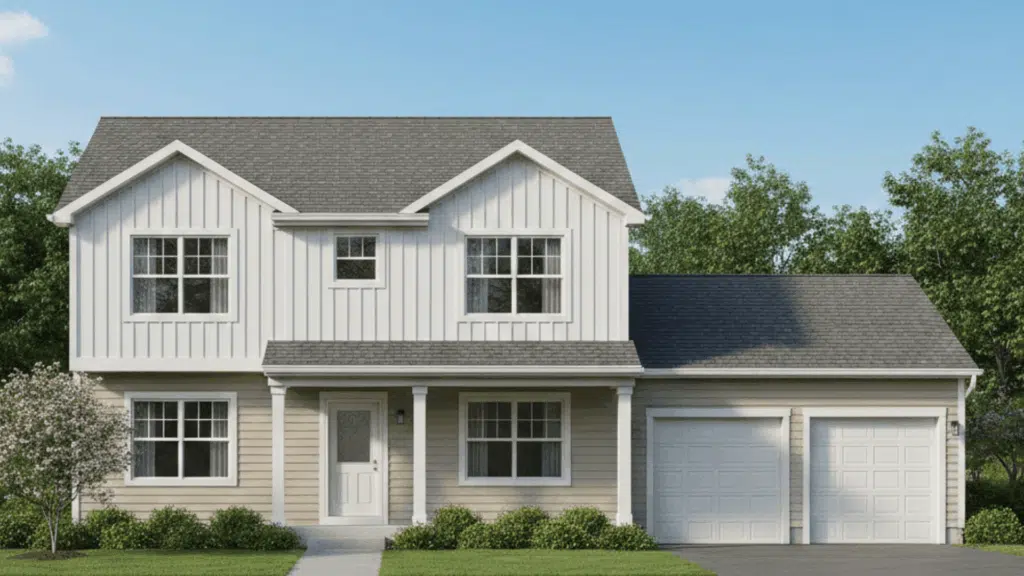
The most common suburban two-story assumes 8 to 9-foot ceilings, moderate roof pitch (5:12 to 7:12), and standard floor assemblies.
These homes typically measure 20 to 24 feet to the ridge, with eave heights around 17 to 19 feet. This configuration balances livable space with construction efficiency.
2. Two-Story with High First Floor
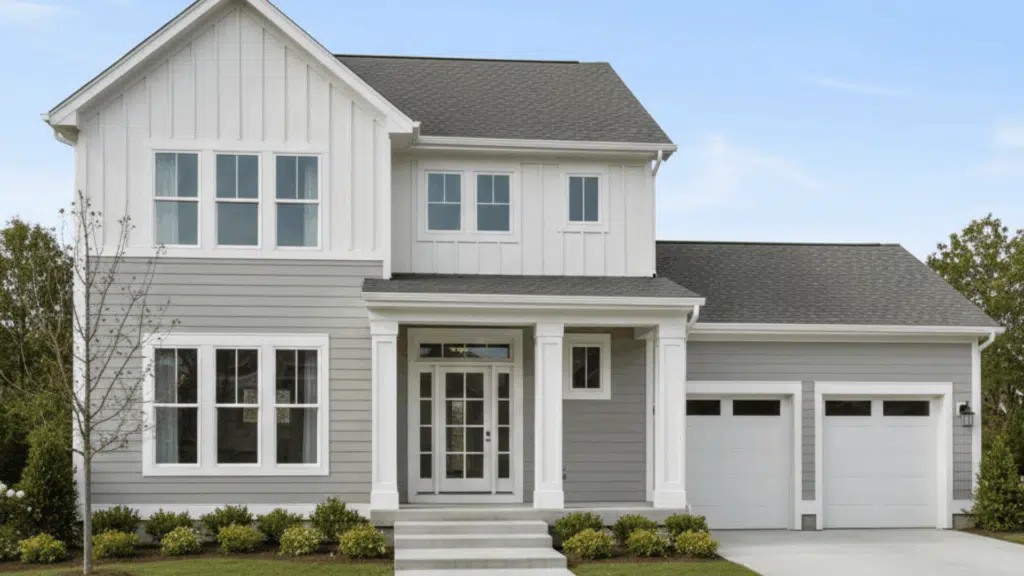
Many newer builds feature 9 or 10-foot first-floor ceilings for an open, airy feel. Combined with 9-foot second-floor ceilings, these homes can reach 24 to 27 feet at the ridge.
The extra height enhances interior aesthetics but requires more exterior materials and can trigger stricter zoning scrutiny.
3. Two-Story with Finished Attic
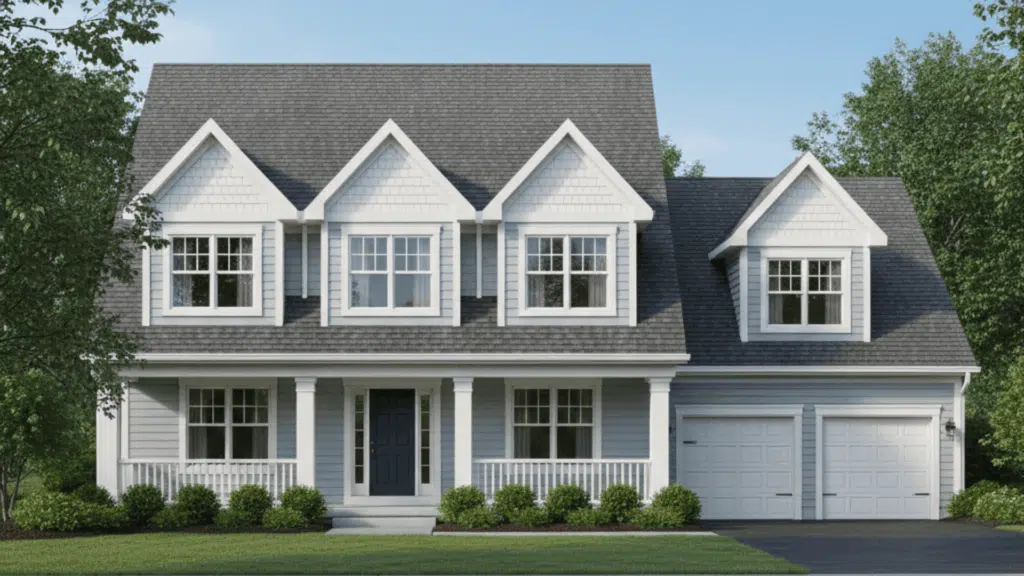
Homes marketed as two-story but including a finished attic or bonus room often approach 2.5-story heights. The roof volume must accommodate standing height in the upper space, pushing ridge heights to 26 to 30 feet.
These designs blur the line between stories and can face different zoning classifications.
4. Townhouse and Rowhouse
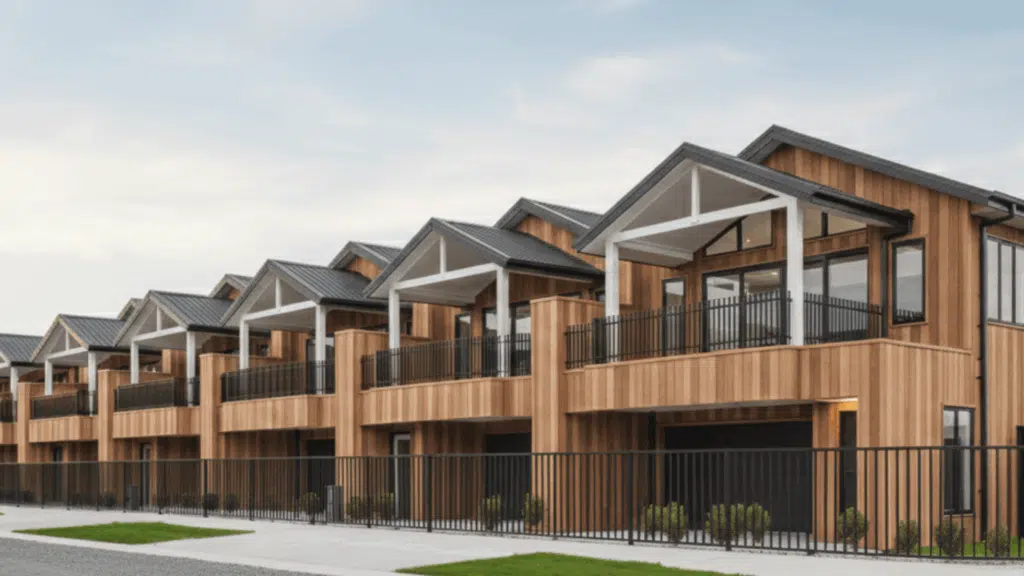
Urban townhouses and rowhouses tend upward rather than outward, often featuring higher floor-to-floor heights and parapets that extend above the roof line for fire separation.
Total heights frequently reach 28 to 35 feet despite only containing two main floors.
5. Modern Flat or Low-Slope Roof Two-Story
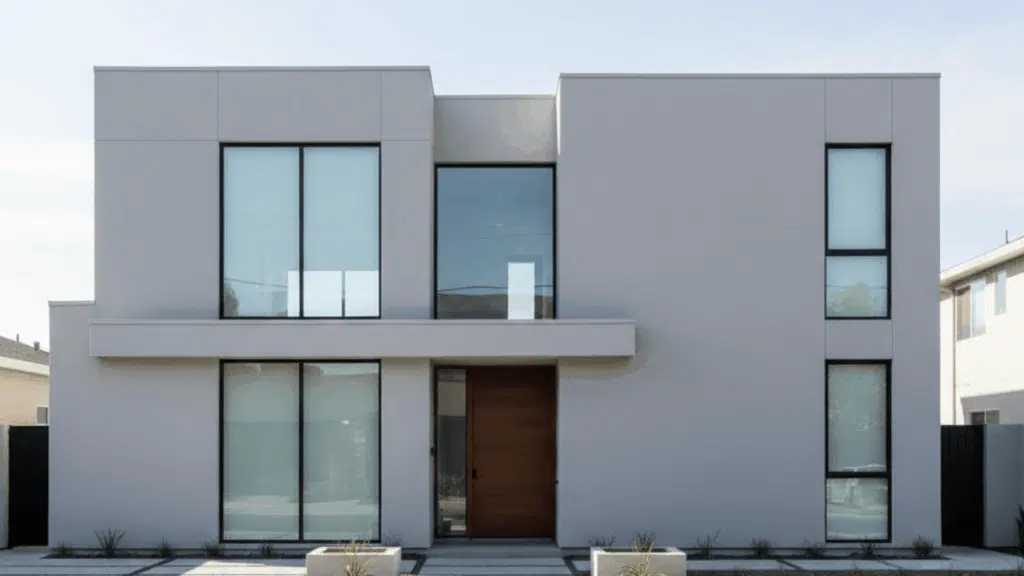
Contemporary designs with flat or nearly flat roofs eliminate the pitched roof height addition, resulting in lower overall profiles, often 18 to 21 feet total.
Parapets surrounding the roof can add a few feet, but these homes generally measure shorter than traditional pitched-roof counterparts with identical interior layouts.
Why Does Two-Story House Height Differ?
Ceiling height choices represent personal preference balanced against cost. Nine-foot ceilings add roughly $1,000 to $2,000 per floor in most markets but create a noticeably more spacious interior. Ten-foot ceilings amplify this effect and cost.
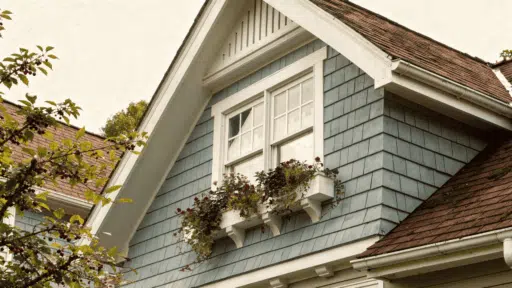
Roof pitch connects directly to architectural style. Colonial and Craftsman homes traditionally feature steeper pitches (8:12 to 12:12) that shed snow and rain effectively while creating attic space.
Modern and Prairie styles favor shallower pitches (2:12 to 4:12) for cleaner lines. Dormers, gables, and hip roof variations add complexity and height.
Structural material choices affect thickness. Deeper trusses span longer distances without interior support, while thicker floor assemblies improve sound control between levels. Both add incremental height.
Climate requirements influence roof design in ways that affect height.
Snow load requirements in northern states often mandate steeper pitches for proper shedding, while wind requirements in coastal areas affect overall structural depth.
Why Does a Two-Story Home’s Height Matter?
Height limits connect to setback requirements, daylight plane restrictions, and view corridor protections.
Taller buildings cast longer shadows and block more views, prompting stricter placement rules. Understanding your home’s height helps determine where on your lot you can build.
Maintenance costs scale with height. Second-story exterior work requires extension ladders at a minimum, and often scaffolding or professional services.
Gutter cleaning, painting, window washing, and roof repairs all cost more and pose greater safety risks on taller homes.
Fire departments consider building height when planning emergency access. Ladder truck capabilities and response procedures factor in structure height, particularly in areas with challenging topography or limited water pressure.
Energy performance changes with volume. Taller ceilings increase the space that needs heating and cooling, and two-story homes create natural stratification where hot air rises.
Building Codes vs Zoning: Who Controls Height?
Building codes establish safety minimums like required ceiling heights, structural integrity standards, and fire separation requirements. These rules ensure buildings are safe to occupy, but rarely limit how tall you can build.
Zoning codes determine what you’re allowed to construct on a specific property. These local ordinances set maximum heights, minimum setbacks, lot coverage limits, and overall building mass. A house can meet every building code requirement while still violating zoning height restrictions.
The distinction matters: building code compliance makes a structure safe, while zoning compliance makes it legal on that particular lot.
Finding Your Local Maximum Height
Maximum residential building height in the United States is almost always set by cities and counties through zoning ordinances, not by state law.
Find your zone first: Use your city/county zoning map to get your property’s zoning label (e.g., R-1, RU, RS-5).
Check the right code section: In the municipal code, look for “Height of Buildings,” “Development Standards,” or your zone’s standards table.
Confirm the measurement method: Some places measure to the ridge, others to the mean roof height, or the highest point; definitions vary.
Don’t rely on “state limits”: “California height limit” or “Florida height limit” isn’t one number; the enforceable limit is in your local code.
Example:Los Angeles can measure height differently by zone; Florida cities set their own rules via local ordinance.
Conclusion
Two-story houses range in size based on ceiling heights, floor system thickness, roof pitch, and foundation type.
The physical height your home achieves depends on the design choices you make during planning.
The maximum height you’re allowed to build depends on your zoning district’s specific regulations, which vary by municipality and sometimes by neighborhood.
Understanding both measurements helps you plan construction that’s both functional for your needs and compliant with local rules.
When you’re ready to build or evaluate a property, start by checking your local zoning code and measuring how height is defined in your jurisdiction; that’s where the real limits live.

Holding a Master’s in Construction Management from Purdue University, William Ray has dedicated more than two decades to studying and applying construction principles. His professional journey includes a tenure with a prominent construction firm, where he specialized in project management and building technologies. William brought his knowledge to our team, providing in-depth insights into practical construction techniques. As the leader of our beginner’s guide to building since 2019, he has a knack for breaking down intricate processes into easily digestible content. When not involved in writing or onsite consultations, William enjoys woodworking and volunteering in community building projects, which aligns with his passion for hands-on construction and community service.