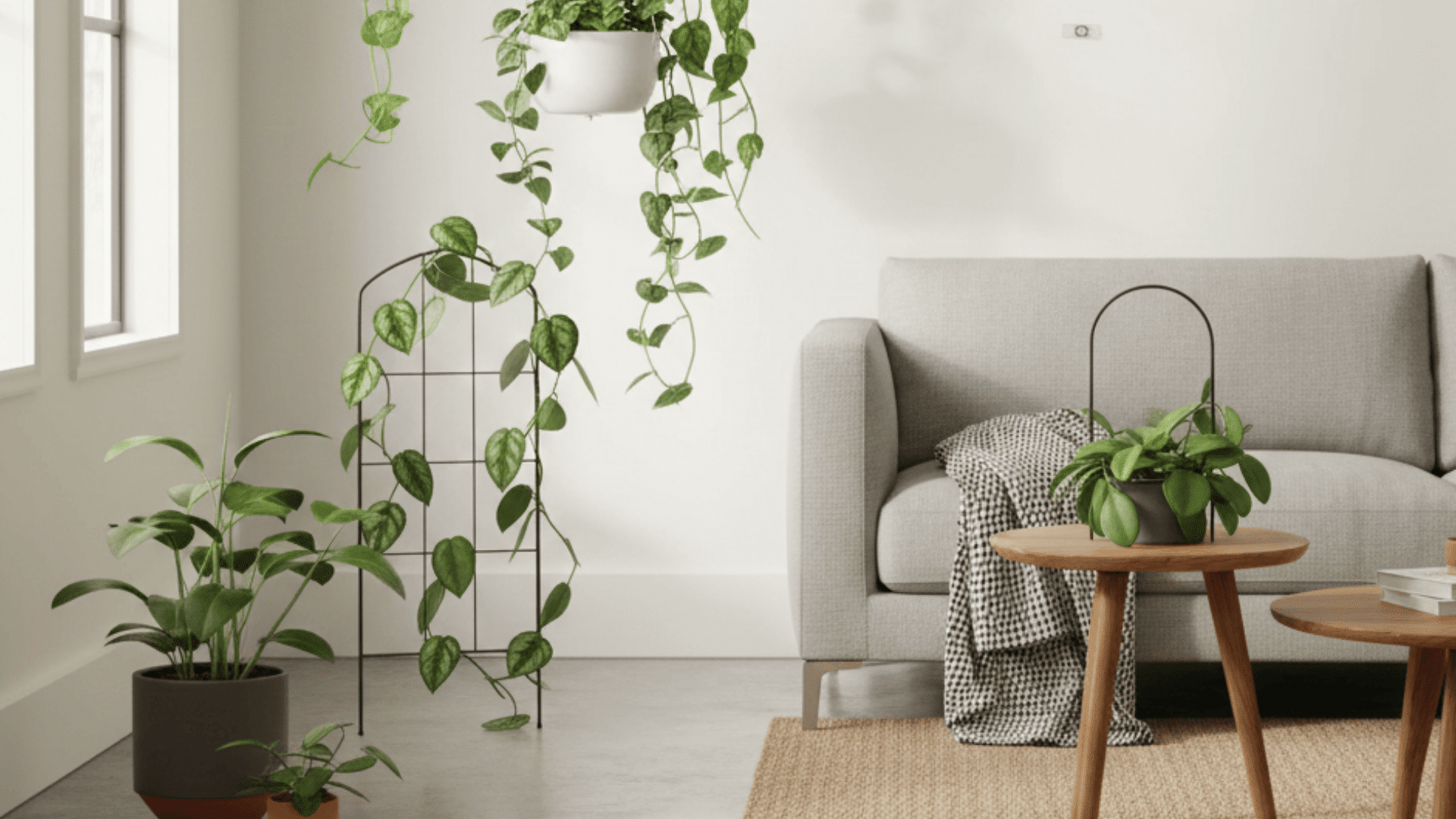

Indoor vine plants are one of the easiest ways to add lush greenery and a “styled” look to any room.
They trail beautifully from shelves, climb neatly up trellises, and soften corners without taking up much floor space.
The best part is that many popular vines are low-maintenance and forgiving, even for beginners.
Choosing the right vine comes down to matching it with your light, your routine, and your home setup, especially if pets are around.
With simple watering habits, good drainage, and basic training, indoor vines can stay full, healthy, and impressive year-round.
Indoor Vine Plant Care Basics
Indoor vine plants stay healthiest with simple, consistent care. Always use a pot with drainage holes, because soggy soil is the quickest way to cause root rot.
Water deeply until it runs out the bottom, let it drain fully, then wait to water again until the top part of the soil feels dry.
Give bright, indirect light for fuller growth, and avoid harsh afternoon sun that can scorch leaves.
Train vines early using wall clips, hooks, a trellis, or a moss pole. To keep plants bushy, pinch tips, prune leggy stems, and replant node cuttings to thicken growth.
Choose the Right Vine for Your Home
A vine that thrives indoors depends on light, routine, and how you want it to look.
Use these quick checkpoints to pick a plant that stays full, healthy, and easy to manage.
1. Pick by light level
Indoor vines respond fast to light, so matching the plant to your window matters most. Low light slows growth and creates long, bare stems, while harsh direct sun scorches leaves. Bright, indirect light usually gives the fullest, healthiest vines.
2. Pick by lifestyle
A plant’s success should fit the home, not fight it. Busy schedules do better with drought-tolerant vines, while high-humidity homes can support fussier tropical climbers. If pets live there, verify toxicity and place risky plants well out of reach.
3. Pick by styling goal
Vines can trail, climb, or become a focal point, so choose based on the look you want. Some plants shine in hanging baskets, others climb poles neatly, and a few stand out for silver, velvet, or variegated leaves that pop in décor.
Indoor Vine Plants That Thrive Indoors
These are some reliable indoor vine plants that trail beautifully, climb with support, and elevate home décor fast.
Each plant includes a quick description, a consistent requirements table, and simple pros vs. restrictions. Always verify toxicity with a trusted reference before bringing a plant into a pet home.
1. Golden Pothos: Epipremnum Aureum
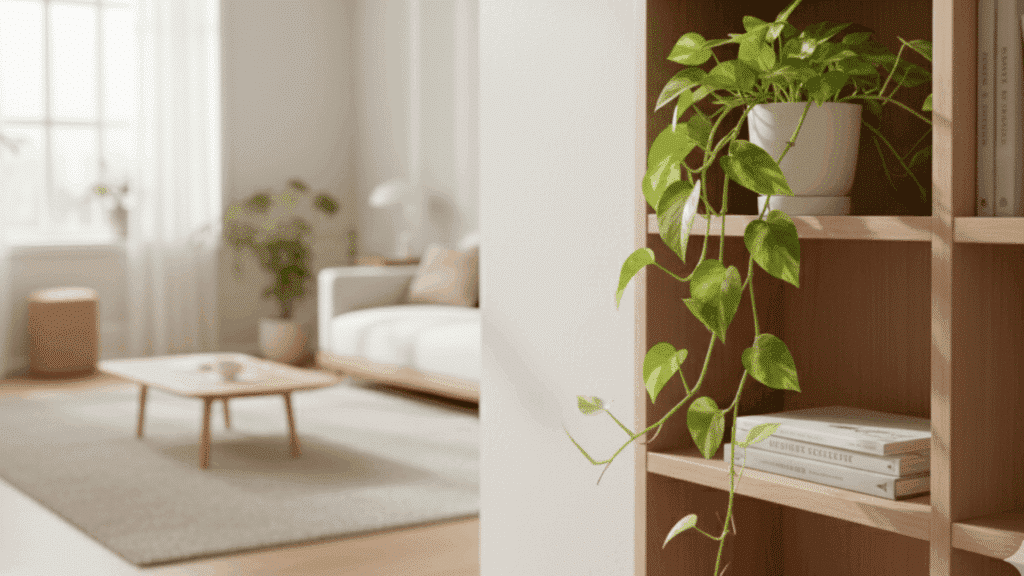
Golden pothos is the classic beginner vine with heart-shaped leaves and fast trailing growth.
It adapts to a wide range of indoor light and bounces back after missed waterings, making it ideal for busy homes.
Requirements
| Light | Water | Mature size (indoors) |
|---|---|---|
| Low to bright indirect | Water when top 2–3 cm dries | Trails 6–10 ft+ |
Pros: Very forgiving and fast-growing. Great for shelves, baskets, and training up poles
Restrictions: Toxic to cats and dogs if chewed (common aroid caution). Variegation fades in low light
2. Marble Queen Pothos: Epipremnum Aureum
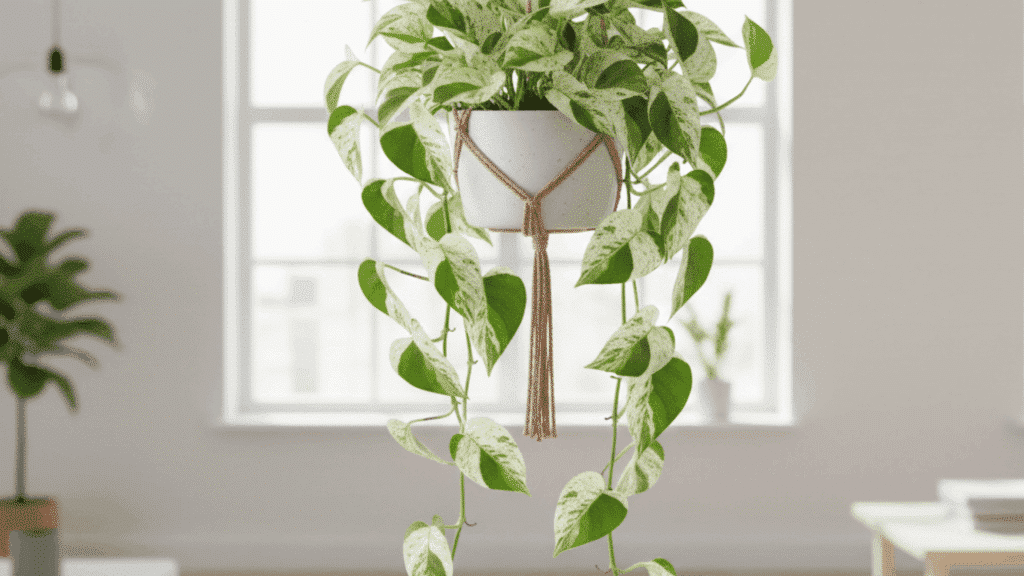
Marble Queen pothos has creamy white marbling that brightens rooms instantly. It grows a little slower than golden pothos but still trails well indoors, especially in bright indirect light that keeps the variegation crisp.
Requirements
| Light | Water | Mature size (indoors) |
|---|---|---|
| Medium to bright indirect | When top 2–3 cm dries | Trails 4–8 ft |
Pros: High décor impact from variegation. Easy care with consistent light
Restrictions: Needs brighter light to stay patterned. Toxic to pets if chewed (common aroid caution)
3. Neon Pothos: Epipremnum Aureum
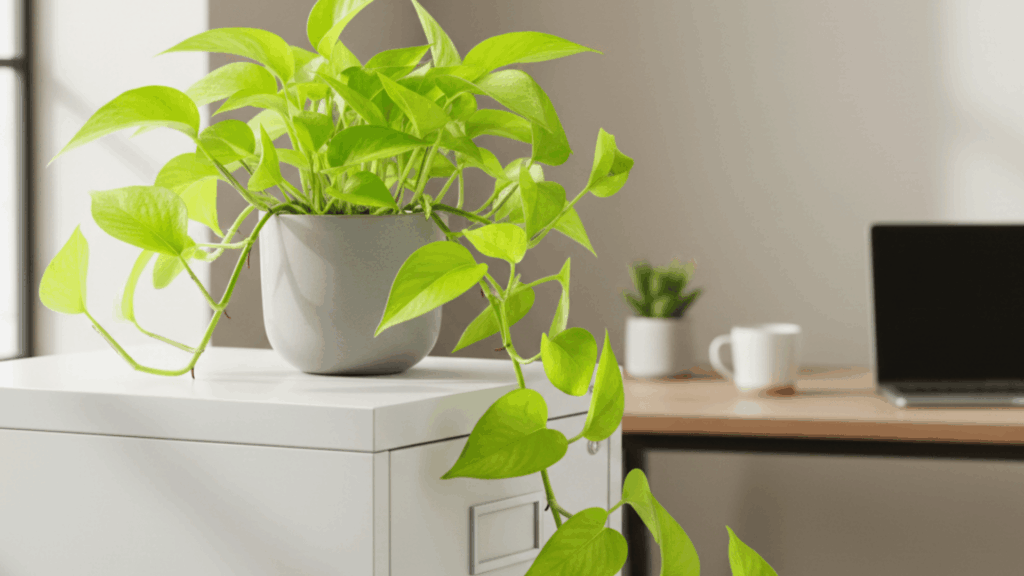
Neon pothos stands out for its vivid lime-green leaves that glow in bright rooms. It’s still easy-care and quick to trail, and it makes dark corners look fresher when placed in medium, indirect light.
Requirements
| Light | Water | Mature size (indoors) |
|---|---|---|
| Medium to bright indirect | When top 2–3 cm dries | Trails 4–8 ft |
Pros: Bold color, easy to style. Fast growth in good light
Restrictions: Color can dull in low light. Toxic to pets if chewed (common aroid caution)
4. Satin Pothos: Scindapsus Pictus
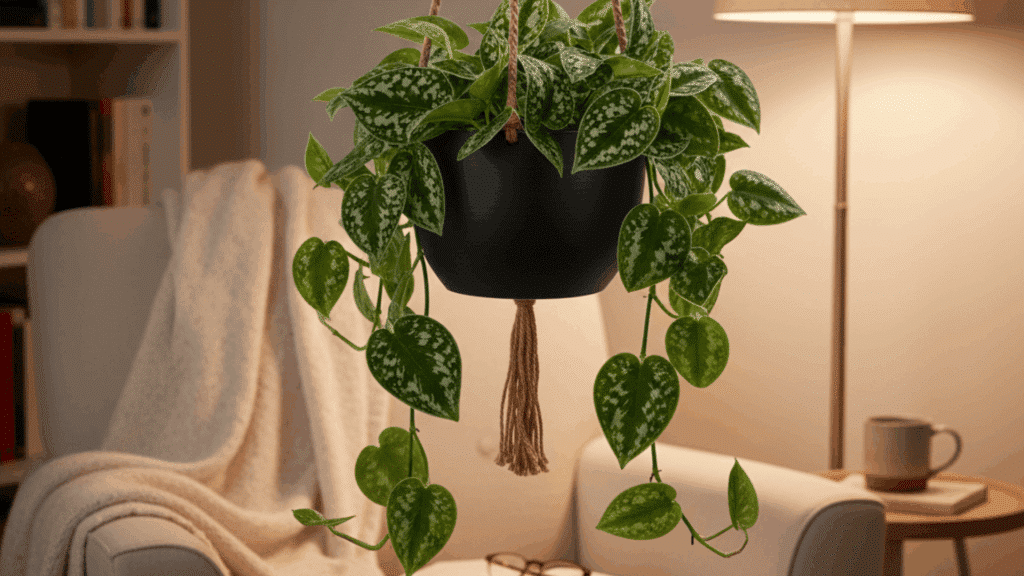
Satin pothos has velvety green leaves dusted with silver, giving a premium, textured look. It grows a bit slower than pothos but trails gracefully and looks especially striking in hanging planters and shelf cascades.
Requirements
| Light | Water | Mature size (indoors) |
|---|---|---|
| Bright indirect (tolerates medium) | When top 3–5 cm dries | Trails 4–8 ft |
Pros: Silver foliage looks “designer”. Handles indoor conditions well
Restrictions: Overwatering causes leaf drop quickly. Likely toxic to pets (aroid family caution)
5. Heartleaf Philodendron: Philodendron Hederaceum
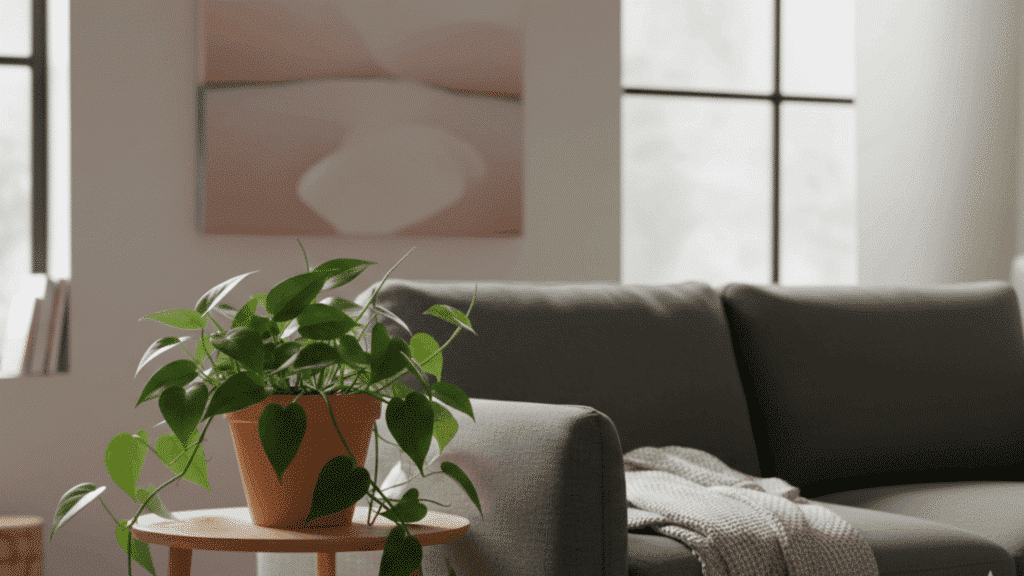
Heartleaf philodendron is a soft, trailing vine with deep green, heart-shaped leaves. It tolerates low light better than many vines and grows steadily, making it a reliable choice for apartments, offices, and beginners.
Requirements
| Light | Water | Mature size (indoors) |
|---|---|---|
| Low to bright indirect | When top 2–3 cm dries | Trails 6–10 ft |
Pros: Excellent low-light tolerance. Easy to propagate from nodes
Restrictions: Toxic to pets if chewed (common aroid caution). Can get leggy without pruning
6. Philodendron ‘Brasil’: Philodendron Hederaceum ‘Brasil’
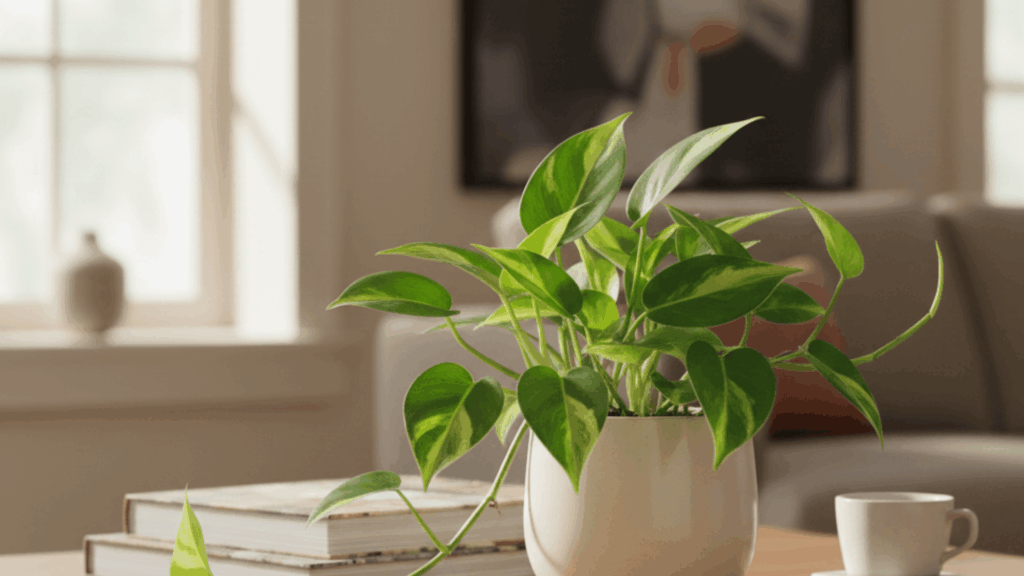
‘Brasil’ offers bright lime-and-green variegation with the same easy trailing habit as heartleaf philodendron.
It’s a great choice if you want a vine that looks more colorful without being high-maintenance or slow-growing.
Requirements
| Light | Water | Mature size (indoors) |
|---|---|---|
| Medium to bright indirect | When top 2–3 cm dries | Trails 6–10 ft |
Pros: Colorful leaves, easy care. Grows full with regular pinching
Restrictions: Variegation fades in low light. Toxic to pets if chewed (common aroid caution)
7. Philodendron Micans: Philodendron Hederaceum Var. Micans
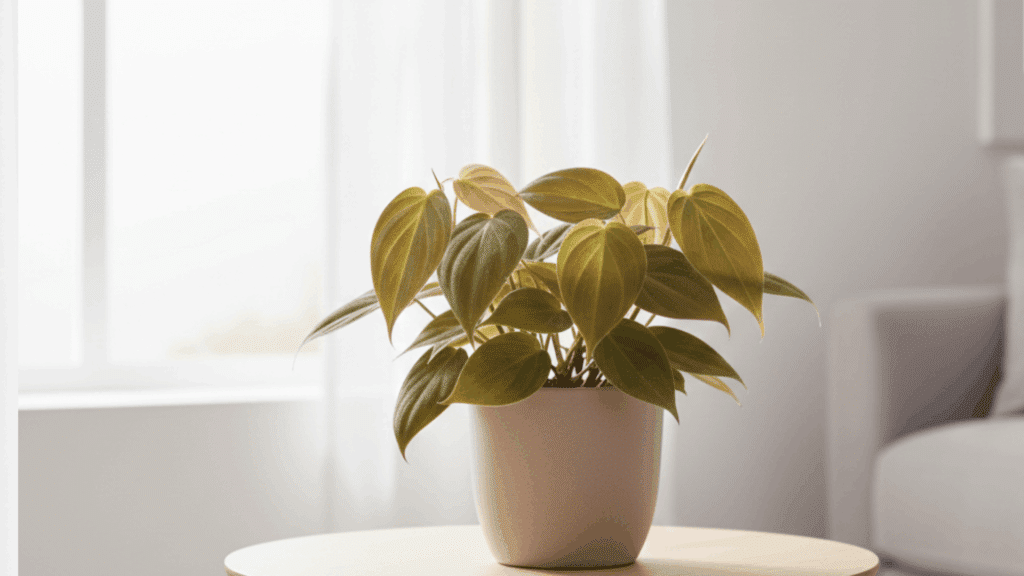
Philodendron micans has velvety leaves with a bronze-to-green sheen that looks rich under indoor light. It trails beautifully and feels “rare” without being difficult, as long as it gets steady warmth and bright indirect light.
Requirements
| Light | Water | Mature size (indoors) |
|---|---|---|
| Bright indirect | When top 3–5 cm dries | Trails 6–10 ft |
Pros: Velvet texture and luxe color. Great for hanging baskets
Restrictions: Needs consistent light for best look. Toxic to pets if chewed (common aroid caution)
8. Swiss Cheese Vine: Monstera Adansonii
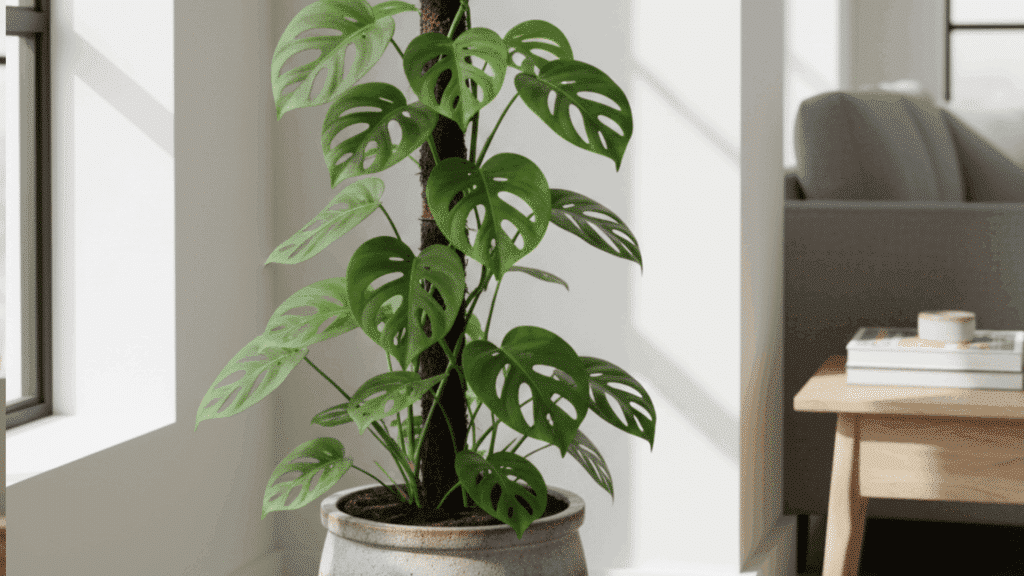
Monstera adansonii is known for its holey, “Swiss cheese” leaves and its ability to climb when given support. Indoors, it can trail or climb a moss pole and creates a bold, tropical feel in modern décor.
Requirements
| Light | Water | Mature size (indoors) |
|---|---|---|
| Bright indirect | When top 3–5 cm dries | Climbs/trails 6–10 ft |
Pros: Statement foliage, fast growth. Climbs well on poles/trellises
Restrictions: Needs support to look its best. Toxic to pets if chewed (common aroid caution)
9. Arrowhead Vine: Syngonium Podophyllum
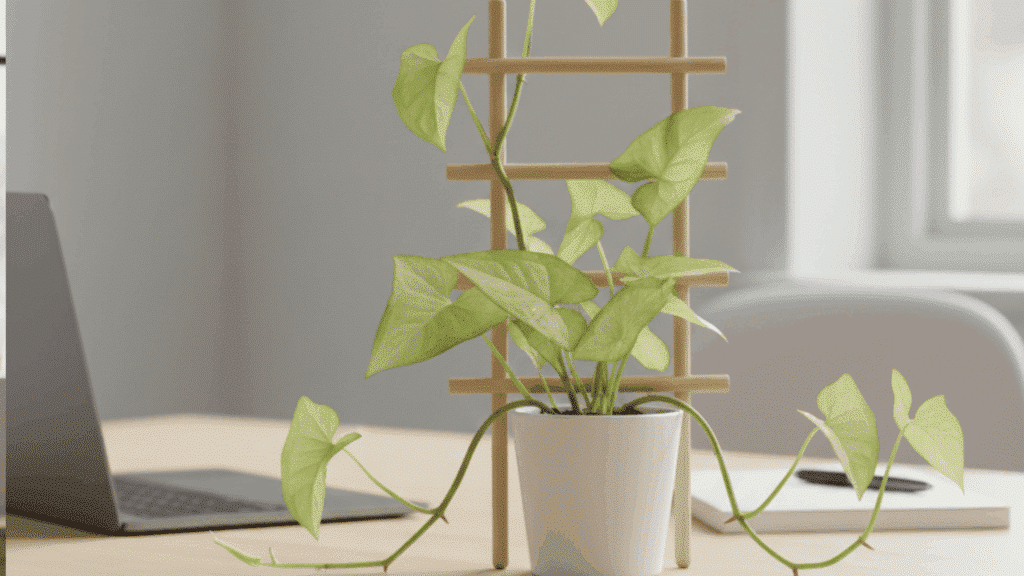
Arrowhead vine starts compact and becomes a trailing climber over time. Its leaf shape changes as it matures, and it comes in many colors. It’s easy indoors, especially when kept evenly moist but not soggy.
Requirements
| Light | Water | Mature size (indoors) |
|---|---|---|
| Low to bright indirect | When top 2–3 cm dries | Trails/climbs 3–6 ft |
Pros: Many color varieties. Good low-light performer
Restrictions: Sap can irritate skin. Toxic to pets if chewed (common aroid caution)
10. String of Hearts: Ceropegia Woodii
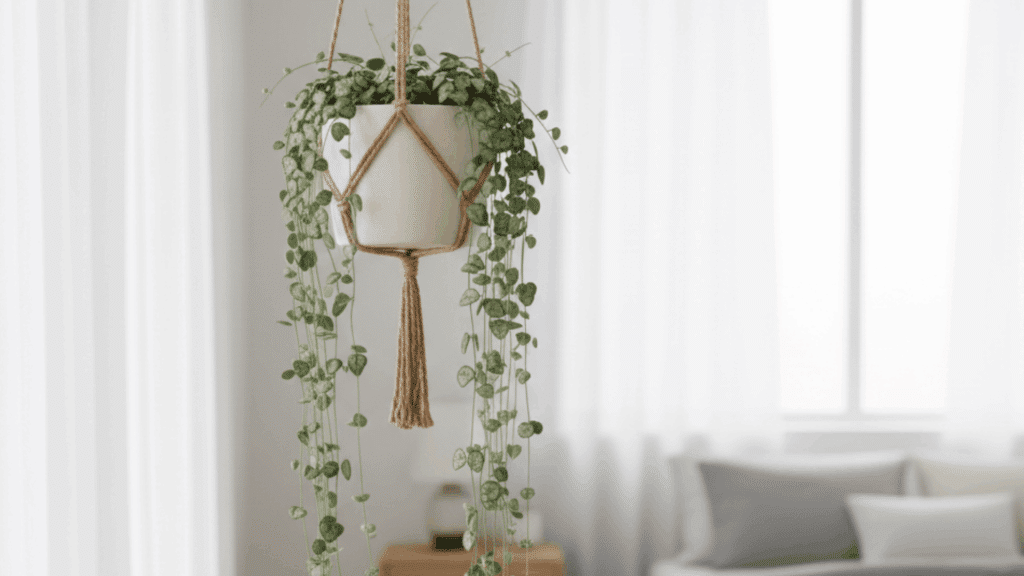
String of hearts is a trailing vine with small, heart-shaped leaves patterned in silver and green. It’s lightweight, perfect for shelves, and thrives with bright light and drying between waterings, making it ideal for minimal-care décor.
Requirements
| Light | Water | Mature size (indoors) |
|---|---|---|
| Bright indirect (some gentle sun ok) | Let soil dry most of the way | Trails 3–6+ ft |
Pros: Drought-tolerant, easy to propagate. Beautiful trailing look for small spaces
Restrictions: Low light makes it sparse. Pet safety varies, verify for your home.
11. String of Turtles: Peperomia Prostrata
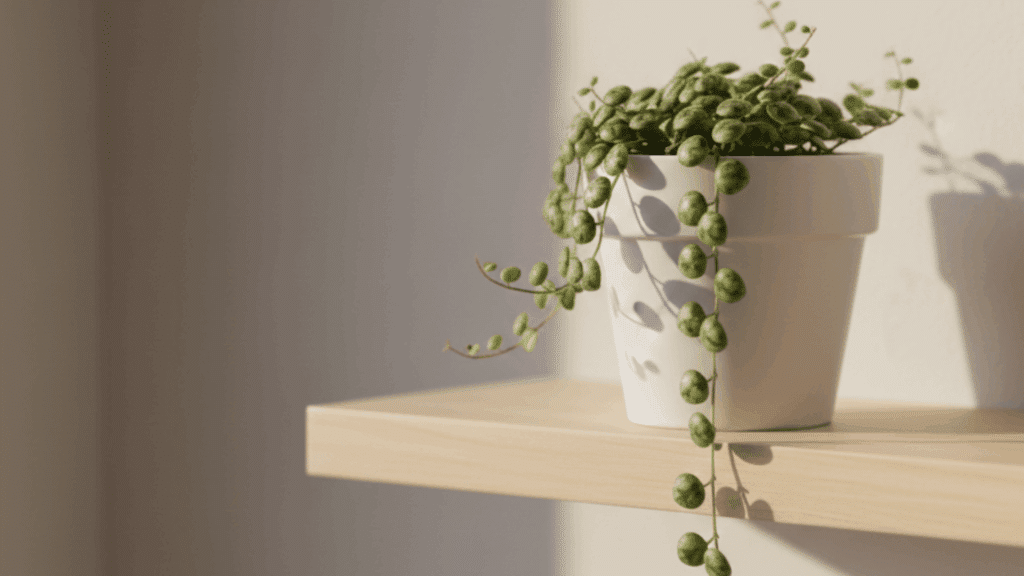
String of turtles is a slow-growing trailing plant with tiny patterned leaves that resemble turtle shells. It’s best for small pots and shelves where it can cascade gently. It prefers moderate light and careful watering.
Requirements
| Light | Water | Mature size (indoors) |
|---|---|---|
| Medium to bright indirect | Let top half dry | Trails 1–3 ft |
Pros: Compact, unique leaf pattern. Good for desks and small shelves
Restrictions: Sensitive to overwatering. Slower growth than most vines
12. String of Pearls: Curio Rowleyanus
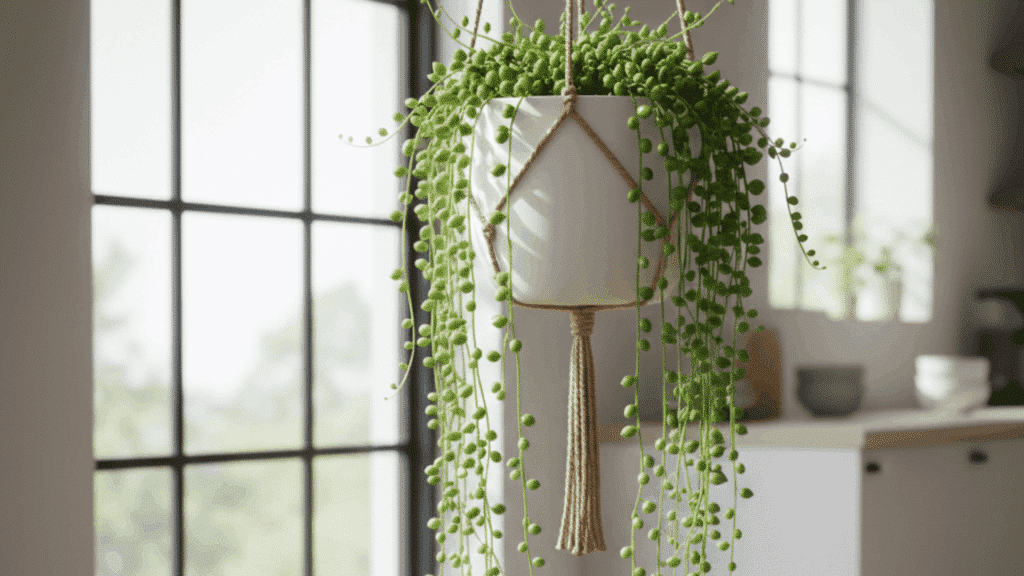
String of pearls features bead-like leaves that trail dramatically from hanging planters. It looks striking in modern interiors but needs bright light and careful watering to avoid rot. It’s best for confident beginners with sunny windows.
Requirements
| Light | Water | Mature size (indoors) |
|---|---|---|
| Bright indirect / some sun | Let soil dry fully | Trails 2–4 ft |
Pros: Iconic, high-impact trailing form. Works well in hanging planters.
Restrictions: Breaks easily; dislikes overwatering. Pet safety varies, verify before buying.
13. String of Bananas: Curio Radicans
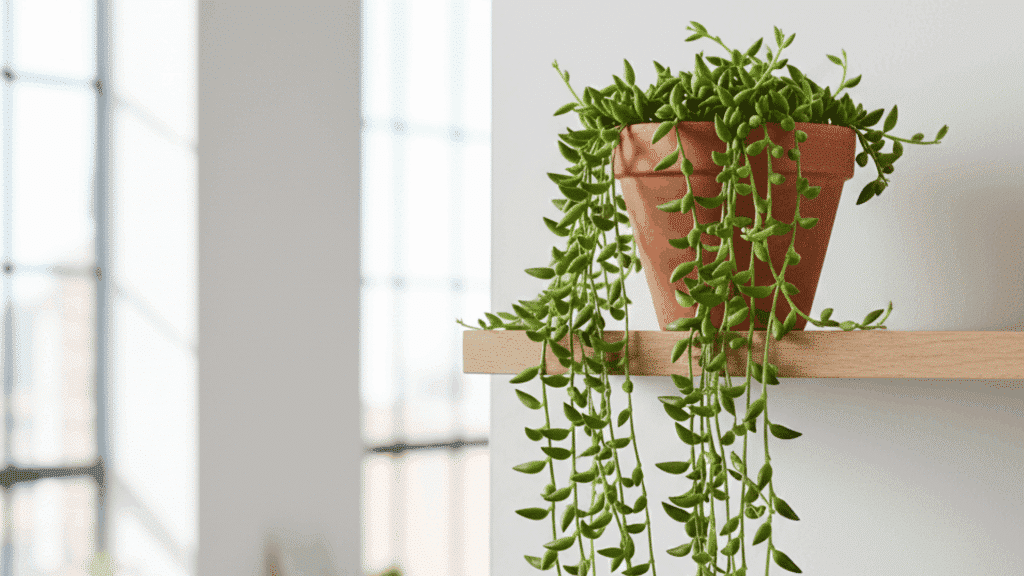
String of bananas is similar to pearls but often easier, with banana-shaped leaves that trail quickly. It thrives in bright light, needs drying between waterings, and adds playful texture to shelves and hanging baskets without needing constant attention.
Requirements
| Light | Water | Mature size (indoors) |
|---|---|---|
| Bright indirect / some sun | Let soil dry fully | Trails 2–4 ft |
Pros: Often more forgiving than pearls. Fast trailing growth in bright light
Restrictions: Overwatering causes quick rot. Pet safety varies, verify for your home
14. Wax Plant: Hoya Carnosa
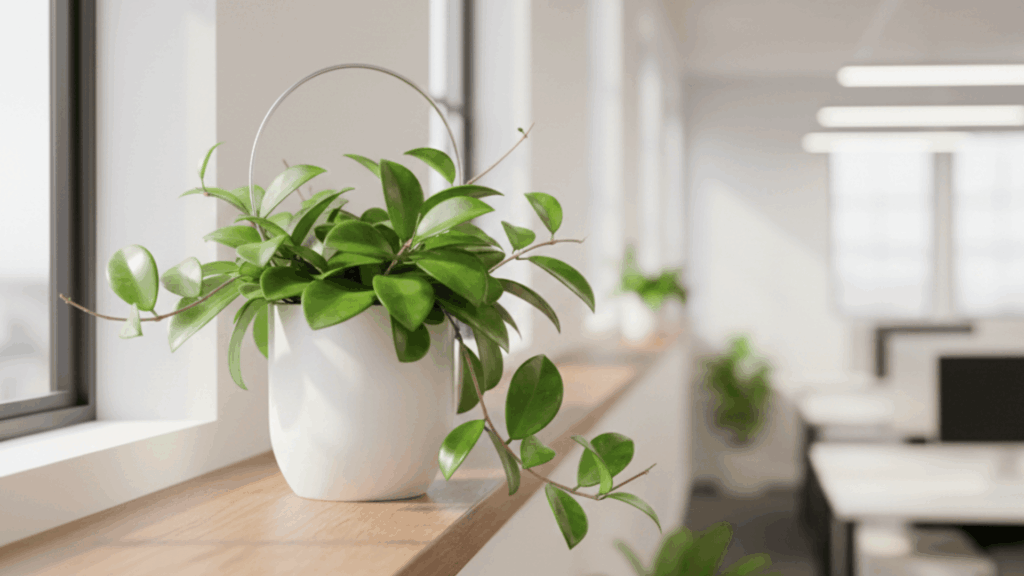
Hoya carnosa is a sturdy vining plant with thick, waxy leaves and the potential for fragrant flower clusters. It prefers bright indirect light and drying slightly between waterings. Once established, it can be one of the most reliable long-term indoor vines.
Requirements
| Light | Water | Mature size (indoors) |
|---|---|---|
| Bright indirect | Let top half dry | Trails/climbs 4–8 ft |
Pros: Long-lived and drought-tolerant. Can bloom indoors with good light.
Restrictions: Slower growth at first. Flowering needs patience and steady light.
15. Hoya ‘krimson Queen’: Hoya Carnosa Cultivar
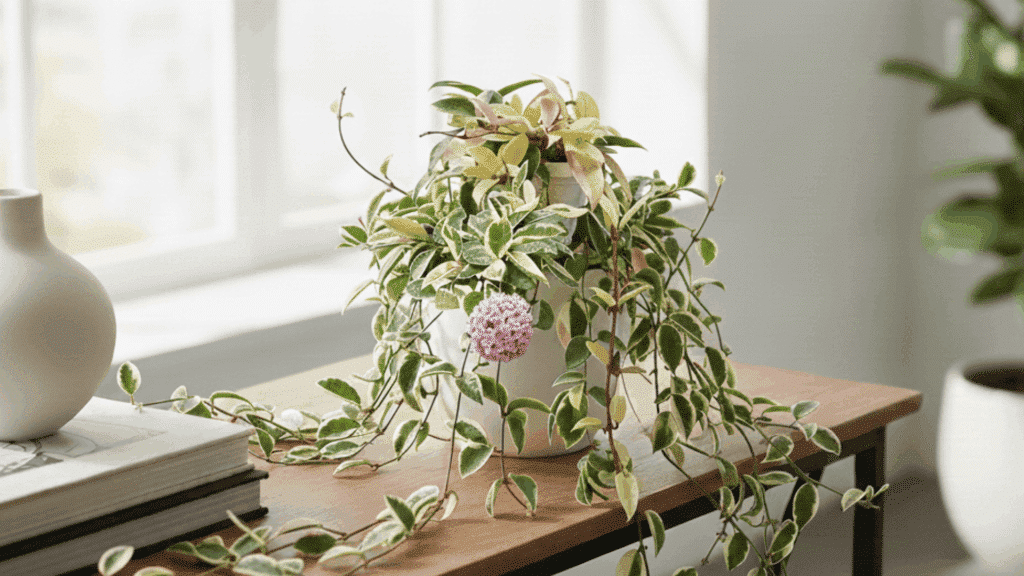
‘Krimson Queen’ adds creamy-white variegation to the classic hoya look. It’s a décor favorite for bright rooms and looks beautiful trained around hoops. Give it steady bright indirect light and avoid overwatering for best results.
Requirements
| Light | Water | Mature size (indoors) |
|---|---|---|
| Bright indirect | Let top half dry | Trails/climbs 4–8 ft |
Pros: High-contrast variegation. Great for styling and training.
Restrictions: Needs brighter light than green hoyas. Can scorch in harsh direct sun.
16. Hoya Kerrii
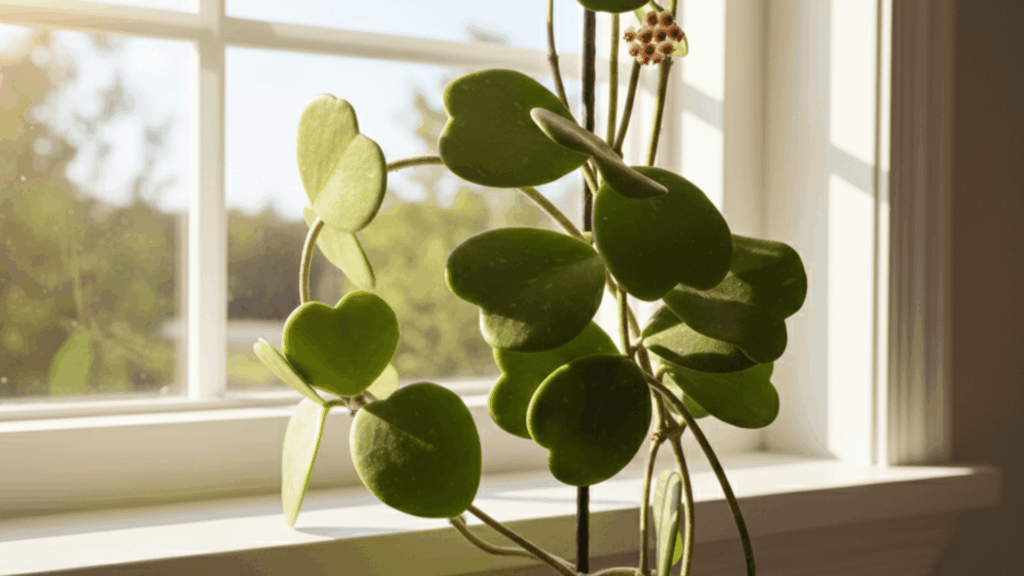
Hoya kerrii has thick heart-shaped leaves and a slow, steady climbing habit. It’s famous as a “sweetheart plant,” but full vines take time. With bright light and careful watering, it becomes a unique, sculptural indoor climber.
Requirements
| Light | Water | Mature size (indoors) |
|---|---|---|
| Bright indirect | Let soil dry well | Climbs 3–6 ft |
Pros: Distinct heart leaves. Drought-tolerant once established.
Restrictions: Slow growth, especially from small cuttings. Needs bright light to grow consistently.
17. Lipstick Plant: Aeschynanthus Radicans
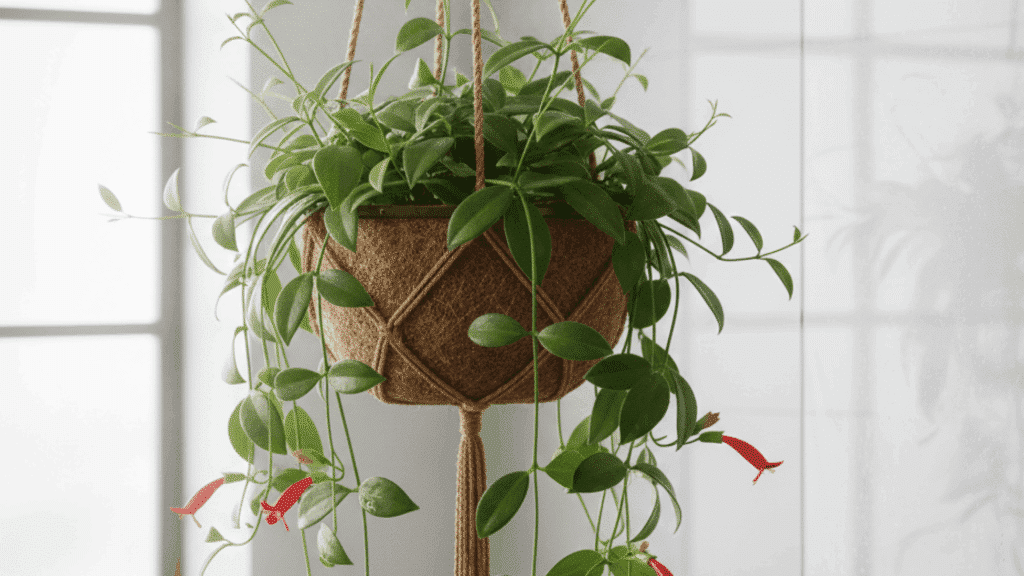
Lipstick plant is a trailing vine-like houseplant known for tubular red flowers that emerge like lipstick. It thrives in bright indirect light and benefits from slightly higher humidity. It’s perfect for hanging baskets where blooms can spill outward.
Requirements
| Light | Water | Mature size (indoors) |
|---|---|---|
| Bright indirect | Keep lightly moist, not soggy | Trails 2–4 ft |
Pros: Produces showy blooms indoors. Great for hanging displays.
Restrictions: Dislikes drying out completely. Needs decent humidity for best flowering.
18. Goldfish Plant: Columnea Spp.
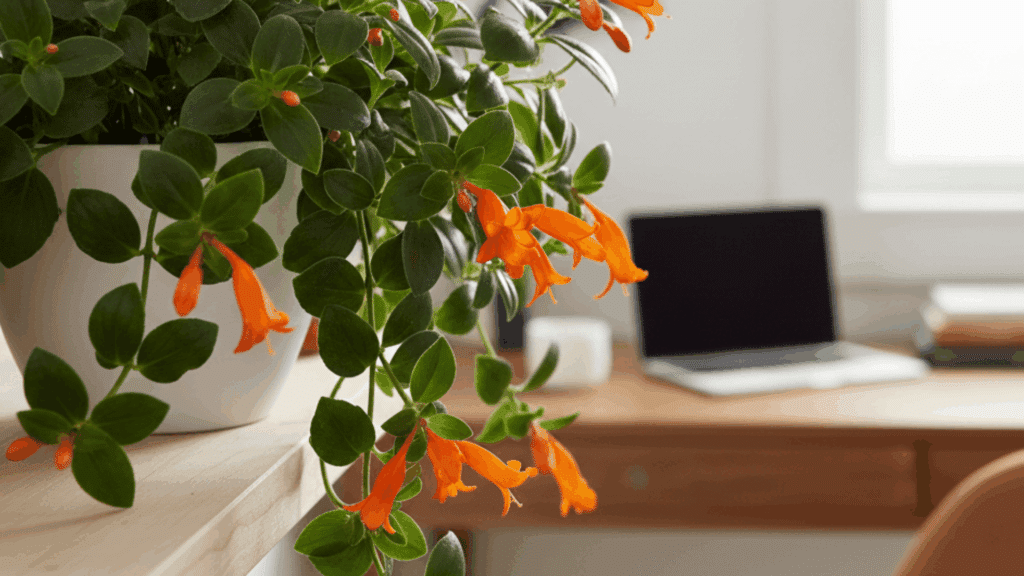
Goldfish plant produces bright, fish-shaped flowers and trails neatly from pots. It’s a strong décor plant for bright rooms and bathrooms with airflow. Keep moisture consistent, and it rewards with blooms that add color without needing heavy styling.
Requirements
| Light | Water | Mature size (indoors) |
|---|---|---|
| Bright indirect | Even moisture, let top dry slightly | Trails 2–3 ft |
Pros: Colorful flowers, compact habit. Great for warm, bright corners.
Restrictions: Can drop buds if too dry. Needs stable conditions to bloom well.
19. Grape Ivy: Cissus Rhombifolia
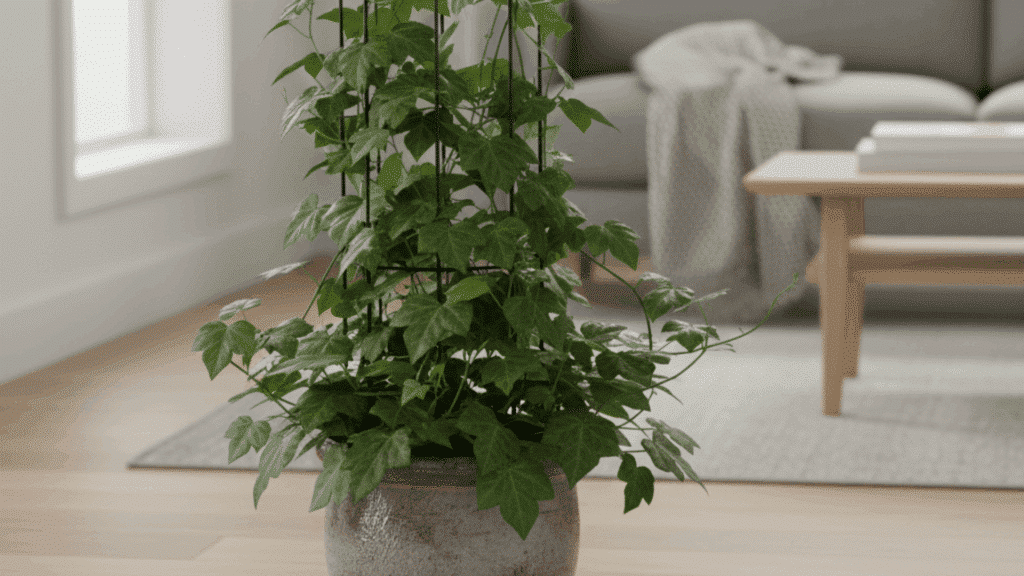
Grape ivy is a vigorous indoor climber with textured leaves and a classic ivy-like look. It tolerates indoor air better than many true ivies and can be trained up supports or allowed to trail. It’s great for filling larger spaces.
Requirements
| Light | Water | Mature size (indoors) |
|---|---|---|
| Medium to bright indirect | When top 3–5 cm dries | Trails/climbs 4–8 ft |
Pros: Fast growth for big coverage. More indoor-tolerant than English ivy.
Restrictions: Leaf drop if stressed or moved often. Needs support for a climbing look.
20. Creeping Fig: Ficus Pumila
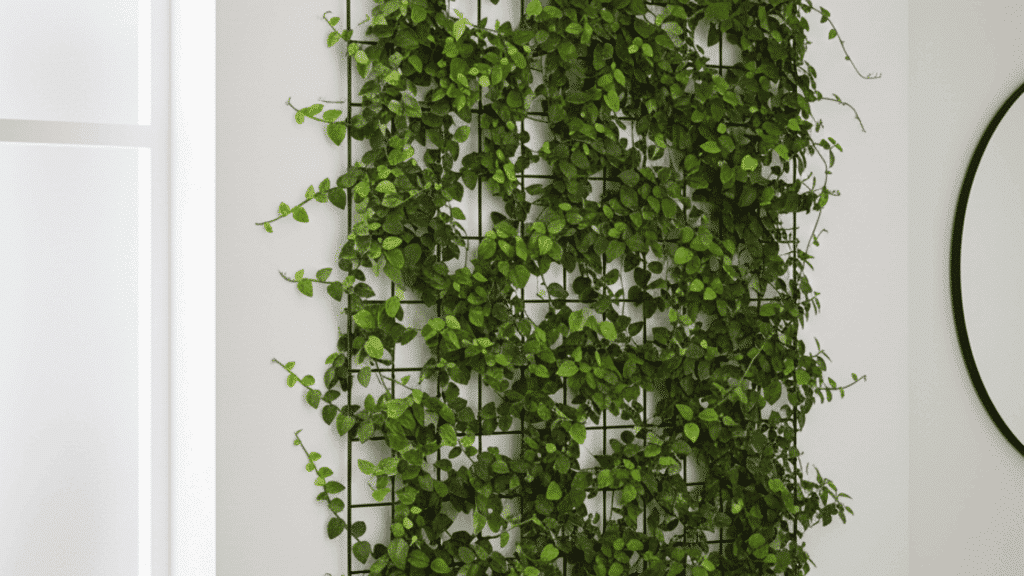
Creeping fig is a true climber that can cover a trellis or wall area with small, dense leaves. Indoors, it can look stunning but needs consistent care and brighter light. It’s best for gardeners who enjoy training and pruning.
Requirements
| Light | Water | Mature size (indoors) |
|---|---|---|
| Bright indirect | Keep evenly moist, not soggy | Climbs 6–10 ft |
Pros: Creates living wall/trellis effect. Dense foliage looks lush and full.
Restrictions: Can be aggressive and needs pruning. Sap may irritate skin; pet safety varies, verify.
21. English Ivy: Hedera Helix
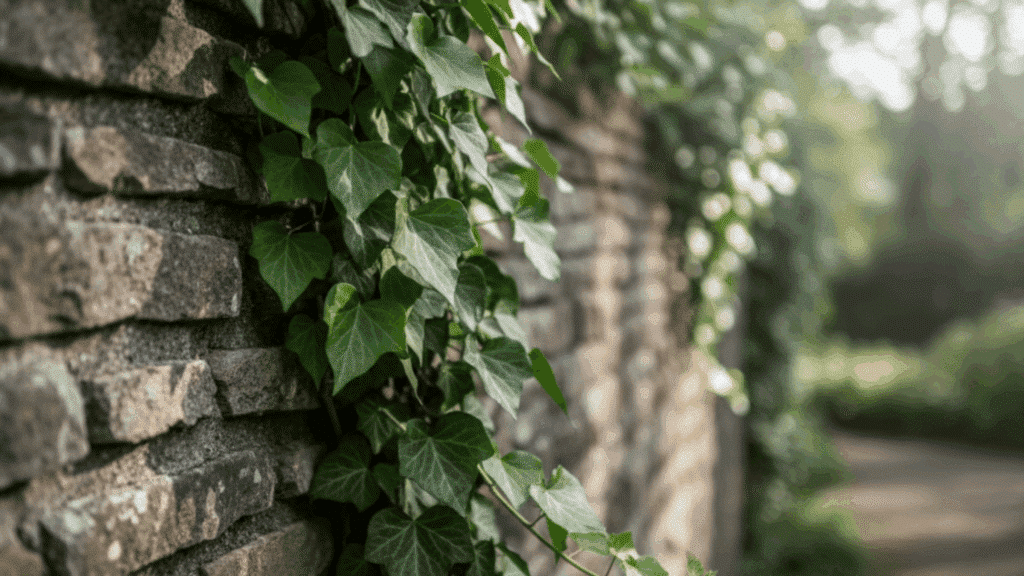
English ivy is a traditional trailing plant with a classic look, but it can be picky indoors. It prefers cooler temperatures, bright light, and consistent moisture. When conditions are right, it trails elegantly, but it can struggle in warm, dry rooms.
Requirements
| Light | Water | Mature size (indoors) |
|---|---|---|
| Bright indirect (cooler is better) | Keep lightly moist | Trails 4–8 ft |
Pros: Classic trailing style. Good for cooler bright rooms.
Restrictions: Toxic to pets if chewed. Prone to pests indoors if stressed.
22. Indoor Jasmine: Jasminum Spp.
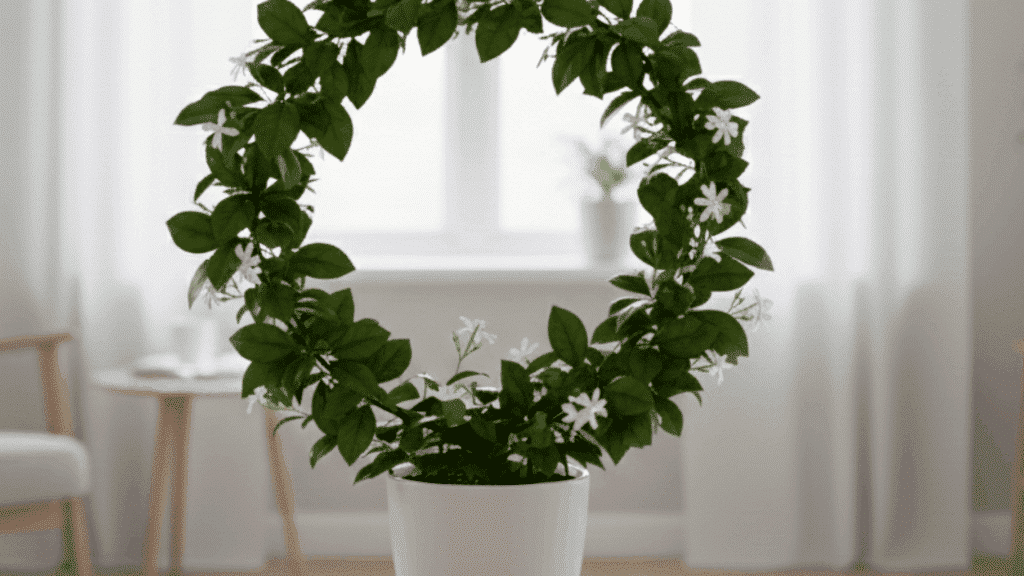
Jasmine can be trained indoors as a climbing vine when given very bright light and support. Some types bloom with a sweet fragrance, making it a high-reward plant for sunny windows. It’s best for bright spaces rather than dim corners.
Requirements
| Light | Water | Mature size (indoors) |
|---|---|---|
| Very bright light | Moderate, don’t let fully dry | Climbs 4–8 ft |
Pros: Potential fragrant blooms. Beautiful trained on hoops/trellis.
Restrictions: Needs more light than most indoor vines. Blooming is harder in low-light homes.
23. Bougainvillea: Bougainvillea Spp.
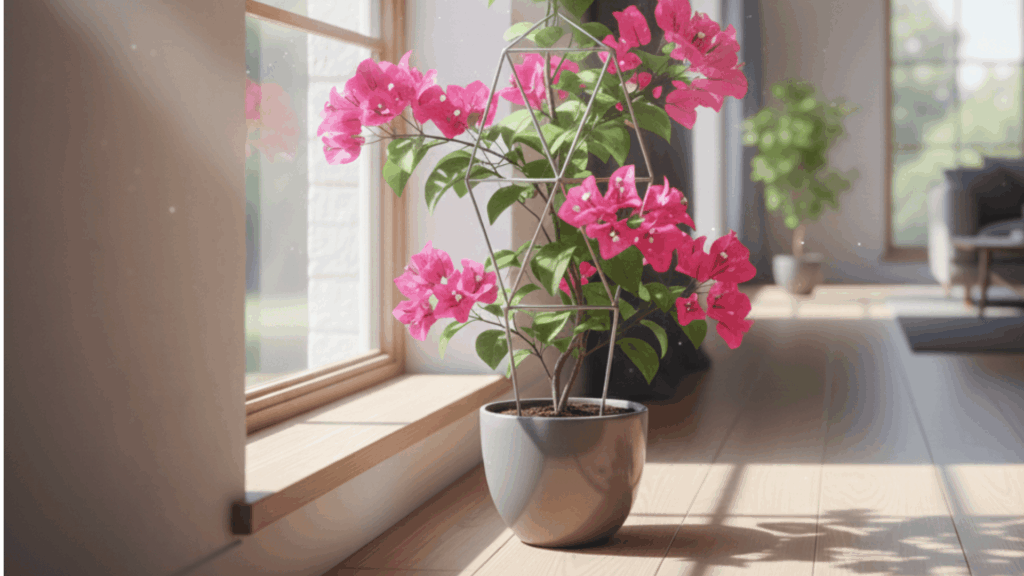
Bougainvillea can be grown indoors only in very bright conditions, ideally with direct sun. It’s not a typical “easy indoor vine,” but it can be a dramatic climber with bold bracts. It needs pruning, strong light, and patience.
Requirements
| Light | Water | Mature size (indoors) |
|---|---|---|
| Direct sun preferred | Let top half dry | Climbs 4–8 ft (trained) |
Pros: Huge color impact in bright spaces. Makes a bold statement plant
Restrictions: Thorns and higher maintenance. Poor performer without strong sun.
24. Million Hearts: Dischidia Ruscifolia
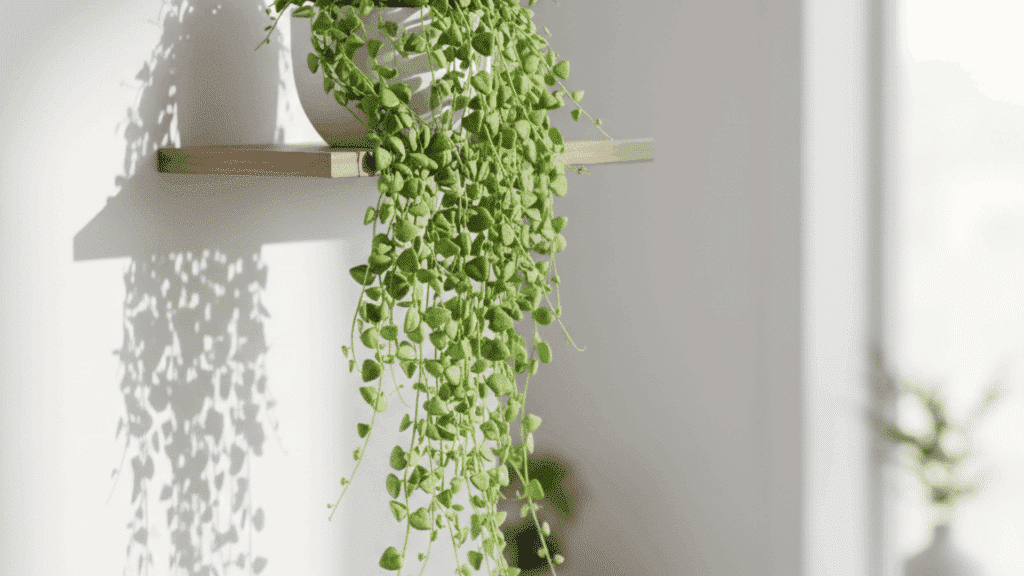
Million hearts is a delicate trailing plant with tiny heart-shaped leaves that form dense strands. It loves bright indirect light, warmth, and careful watering. It’s perfect for minimalist décor where the vine itself becomes the texture and detail.
Requirements
| Light | Water | Mature size (indoors) |
|---|---|---|
| Bright indirect | Let top half dry | Trails 2–4 ft |
Pros: Light, airy trailing look. Great for small hanging planters.
Restrictions: Sensitive to cold and overwatering. Needs steady light to stay full.
25. Mistletoe Cactus: Rhipsalis Spp.
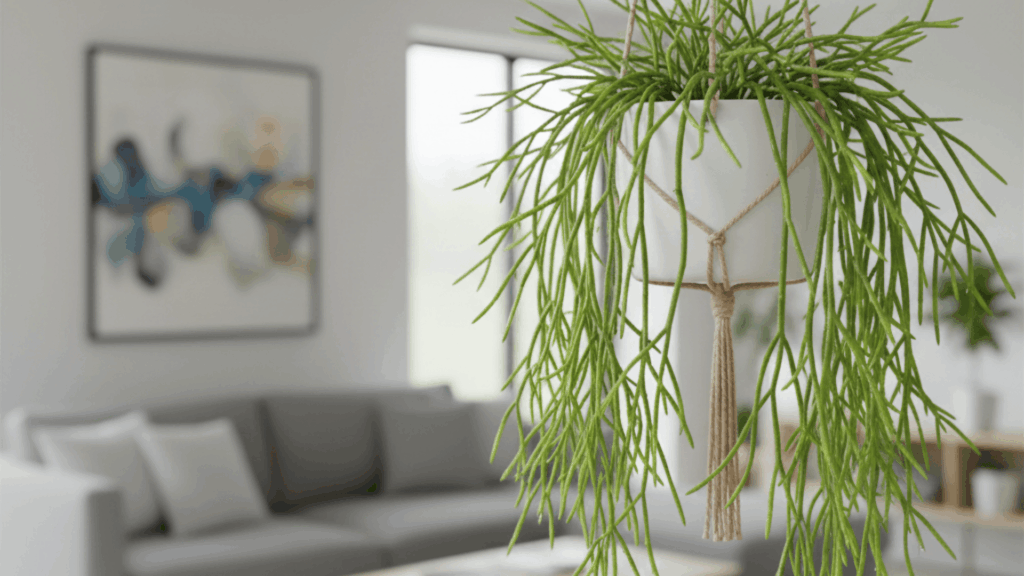
Mistletoe cactus is a trailing cactus with thin, draping stems that soften shelves and hanging planters. Unlike desert cacti, it prefers indirect light and moderate watering. It adds texture without sharp spines, making it a friendly “soft cactus” choice.
Requirements
| Light | Water | Mature size (indoors) |
|---|---|---|
| Medium to bright indirect | When top half dries | Trails 2–4 ft |
Pros: Unique trailing texture, easy décor plant. More forgiving than many succulents.
Restrictions: Overwatering causes quick decline. Needs brighter light than low-light vines.
Common Problems With Indoor Vines
Indoor vines usually fail for a few repeatable reasons, not “bad luck.” Spot the symptom, match it to the most likely cause, and fix it early before the plant thins out.
Leggy vines (long gaps): Move it to brighter indirect light, prune back to a node, and root the cuttings to refill the pot so it grows thicker instead of longer.
Yellow leaves: Check watering first, let soil dry slightly between soaks, and confirm the pot drains freely; constant moisture and no drainage are the most common triggers.
Leaf drop: Protect it from drafts, AC blasts, heaters, and sudden temperature swings, then stabilize watering so the plant isn’t cycling between bone-dry and soaked.
Pests (mealybugs/spider mites): Isolate the plant, wipe stems and leaf undersides, and treat consistently (soap or neem) because one spray rarely ends an infestation.
Slow growth: Increase light, refresh tired soil, and feed lightly in spring/summer; weak light and exhausted mix often look like “nothing is happening” for months.
Styling Ideas That Make Indoor Vines Look Expensive
Vines look high-end when they’re intentional, not randomly placed. The goal is clean lines, repeatable shapes, and controlled trailing or climbing.
1. Hanging basket corner
Hang one trailing vine near a bright window, then add a second basket slightly higher or lower for a layered look. Keep pots the same color, let foliage differ.
Trim runners to a clean outline, and rotate weekly so the cascade stays balanced.
2. Shelf cascade
Place a vine on the top shelf and let it spill down one side like a waterfall. Use a simple pot, hide the nursery pot inside, and guide strands with discreet clips.
Prune to keep lengths intentional, and add one contrasting leaf texture beside it.
3. Trellis wall
Train a vine up a slim trellis or wall grid for a structured, modern look. Start with young, flexible stems, attach gently with soft ties, and keep growth symmetrical by pruning uneven shoots. This setup turns a small plant into living wall art.
Repeat one pot color and vary leaf texture for a clean, designer finish.
Conclusion
A thriving indoor vine isn’t about complicated plant care; it’s about the right match and a few consistent habits.
Start with a vine that fits your light level, then support it with a draining pot, a simple soak-and-dry watering rhythm, and steady indoor temperatures.
Train growth early so it trails or climbs in a clean, intentional way, and keep plants looking full by pruning and replanting cuttings.
If problems show up, fix them quickly by checking light, watering, drainage, and pests. With these basics, indoor vines become long-lasting décor that makes a home feel calmer, fresher, and more alive.

With a Master’s in Landscape Architecture from the University of Virginia, Sophia Stephenson has dedicated the last 20 years to creating and maintaining vibrant outdoor spaces. Her professional journey started in landscape design, where she gained a reputation for innovative and sustainable approaches. Sophia became a part of our editorial team as a freelancer in 2019, offering a fresh perspective on outdoor living. Since 2020, she has been the chief for our outdoor design content, blending aesthetic appeal with environmental stewardship. In her leisure time, Sophia is a keen photographer, capturing the beauty of natural landscapes, a hobby that complements her professional expertise.