
Buying the wrong amount of paint is one of the most common home improvement mistakes. Too little means a second trip to the store mid-project, often with a mismatched batch.
Too much leaves you storing half-empty cans that may never get used. Getting the amount right comes down to understanding how coverage works, what your specific surfaces require, and how to account for the variables that change your estimate.
Break down the math, and walk through real project scenarios, and understand what affects coverage so you can buy confidently and avoid both shortages and waste.
Coverage depends on surface texture, paint type, number of coats, and application method, but the core calculation stays consistent across projects.
What Does “Coverage” Really Mean
Coverage refers to how much surface area one gallon of paint covers per coat. Most interior paints list 350–400 square feet per gallon on the label, but that number assumes smooth, primed surfaces.
Porous drywall, textured walls, or raw wood can drop actual coverage to 250–300 square feet per gallon.
Coverage is always measured per coat. Even if one coat looks acceptable, most walls need two coats for uniform color and durability.
The first coat soaks into the surface and evens out texture, while the second provides consistent color and finish. Skipping the second coat usually results in streaks, uneven sheen, and visible roller marks once the paint dries fully.
Finish also plays a role. Flat paint hides imperfections but shows every touch. Satin and eggshell reflect light slightly, making surface flaws and thin spots more visible.
This is why higher-sheen paints often require more careful application and sometimes an extra coat to achieve clean coverage.
How Much Paint for Common Home Projects?
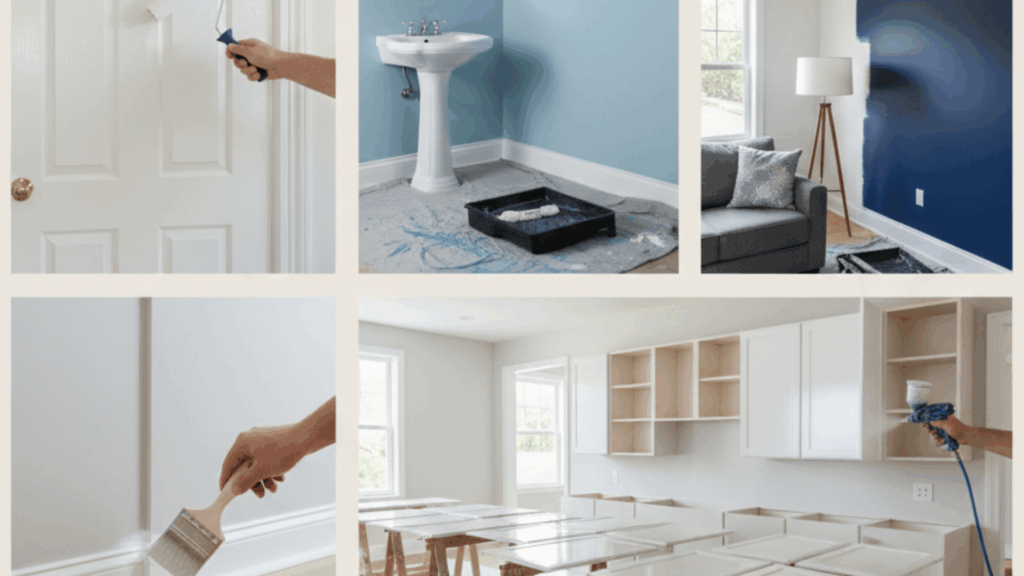
1. Small Bathroom or Powder Room
A typical powder room with 40 square feet of floor space has roughly 120–150 square feet of wall area, depending on ceiling height. Adding the ceiling brings the total to 160–190 square feet.
Bathrooms require moisture-resistant paint, which may have slightly different flow characteristics than standard wall paint. Plan for two coats on walls and one or two on the ceiling, depending on the existing color.
A gallon covers this project comfortably with paint left for touch-ups.
2. Accent Wall Projects
An 8-foot-tall, 12-foot-wide accent wall measures 96 square feet. Subtract windows or large furniture if they block significant portions.
Accent walls often involve bold or dark colors, which typically require three coats for full hide, especially over lighter base colors. Bright reds, deep blues, and vibrant yellows are notorious for showing streaks and requiring extra coverage.
For a single accent wall with three coats, expect to use close to one gallon.
3. Trim and Baseboards
Trim coverage converts linear feet to paintable area. Standard baseboard runs about 6 inches tall, so 100 linear feet equals roughly 50 square feet of surface area.
Trim paint goes on thicker than wall paint and requires careful brushwork, which increases waste. Plan for two coats minimum, and expect some extra usage from drips and touch-ups.
A quart covers 50–75 linear feet of standard trim with two coats. For whole-house trim, buy by the gallon.
4. Kitchen Cabinets
Cabinet painting involves doors, drawer fronts, and face frames. A standard 10-foot run of upper and lower cabinets has roughly 80–100 square feet of paintable surface when all sides are included.
Cabinet paint requires three coats minimum due to durability needs and the high-traffic nature of kitchen surfaces. Specialty cabinet paints often have lower coverage rates than wall paint because of their thicker formulation.
Expect to use 1.5 to 2 gallons for a full kitchen, depending on the number of cabinets and whether you’re painting interiors.
5. Single Interior Doors
A standard interior door measures roughly 21 square feet per side. Painting both sides means 42 square feet. Paneled doors have more surface area due to recessed details, pushing the total closer to 50 square feet.
Most doors need two coats. A quart covers about 100 square feet per coat, so one quart handles a single door with some leftover. If you’re painting multiple doors, a gallon becomes more efficient.
Choose Your Project Type First
Before running calculations, identify what you’re painting. Different projects have different coverage patterns and buying strategies:
- Single interior door
- Small bathroom or powder room
- Accent wall
- Trim and baseboards
- Kitchen cabinets
Each scenario requires specific measurements and typical coat expectations, covered in detail below.
What Changes Your Paint Coverage Estimates?
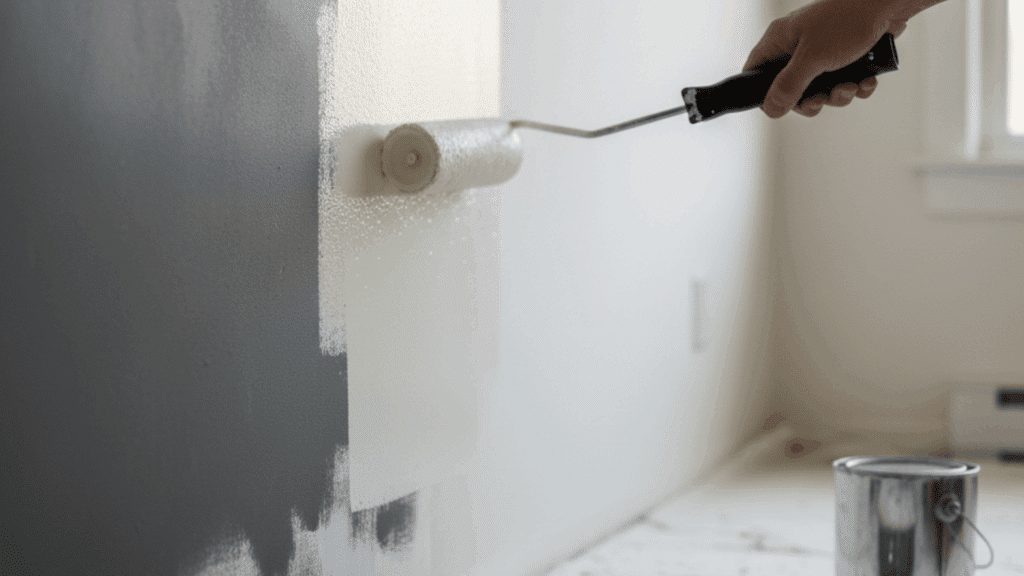
Paint coverage isn’t a fixed number. It changes based on what you’re painting, how you apply it, and the conditions in the room.
Knowing the biggest “coverage changers” helps you buy the right amount and avoid mid-project shortages.
| Factor | How it changes your estimate | Quick fix |
|---|---|---|
| Surface texture & porosity | Often needs more paint; can reduce effective coverage significantly | Prime porous patches, use proper nap roller for texture |
| Paint quality & hide | Often adds extra coats (3–4 vs 2) | Use better paint in high-visibility rooms; budget for extra coat if not |
| Application method | Brushes/sprayers typically use more than rollers | Roll large areas, brush only edges/trim; control sprayer technique |
| Color transitions | More coats, especially with bold/saturated colors | Use tinted primer or a transition coat before finish color |
| Environmental conditions | Can cause thicker application, runs, rework → more paint | Paint in recommended temp/humidity, ventilate, avoid peak heat |
Texture, tool choice, and coat count are the biggest drivers, plan for them and add a small buffer so you don’t run short.
The Simple Calculation Method for All Rooms
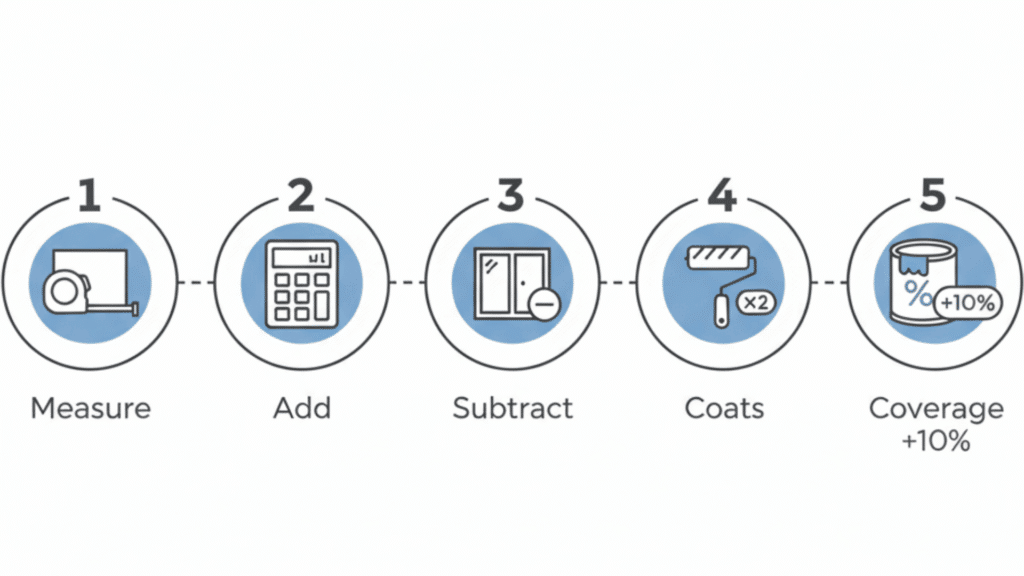
Use this quick, reliable method to estimate paint for any room without guessing. It keeps you from running short mid-project or overbuying cans you won’t use.
- Step 1: Measure walls (width × height), ceiling (length × width), and trim (linear feet × ~0.5 ft).
- Step 2: Add all measured areas together (include ceiling/trim only if painting them).
- Step 3: Subtract unpainted openings (door ≈ 21 sq ft, window ≈ 15 sq ft).
- Step 4: Multiply the total by the number of coats (usually 2; use 3 if needed).
- Step 5: Divide by the paint’s coverage rate, then add ~10% extra for waste/touch-ups.
If you follow these five steps, you’ll end up with a paint estimate that’s accurate enough for most DIY jobs.
Primer and Paint Coverage: Does Primer Reduce Paint Needed?
Primer doesn’t replace paint, but it often reduces how much paint you use by improving adhesion and creating an even base.
It’s especially helpful on patched drywall, stains, porous surfaces, raw wood, and dark-to-light color changes.
Without primer, those surfaces can soak up paint or show bleed-through, forcing extra coats. With primer, many projects drop from three finish coats to one or two, saving time and reducing total paint gallons.
The trade-off is buying primer and doing an extra step, but it usually prevents uneven color, flashing, and rework, especially when coverage is unpredictable.
Conclusion
Getting your paint estimate right means fewer interruptions, less waste, and a smoother project from start to finish.
By measuring accurately, understanding how surface texture and color affect coverage, and planning for the right number of coats, you can buy exactly what you need.
Keep leftover paint sealed and labeled for touch-ups, and remember that a small buffer for waste always beats running short mid-project.
With these methods, you’ll approach the paint aisle with confidence and leave with the right amount every time.

Holding a Master’s in Library and Information Science from the University of Illinois, Josh Clarke has dedicated more than 15 years to managing and disseminating information across various platforms. His professional journey includes significant experience as a research librarian, where he developed an expertise in sourcing and providing accurate and comprehensive answers to diverse questions. In 2018, Josh brought his rich experience to our platform, quickly establishing himself as a reliable source for general FAQs. He has been overseeing our information curation since then, combining his research skills with a flair for engaging content delivery. When not involved in information management, Josh enjoys exploring digital photography and participating in local quiz competitions, hobbies that complement his inquisitive nature and love for learning.