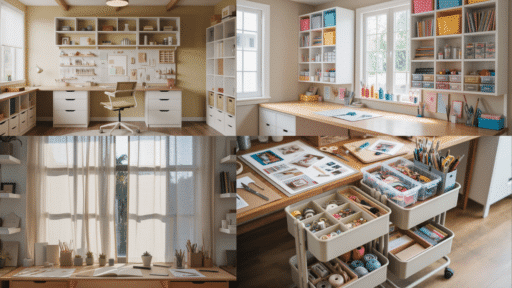
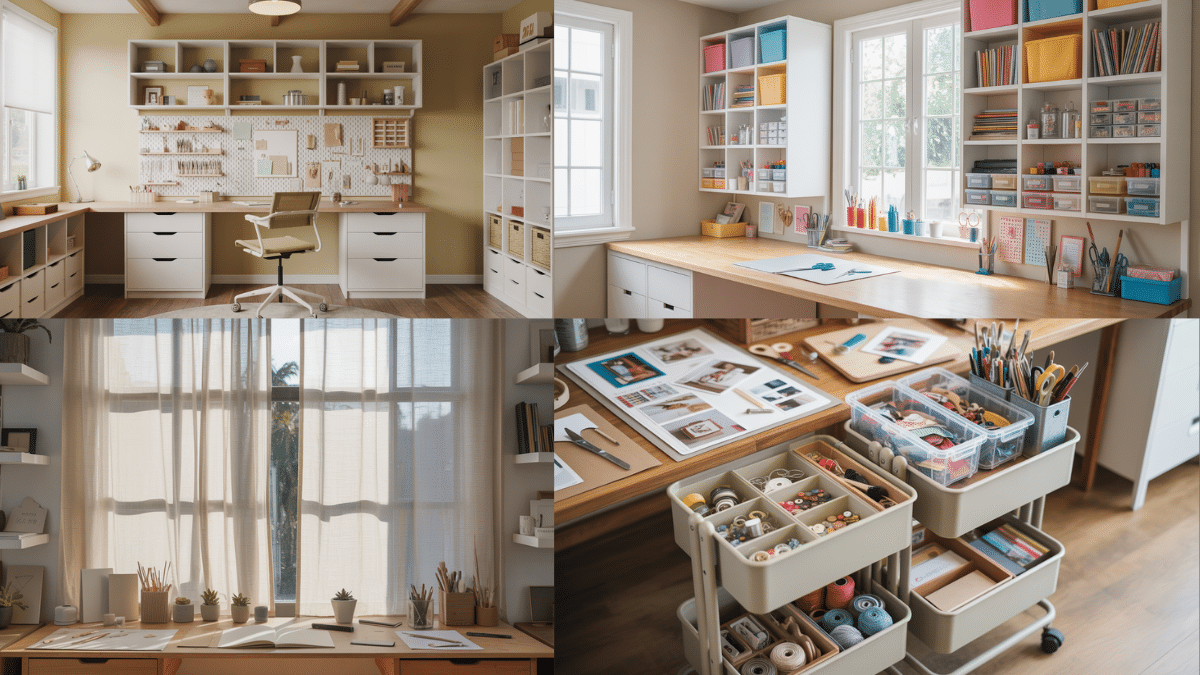

A craft room works best when the space feels easy to use and simple to maintain.
Even a small room can support creativity when the layout keeps tools within reach and supplies neatly stored.
Instead of filling the room with furniture, the focus should stay on flow, lighting, and comfort.
The right setup helps reduce clutter, saves time during projects, and makes it easier to return to unfinished work.
Whether the space is a spare bedroom, a corner of the home, or a shared room, smart craft room design layouts can improve how the room functions.
The ideas below focus on practical craft room layouts that support daily crafting without feeling crowded or overwhelming.
Craft Room Designs Layouts that Fit Real Life
The layout shapes how the craft room functions. A thoughtful layout reduces clutter and supports steady workflow.
1. Single-Wall Craft Room Layout
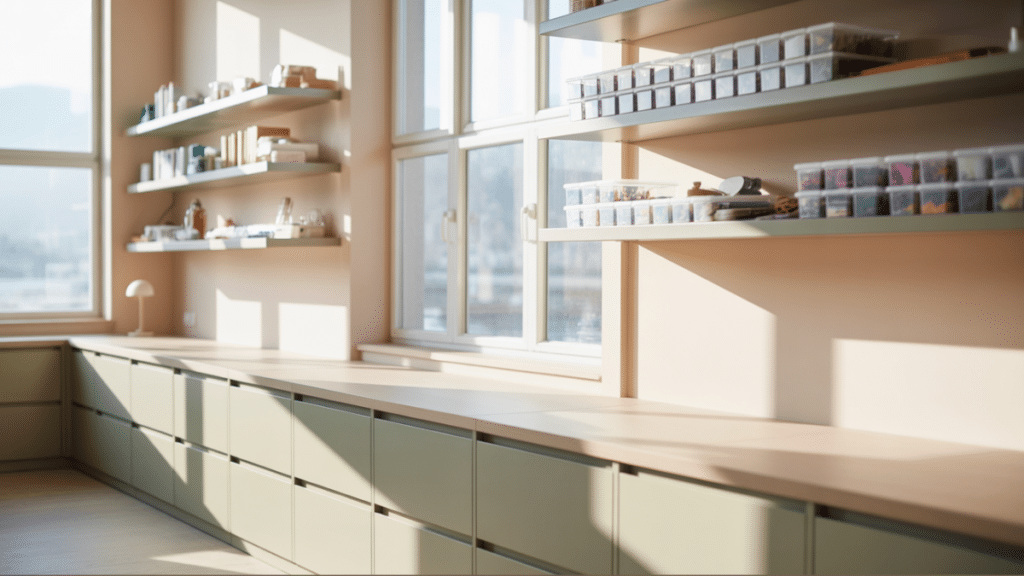
A single-wall craft room layout places the main work surface, shelving, and storage along one wall.
This layout works well in small rooms or multipurpose spaces because it leaves the rest of the room open. Supplies remain visible and easy to reach without blocking walkways or doors.
It also makes cleaning faster, as everything returns to one defined zone. This setup suits paper crafts, sewing, and light DIY work, where a compact and organized craft room is needed.
2. L-Shaped Workstation Layout
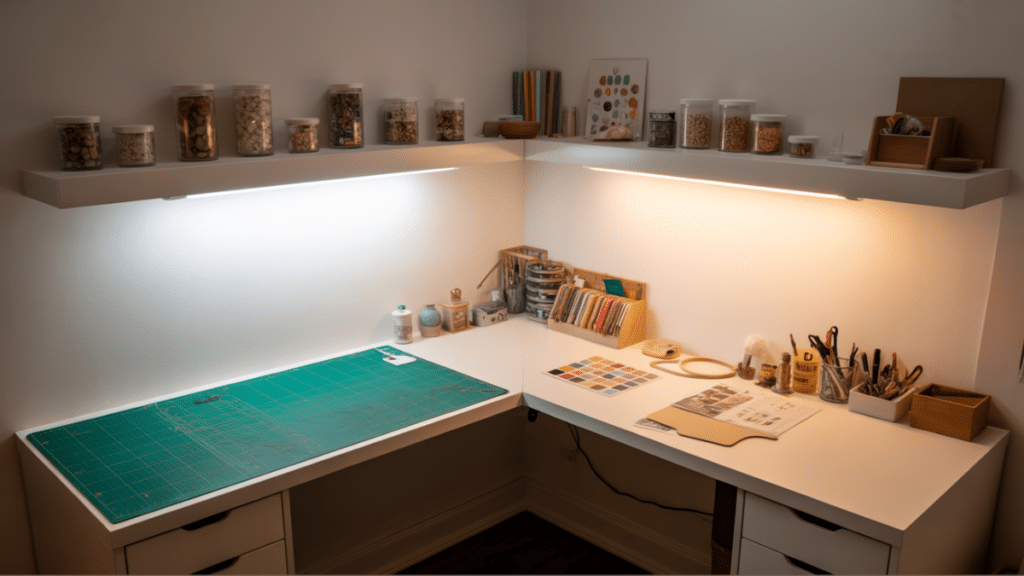
An L-shaped workstation layout creates two connected work areas that support different tasks.
One surface can handle cutting or preparation, while the second surface supports assembling, sewing, or tool use.
This layout helps keep supplies spread out but still within arm’s reach.
It works especially well in medium-sized rooms where workflow matters.
By separating tasks without isolating them, the craft room feels structured while staying flexible for different projects.
3. U-Shaped Craft Room Layout
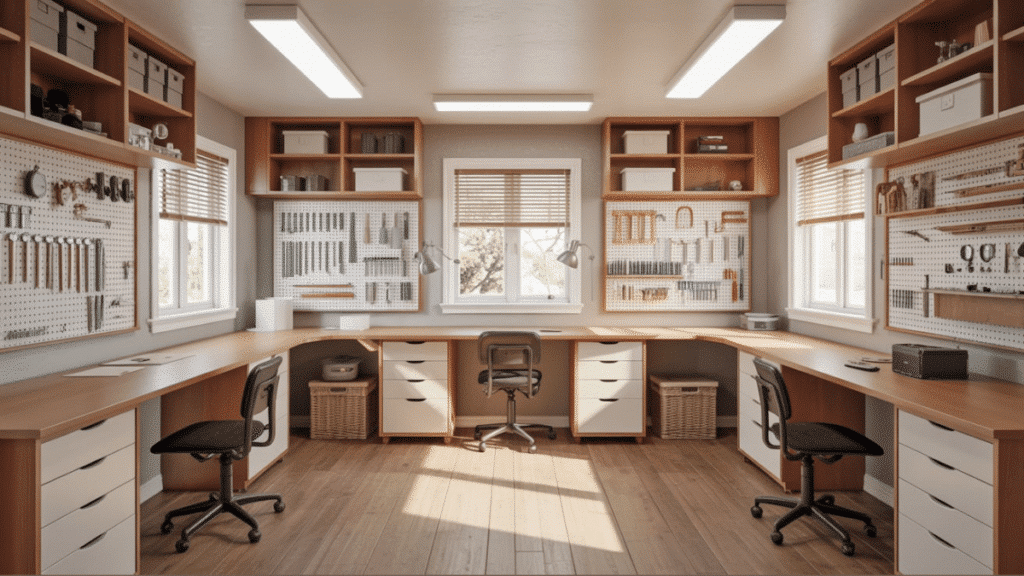
A U-shaped craft room layout surrounds the work area on three sides, keeping tools, supplies, and surfaces close together.
This layout supports crafts that require frequent switching between materials, such as sewing, scrapbooking, or mixed-media projects.
Storage can run along all three walls, reducing the need to move around while working.
It suits dedicated craft rooms where the space is often used and benefits from a clear, defined work zone.
4. Center Island Craft Room Layout
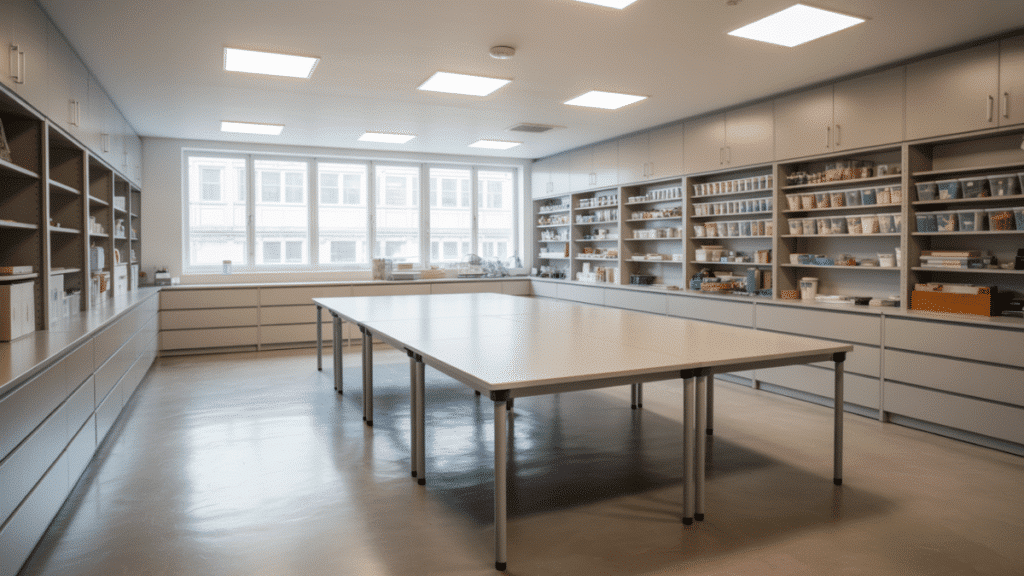
A center island craft room layout places a large worktable in the middle of the room, with cabinets or shelves along the walls.
This design supports large projects that need wide, flat surfaces.
It also works well for shared craft rooms where more than one person uses the space at the same time.
Wall storage keeps supplies organized while the island remains clear for active projects.
5. Peninsula Craft Room Layout
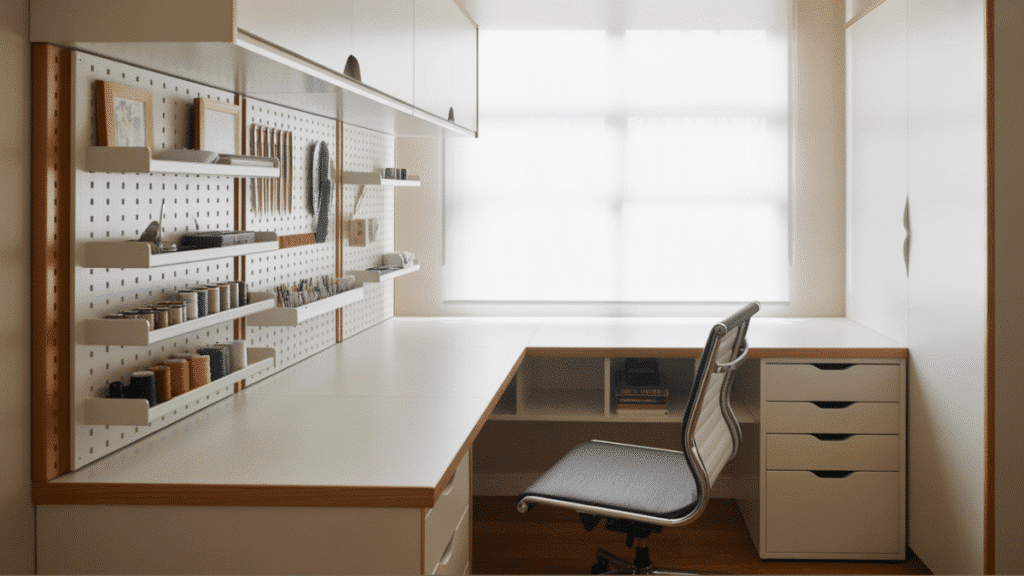
A peninsula layout extends one work surface from the wall into the room while leaving the other sides open.
This layout offers many of the benefits of an island without requiring as much space.
It creates two usable work sides and supports shared crafting or multitasking.
The wall side can hold tools and power outlets, while the open side supports cutting or assembling.
6. Window-Facing Craft Desk Layout
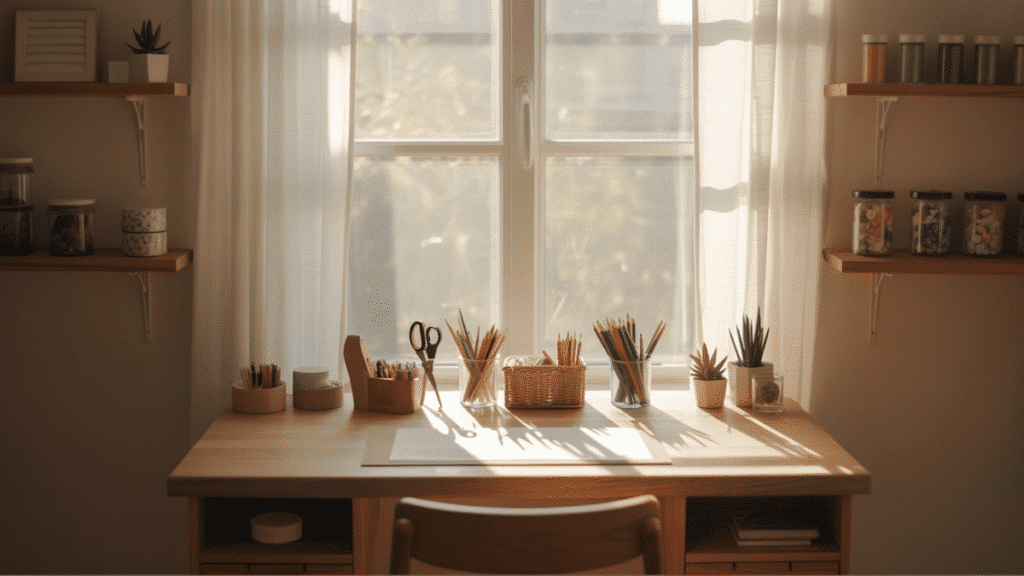
A window-facing craft desk layout places the main work surface near natural light.
This setup helps with color accuracy and detail-focused tasks.
The space often feels more open and comfortable, especially during long crafting sessions.
Task lighting can still be added for evenings, but natural light improves daily usability.
7. Closet-To-Craft-Room Conversion Layout
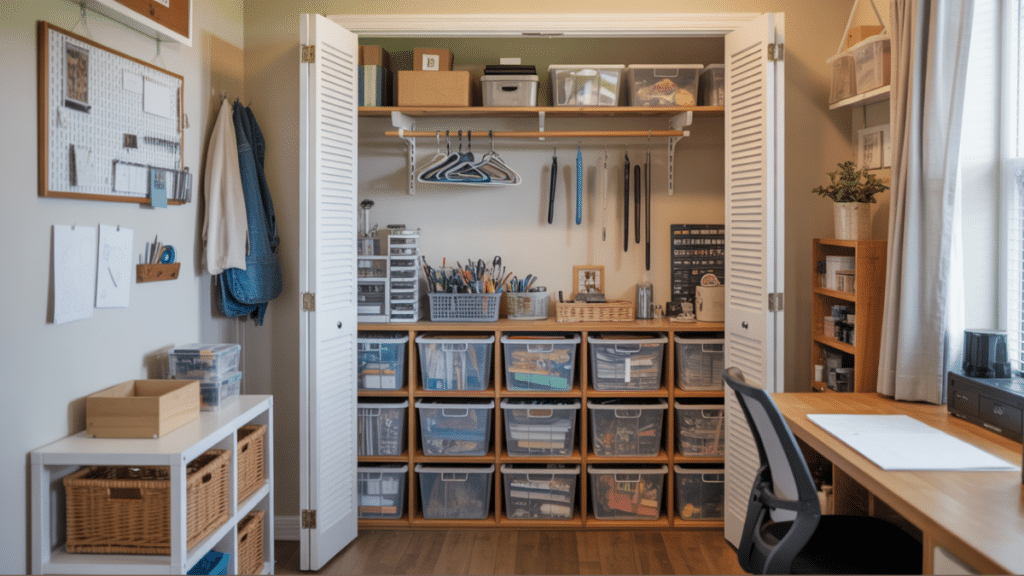
This layout uses a closet as a storage-focused zone within the craft room.
Shelves, hooks, and bins turn the closet into a central supply area. Keeping storage contained helps the main room stay uncluttered.
This approach works well in bedrooms or guest rooms where the craft room must stay visually tidy.
8. Craft Closet Layout for Small Homes
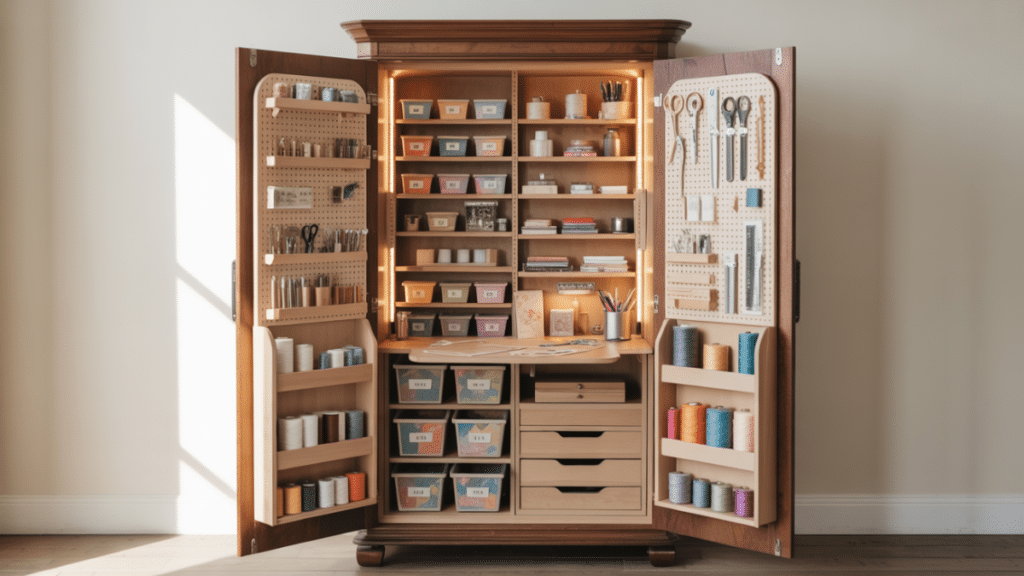
A craft closet layout uses an armoire, wardrobe, or built-in closet as a complete craft station.
Supplies stay hidden when doors are closed, which helps shared living spaces feel organized. Inside, shelves and bins hold tools and materials in a compact format.
This layout suits apartments and homes without a full craft room.
9. Corner Craft Station Layout
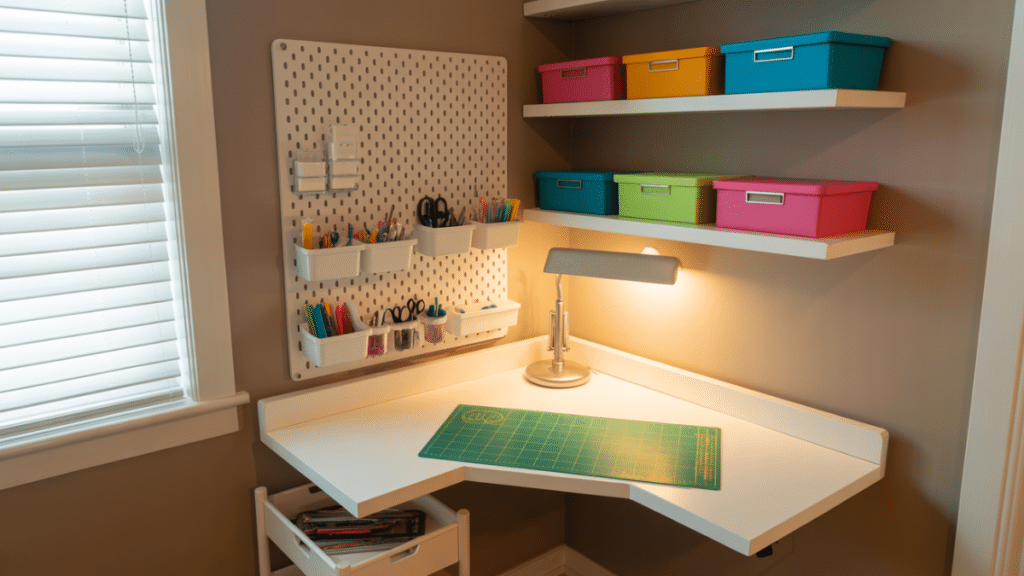
A corner craft station layout turns unused corners into functional crafting areas.
A corner desk paired with vertical wall storage keeps supplies accessible without taking much floor space.
This setup works well for light crafting and occasional projects, especially in bedrooms or home offices.
10. Shared Guest Room Craft Room Layout
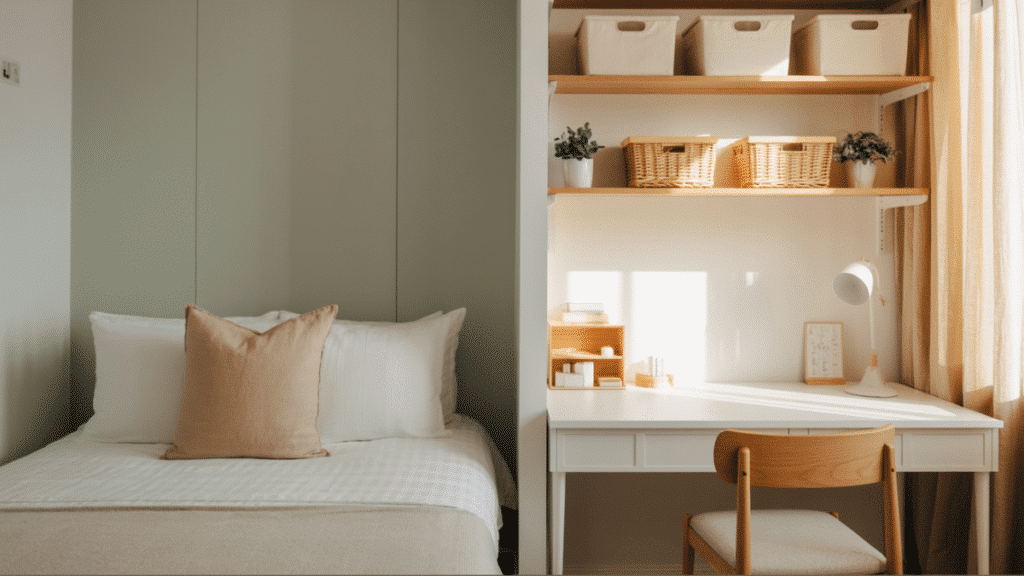
This layout combines a guest sleeping area with a craft room. Storage stays along one wall, while a desk or table fits into the remaining space.
Furniture such as daybeds or wall beds helps maintain flexibility.
The craft room stays functional without disrupting the guest setup.
11. Two-Zone Craft Room Layout
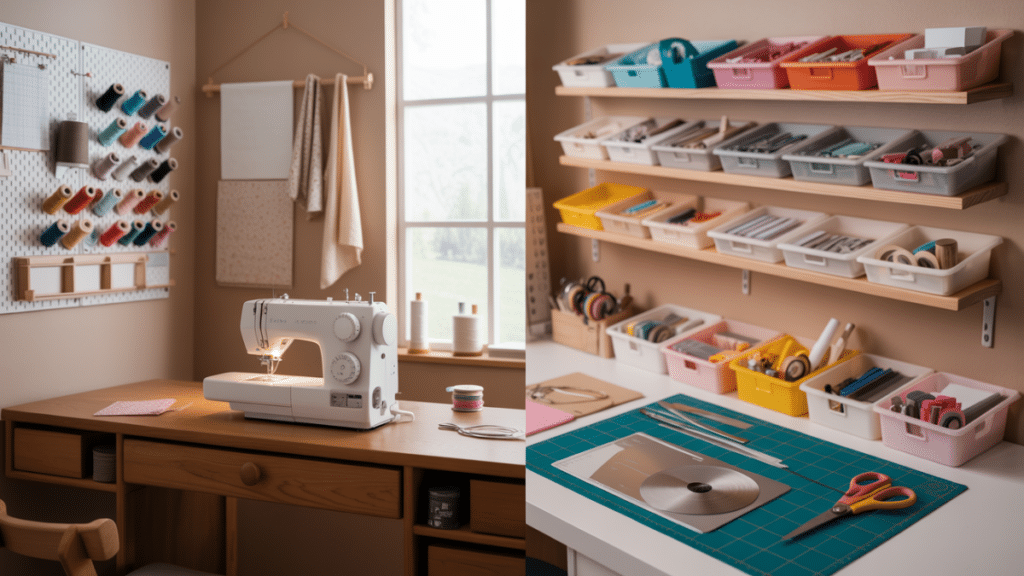
A two-zone layout divides the craft room into separate areas based on activity.
One zone might support sewing while the other handles paper crafts or painting.
This separation reduces mess and keeps supplies organized by purpose. It works well for crafters with multiple hobbies.
12. Kids-and-Adults Shared Craft Room Layout
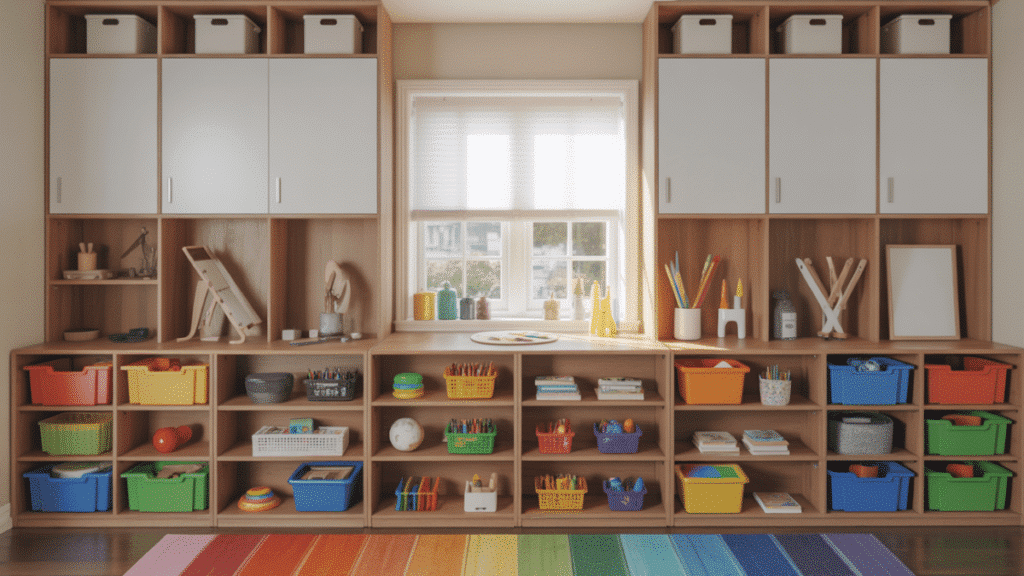
This layout supports both children and adults using the same space.
Lower shelves and bins store kid-safe supplies, while higher storage holds sharp tools and advanced materials.
Clear zones help keep the craft room safe and easy to manage for all ages.
Craft Room Storage Ideas that Reduce Clutter
Smart storage keeps supplies visible, protected, and easy to return after use.
13. Pegboard Tool Wall
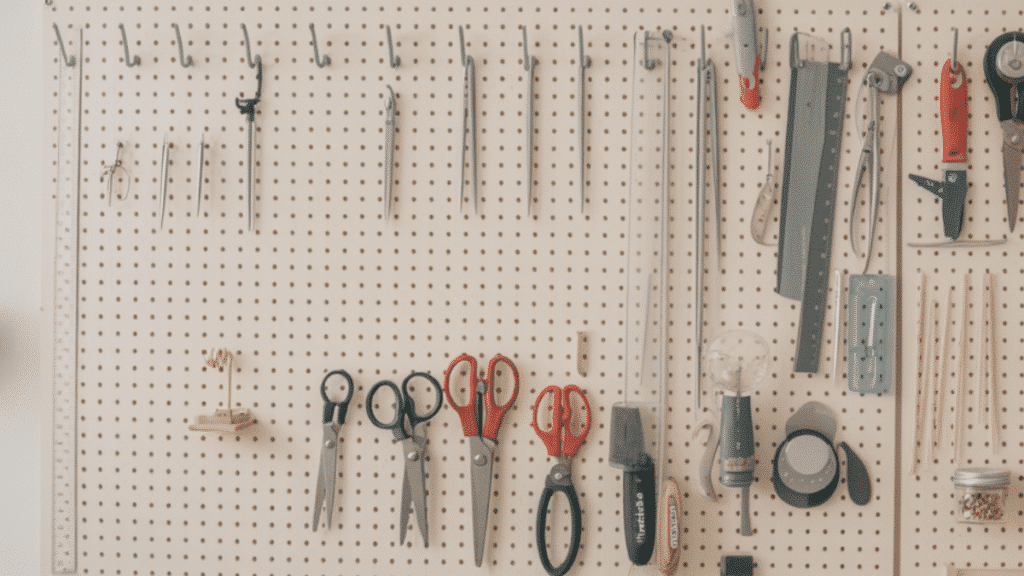
A pegboard tool wall keeps everyday tools in plain sight. Scissors, rulers, and cutters hang neatly instead of filling drawers.
This setup clears work surfaces and helps maintain order during active projects.
14. Grid Panel Wall Storage
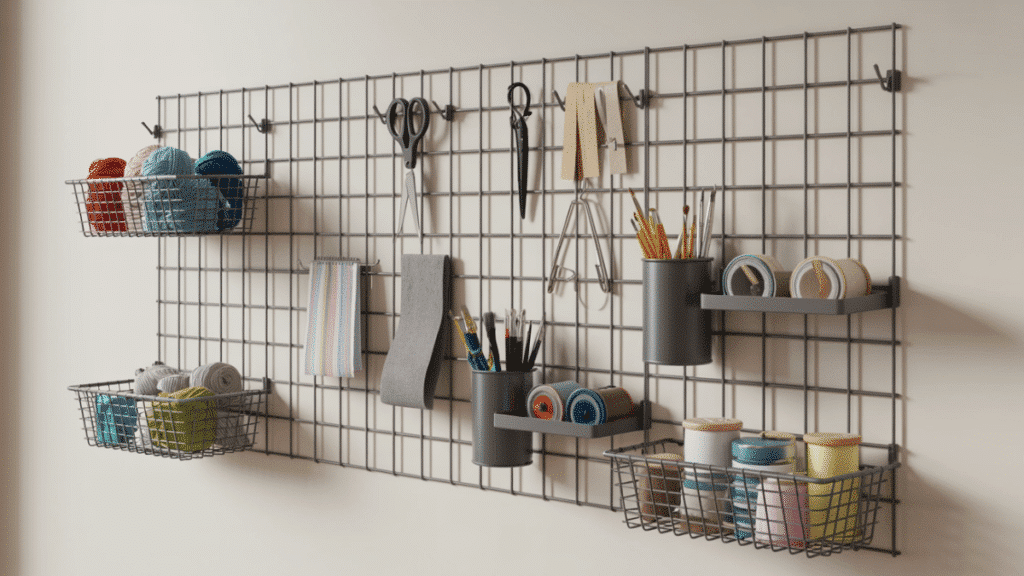
Grid panels offer stronger support for baskets and hooks.
They hold heavier tools and allow flexible changes as supplies grow. This option works well for craft rooms with mixed materials.
15. Clear Bin Storage System
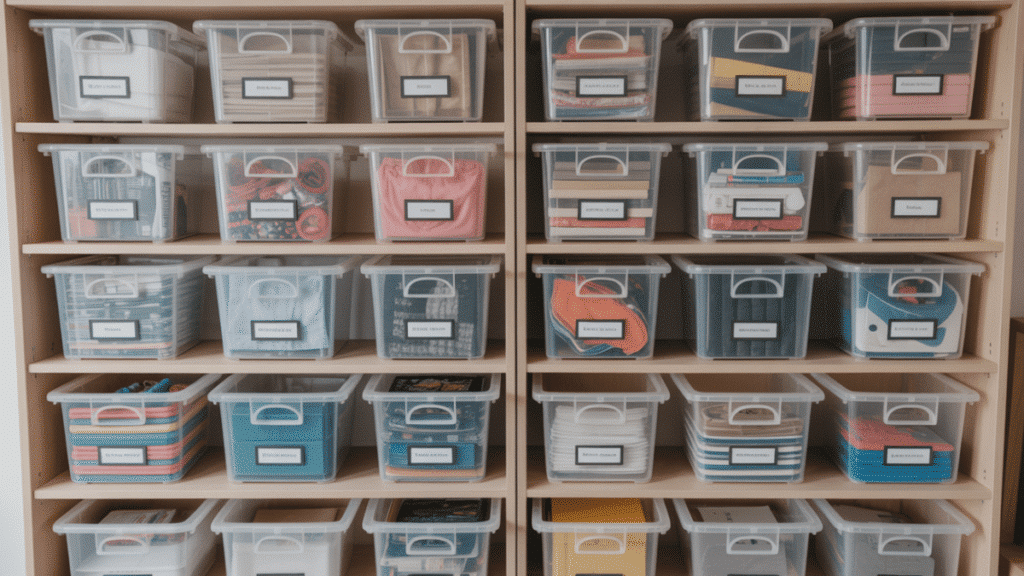
Clear bins make it easy to see what is stored without opening containers.
Grouping supplies by material helps prevent clutter. Labels support quick cleanup and restocking.
16. Drawer Dividers for Small Tools
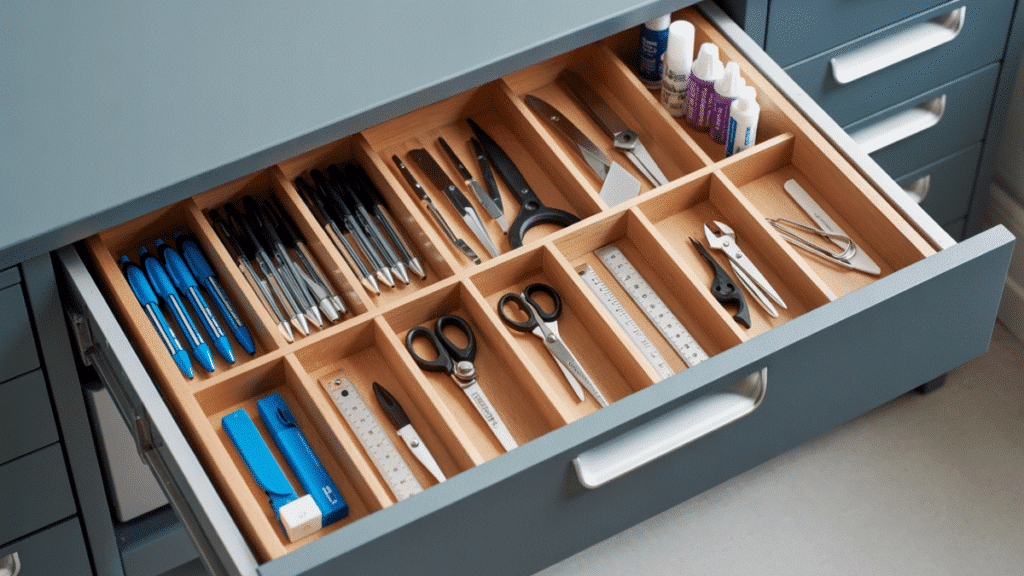
Drawer dividers separate pens, blades, adhesives, and small rulers into defined sections.
This prevents drawers from turning messy and reduces the time spent searching for tools.
Dividers also protect sharp items from shifting and getting damaged when drawers open and close.
17. Rolling Cart Storage
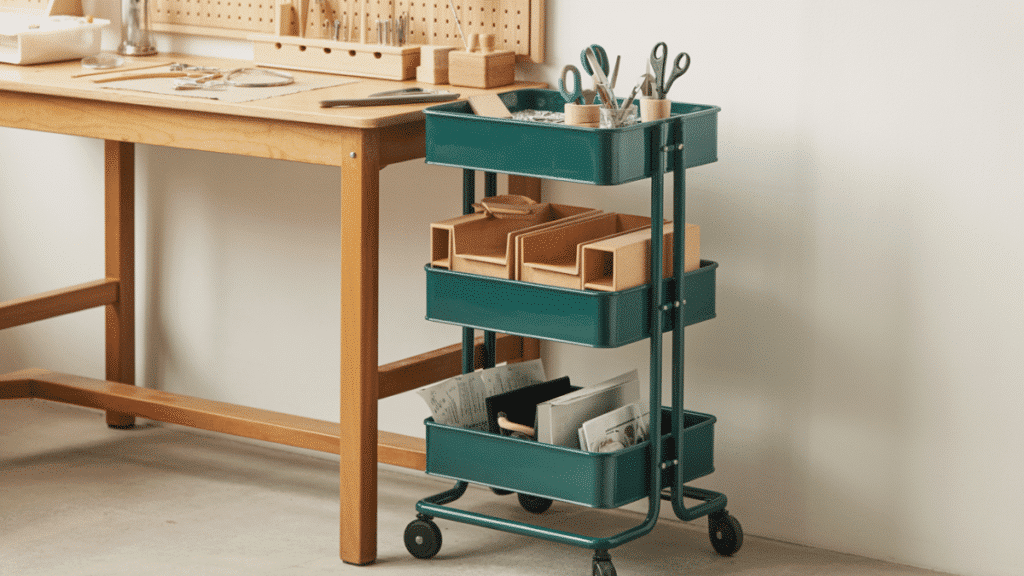
Rolling carts hold active projects and tools that need to move between work areas.
They tuck away easily when not in use and keep ongoing work off the main table.
This setup supports flexible craft room design layouts, especially in shared or multipurpose spaces.
18. Vertical Paper Storage
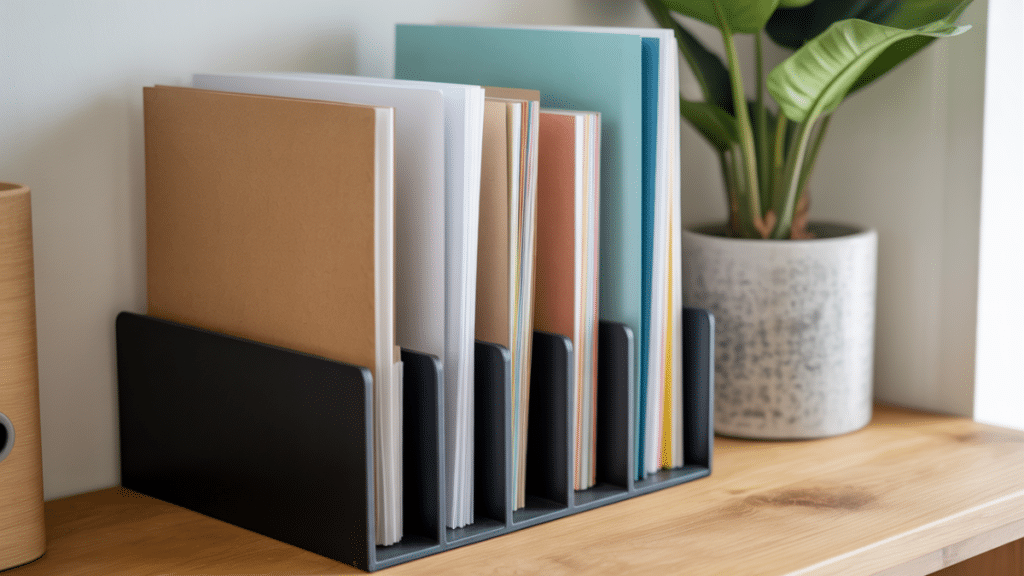
Vertical storage keeps paper flat and protected while making colors easy to see at a glance.
It reduces bending, curling, and torn edges during storage. This option works especially well for cardstock, vinyl sheets, and specialty paper.
19. Ribbon and Tape Organization
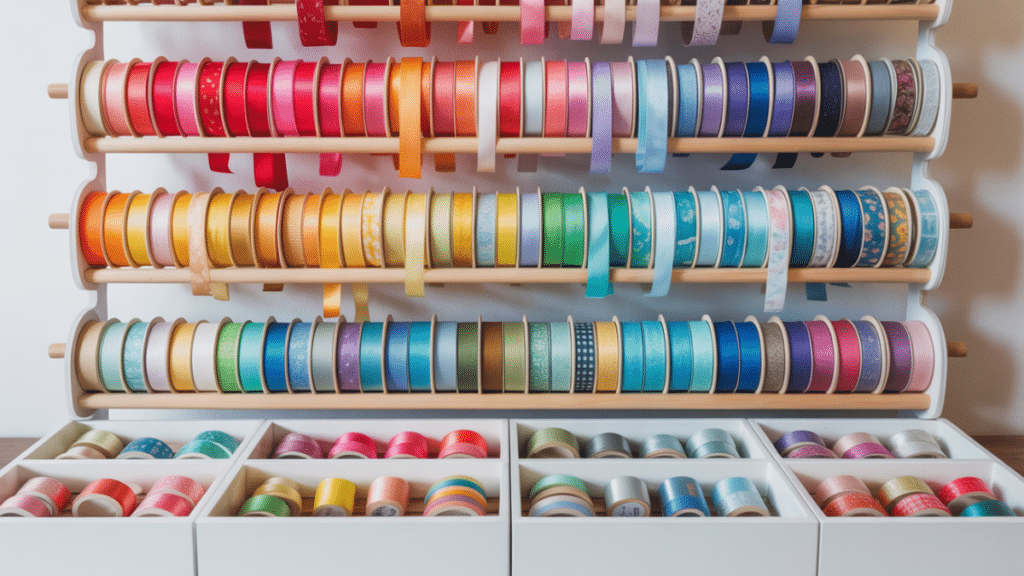
Dedicated ribbon and tape storage prevents tangles, creases, and wasted material.
Rods allow smooth unwinding, while divided drawers keep rolls separated. This setup speeds up projects and helps maintain a tidy craft room.
20. Thread Storage System
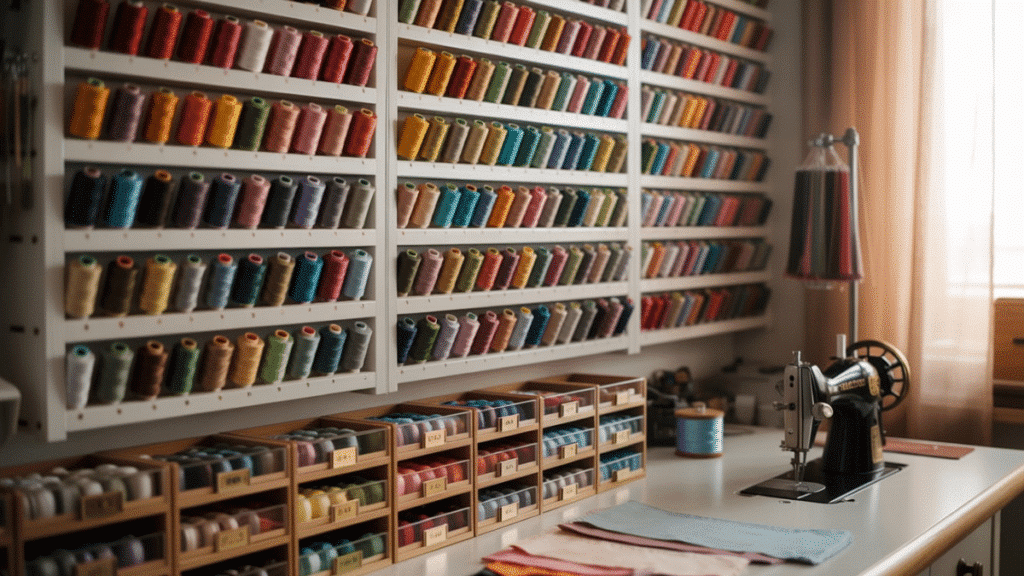
Thread storage keeps spools upright and easy to sort by color or size.
When threads stay visible, sewing projects move faster, and mistakes are less likely.
Organized thread storage also protects spools from dust and tangling.
What Makes a Craft Room Comfortable and Easy to Use?
Lighting and comfort choices shape how easy and safe the space feels during use.
Good lighting supports accuracy and reduces eye strain. Overhead light should be paired with task lighting near the main work surface, especially for detailed crafts like sewing or cutting.
Easy access to power keeps tools and lamps usable without cluttered cords. Outlets placed near desks and storage walls improve safety and workflow.
Comfort matters for longer sessions. Supportive seating and good airflow help the craft room stay usable, calm, and easy to return to for everyday projects.
Conclusion
A well-planned craft room supports creativity without adding stress.
When layouts feel natural, and storage matches the supplies being used, projects stay organized and easier to manage.
Thoughtful craft room designs and layouts help reduce clutter, save time, and make better use of available space, even in smaller homes.
Simple choices like clear storage, flexible furniture, and proper lighting can improve how the room functions day to day.
A craft room should feel practical, calm, and ready whenever inspiration strikes.
Small changes can make a noticeable difference in how often the space gets used.
Share thoughts, layout ideas, or organization tips in the comments to help others improve their craft rooms, too.

Ava Taylor, holding a Bachelor’s degree in Interior Design from the Pratt Institute, has made her mark in creating engaging and functional living spaces for over 14 years. She began her career with a New York-based design studio, where she gained a reputation for her innovative and user-centric designs. Ava joined our team in 2019, bringing a blend of artistic flair and practicality to our home improvement section. Since the she has been the lead contributor to our room transformation series, inspiring readers with her unique approach to maximizing space utility and aesthetic appeal. Beyond her professional work, Ava is a passionate collector of vintage furniture, a hobby that enriches her design perspective.