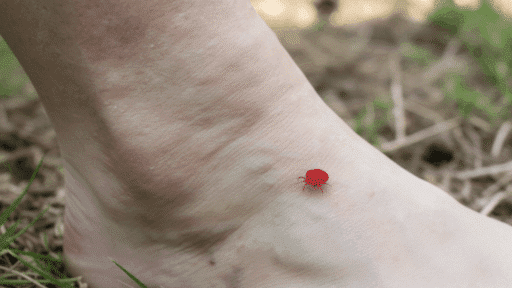
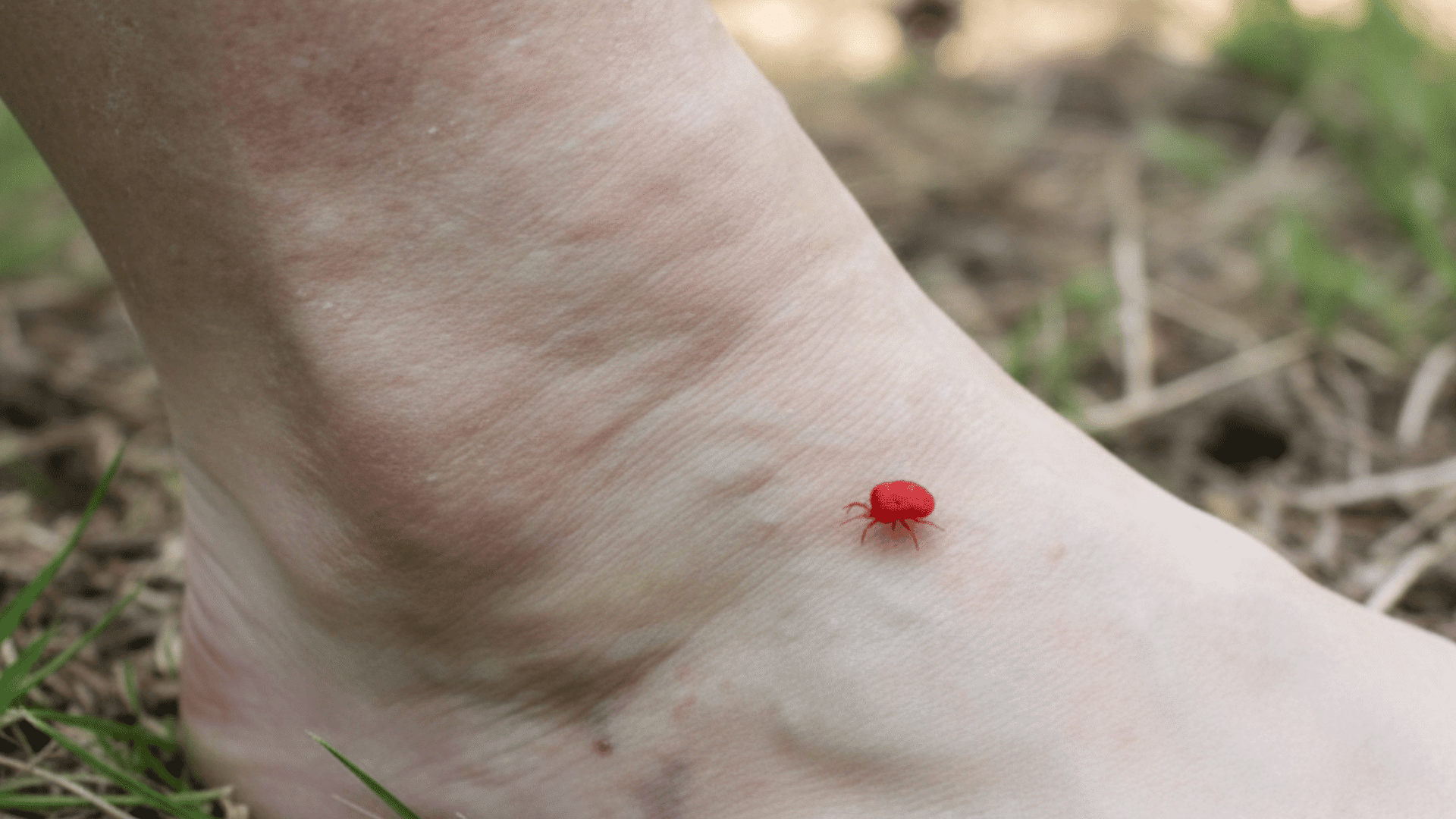

Chiggers turn yard work into an itchy nightmare. These microscopic mite larvae thrive in tall grass, shady spots, and damp vegetation, waiting to latch onto anyone who brushes past.
The welts they leave behind can itch for days, and the worst part is you often don’t realize you’ve been bitten until hours later.
Ciggers concentrate in specific problem areas rather than infesting entire properties. With targeted habitat changes and smart treatment choices, you can reclaim your yard without dousing every square foot in chemicals.
So find out what actually works based on extension research and real gardener experiences, from organic habitat fixes to chemical hotspot treatments, plus bite identification and prevention strategies that make outdoor time comfortable again.
What Are Chiggers?
Chiggers are the larval form of harvest mites in the Trombiculidae family. At less than 1/150 of an inch, they’re nearly invisible to the naked eye.
Unlike ticks, they don’t burrow under your skin. They attach to pores or hair follicles and inject saliva that breaks down skin cells for feeding. This saliva triggers the intense allergic reaction that causes the trademark itch.
In gardens, chiggers cluster in specific habitats: overgrown borders, tall grass patches, the shady ground beneath shrubs, and anywhere moisture lingers.
They need humidity to survive, which is why they disappear from sunny, well-maintained lawn areas but thrive in neglected corners and brushy edges.
The common myth that chiggers burrow deep or that you need to suffocate them with nail polish is wrong. The itching comes from an allergic reaction to their saliva, not from the chigger itself.
By the time you feel the itch, the chigger has usually already dropped off. The discomfort can last a week, and scratching raises the risk of bacterial infection.
How to Get Rid of Chiggers Organically
Organic control focuses on eliminating the conditions chiggers need to survive.
1. Mow Low and Remove Tall Weeds
Chiggers cling to vegetation above six inches. Keeping grass short and eliminating weedy patches removes their primary habitat.
Pay special attention to fence lines, garden borders, and transition zones between lawn and wild areas.
2. Thin Dense Shrubs and Clear Yard Debris
Chiggers need shade and moisture. Pruning lower branches to allow sunlight through and removing leaf litter, grass clippings, and brush piles dries out the ground layer. Better air circulation makes the environment inhospitable.
3. Fix Wet Spots and Overwatering
Check for drainage problems, leaky hoses, or areas where sprinklers create constant moisture.
Chiggers thrive in damp conditions, so eliminating standing water and reducing irrigation in problem zones helps significantly.
4. Use Diatomaceous Earth Carefully in Hotspots
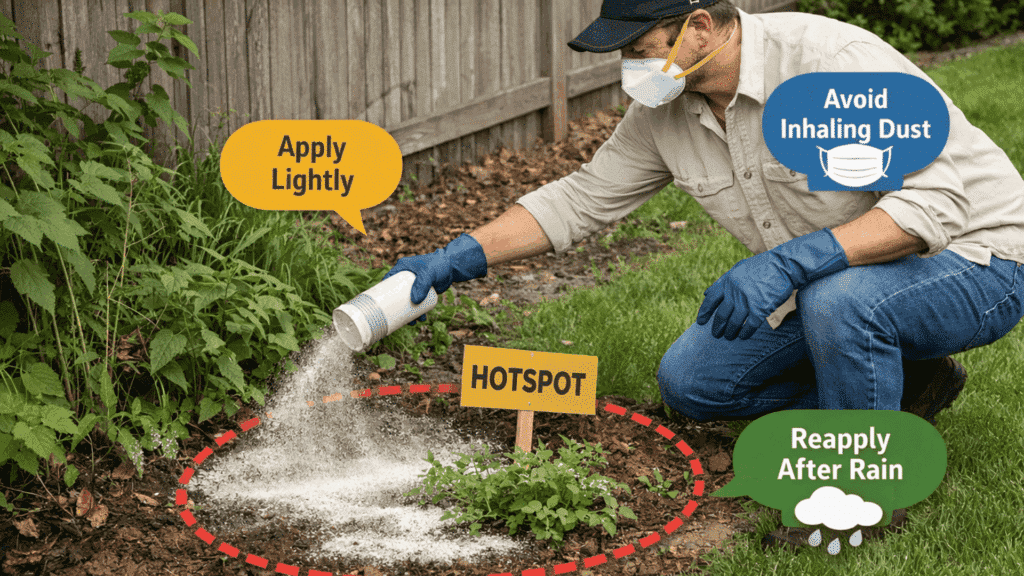
Food-grade diatomaceous earth damages the exoskeletons of small arthropods. Dust it lightly on vegetation and soil in confirmed chigger areas.
Avoid breathing the dust during application, and reapply after rain since it loses effectiveness when wet.
5. Consider Plant-Based Repellents for Edges
Some gardeners report modest success with essential oil sprays containing cedar, lemongrass, or peppermint oil around known hotspots.
These work as deterrents rather than killers and require frequent reapplication.
How to Get Rid of Chiggers With Inorganic Chemicals
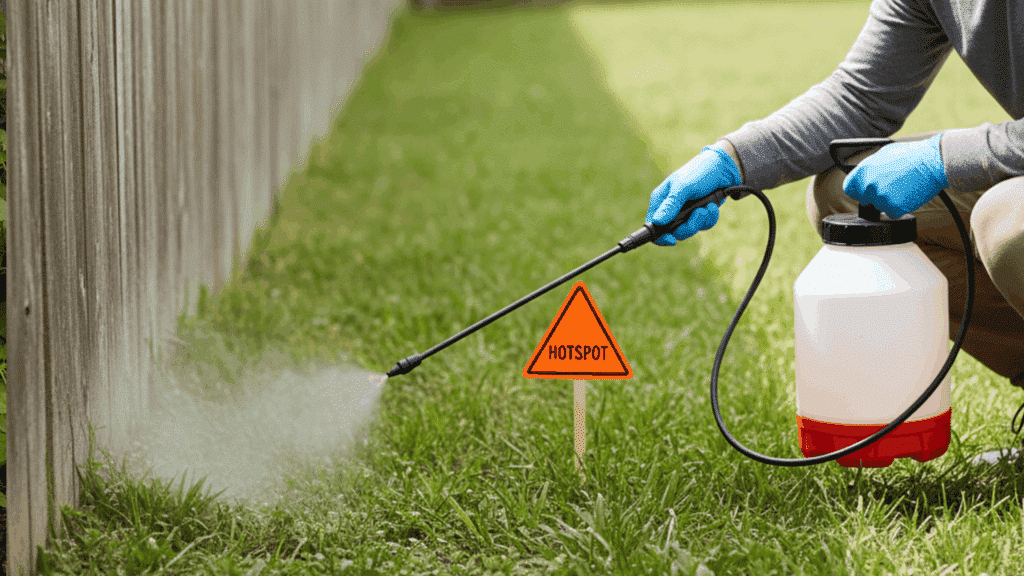
Chemical treatment makes sense when habitat modification alone doesn’t solve persistent hotspots.
If you’ve cleared vegetation, improved drainage, and still get bitten in the same spots, targeted insecticide use can provide relief. Focus on problem areas rather than treating the entire property.
Common Active Ingredients
Extension resources often recommend products containing bifenthrin, permethrin, lambda-cyhalothrin, or carbaryl for chigger control.
These work as contact insecticides, killing chiggers that touch treated vegetation.
- Bifenthrin – contact spray on vegetation; kills chiggers on treated areas.
- Permethrin – contact control on vegetation; also used to treat clothing (not skin).
- Lambda-cyhalothrin – pyrethroid contact insecticide for turf/vegetation where chiggers are present.
- Carbaryl – contact insecticide option used for chigger “hot spot” treatments.
Application tips
|
Note: Keep children and pets off treated areas according to label instructions, typically 24 to 48 hours depending on the product. Water the area lightly after the spray dries if recommended. Store chemicals properly and dispose of containers as directed.
How to Identify Chigger Bites?
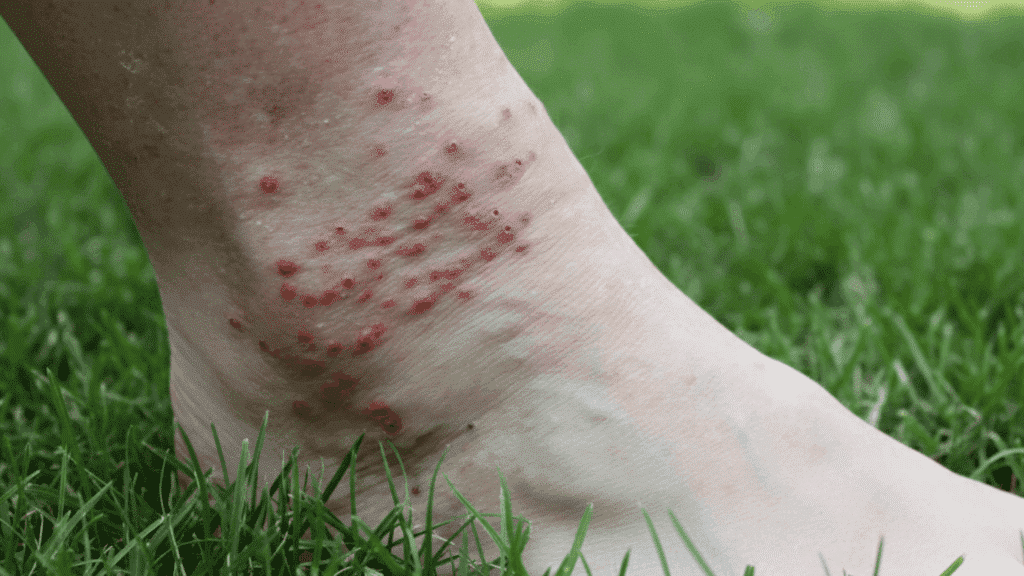
Chigger bites stand out from other insect bites by their delayed onset, intense itching, and clustering pattern in areas where clothing creates pressure against the skin.
Recognizing these characteristics helps confirm what you’re dealing with.
Common Symptoms
- Intensely itchy red welts that often appear in clusters
- Small red bumps that may develop into larger welts or hives
- Bites concentrated where clothing fits tightly: ankles, waistbands, sock lines, and underwear elastic areas
The itching typically starts several hours after exposure and can persist for days. The delayed reaction makes it hard to connect the bites with the specific outdoor activity that caused them.
Quick “Not Chiggers” Comparisons
Mosquito bites tend to appear as random single welts and itch immediately. Flea bites typically cluster on lower legs and occur indoors where pets live. Poison ivy creates a streaky rash pattern with fluid-filled blisters. If you’re unsure, consult a healthcare provider.
Chigger Bite Treatment

Once bites appear, the goal is managing itch and preventing infection while the reaction runs its course.
1. First Steps the Same Day
Shower with soap as soon as possible after potential exposure, hot water, and thorough scrubbing remove chiggers that haven’t attached yet.
Wash clothes immediately in hot water to eliminate any larvae still on the fabric. The sooner you clean up, the fewer bites you’ll develop, since chiggers need time to attach and feed.
2. Itch Relief That’s Commonly Recommended
Apply cold compresses for 15-20 minutes several times daily to reduce swelling and numb the itch.
Over-the-counter calamine lotion or hydrocortisone cream can reduce inflammation and itching throughout the day.
Oral antihistamines may help with severe reactions. The key is avoiding scratching, which can introduce bacteria and cause infection.
3. When to Call a Clinician
Seek medical attention if you notice signs of infection, such as spreading redness, increasing warmth, pus, or fever. Also consult a clinician if swelling becomes severe or symptoms don’t improve after several days.
How to Prevent Chigger Bites
Prevention combines yard maintenance with personal protection to keep chiggers off your skin in the first place.
- Yard behavior changes that cut bites fast: Avoid tall grass and brushy edges during peak chigger season. Keep walkways and frequently used areas mowed short so you’re not brushing against vegetation where chiggers wait.
- Clothing strategy that people swear by: Wear long pants tucked into boots or socks, long sleeves, and gloves for gardening or yard work. Light-colored clothing makes it easier to spot chiggers before they reach your skin.
- Repellents and clothing treatments: Apply DEET-based repellents to exposed skin following product directions. For added protection, treat clothing and gear with permethrin spray explicitly designed for fabric use; never apply permethrin directly to skin. Permethrin-treated clothing maintains repellency through multiple washes.
- Post-yard routine: Shower promptly after working outdoors in chigger-prone areas and run clothes through a hot wash cycle to eliminate any hitchhiking larvae.
Conclusion
Chigger control comes down to habitat management first, targeted treatment second.
Mowing problem areas short, clearing debris, and fixing moisture issues eliminates most chigger habitat without chemicals.
For persistent hotspots, diatomaceous earth or short-residual insecticides applied to specific zones provide relief when needed.
Prevention through proper clothing, repellents, and post-yard hygiene keeps bites minimal. The key is recognizing that chiggers concentrate in specific microhabitats rather than infesting entire properties.
Once you identify and modify those hotspots, your yard becomes comfortable again.
Most gardeners find that consistent mowing and debris removal, combined with smart clothing choices during peak season, reduce chigger problems to manageable levels within a few weeks.

With a Master’s in Landscape Architecture from the University of Virginia, Sophia Stephenson has dedicated the last 20 years to creating and maintaining vibrant outdoor spaces. Her professional journey started in landscape design, where she gained a reputation for innovative and sustainable approaches. Sophia became a part of our editorial team as a freelancer in 2019, offering a fresh perspective on outdoor living. Since 2020, she has been the chief for our outdoor design content, blending aesthetic appeal with environmental stewardship. In her leisure time, Sophia is a keen photographer, capturing the beauty of natural landscapes, a hobby that complements her professional expertise.