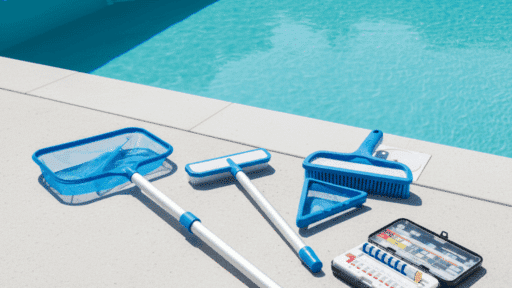
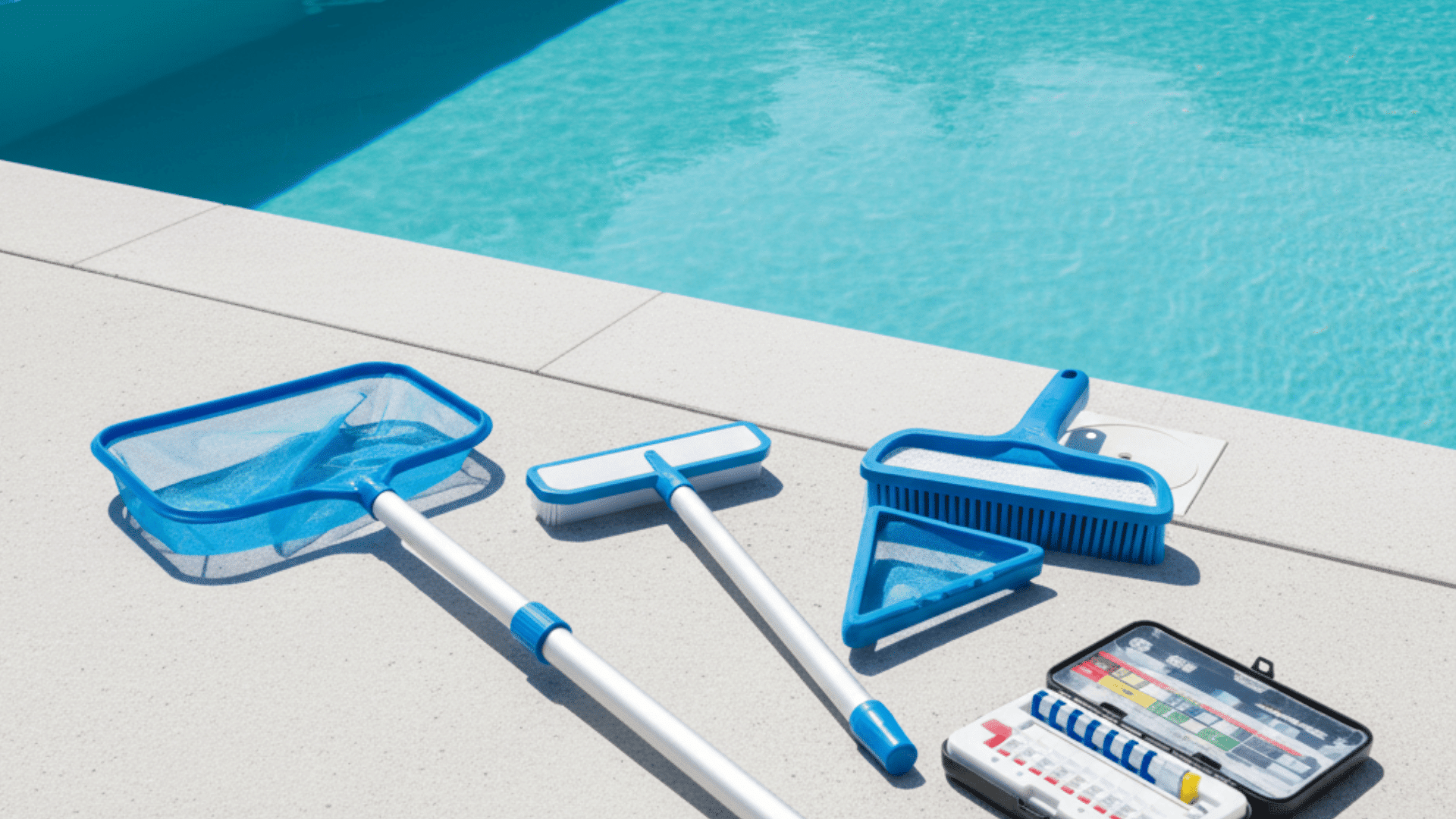

Pool maintenance is a routine process that keeps water clean, equipment functioning correctly, and swimmers safe.
A well-maintained pool requires consistent circulation, regular cleaning, balanced water chemistry, and proper equipment use.
Neglecting any of these areas leads to algae growth, cloudy water, equipment strain, and higher operating costs.
Take a look at exactly how to maintain a pool using proven practices suitable for new pool owners.
What Matters the Most in Pool Maintenance?
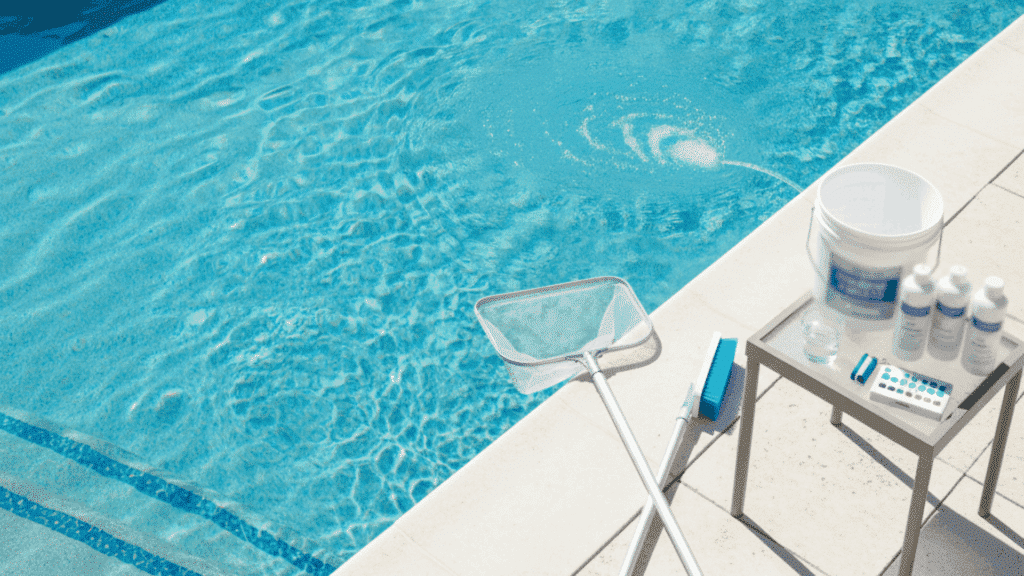
Effective pool maintenance depends on controlling three core factors: circulation, cleanliness, and water chemistry. These elements work together and must be managed consistently.
1. Proper Circulation and Regular Use
Water circulation prevents stagnation and distributes chemicals evenly throughout the pool. The pump should run long enough each day to circulate the entire volume of water.
For most residential pools, this requires 8–12 hours of pump operation daily, adjusted based on pool size, temperature, and bather load.
Circulation pulls debris into the skimmer and filter, moves treated water across all surfaces, and prevents algae from settling in low-flow areas.
Pools that are used regularly benefit from natural water movement, but usage never replaces pump operation. Poor circulation is a primary cause of cloudy water and algae outbreaks.
2. Regular Cleaning
Debris left in the pool breaks down and consumes sanitizer, reducing water quality. Leaves, insects, pollen, and dirt must be removed before they sink or clog the filtration system.
Surface skimming should be performed several times per week, or daily during heavy debris periods.
Pool walls, steps, and corners must be brushed weekly to remove biofilm and algae spores that are not captured by filtration alone.
Cleaning prevents small problems from developing into water clarity and sanitation issues.
3. Pool pH and Water Chemistry
Balanced water chemistry keeps swimmers safe and protects pool surfaces and equipment. The most critical values are:
- pH: 7.2–7.6
- Free chlorine: 1–3 ppm
- Total alkalinity: 80–120 ppm
- Calcium hardness: 200–400 ppm (surface dependent)
When pH is too high, chlorine becomes less effective. When pH is too low, water becomes corrosive and damages metal components and finishes.
Note: Chemical levels must be tested at least two to three times per week and adjusted immediately when out of range.
Proper Pool Cleaning Methods
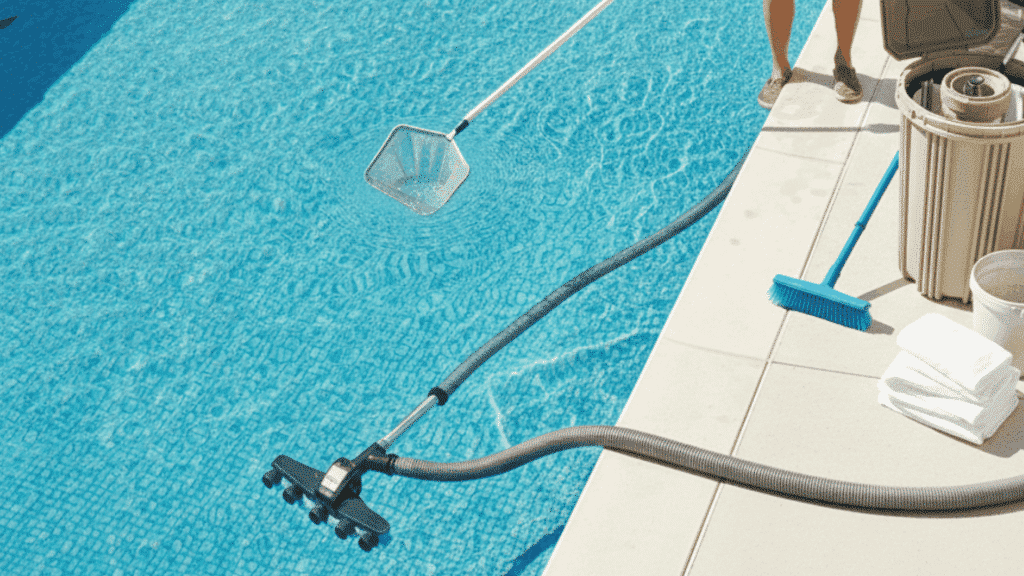
Cleaning tasks should follow a structured schedule to maintain water clarity and prevent mechanical strain.
1. Skimming and Brushing
Skimming removes floating debris before it sinks. A leaf skimmer attached to a telescopic pole is sufficient for routine use. Brushing should target walls, waterline tile, steps, ladders, and corners. Each surface type requires the correct brush material to avoid damage. Consistent brushing disrupts algae formation and improves sanitizer effectiveness.
2. Vacuuming the Pool
Vacuuming removes debris that settles on the pool floor. Manual vacuums allow targeted cleaning, while automatic and robotic cleaners provide consistent coverage with less labor. Vacuuming should be performed weekly or more often if debris accumulation is visible.
3. Filter Cleaning and Maintenance
Filters capture fine particles and must be cleaned to maintain flow. The cleaning method depends on filter type:
- Cartridge filters: remove and rinse when pressure rises 8–10 psi above baseline
- Sand filters: backwash when pressure increases
- DE filters: backwash and recharge with DE powder as required
A dirty filter reduces circulation and forces the pump to work harder, increasing energy use and wear.
Pool Water Chemistry Management
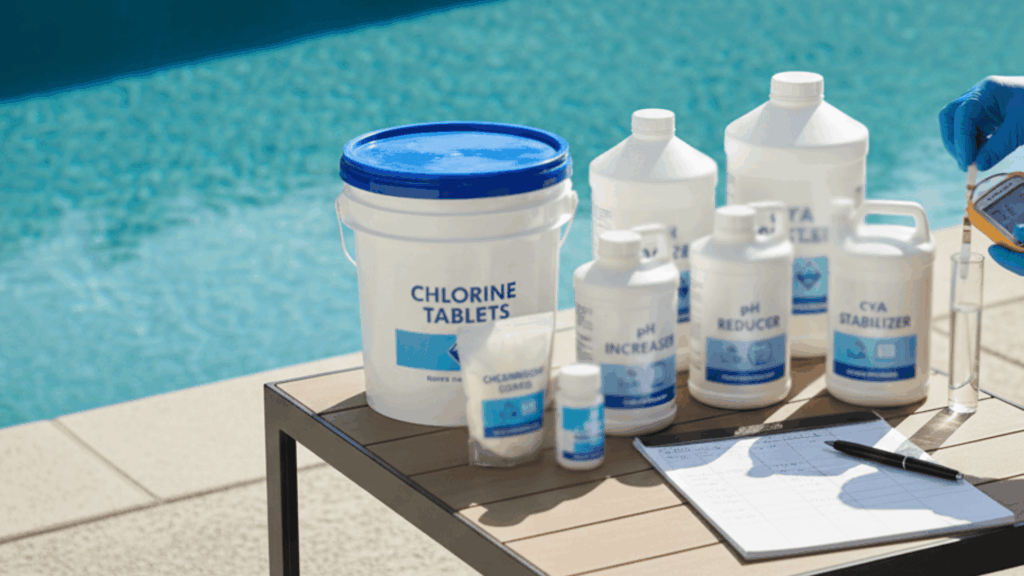
Chemical maintenance must be methodical and based on testing, not estimation.
1. Essential Pool Chemicals
Sanitizer controls bacteria and algae. Chlorine is the most common option, though salt systems generate chlorine automatically. pH increasers and reducers adjust acidity.
Alkalinity stabilizes pH, and a stabilizer protects chlorine from UV degradation. Each chemical serves a specific purpose and should only be added when testing indicates a need.
2. Testing Frequency and Accuracy
Water should be tested multiple times per week using a reliable test kit or digital tester. Results must be recorded, and adjustments made incrementally.
Large chemical corrections increase the risk of imbalance and surface damage.
3. Common Chemistry Errors
Adding chemicals without testing, overcorrecting levels, and ignoring alkalinity are common mistakes.
These practices lead to unstable water and recurring maintenance issues. Controlled adjustments and consistent monitoring prevent these problems.
Pool Maintenance During Vacations
Proper preparation and follow-up keep pool water stable during extended absences. These steps outline exactly what to do before leaving, while away, and after returning to prevent water quality issues and equipment strain.
Step 1: Prepare the Pool Before Leaving
Clean the pool thoroughly by skimming debris, brushing surfaces, vacuuming the floor, and emptying skimmer baskets.
Test and balance water chemistry, setting chlorine at the upper end of the normal range. Confirm the pump timer is programmed for daily circulation to prevent stagnation.
Step 2: Set Up Maintenance While Away
For short trips, use a floating chlorine dispenser and install a pool cover to reduce debris and evaporation.
For longer vacations, arrange for a pool service or a reliable caretaker to test water, add chemicals if needed, and remove debris at least once per week.
Step 3: Inspect and Restore the Pool After Returning
Test the water immediately upon return to check chlorine, pH, and alkalinity levels. Apply shock treatment if sanitizer levels are low or water appears dull.
Clean skimmer baskets, inspect the filter, and resume normal maintenance to restore full water clarity and balance.
Best Equipment for Pool Maintenance
The right equipment makes routine pool care faster, more effective, and easier to manage. The table below outlines essential tools and useful upgrades, along with their primary purpose.
| Equipment | Primary Use |
|---|---|
| Leaf skimmer | Removes floating leaves, insects, and debris before they sink and affect water quality |
| Pool brush (surface-specific) | Scrubs walls, floors, steps, and waterline to prevent algae and biofilm buildup |
| Manual vacuum or automatic cleaner | Removes debris from the pool floor that cannot be captured by skimming alone |
| Water testing kit | Measures chlorine, pH, alkalinity, and other chemical levels to maintain balanced water |
| Telescopic pole | Extends reach for skimmers, brushes, and vacuum heads across the entire pool |
| Robotic pool cleaner | Provides consistent, automated cleaning with minimal manual effort |
| Pool cover | Reduces debris entry, limits evaporation, and helps retain heat |
| Variable-speed pump | Improves circulation efficiency while reducing energy consumption |
| Timer or automation system | Controls pump run times and circulation schedules for consistent maintenance |
Using the correct combination of essential tools and upgrades improves water clarity, protects equipment, and reduces long-term maintenance effort.
Tips for Maintaining a Pool Long Term
Consistency is more important than intensity. A structured weekly schedule prevents emergencies and reduces chemical use. Maintenance logs help track trends and anticipate issues.
Follow a weekly maintenance schedule to prevent water quality issues and reduce emergency chemical adjustments.
Test and record water chemistry regularly to identify trends and correct imbalances before they escalate.
Inspect equipment frequently to catch wear, leaks, or reduced performance early.
Adjust maintenance seasonally as water temperature and usage patterns change.
Fix small problems immediately to avoid costly repairs and system downtime.
Addressing small problems immediately prevents system failures and expensive repairs.
Conclusion
Pool maintenance is a controlled process based on circulation, cleanliness, and balanced chemistry. When these fundamentals are managed correctly, pool water remains clear, safe, and stable.
Skipping routine maintenance leads to preventable damage and higher costs.
A disciplined maintenance schedule, proper equipment, and accurate testing ensure long-term performance and reliability for any residential pool.
If you have a routine that works well or a maintenance challenge you’re dealing with, share it in the comments. Your experience can help other pool owners keep their pools clear and trouble-free.

With a Master in Architectural Studies from University of Pennysylvania, Marwa Haydar has pioneered living spaces since 2005. Her expertise, initially honed in a prestigious architectural firm, is evident in her approach to creating environments. Marwa became part of our team in 2019 and has since been a driving force in our home improvement section, known for her practical yet stylish solutions. She’s been spearheading our design workshops since then, infusing her passion for teaching into her work. In her leisure time, Marwa enjoys exploring historic architecture and is an enthusiastic pottery hobbyist, further enriching her understanding of form and texture.