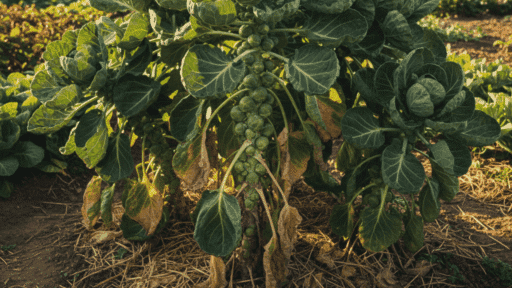

Brussels sprouts are one of the most rewarding vegetables for gardeners who enjoy cool-season growing and structured plant care.
These compact, cabbage-like buds grow vertically along tall stems and thrive when many other crops fade.
With the right timing, soil preparation, and maintenance, they deliver reliable harvests and excellent flavour, especially after exposure to cool temperatures.
This is how to grow Brussels sprouts from seed to harvest, with soil requirements, planting methods, seasonal care, common mistakes, and storage.
What are Brussels Sprouts?
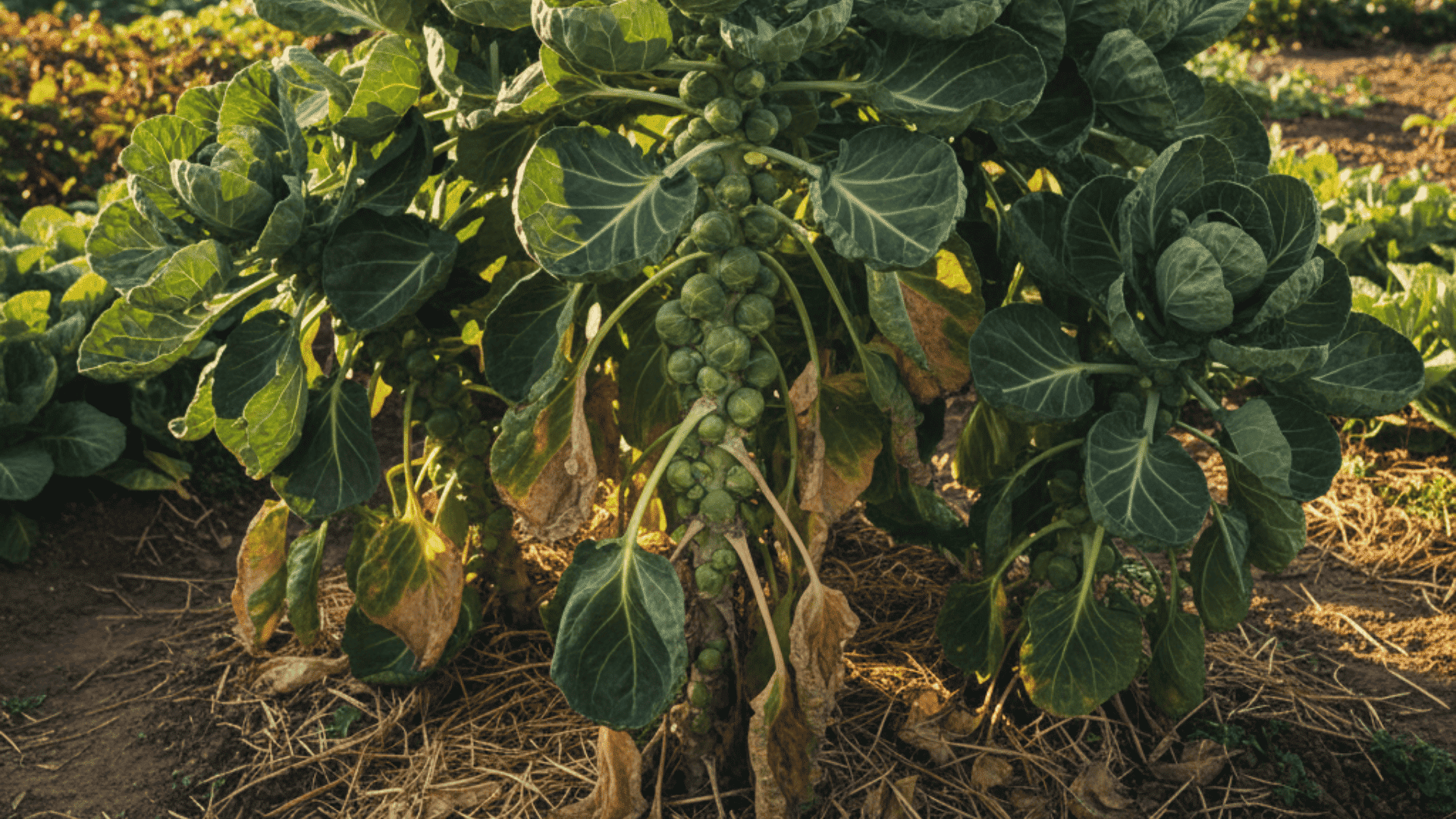
Brussels sprouts (Brassica oleracea var. gemmifera) belong to the same family as cabbage, broccoli, and kale. Instead of forming one large head, they produce dozens of small buds along a thick central stem that can reach 2–3 feet tall.
Their growth follows clear stages: seed germination, seedling development, leafy vegetative growth, sprout formation along the stem, and final maturity.
This process takes time. Most varieties require between 80 and 110 days from transplanting to harvest, depending on climate and cultivar.
Because of their long growing season, Brussels sprouts are best suited to regions with cool autumns or mild winters.
They are classified as a cool-weather crop and develop best when maturing in cooler temperatures rather than peak summer heat.
Growing Requirements for Brussels Sprouts
1. Soil Requirements
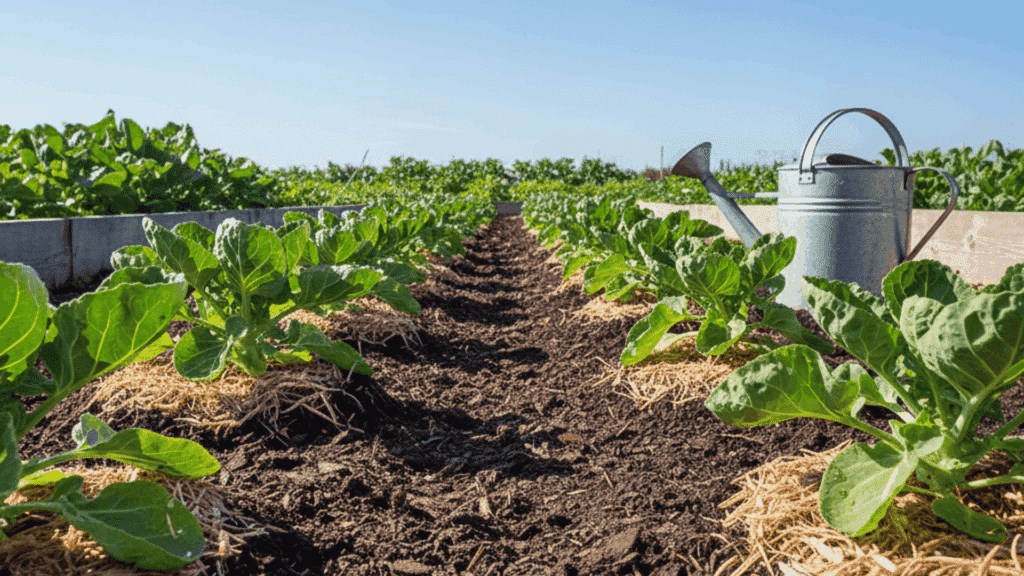
Brussels sprouts need fertile, well-drained soil to support their long growing cycle. A loamy soil rich in organic matter provides the best structure for strong root development.
- Ideal soil pH: 6.0–7.5 (slightly acidic to neutral)
- Soil preparation: Incorporate compost or well-rotted manure before planting
- Drainage: Avoid compacted or waterlogged soil, which can lead to root diseases
Healthy soil ensures steady nutrient availability throughout the season, which is essential for uniform sprout formation.
2. Sun and Temperature
Brussels sprouts perform best in full sun, requiring at least 6–8 hours of direct sunlight daily.
- Optimal growing temperature: 15–18°C (60–65°F)
- Frost tolerance: Light frost is beneficial and can improve flavour
- Heat sensitivity: Prolonged temperatures above 25°C (77°F) can hinder sprout development
Timing the crop so sprout formation occurs in cool weather is one of the most important success factors.
3. Water and Moisture
Consistent moisture is critical. Uneven watering stresses plants and leads to poor-quality sprouts. Water deeply and regularly, especially during dry periods.
Aim for evenly moist soil, not saturated. Mulch helps retain moisture and regulate soil temperature.
How to Plant Brussels Sprouts?
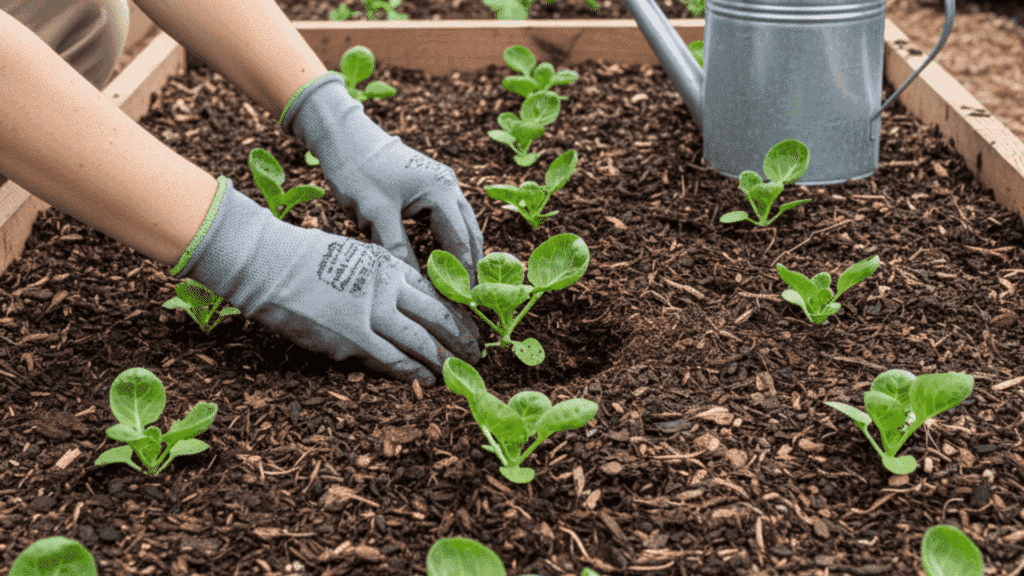
Establishing Brussels sprouts correctly at planting time determines how well they perform for the rest of the season.
These steps walk through the full planting process, from soil preparation to early growth care, to ensure strong, healthy plants.
Step 1: Prepare the Planting Area
Select a location that receives full sun for most of the day. Loosen the soil to a depth of at least 12 inches and mix in compost or well-rotted manure.
Remove stones and weeds so roots can establish easily and grow without competition.
Step 2: Start Seeds Indoors (Optional but Recommended)
Sow Brussels sprout seeds indoors 6–8 weeks before the last expected frost. Plant seeds about ½ inch deep in seed trays filled with seed-starting mix.
Keep soil consistently moist and place trays in a warm, bright location until germination.
Step 3: Harden Off Seedlings
Gradually acclimate seedlings to outdoor conditions over 7–10 days. Place them outside for a few hours each day, increasing exposure to sun and wind.
This process strengthens stems and reduces transplant shock when plants are moved into the garden.
Step 4: Transplant at the Right Time
Transplant seedlings outdoors once they have 4–6 true leaves and frost risk has passed. Plant during cool weather whenever possible.
Set plants slightly deeper than they were in trays to improve stability and encourage strong root development.
Step 5: Space Plants Correctly
Space Brussels sprout plants 24–30 inches apart in rows spaced at least 30 inches apart.
Proper spacing ensures good airflow, reduces disease pressure, and allows enough room for large leaves and full sprout development along the stem.
Step 6: Water Immediately After Planting
Water thoroughly after planting to settle the soil around the roots. Deep watering helps eliminate air pockets and encourages roots to grow downward.
Maintain evenly moist soil during the first two weeks to support successful establishment.
Step 7: Apply Mulch
Add a layer of organic mulch around each plant once the soil has warmed. Mulch conserves moisture, suppresses weeds, and regulates soil temperature.
Keep mulch a few inches away from the stem to prevent moisture-related stem issues.
Care Throughout the Growing Season
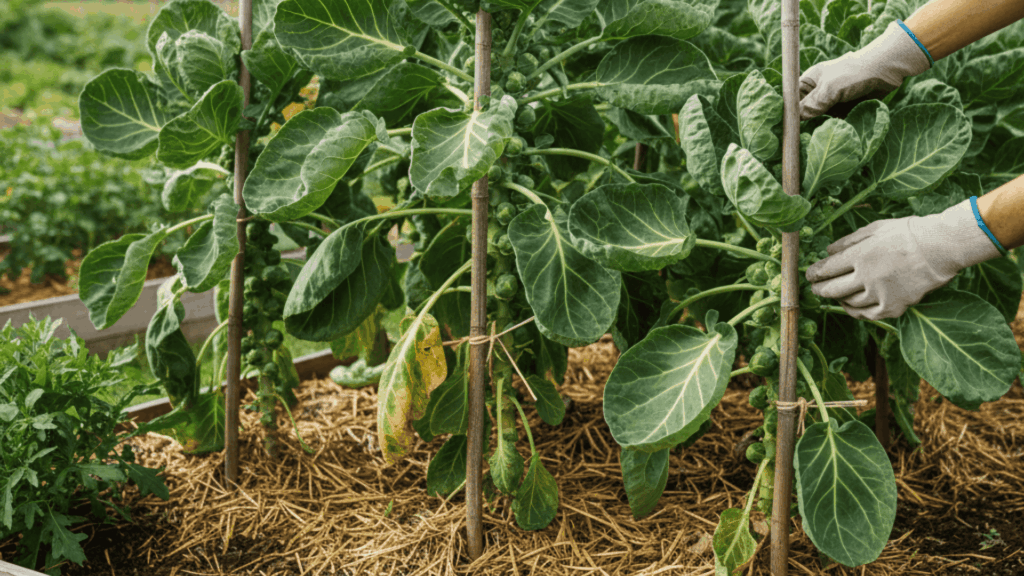
Consistent care keeps Brussels sprouts growing steadily and prevents the stress that leads to poor sprout formation.
| Care Area | What to Do | Why It Matters |
|---|---|---|
| Watering and Feeding | Water deeply and consistently to keep soil evenly moist, especially during dry periods. Apply a nitrogen-rich fertilizer early, then switch to a balanced feed once sprouts begin forming. | Prevents plant stress, supports strong leaf growth early, and promotes firm, evenly sized sprouts later in the season. |
| Mulching and Weed Control | Apply organic mulch such as straw or compost after plants are established. Keep mulch slightly away from the stem to avoid excess moisture buildup. | Retains moisture, regulates soil temperature, and reduces competition from weeds without increasing disease risk. |
| Support and Plant Stability | Stake tall plants or mound soil around the base as they grow. Provide extra support in windy locations. | Prevents plants from toppling, protects roots, and keeps stems upright for uniform sprout development. |
| Pruning and Leaf Management | Remove only damaged, yellowing, or diseased lower leaves. Avoid excessive pruning of healthy foliage. | Maintains airflow while preserving enough leaf surface for photosynthesis and sprout formation. |
| Pest and Disease Monitoring | Inspect plants regularly for aphids, caterpillars, and cabbage loopers. Practice crop rotation and maintain clean garden conditions. | Early detection reduces damage, limits disease spread, and minimizes the need for aggressive treatments. |
Managing water, nutrients, plant structure, and pest pressure throughout the season directly affects both yield and flavour.
Common Reasons for Failure and How to Avoid Them
Brussels sprouts are sensitive to environmental stress and timing, which makes small planning mistakes more noticeable during the growing season.
- Heat Stress: Warm conditions during sprout formation result in loose, bitter sprouts. Plan planting so maturity aligns with cool weather.
- Poor Timing: Planting too late can push development into heat, while planting too early may stunt growth. Use regional frost dates to guide scheduling.
- Nutrient Deficiencies: Insufficient nitrogen or depleted soil leads to small, underdeveloped sprouts. Soil enrichment before planting is essential.
- Overcrowding and Poor Airflow: Crowded plants restrict airflow, increasing disease pressure and reducing yield. Proper spacing prevents this.
- Inconsistent Watering: Irregular moisture disrupts sprout formation. Maintain even watering throughout the season.
Understanding these common failure points helps prevent poor sprout development and uneven harvests before problems become permanent.
Conclusion
Growing Brussels sprouts successfully depends on timing, soil preparation, and steady care rather than constant intervention.
When planted correctly and matured in cool conditions, they reward patience with consistent yields and excellent flavour.
Focus on fertile soil, adequate spacing, reliable watering, and pest management to avoid common setbacks. Harvest gradually and store properly to extend enjoyment well into winter.
With these fundamentals in place, Brussels sprouts become a dependable addition to any cool-season garden, producing nutritious harvests year after year with minimal guesswork and predictable results.

With a Master’s in Landscape Architecture from the University of Virginia, Sophia Stephenson has dedicated the last 20 years to creating and maintaining vibrant outdoor spaces. Her professional journey started in landscape design, where she gained a reputation for innovative and sustainable approaches. Sophia became a part of our editorial team as a freelancer in 2019, offering a fresh perspective on outdoor living. Since 2020, she has been the chief for our outdoor design content, blending aesthetic appeal with environmental stewardship. In her leisure time, Sophia is a keen photographer, capturing the beauty of natural landscapes, a hobby that complements her professional expertise.