
Aquarium care often looks simple, yet water quality is where most problems quietly begin.
Many fish owners assume clear water means healthy conditions, only to face stress, algae, or sudden fish loss later.
The good news is that these issues are often preventable with a proper water change routine.
This blog promises to explain fish tank water changes in a clear, practical way, without guesswork or complicated steps.
It previews how often water should be changed, how much to replace, and how to do it safely with fish still in the tank.
By the end, maintaining clean, balanced aquarium water should feel manageable and far less confusing.
Why Changing Fish Tank Water is Important?
A fish tank water change is the process of removing a portion of old aquarium water and replacing it with fresh, treated water.
This routine removes waste, leftover food, and harmful byproducts that filters alone cannot eliminate.
Unlike topping off water lost to evaporation, changing fish tank water actively improves water quality.
An aquarium water change helps keep nitrate levels under control, supports stable pH, and creates a healthier environment for fish and plants.
Fish produce waste continuously. Uneaten food also breaks down and releases harmful compounds into the water.
Over time, these pollutants raise nitrate and phosphate levels, which can stress fish and fuel algae growth.
Even if the water looks clear, waste often settles in the gravel. Regular water changes reduce toxins, replenish minerals, and help maintain proper oxygen levels.
Without consistent maintenance, fish may show signs of stress, reduced activity, or illness.
How Often Should You Change Fish Tank Water?
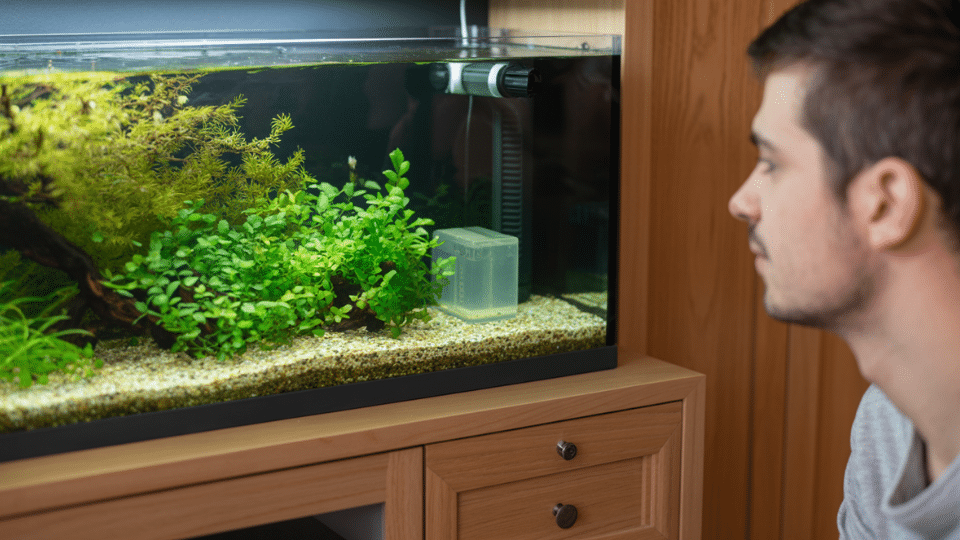
The frequency of a fish tank water change depends on tank size, stocking level, and filtration.
- Most community tanks benefit from a 10–20% water change once a week
- Heavily stocked or small tanks may need more frequent changes
- Larger tanks with good filtration may stretch to every two weeks
Tanks with filters still require regular water changes. Filters trap debris but do not remove dissolved waste. Monitoring nitrate levels helps determine whether changes should happen more often.
How Much Water Should Be Changed?
A partial water change replaces only part of the aquarium water, which helps avoid sudden shifts in chemistry.
- 10–20% for routine maintenance
- 25–40% when nitrate levels rise
- Larger changes only when the water quality is severely poor
Changing too much water at once can stress fish. Smaller, consistent changes are safer and more effective than large, infrequent ones.
How to Change Fish Tank Water Without Killing Fish?
Fish are sensitive to sudden changes in temperature and water chemistry, which is why problems often occur when replacement water differs too much from the existing tank water.
During a fish tank water change, new water should closely match the tank’s temperature and always be treated with a conditioner before being added.
Adding untreated tap water or pouring water in too quickly can shock fish and cause stress.
The safest approach is to replace water slowly and in smaller amounts so the environment remains stable.
A careful aquarium water change helps fish stay calm and reduces the risk of sudden reactions.
How to Change Fish Tank Water With Fish in It?
Changing fish tank water with fish in it is the recommended approach.
Fish should stay inside the tank because catching and relocating them causes unnecessary stress.
Partial water changes allow fish to remain comfortable while water quality improves.
Water should be added slowly, ideally using a container or hose that reduces splashing. Sudden movement, loud noise, or fast refilling can disturb fish during the process.
Keeping conditions stable is the key to reducing stress during a water change.
How to Change Water in a Fish Tank With a Filter?
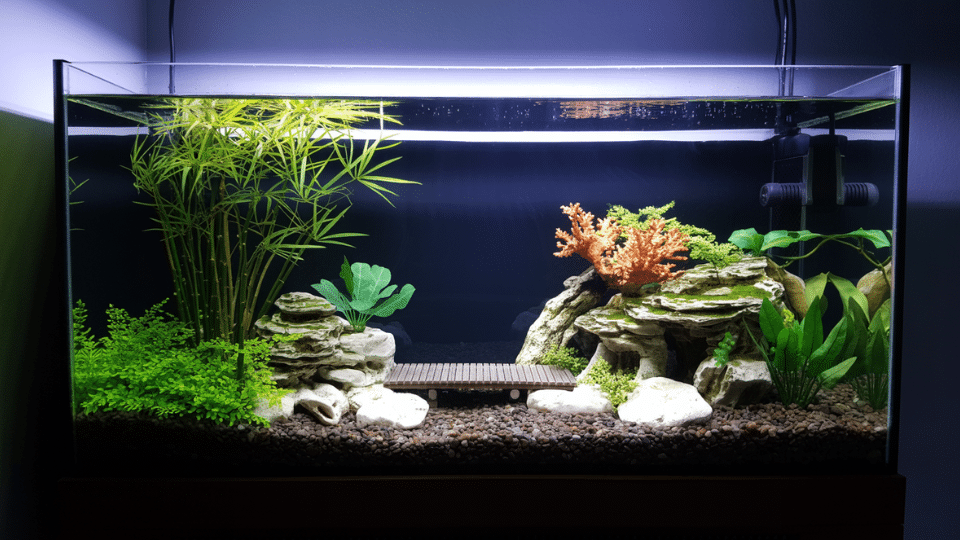
Filters should remain in place during a water change. Turning them off briefly is fine, but they should not be cleaned at the same time as the gravel.
Filters contain beneficial bacteria that help break down waste.
Cleaning the filter and performing a water change together can disrupt the biological balance.
If filter maintenance is needed, do it several days before or after changing aquarium water.
Step-by-Step Fish Tank Water Change
Turn off heaters, lights, and filters
Use a siphon to remove water into a bucket
Lightly vacuum the gravel to remove debris
Remove the desired percentage of water
Treat replacement water with conditioner
Slowly add new water back into the tank
Restart equipment once water levels stabilize
This process supports safe and effective aquarium water change routines.
What Water to Use for Fish Tank Water Change?
Tap water is commonly used, but it must be treated first. Chlorine and chloramine found in tap water can harm fish.
Safe options include Dechlorinated tap water and Conditioned RO water (when properly remineralized).
Water should sit briefly or be treated before adding it to the tank. Untreated water should never be poured directly into an aquarium.
Common Mistakes During Aquarium Water Changes
Avoiding these mistakes helps maintain stable water conditions and keeps fish comfortable during aquarium water changes.
- Removing too much water at once can disrupt temperature, pH, and beneficial bacteria, which may stress fish or cause unusual behavior.
- Adding untreated tap water introduces chlorine and chloramine, which can damage fish gills and harm helpful bacteria.
- Cleaning the filter and gravel during the same water change can reduce beneficial bacteria needed to maintain balance.
- Refilling the tank too quickly may create strong currents, loud noise, and sudden temperature changes that disturb fish.
Special Situations for Fish Tank Water Changes
Different tank conditions may require adjustments to the usual water change routine. Understanding these situations helps prevent stress and supports a healthier aquarium environment.
New Tanks
New aquariums require extra care because beneficial bacteria are still developing.
During the cycling process, frequent water changes can slow progress unless ammonia or nitrate levels rise to unsafe levels.
In most cases, water should only be changed if test results show harmful spikes. Once cycling is complete and fish are added, a regular water change routine can begin gradually.
Planted Aquariums
Planted aquariums often stay cleaner for longer because plants absorb some waste as nutrients.
Even so, water changes are still necessary to remove excess buildup and maintain proper balance.
Reduced frequency may be possible, but skipping maintenance entirely can lead to nutrient imbalances or algae growth over time.
After Illness or Cloudy Water
When fish recover from illness or the water becomes cloudy, a partial water change can help restore clarity and improve overall conditions.
Replacing a portion of the water removes lingering waste and helps stabilize the tank without causing unnecessary stress to the fish.
Conclusion
Maintaining a consistent fish tank water change routine is one of the most effective ways to support long-term aquarium health.
Regular water changes remove waste, control nutrient buildup, and help keep water chemistry stable for fish and plants.
Understanding how often to change water, how much to replace, and how to do it safely reduces stress and prevents common problems.
Each tank is different, so routines may need small adjustments based on size, stocking, and filtration.
Paying attention to water quality and fish behavior helps guide those decisions.
With proper care and steady maintenance, aquarium water stays clean, balanced, and supportive of healthy fish over time.

Holding a PhD from Cornell University in Ecology and Evolutionary Biology, Will Jacks has dedicated 15 years to studying and writing about biodiversity. Before becoming a pivotal contributor to our site in 2018, he served as a consultant for wildlife documentaries, blending his academic rigor with visual storytelling. His work, aimed at demystifying the lives of creatures big and small, reflects a career spent in both academia and the field. An advocate for conservation, Will’s hobbies include photography of rare species and volunteering for animal rescue organizations. His insights bring a unique blend of professional expertise and personal commitment to our readers.