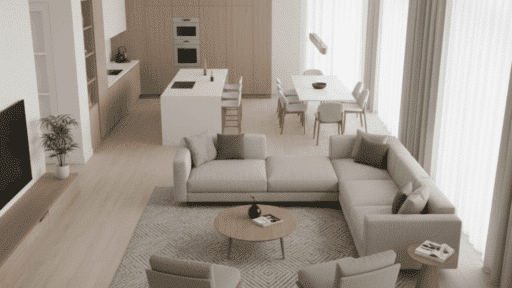
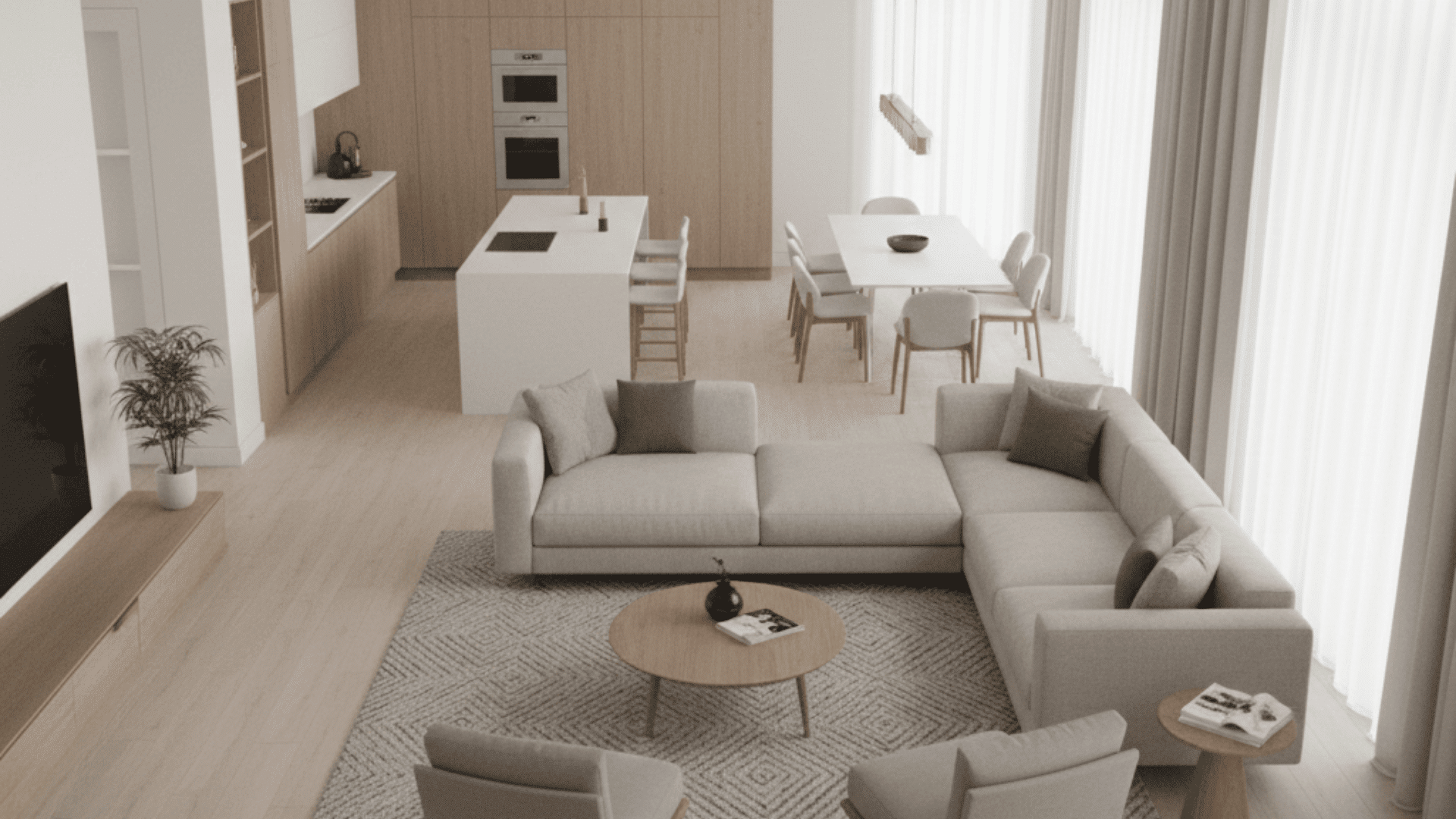

A long open-plan kitchen living room offers flexibility, light, and a strong connection between daily activities, but it also demands careful planning.
Without a clear structure, these spaces can feel stretched, cluttered, or difficult to use. The most successful long open plans rely on intentional zoning, controlled sight lines, and layouts that support real movement rather than furniture pushed to the edges.
When each zone has a clear role and transition, the room feels organized instead of overwhelming.
These ideas focus on complete floor-plan strategies that help long open spaces function smoothly, stay visually calm, and adapt to everyday living as well as entertaining.
Open Floor Decorating and Layout Plan Ideas
A long open-plan space works best when each zone is clearly defined without breaking visual flow.
The ideas below focus on complete layout strategies that organize movement, balance activity, and keep kitchen, dining, and living areas working together as one cohesive plan.
1. Great-Room Open Floor
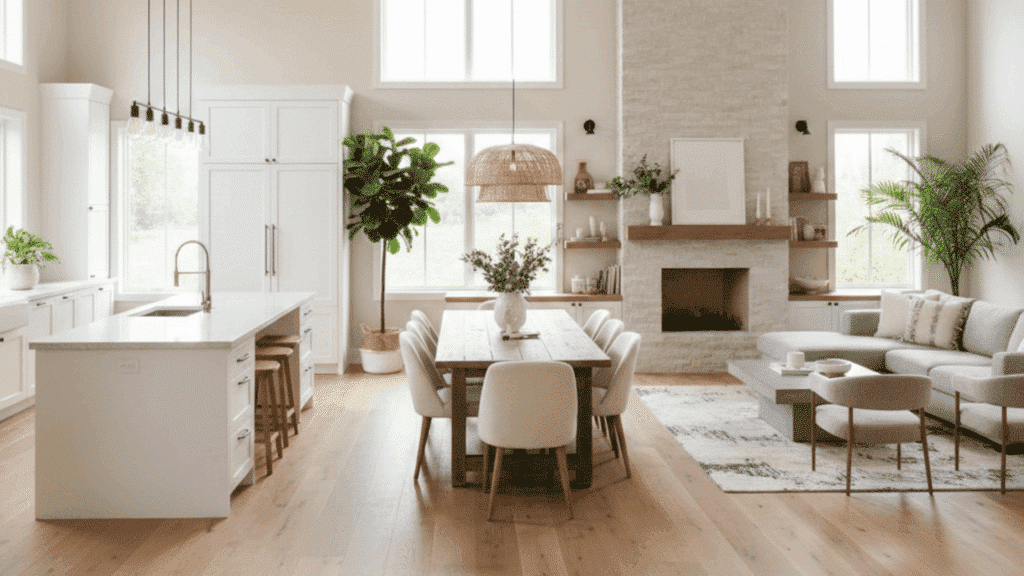
Combine kitchen, dining, and living into one shared “great room” with one clear focal point (like a media wall or fireplace).
Keep furniture grouped in zones so the space feels intentional, not scattered. This layout boosts light and togetherness, but needs smart zoning for noise and clutter control.
2. Shape Around an L-Layout Open Floor
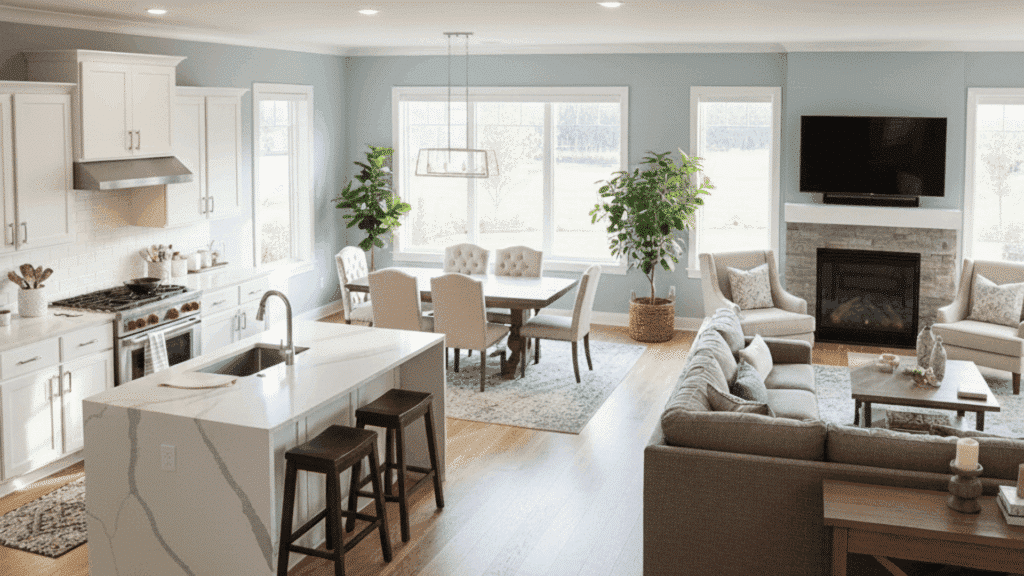
Use an L-shaped kitchen to define two sides of the open space: cooking on one leg, dining/living on the other. It naturally creates a corner “hub” without walls.
Keep the inside corner open for traffic flow, and place seating so sight lines stay clear across zones.
3. Island-and-Dining-Table Open Floor
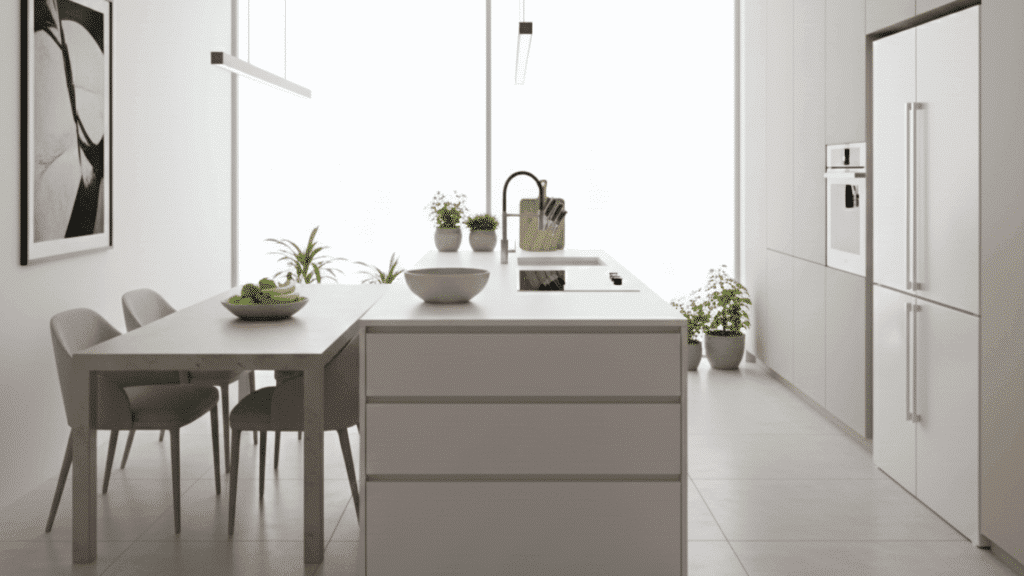
Place a kitchen island first, then position the dining table close enough for easy serving but far enough to avoid chair collisions. This creates a natural meal-prep-to-dinner path.
The design focus is convenience and social cooking, with the table acting as the “second anchor” after the island.
4. U-Shaped Open Floor
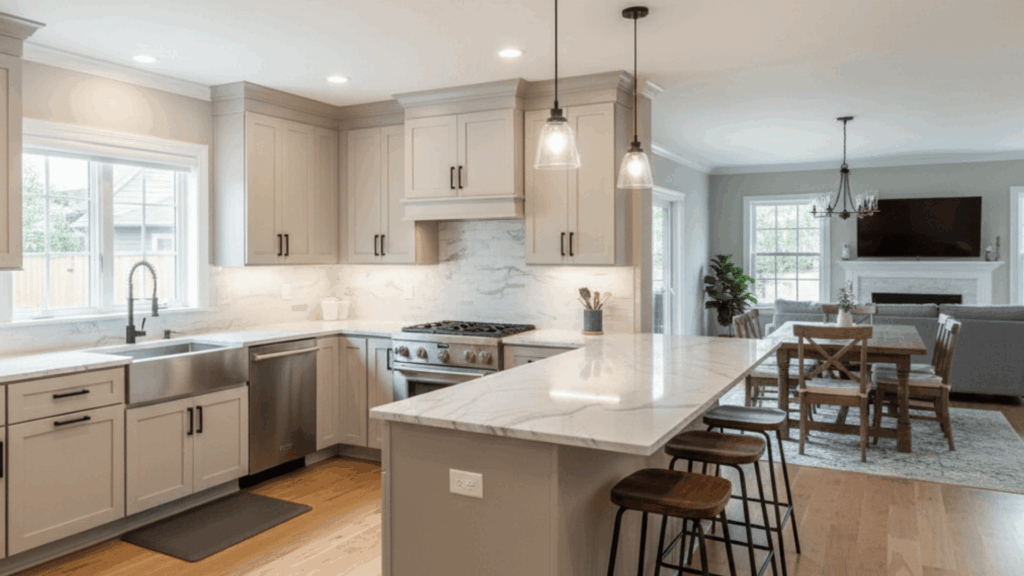
A U-shaped kitchen gives maximum counter space while still opening to the living and dining.
Keep one side as a low “open edge” (peninsula or half wall) so the kitchen feels connected, not boxed in. This plan focuses on efficiency: short steps between sink, stove, and fridge.
5. Island Parallel to Sofa Open Plan
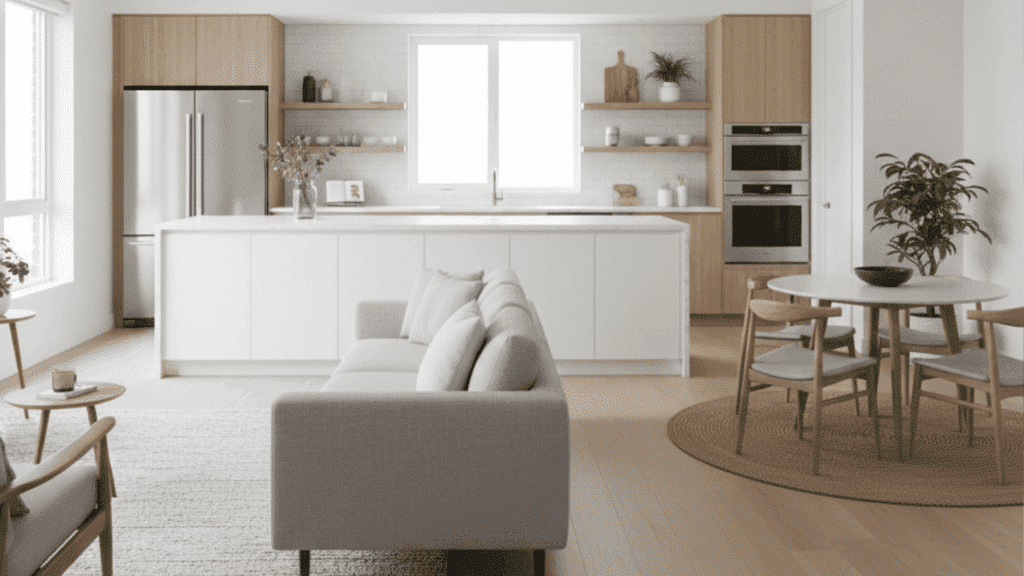
Align the island with the sofa so the back of the seating zone faces the kitchen, creating a clean boundary. Add a narrow console behind the couch for lamps or baskets.
This layout focuses on straight sight lines and conversation, so cooks can face the living area without twisting the room’s flow.
6. Open Galley Floor Plan
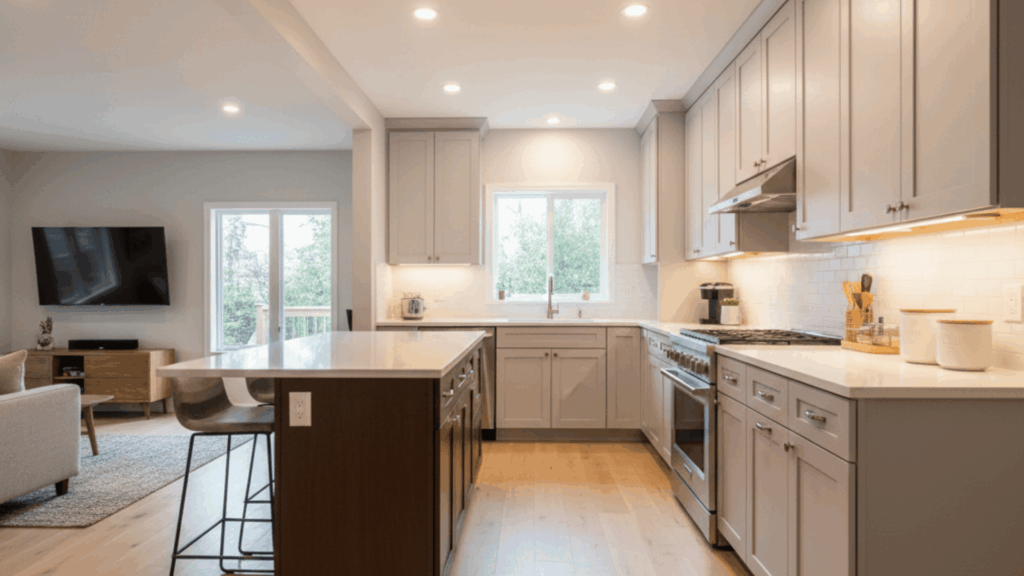
An open galley keeps two parallel runs of cabinets but removes the “closed hallway” feeling by opening one end to dining/living. It’s ideal for smaller homes because it uses space efficiently.
The focus is on a strong work zone with a direct path to the table and minimal wasted steps.
7. Open Sight Lines Floor Plan
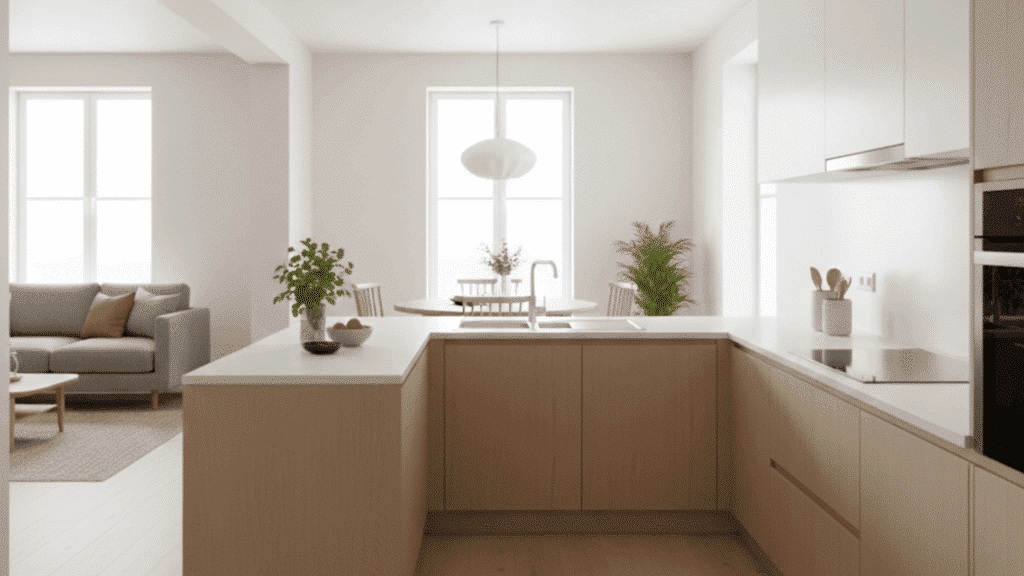
Design the room so the first view from the entry feels calm and balanced, no tall clutter blocking the line of sight. Keep upper cabinetry lighter or limited, and use low furniture near walkways.
The focus is visual openness, which is a key benefit of open concepts.
8. Peninsula Open Floor Plan
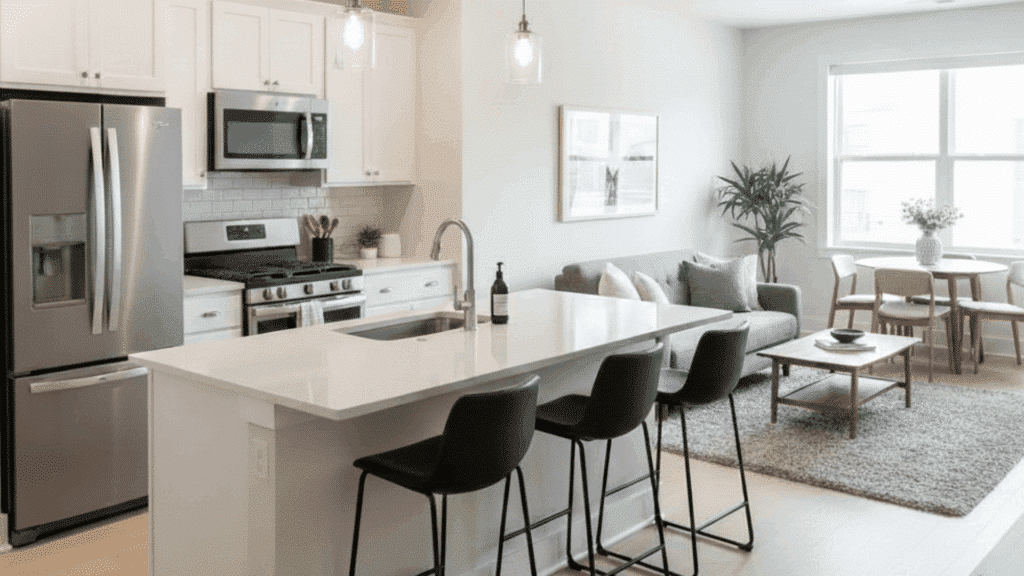
Swap a whole island for a peninsula when space is tight. A peninsula creates seating and prep space while preserving traffic lanes.
Aim the open side toward the living zone so cooks can stay connected. This plan focuses on “built-in zoning” with fewer clearance demands than a centered island.
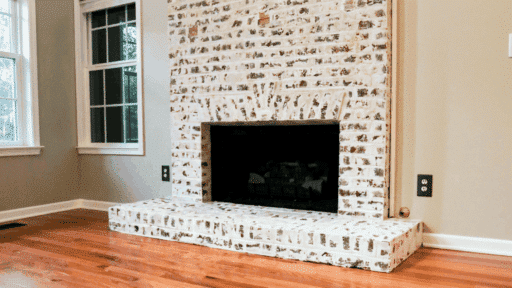
9. Fireplace Open Floor Plan
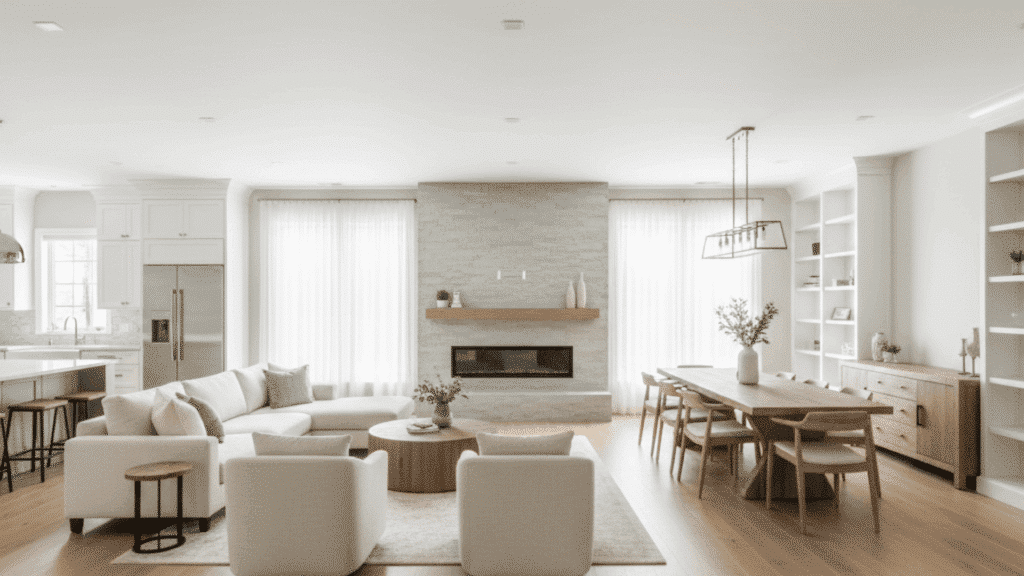
Use a fireplace as the shared focal point that visually holds the living zone in place. Position seating to face it, then orient the dining area nearby, but not competing for attention.
The design focus is hierarchy: one main focal feature helps an open plan feel organized instead of a floaty walkthrough.
10. Pantry Open Floor Plan
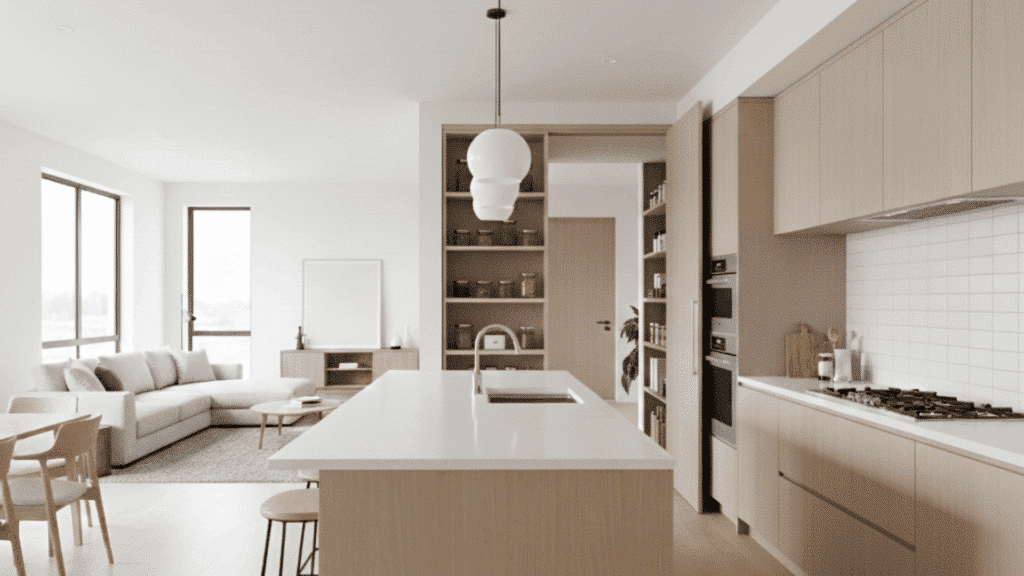
A walkthrough of the pantry between the kitchen and the garage/mudroom so groceries and clutter move “behind the scenes.”
This keeps counters cleaner in an open concept where everything shows. Focus on function: store appliances, snacks, and bulk items out of sight while keeping the kitchen’s main wall airy and straightforward.
11. Double-Island Open Floor Plan
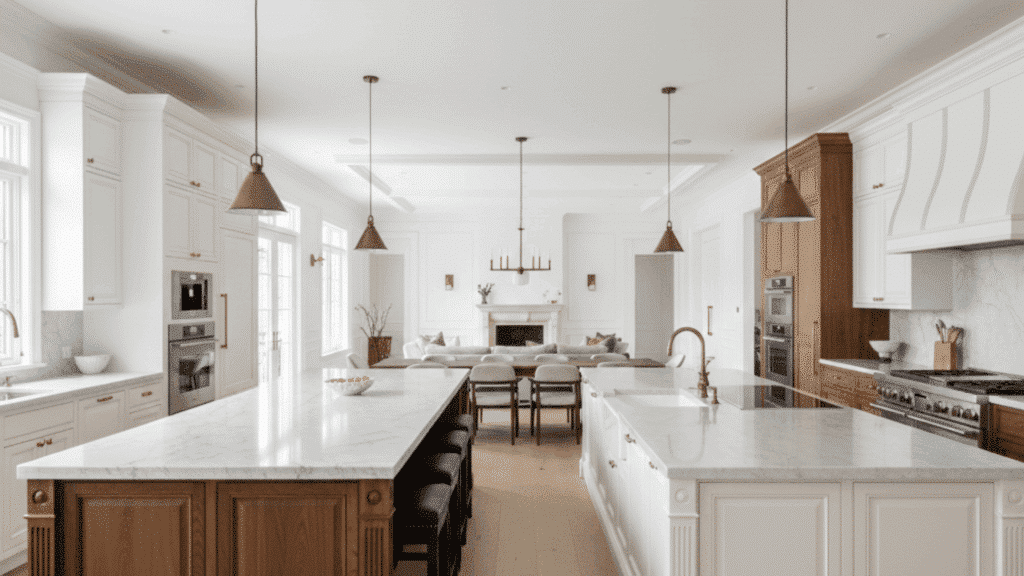
Two islands work in large open spaces: one for prep and one for seating/serving. Keep at least one clear aisle between them so traffic doesn’t choke.
The design focus is separation of tasks; mess stays in the prep zone while guests gather at the social island without crowding the cook.
12. Open-Stairwell Open Floor Plan
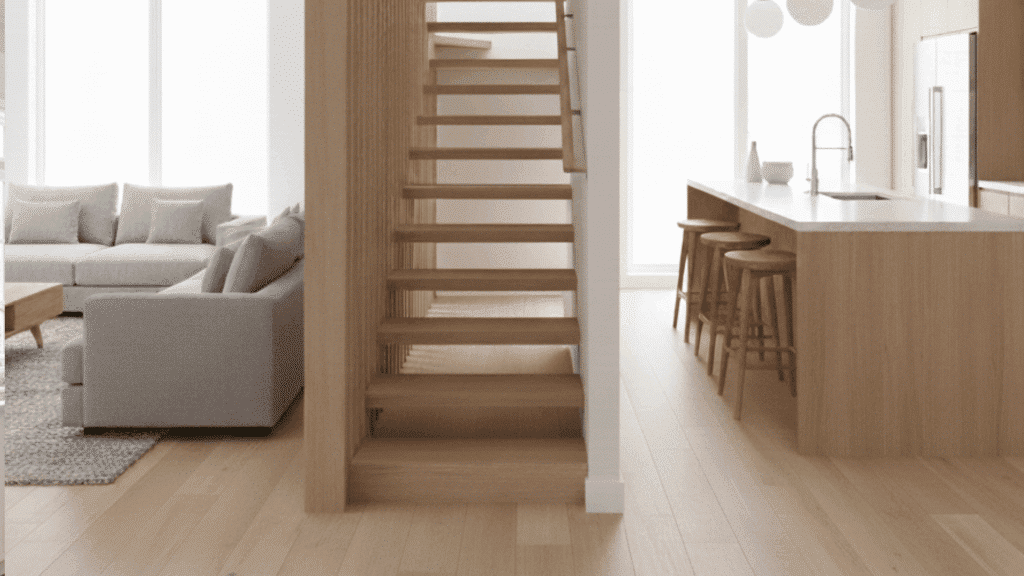
Let the stairwell act like a vertical “room divider” without closing the layout. Use the under-stair area for storage, a reading nook, or built-ins.
Keep railings visually light to protect sight lines. The focus is on using architecture to define zones while keeping airiness and light movement.
13. Dining Banquette Nook
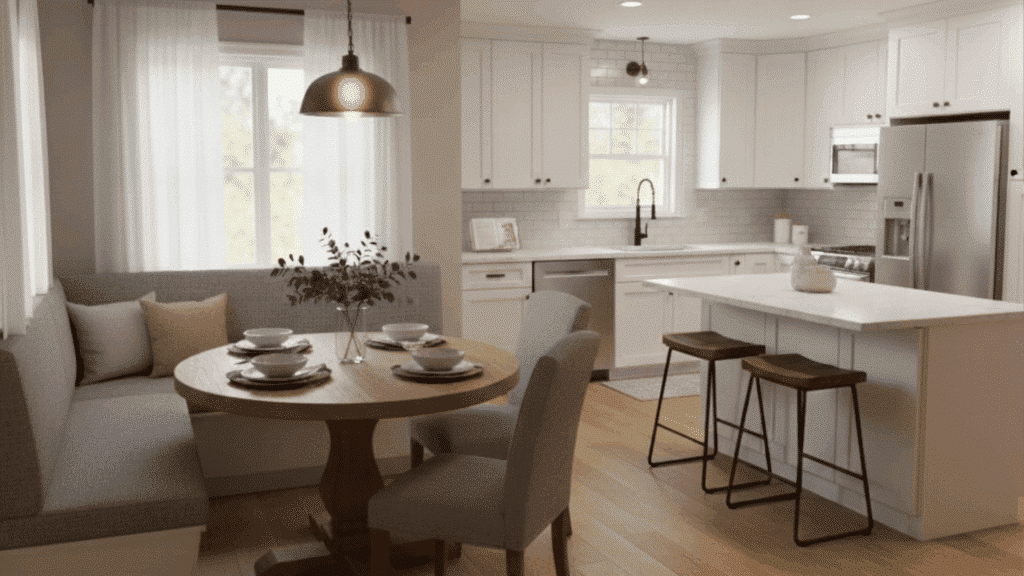
Build a banquette along a wall or window to create a cozy dining zone inside a large open room. It saves space, reduces chair clutter, and visually “pins” the dining area in place.
The focus is comfort and efficiency; banquettes make open dining feel intentional, not like furniture floating.
14. Open-Entry Drop Zone
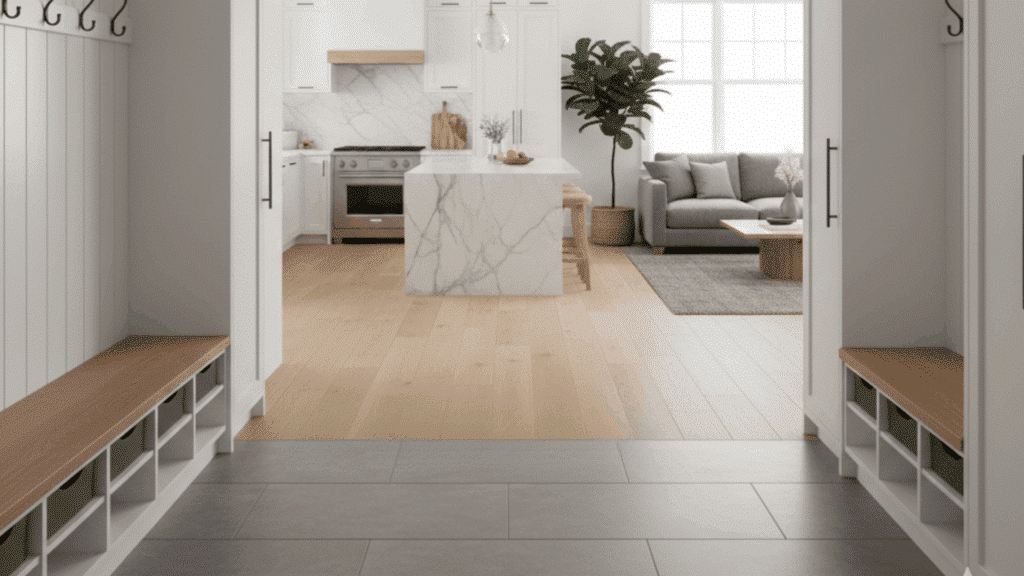
Create a small entry drop zone with hooks, a bench, and a closed cabinet so shoes and bags don’t spill into the open plan. Place it near the main traffic path but slightly tucked aside.
The focus is on controlling visual clutter, which is essential when the whole main level is visible.
15. Loft-Style Open Floor
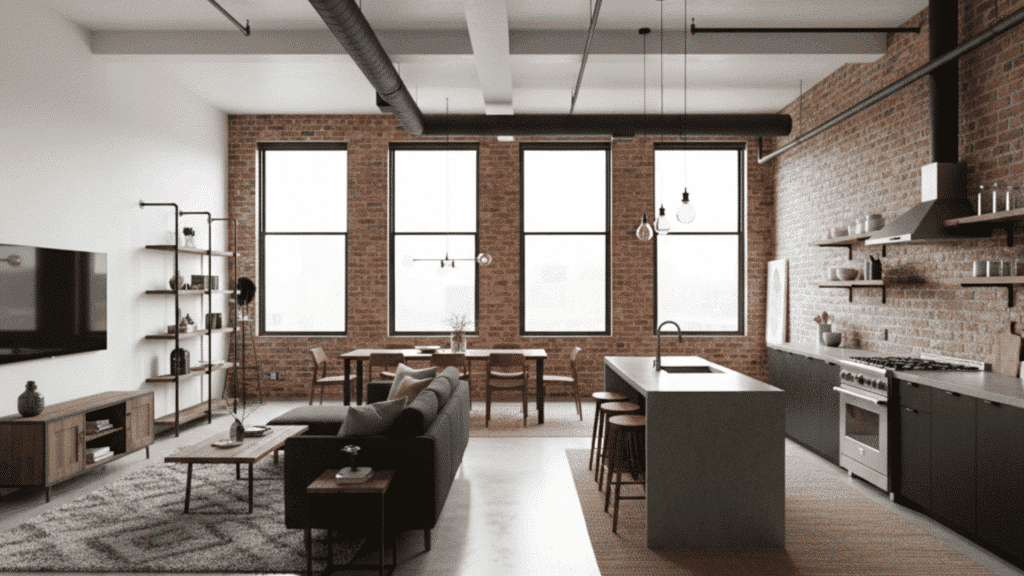
Loft-style plans lean into openness with fewer partitions and more flexible furniture-based zones. Use large rugs and strong lighting choices to define “rooms.”
Keep storage closed and minimal to avoid a warehouse feel. The focus is adaptability, spaces shift from entertaining to work to lounging without structural changes.
16. Window Wall
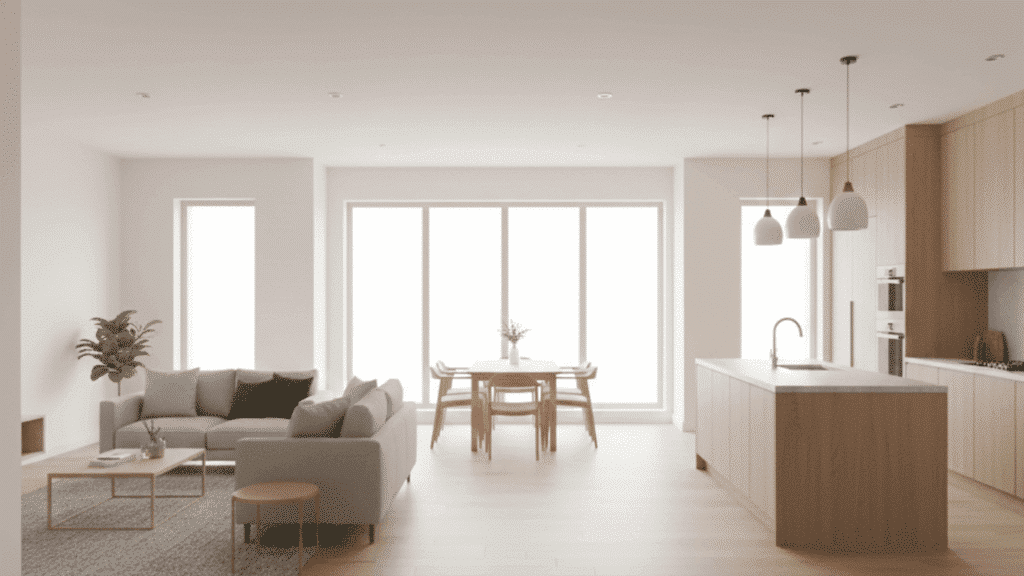
Use a whole window wall to pull light across the open plan and visually expand the room. Arrange seating to face the view, then place dining nearby so both zones share daylight.
The focus is on rightness, one of the biggest perks of open concepts, while managing glare with layered window treatments.
17. Office Nook
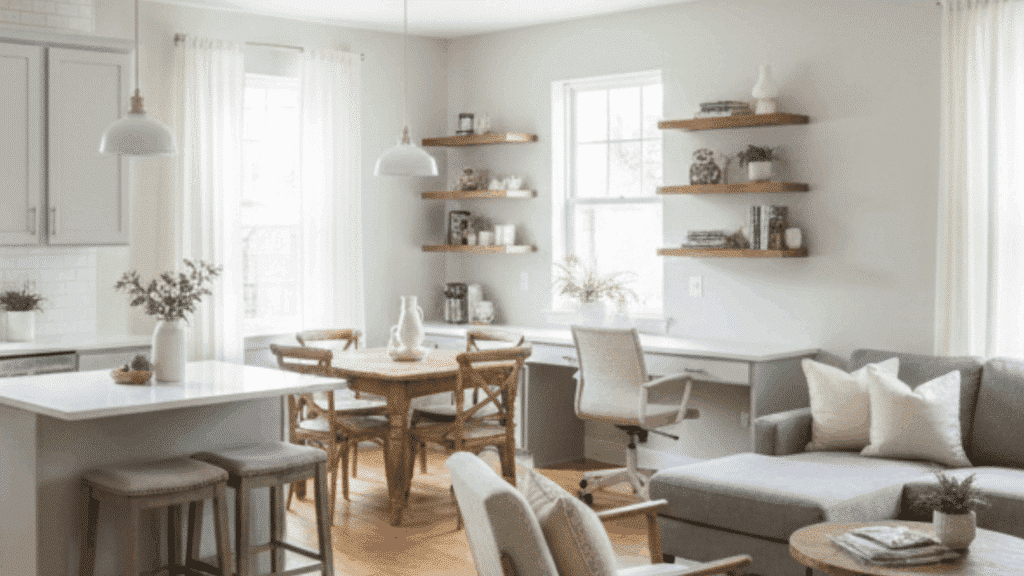
Carve out a compact office nook along a wall with a slim desk and vertical storage. Use a rug or wall paint change to “frame” it without walls.
The focus is on function in open living, open plans can lack quiet corners, so a defined micro-zone helps work feel contained
18. Separated by Rugs
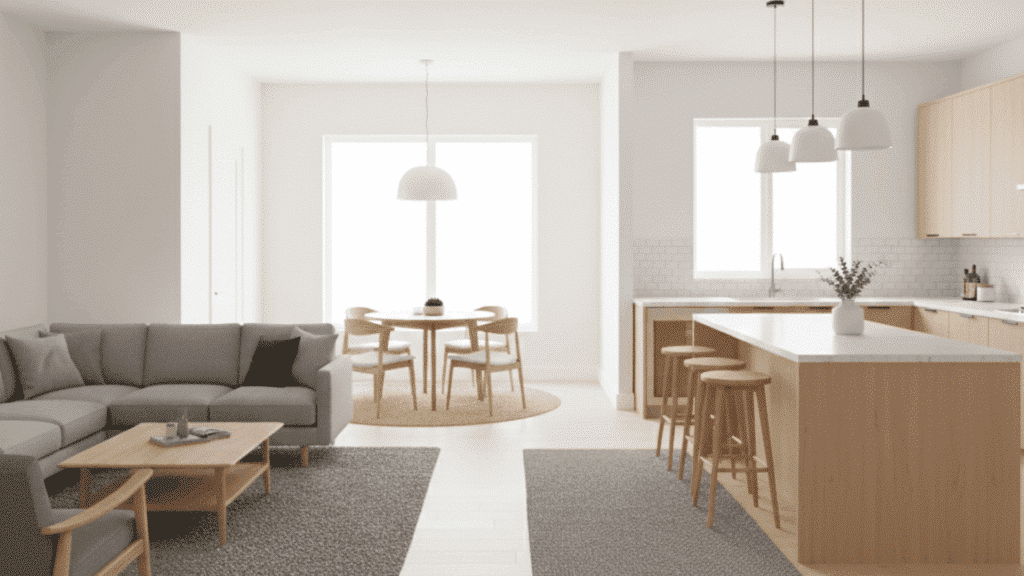
Assign a distinct rug to each zone, living, dining, and sometimes a kitchen runner, so the eye reads clear boundaries.
Choose sizes that fully fit the furniture groupings (front legs on, dining chairs staying on the rug). The focus is zoning without walls, a core trick for open layouts.
19. Separated by Lighting
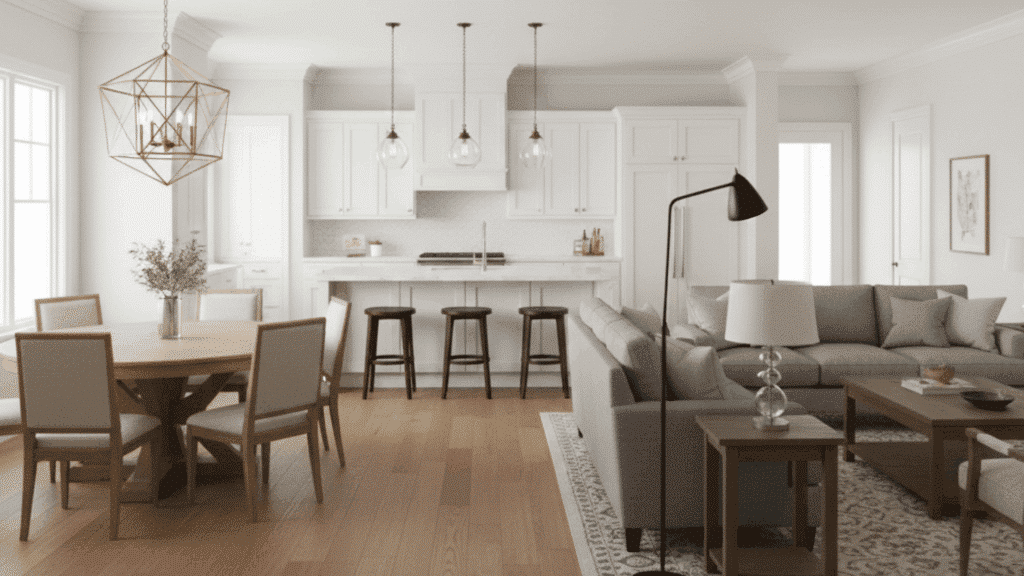
Use different lighting “layers” per zone: pendants over the island, a chandelier over the dining, and floor/table lamps in the living.
This creates visual rooms and improves function. Keep fixture styles related so it feels cohesive. The focus is clarity; lighting tells the brain where each activity belongs, even in one big space.
20. Floating-Furniture Layout
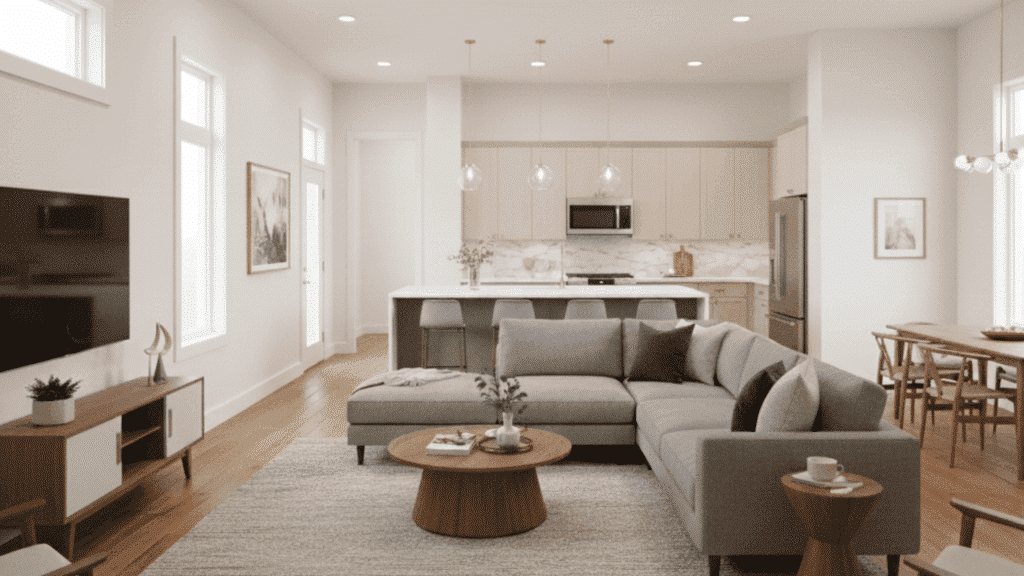
Float the sofa and chairs away from the walls to form a living “island” inside the open plan. Add a console or low shelf behind seating to create a soft boundary.
The focus is intentional placement; floating groups stop the space from feeling like a perimeter ring of furniture with emptiness in the middle.
21. Console-Table Divider
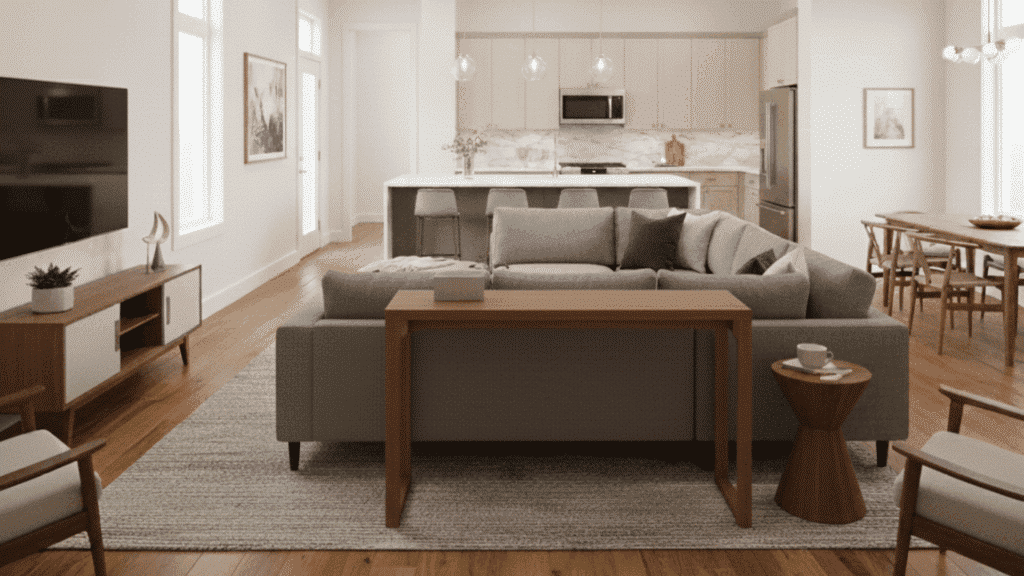
Place a console table behind the sofa or between the living and dining to create a subtle divider. Use it for lamps, art, or baskets that hide small clutter.
The focus is on light separation without blocking sight lines, perfect when an open concept needs structure but not another bulky piece like a bookcase.
22. Walkway Loop
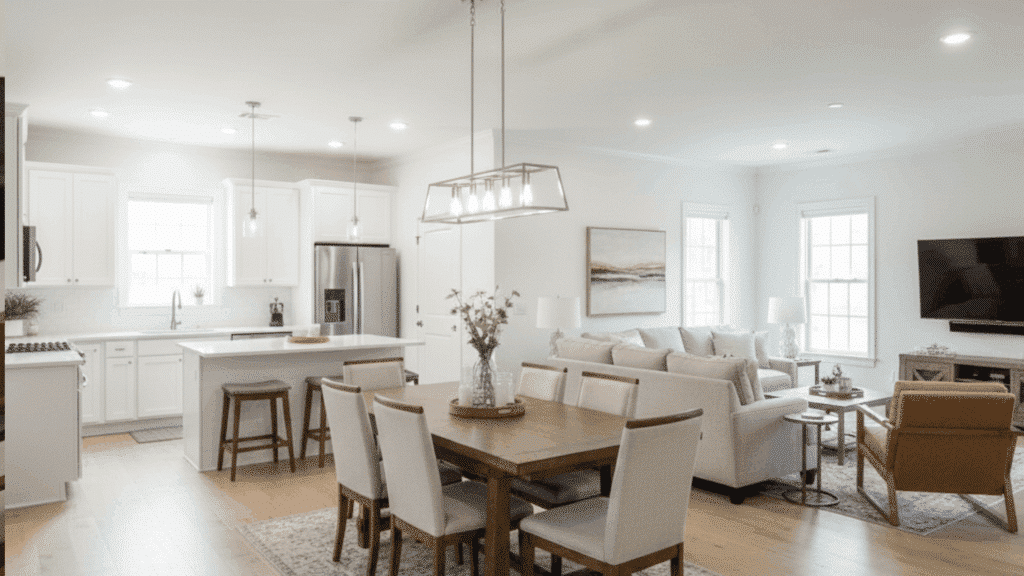
Design circulation as a loop so people can move around seating, island, and dining without dead ends. This reduces bottlenecks during daily life and gatherings.
The focus is flo; open plans can still feel cramped if paths collide. A clear loop keeps movement smooth and protects each zone’s comfort.
23. Dining with the Living Area
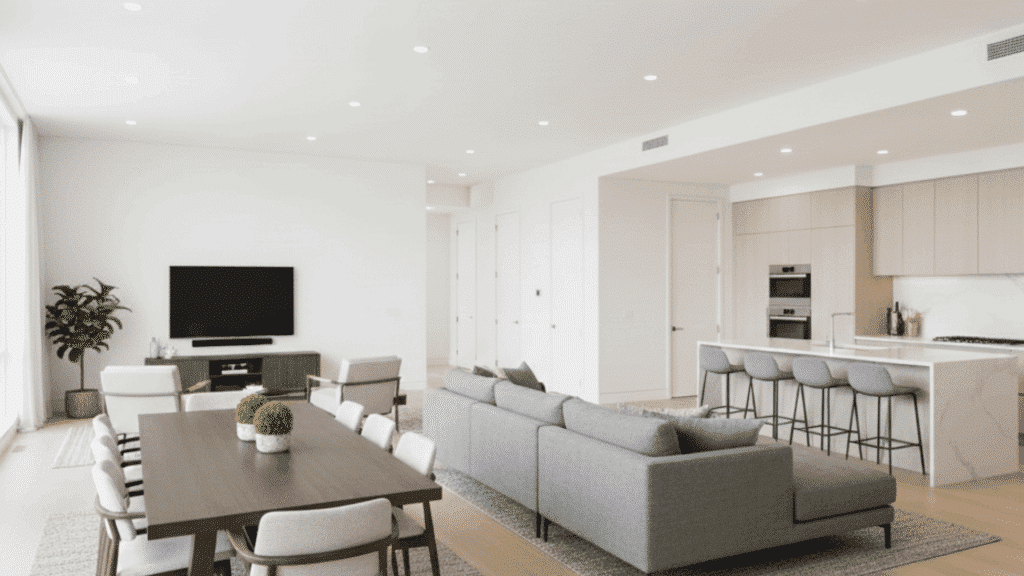
Blend dining and living by using one unified palette and aligning furniture edges (table centered with sofa grouping).
Keep the dining zone slightly “forward” so chairs don’t interrupt the living path. The focus is on harm; my approach makes the open plan feel calm and coordinated instead of three separate styles competing.
24. Shelving Divider
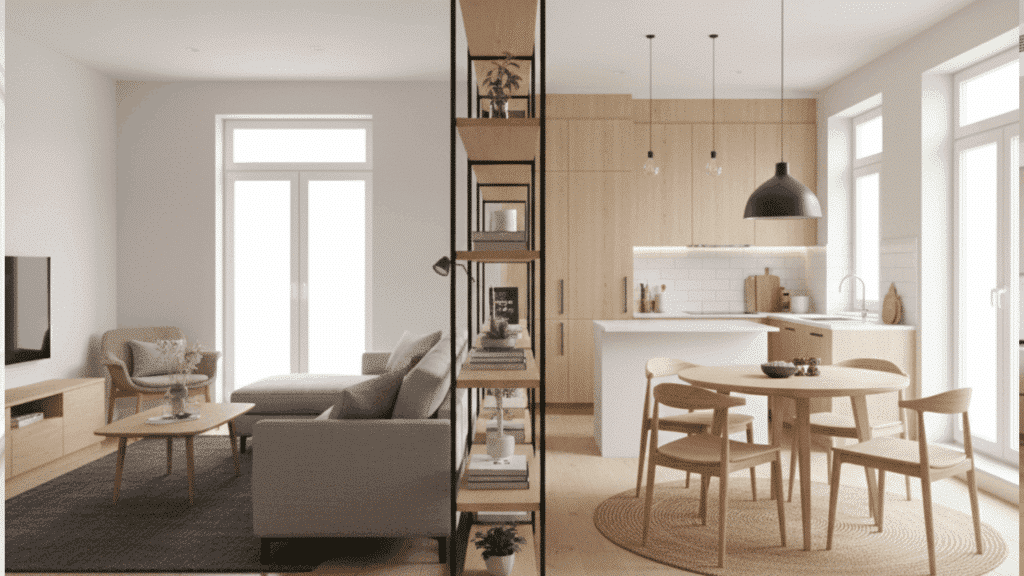
Use open shelving as a divider between zones to add storage while keeping light and visibility. Keep shelves airy, with more negative space than objects, to avoid visual clutter.
The focus is function plus zoning: shelving can separate living and dining while also holding books, baskets, or decor that supports the room’s style.
25. Tray Ceiling
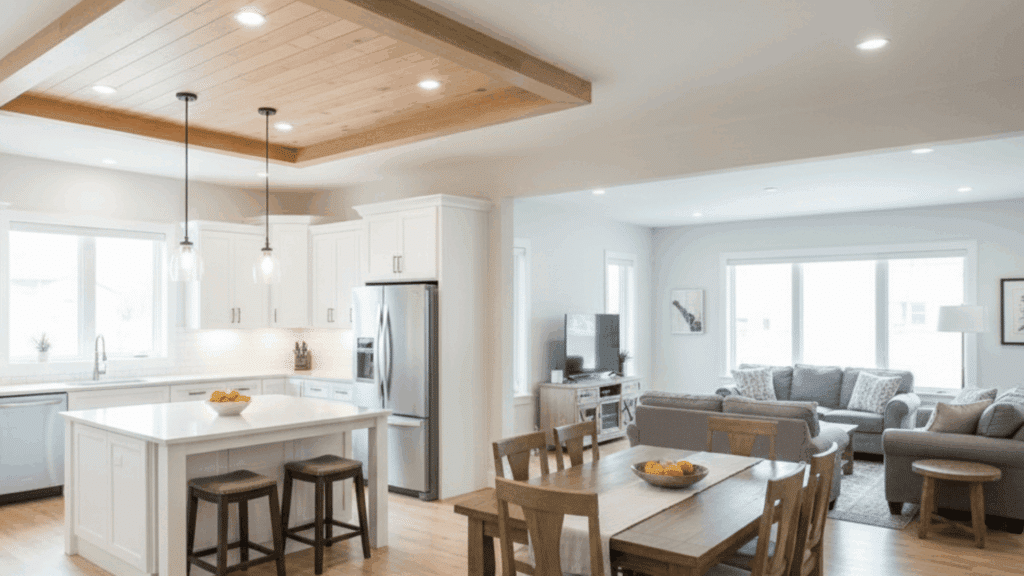
Add a tray ceiling over one zone (often living or dining) to create a “room within a room” feeling. It defines space without walls and adds height detail.
The focus is architectural zoning, subtle ceiling changes help open plans feel designed, not like one large rectangle with furniture dropped in.
26. Contrasting Color Island
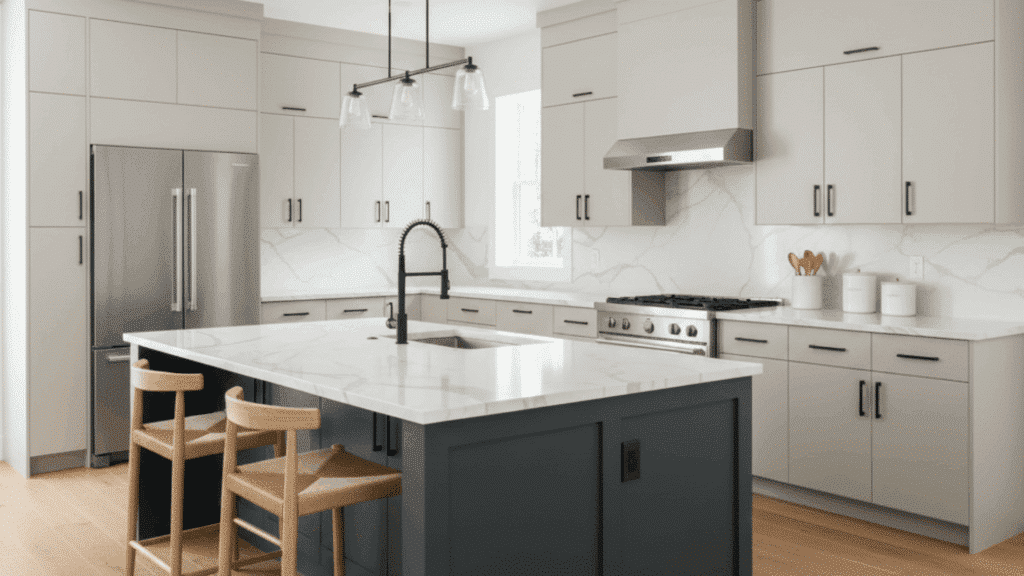
Make the island a contrasting color from the perimeter cabinets to turn it into a design anchor. This helps the kitchen read as its own zone in an open plan.
The focus is visual definition; contrast creates a boundary that the eye understands, especially when walls are gone, and everything shares one continuous flooring.
27. Matching Finishes
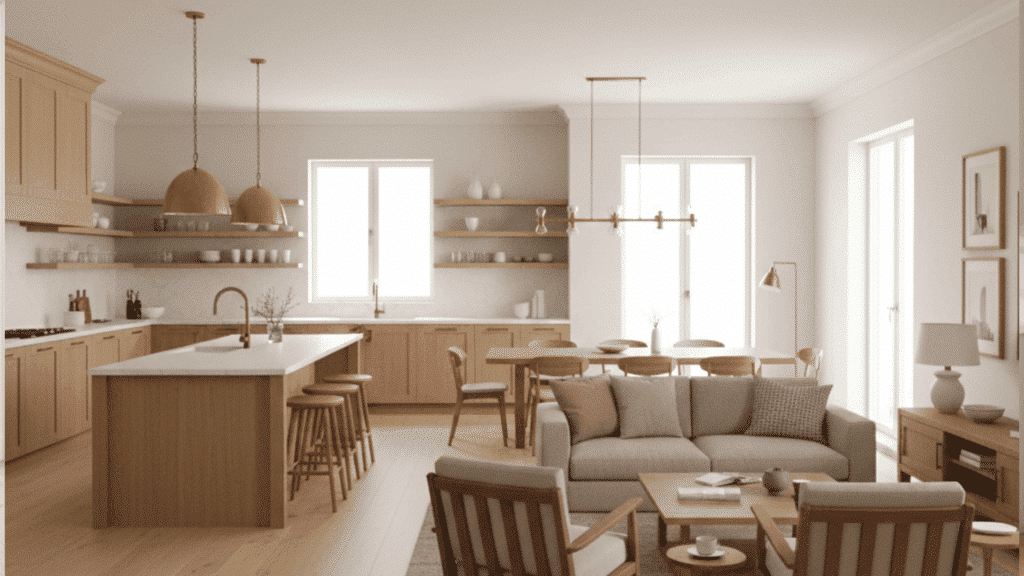
Repeat finishes across zones, same metal tone, consistent wood stain, coordinated textiles, so the open plan feels unified.
This prevents the kitchen from looking like a separate “different house” from the living room. The focus is cohesion, which matters more in open layouts because the spaces are always seen together.
28. Give the Dining Area One Bold Feature Wall
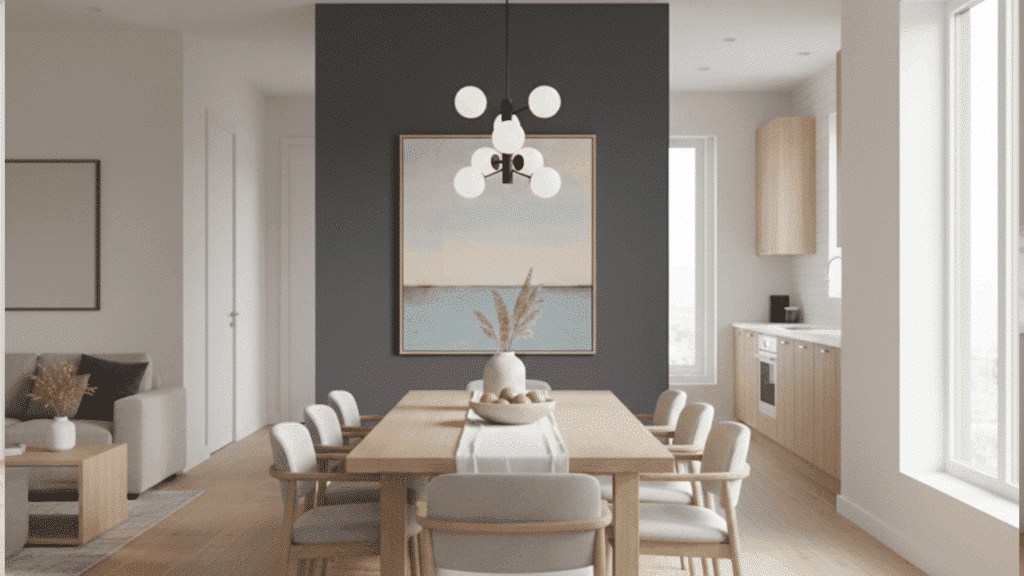
Create a dining accent wall with paint, paneling, or wallpaper to give the table a clear home base. Keep the rest of the open plan quieter so the accent doesn’t overwhelm.
The focus is anchoring; one defined wall can replace the role a missing dining room enclosure used to play.
29. Balance the Main Wall With Symmetry
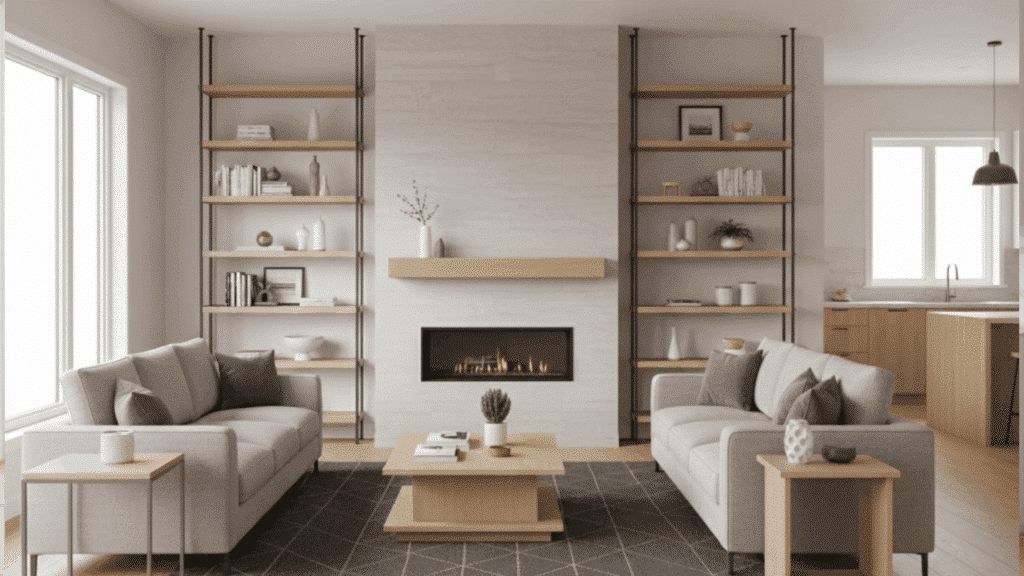
Build symmetry on a central wall, matching sconces, balanced art, or paired cabinetry, to calm an ample open space. Symmetry creates order when everything is visually connected.
The focus is balance: in open plans, too many competing focal points can feel chaotic. A symmetrical feature wall gives the eye a place to rest.
30. Use Art as the Room’s Visual “Center”
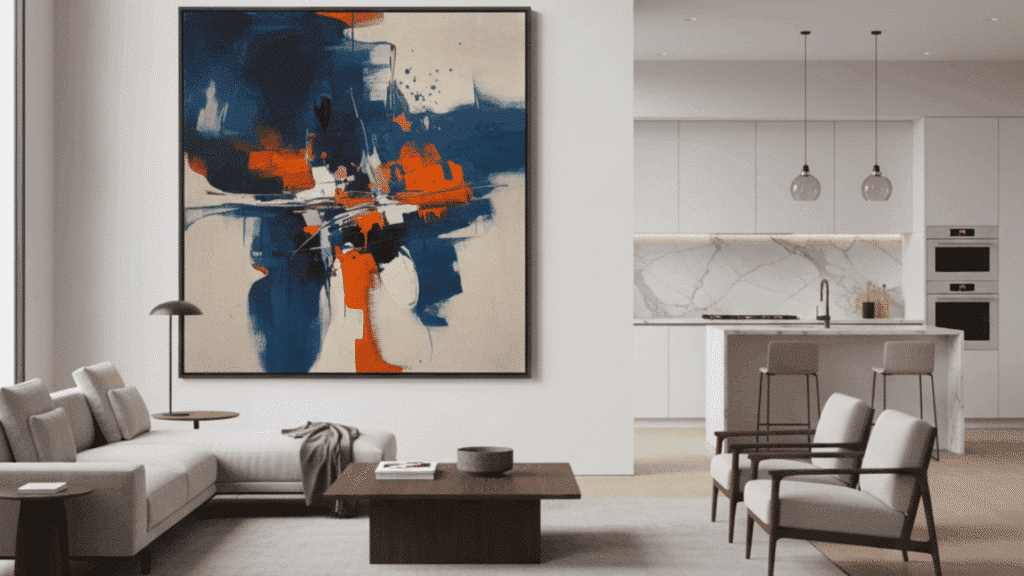
Use a large, intentional art wall to define the living zone and set the style direction for the whole open plan. Keep the surrounding decor simpler so the art reads as a primary anchor.
The focus is storytelling, art can replace walls as the “boundary marker,” visually separating lounging from dining or kitchen activities.
31. Create a Dedicated Beverage and Serving Spot
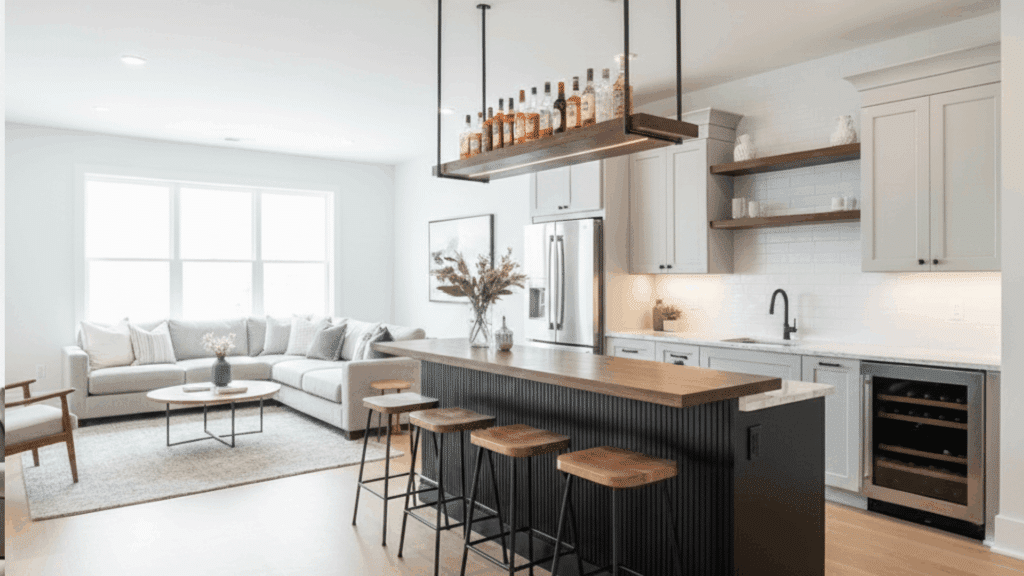
Create a small bar corner with a cabinet, open shelves, and a tray for glassware to serve as an entertaining zone. Place it near the dining but away from the main cooking lane.
The focus is on function: a bar corner reduces kitchen crowding during gatherings and gives the open plan a purposeful “hospitality” feature.
32. Pick Hardworking Finishes for Real Life Wear
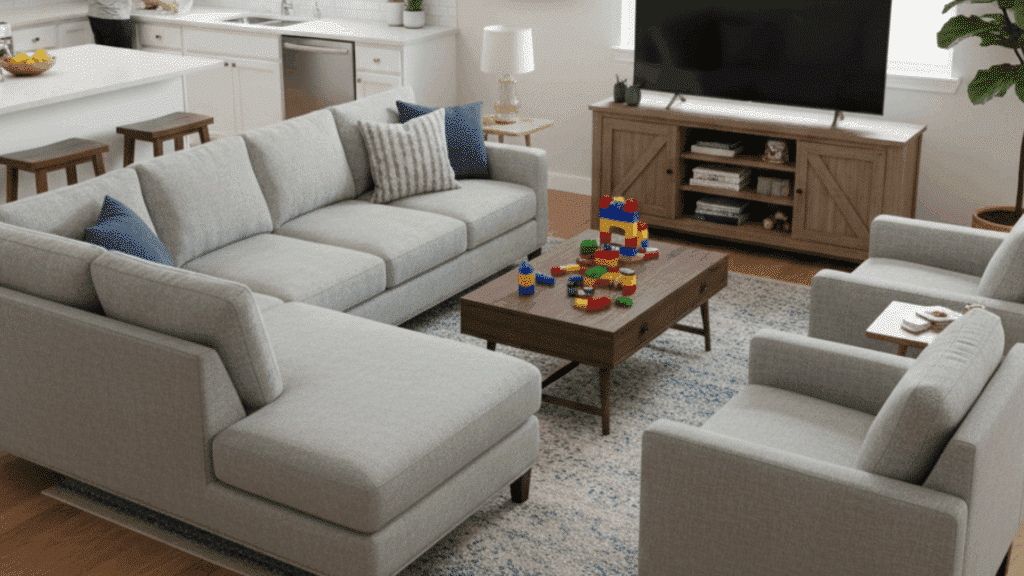
Choose durable materials where traffic and mess overlap, such as washable rugs, wipeable upholstery, and hardwearing flooring.
Open plans concentrate activity, so wear shows faster. The focus is longevity: practical finishes keep the home looking good even when kitchen, dining, and living share the same zone, and cleaning has to be frequent.
33. Add Sliding Pocket Doors for Optional Separation
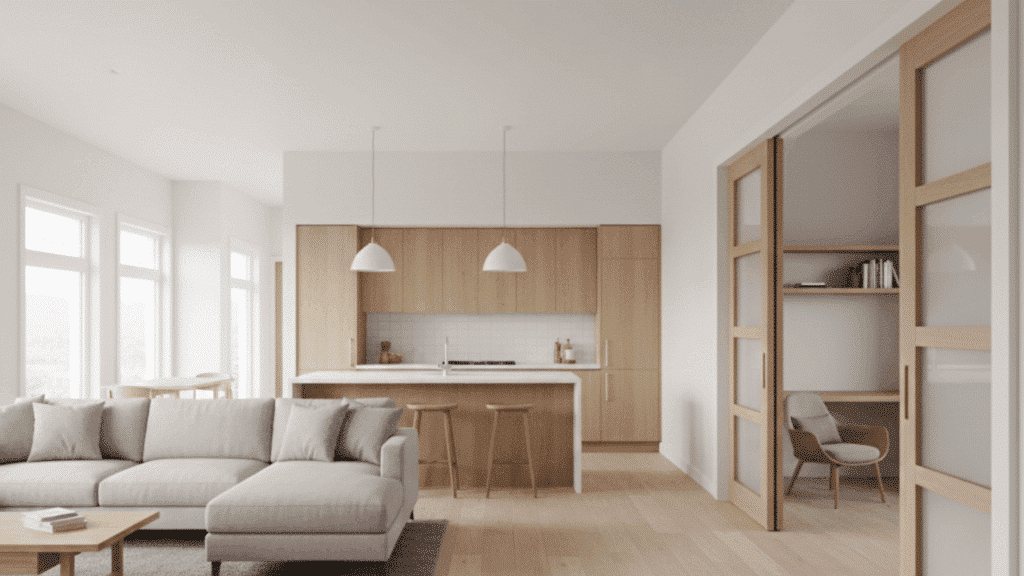
Add pocket doors to close off a kitchen, office nook, or media space when needed without losing the open-plan option. They slide away when open and reduce noise when closed.
The focus is on flexibility; open plans can struggle with privacy and sound, so pocket doors offer the best of both worlds.
34. Layer Soft Textiles to Reduce Echo
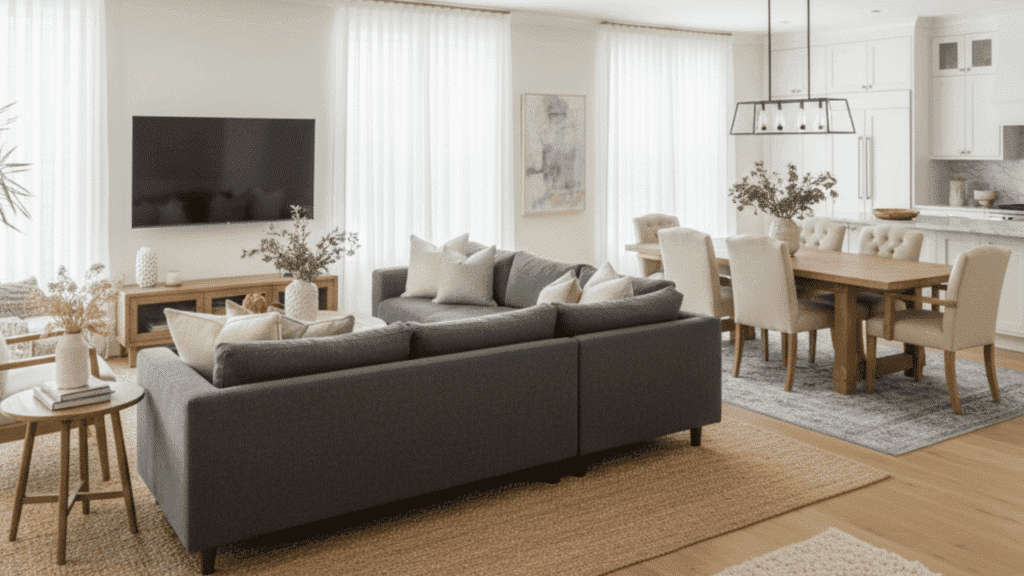
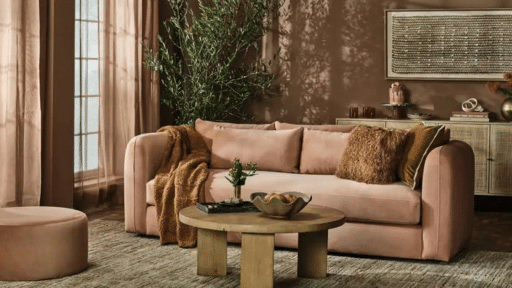
Use soft fabrics, curtains, upholstered seating, and textured rugs to absorb sound and reduce the echo familiar in open concepts.
Keep the palette consistent so the softness feels intentional, not cluttered. The focus is comfort: open layouts often need sound help, and textiles do it quietly while also adding warmth and a lived-in feel.
35. Create a “Kitchen Mess” Visual Boundary
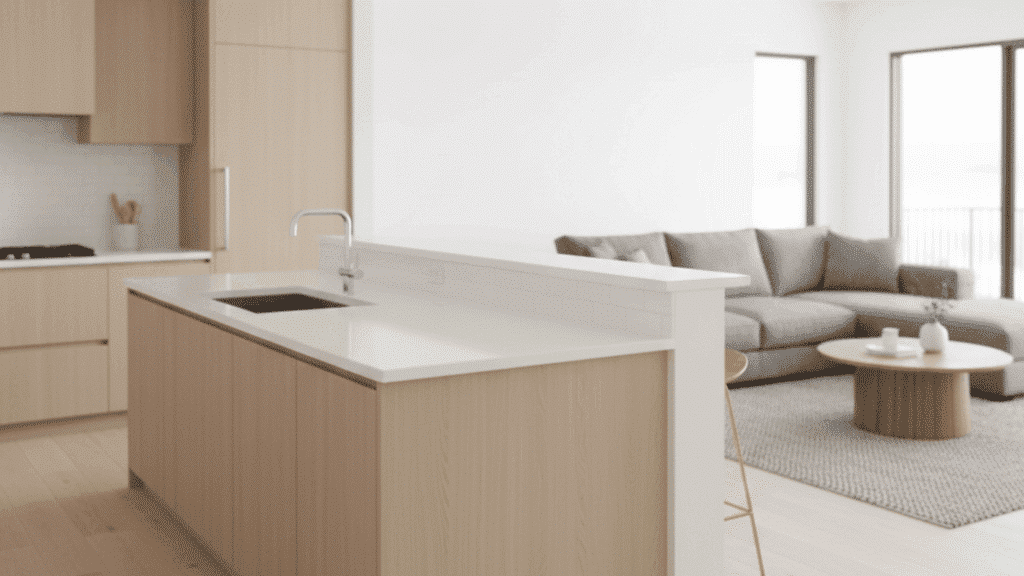
Create a “mess boundary” so the kitchen stays functional without dominating the open plan. Use taller backsplashes, a raised bar ledge, or strategic sight-line control (like the sink not facing the entry).
The focus is visual calm, open plans expose everything, so hiding the daily mess makes the whole space feel cleaner.
Conclusion
Designing a long open-plan kitchen living room works best when layout decisions come before décor.
Clear circulation, defined zones, and consistent finishes create structure without closing the space. Whether you rely on islands, rugs, lighting, or architectural features, each choice should support movement, visibility, and daily use.
Avoid overloading the room with competing focal points or blocking pathways that turn openness into congestion.
When the kitchen, dining, and living areas are balanced and purpose-driven, the space feels comfortable and efficient instead of oversized or chaotic.
A well-planned open plan grows with changing needs while remaining easy to maintain.

With a Master in Architectural Studies from University of Pennysylvania, Marwa Haydar has pioneered living spaces since 2005. Her expertise, initially honed in a prestigious architectural firm, is evident in her approach to creating environments. Marwa became part of our team in 2019 and has since been a driving force in our home improvement section, known for her practical yet stylish solutions. She’s been spearheading our design workshops since then, infusing her passion for teaching into her work. In her leisure time, Marwa enjoys exploring historic architecture and is an enthusiastic pottery hobbyist, further enriching her understanding of form and texture.