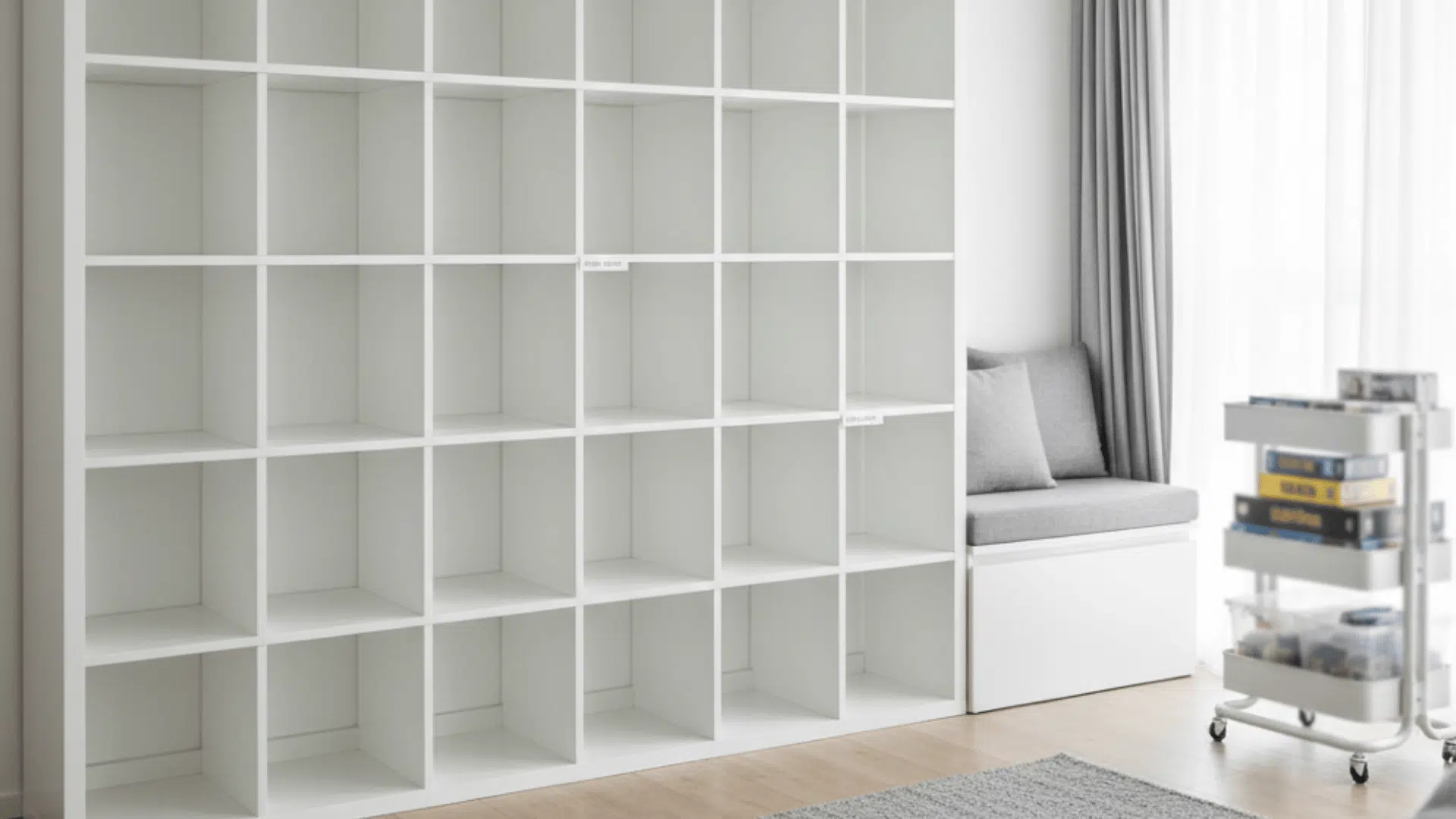

A board game collection grows quickly, and without a defined storage system, it becomes difficult to browse, maintain, and use.
Poor organization leads to damaged boxes, missing components, and unnecessary setup time. Effective board game storage focuses on visibility, protection, and ease of access.
The goal is not to store more games, but to make every game easy to find, set up, and put away.
The ideas below prioritize practical layouts, simple modifications, and repeatable systems that work for small or large collections.
Each method is designed to reduce clutter, protect components, and support regular play.
Board Game Storage Ideas
These ideas focus on visibility, stability, and fast setup. Each system can be used independently or combined to fit available space and collection size.
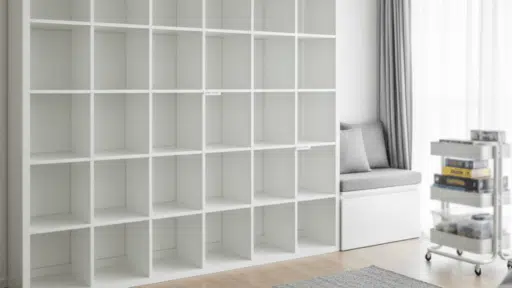
1) IKEA KALLAX Cube Shelf “Game Library”
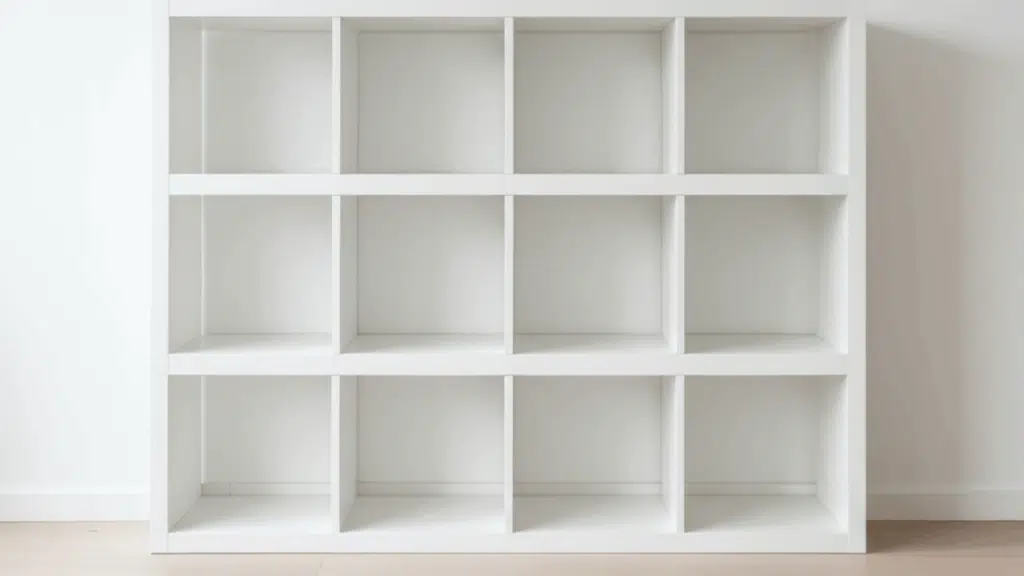
Build a dedicated game wall using cube shelving. Assign each cube to a category (family, party, strategy, kids).
Store boxes vertically for spine visibility, and keep heavy games in lower cubes. Add simple labels so everyone returns games to the correct spot.
Pro tip: Keep one empty cube for “recently played” to prevent piles.
2) Rod Divider Hack for Cube Shelves

Add two interior rods or slim dividers in a cube to prevent vertically stored games from leaning and toppling.
This makes it easier to slide games in and out without disturbing the full stack. Use this in high-traffic cubes where titles get pulled often.
Pro tip: Use dividers in cubes that hold your tallest or heaviest boxes.
3) Cube Drawer Inserts for Small Games
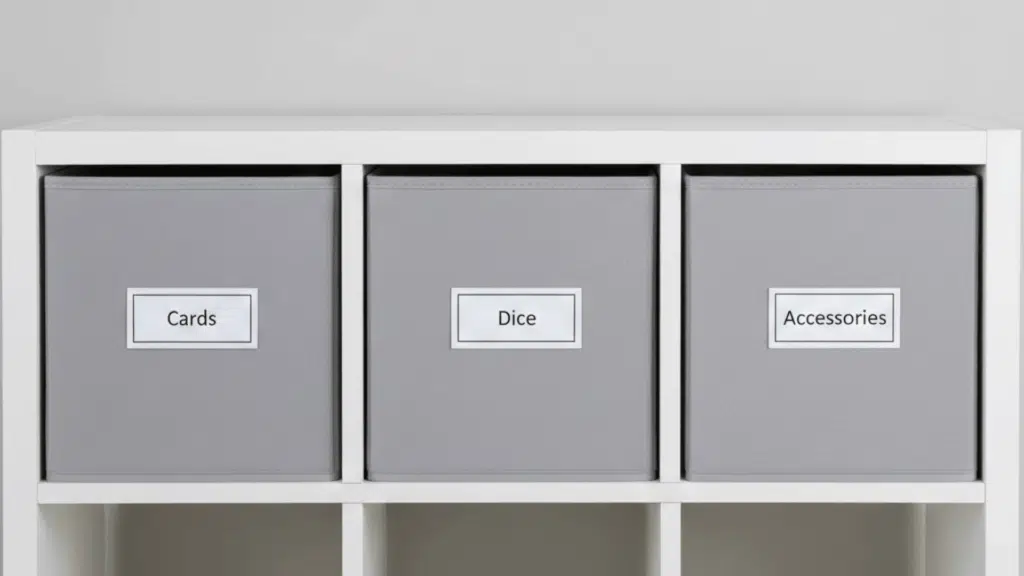
Use drawer inserts inside cube shelves for card games, small-box titles, dice games, and loose accessories.
This prevents smaller items from disappearing behind larger boxes and keeps the shelf clean. Label drawers by type for fast game-night grabbing.
Pro tip: Reserve one drawer for “bags, bands, labels” for quick fixes.
4) Vertical Storage + Bag-and-Label System
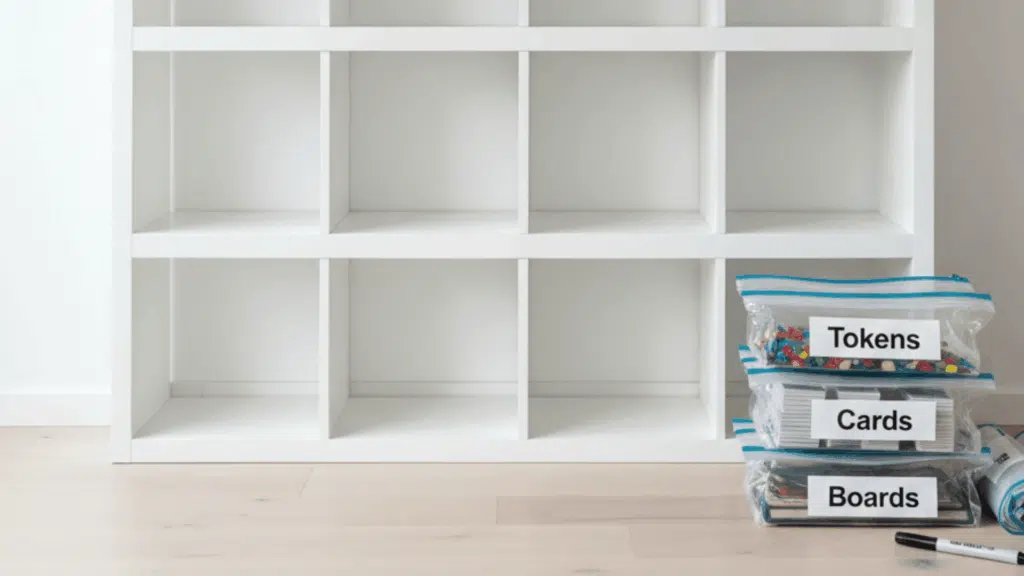
Store games upright like books, but secure components first. Bag tokens and cards, label the bags, and place the rulebook on top inside the box.
This prevents spills when the box is vertical and speeds setup because everything stays sorted.
Pro tip: Use one bag per component type, not one bag for everything.
5) Silicone Game Box Bands
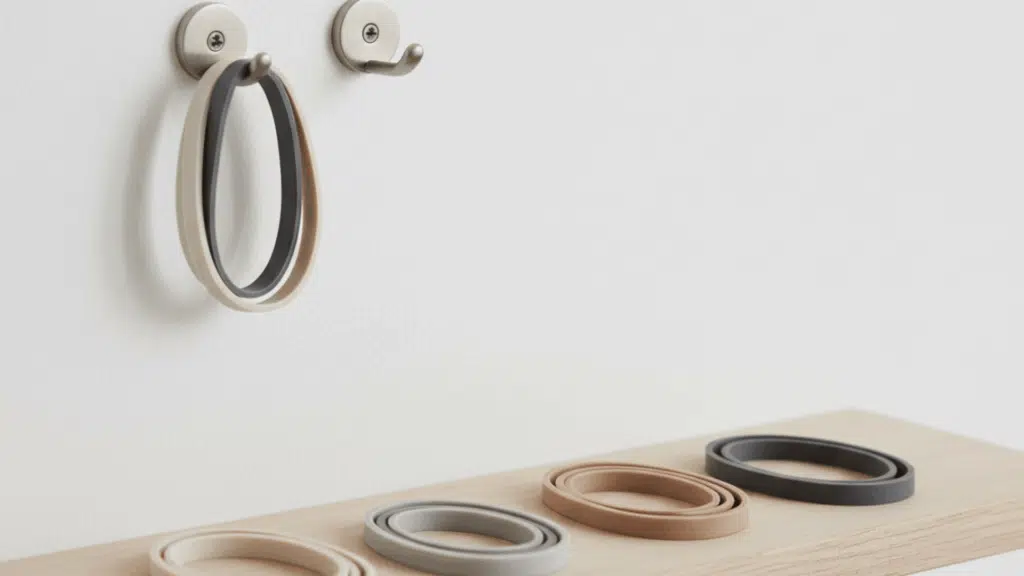
Use silicone bands to keep lids tight during vertical storage. They reduce box gaping and stop trays from shifting, especially in boxes with weak inserts or multiple expansions.
They’re quick to add and easy to remove during setup.
Pro tip: Avoid thin rubber bands. They can damage box corners over time.
6) DIY Box Insert
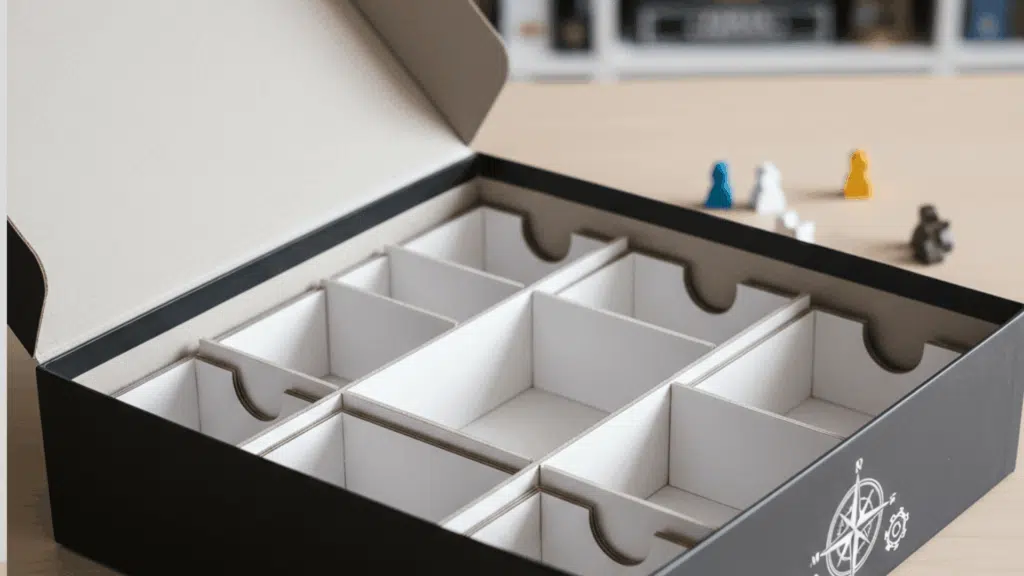
Cut panels to create compartments inside the original box. Build wells for tokens, a card channel, and a flat space for boards.
This keeps parts sorted, reduces setup time, and makes packing consistent without forcing the lid closed.
Pro tip: Dry-fit pieces before gluing so lids close without bulging.
7) Photo Case Storage for Tokens
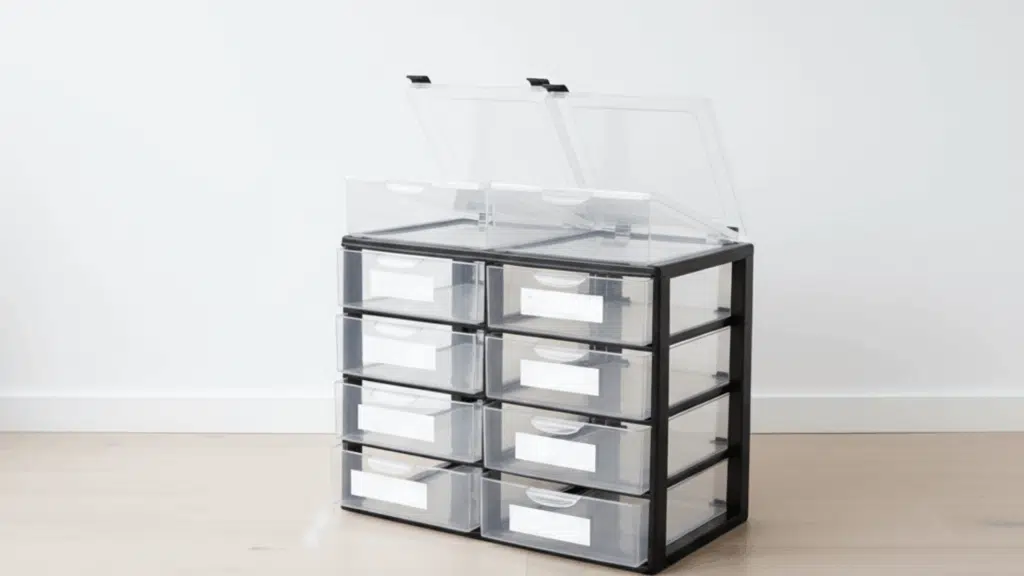
Use a photo case box (small clear cases inside one larger case) to sort tokens, dice, and bits by game or category.
Label each inner case. This works well for games you play often and want quick access to components.
Pro tip: Store the photo case near the shelf zone with those games.
8) Magazine File Holders for Small Boxes
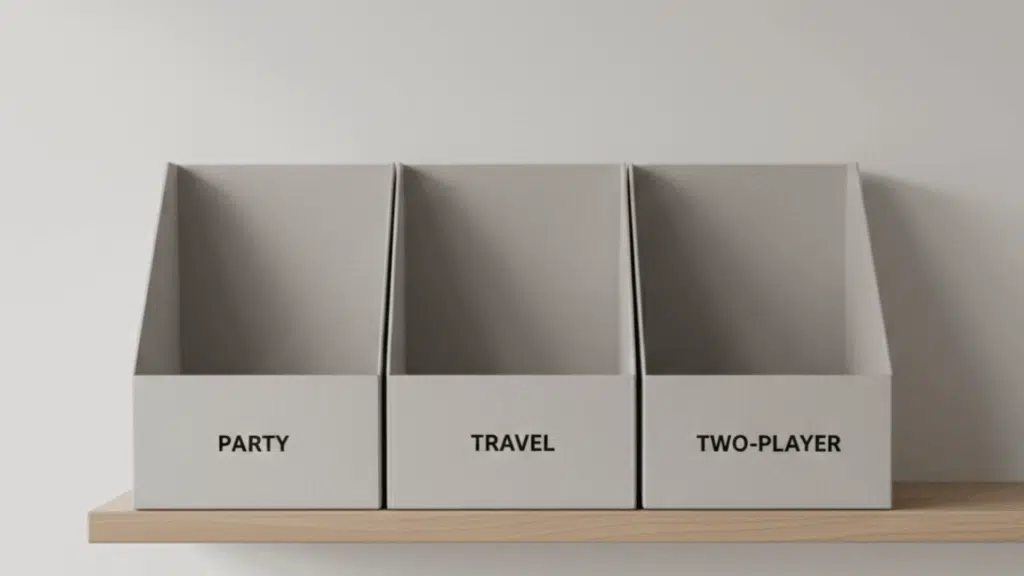
Put small-box games in magazine holders so they stand upright and don’t slide around. Label each holder (party cards, two-player, travel).
This prevents small titles from being hidden behind larger boxes and keeps shelves easy to browse.
Pro tip: Use sturdy holders so they don’t bow under weight.
9) Under-Ottoman “Grab-and-Play” Bin
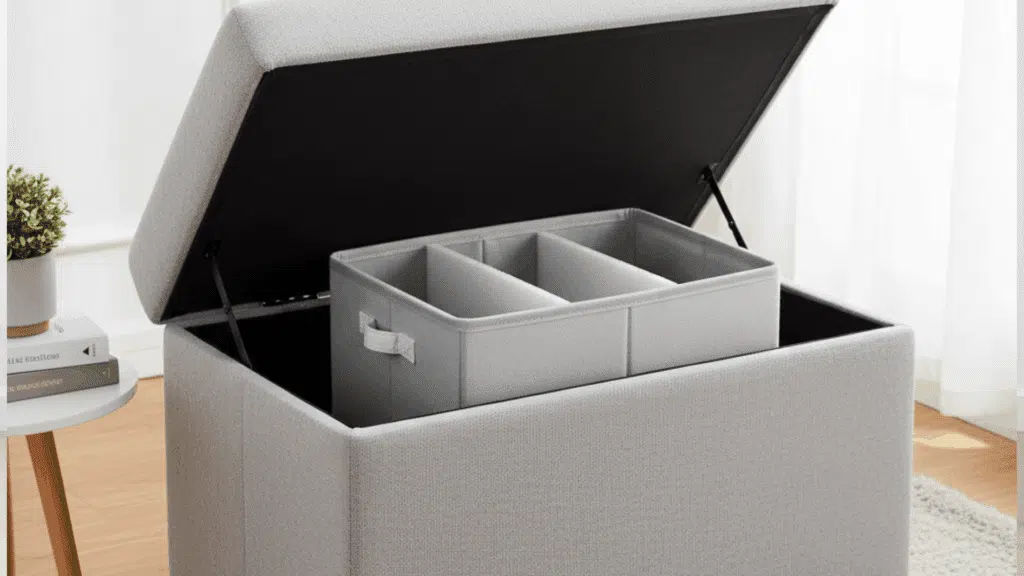
Store your most-played games in a storage ottoman or bench near your main play space. Use a bin inside to keep boxes upright.
This cuts setup friction and speeds cleanup because everything returns to one location.
Pro tip: Limit to 6–10 games and rotate monthly.
10) Coffee Table Storage with Divided Trays
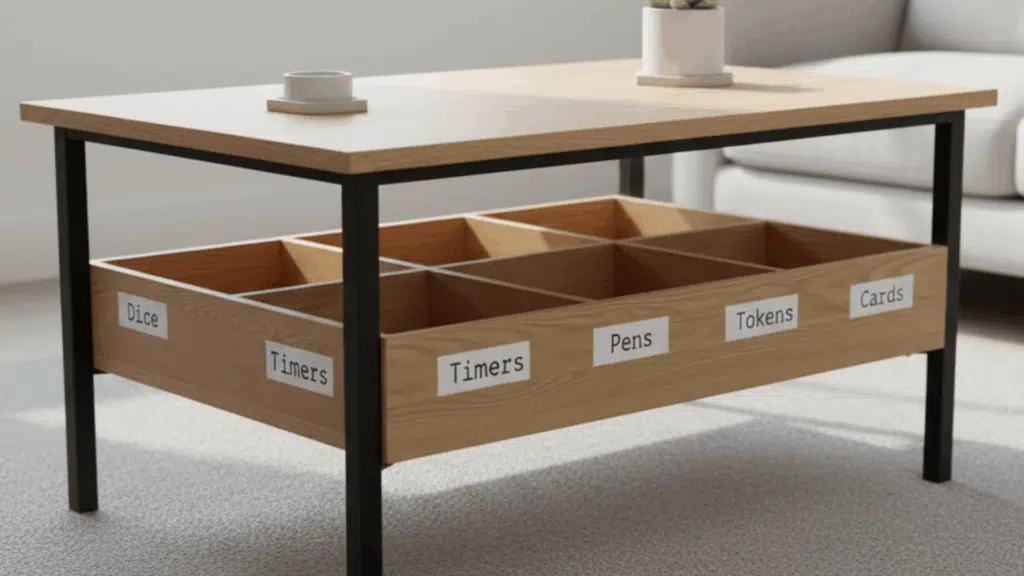
Use a coffee table with storage or add bins underneath and create divided trays for essentials: dice, timers, score pads, pencils, and 3–5 quick games. It keeps tools ready and reduces trips to shelves during game night.
Pro tip: Keep coasters in the same tray to protect the table faster.
11) Closet Shelf + Door Pocket Organizer
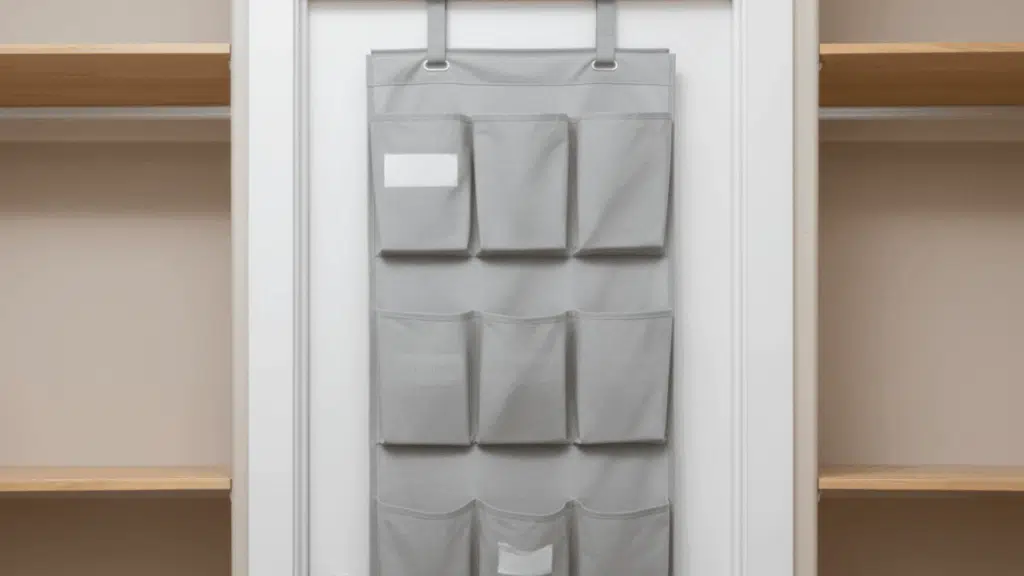
Use a closet shelf for bigger games and a door pocket organizer for card games and accessories. Label pockets so items don’t mix.
This creates a full storage zone in a hidden space and keeps living areas visually clean.
Pro tip: Put most-used items at eye level for quick access.
12) Rolling Game Night Cart (Rotation System)
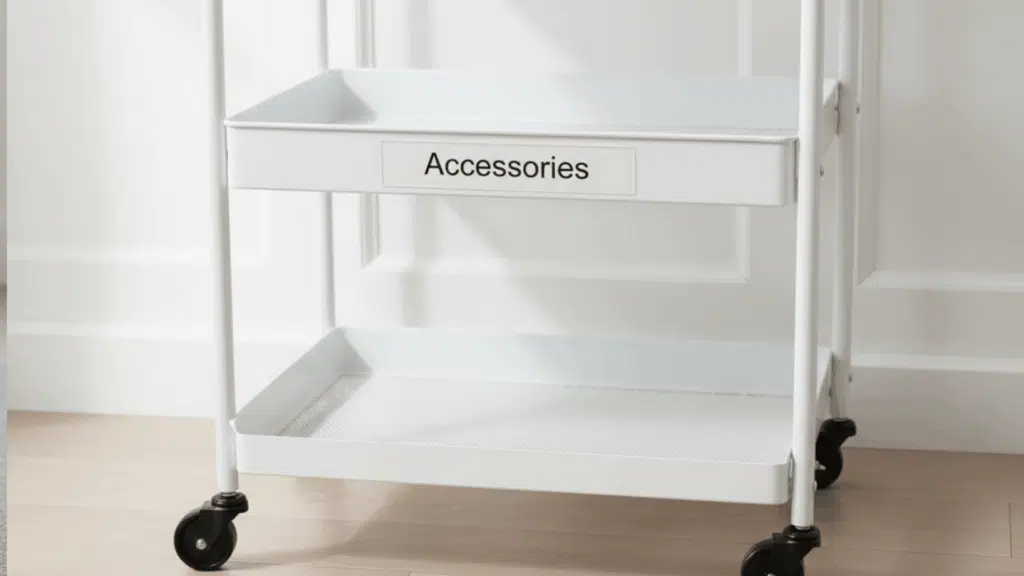
Use a rolling cart for your current rotation plus accessories. Keep 4–8 monthly games and a small kit (bags, pencils, timer, napkins). Roll it to the table and return everything in one trip to reduce clutter.
Pro tip: Keep heavy boxes on the bottom shelf to prevent tipping.
13) Shelf Risers for Deep Shelves
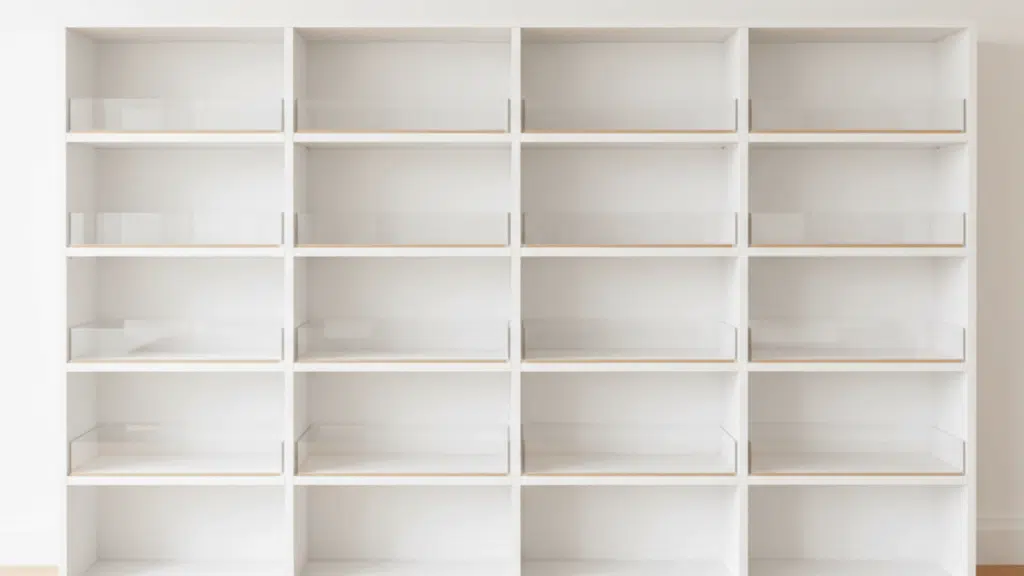
Add shelf risers so you can store two rows without hiding games in the back.
Put taller games on the raised back row and shorter games in front. This improves visibility and helps you keep categories intact without pulling stacks out.
Pro tip: Use a non-slip liner under risers so they don’t slide forward.
14) Bookends and Shelf Stops for Vertical Rows
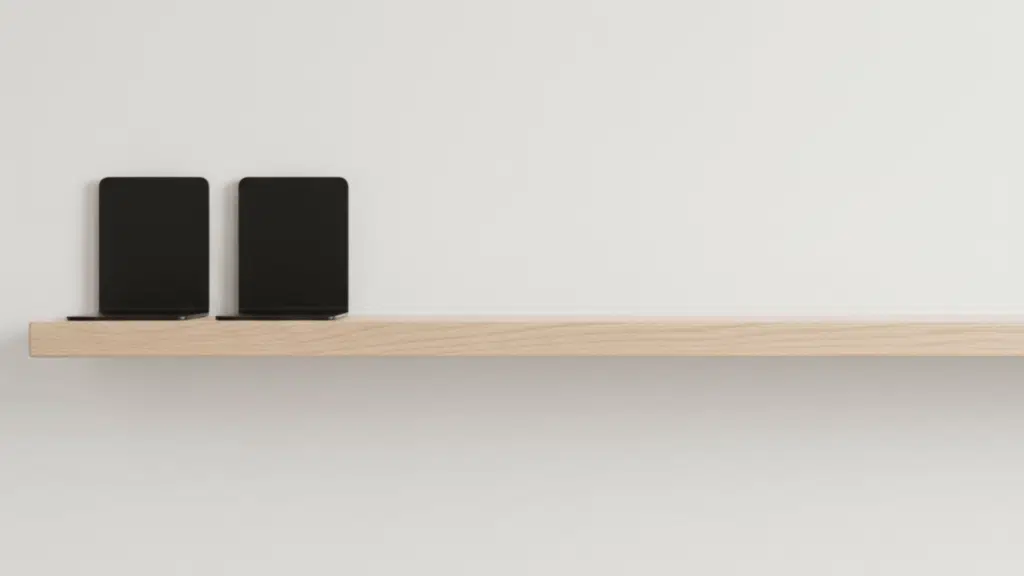
Use heavy bookends or shelf stops to keep vertically stored games upright and tight. This prevents leaning that crushes box corners and makes browsing easier.
It’s a simple fix for shelves that aren’t fully packed but need structure.
Pro tip: Place the stop at the empty end of the row, not mid-row.
15) “One Shelf = One Category” Zoning
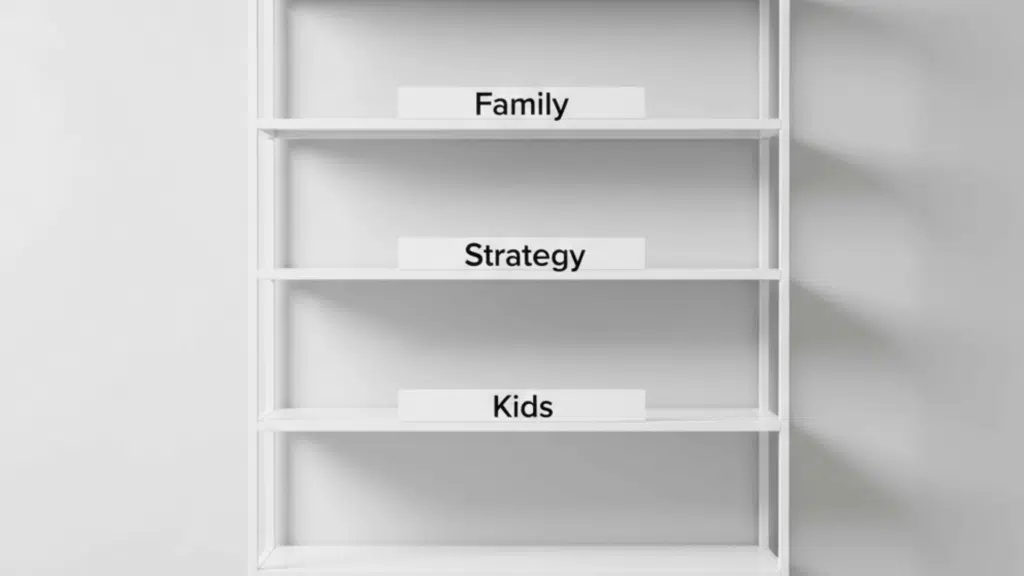
Assign each shelf or cube to a single category: party, family, strategy, co-op, kids, two-player, campaign.
This speeds selection and makes cleanup simple. Consistent zones reduce random stacking and help the collection stay usable long-term.
Pro tip: Put party games closest to where you play most often.
16) Expansion Pouches (One Game, One Set)
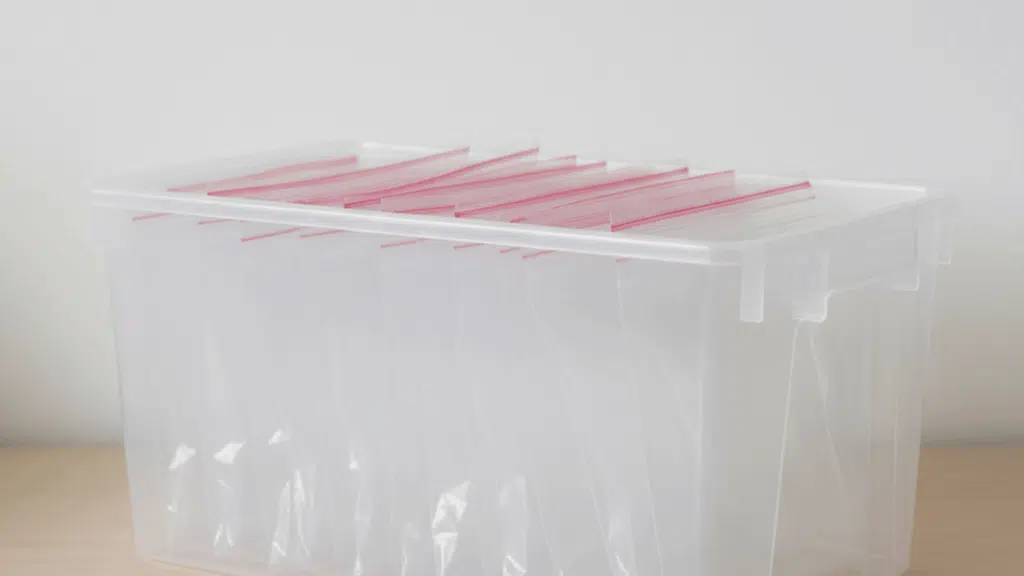
Use labeled zip pouches for expansions and store them with the base game. If they don’t fit, keep an “expansion bin” labeled by game title.
This prevents lost modules and cuts the time spent hunting for pieces before play.
Pro tip: Keep expansion rulebooks with the base rulebook, not in the pouch.
17) Hardware Organizer Drawer Cabinet
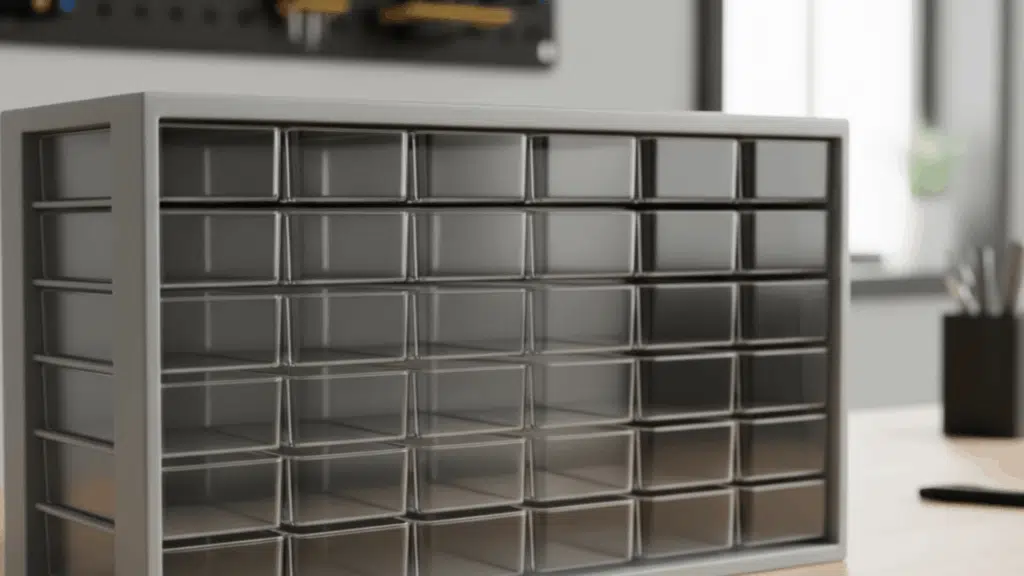
Move components into a small parts drawer cabinet for frequently played games. Label drawers by game and component type.
Store boards and manuals separately on a shelf or file bin. This reduces box wear and speeds setup.
Pro tip: Clear drawers help you confirm contents without opening them.
18) Flat Stack System for Thin Classics
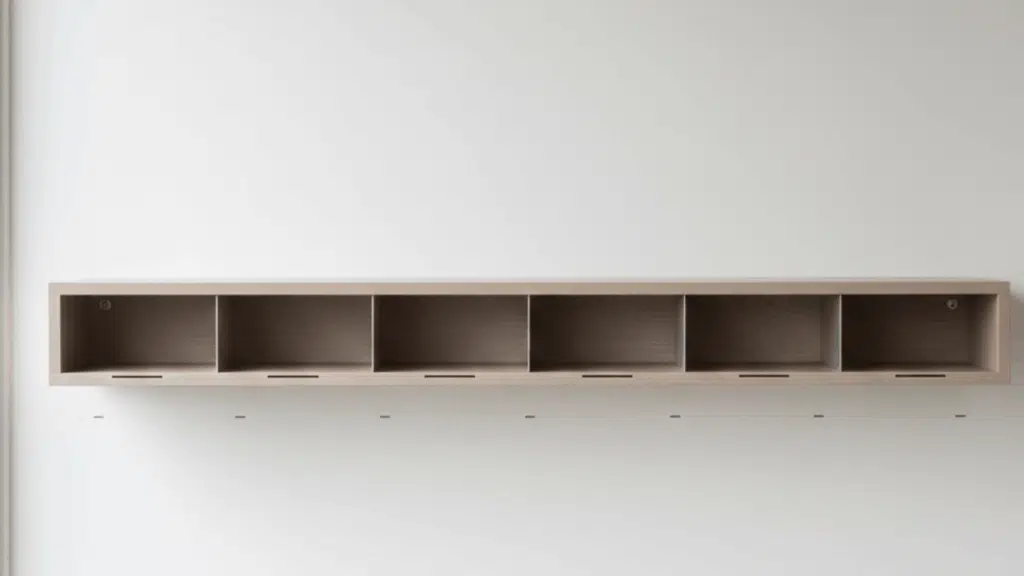
Store thin classic games horizontally because boards and inserts shift less. Stack heavier games at the bottom and keep the stack short to protect corners.
Add a divider or bookend so stacks don’t spread across the shelf.
Pro tip: Limit stacks to 6–8 games to avoid crushed boxes.
19) Dust-Control Doors or Curtains for Shelves
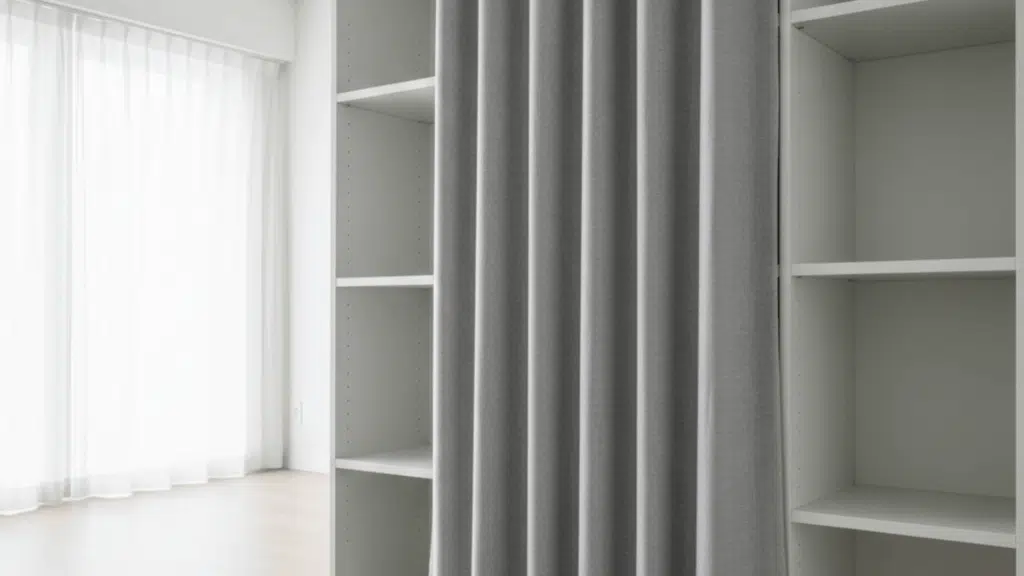
Add doors, curtains, or fabric panels to open shelving to reduce dust and sun exposure. This protects boxes and keeps the room looking clean, especially in living rooms. It also hides visual clutter while keeping the shelf accessible.
Pro tip: Use blackout fabric if the shelf gets direct sunlight.
20) “Recently Played” Return Zone
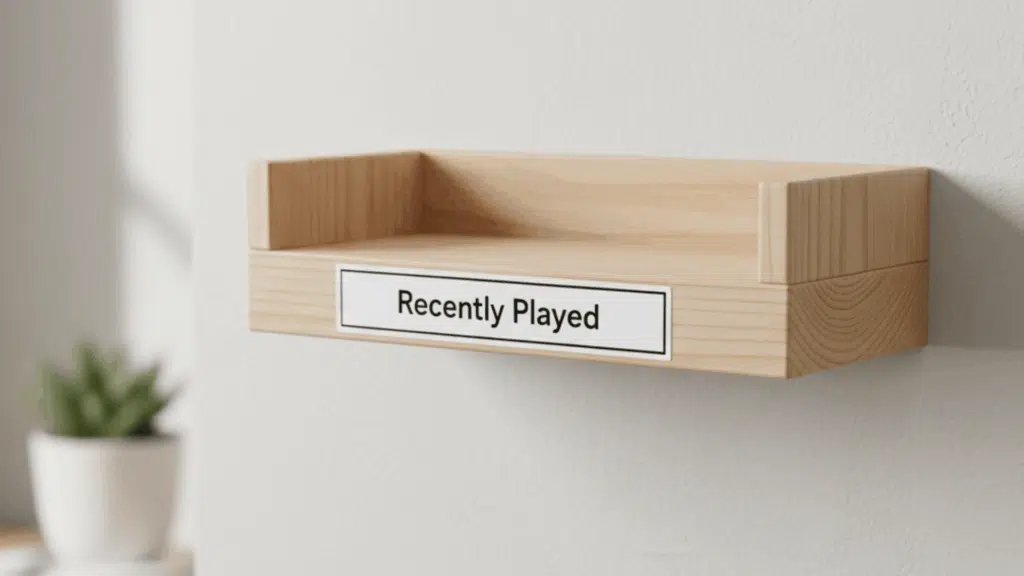
Create one dedicated spot for games that were just used. This stops half-put-away boxes from spreading around the house.
Once a week, return items from this zone to their correct category shelves to keep the system stable.
Pro tip: Keep this zone small, overflow means it’s time to reset.
Practical Storage Tips For Your Games
Small, consistent habits keep a board game collection usable long-term. These practices reduce wear, prevent clutter, and make setup and cleanup predictable.
- Store heavy games on lower shelves to reduce strain on shelving units and prevent box damage if a game is pulled out quickly.
- Keep categories consistent across all shelves so games always return to the same location, eliminating random stacking over time.
- Label shelves, drawers, and bins clearly to make cleanup automatic for everyone who uses the collection.
- Bag and label components before vertical storage to prevent spills, lost pieces, and slow setup when boxes are stored upright.
- Limit horizontal stacks to short, controlled piles to avoid crushed corners and warped box lids.
- Maintain one defined “return zone” so recently played games don’t spread across tables, floors, or random shelves.
Consistency matters more than storage type; systems that are easy to maintain will stay organized.
Conclusion
Board game storage works best when it supports regular play, not just display. A functional system prioritizes visibility, component protection, and easy cleanup.
Categorized shelves, vertical storage with secured components, and defined zones prevent damage and reduce setup time. Small adjustments, such as dividers, labeled bags, and rotation systems, keep collections usable as they grow.
The most effective storage approach is consistent, easy to maintain, and matched to how often games are played.
With a clear structure in place, every game stays accessible, protected, and ready for the table.

With a Master in Architectural Studies from University of Pennysylvania, Marwa Haydar has pioneered living spaces since 2005. Her expertise, initially honed in a prestigious architectural firm, is evident in her approach to creating environments. Marwa became part of our team in 2019 and has since been a driving force in our home improvement section, known for her practical yet stylish solutions. She’s been spearheading our design workshops since then, infusing her passion for teaching into her work. In her leisure time, Marwa enjoys exploring historic architecture and is an enthusiastic pottery hobbyist, further enriching her understanding of form and texture.