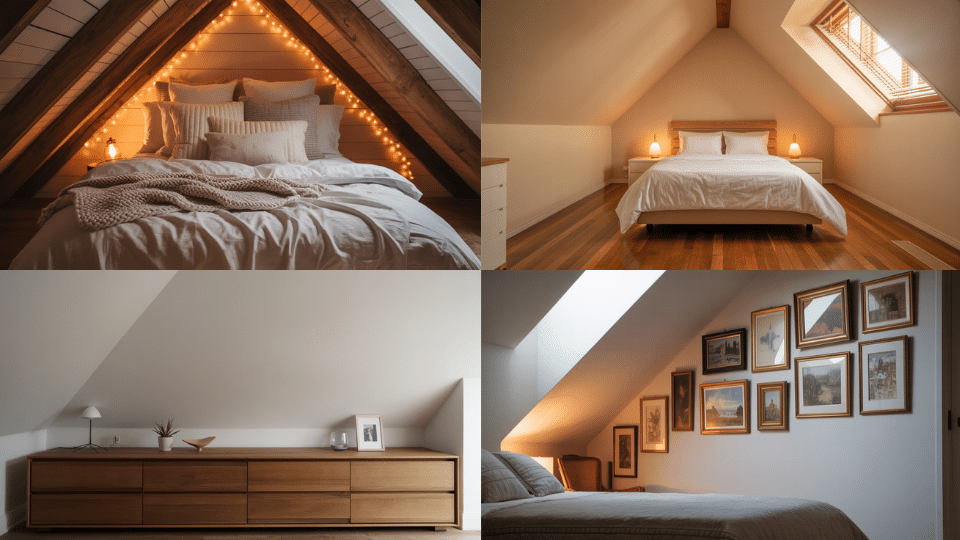

Low sloped ceilings can feel limiting at first, but they’re often what give a bedroom its most memorable character.
Instead of treating the angle as something to hide, the smartest designs work with it.
The key is understanding how the ceiling changes the way the room functions.
Areas with full height are best for standing, storage, and movement, while lower sections naturally lend themselves to rest, seating, or display.
When furniture is scaled correctly and lighting is thoughtfully layered, a sloped ceiling bedroom can feel intentional, cozy, and surprisingly spacious.
With the right layout choices and a few design adjustments, these rooms often end up feeling more special than standard boxy spaces.
List of Smart Low Sloped Ceiling Bedroom Ideas
Low sloped ceilings don’t have to restrict how a bedroom looks or functions. When the angles are treated as part of the design, they often become the feature that sets the space apart.
The most successful rooms pay attention to ceiling height, furniture proportions, and how light moves through the room.
Thoughtful layouts help avoid cramped areas while making better use of every corner.
The ideas below focus on practical ways to improve comfort, movement, and visual balance, all while working naturally with the ceiling shape instead of against it.
1. Low Platform Bed for Sloped Ceiling Bedrooms
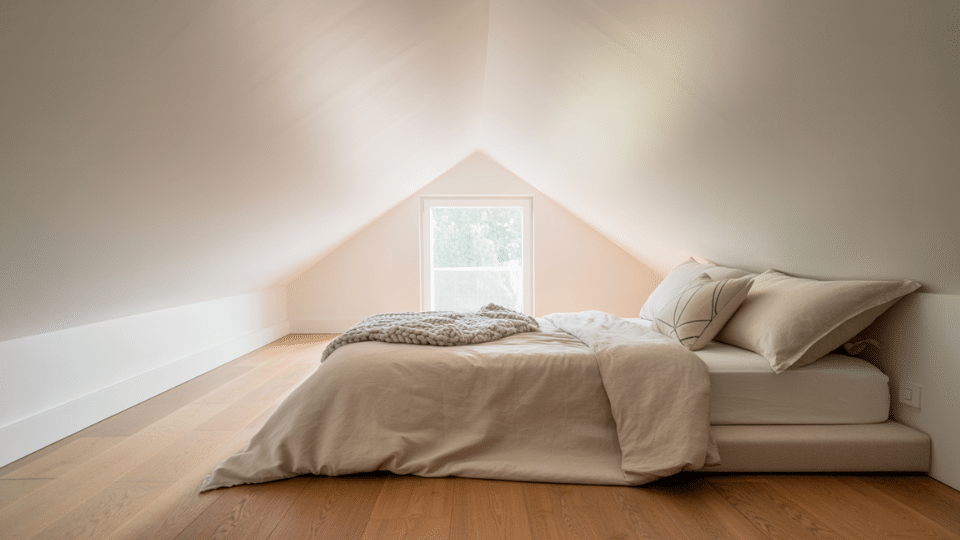
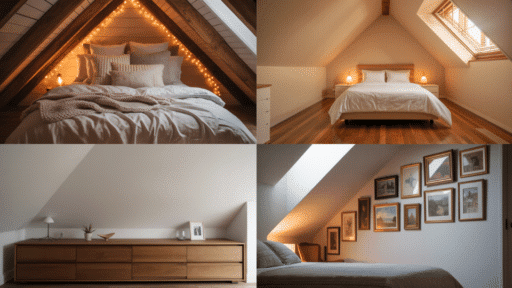
A low platform bed is one of the easiest ways to make a sloped ceiling bedroom feel more comfortable.
By lowering the sleeping surface, the room gains visual breathing space, especially near the head of the bed.
This setup also reduces the risk of bumping your head when getting in and out of bed. Platform beds work well with modern, minimalist, and cozy attic-style rooms.
2. Place the Bed Under the Ceiling Slope
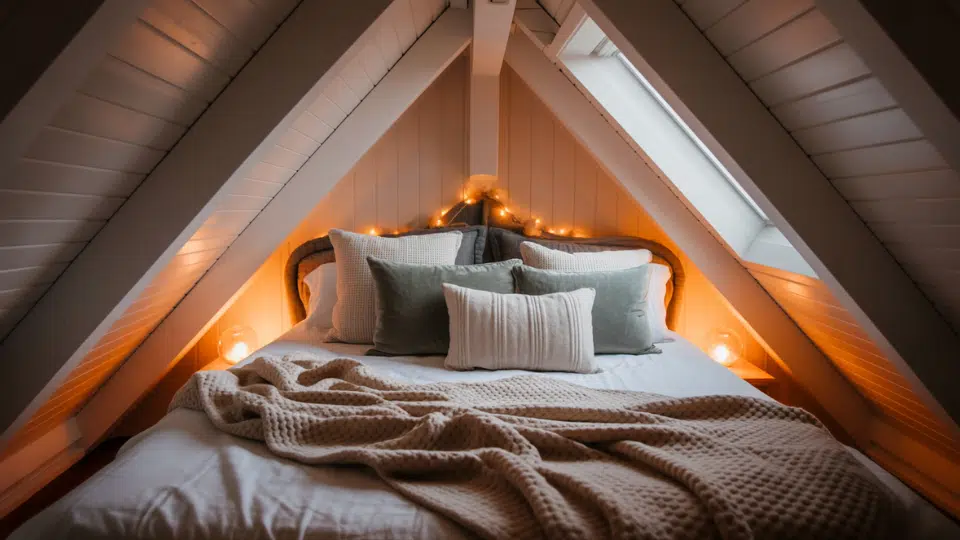
Positioning the bed directly beneath the slanted section can create a built-in, tucked-in feel.
This layout often feels intentional rather than forced, especially when paired with layered bedding and soft lighting.
It’s a smart choice for attic bedrooms where wall height varies across the room. The slope naturally frames the bed without needing extra décor.
3. Skip Tall Headboards in Low Ceiling Bedrooms
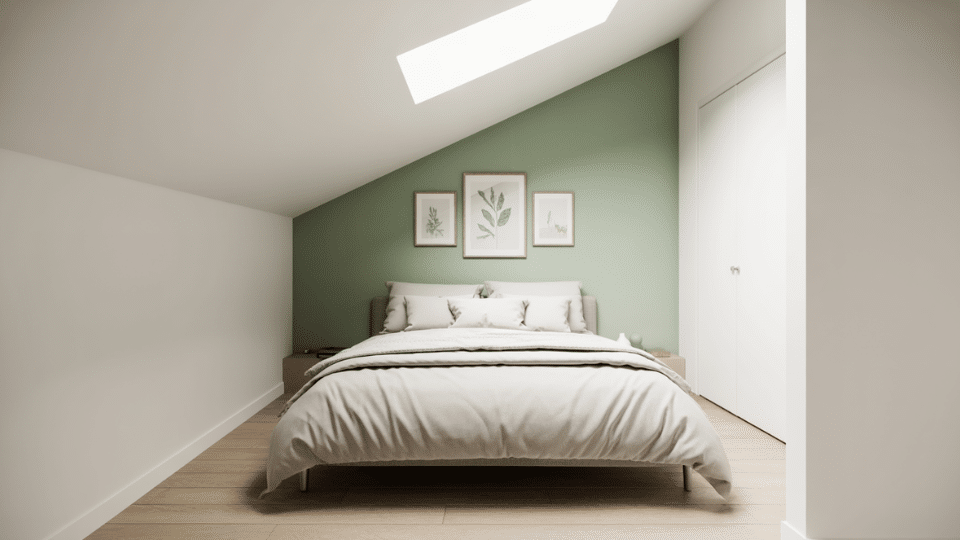
Tall headboards tend to compete with sloped ceilings and can make the room feel crowded.
Instead, let the wall finish, paint color, or ceiling detail act as the backdrop.
Upholstered wall panels or a simple wood accent can add interest without overpowering the space. This approach keeps the focus on the architecture instead of fighting it.
4. Put the Bed on the Tallest Wall
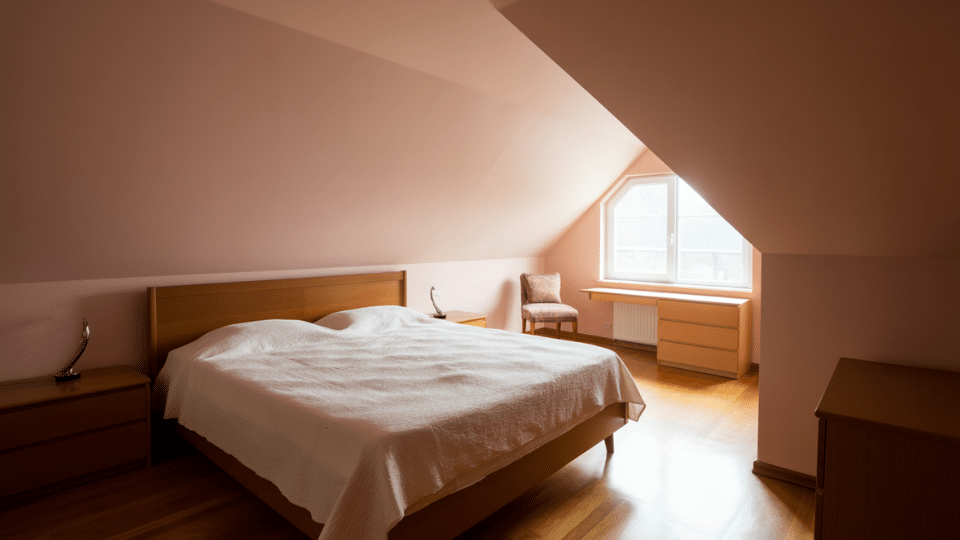
When the room has one section with more headroom, it’s usually best to anchor the bed there.
This placement improves movement around the bed and makes the layout feel more natural.
It also allows nightstands and lighting to fit more comfortably. Even small height differences can make a big impact on daily comfort.
5. Wall Sconces Instead of Table Lamps
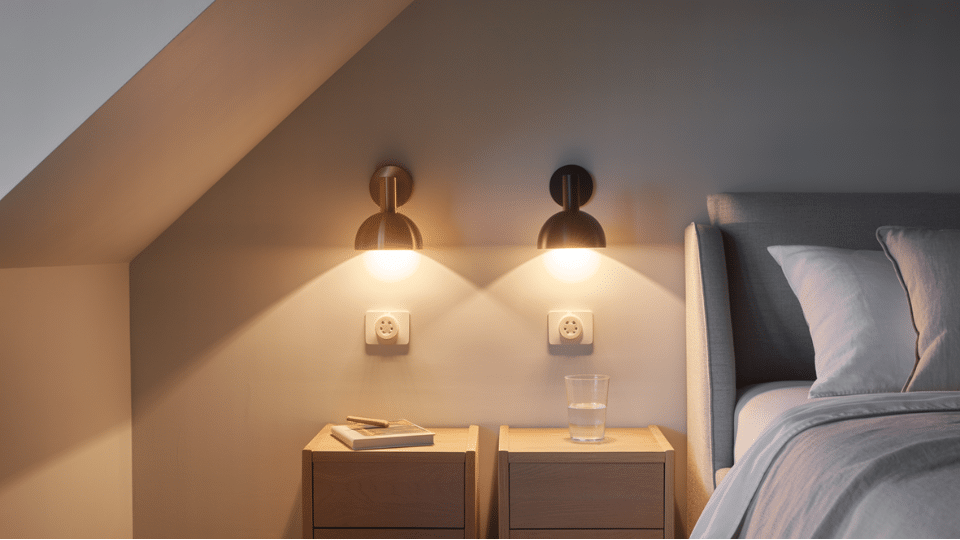
Wall sconces are ideal for low-sloped ceiling bedrooms because they free up surface space and reduce visual clutter.
They provide focused light exactly where it’s needed, especially for reading.
Sconces also help keep nightstands compact, which is helpful when floor space is limited. Choose adjustable styles for added flexibility.
6. Ceiling-Mounted Lighting on Low Sloped Ceiling Bedroom
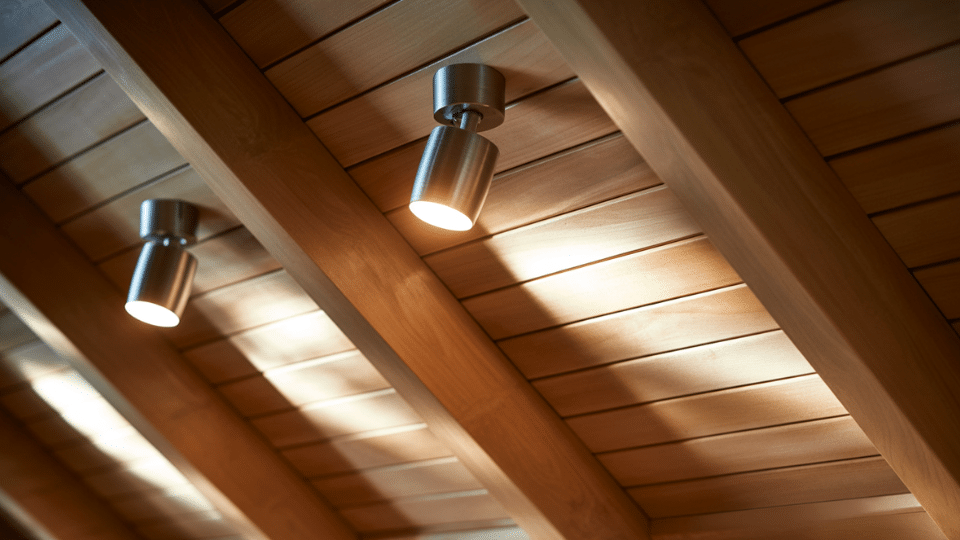
Some sloped ceilings are perfect for small, directional ceiling lights.
These fixtures highlight the angle rather than hiding it, and can make the architecture feel intentional.
They’re especially useful when wall space is limited or uneven. Proper placement prevents shadows and keeps the room evenly lit.
7. Plug-In Lighting for Slanted Ceiling Rooms
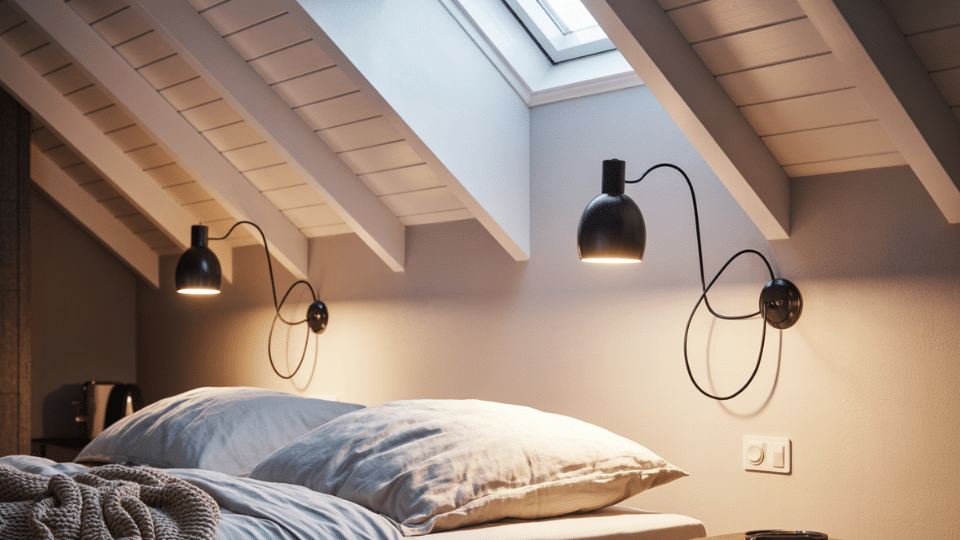
Plug-in wall lights offer flexibility in rooms where wiring is tricky. They allow you to test placement before committing and work well in rentals or older homes.
Cords can be styled neatly or hidden with simple clips. This option combines function with design freedom.
8. Low Dressers That Fit Under Sloped Ceilings
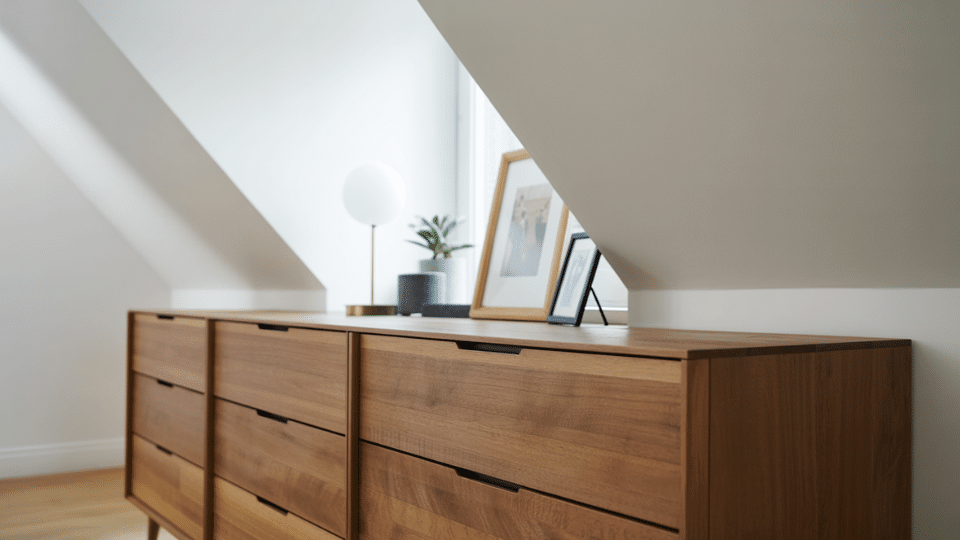
Short, wide dressers work far better than tall chests in rooms with angled ceilings.
They slide easily under slopes while still offering generous storage.
These pieces help maintain clear sightlines across the room. The result feels balanced rather than top-heavy.
9. Built-In Storage Under Eaves
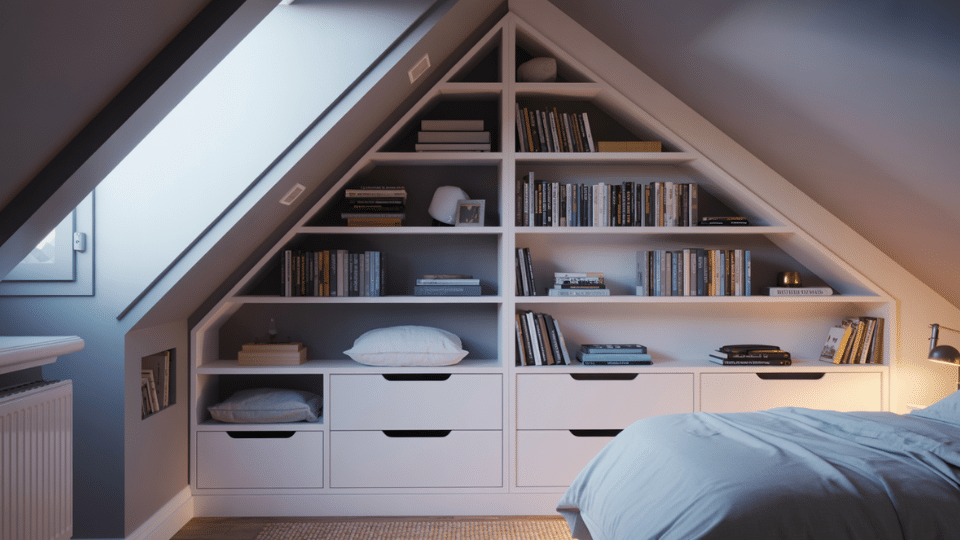
Custom or semi-custom storage under the eaves turns unused space into one of the hardest-working areas in the room.
Shelves, drawers, or cabinets can follow the roofline for a clean look.
Built-ins also reduce the need for bulky furniture elsewhere. This approach is especially useful in attic bedrooms.
10. Basket Storage for Low Clearance Areas
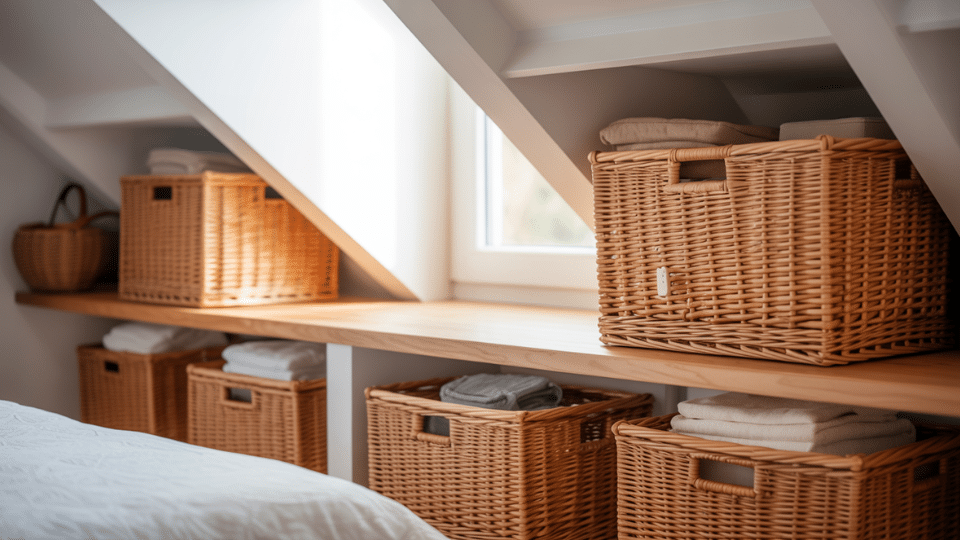
Baskets are an easy solution for areas where furniture won’t fit.
They can be tucked under slopes, beds, or benches without blocking movement.
Woven or fabric styles add texture while keeping items hidden. This keeps the room organized without adding visual weight.
11. Reading Nook Ideas for Sloped Ceiling Bedrooms
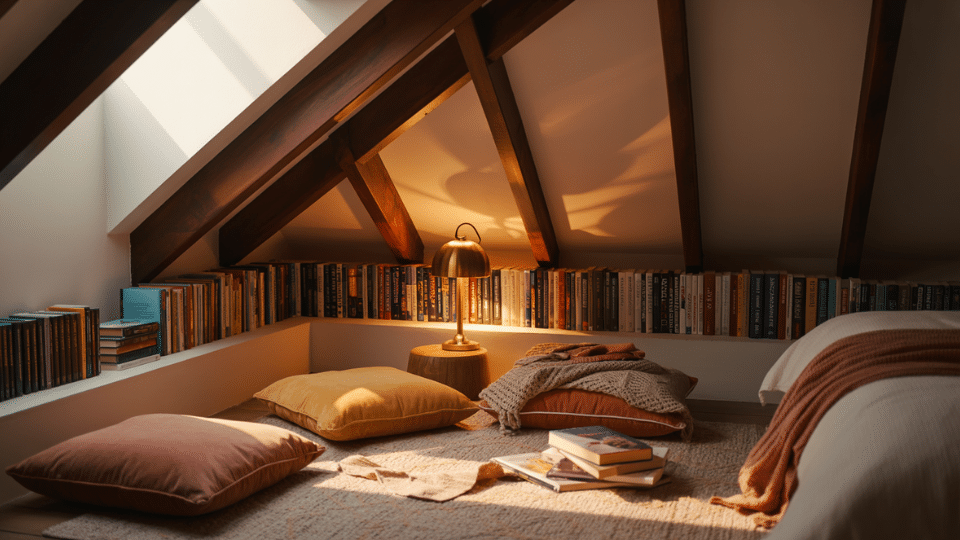
Low corners that feel awkward for standing often work beautifully as reading spots.
A floor cushion, small chair, or built-in bench instantly adds purpose to the space.
Soft lighting and a nearby shelf make it feel finished. These nooks add comfort without needing extra square footage.
12. Use Dormer Windows as Design Anchors
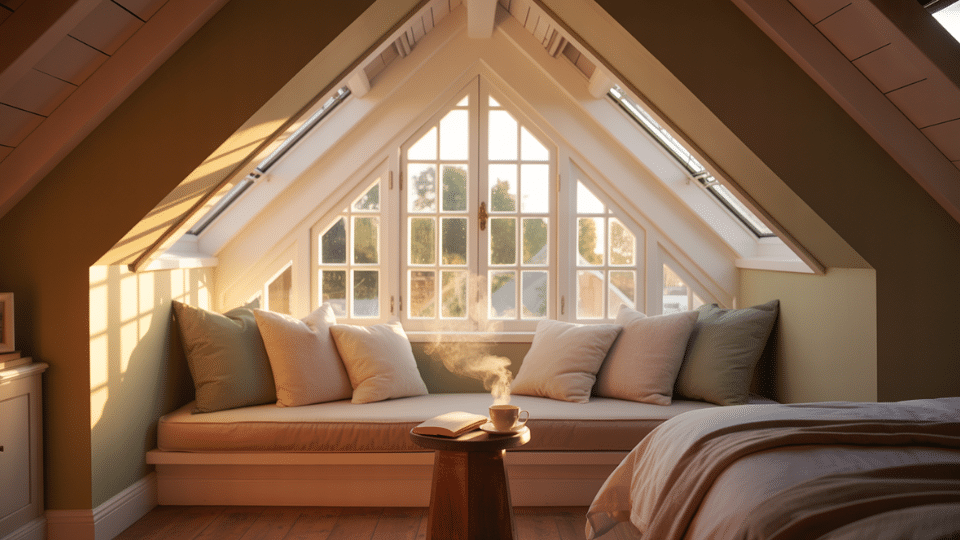
Dormers naturally create structure in sloped ceiling rooms. Placing the bed or seating area near a dormer helps define zones.
The added light makes the room feel more open and welcoming. Dormers often become the visual center of the bedroom.
13. Daybeds and Trundles for Tight Layouts
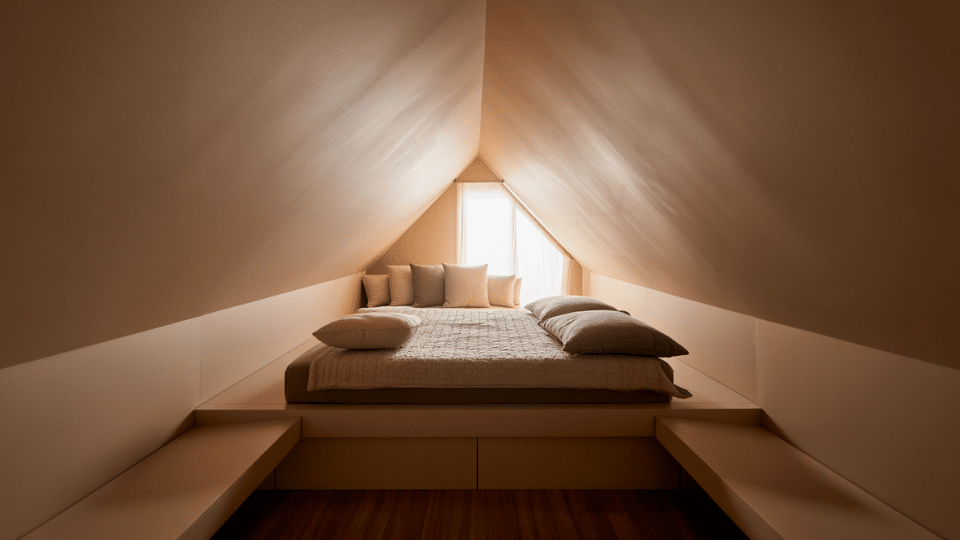
Daybeds and trundles offer flexibility in rooms with limited height.
They work well in guest rooms, kids’ rooms, or shared spaces. During the day, they keep the room open and functional.
At night, they provide a comfortable sleeping space without crowding the layout.
14. Light Paint Colors for Low Sloped Ceilings
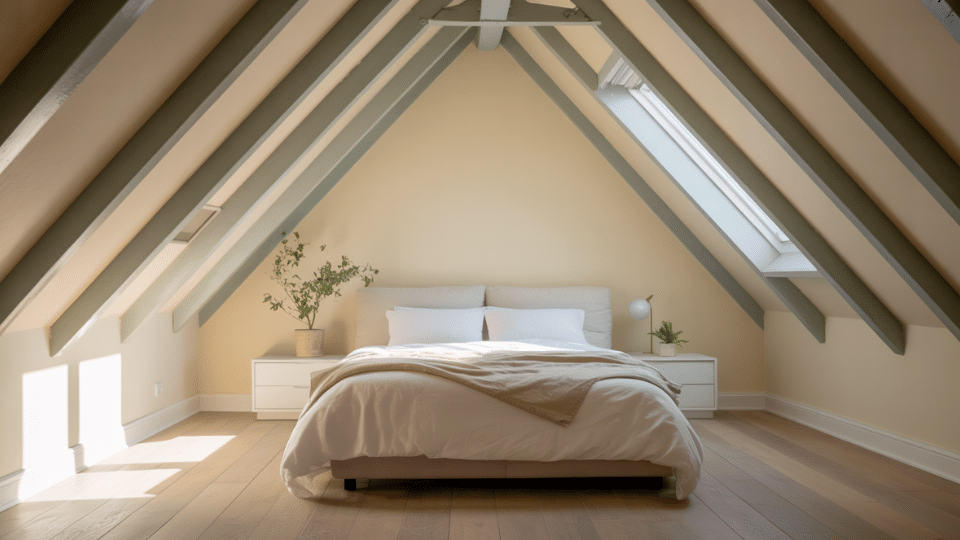
Lighter shades help reflect natural and artificial light across angled surfaces. This keeps the ceiling from feeling heavy or close.
Soft neutrals, warm whites, and muted tones tend to work best. The room feels brighter without losing warmth.
15. Same Color on Walls and Ceiling
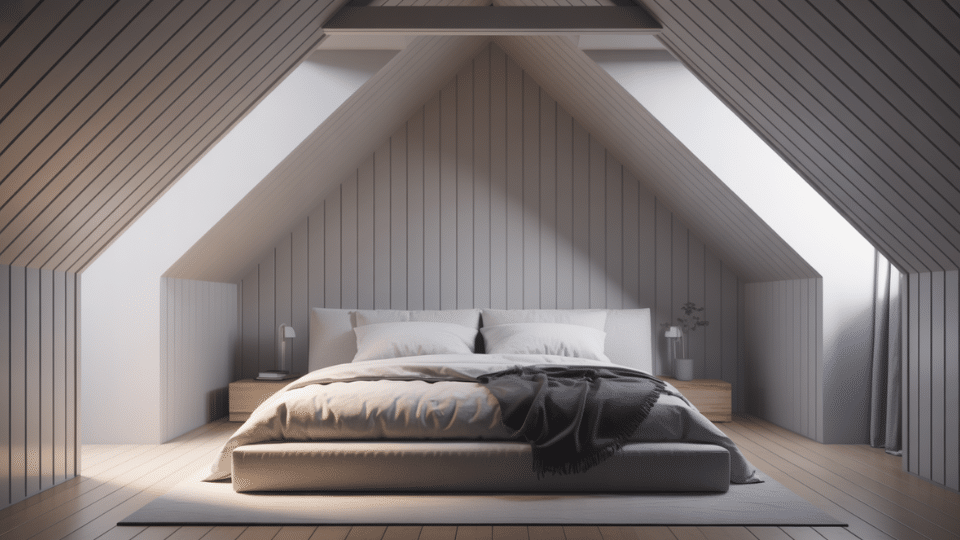
Using one color across walls and ceiling reduces visual breaks. This helps soften sharp angles and creates a calm, unified look.
It’s especially effective in small sloped ceiling bedrooms. The space feels less busy and more intentional.
16. Accent Wall Ideas for Slanted Ceilings
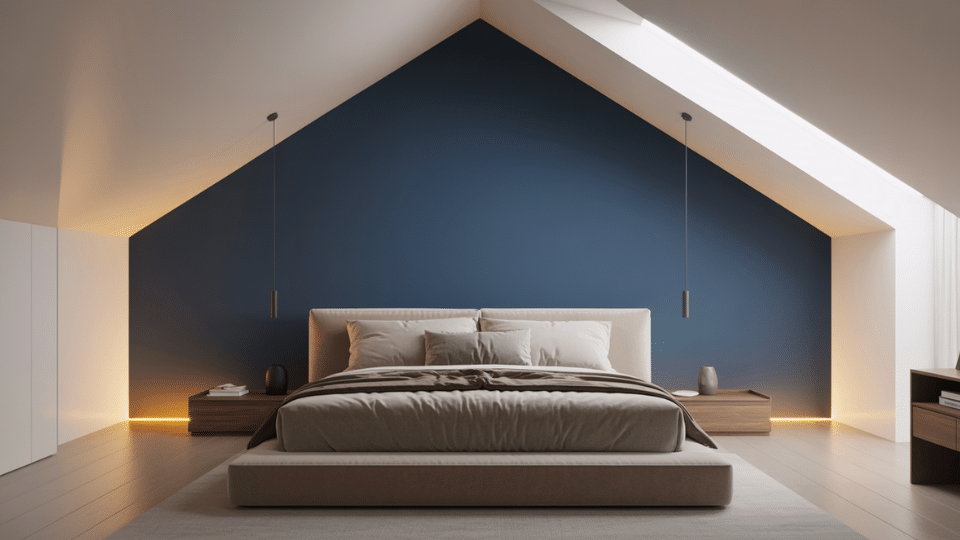
Highlighting one sloped wall can turn an awkward angle into a feature. Paint or wallpaper draws the eye intentionally instead of letting the slope feel random.
Keeping the rest of the room simple balances the effect. This works well when the slope is visually prominent.
17. Wallpaper for Sloped Ceiling Bedrooms
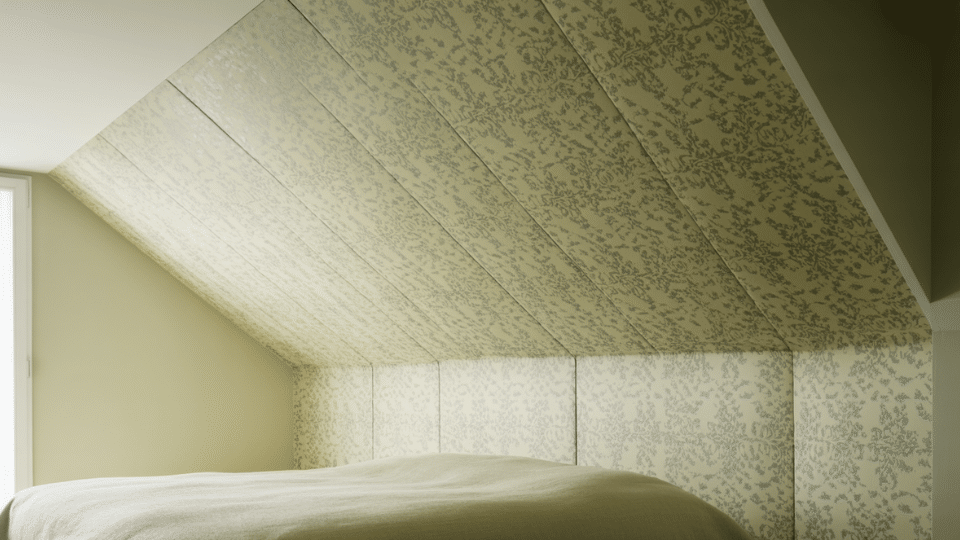
Wallpaper doesn’t need to cover every surface to make an impact. A single slanted section or partial wall adds personality without overwhelming the room.
Patterns with subtle movement tend to work best. This approach keeps the design controlled and cohesive.
18. Art Placement for Angled Wall Bedrooms
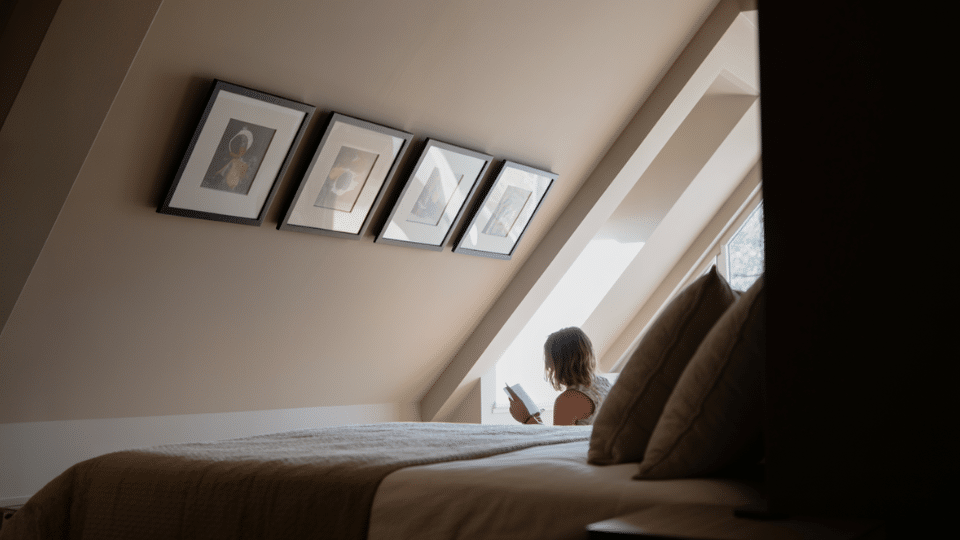
Art looks best when hung lower in sloped ceiling rooms. Placing it at seated eye level feels more natural and avoids awkward spacing near the ceiling.
Smaller groupings often work better than oversized pieces. This keeps the walls visually balanced.
19. High Curtain Placement for Sloped Ceilings
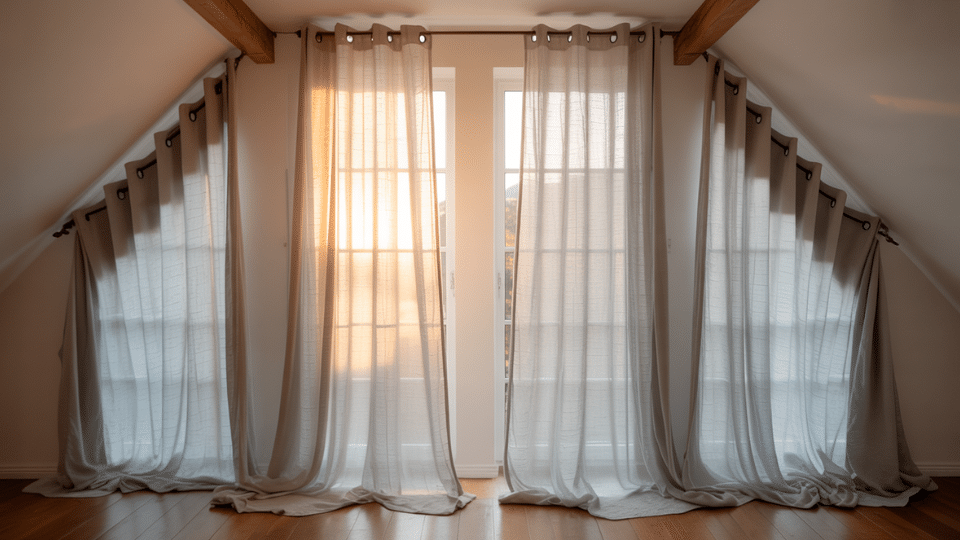
Mounting curtain rods higher than expected helps visually stretch the room. Even with slanted ceilings, this trick adds a sense of height.
Light fabrics work best to avoid weighing down the wall. Curtains become part of the design rather than an afterthought.
20. Layered Lighting for Low-Ceiling Bedrooms
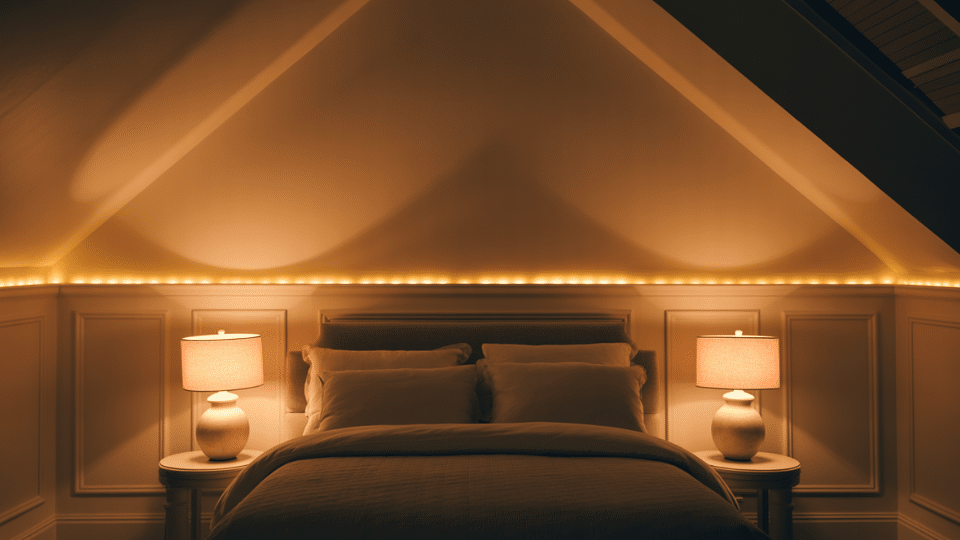
Relying on one light source often creates dark corners in sloped rooms. Layering lighting spreads brightness evenly across the space.
Combining wall lights, bedside lighting, and soft ambient light improves comfort. This makes the room usable at all times of day.
21. Small-Scale Furniture for Slanted Rooms
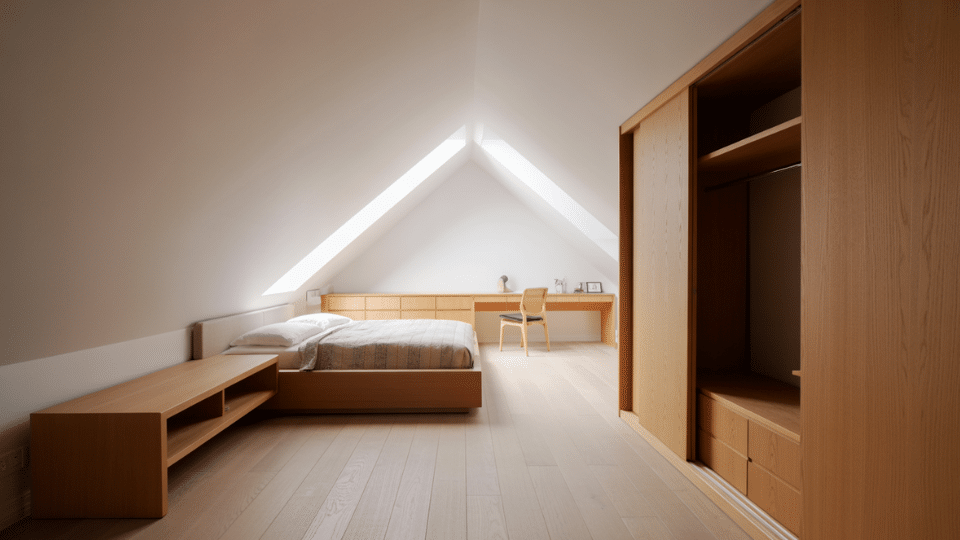
Furniture with slimmer profiles fits better under angled ceilings.
Choosing pieces that don’t overpower the room helps maintain flow. Smaller scale doesn’t mean less comfort; it means better balance.
This final detail often ties the whole room together.
Conclusion
Low-sloped ceiling bedrooms work best when the design follows the shape of the space instead of forcing standard layouts.
With the right furniture scale, thoughtful lighting, and smart placement, these rooms can feel comfortable and well planned rather than awkward.
Angled ceilings naturally create cozy zones, built-in opportunities, and unique focal points that flat ceilings simply don’t offer.
Small adjustments, like lowering furniture, layering light, or using under-eave storage, often make the biggest difference.
When each choice feels intentional, the room becomes both practical and inviting.
If you’re working with a sloped ceiling bedroom, share which idea fits your space best or what challenge you’re trying to solve in the comments.

Ava Taylor, holding a Bachelor’s degree in Interior Design from the Pratt Institute, has made her mark in creating engaging and functional living spaces for over 14 years. She began her career with a New York-based design studio, where she gained a reputation for her innovative and user-centric designs. Ava joined our team in 2019, bringing a blend of artistic flair and practicality to our home improvement section. Since the she has been the lead contributor to our room transformation series, inspiring readers with her unique approach to maximizing space utility and aesthetic appeal. Beyond her professional work, Ava is a passionate collector of vintage furniture, a hobby that enriches her design perspective.