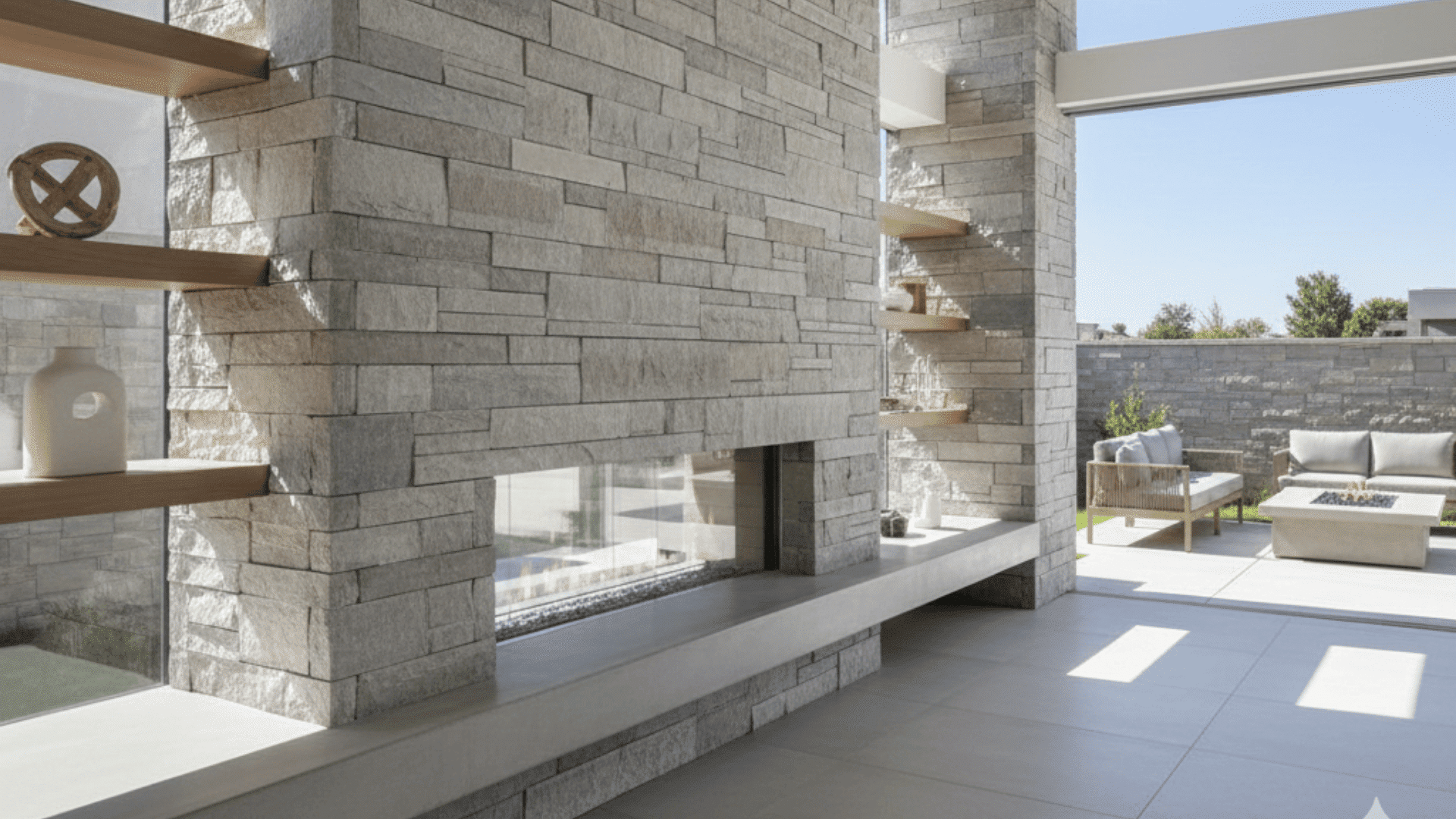

Stone fireplaces offer lasting visual structure and work across both indoor and outdoor spaces when planned correctly.
The material brings texture, durability, and scale that many other finishes cannot achieve.
Whether placed in a living room, patio, courtyard, or covered outdoor area, stone fireplaces can anchor seating, guide layouts, and define how a space is used.
The ideas in this collection focus on clear design applications rather than decoration, showing how stone type, orientation, and placement affect both function and appearance.
With the right choices, a stone fireplace becomes a permanent architectural feature that supports everyday living and long-term use.
How to Make Sure Your Stone Fireplace Fits Your Design
A stone fireplace should match the scale, style, and function of the space, not overpower it.
Start by matching stone size to room size; larger rooms can handle full-height or slab stone, while smaller areas benefit from tighter joints or lighter tones.
Choose stone texture based on surrounding finishes; smooth stone fits modern layouts, while irregular stone works better with rustic or natural materials.
Indoors, align the fireplace with existing focal points like seating or media walls. Outdoors, consider wind exposure, roof coverage, and proximity to furniture.
Always coordinate stone color with flooring and cabinetry so the fireplace feels integrated rather than added later.
Stone Fireplace Ideas for Indoor and Outdoor Spaces
Stone fireplaces work equally well inside the home and in outdoor living areas when the design matches scale, exposure, and use.
These clear visual layouts, stone types, and structural choices translate well across living rooms, patios, courtyards, and covered outdoor rooms.
1. Floor-to-Ceiling Stacked Stone Fireplace
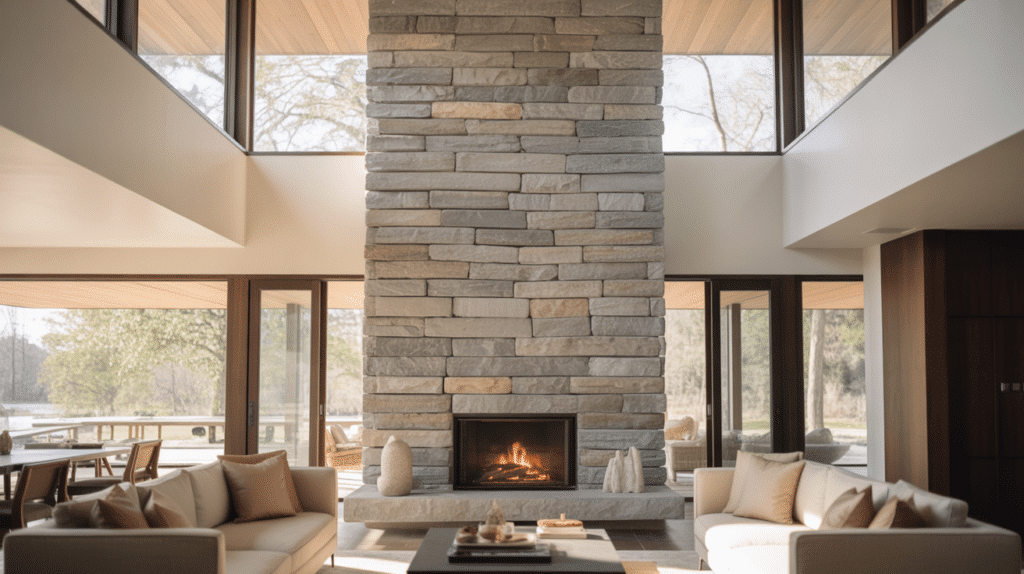
A full-height stacked stone fireplace creates a strong vertical focal point. Indoors, it suits great rooms and open layouts.
Outdoors, it works well under covered patios or pergolas where height helps anchor seating zones and visually define the space.
2. Whitewashed Stone Fireplace
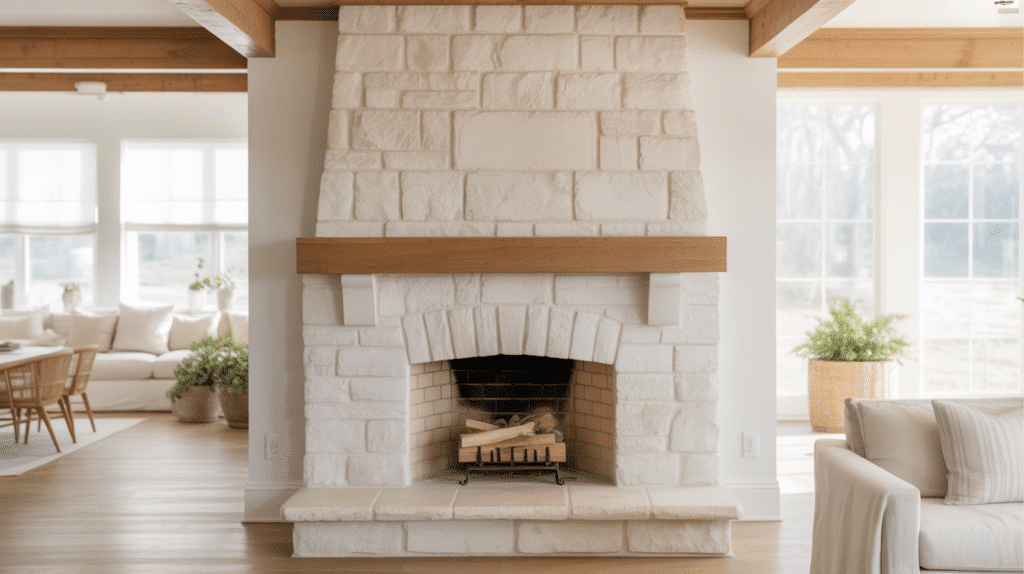
Whitewashed stone softens texture while keeping depth. Indoors, it fits bright living rooms and coastal spaces.
Outdoors, it reflects heat and light, making it ideal for sunlit patios where darker stone would feel too heavy or absorb excess warmth.
3. Charcoal or Dark Slate Stone Fireplace
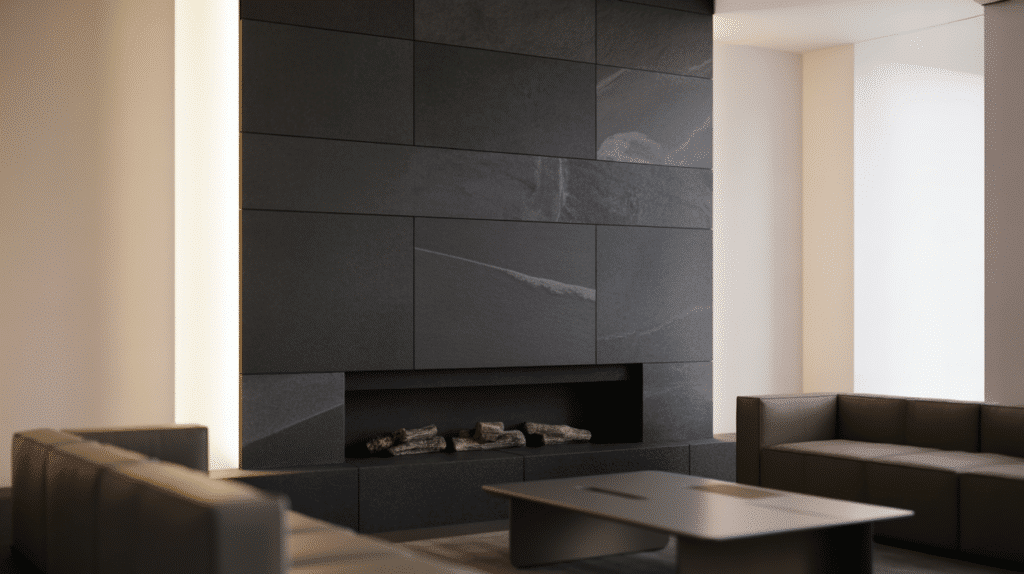
Dark stone creates contrast and definition. Indoors, it works well in modern or industrial rooms with light walls.
Outdoors, it pairs with metal furniture and concrete flooring, grounding open-air seating areas and resisting visible smoke staining.
4. Limestone Stone Fireplace With Clean Joints
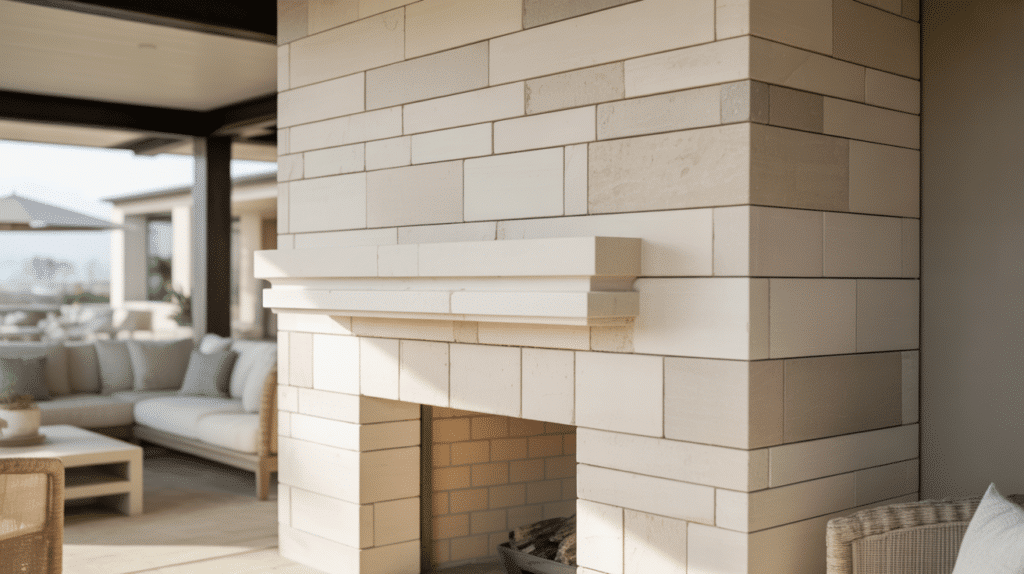
Limestone offers a smooth, controlled texture. Indoors, it suits transitional and modern interiors.
Outdoors, it performs well in covered areas with minimal exposure, providing a refined look without the visual noise of rough stone surfaces.
5. Rounded Fieldstone Fireplace
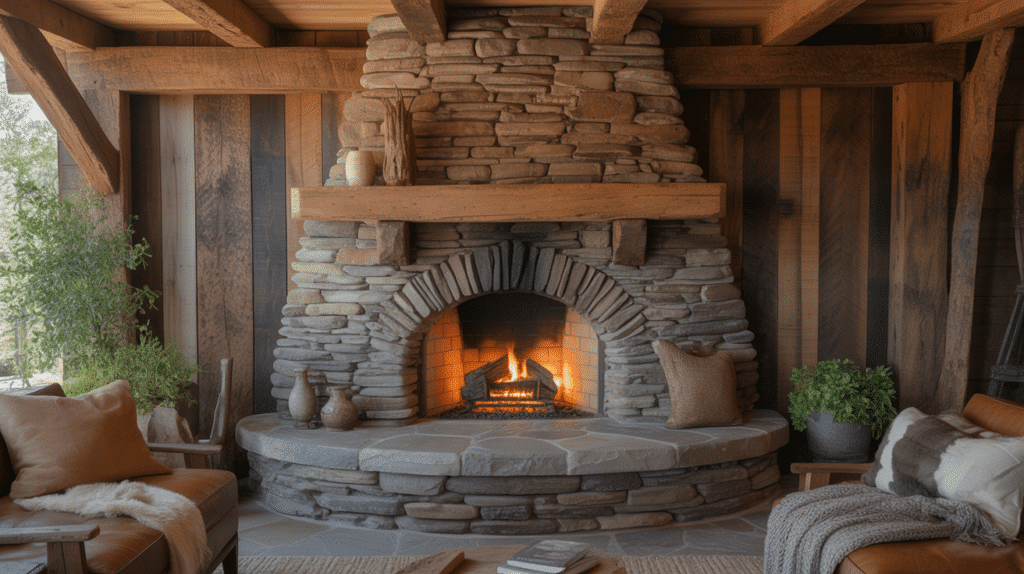
Fieldstone creates a natural, irregular surface. Indoors, it fits rustic or lodge-style rooms.
Outdoors, it blends easily with landscape elements like gravel, wood, and greenery, making it ideal for garden patios and mountain or lake settings.
6. River Rock Stone Fireplace
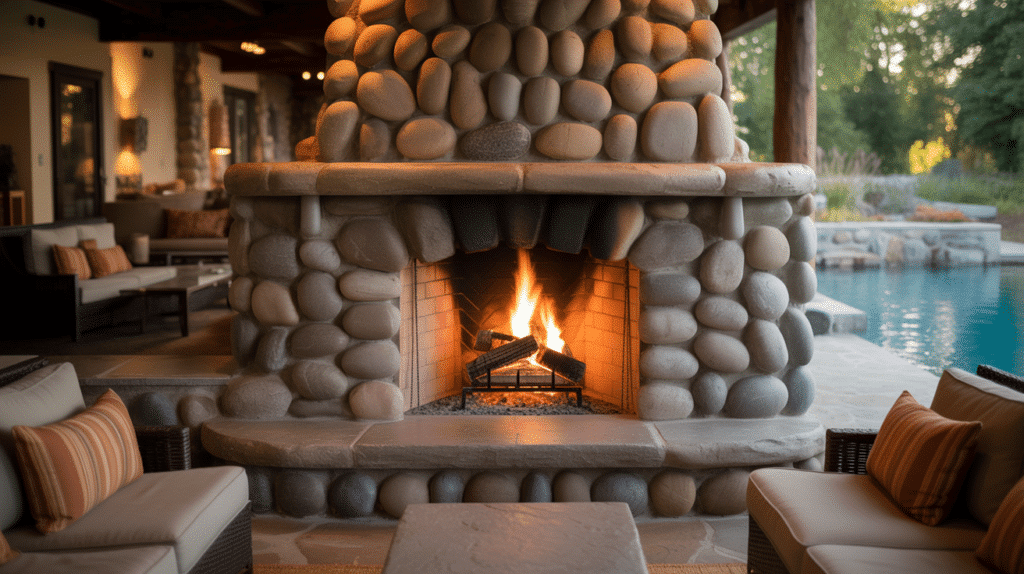
River rock fireplaces feature smooth, rounded stones. Indoors, they soften hard-lined spaces.
Outdoors, they work exceptionally well near pools or water features, visually connecting the fireplace to surrounding natural elements and reducing harsh visual transitions.
7. Tight-Joint Ledgestone Fireplace
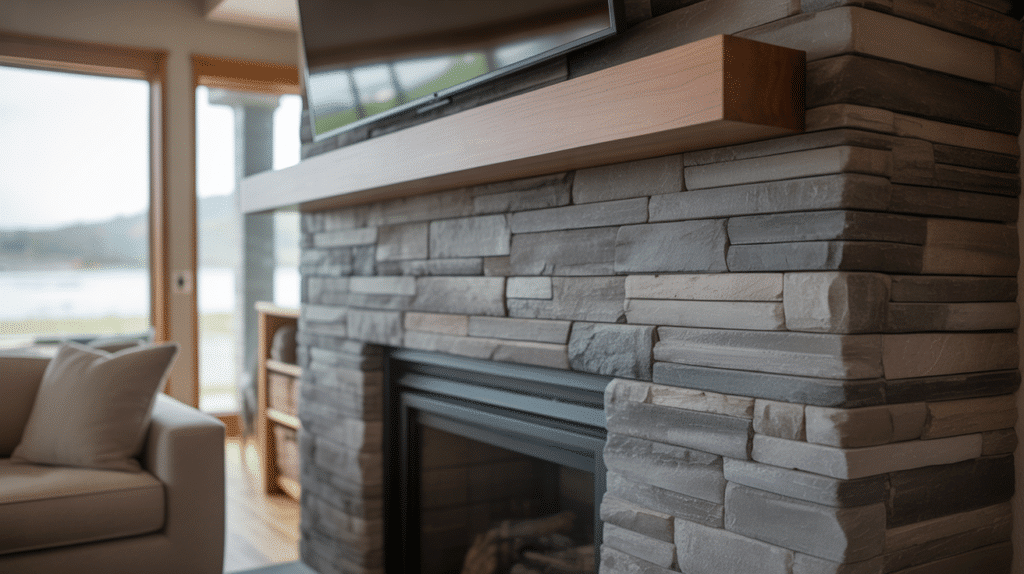
Ledgestone with narrow joints creates a clean texture. Indoors, it fits modern farmhouse or transitional rooms.
Outdoors, it holds up well on vertical surfaces under cover, offering depth without collecting debris or moisture between stones.
8. Mixed-Stone Mosaic Fireplace
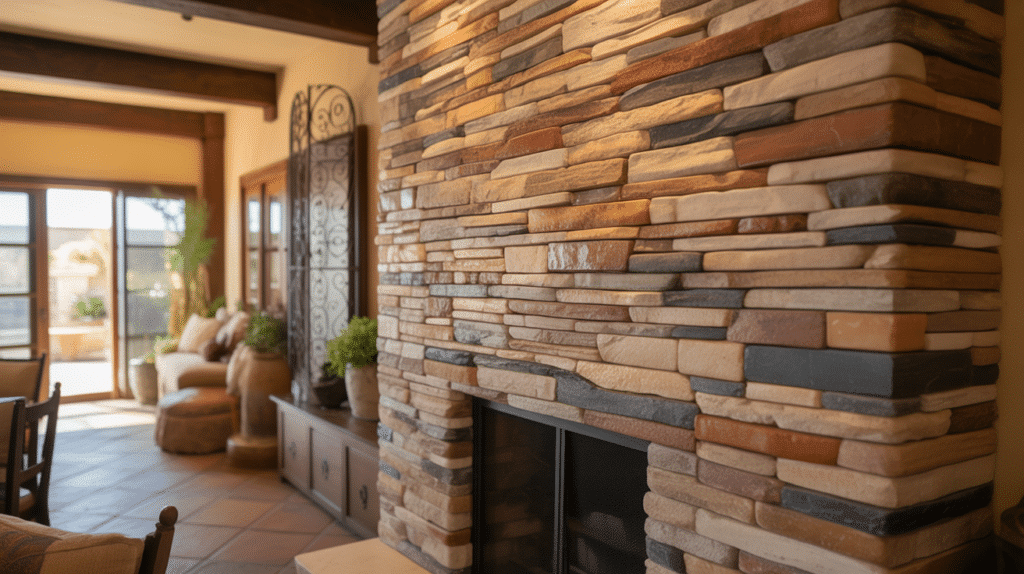
A mixed-stone layout uses varied sizes and tones. Indoors, it adds interest to neutral rooms.
Outdoors, it works well in eclectic or Mediterranean-style patios where variation feels intentional and complements tile, stucco, and textured flooring.
9. Stone Fireplace With Symmetrical Built-Ins
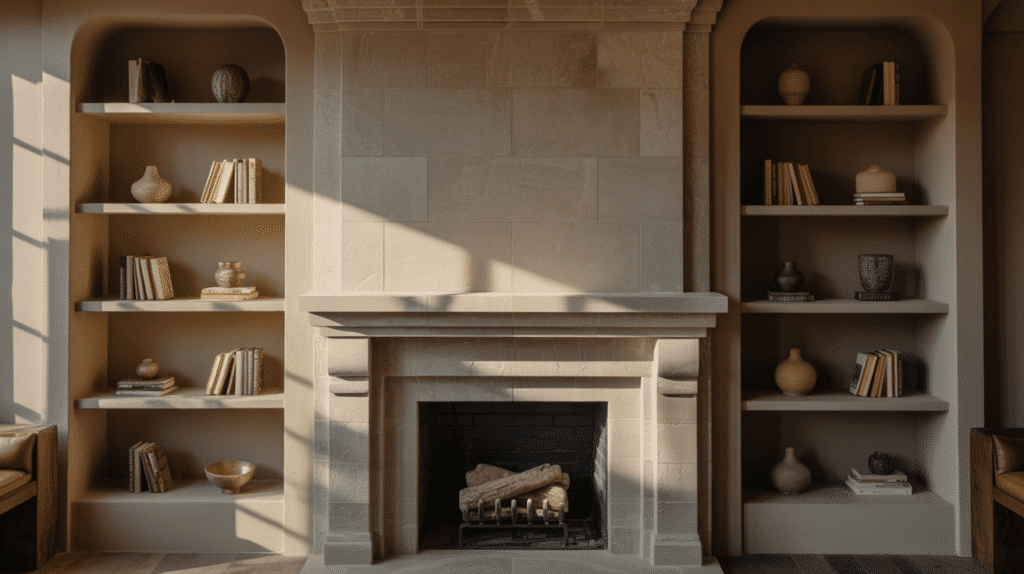
Stone fireplaces framed by built-in cabinets or shelving create balance. Indoors, they organize storage and display. Outdoors, symmetrical side walls or niches can hold firewood or décor, maintaining structure while adapting to open-air conditions.
10. Stone Fireplace With Open Side Shelving
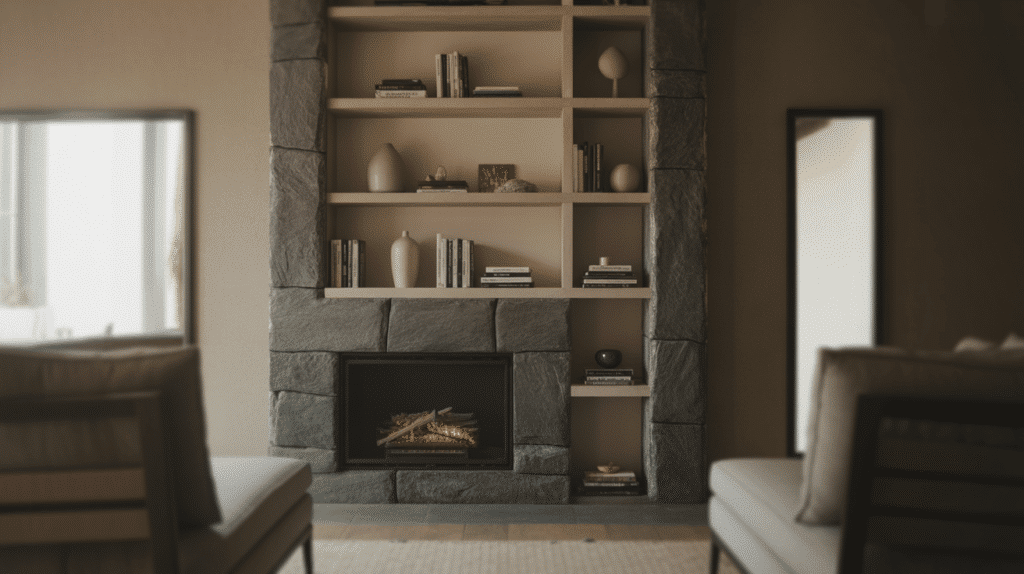
Open shelving beside a stone fireplace lightens the wall visually. Indoors, it reduces bulk in small rooms. Outdoors, recessed shelves can hold lanterns or planters, adding function without enclosing the space.
11. Stone Fireplace With Floating Wood Mantel
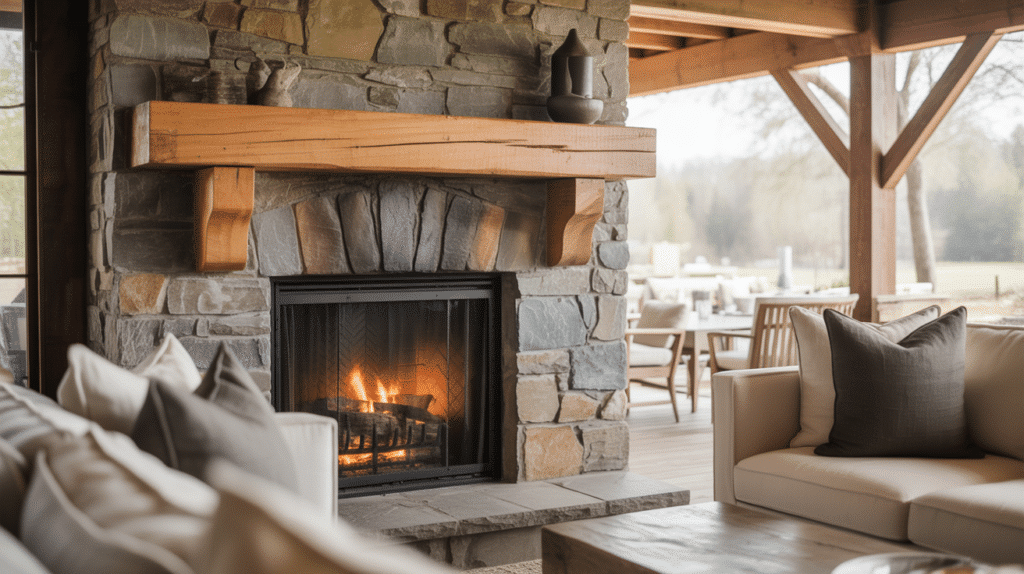
A floating wood mantel adds warmth against stone. Indoors, it softens modern layouts. Outdoors, use sealed or reclaimed wood under cover to create a focal line without adding visual weight or blocking airflow around the fireplace.
12. Mantel-Free Stone Fireplace
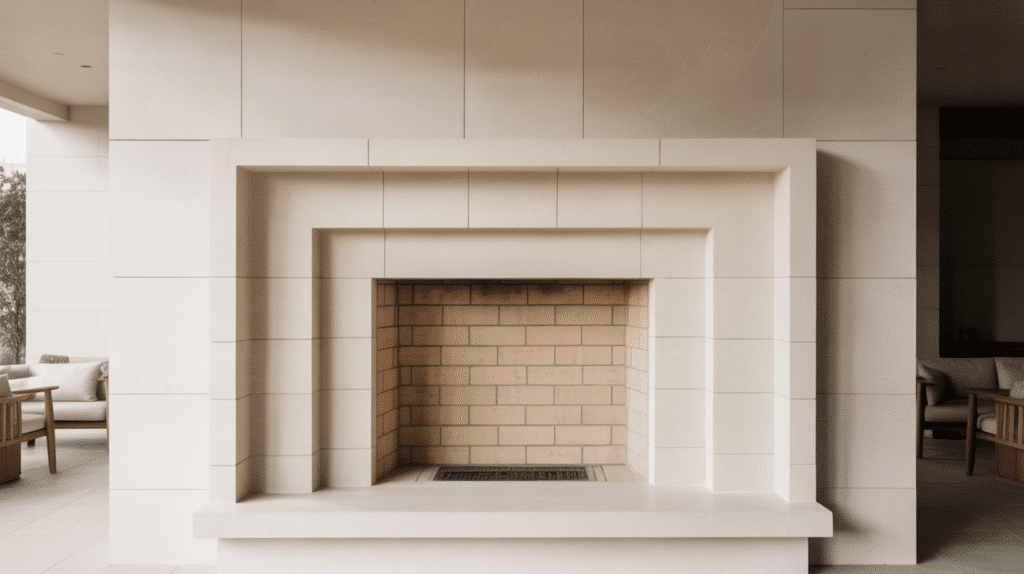
Removing the mantel creates a clean, uninterrupted stone surface. Indoors, this suits minimalist spaces.
Outdoors, it reduces maintenance and keeps the design simple, especially in exposed environments where projecting elements may weather unevenly.
13. Stone Fireplace With Plaster Surround Above
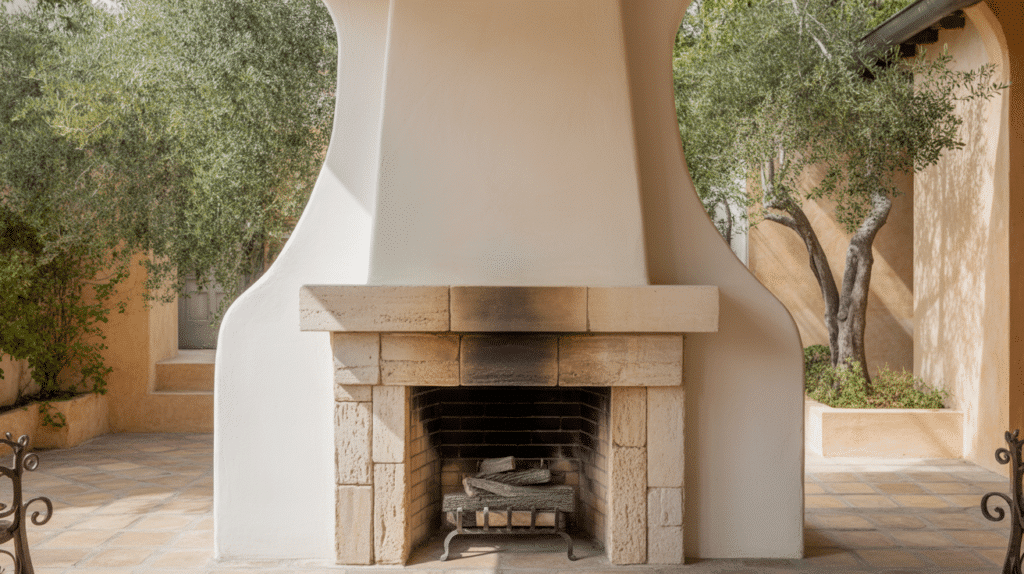
Combining stone around the firebox with plaster above reduces visual density. Indoors, it lights tall walls.
Outdoors, it works well in Mediterranean or desert climates, pairing stone durability with smoother, heat-reflective surfaces.
14. Arched Stone Fireplace Opening
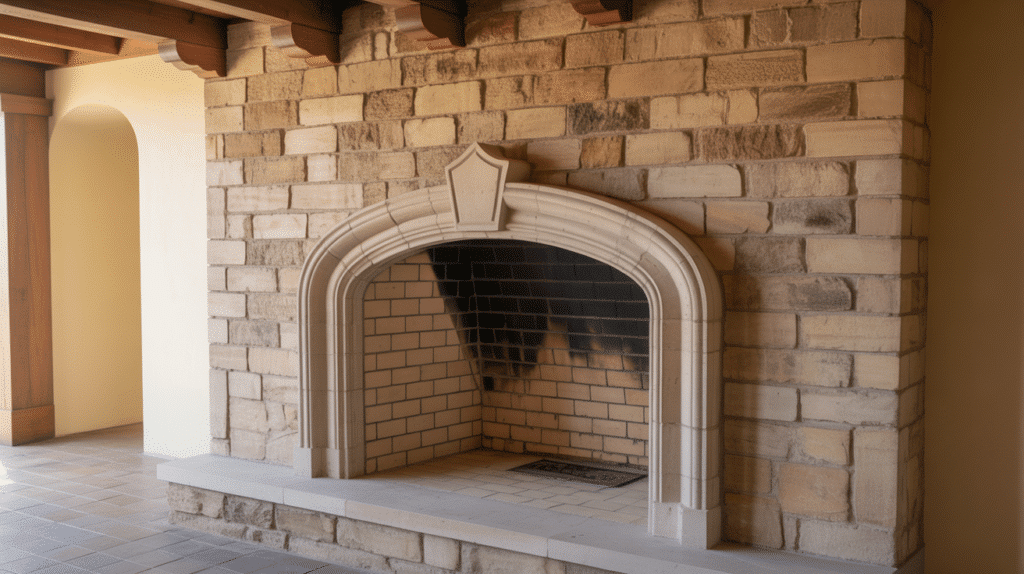
An arched firebox softens rigid layouts. Indoors, it fits traditional or European-inspired rooms.
Outdoors, it adds character to courtyards and garden walls, breaking up straight lines and framing the fire as an architectural feature.
15. Corner Stone Fireplace
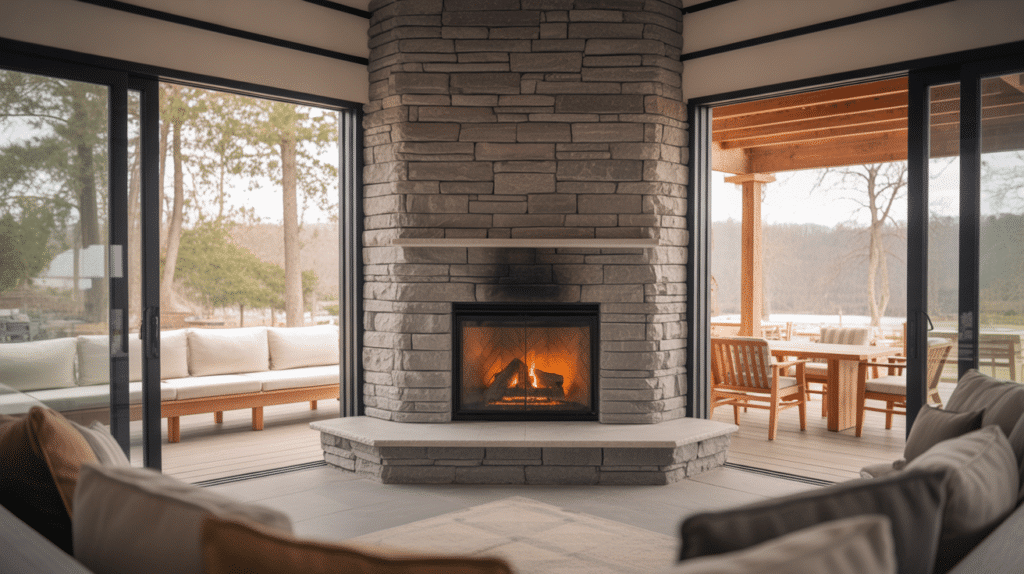
Corner fireplaces save wall space. Indoors, they suit smaller rooms or open layouts.
Outdoors, they help define seating areas along perimeter walls, keeping the fire visible without blocking primary views or circulation paths.
16. Double-Sided Stone Fireplace
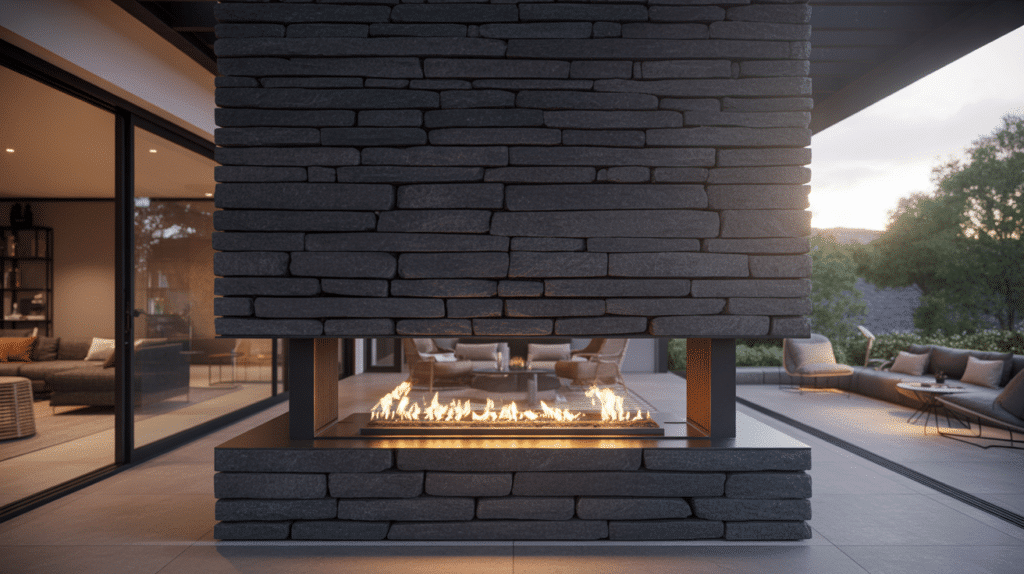
A double-sided fireplace serves two zones. Indoors, it separates living and dining areas.
Outdoors, it works between patio and pool zones or lounge and dining spaces, providing warmth and visual connection from both sides.
17. Stone Fireplace With Bench-Style Hearth
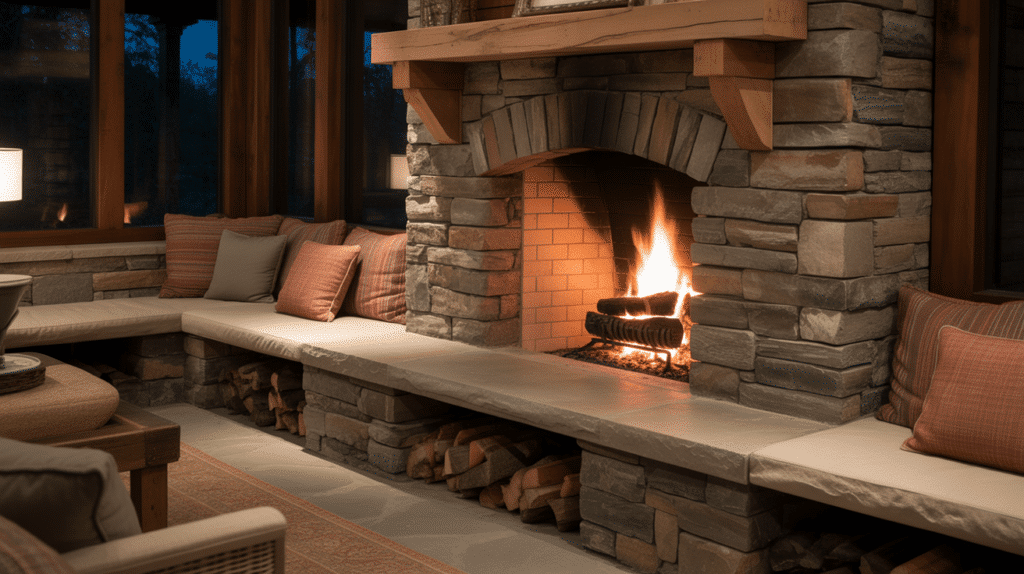
A raised hearth creates casual seating. Indoors, it supports social layouts. Outdoors, it doubles as extra seating near the fire, reducing the need for movable furniture and helping anchor the fireplace as a gathering point.
18. Linear Fireplace With Stone Slab Surround
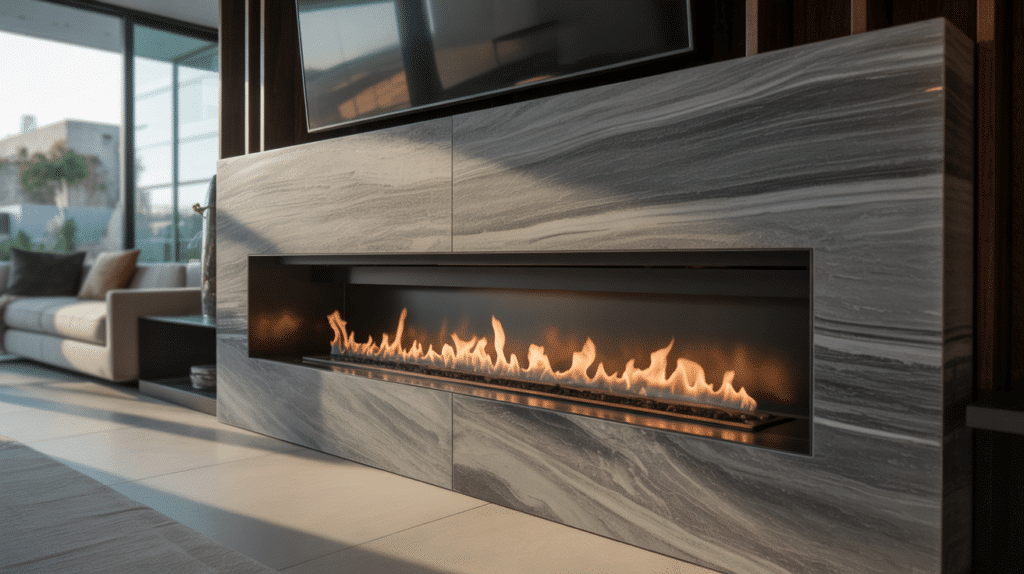
Linear fireboxes pair well with large stone slabs. Indoors, they suit contemporary spaces.
Outdoors, slab stone reduces grout lines and maintenance, creating a clean, modern focal wall under covered or semi-covered conditions.
19. Large-Format Stone Slab Fireplace
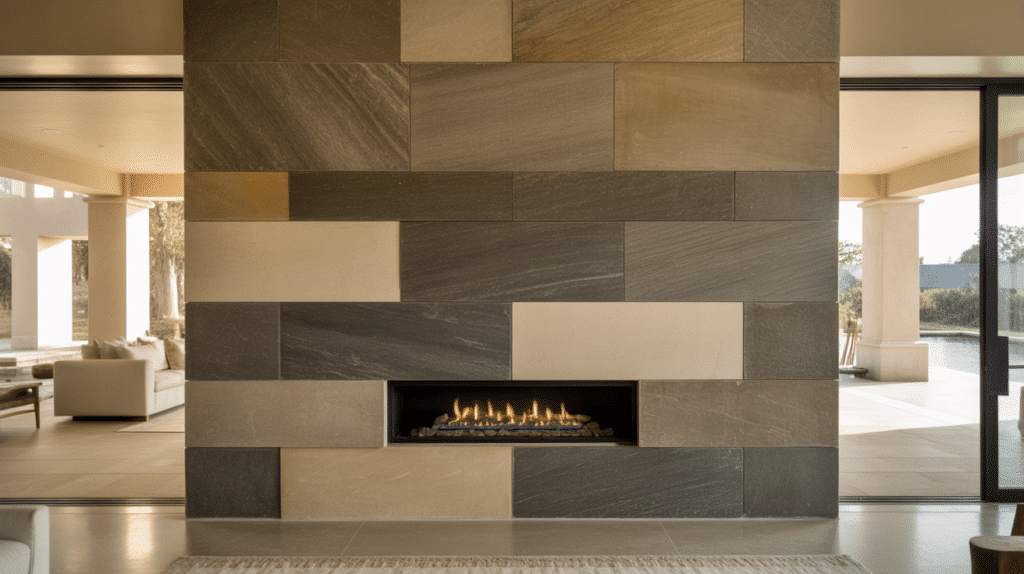
Using oversized stone slabs creates a seamless look. Indoors, it elevates modern interiors.
Outdoors, it minimizes joints exposed to weather, making it practical for high-end patios where clean lines and durability are priorities.
20. Marble-Look Stone Fireplace
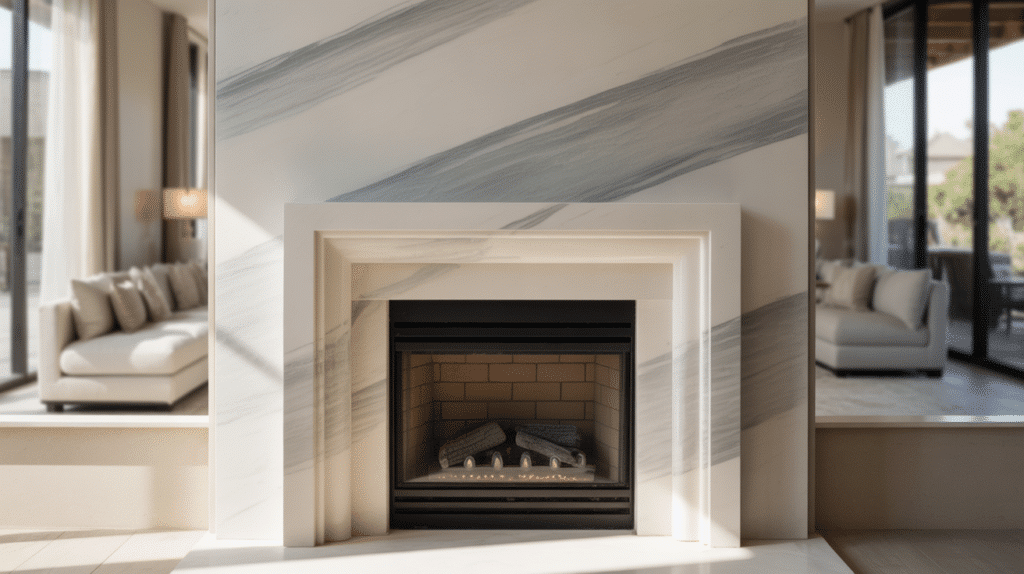
Marble-look stone offers a refined contrast. Indoors, it fits classic-modern spaces.
Outdoors, use engineered or porcelain stone alternatives to achieve the look while handling temperature changes and exposure more reliably than natural marble.
21. Stone Fireplace With Metal Firebox Trim
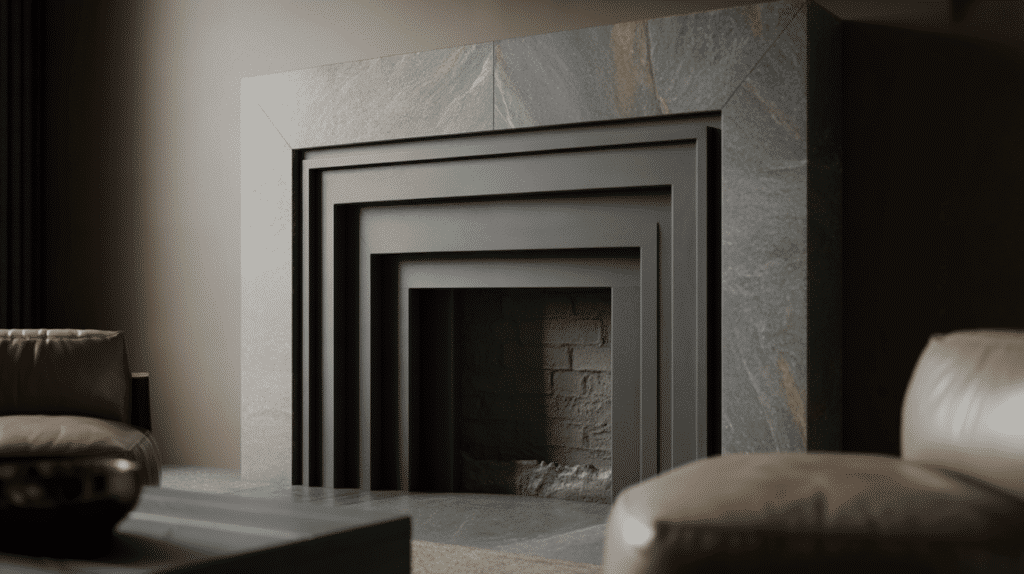
Metal trim sharpens the fireplace opening. Indoors, it adds contrast. Outdoors, it protects stone edges from heat and wear, especially in high-use fire pits or fireplaces that see frequent seasonal use.
22. Stone Fireplace With Reclaimed Wood Mantel
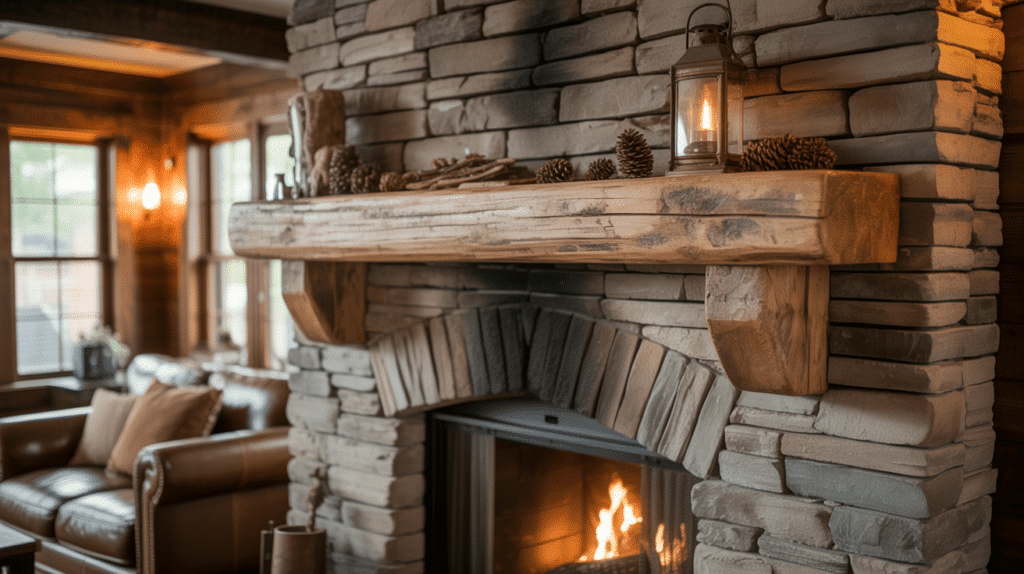
Reclaimed wood adds texture and history. Indoors, it softens stone walls. Outdoors, when properly sealed and covered, it adds warmth and contrast, especially in rustic or farmhouse-style exterior living spaces.
23. Stone Fireplace With Painted Mantel Surround
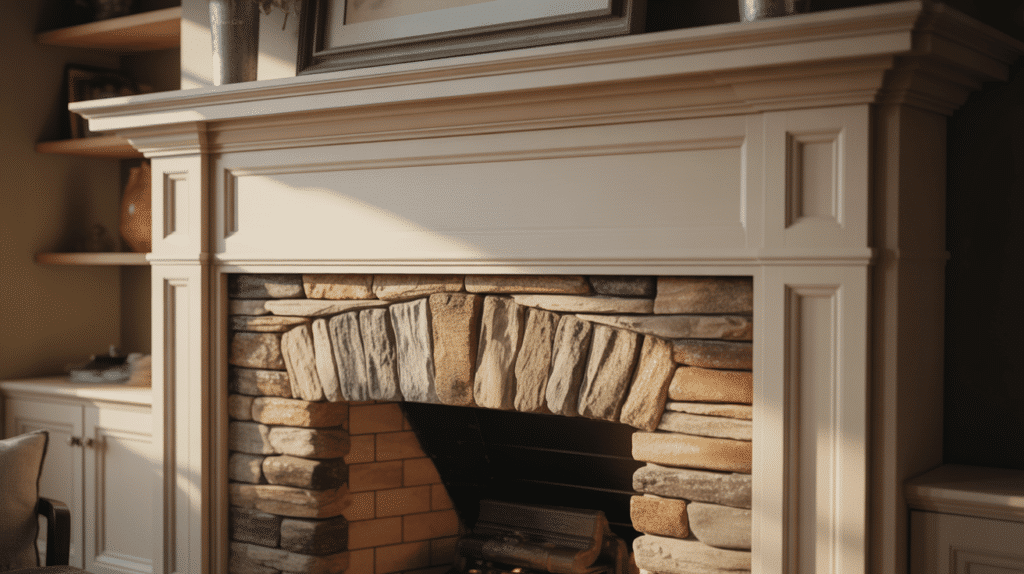
A painted mantel frames the stone cleanly. Indoors, it blends traditional detailing with texture. Outdoors, painted masonry or concrete mantels can define the firebox while allowing stone to remain the dominant surface.
24. Stone Fireplace With Decorative Firebox Tile
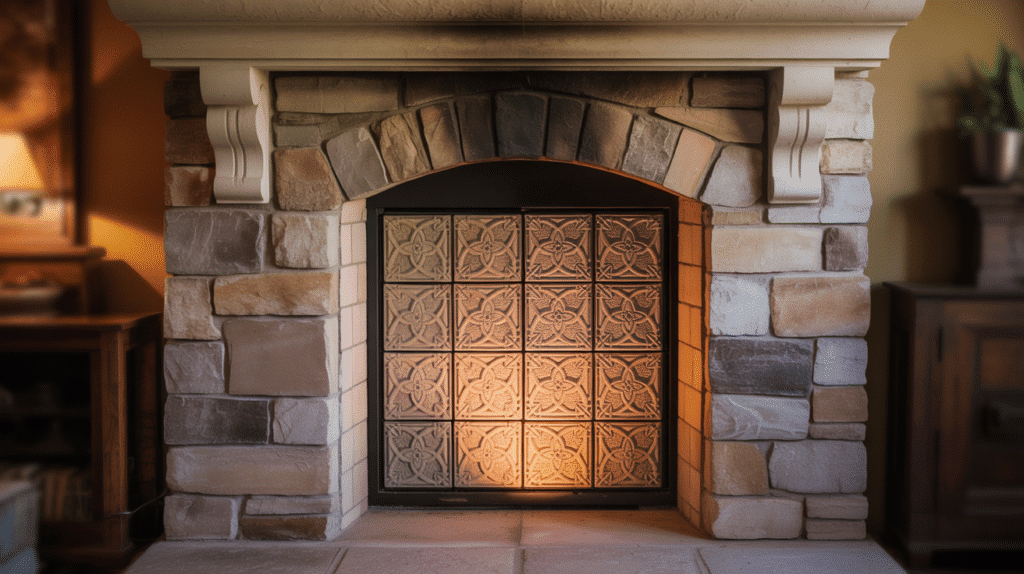
Adding tile inside the firebox introduces a pattern. Indoors, it adds detail at eye level. Outdoors, use heat-rated tile to bring color and texture without overwhelming the surrounding stone surfaces.
25. Stone Fireplace With Integrated TV Niche
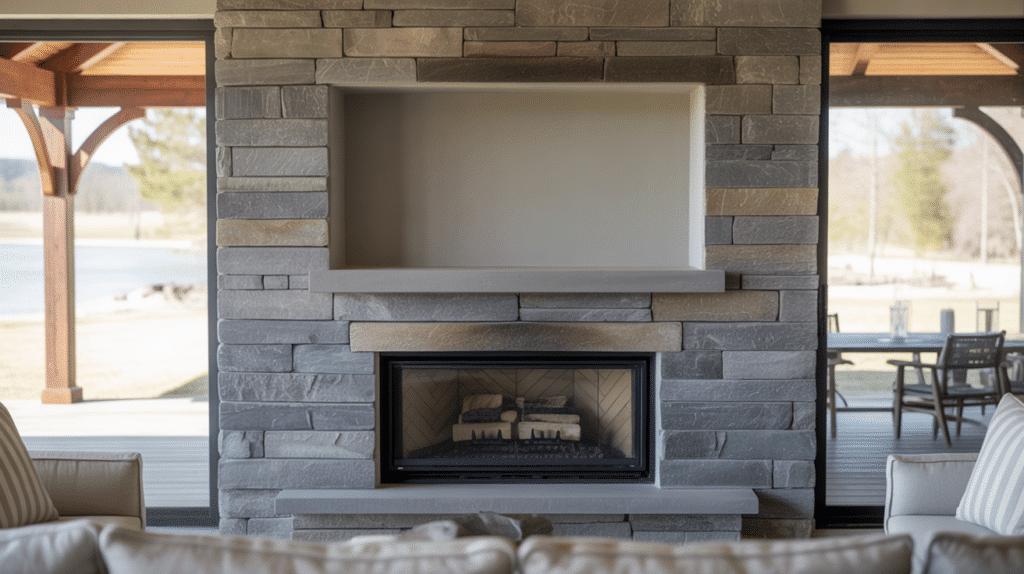
A built-in TV niche organizes media placement. Indoors, it reduces clutter. Outdoors, it works in covered patios where screens are protected, keeping entertainment and fire features aligned on one central wall.
26. Stone Fireplace With Offset TV Placement
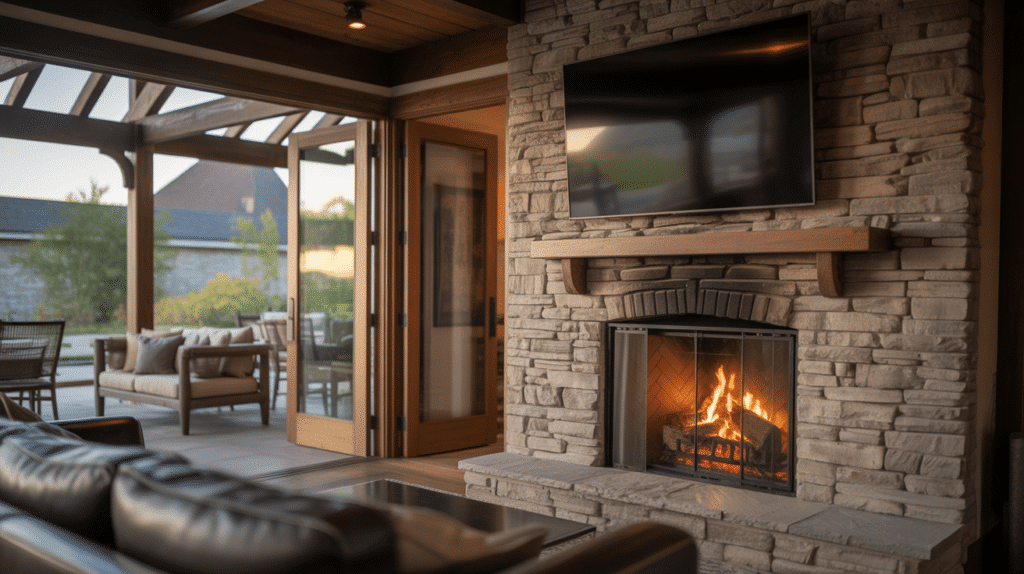
Offset TVs keep the fireplace visually dominant. Indoors, this improves balance. Outdoors, it prevents heat exposure to electronics while maintaining a cohesive wall design for both fire and viewing areas.
27. Vertical Stone Orientation Fireplace
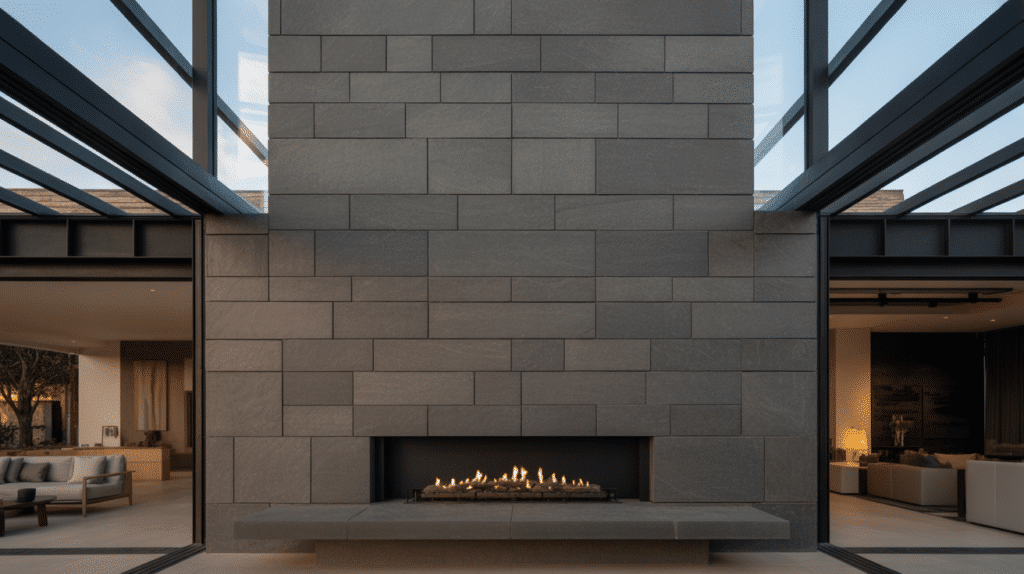
Vertical stone emphasizes height. Indoors, it suits tall ceilings. Outdoors, it complements pergolas and vertical structures, visually stretching the fireplace wall and aligning it with posts, columns, or surrounding architecture.
28. Horizontal Stacked Stone Fireplace
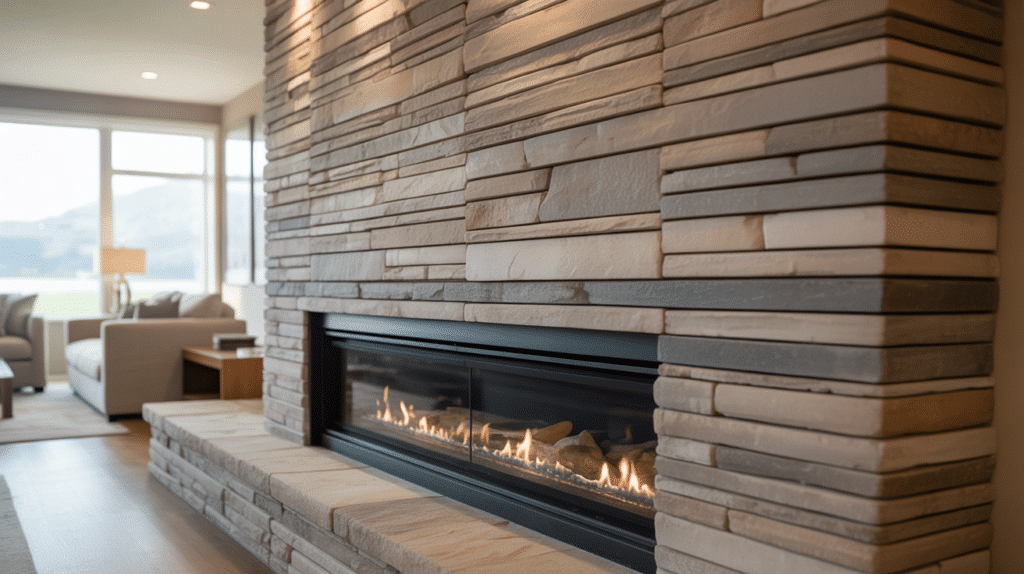
Horizontal stone emphasizes width. Indoors, it works well in low-ceiling rooms. Outdoors, it pairs with long patios or pool decks, visually extending the space and guiding seating arrangements along the fireplace wall.
29. Stone Fireplace With Wood Storage Niches
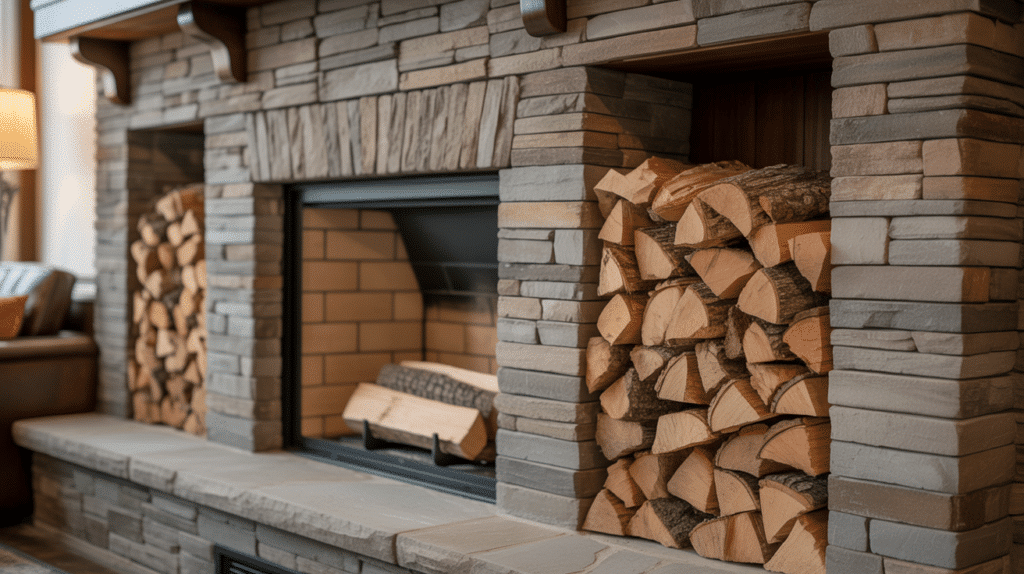
Integrated wood storage adds function. Indoors, it supports daily use. Outdoors, recessed niches keep firewood dry and accessible while adding rhythm and structure to the stone surface.
30. Stone Fireplace Framed by Windows
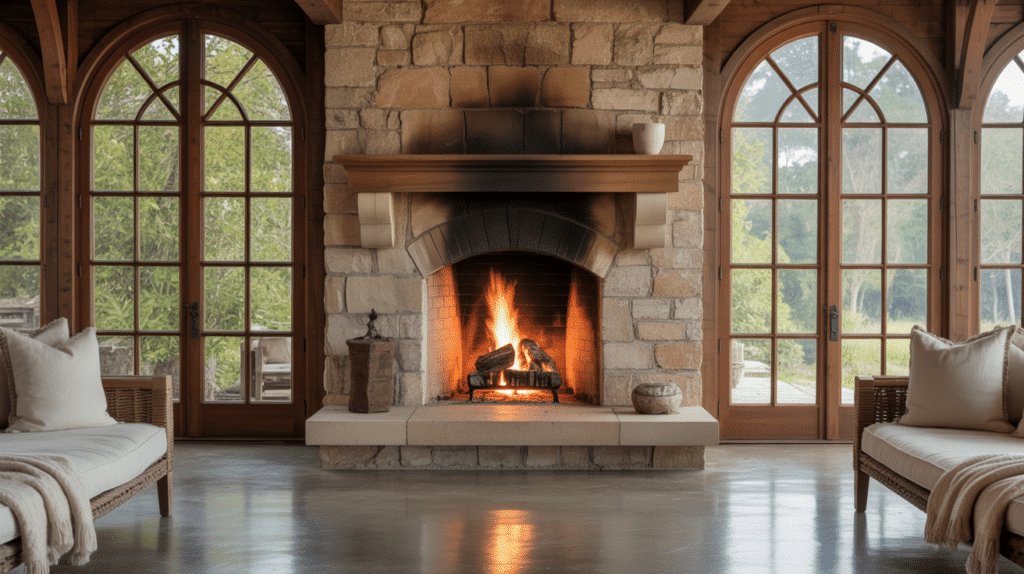
Windows beside a stone fireplace balance weight. Indoors, they bring in light. Outdoors, open sides or framed views reduce mass and connect the fireplace to the surrounding landscape or backyard views.
31. Outdoor Stone Fireplace Matching Home Exterior
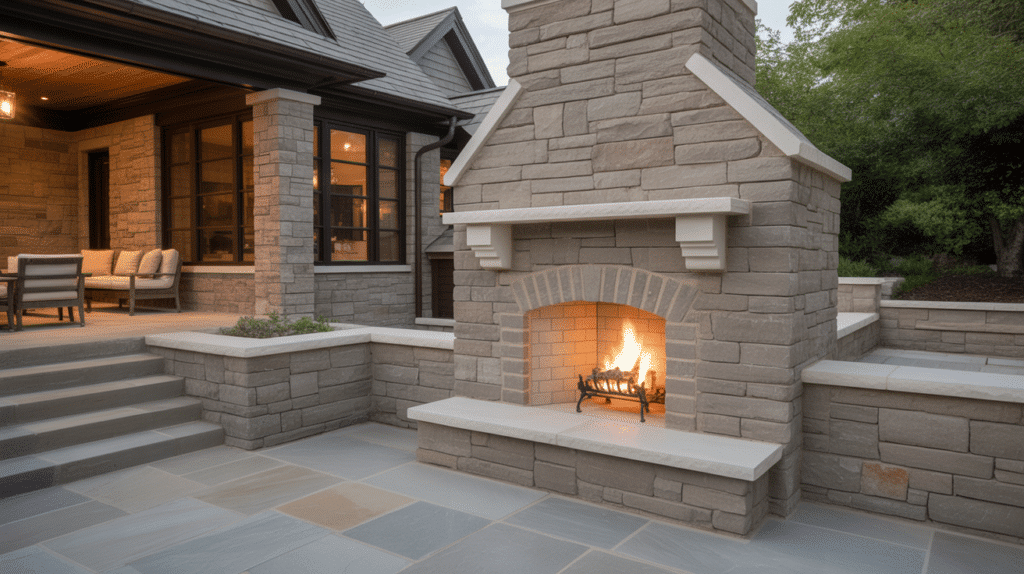
Matching the stone to the home exterior creates continuity. Indoors, it ties spaces together visually. Outdoors, it makes the fireplace feel permanent and intentional, especially in patios directly connected to the house.
32. Stone Fireplace With Thin Hearth Slab
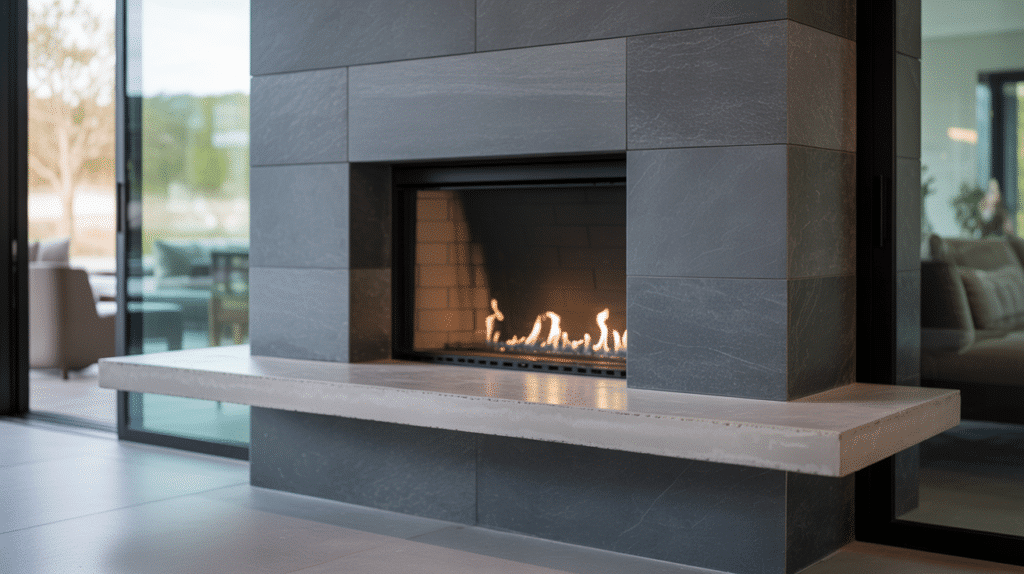
A thin hearth slab keeps the design light. Indoors, it suits modern layouts. Outdoors, it reduces trip hazards and creates a clean transition between the firebox and patio flooring.
33. Stone Fireplace With Raised Block Hearth
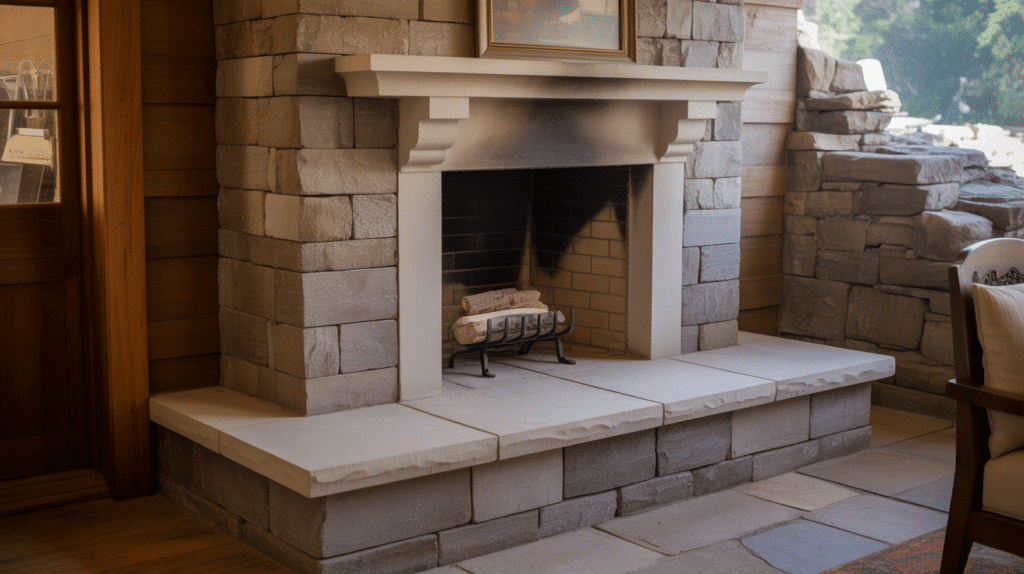
A raised hearth defines the fire zone. Indoors, it adds structure. Outdoors, it creates a clear seating edge and protects flooring from heat and sparks.
34. Warm-Toned Mixed Stone Fireplace
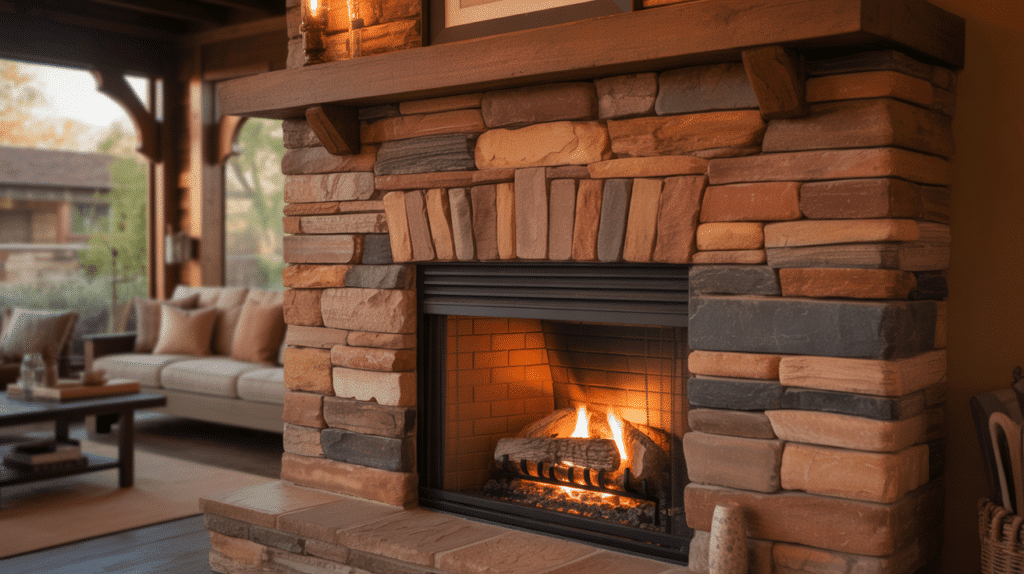
Warm stone tones suit inviting spaces. Indoors, they pair well with wood floors. Outdoors, they complement natural surroundings and age gracefully in sunlight and varying weather conditions.
35. Stone Fireplace as a Feature Wall Centerpiece
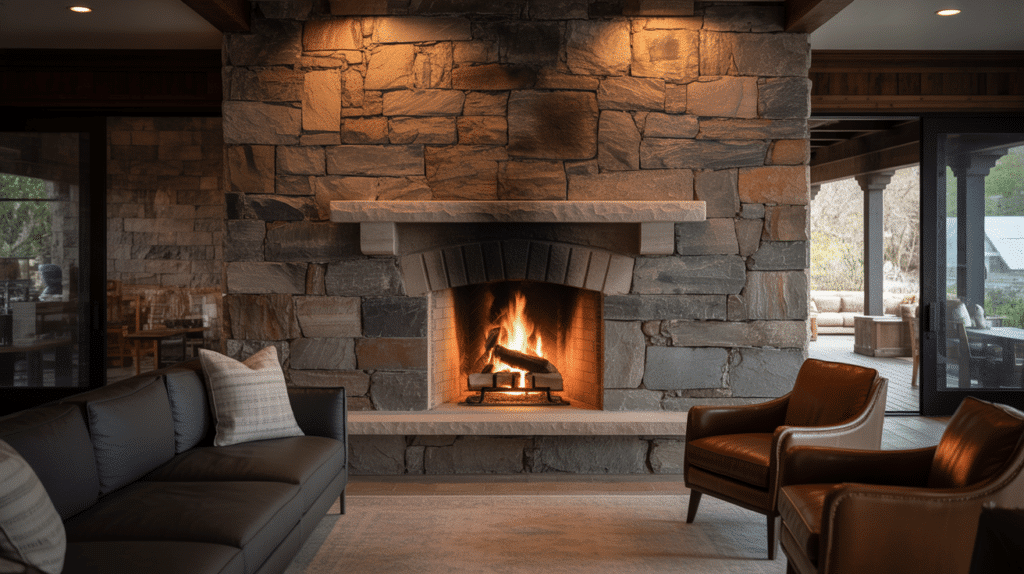
Using the fireplace as the main feature wall organizes the room. Indoors, it anchors furniture layouts.
Outdoors, it defines the entire living area, combining fire, seating orientation, and architectural focus in one element.
Practical Planning Tips for Indoor and Outdoor Stone Fireplaces
Before finalizing a design, practical planning ensures the fireplace performs as well as it looks.
- Confirm local building codes and clearance requirements, especially for outdoor installations.
- Usestone rated for heat and weather exposure in exterior spaces.
- Plan lighting early so the stone texture remains visible at night.
- For outdoor fireplaces, ensure proper drainage and water runoff around the base.
- Indoors, account for hearth height, mantel clearance, and furniture spacing to maintain safe, comfortable circulation.
These steps help prevent costly adjustments after installation.
Conclusion
Stone fireplace design works best when material choice, placement, and scale are aligned with how the space is actually used.
Indoors, stone can anchor open layouts, balance large walls, and provide long-term durability.
Outdoors, it defines gathering areas and creates structure within open landscapes. By selecting the right stone type, orientation, and surrounding elements, a fireplace becomes more than a visual feature.
It becomes a functional centerpiece. Thoughtful planning ensures the fireplace fits naturally into its setting, supports daily use, and remains visually consistent with the overall design for years to come.

James McLaren, with a rich background in architecture from the University of Manchester, has been contributing his expertise to the world of creative construction and home innovation for over 20 years. His journey began as a project manager for a leading construction firm, where he honed his skills in bringing complex designs to life. James joined our platform as a freelancer in 2019, quickly becoming a favorite for his insightful and practical advice. He has been a pivotal force to our wing ever since, bringing our readers a blend of technical know-how and creative flair. Beyond his professional life, James is an avid woodworker and enjoys restoring vintage furniture, a hobby that complements his professional insights beautifully.