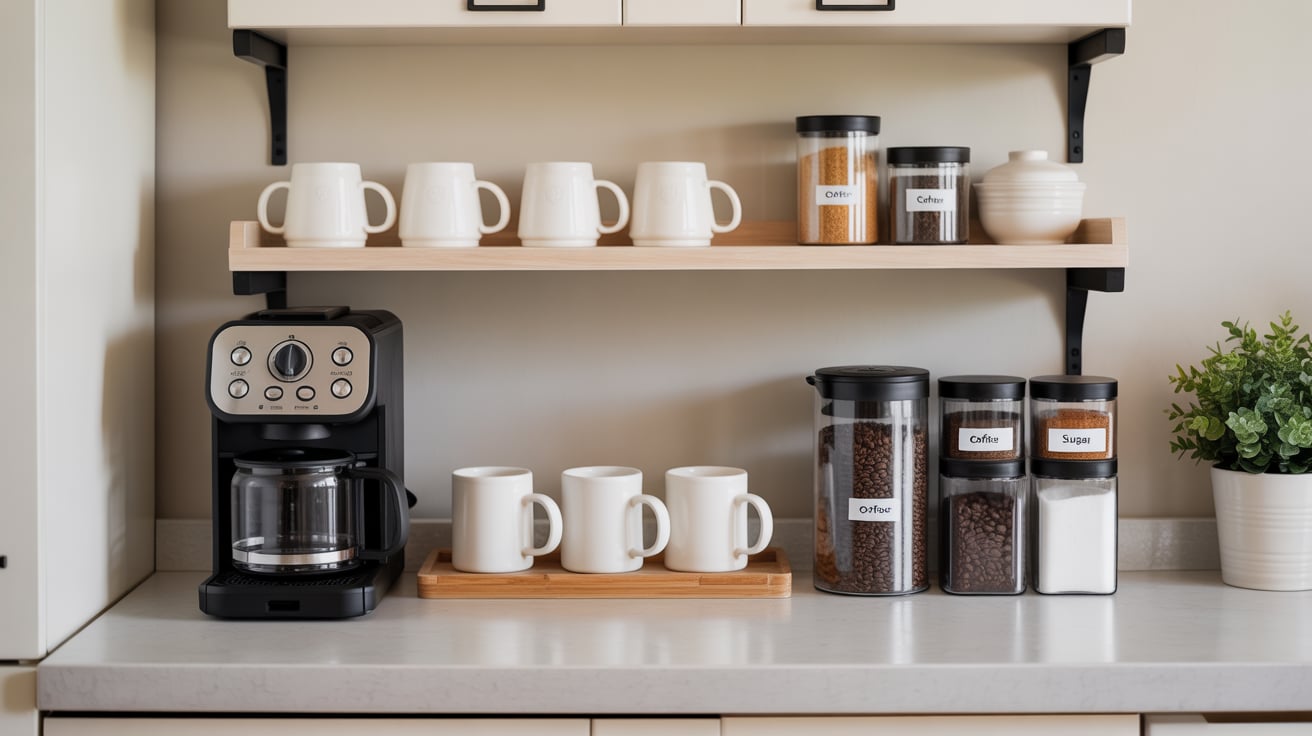

A coffee station in the kitchen keeps mugs, beans, pods, and brewing tools in one place, which helps mornings feel smoother, and counters stay easier to manage.
The setup can be as small as a tray with a compact machine or as permanent as a built-in cabinet nook with lighting and storage.
The best option depends on available wall space, counter depth, outlet placement, and how often coffee is made each day.
This list shares coffee station ideas that suit small kitchens, open layouts, and high-traffic households, with a focus on practical storage, simple upkeep, and a clean visual finish.
11 Coffee Station Ideas for the Kitchen
These coffee station setups focus on everyday usability, efficient storage, and clear visual organization.
Each idea shows how to group coffee tools in a way that fits different layouts, counter sizes, and household routines without disrupting kitchen workflow.
1) Tray-Based Coffee Station
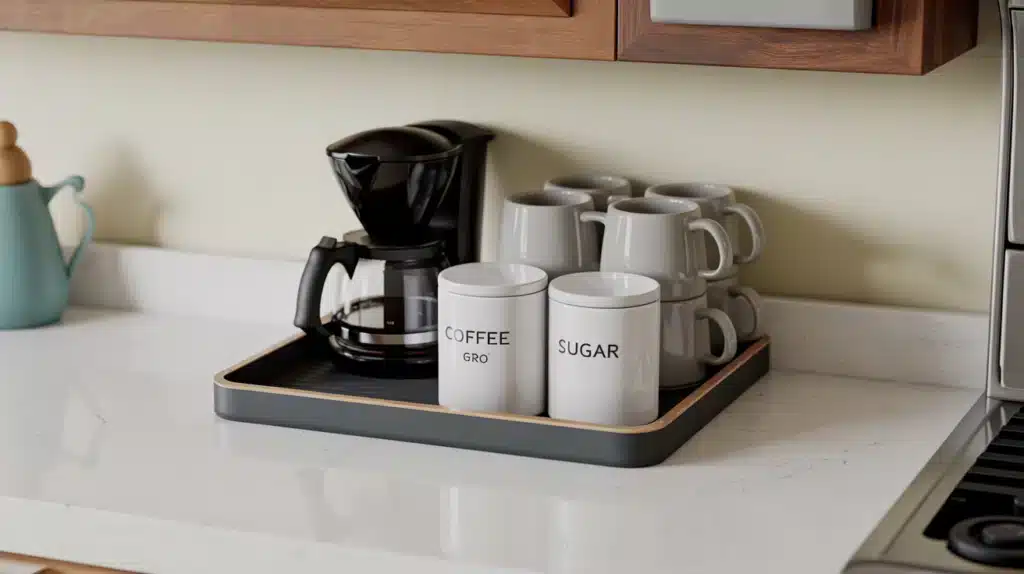
Best for: renters and limited counter space
Uses: tray, coffee maker, canisters
A tray creates a clear boundary so items do not spread across the counter. It also makes cleaning faster because the entire setup can be lifted and wiped underneath.
2) Corner Coffee Station on the Counter
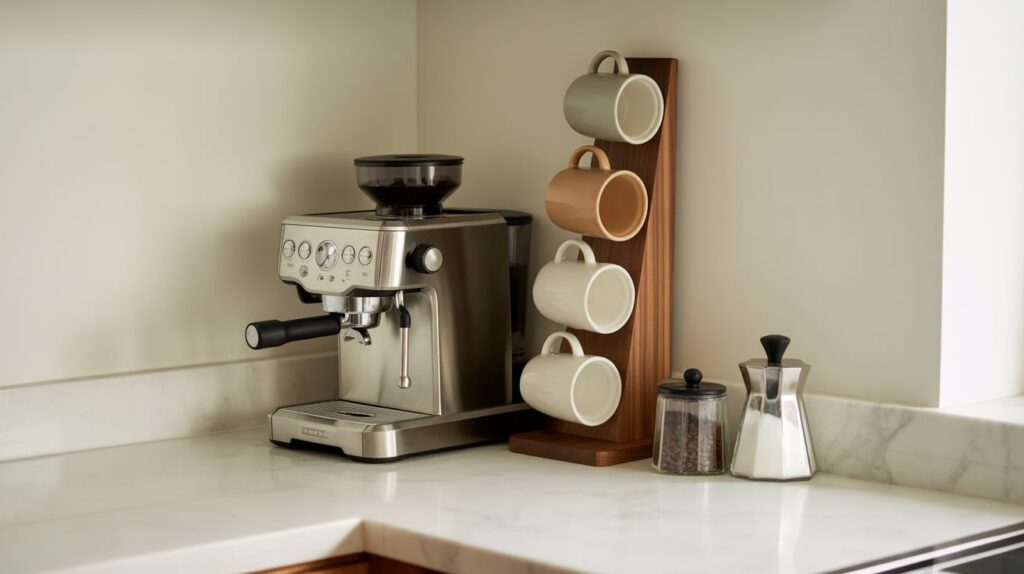
Best for: unused counter corners
Uses: compact machine and mug stand
Corner placement keeps the station out of the main prep lanes. A vertical mug stand helps avoid taking up more counter width than needed.
3) Coffee Station Under Upper Cabinets
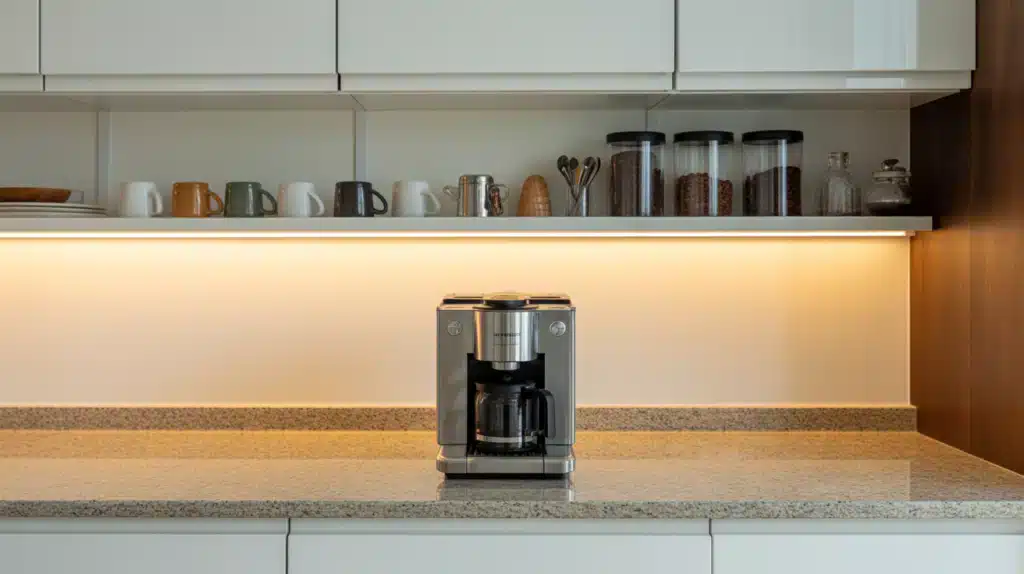
Best for: keeping it visually tucked away
Uses: machine below, storage above
This layout works well when mugs and refills fit directly above the machine. Under-cabinet lighting helps reduce shadows during early mornings.
4) Wall Shelf Coffee Station
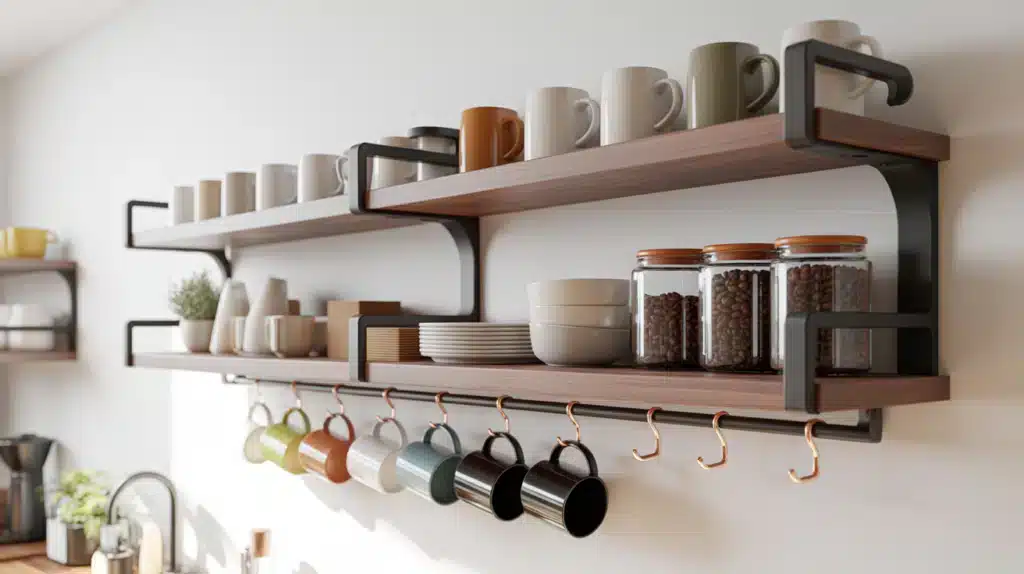
Best for: kitchens short on counter space
Uses: one or two shelves with mug hooks
Shelves keep mugs and supplies off the counter while staying within reach. Mug hooks work best when spaced to avoid handles bumping.
5) Coffee Station in a Kitchen Nook
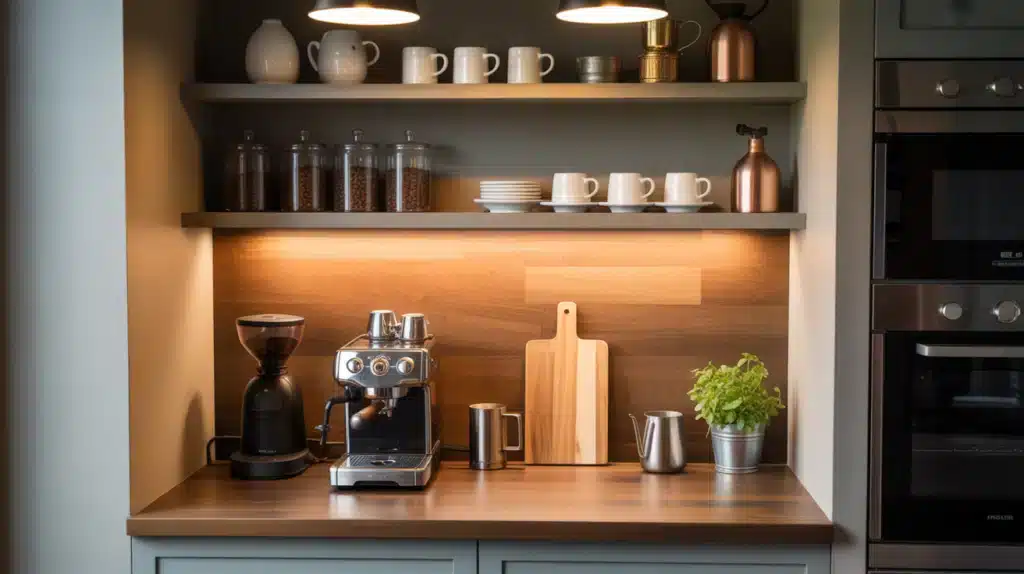
Best for: awkward or unused wall sections
Uses: small counter and open shelving
A nook helps define coffee as its own zone. Open shelving keeps daily items accessible without opening cabinets.
6) Hidden Coffee Station Inside a Cabinet
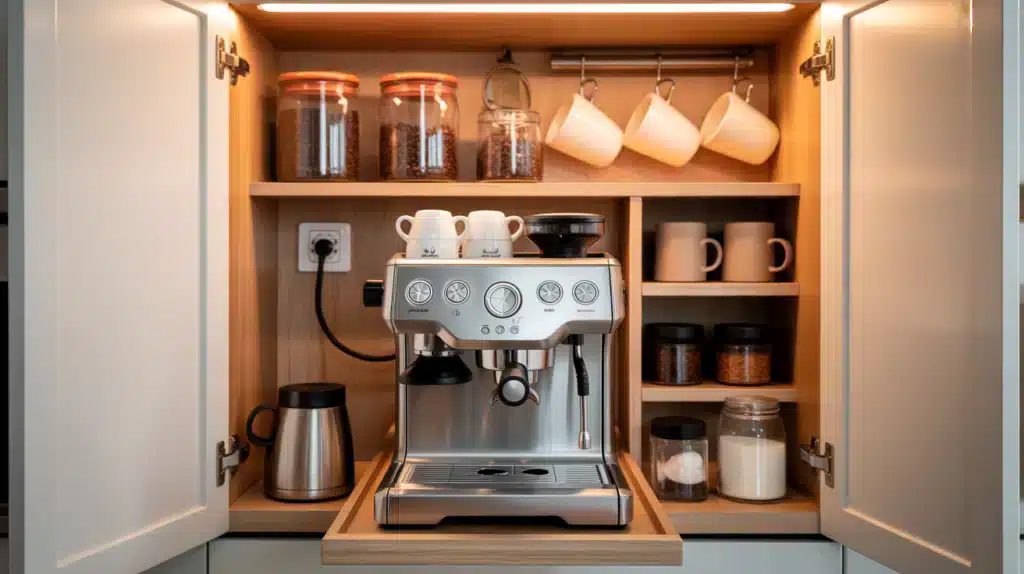
Best for: clutter-free kitchens
Uses: cabinet space with an interior outlet
A cabinet station keeps machines out of sight when not in use. Interior outlets prevent cords from trailing across counters.
7) Pantry Coffee Station
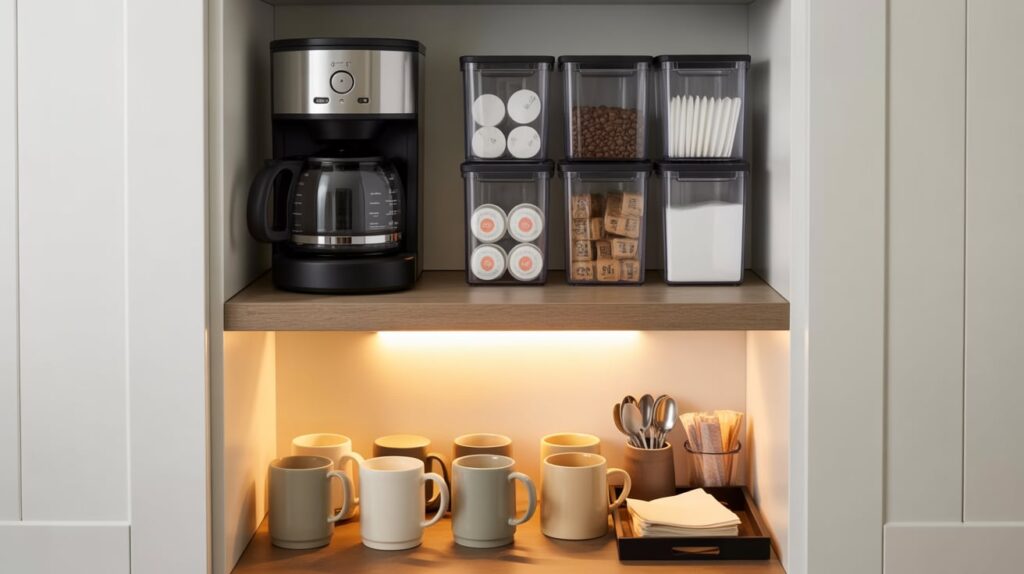
Best for: freeing up main counters
Uses: pantry shelf and storage bins
A pantry setup keeps the kitchen counter clear. Clear bins help separate pods, filters, and sweeteners without overfilling shelves.
8) Coffee Station on a Rolling Cart
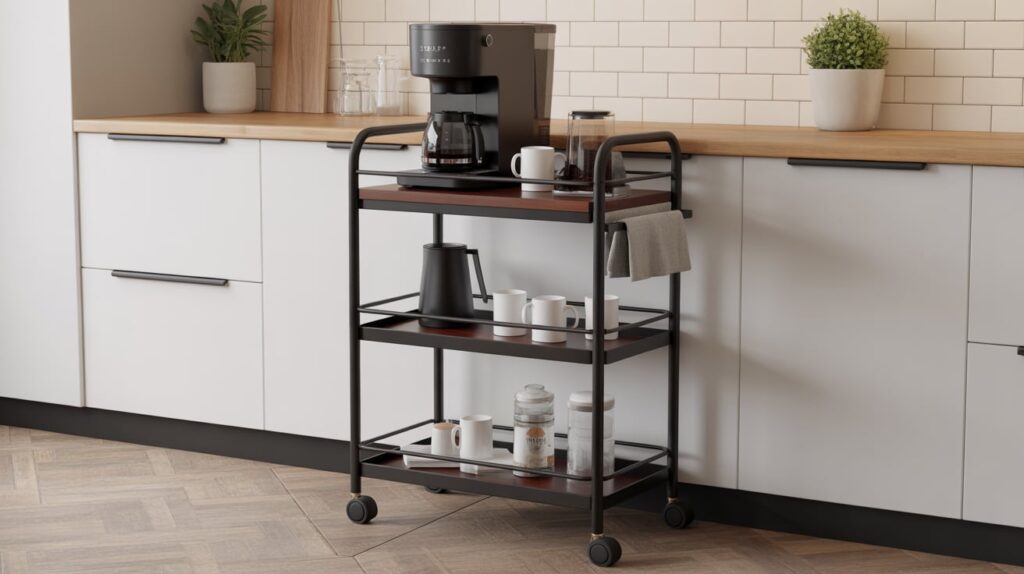
Best for: flexible layouts
Uses: mobile cart with shelves
A cart works well in kitchens that need counters available for cooking. The top tier can hold the machine while lower tiers handle refills and mugs.
9) Coffee Station and Microwave Combo Nook
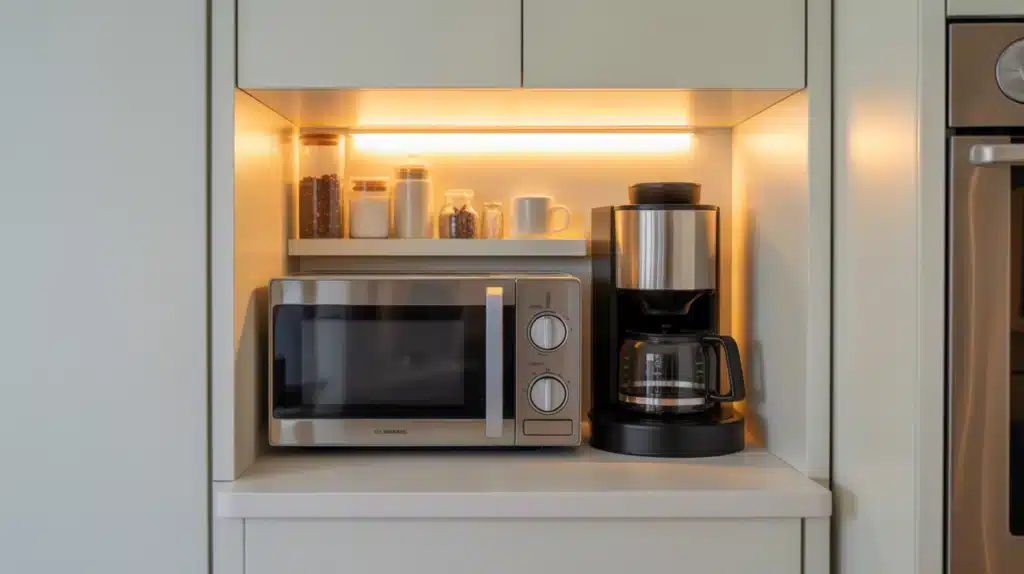
Best for: compact kitchens
Uses: small microwave and slim coffee maker
Pairing both appliances in one zone saves space. Keeping coffee items on a shelf above prevents crowding around the microwave.
10) Built-in Cabinet Appliance Garage Coffee Station
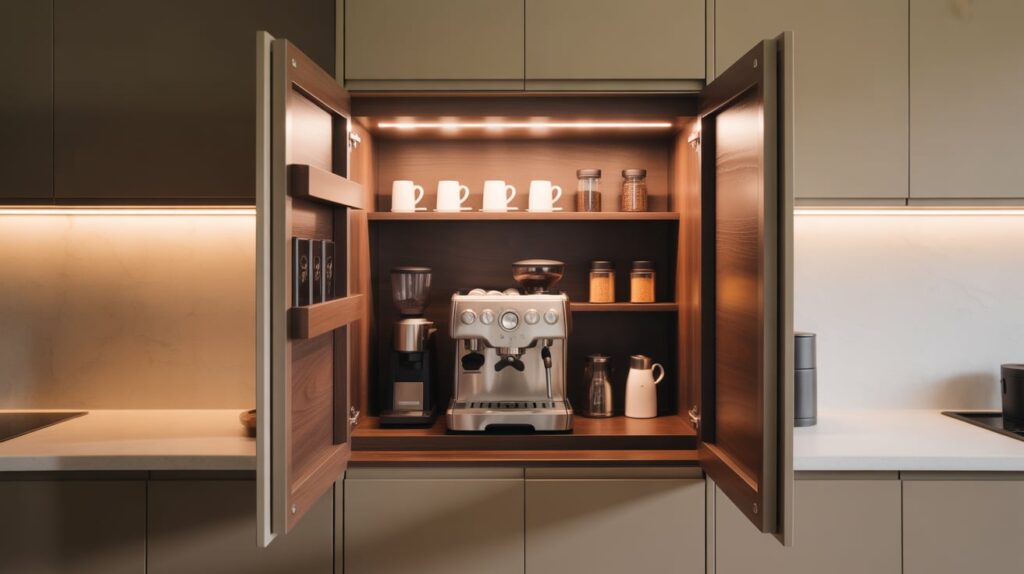
Best for: clean, built-in appearance
Uses: lift-up or pocket cabinet doors
This option keeps machines ready to use but visually contained. Pocket doors help avoid doors swinging into nearby walkways.
11) Coffee Station with a Beverage Fridge Below
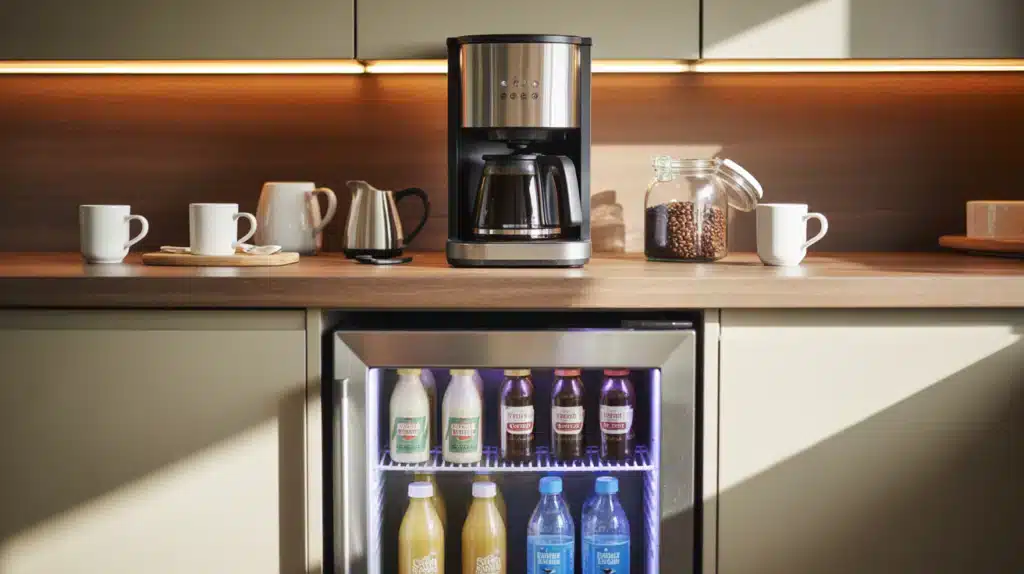
Best for: iced coffee or frequent guests
Uses: under-counter fridge
An under-counter fridge keeps creamers and cold drinks close to the brew area. It also reduces trips to the main refrigerator during busy mornings.
Benefits of Having a Kitchen Coffee Station
A kitchen coffee station is a dedicated space for preparing and enjoying coffee at home. It brings together tools, ingredients, and accessories in one organized area. Beyond convenience, a coffee station adds daily comfort and practical value to the kitchen.
1. Saves Time in Daily Routines
Keeping coffee supplies in one place reduces morning delays. There is no need to search for mugs, filters, or beans. Everything required for preparation stays within reach, making mornings more efficient.
2. Improves Kitchen Organization
A coffee station helps limit clutter by assigning a fixed spot for coffee-related items. This keeps countertops tidy and prevents cabinets from becoming overcrowded with scattered supplies.
3. Supports Cost Savings
Preparing coffee at home lowers spending on café visits. Over time, a home coffee station helps reduce recurring expenses while still allowing regular access to preferred drinks.
4. Encourages Consistent Coffee Habits
Having a visible and ready setup supports regular use. It becomes easier to prepare coffee without extra effort, which helps maintain consistent routines during busy days.
5. Allows Personal Customization
A coffee station can be arranged based on individual preferences. Equipment, storage style, and layout can match available space and preferred brewing methods, from simple drip coffee to manual options.
What to Include in a Kitchen Coffee Station?
A well-planned coffee station includes only what is used regularly, keeping the setup efficient without overcrowding the counter or nearby storage areas.
- Coffee maker or espresso machine
- Mugs or cups
- Beans, pods, or grounds
- Sugar, creamer, and stir tools
- Storage bins or canisters
- Small trash container for pods or filters
Coffee Station Setup Table
Organizing the station by function helps reduce movement, speeds up brewing, and keeps related items grouped together.
| Zone | What to place | Why it helps |
|---|---|---|
| Brew | Machine and kettle | Centralizes coffee prep |
| Add-ons | Sugar, pods, syrups | Reduces back-and-forth |
| Mugs | Shelf, hooks, or rack | Keeps mugs accessible |
| Storage | Bins or drawers | Limits counter clutter |
| Cleanup | Towel and small bin | Keeps the area tidy |
Conclusion
A kitchen coffee station feels most useful when it matches the layout and the daily coffee routine.
A tray on the counter can keep essentials contained, while a cabinet nook or hutch can hide machines and store refills.
The goal is a clear zone for brewing, add-ons, mugs, and cleanup so the main work surface stays open.
Keep only frequently used items within reach and place backups in bins or drawers nearby.
Wipe drips, empty the pod or filter waste, and reset the area each evening. Share which setup option fits the kitchen and why in the comments.
Small labels and matching containers help find supplies and keep the station tidy.

Ava Taylor, holding a Bachelor’s degree in Interior Design from the Pratt Institute, has made her mark in creating engaging and functional living spaces for over 14 years. She began her career with a New York-based design studio, where she gained a reputation for her innovative and user-centric designs. Ava joined our team in 2019, bringing a blend of artistic flair and practicality to our home improvement section. Since the she has been the lead contributor to our room transformation series, inspiring readers with her unique approach to maximizing space utility and aesthetic appeal. Beyond her professional work, Ava is a passionate collector of vintage furniture, a hobby that enriches her design perspective.