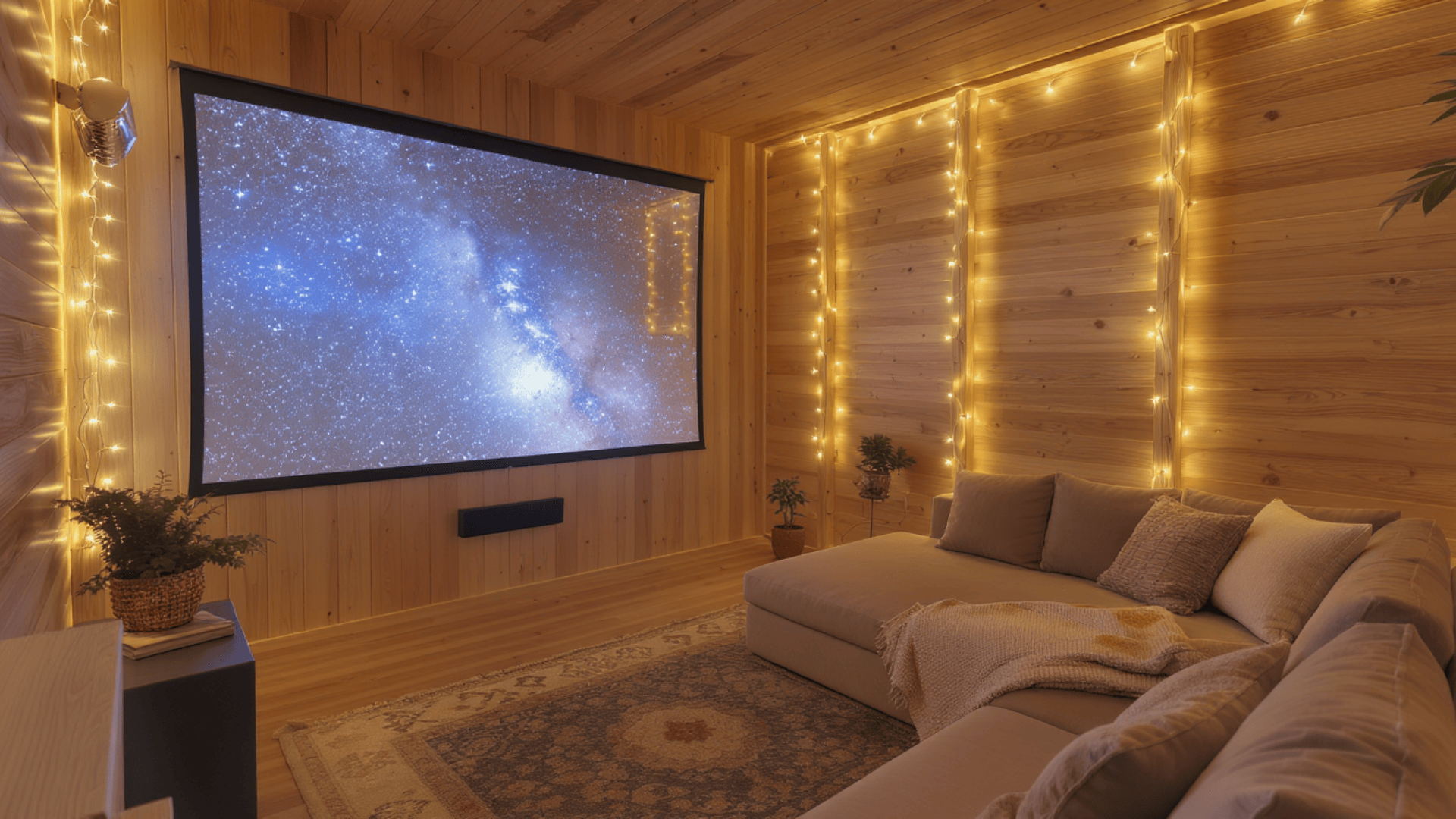

A home can feel completely different once sound, light, and space begin to work together.
A well-thought-out home theatre idea goes beyond screens and speakers, shaping how moments are experienced, shared, and remembered.
From quiet movie nights to lively game sessions, small design choices influence comfort, clarity, and atmosphere in powerful ways.
Layout, lighting balance, seating flow, and subtle decor details quietly shape the experience without demanding attention.
Some elements improve immersion, while others support ease and long-term use.
The sections ahead unfold these layers one by one, revealing how thoughtful planning and creative decisions can transform an ordinary room into a space built for lasting entertainment.
Key Elements of a Home Theatre Setup
A well-planned home theatre depends on more than just a screen and speakers. The right combination of layout, lighting, sound control, and seating creates a balanced viewing environment.
Each element plays a specific role in improving comfort, clarity, and overall performance.
Core components to focus on:
- Screen placement: Position the screen at eye level from the main seating area to reduce neck strain.
- Audio system selection: Choose speakers suited to room size for balanced sound distribution.
- Lighting control: Use dimmable or indirect lighting to avoid glare during playback.
- Seating arrangement: Space seating to maintain clear sightlines and easy movement.
- Acoustic treatment: Add sound-absorbing surfaces to limit echo and improve dialogue clarity.
Home Theater Decor Ideas
This section presents practical and creative home theater decor ideas that focus on comfort, layout, lighting, and visual balance to enhance the overall viewing experience.
Each idea below highlights a different approach, making it easier to adapt the design to available space, personal style, and viewing preferences:
1. Dark Acoustic Wall Panels
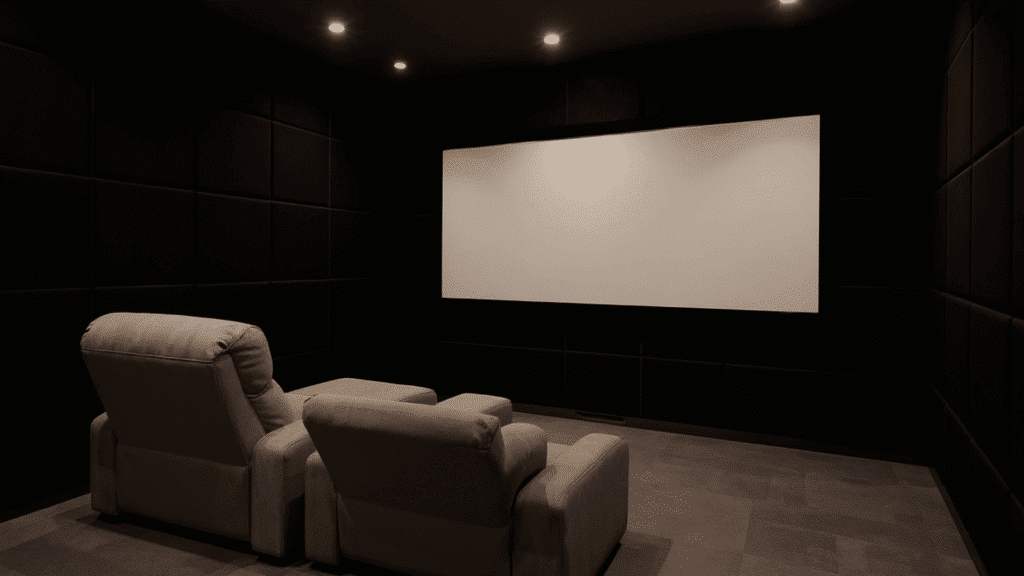
Dark acoustic wall panels combine sound control with a refined visual presence.
Their padded surface minimizes echo and unwanted noise, helping dialogue and background scores sound clearer.
The deep color tones also reduce light reflection, making on-screen visuals stand out while giving the room a focused, theater-style atmosphere.
2. Recessed LED Strip Lighting
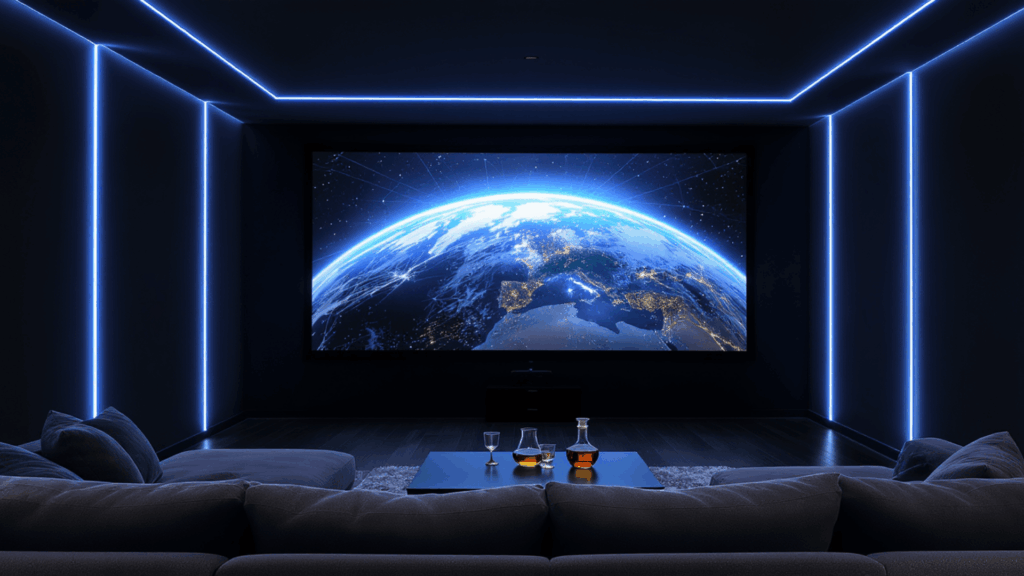
Recessed LED strip lighting outlines walls and ceilings with a soft, controlled glow. Installed within architectural edges, the lighting adds depth without distracting from the screen.
This approach supports comfortable viewing in low light while enhancing the room’s layout through clean lines and subtle illumination.
3. Tiered Seating Platforms
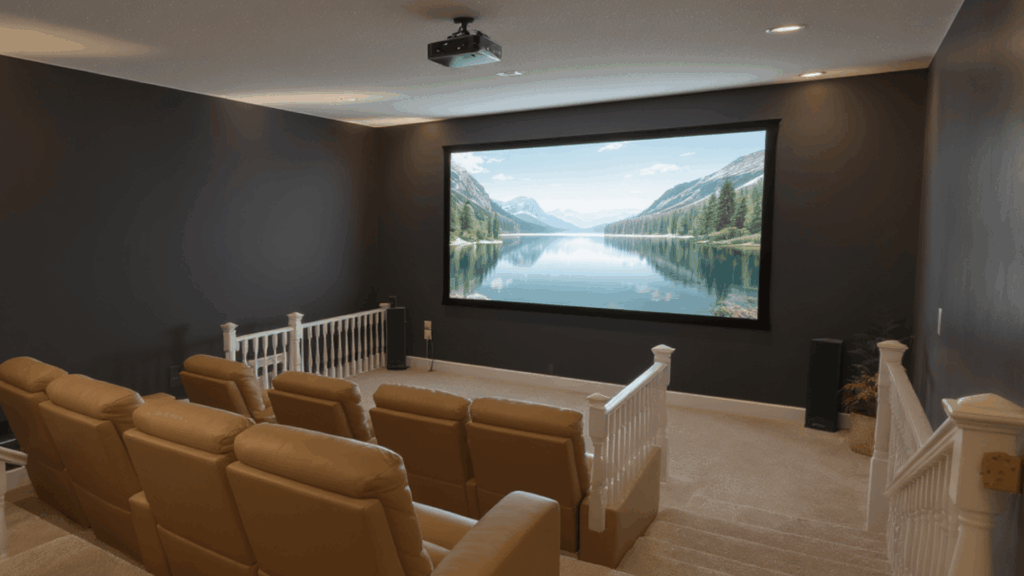
Tiered seating platforms improve viewing angles by raising each row slightly above the one in front.
This layout prevents blocked sightlines and allows every seat to face the screen directly.
Beyond function, tiered flooring adds structure and helps larger rooms feel more organized and purpose-built.
4. Star Ceiling Effect
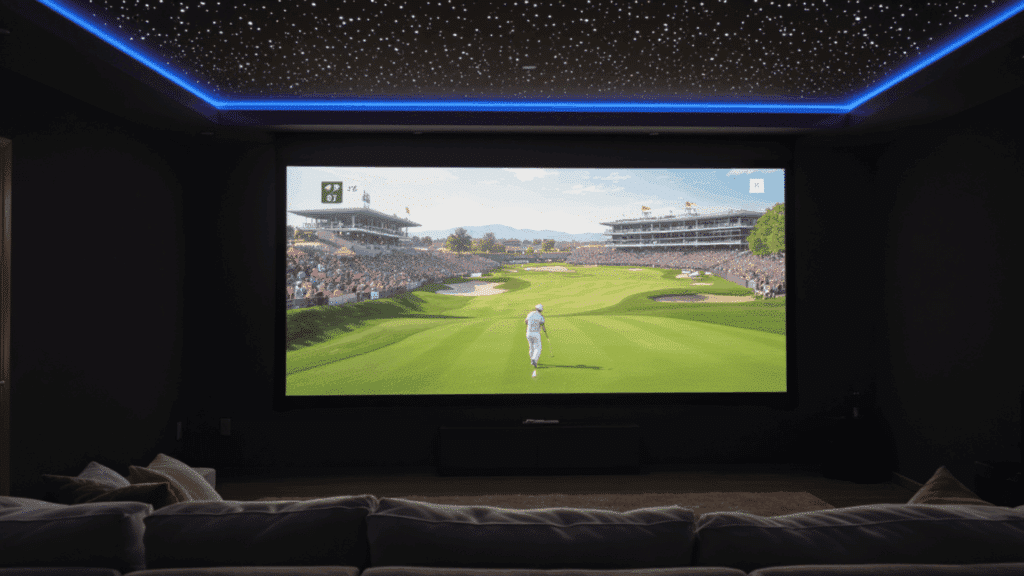
A star ceiling effect transforms the ceiling into a calming visual feature using fiber-optic or pin lighting. The gentle points of light create a night-sky look that adds character without overwhelming the space.
This ceiling treatment works especially well in darkened rooms where ambient light is carefully controlled.
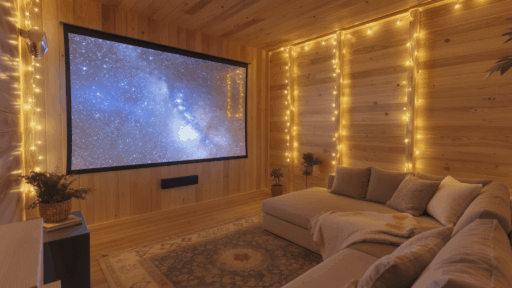
5. Wood Slat Feature Wall
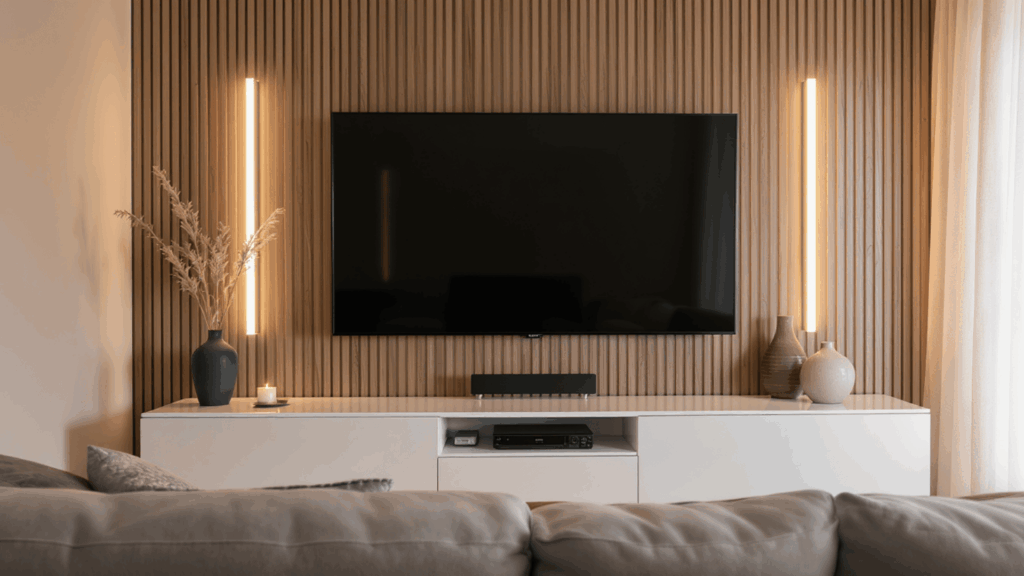
A wood slat feature wall introduces warmth and texture while supporting sound diffusion. The linear design breaks up flat surfaces and helps manage audio reflection.
Positioned behind a screen or entertainment unit, the natural material balances modern technology with an inviting, well-finished interior look.
6. Built-In Equipment Cabinetry
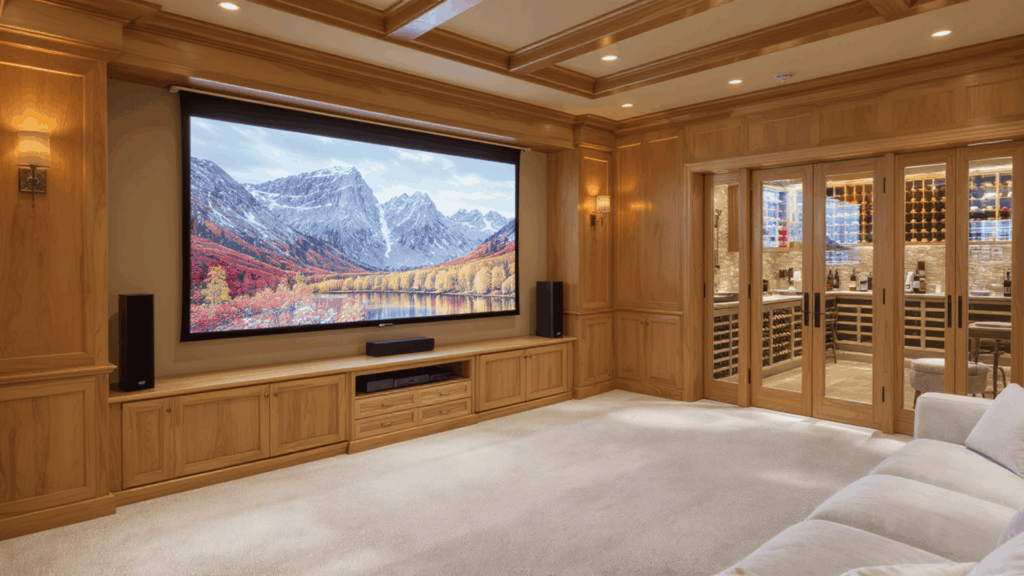
Built-in equipment cabinetry keeps media devices organized and hidden from view.
Custom compartments allow proper airflow while concealing cables, receivers, and consoles.
This setup maintains a clean appearance and reduces visual clutter, helping the room feel intentional rather than crowded with exposed electronics.
7. Blackout Curtains with Heavy Drapery
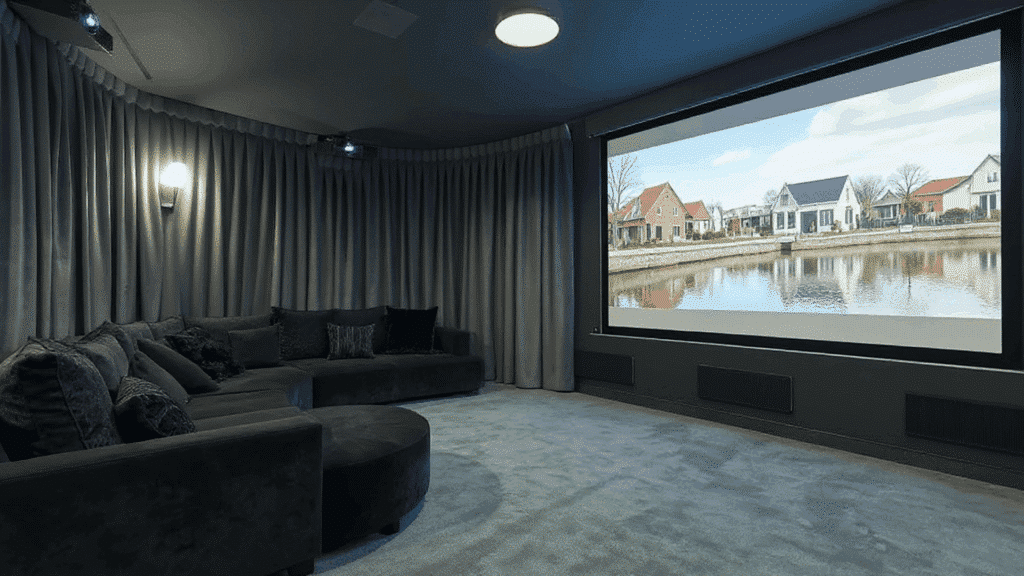
Blackout curtains paired with heavy drapery block external light and soften sound within the room.
Their thick fabric improves viewing conditions during daytime use while adding visual weight to walls. When drawn back, they also frame the screen area, reinforcing a dedicated viewing zone.
8. Vintage Cinema Touch Home Theater
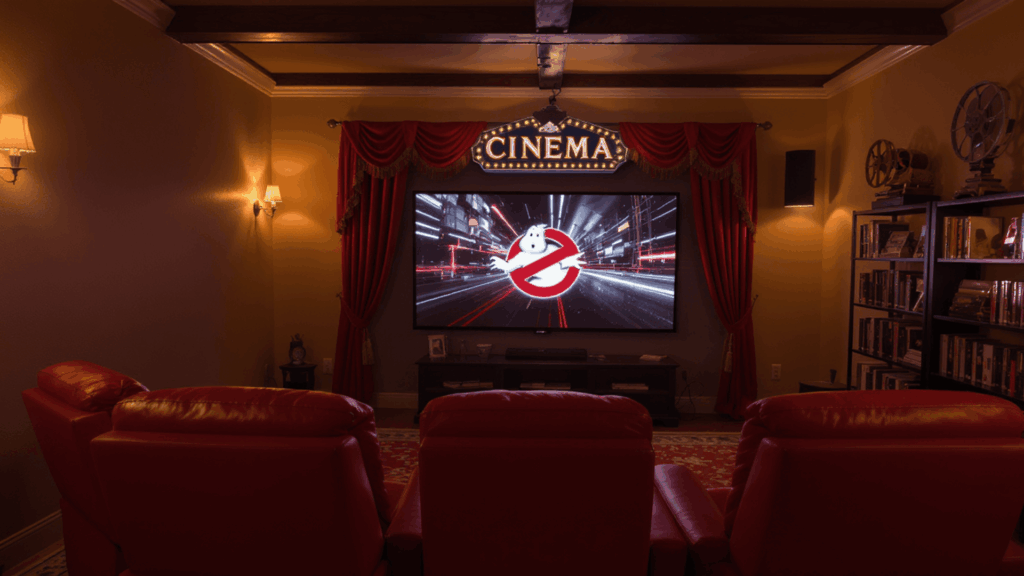
A vintage cinema-inspired home theater uses classic elements to create a nostalgic setting. Decorative signage, rich materials, and warm lighting echo traditional movie houses.
This approach focuses on atmosphere, turning movie nights into an experience shaped by visual character rather than purely modern styling.
9. Popcorn or Snack Nook
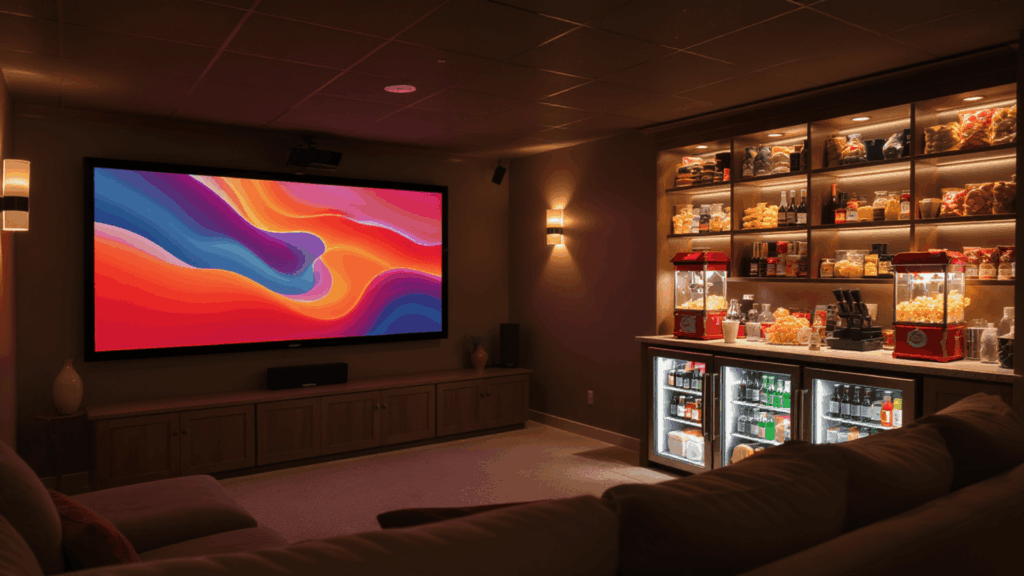
A popcorn or snack nook adds convenience by keeping refreshments close to the viewing area. Built-in shelving, small refrigerators, or display cabinets help organize treats without disrupting the layout.
This feature encourages longer viewing sessions while keeping foot traffic away from the screen and seating.
10. Ceiling-Mounted Projector Box
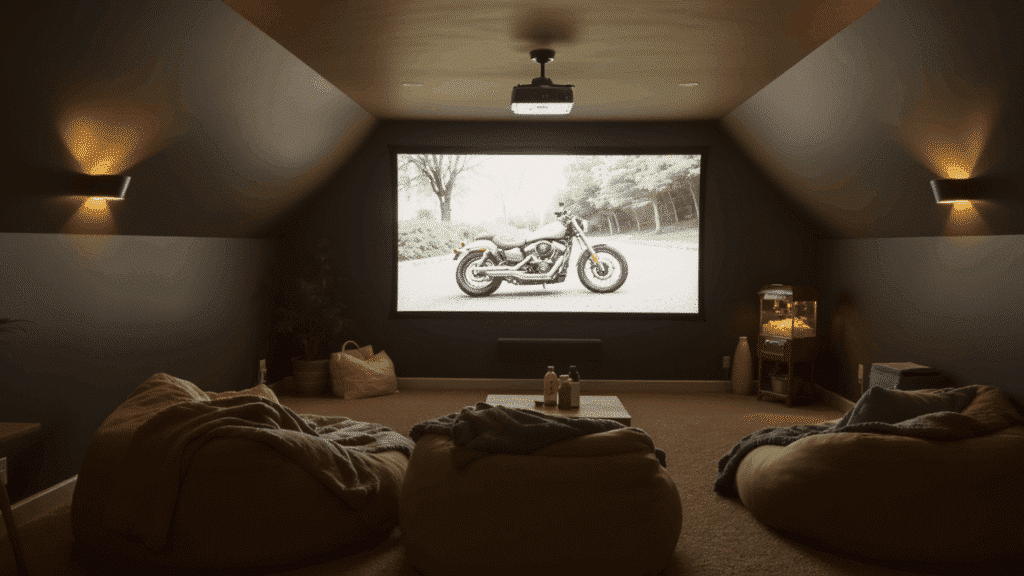
A ceiling-mounted projector box hides equipment while maintaining proper alignment and ventilation.
Designed to blend with the ceiling, it prevents visual distraction and protects the projector from dust. This solution keeps the floor area clear and supports a polished, permanent installation rather than a temporary setup.
11. Home Theater Decor for Kids
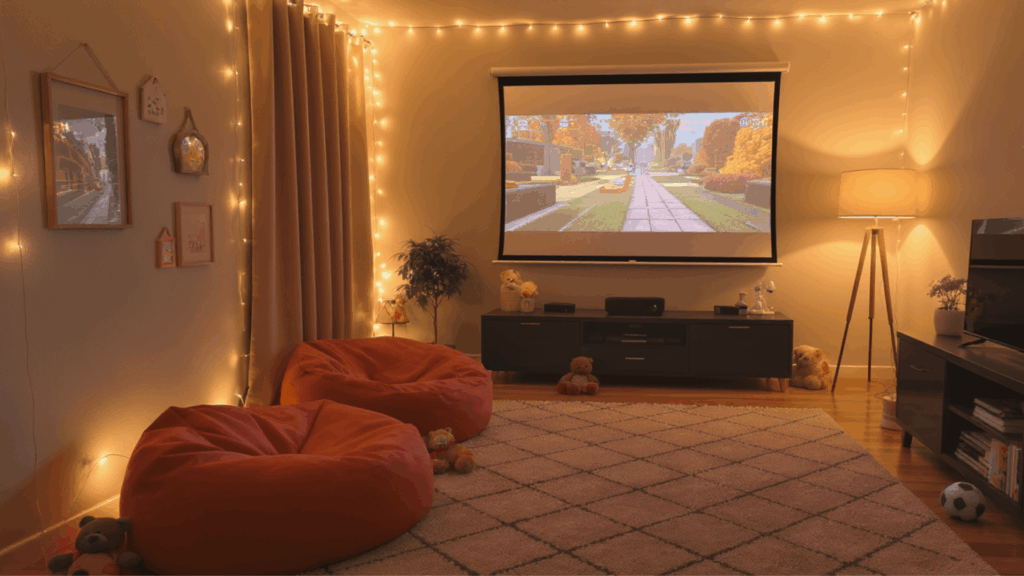
Home theater decor designed for kids focuses on comfort, safety, and flexibility. Soft seating options, warm lighting, and playful accents make the space welcoming for younger viewers.
The layout supports group activities while remaining easy to adapt as needs change, encouraging relaxed family viewing time.
12. Minimal Design Home Theatre
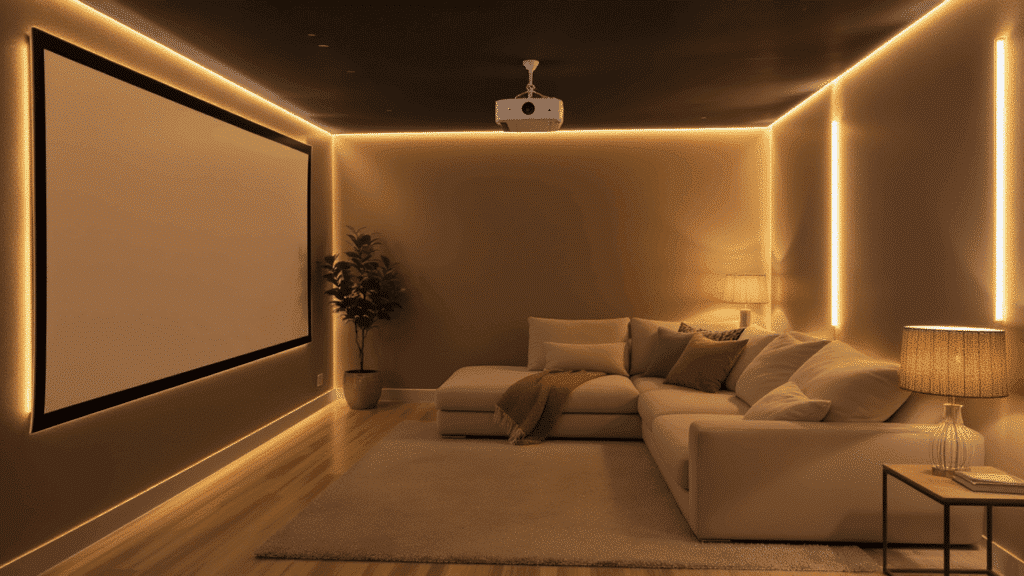
A minimal design home theatre prioritizes clean lines, restrained color palettes, and uncluttered surfaces.
By limiting decorative elements, attention stays on the screen and sound experience. This style suits smaller rooms especially well, as it avoids visual overload while maintaining a calm, intentional environment.
13. Floor Seating with Cushions
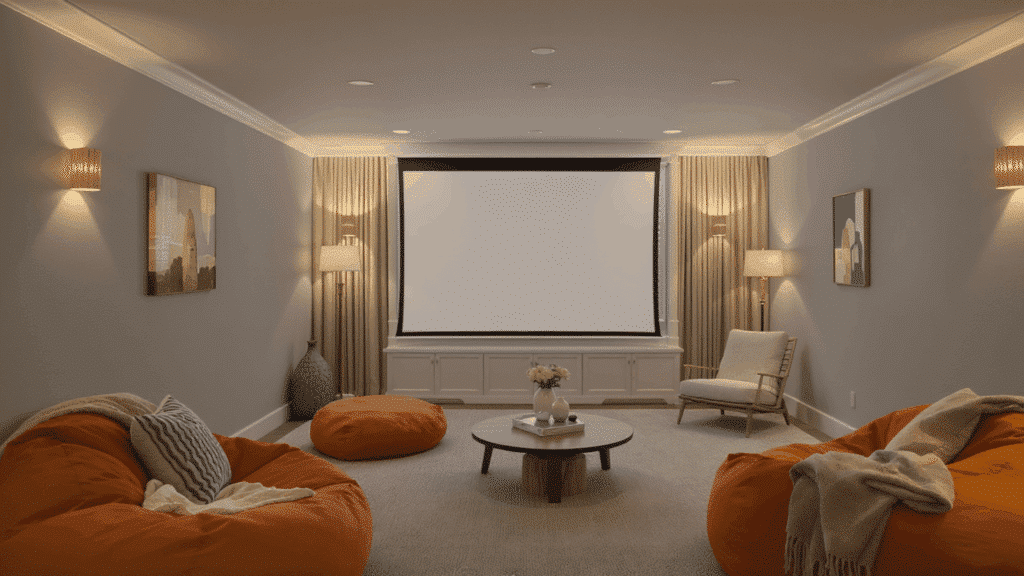
Floor seating with cushions creates an informal and adaptable viewing arrangement. Large padded cushions, poufs, or low loungers allow flexible placement and easy movement.
This setup works well for casual spaces, making the room feel relaxed while accommodating different group sizes without fixed furniture.
Planning a Home Theatre on a Budget
Setting up a home theatre does not require high-end spending. Careful planning, prioritizing essentials, and selecting cost-effective alternatives can help create an enjoyable viewing space.
The focus should remain on functionality, comfort, and long-term usability rather than unnecessary upgrades.
| Component | Budget Range (USD) | Notes |
|---|---|---|
| Projector or TV | $300 – $800 | Entry-level models offer reliable performance for small rooms |
| Sound system | $200 – $600 | Compact speaker sets or soundbars suit limited spaces |
| Seating | $250 – $700 | Sofas, recliners, or floor seating depending on layout |
| Lighting | $50 – $150 | Basic LED strips or dimmable fixtures |
| Accessories | $50 – $200 | Cables, mounts, and minor decor elements |
All values listed above are approximate and may vary based on brand, region, and availability.
Conclusion
Creating a functional and inviting entertainment space comes down to thoughtful choices rather than excess.
The content above connects essential setup decisions with decor choices that support sound, lighting, and comfort, showing how balance plays a quiet but important role in performance.
Whether the focus is family-friendly seating, focused acoustics, or a streamlined design, the goal remains the same: a room that works well every time it’s used.
When planning feels intentional, the result is a space that stays relevant and enjoyable over time.
Share your experience or favorite home theatre setup detail in the comments below.

With a Master in Architectural Studies from University of Pennysylvania, Marwa Haydar has pioneered living spaces since 2005. Her expertise, initially honed in a prestigious architectural firm, is evident in her approach to creating environments. Marwa became part of our team in 2019 and has since been a driving force in our home improvement section, known for her practical yet stylish solutions. She’s been spearheading our design workshops since then, infusing her passion for teaching into her work. In her leisure time, Marwa enjoys exploring historic architecture and is an enthusiastic pottery hobbyist, further enriching her understanding of form and texture.