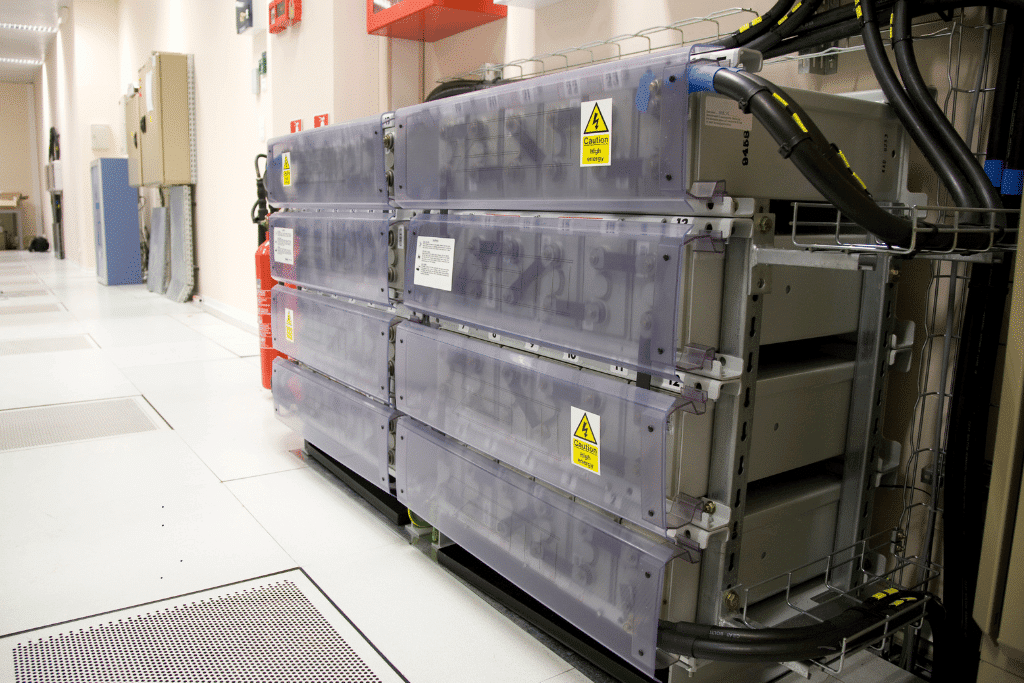
When people compare energy storage solutions, the conversation almost always starts with upfront price. Super capacitor batteries often look expensive at first glance, especially when compared to traditional lithium-ion batteries. But that first price tag doesn’t tell the real story.
What actually matters—especially for solar, industrial, and commercial systems—is lifetime cost. And this is where super capacitor batteries quietly outperform most conventional energy storage technologies.
Let’s break down how super capacitor batteries by Nex Cap Energy lower lifetime energy storage costs—not through sales claims, but through real-world efficiency, durability, and performance.
1. Cycle Life: Where Most Batteries Lose Money
Traditional batteries store energy through chemical reactions. Every time they charge and discharge, those chemical materials degrade. Even the best lithium batteries slowly lose capacity, and after a few thousand cycles, replacement becomes unavoidable.
Super capacitor batteries work differently.
They store energy electrostatically rather than chemically. Because there are no ongoing chemical reactions breaking down internal materials, cycle life increases dramatically. Many super capacitor systems are rated for hundreds of thousands to over a million charge-discharge cycles.
What does this mean financially?
- Lithium batteries may need replacement every 5–8 years
- Super capacitor batteries can last 10–20 years or more
- Fewer replacements mean lower total ownership cost
Instead of paying repeatedly for new battery packs, users spread their investment over a much longer operating life.
2. Minimal Performance Degradation Over Time
Battery degradation doesn’t just lead to replacement costs—it also leads to hidden inefficiencies.
As traditional batteries age:
- Capacity drops
- Voltage becomes unstable
- Systems require oversizing to compensate for loss
Super capacitor batteries maintain consistent performance over their lifespan. Even after years of heavy cycling, they retain predictable charge and discharge behavior.
This consistency eliminates:
- Oversizing at installation
- Early system inefficiencies
- Mid-life performance upgrades
In other words, you don’t have to “buy extra” capacity upfront just to account for future losses.
3. Faster Charging Reduces Energy Waste
Slow charging isn’t just inconvenient—it’s costly.
Traditional batteries lose energy as heat during prolonged charging cycles. Over thousands of cycles, those losses add up.
Super capacitor batteries charge extremely fast and with high efficiency. Because charging times are shorter and internal resistance is lower, less energy is wasted during each cycle.
Over the system’s lifetime, this results in:
- Lower energy losses
- Better utilization of generated solar or grid power
- Reduced operational inefficiencies
For solar applications especially, capturing and using energy efficiently translates directly into financial savings.
4. Reduced Cooling and Thermal Management Costs
Heat is one of the biggest enemies of batteries—and one of the biggest hidden costs.
Lithium-based systems often require:
- Active cooling systems
- Temperature monitoring
- Thermal protection mechanisms
All of this adds:
- Equipment costs
- Power consumption
- Maintenance requirements
Super capacitor batteries are inherently more thermally stable. They operate safely across wider temperature ranges and generate less heat during operation.
This reduces:
- Cooling infrastructure expenses
- HVAC energy usage
- Risk of thermal failure
In large installations, the savings from simplified thermal management alone can be substantial.
5. Lower Maintenance and Monitoring Expenses
Traditional battery systems demand attention:
- Regular health checks
- Capacity monitoring
- Balancing systems
- Firmware updates and safety inspections
Super capacitor batteries, by design, are far more maintenance-light.
Because there’s minimal degradation and no chemical aging:
- Fewer inspections are required
- Monitoring systems can be simpler
- Downtime is reduced
For businesses, maintenance isn’t just about cost—it’s also about lost productivity. Fewer interventions mean systems stay operational longer without interruption.
6. Improved System Reliability Reduces Downtime Costs
Energy storage downtime is expensive.
For solar systems, downtime can mean:
- Lost energy generation
- Backup failures
- Equipment stress
Super capacitor batteries deliver high reliability, even under frequent charge-discharge cycles or sudden load spikes. They handle surge loads and peak demands better than traditional batteries without long-term damage.
This reliability translates into:
- Fewer system failures
- Lower emergency repair costs
- Higher uptime across the system’s life
Reliability may not appear on an invoice, but it has a very real financial impact over time.
7. End-of-Life Value and Sustainability Savings
When lithium batteries reach end of life, disposal and recycling can be costly and regulated. Transportation, handling, and compliance add extra expenses.
Super capacitor batteries:
- Contain fewer hazardous materials
- Are easier to recycle
- Have longer usable secondary applications
The result is lower end-of-life costs, both financially and environmentally.
8. The Real Cost Equation: Lifetime vs Purchase Price
When you add everything together—replacement cycles, efficiency losses, cooling, maintenance, downtime, and disposal—the cost equation changes.
While super capacitor batteries may cost more upfront, they often deliver:
- Lower cost per cycle
- Lower cost per year of operation
- Lower total cost of ownership (TCO)
For applications with frequent cycling, long operational lifetimes, or demanding environments, the savings become even more pronounced.
Read the article: How Clean Energy is Quietly Changing the Cost of Power
Final Thoughts
Super capacitor batteries reduce lifetime energy storage costs not through shortcuts, but through engineering fundamentals: longer life, stable performance, efficiency, and reliability.
They shift energy storage from a recurring expense into a long-term asset.
For solar systems, industrial power storage, and high-cycle applications, the question isn’t “Why do super capacitor batteries cost more upfront?”—it’s “How much will they save me over the next 10 to 20 years?”
And more often than not, the answer is: a lot more than expected.

Liam Bennett holds a degree in Computer Science from the University of Edinburgh and has over 15 years of experience in technology and digital innovation. He began his career in software development, focusing on user-friendly systems and backend architecture. Liam joined our platform in 2025 to lead our Tech section, where he simplifies complex topics—from smart home devices and AI tools to cybersecurity and troubleshooting tips. Known for his clear, practical advice, he helps readers navigate today’s fast-evolving tech landscape. Outside of work, Liam enjoys building custom PCs and contributing to open-source projects.