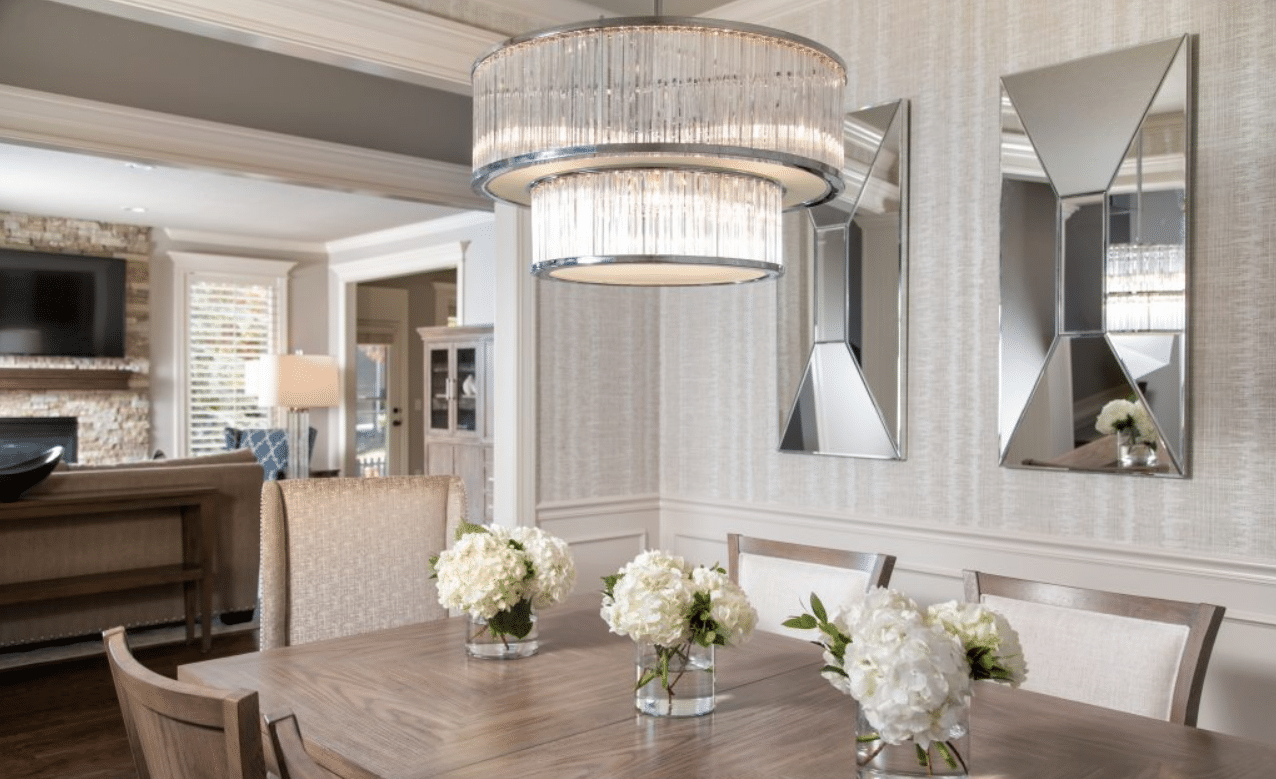

A chandelier has a unique way of transforming a room. More than just a light fixture, it’s a way to add some much-needed personality, create atmosphere and inject a sense of style into a space that few other fixtures can quite match. Because it’s such a focal point, the right design is also super important.
While a lot of people still picture the traditional chandelier styles they’re used to – the ones with ornate arms, crystal details and classic metal finishes – these are no longer the only options anymore.
Nowadays, there’s a whole range of modern designs available, featuring clean lines, sculptural shapes and all sorts of contemporary materials.
This means that even if your home is on the modern or minimalistic side, you should still be able to find a chandelier that really brings out the space and fits in with your overall style.
What Defines a Traditional Chandelier?
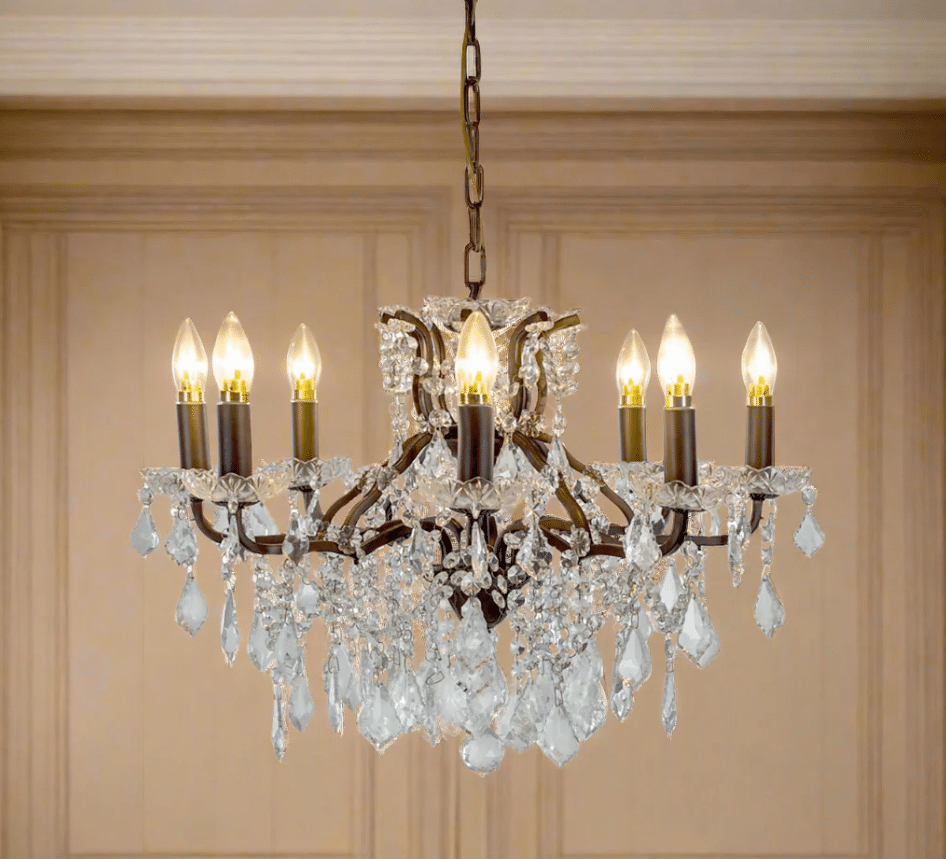
A traditional chandelier is something that’s been inspired by classic European design and is all about looking elegant and decorative. They’re often designed to be a real show-stopper and bring a sense of timeless sophistication to a space.
Common features include ornate arms that curve in a pretty way, and you’ll often see layered detailing and decorative bits like crystal or glass droplets – not to mention the odd candle-style bulb.
Warm finishes like brass, bronze or antique gold are often used to add to the classic look, and the structured, symmetrical design creates a balanced and refined appearance.
What Defines a Modern Chandelier?
Modern chandeliers are all about clean lines, minimalist design and the use of pretty innovative materials. Instead of relying on all sorts of fancy details, they create visual impact with bold shapes and tidied-up forms.
They often feature sleek geometric or linear silhouettes, the use of LED lighting or perhaps even some strip lighting and contemporary finishes like matte black, chrome, brushed nickel or mixed metals.
Their lightweight, open design helps to make spaces feel nice and airy, which is why modern chandeliers are such a great choice for contemporary homes, open-plan layouts and spaces where you want the lighting to be subtle yet still make an impression.
Styling a Traditional Chandelier
Traditional chandeliers bring a whole lot of timeless elegance and a sense of sophistication to an interior – it’s instant visual drama and a luxurious focal point. Their ornate details, crystal embellishments and classic finishes make them perfect for spaces where you want to create some grandeur – or put it simply, make a statement. One of the reasons they work so well is because they can fit in anywhere – larger or more formal areas – and they work beautifully in dining rooms, living rooms or entryways where they can really show off their style.
Are traditional chandeliers ever out of fashion? Never! They’ve got a timeless appeal that never goes out of style. Here are a few ways you can use them:
- Dining room: A classic crystal or brass chandelier above the dining table is the perfect way to add some sophistication and create a warm, inviting atmosphere for meals and gatherings.
- Living room: Multi-armed or tiered chandeliers can be a dramatic centrepiece, drawing the eye up to those high ceilings and adding a bit of luxury to the space.
- Bedroom: Smaller, decorative chandeliers bring a charming touch and some elegance to a room without overpowering it.
- Hallways and Entryways: A traditional chandelier in the foyer is a great way to make a first impression and create a welcoming, refined space.
- Staircases: Suspended traditional chandeliers are a great way to draw the eye up and add some grandeur to multi-level homes.
Styling a Modern Chandelier
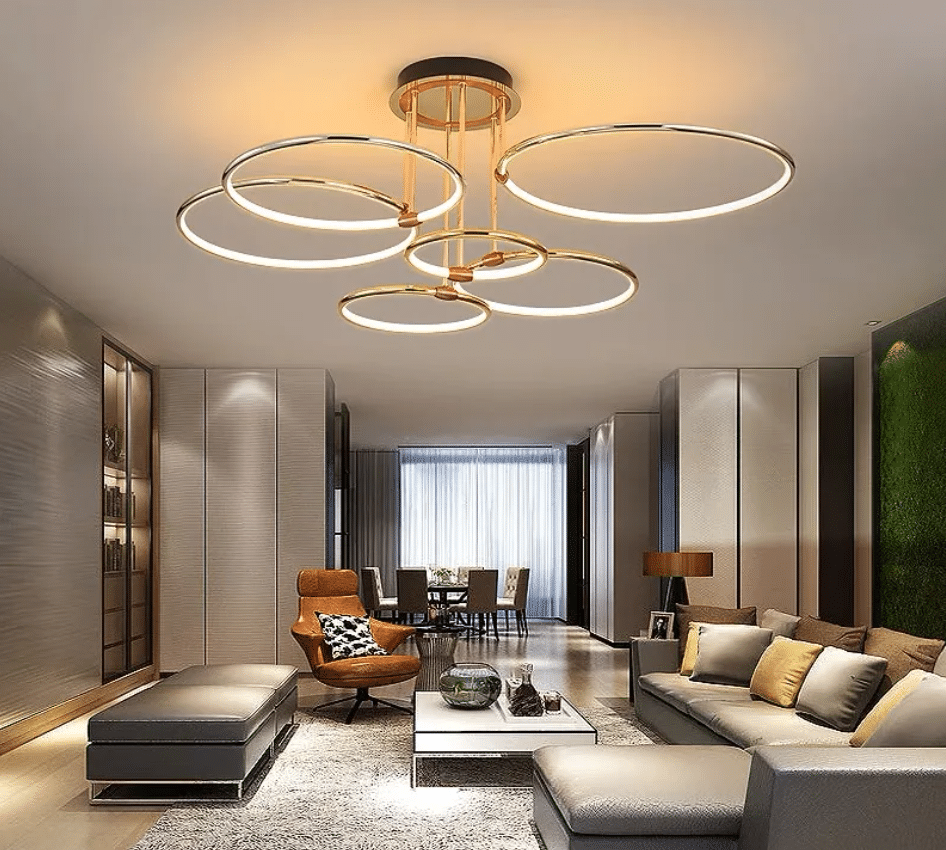
Modern chandeliers are perfect for minimalist and contemporary interiors – they bring a sleek, stylish touch that can totally transform a room. Influenced by mid-century modern, Scandinavian and industrial styles, these fixtures rely on good proportions and form rather than fancy details to make a statement. Thoughtfully arranged asymmetrical designs can add a bit of artistic flair without throwing off the balance, and neutral finishes with a bit of texture are great at blending in with a variety of colour schemes.
Using them in different rooms:
- Dining Room: A linear LED chandelier above the dining table is a great way to create a focal point and provide some nice, even light for meals and gatherings.
- Living Room: Geometric or ring-style chandeliers can be a striking centrepiece in open-plan living areas without overwhelming the space.
- Bedroom: Slim, minimalist pendant-style chandeliers or small multi-arm fixtures are great at adding some style and ambient lighting without cluttering the room.
- Kitchen: Modern chandeliers above an island or breakfast bar are a great way to get some functional light and a modern design statement all in one.
- Home Office: Compact, sleek designs provide adequate illumination while keeping the workspace looking clean and professional.
Picking the Right Size and Perfect Placement for Your Chandelier
When it comes to picking the perfect chandelier, style is just half the battle – size and placement are almost as important; if not more so. You see, a chandelier that’s too big will completely dominate a room, while one that’s too small might get lost in the background – and chances are you’re trying to make a statement.
There’s a rough rule of thumb for sizing a chandelier: add the length and width of the room (in feet) and see what kind of number you end up with in inches. That’ll give you an idea of the sort of diameter your fixture needs to be.
For instance, a room that’s 12 feet long and 10 feet wide works out to 22, so a fixture that’s roughly 22 inches in diameter would look pretty proportionate. In dining rooms, the chandelier should be a bit narrower than the table – typically 30-50 cm narrower than the width – to keep the focus balanced, while still making sure diners can see each other.
And then there’s the placement – just as crucial as the size of the chandelier. Over dining tables, you want to hang it about 75 – 90 cm above the tabletop so the lighting’s adequate without getting in the way of the view.
In living rooms or entryways, you want the fixtures to be high enough so you don’t bang your head on them, but low enough to create a cosy, intimate sort of atmosphere. And in foyers or staircases with double-height ceilings, a multi-tiered chandelier can really emphasise the height and make the space look grand.
It’s also worth thinking about the scale of the other furniture and architectural features in the room – a big room with high ceilings can handle a pretty bold, oversized design, while a smaller room will benefit from a slimmer, less showy fixture. For a really modern, minimalist look, clean and linear designs work best, while if you’re going for a more traditional, elegant look, a fancy traditional chandelier will suit your space much better.
By giving some thought to the size, scale and placement, you can make sure your chandelier not only lights up the room, but also adds to the overall style and atmosphere, turning it into a real showstopper.

With a Master in Architectural Studies from University of Pennysylvania, Marwa Haydar has pioneered living spaces since 2005. Her expertise, initially honed in a prestigious architectural firm, is evident in her approach to creating environments. Marwa became part of our team in 2019 and has since been a driving force in our home improvement section, known for her practical yet stylish solutions. She’s been spearheading our design workshops since then, infusing her passion for teaching into her work. In her leisure time, Marwa enjoys exploring historic architecture and is an enthusiastic pottery hobbyist, further enriching her understanding of form and texture.