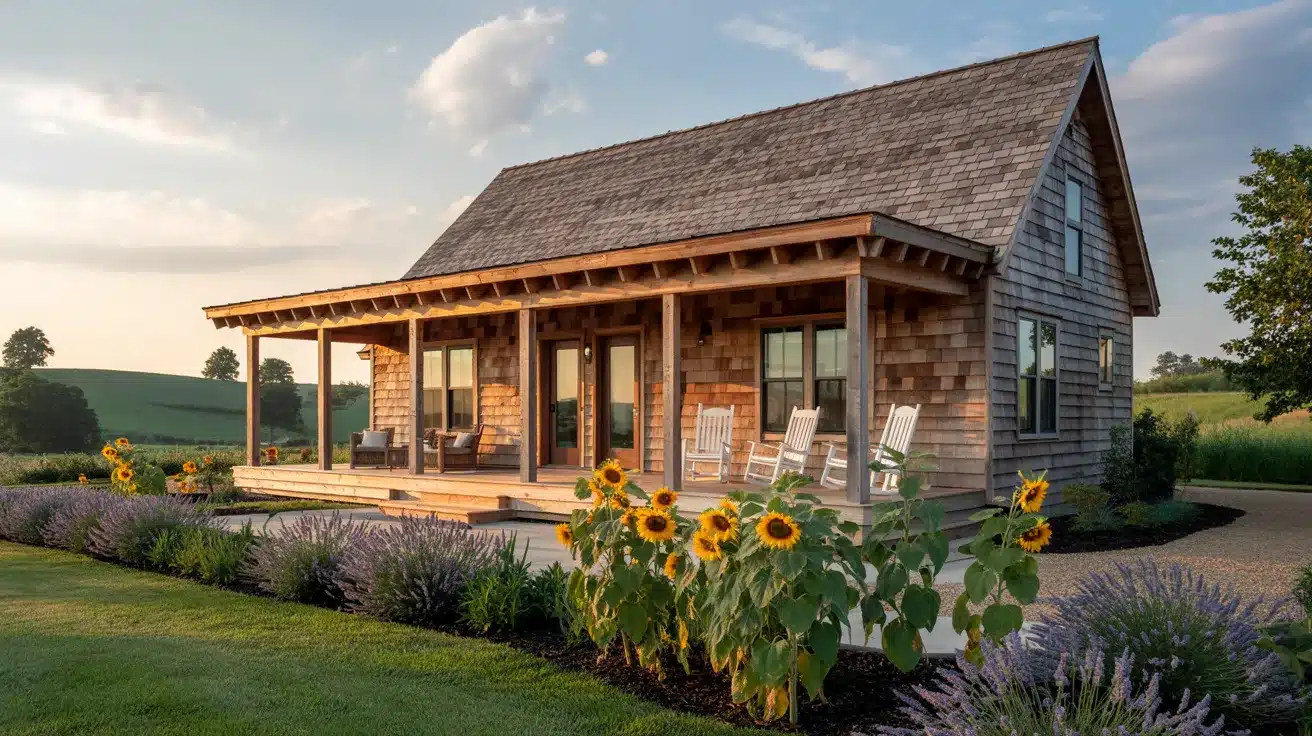

A roof plays a major role in protecting a building from weather and structural stress.
Among different roof types, the hip roof design is widely used for its balanced shape and strong performance.
This design supports better drainage, improved wind resistance, and even weight distribution across all sides.
This blog explains how hip roof design works, the most common design types, and the materials used for construction.
Each section provides clear details to support planning and decision-making.
The goal is to present practical information that helps explain why hip roof design remains a reliable roofing choice.
Related Reads: |
Hip Roof Design Pictures
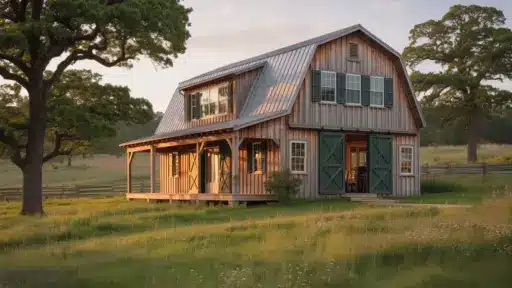
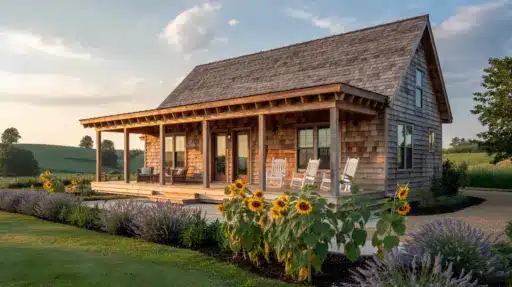
These images show different hip roof design styles used in residential and commercial buildings. Each picture highlights roof shape, slope, and overall structure.
1. Simple Hip Roof Design
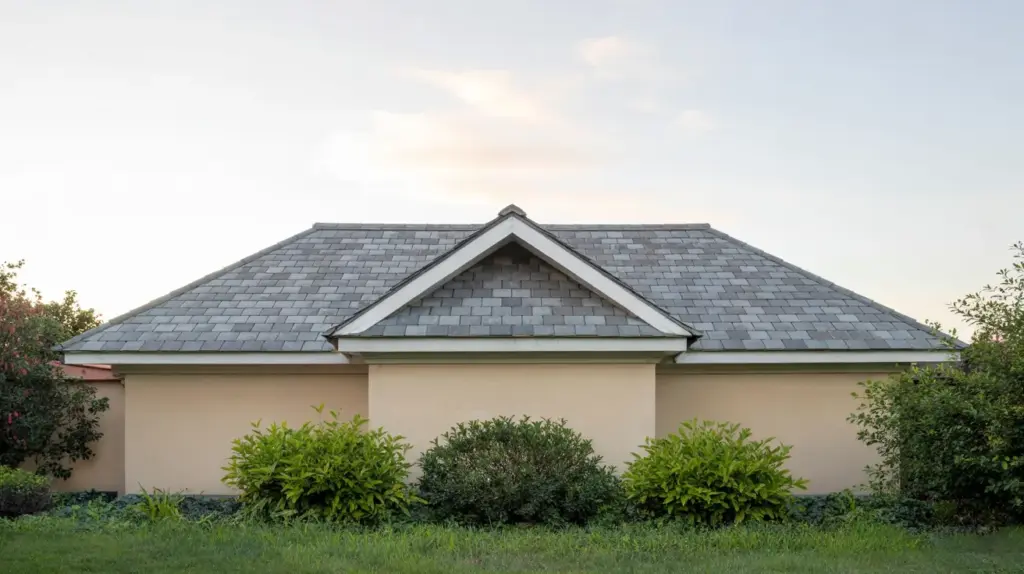
A simple hip roof design has four sides that slope downward from the top. All sides meet at a single ridge, which keeps the roof balanced.
This design allows rainwater to flow away from the house on all sides, reducing water buildup.
The even slopes help the roof stay stable during strong winds. Because the weight is spread evenly, the walls face less pressure over time.
This hip roof design works well for homes in areas with changing weather conditions.
2. Pyramid Hip Roof Design

A pyramid hip roof design has four equal sloping sides that meet at one central point.
There is no ridge, which makes the roof very firm and steady. This shape helps the roof resist wind from all directions.
Rainwater drains evenly off each side, lowering the chance of leaks. The design is often used on square buildings and small structures. Its simple shape also makes repairs and inspections easier.
3. Cross Hip Roof Design
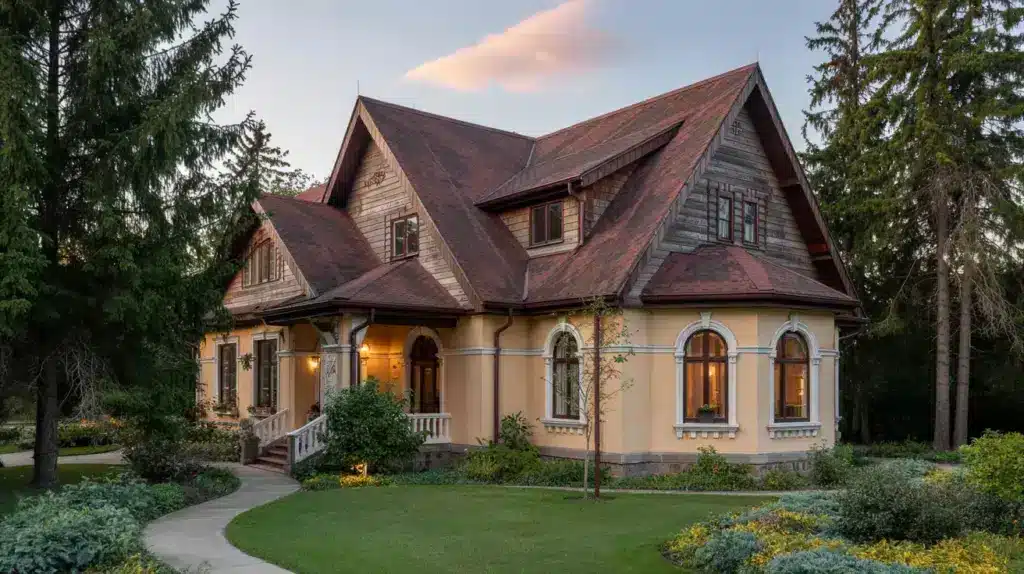
A cross-hip roof design is created when two hip roofs connect at a right angle. Each section has its own ridge, forming a layered roof shape.
This design is common in larger homes with multiple rooms or wings. The structure helps divide interior spaces more clearly.
The sloping sides continue to protect the building from wind and rain. Proper drainage planning is needed to guide water between roof sections.
4. Hip and Valley Roof Design
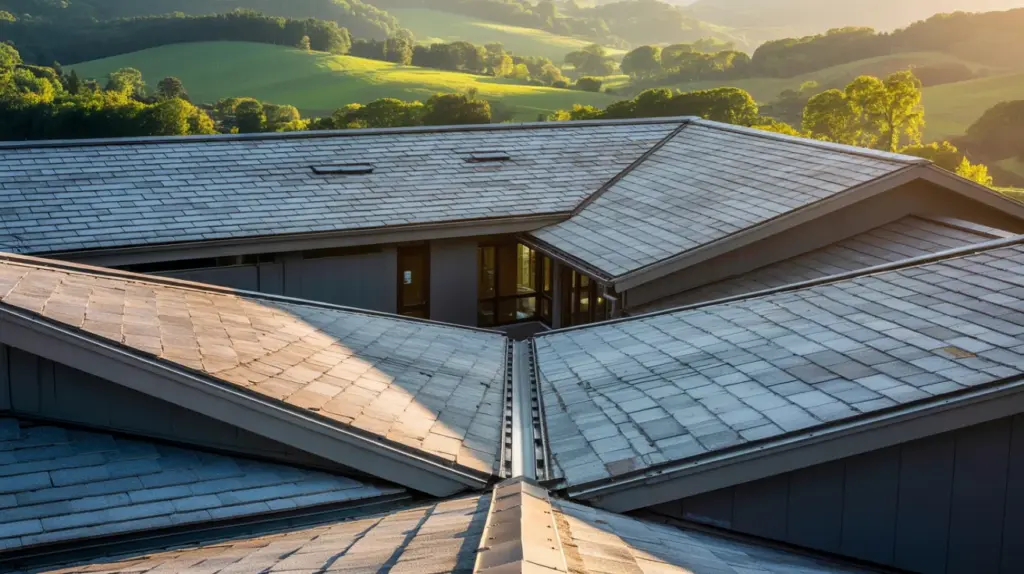
A hip and valley roof design combines several hip roof sections linked by valleys. Valleys collect rainwater and direct it toward gutters and drains.
This design works well for wide or uneven building layouts. Strong sealing is important where roof sections meet to avoid water leaks.
The layout supports efficient water movement during heavy rainfall. When built correctly, this hip roof design provides strong protection and long-lasting performance.
5. Hip Roof Design with Dormers
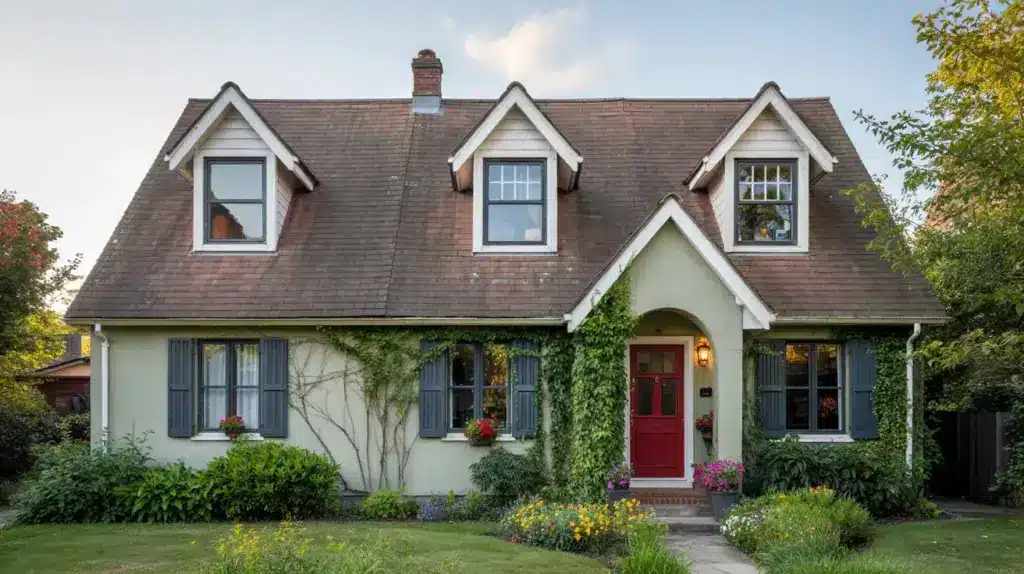
A hip roof design with dormers includes small roof extensions with windows.
Dormers bring daylight into upper rooms and improve air flow. They also increase usable space under the roof.
The sloping roof sides continue around the dormers, keeping the structure balanced.
Careful installation helps prevent water from collecting near the dormer edges. This design improves comfort without changing the main roof shape.
6. Half-Hip Roof Design
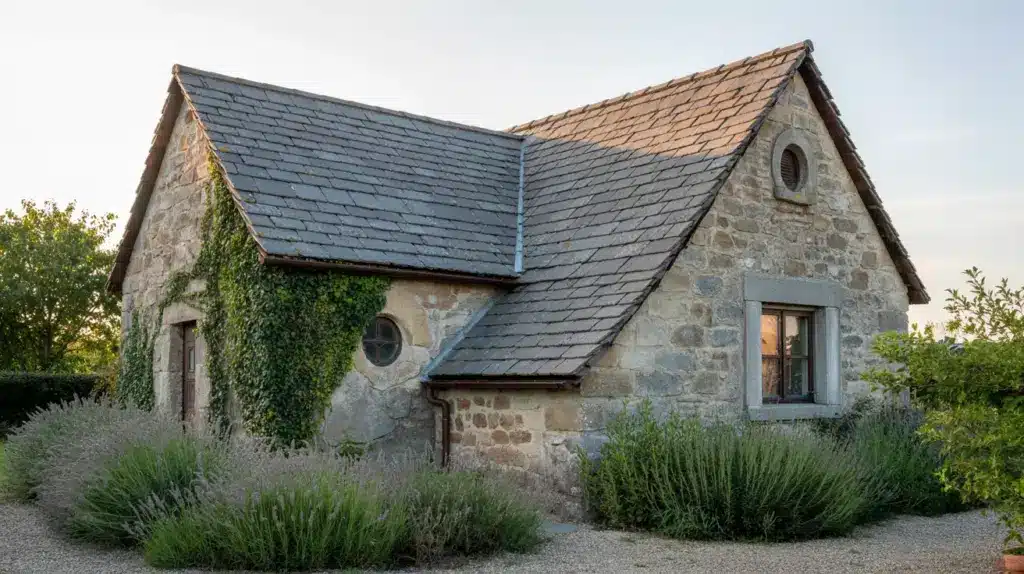
A half-hip roof design features sloping sides, but part of the roof end remains vertical. This design reduces wind pressure while allowing more interior wall space.
It combines the strength of a hip roof with the flexibility of a gable roof. The structure improves roof stability in windy areas. It also supports better airflow inside the building.
This hip roof design is often used in traditional and regional housing.
7. Hip Roof Design with Extended Eaves
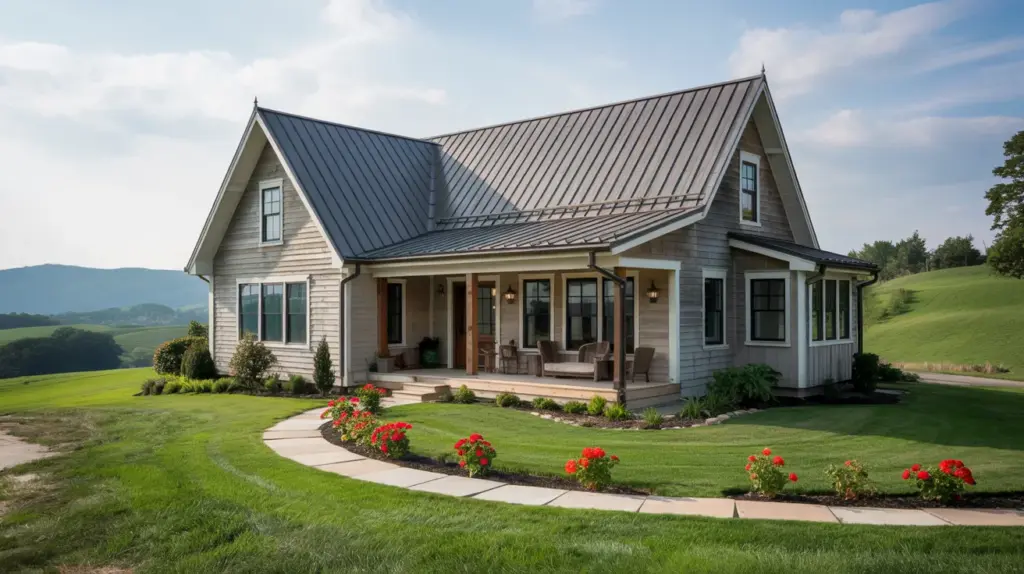
A hip roof design with extended eaves includes longer roof edges that stretch beyond the walls.
These extensions protect the building from rain and direct sunlight. They help keep water away from windows and doors.
Extended eaves also reduce heat exposure on exterior walls. Extra support is required to handle the added roof length.
This design improves weather protection and helps maintain the building exterior over time.
Common Materials Used in Hip Roof Design
Hip roof design works well with different roofing materials. The choice depends on weather conditions, budget, and roof support.
Asphalt shingles are lightweight, easy to install, and suitable for most residential buildings.
Clay and concrete tiles are strong and handle heat well but require extra roof support.
Metal roofing allows quick water drainage and performs well in windy and rainy areas.
Slate roofing offers long-term durability but needs a strong structure due to its weight.
Wooden shingles provide natural airflow but require regular care to prevent damage.
Conclusion
Hip roof design offers a strong and reliable roofing structure for many building types.
The sloping sides improve water drainage and reduce pressure from wind, which supports long-term stability.
Different design options allow flexibility for small homes, large buildings, and complex layouts.
Material selection also plays an important role in performance, durability, and maintenance needs.
When planned carefully, a hip roof design supports weather protection, structural balance, and efficient roof drainage.
Proper construction and material choice help extend roof life and reduce repair issues.
Overall, hip roof design remains a practical and dependable roofing solution for varied architectural needs.

Tommy Hardy, an alumnus of the Georgia Institute of Technology with a degree in Mechanical Engineering, has been a go-to figure in residential upkeep and innovation for over 18 years. His career commenced in a leading home appliance manufacturing company, where he mastered the intricacies of household systems. Joining our platform in 2020, Tommy quickly became a reader favorite for his practical and easy-to-follow guides. He took the helm of our DIY section in 2019, consistently delivering content that empowers homeowners. Beyond his professional pursuits, Tommy is a passionate gardener and enjoys woodworking, skills enhancing his hands-on approach to home care.