
In Jacksonville, FL, our homes are in a climate that many people want. It gives lots of sunshine, salty sea breezes and green plants all year. But it also brings a buildup of dirt. We see the dirt on the porch and on the roof. The dirt is not dust; this is a layered record of the local environment.
It leaves its mark from the sidewalk to the top of the roof. A homeowner may notice a stain on the driveway. The hidden dirt behind the stain spreads across the driveway because it is more common than the stain. If the homeowner does not clean the hidden dirt, it can lead to repairs later.
Don’t ignore the dirt and then pay for a costly repair. Use power washing services.
Jacksonville’s Unique Recipe for Grime
To understand the dirt problem, you first need to understand Jacksonville’s unique atmospheric cocktail. Unlike a dust pile, the layers adhere with purpose. You can see the hidden dirt issue show up in every corner.
- Shade, sun, and persistent dampness. Walls that receive little direct sunlight — often the north-facing sides — tend to stay damp longer after rain or morning dew. Without enough sun to dry the surface, moisture lingers and encourages algae and mildew. In contrast, sun-exposed walls may dry quickly but experience accelerated fading and surface breakdown from UV exposure combined with salt residue.
- Landscaping that changes airflow. Bushes, fences, and nearby trees can block natural airflow around parts of the house. Reduced ventilation means moisture evaporates more slowly. Leaves and organic debris from landscaping also add to the material that collects along foundations, in corners, and behind downspouts.
- The salt lacquer. Do you notice that ocean air does not just bring a smell, it carries a tiny mist of salt? It settles on every exposed surface. Acts as a sticky corrosive primer. The salt pulls moisture from the humidity, binds the next layers of dirt strongly. This is not surface dust, but coating is a bonded layer. The salt coating is especially strong on the north and east sides of homes. Those sides take the brunt of the prevailing winds, from the Atlantic and the St. Johns River.
- The pollen glaze. Jacksonville’s cover of oaks, pines, and different plants comes at a cost. You can see the yearly flood of pollen. It is a green powder that is more than an allergy trigger. When pollen mixes with morning dew and salt residue, it forms a plaster-like coating. On the siding, it creates the dirty film. In roof valleys and gutters, it becomes the base layer of the mix. You can watch the pollen glaze build up on your siding each spring.
- The biological bloom. You can see the humidity also works as a growth medium. The algae show up as black‑green streaks, on north‑facing walls. Also, you can see the combination feed lichen the fungus‑algae hybrid that covers roofs and pavers. The dirt is a living, breathing, damaging ecosystem that clings to your home.
- The infrastructure haze. Beyond nature urban elements also add to the haze. You can notice brake dust from the road network, industrial particles and runoff minerals put a gray tint on the lower parts of a home’s exterior.
In Jacksonville, exterior buildup does not settle evenly. Different parts of the same house age at different speeds because small “microclimates” form around the structure. These subtle environmental pockets explain why one wall stains quickly while another stays relatively clean, or why one corner of the roof shows growth first.
Seasonal Patterns That Shape Buildup
Jacksonville’s grime pattern changes through the year:
- Spring. Heavy pollen creates a sticky base layer on siding, screens, and outdoor furniture.
- Summer. Heat and humidity accelerate biological growth on shaded surfaces.
- Fall. Leaves and seeds collect in gutters and roof valleys, holding moisture.
- Winter. Cooler air slows evaporation, allowing residue to remain longer after rain.
Recognizing these seasonal shifts helps explain why some problems seem to appear “suddenly” when they have actually been forming for months.
Early Warning Signs Most People Overlook
Before obvious staining appears, there are subtle indicators that buildup is affecting materials:
- Fading paint in irregular patches.
- Fine white lines on pavers (early efflorescence).
- Slight darkening along caulk lines.
- Persistent damp smell near exterior walls.
- Increased insect activity around gutters or shaded siding.
Catching these signs early can prevent more serious issues later.
Small Architectural Details That Trap Contaminants
Certain design features unintentionally collect more grime:
- Decorative trim and ledges where dust and pollen settle.
- Window sills that hold moisture after rain.
- Light fixtures and door hardware that cause rust streaks.
- Textured stucco finishes that provide extra surface area for buildup.
These areas often require more careful attention because they trap residue more easily than flat surfaces.
The Unseen Narrative: Reading Your Home’s Dirty Story
The hidden nature of this grime means problems often begin long before they are recognized. The story unfolds in chapters.
Chapter One: The Gutter as a Garden
Most homeowners view the gutter as a water system, and in Jacksonville, FL the gutter becomes a raised bed. The first layer of salt-hardened pollen catches wind-blown soil and maple seeds. The gutter garden mat retains water. Encourages weed roots. You can see the weight of the gutter garden stress the brackets, the constant moisture on the fascia board cause wood rot hidden behind the gutter lip. The first sign is not the garden itself but a paint bubble on the fascia or a leak in the soffit.
Chapter Two: The Porous Deception
When you look at Jacksonville building materials you see stucco, concrete pavers and certain bricks. They are valued for the look and the durability. The porosity of building materials is the spot. Dirt and salt do not sit on the surface, but they are drawn into the pores. Over time this creates efflorescence on the pavers and, on the foundations. It is a white powdery salt that pushes to the surface, breaks down the binding agents in the masonry and cause cracks. Weaken the whole structure. You can notice the dirt moved from the outside, to the inside and damaging the integrity.
Chapter Three: The Roof’s Silent Suffering
Asphalt shingles allow water to run off quickly. The Jacksonville biofilm of algae, lichen, and settled polymer from pollen forms a moisture-holding blanket on the roof. The retained moisture accelerates the loss of granules from the shingles. The granules are the layer that blocks UV rays. The weight of the organic matter can also weaken the substrate. You can watch the roof suffer under the blanket.
Chapter Four: The Clogged Skin
The vinyl siding resist rot but fail against Jacksonville’s grime matrix. It builds up and forms a damp, acidic layer. Then traps moisture against the home’s weather barrier. It invites mold growth on the backside of the siding or on the house wrap and stays invisible until it appears inside the house as a smell or as wall discoloration.
The Jacksonville-Specific Mistake: Misapplication of Force
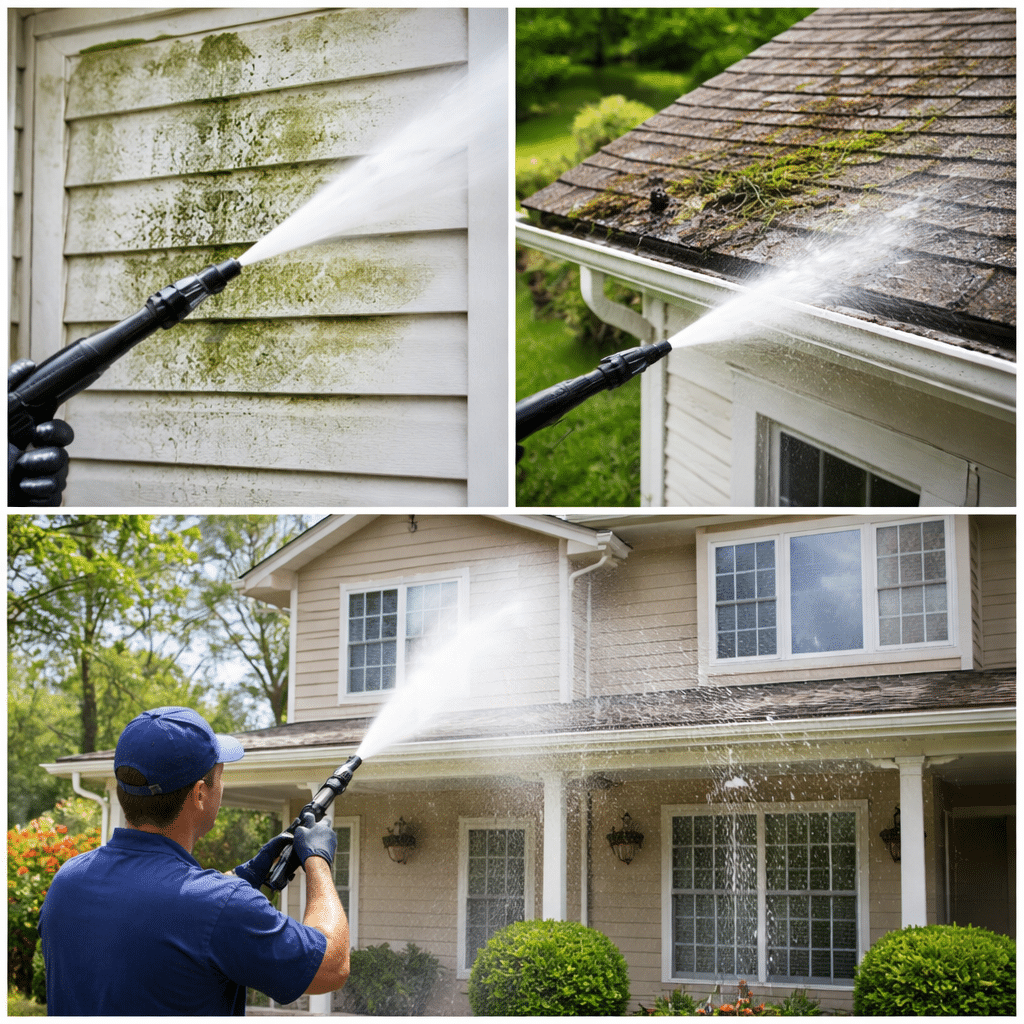
Some homeowners rent a high‑pressure washer and turn on a lot of water. The hidden dirt cause damage because the pressure often 3000+ PSI, can:
- Force water behind siding and soffits through existing microscopic gaps, leading to interior wall damage and mold.
- Blast the protective granules off asphalt shingles, instantly aging the roof.
- Etch and scar soft brick or older wood.
- Fracture the seal on the window and door caulking.
The brute-force approach fixes the problem. The brute-force approach also creates invisible, expensive issues.
The Professional Philosophy: A Matter of Chemistry and Precision
The professional Jacksonville power washing service is not the same as the DIY method. A workers use chemicals and careful technique instead of brute force. It reaches hidden dirt without hurting the home. The DIY method often relies on force, and you can miss hidden dirt or damage the home.
A professional does not just see dirt. He diagnoses the composition of the dirt. Is the dirt mainly algae, mineral efflorescence, or a rust stain from a fixture? Each type of dirt needs a solution.
The Bottom Line
In Jacksonville, FL, many homeowners think that keeping the outside of the house looking nice is a luxury, but maintaining your home’s exterior is a part of preventive maintenance. The hidden dirt problem works slowly, but it still causes decay. The clogged gutters let water get in, and the acidic film eats the roof shortens the it’s life.
The addressing the problem with an expert approach that respects the local chemistry of grime and the weakness of materials is an investment in the lasting health of your largest asset. You can see that the approach reads the hidden story written in salt, pollen, and algae. The approach then rewrites the story, with science and care. You can notice that the approach preserves the home’s beauty and soundness from the sidewalk to the roofline.

With a Master’s in Architecture from the University of California, Berkeley, Mitchell Green has spent over two decades dedicated to the study and practical application of home fixture design. His career started in an architectural firm, providing him a strong foundation in the structural and aesthetic aspects of home interiors. Mitchell brought his comprehensive knowledge to our platform, where he has been an influential voice in our home fixtures and fittings section. Since 2018, he has been guiding our readers through the intricacies of selecting and installing fixtures, combining technical know-how with design flair. In his spare time, Mitchell is a keen photographer, capturing architectural details and design elements, an interest that complements his professional focus.