
When architectural firms put together project submissions, the visuals often make or break the whole thing. Good 3D renderings aren’t just nice-to-haves anymore—they’re what get your design ideas across clearly, help win approvals, and ultimately land the job.
In this guide, we explain why visualization is non-negotiable for architects now and break down the essential criteria for choosing a professional studio. To help you decide, we’ve also included profiles of some leading firms.
1. Fortes Vision
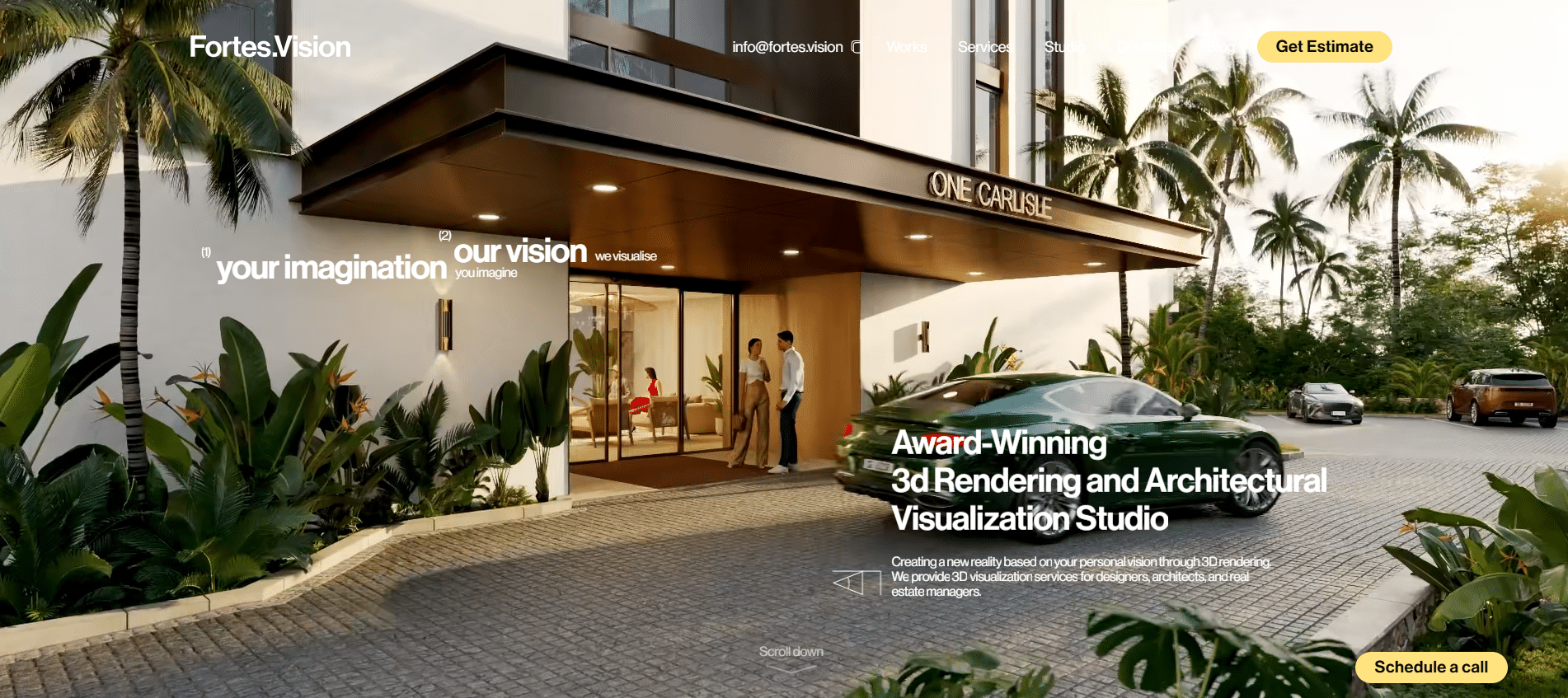
Fortes Vision is an award-winning 3D rendering and architectural visualization studio. They focus on turning design concepts into detailed visuals. Work with architects, designers, and real estate people across the globe.
The studio’s main focus is converting client ideas into photorealistic images using advanced 3D visualization and CGI techniques. Their work supports design checks, client discussions, marketing materials, and competition entries, allowing stakeholders to review projects in detail before construction begins.
With over seven years in business, they’ve become a top provider in architectural visualization. Strengths include reliable delivery of quality work on schedule and emphasis on good visual design. Take care with every project to meet client needs and create effective, unique visuals.
Services offered:
- Interior rendering: Photorealistic images showing interior spaces with decor, lighting, and materials.
- Exterior rendering: Realistic views of building exteriors and how they fit the surroundings.
- Architectural animation: Video presentations that walk through the design.
- Brand identity: Full branding services from logos to guidelines for market positioning.
- Web development: Custom websites and platforms to improve online visibility.
Fortes Vision acts as a strategic partner. Combine artistic skill and technical know-how. Deliver visuals that engage viewers and support faster decisions. For professionals needing high-quality 3D rendering to improve presentations, they turn ideas into clear visual assets.
2. Omegarender
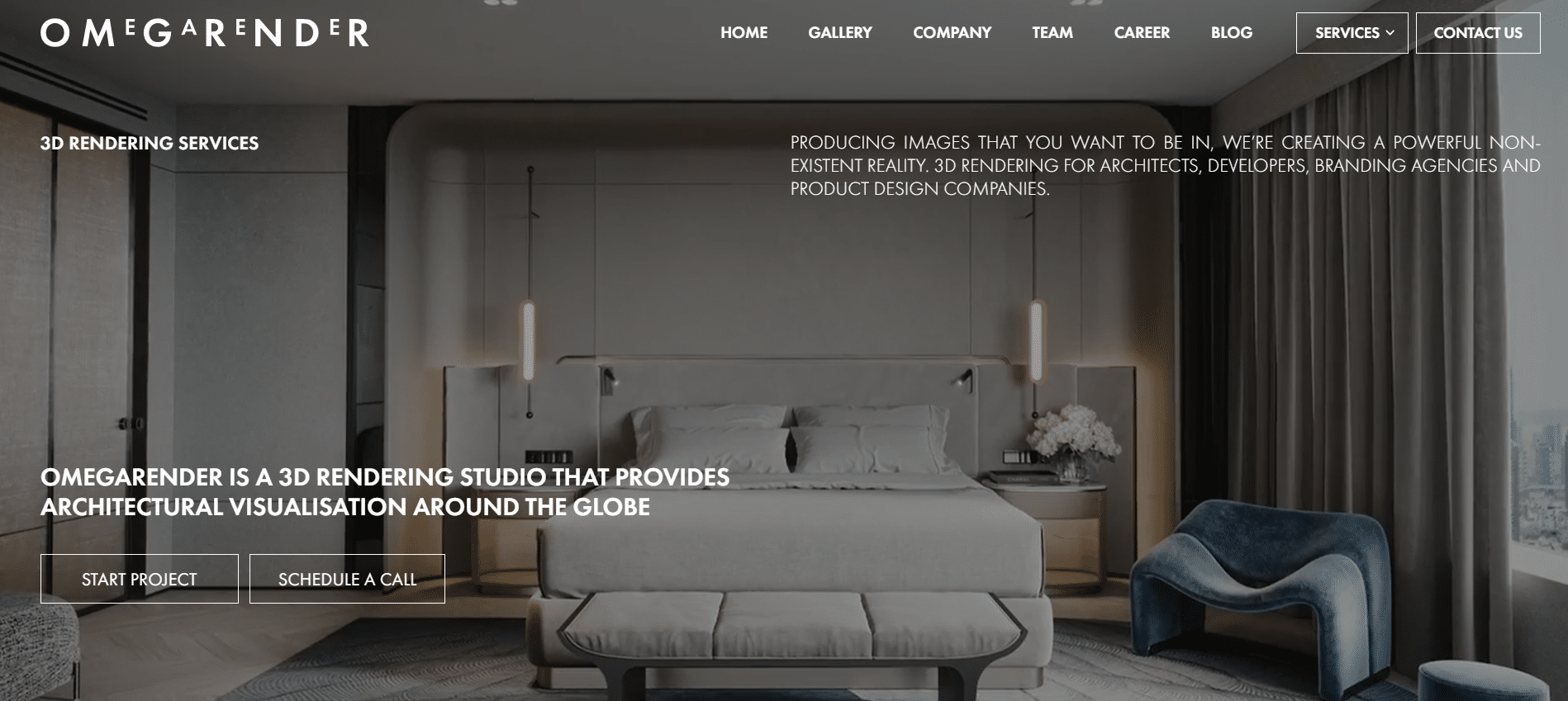
Founded in 2016, Omegarender has been in the 3D rendering business serving global architects since 2011. Their focus is on photorealistic architectural visualization. For them, a successful project isn’t just a technically accurate image. It needs to have the right atmosphere and communicate the design’s intent. That artistic focus is what they build everything around.
The company emphasizes a realistic atmosphere in its renders. Achieved through technical skills and artistic decisions. All images get reviewed to meet quality standards. Deliver high-realism results. Makes them a good partner for architects and developers who need visuals with impact.
Workflow centers on close collaboration. Team includes artists with architecture or design backgrounds. They work to understand the client’s main concept. Managed via an online system with a dedicated contact, regular updates, and processes adjusted for each project.
Core services:
- Exterior 3D renders: Photorealistic images from multiple viewpoints. Shows the building design in context.
- Interior 3D visuals: Creates lifelike images of interior spaces. Focuses on atmosphere, materials, and detail.
- 3D animation: Fly-throughs and animations presenting the full project.
- 3D product visualization: Accurate modeling and rendering for products.
- 3D modeling: Precise models for architecture and design needs.
They serve clients in architecture, real estate, development, and interior design. Combine technology and art. Team sourced globally, strong focus on architecture, and use advanced software. For professionals wanting a collaborative partner in visualization, Omegarender provides reliable services.
3. Brick Visual
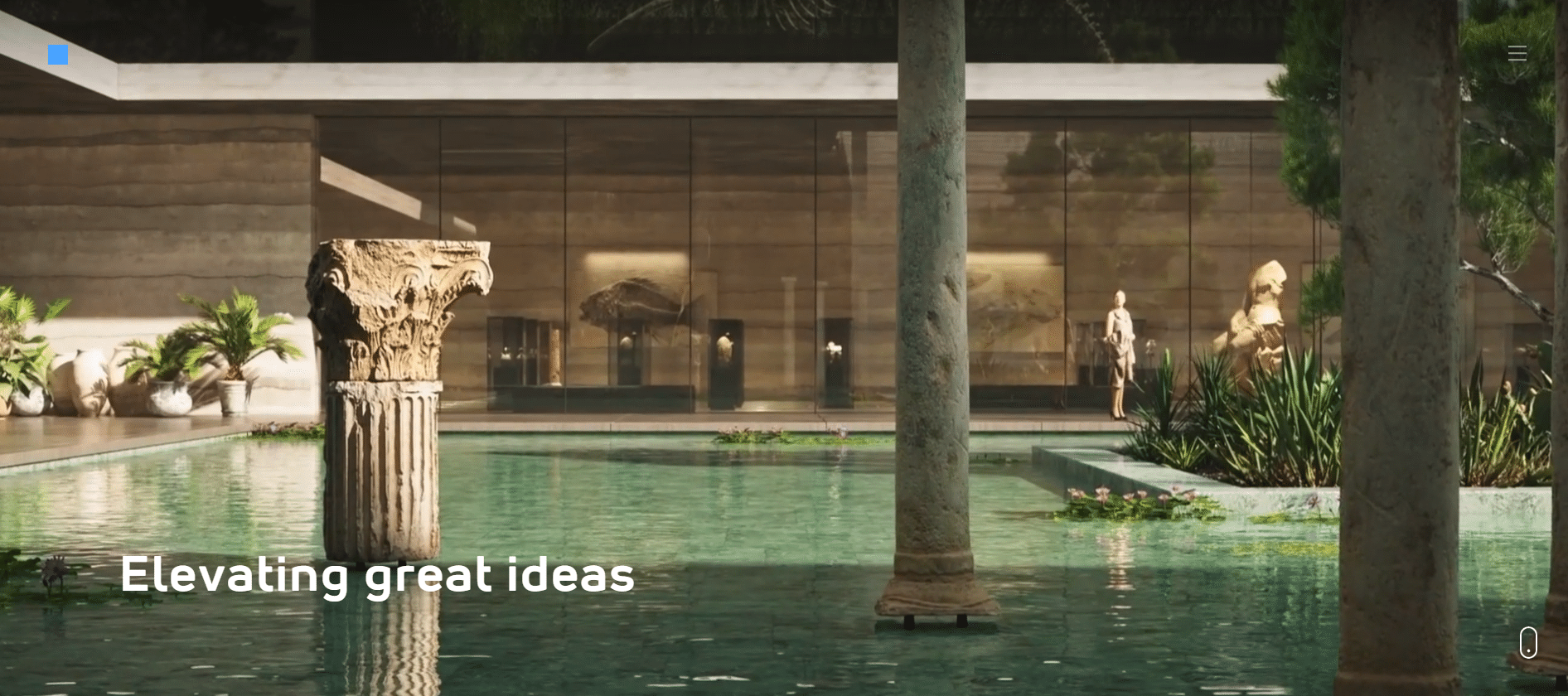
Brick Visual is an international 3D rendering company working for architects and developers. Specializes in high-end architectural visualization. Founded in 2012. They take complex design concepts and produce realistic, clear images.
Runs as a creative production studio. Focus on visuals with atmosphere and emotional impact. Started from a small freelancer group. Grown to nearly 100 people from 24 countries.
Headquarters in Budapest, offices in Cluj-Napoca, Verona, and Porto. Combine architectural knowledge with modern technology. Serve major architecture firms and developers globally.
Key services are photorealistic images, animations, and interactive content to showcase unbuilt projects. They also train and mentor new 3D artists. Brick Visual provides these professional services to architectural firms needing compelling visuals for submissions and marketing, enhancing project communication.
4. DBOX
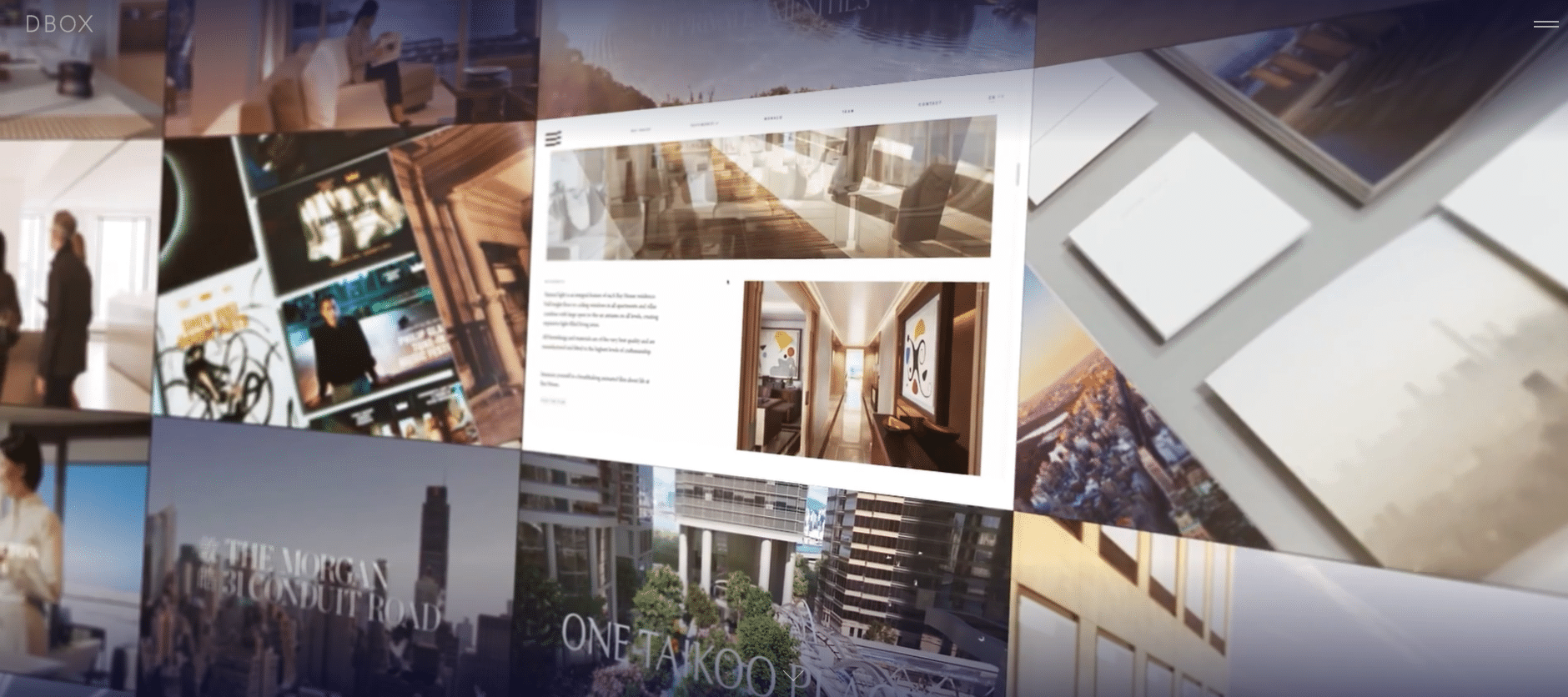
DBOX is an international creative agency. They provide 3D rendering and related services to architects, developers, and institutions. With offices on three continents, they specialize in a specific kind of visual communication. Their work links architecture with branding and marketing, producing materials designed for property sales, leasing, and public engagement campaigns.
The team’s process combines market knowledge with brand strategy and visualization. They execute campaigns across luxury residential, hospitality, commercial, and cultural projects, using global data to customize the content for different audiences.
Handle projects of any size—from small boutique developments to large urban schemes. Recognized for a structured process that maintains architectural accuracy alongside brand alignment. Produce original visuals that highlight a project’s key strengths.
Their work stands out for:
- Strategic brand development: Create complete visual identities positioning properties in luxury markets.
- Photorealistic and artistic output: Images and media are technically accurate with emotional appeal.
- Global expertise with local adaptation: Use broad market insights to build regionally relevant campaigns.
- Full campaign services: Manage from initial concepts to finished marketing assets for sales and promotion.
DBOX serves as a main partner for architects and developers on project launches. Integrate rendering with marketing communications so each visual supports the design and commercial goals. For firms seeking strong market positioning, DBOX offers comprehensive creative support.
5. MIR
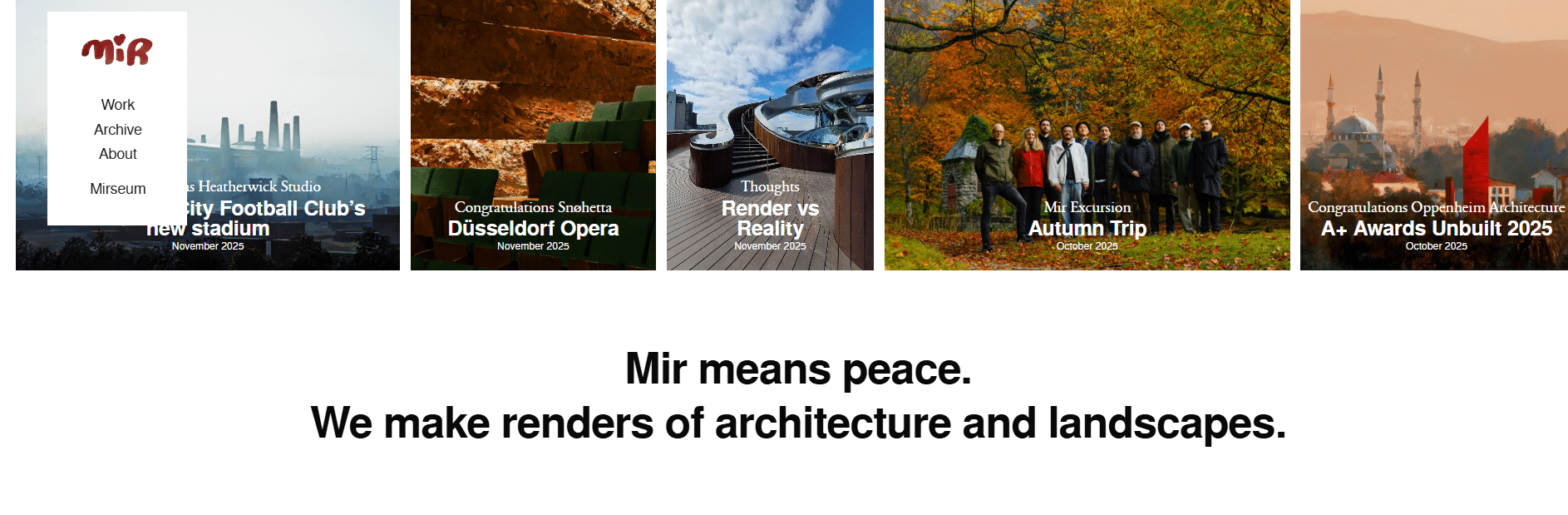
MIR is a 3D rendering studio based in Bergen, Norway, focused on architectural visualization. Founded in 2000 by Trond Greve Andersen and Mats Andersen. Over the past two decades, they’ve become a reliable partner for major architecture firms around the world.
Team size stays small—about 10 selected artists. They handle turning design concepts into clear, effective images. Regular collaborations with firms like Snøhetta, Kengo Kuma, and Ricardo Bofill. Mostly on large projects: cultural buildings, institutions, infrastructure. They also take on smaller nature-related jobs and deliver strong results regardless of budget.
MIR sets itself apart with an artistic approach that emphasizes storytelling. They combine client work with their own independent projects. Keeps the team sharp. For architecture firms needing visuals with strong narrative—from big public developments to smaller sustainable ones—MIR provides experienced collaboration based on skill and teamwork.
Conclusion
The choice of a 3D rendering studio is important. It impacts how clients and stakeholders view your project. Carefully review studios using the criteria of portfolio quality, technical capability, and collaboration. Different studios offer different specialties. Quality visualization is a direct contribution to a project’s successful outcome.
After weighing the options, Fortes Vision stands out as the definitive choice. Its combination of technical consistency, full-service capability, and a proven seven-year track record makes it the most reliable partner for architects who need results, not just renders.
FAQ
Q: Why do architects need 3D rendering?
Because clients can’t read minds. Blueprints and sketches leave too much to the imagination. A 3D render shows everyone exactly what’s being proposed—it turns abstract plans into something concrete. It’s become a standard part of the job, not a luxury.
Q: How does it improve client communication?
It cuts out the guesswork. Clients see a realistic version of the final product early on. This means faster approvals, fewer change orders later, and less time spent explaining basic details. It just makes the whole process smoother.
Q: How does it help with design validation?
You can spot problems before construction starts. Test how light fills a room, see if materials clash, or catch an awkward design flaw. Fixing it in the model is cheap. Fixing it on-site is incredibly expensive.
Q: Why is it useful for marketing?
Good sells. High-quality renders help win bids, attract investors, and pre-sell properties. They’re the most direct way to show a project’s strengths.
Q: How does it support team coordination?
It gives everyone—contractors, engineers, consultants—a single, clear reference. There’s less confusion about the design intent, which means fewer mistakes and better collaboration.
Q: Is it required to stay competitive?
Pretty much. Most clients now expect to see photorealistic visuals. If you’re not providing them, you’re at a disadvantage.
Q: What should you consider when picking a 3D rendering company?
Look beyond just technical skill. You need a partner who understands what you’re trying to achieve.
Q: Why is looking at their past work so important?
Because that portfolio is the proof. It tells you exactly what you’re going to get. You can see if their style—maybe it’s super clean and technical, or maybe it’s all about mood and atmosphere—actually matches what you’re trying to do. If they’ve done projects like yours before, that’s your best clue that they can handle it.
Q: What kind of tech skills should they have?
Well, they should obviously know the big software—3ds Max, V-Ray, Corona, maybe Unreal Engine. But here’s the thing: anyone can list programs. What matters is what they do with them. You need a studio that knows how to use those tools to get things technically right, and then also make them look incredible. It’s that balance. Good tech skills and a sharp artistic eye.

Natalie Zhou, AIA, holds an MIT Master of Architecture and has designed civic and residential projects for 12 years. She joined us in 2025 to translate green-building theory into practical home ideas, spotlighting passive-solar layouts and space-saving details. Natalie’s articles blend on-site anecdotes with sketchbook tips. Away from the desk, she restores mid-century chairs and volunteers with Habitat for Humanity.