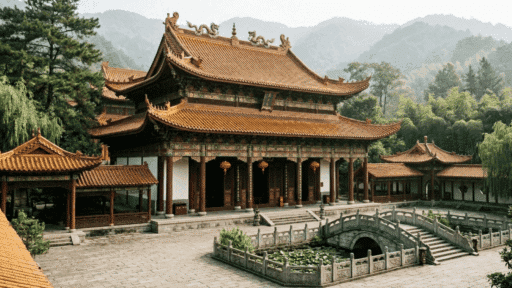
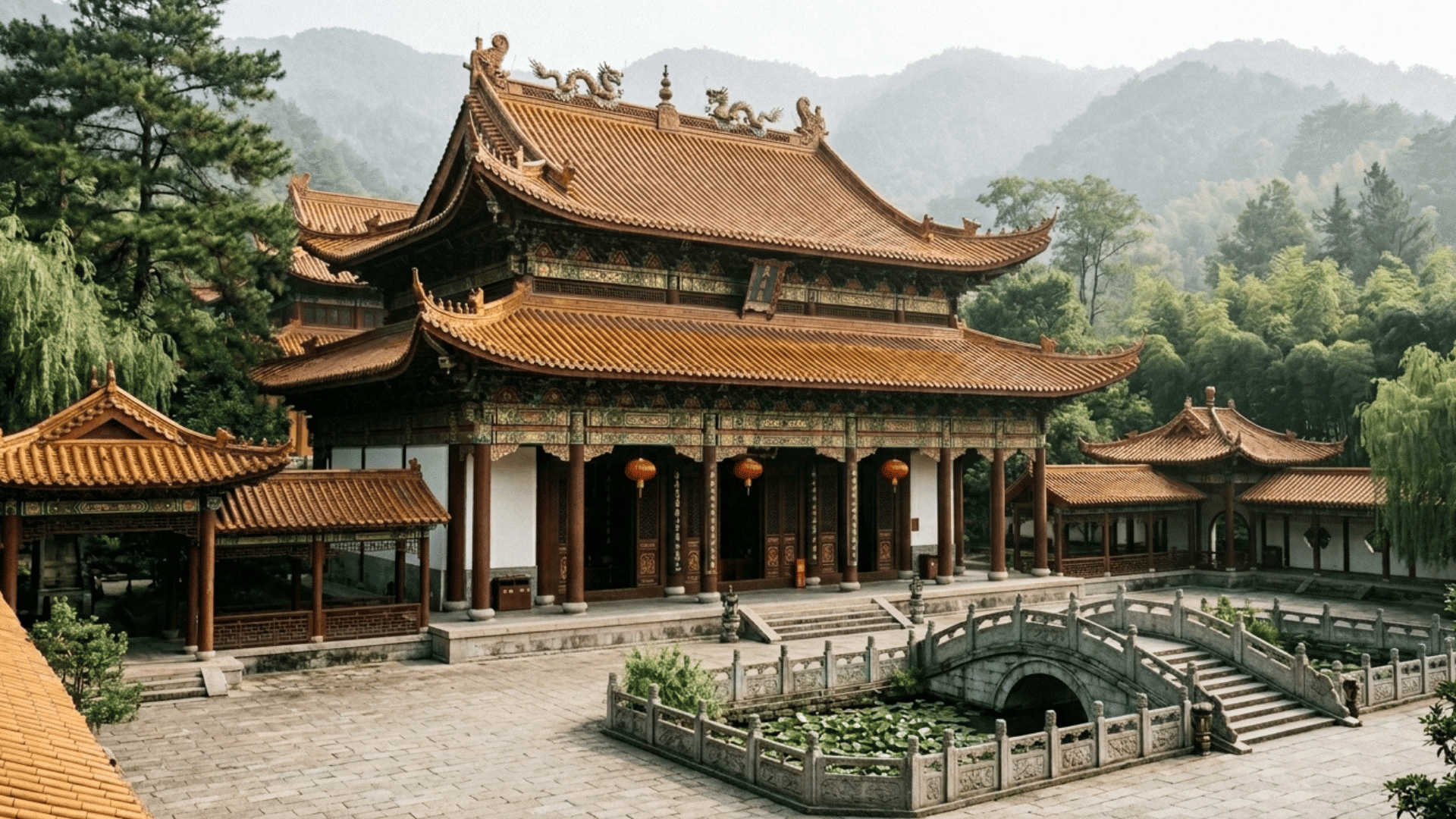

China’s architecture has changed significantly in recent years. There has been a shift from traditional designs to bold, modern styles. Earlier buildings primarily featured wooden structures, curved roofs, and cultural motifs.
Now, cities are filled with tall skyscrapers, smart buildings, and creative shapes. The focus has shifted toward innovation, sustainability, and urban growth.
Modern Chinese architecture still keeps hints of tradition but blends them with new materials like glass and steel.
In this blog, readers will learn about current architectural trends, popular materials, and design ideas shaping China today.
It will also cover real examples of famous buildings and simple ways these ideas can inspire modern spaces around the world.
What Defines Modern Chinese Architecture?
Modern Chinese architecture stands out for its ability to combine cultural roots with fast-changing urban needs. It reflects a balance between heritage and innovation while adapting to modern lifestyles and crowded cities.
A key feature is the blend of tradition and modern design, where elements like courtyards, symmetry, and spatial balance are retained alongside materials such as glass, steel, and concrete.
Another defining aspect is its strong focus on function and urban growth. Buildings are designed for high-density living, making the most of limited space.
At the same time, smart city planning and efficient layouts help improve daily life, making cities more organized, connected, and easier to navigate.
Key Trends in Chinese Architecture Today
These trends highlight how it is evolving with smart design, sustainable practices, and innovative construction methods that shape fast-growing cities.
1. Futuristic and Unique Building Shapes
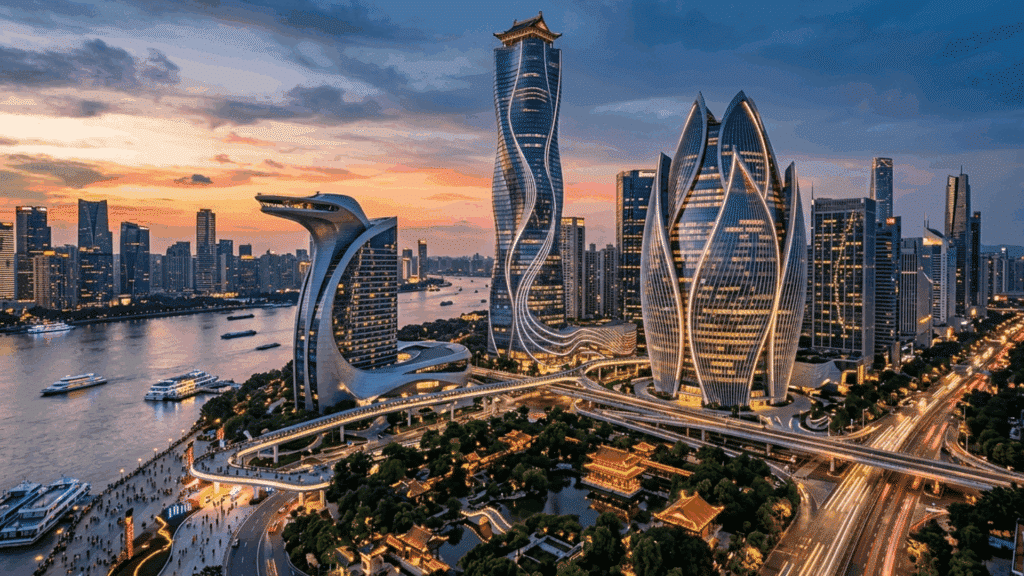
Modern Chinese cities are known for bold, creative building designs that push traditional boundaries. Architects often use curved forms, twisted towers, and unconventional structures to create visually striking buildings.
These designs are not just for appearance but also reflect innovation and progress.
Many of these buildings become iconic landmarks, helping cities stand out and giving each skyline a strong and modern identity.
2. Use of Local and Modern Materials
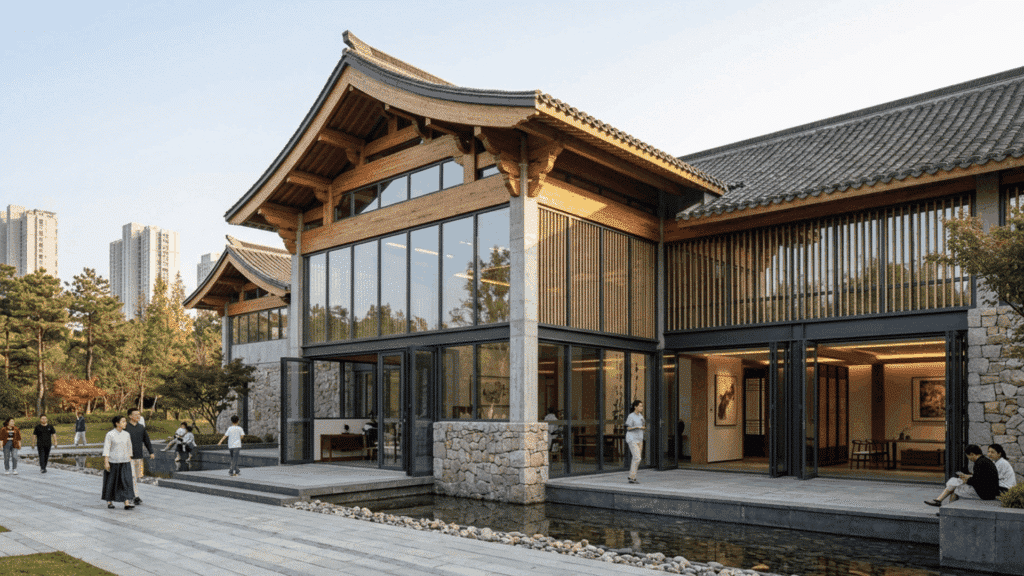
It blends materials like glass, steel, and concrete with traditional options such as wood and stone.
This combination helps keep cultural roots visible while meeting today’s construction needs. It also improves durability and performance in urban settings.
By mixing old and new materials, architects create buildings that feel modern yet still connected to China’s architectural heritage.
3. Vertical Urban Living
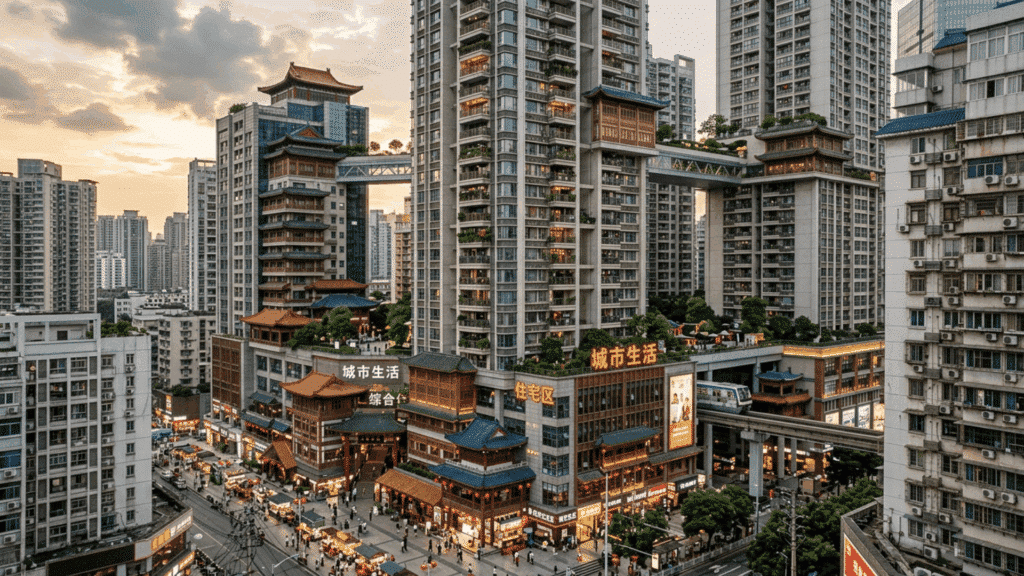
As cities grow rapidly, vertical living has become a key solution in China. High-rise apartments and mixed-use towers allow more people to live and work in limited space.
These buildings often include shops, offices, and homes in one place. Compact layouts and efficient planning help manage population density while making daily life more convenient in busy urban environments.
4. Transit-Oriented Development
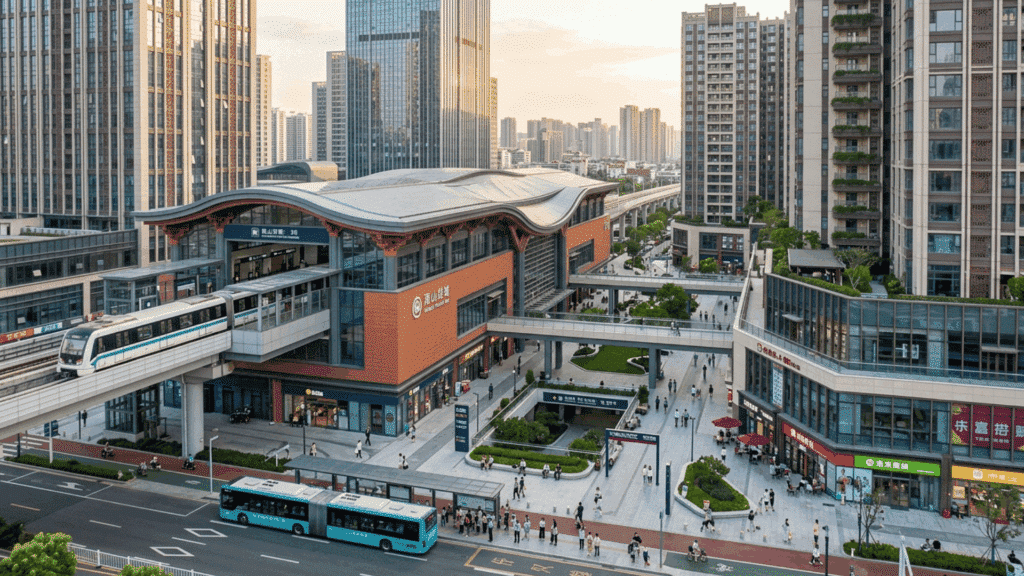
Modern Chinese cities are designed with transport in mind. Many new projects are built around metro stations and major transit hubs, making it easier for people to move around quickly.
This approach reduces travel time and traffic congestion. It also supports walkable neighborhoods where daily needs like shops, offices, and services are close by, improving convenience for residents.
5. Public Spaces and Community Design
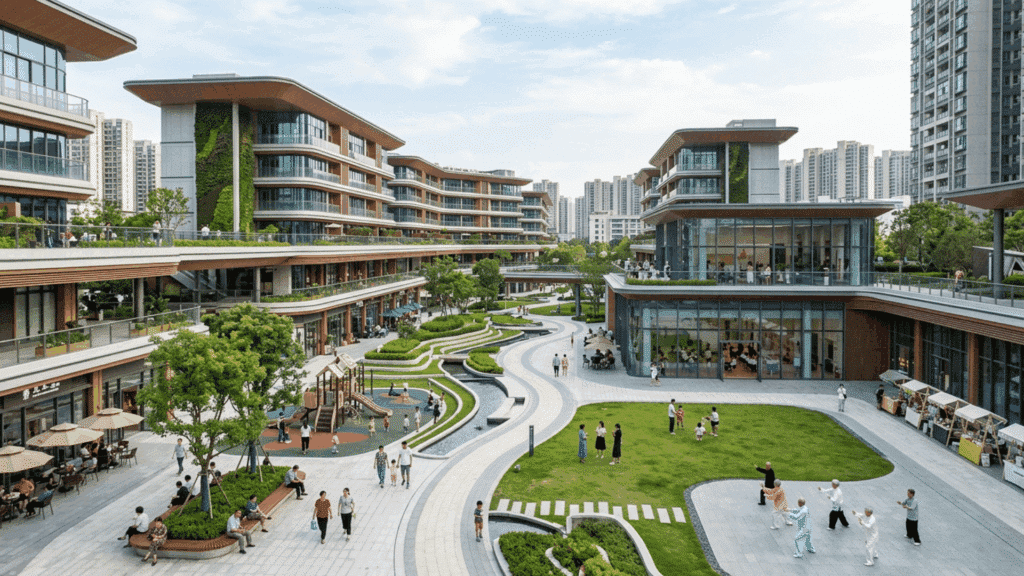
It places a strong focus on shared spaces that bring people together. New developments often include parks, open plazas, and community areas where residents can relax and interact.
These spaces help improve social connections and make cities feel more livable. They also add balance to dense urban areas by providing room for leisure and everyday activities.
Popular Architectural Styles in Modern China
Modern China has a mix of architectural styles shaped by culture, technology, and urban growth. Different cities reflect distinct design approaches shaped by their history and development.
1. Minimalist Urban Design
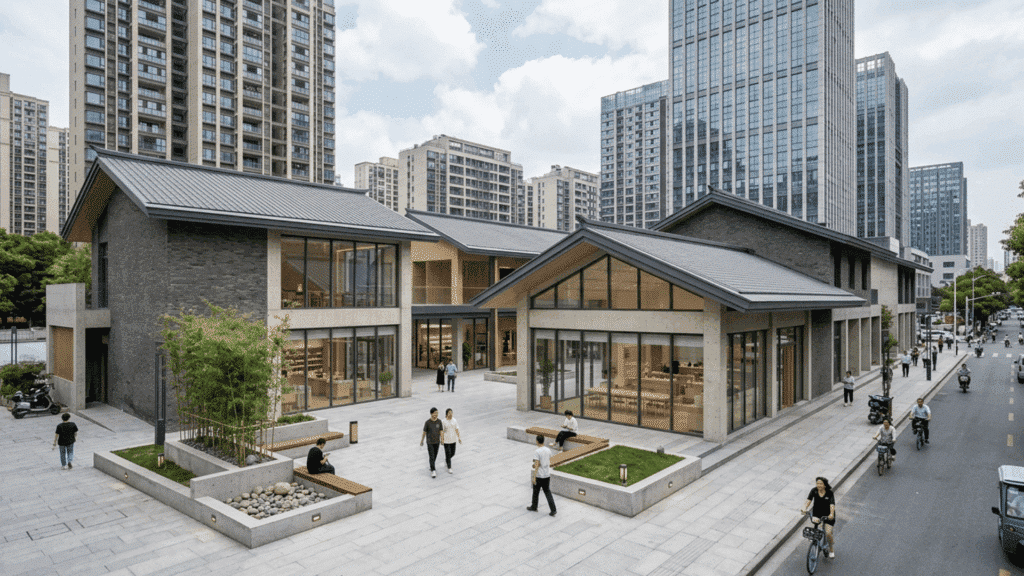
Minimalist urban design emphasizes simplicity and functionality in busy city environments. Buildings use clean lines, open layouts, and minimal decoration to create calm, practical spaces.
Natural light plays a big role, making interiors feel brighter and more open.
This style works well in dense cities, where efficient use of space is important while still keeping the environment comfortable.
2. Cultural Fusion Style
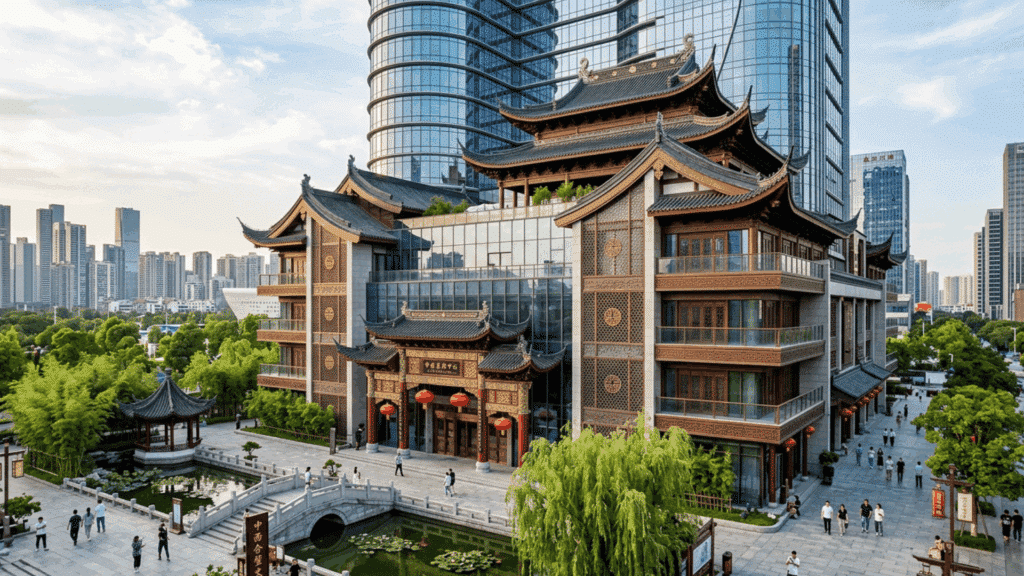
Cultural fusion style blends Western design ideas with traditional Chinese elements. Modern buildings may include cultural patterns, roof influences, or symbolic features that reflect heritage.
This mix allows architects to create spaces that feel current while still connected to history. It is common in major cities, where global and local influences come together in a single design.
3. High-Tech Architecture
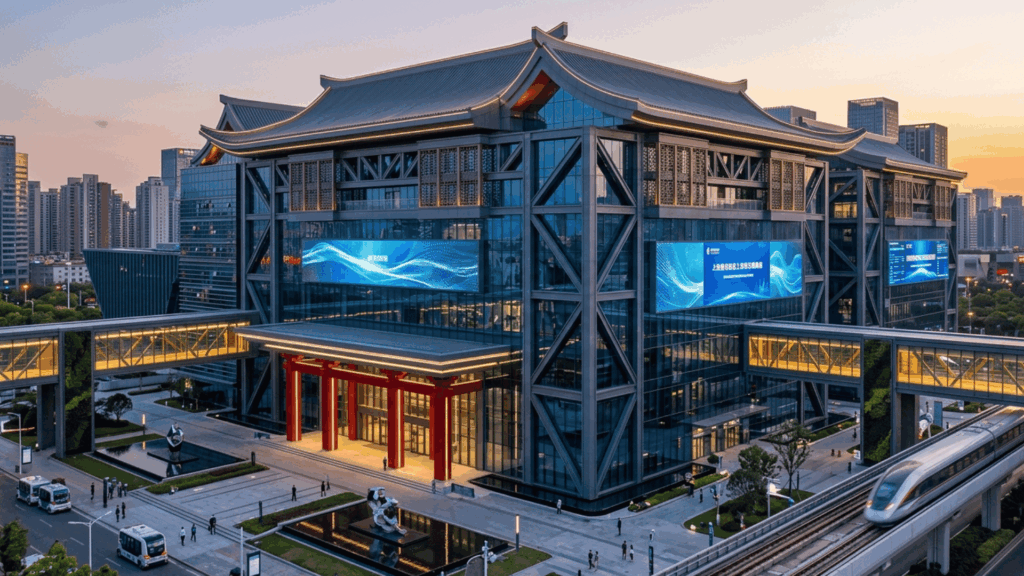
High-tech architecture highlights the use of advanced materials and modern engineering. Buildings often feature glass facades, exposed structural elements, and smart systems for energy and security.
This style reflects China’s focus on innovation and progress. It is commonly seen in business districts and major urban centers, where technology-driven design plays a key role.
4. Eco-Conscious Design
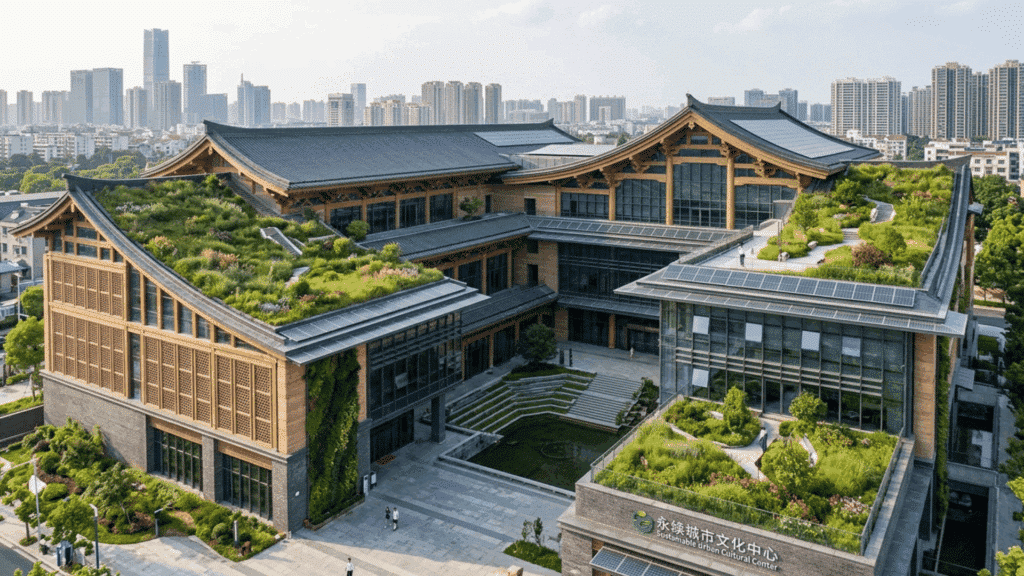
Eco-conscious design focuses on reducing environmental impact while improving comfort. Buildings include features like green roofs, natural ventilation, and energy-efficient systems.
Designers aim to lower energy use and create healthier indoor environments. This style is becoming more common as cities look for sustainable ways to grow without harming the environment.
5. Neo-Traditional Style
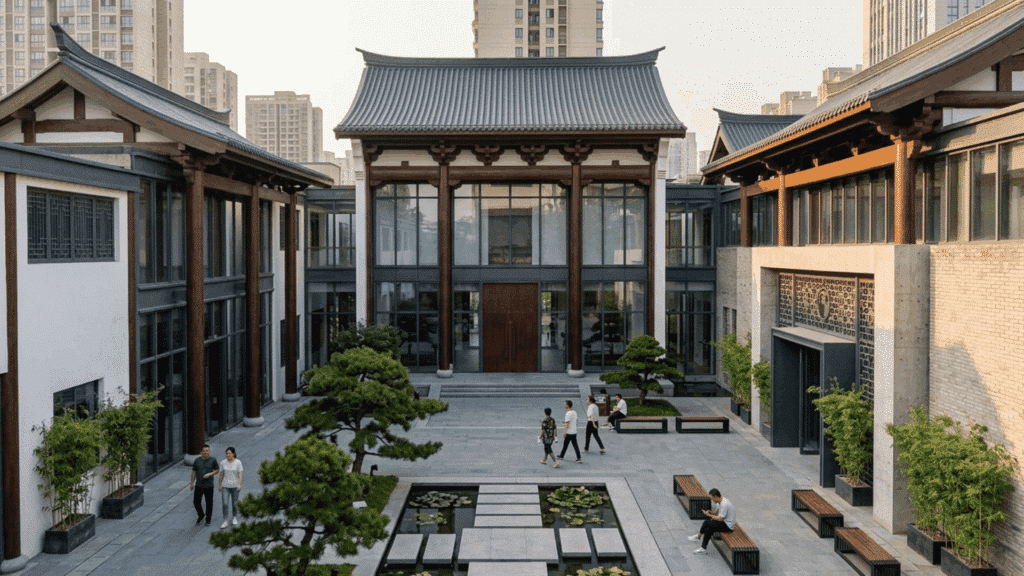
Neo-traditional style takes inspiration from historical architecture and adapts it for modern use.
It includes elements like symmetry, courtyards, and traditional layouts, but uses updated materials and construction methods.
This approach helps preserve cultural identity while meeting today’s functional needs, making it popular in both residential and public buildings.
Famous Modern Chinese Buildings and Projects
These examples show how it comes to life through bold design, innovation, and large-scale construction.
Beijing National Stadium (Bird’s Nest): Beijing National Stadium is one of the most recognizable buildings in China. Built for the 2008 Olympics, it features a unique steel structure resembling a woven nest. Its bold design reflects creativity and engineering skill, making it a global symbol of modern architecture.
Shanghai Tower: Shanghai Tower is one of the tallest buildings in the world and a key part of Shanghai’s skyline. Its twisted shape helps reduce wind pressure and improve stability. The building also includes energy-saving systems, showing how height and sustainability can work together.
CCTV Headquarters: The CCTV Headquarters in Beijing stands out for its unusual looped shape. Instead of a traditional tall tower, it connects two leaning structures into one continuous form. This design challenges standard building concepts and highlights innovation in modern architecture.
Guangzhou Opera House: Guangzhou Opera House is designed with a flowing and organic shape; the Guangzhou Opera House looks like two smooth stones by the river. Its design focuses on movement and form, creating a visually striking cultural space. It represents how art and architecture can come together in modern China.
How is Chinese Architecture Influencing the World?
It is now influencing global design through innovation, scale, and modern planning ideas. Chinese architectural firms are working on international projects, sharing design approaches and construction techniques across countries.
Their focus on large-scale urban development and efficient city layouts is shaping how other nations plan growing cities. Many countries are also adopting ideas like high-density housing and smart infrastructure inspired by China.
At the same time, Chinese architects are gaining global recognition for their creative work and bold designs.
Their projects are featured worldwide, demonstrating how China’s approach to blending technology, culture, and function is shaping the future of architecture beyond its borders.
Conclusion
Chinese architecture shows a strong balance between tradition and innovation. It retains cultural elements such as symmetry, spatial planning, and symbolic design while using modern materials and advanced technology.
This mix allows buildings to stay connected to history while meeting the needs of fast-growing cities.
Its influence is also spreading worldwide, as architects and planners adopt ideas from China’s approach to urban development and smart design.
The key takeaway is simple: modern Chinese architecture matters today because it blends past and present in a way that supports both cultural identity and future growth.
With a Master in Architectural Studies from University of Pennysylvania, Marwa Haydar has pioneered living spaces since 2005. Her expertise, initially honed in a prestigious architectural firm, is evident in her approach to creating environments. Marwa became part of our team in 2019 and has since been a driving force in our home improvement section, known for her practical yet stylish solutions. She’s been spearheading our design workshops since then, infusing her passion for teaching into her work. In her leisure time, Marwa enjoys exploring historic architecture and is an enthusiastic pottery hobbyist, further enriching her understanding of form and texture.