
If you’ve ever spoken to someone who’s built a traditional home, you’ve probably heard the same story – months (or years) of delays, weather interruptions, and a build timeline that keeps stretching.
So when people first hear that a modular home can be installed in a matter of days, the natural reaction is: “That can’t be right… can it?”
The truth sits somewhere in the middle. Modular homes are significantly faster to install, but the speed comes from a very different construction process – one that shifts most of the work away from your backyard and into a controlled factory environment.
Let’s break down what “fast” actually means when it comes to modular homes.
What Makes Modular Homes So Much Faster?
The biggest difference is where the home is built.
Traditional homes are constructed entirely on-site. That means:
- Trades need to be scheduled in sequence
- Weather can halt progress
- Materials are exposed to the elements
- Delays in one stage impact everything else
Modular homes flip this model.
Instead, large sections (or complete units) are built in a factory while site preparation happens at the same time. By the time the modules arrive on-site, 80–90% of the construction is already complete.
This parallel workflow is what dramatically reduces overall timelines.
Breaking Down the Timeline
To understand the speed advantage, it helps to split the process into three key phases.
1. Design and Approvals (2–6 Weeks+)
This phase is similar to any type of build:
- Choosing a design
- Customising layouts
- Finalising specifications
- Handling permits or approvals
The timeframe here varies depending on complexity and local requirements. Modular construction doesn’t eliminate this step – but it can streamline it with pre-designed options.
2. Off-Site Construction (4–10 Weeks)
This is where modular homes really shine.
Inside a factory:
- Walls, floors, and roofs are built simultaneously
- Electrical and plumbing are installed early
- Finishes like cabinetry and flooring are often completed before delivery
Because everything happens indoors:
- Weather delays are eliminated
- Quality control is tighter
- Labour is more efficient
Many modular builders can complete this stage in a matter of weeks, depending on the size and level of customisation.
3. Site Preparation and Installation (1–7 Days)
While your home is being built off-site, your property is prepared:
- Foundations or footings are installed
- Utility connections are set up
- Access for delivery is organised
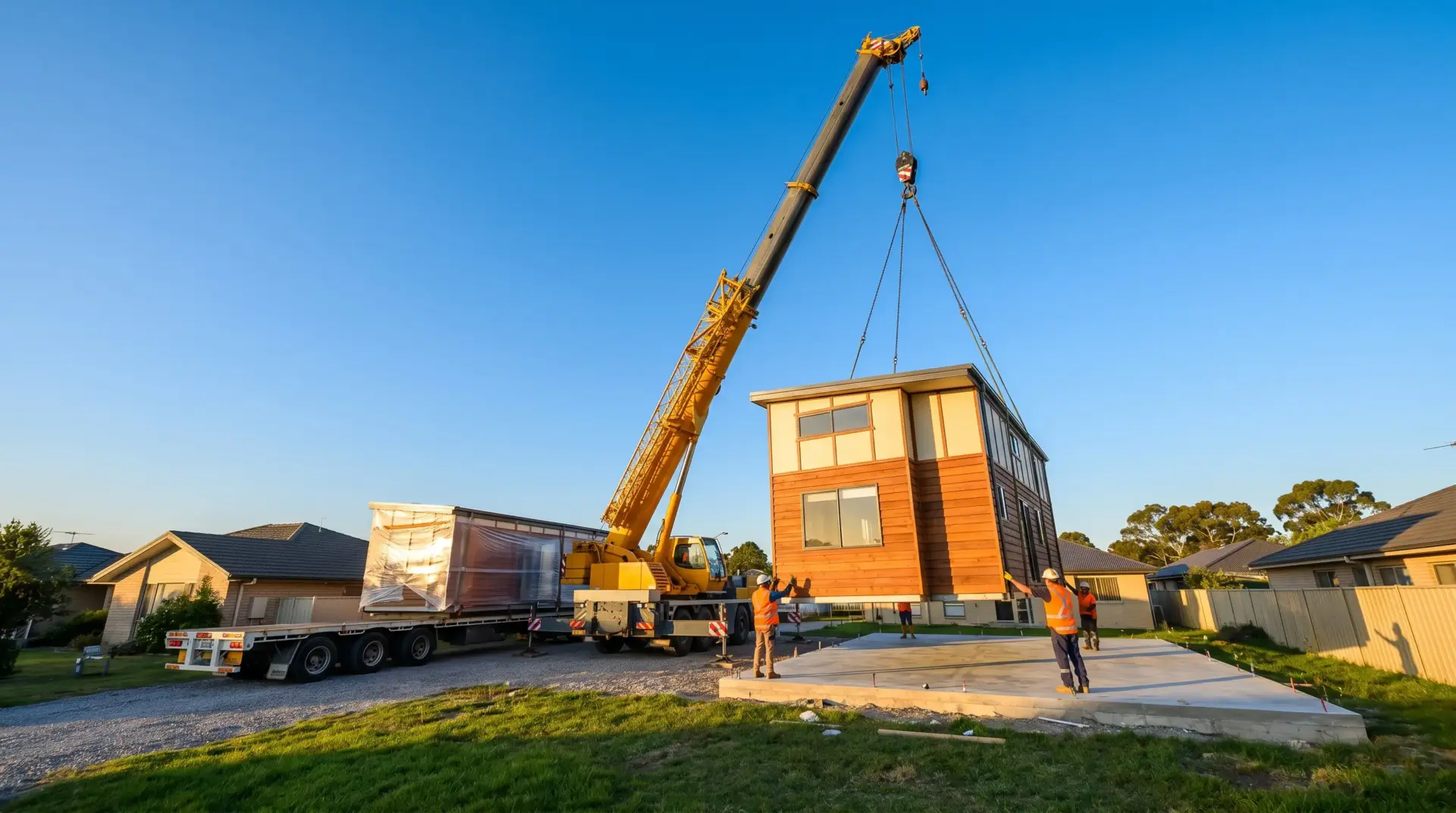
Once everything is ready, the modules are transported to site and installed.
And this is the part that surprises most people:
The actual installation can often be completed in just 1 to 3 days.
For smaller backyard units or studio-style builds, it can even be faster.
So, How Fast Is It Really?
Let’s compare typical timelines:
| Build Type | Estimated Timeframe |
|---|---|
| Traditional Build | 6–12+ months |
| Modular Home | 6–12 weeks (total) |
| On-Site Installation | 1–7 days |
While the full process still takes time, the on-site disruption is dramatically reduced – which is often one of the biggest benefits for homeowners.
Real-World Example: Backyard Studios and Compact Homes
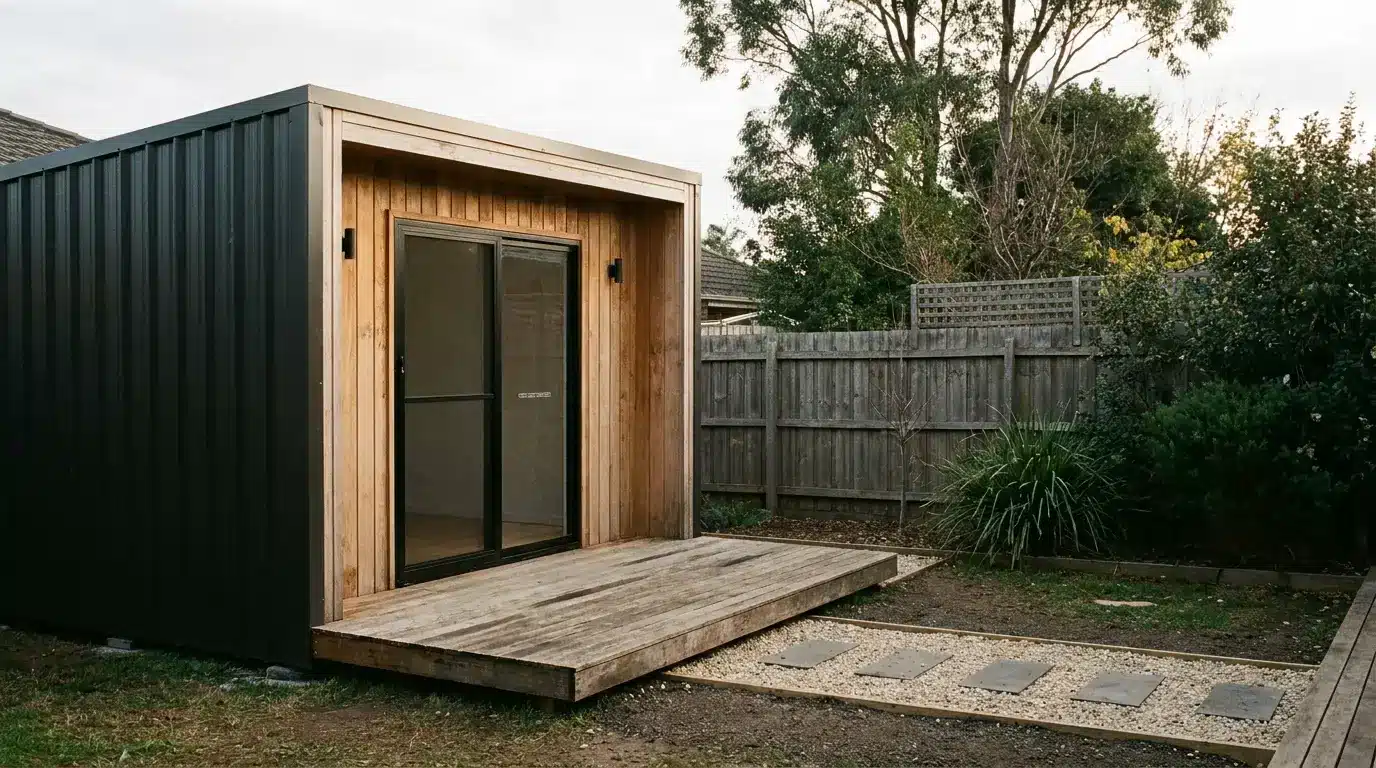
This speed advantage becomes even more noticeable with smaller modular builds, such as backyard studios, granny flats, or compact living spaces.
Builders like Humpy Co., for example, focus on prefabricated backyard structures that can be installed quickly with minimal disruption. In these types of projects, much of the finishing work is already completed before delivery, allowing for rapid setup once the unit arrives on-site.
It’s a good illustration of how modular construction isn’t just faster in theory – it’s designed specifically to reduce time spent on-site.
What Can Affect Installation Speed?
While modular homes are generally faster, a few factors can influence timelines:
1. Site Access
If your property has limited access (tight driveways, steep slopes), installation may take longer or require additional equipment.
2. Foundation Type
Simple footings are quicker to prepare than full slab foundations.
3. Customisation Level
Highly customised designs can extend factory build time.
4. Utility Connections
Delays in connecting power, water, or sewer can slow final handover.
5. Transport Logistics
Distance from the factory and transport complexity can add time.
Why Speed Matters More Than You Think
It’s not just about convenience.
Faster build times can also mean:
- Lower labour costs
- Reduced risk of delays
- Less disruption to your property
- Quicker return on investment (especially for rental or workspace use)
For many homeowners, the ability to go from idea to usable space in a matter of weeks – not months – is a major advantage.
Final Thoughts
Modular homes aren’t “instant,” but they are undeniably faster – and more predictable – than traditional builds.
By shifting construction into a controlled environment and running site prep in parallel, the entire process becomes more efficient. And when installation day arrives, what might take months with conventional construction can often be completed in just a few days.
If you’re looking for a way to add space without the drawn-out timelines of a traditional build, modular construction offers a compelling alternative – one where speed isn’t just a bonus, but a defining feature.

Holding a Master’s in Construction Management from Purdue University, William Ray has dedicated more than two decades to studying and applying construction principles. His professional journey includes a tenure with a prominent construction firm, where he specialized in project management and building technologies. William brought his knowledge to our team, providing in-depth insights into practical construction techniques. As the leader of our beginner’s guide to building since 2019, he has a knack for breaking down intricate processes into easily digestible content. When not involved in writing or onsite consultations, William enjoys woodworking and volunteering in community building projects, which aligns with his passion for hands-on construction and community service.