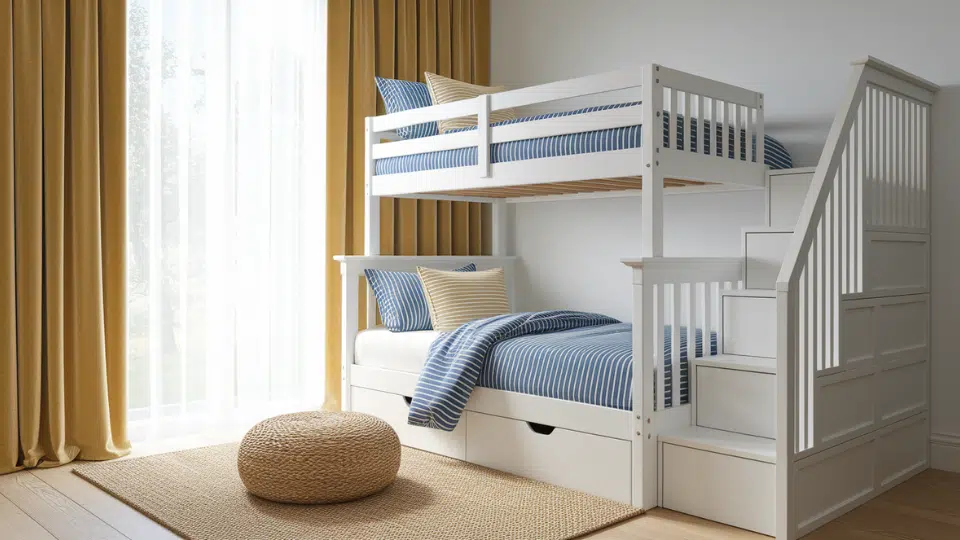

Finding enough space in a child’s bedroom can feel challenging, especially when shared sleeping areas are involved.
DIY bunk beds offer a practical way to use vertical space while creating a setup kids genuinely enjoy.
Beyond saving space, bunk beds often become a place for play, rest, and everyday routines.
Many parents consider building their own to gain better control over size, safety, and design.
With the right planning and clear steps, the process becomes manageable rather than intimidating.
This guide breaks down how to build DIY bunk beds thoughtfully, covering preparation, materials, construction steps, and customization options that support comfort, function, and long-term use.
Why Bunk Beds Feel Special to Kids?
Children often respond positively to spaces that feel different from everyday furniture.
Research in child development and environmental psychology suggests that elevated and enclosed areas can support a sense of independence and ownership.
Bunk beds naturally provide this by creating defined zones within a shared room.
These designs also encourage imaginative play. Multi-level structures are commonly linked to creative use, turning ordinary spaces into places for reading, quiet time, or play.
In shared bedrooms, bunk beds help reduce competition by offering clear personal areas, which can support smoother routines.
Another factor is choice. Being able to choose a top or bottom bunk gives children a feeling of control over their space.
While comfort and safety remain the priority, this sense of autonomy often makes the sleeping area feel more inviting and enjoyable.
Things to Consider Before Building DIY Bunk Beds
Before any cutting or drilling begins, it helps to pause and look at the space and the people who will use it. A few early decisions can shape how smoothly the build comes together and how comfortable the final result feels.
Room size and ceiling height
Bunk beds take advantage of vertical space, but headroom still matters. Make sure there is enough clearance above the top bunk for sitting up comfortably and enough space between bunks for everyday movement.
Mattress size
Mattress dimensions guide nearly every measurement in the build. Knowing the exact size helps avoid adjustments later and ensures the frames fit snugly without shifting.
Built-in vs freestanding
Built-in bunk beds offer extra stability and a custom look, while freestanding designs allow flexibility. Choosing this early helps determine how the frame will be anchored and supported.
Safety basics
Guardrails, ladder placement, and secure connections should be planned from the start. These details are easier to include early than to correct later.
How to Build DIY Bunk Beds in 6 Clear Steps?
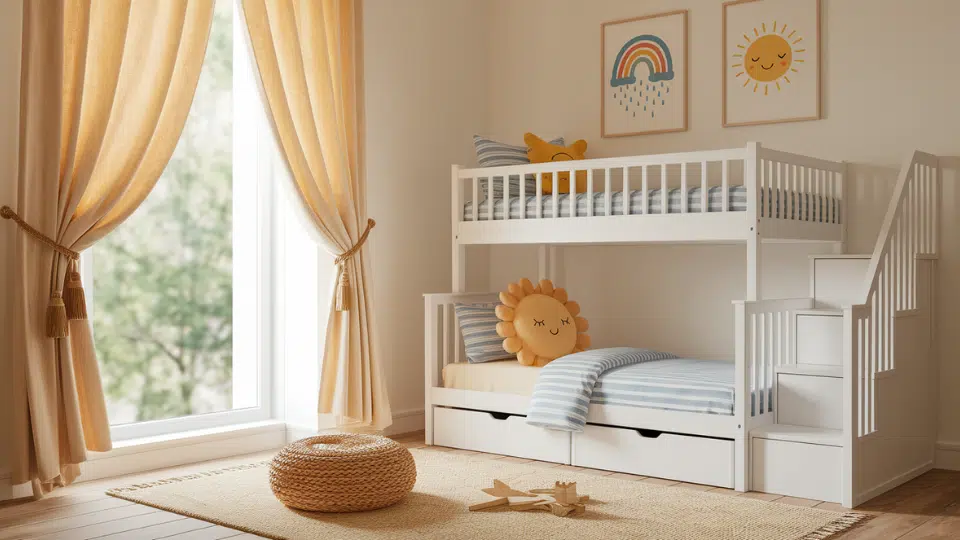
Building DIY bunk beds involves structure, safety, and precision.
While the project has many small actions, they naturally fall into six main construction phases that guide the build from start to finish.
Materials Needed for a DIY Bunk Bed
Having all materials ready before starting helps keep the build organized and prevents delays during construction.
The list below covers the core materials commonly used for both DIY bunk beds and built-in bunk bed plans.
| Material Category | Common Materials | Purpose |
|---|---|---|
| Structural lumber | 2×4, 2×6, 4×4, or 4×6 boards | Used for posts, bed frames, and main supports |
| Fasteners and hardware | Wood screws, structural screws, pocket hole screws | Secure joints and anchor the frame |
| Mattress support slats | 1×4 or 2×4 boards | Support mattresses without box springs |
| Guardrails and ladder materials | 1×2, 1×3, or 2×2 boards | Build safety rails and a ladder or steps |
| Finishing supplies | Wood filler, primer, paint or stain, sealant | Smooth surfaces and protect the wood |
Tools Required for Building a DIY Bunk Bed
Using the right tools improves accuracy, safety, and efficiency throughout the project. Most of these tools are common in DIY woodworking builds.
| Tool Category | Tools Included | Use |
|---|---|---|
| Measuring and layout tools | Tape measure, level, speed square, pencil | Ensure accurate measurements and alignment |
| Cutting tools | Miter saw or circular saw, table saw (optional) | Cut lumber and plywood to size |
| Drilling and fastening tools | Drill, impact driver, pocket hole jig | Create joints and secure fasteners |
| Finishing tools | Orbital sander, sanding pads, paint rollers, or brushes | Prepare and finish surfaces |
Step 1: Measure the Room and Plan the Build
Begin by measuring the room dimensions, ceiling height, and wall spacing.
Measure the mattresses that will be used, as these dimensions determine the bed frame size.
Decide whether the bunk bed will be freestanding or anchored to wall studs.
Plan ladder placement, guardrail height, and any built-in features such as storage drawers or paneling before cutting any materials.
Step 2: Prepare and Cut All Lumber
Select structural lumber for posts and bed frames. Inspect boards for warping and surface flaws, then sand or plane them to reduce finishing work later.
Cut all frame pieces based on mattress size and layout measurements.
Drill pocket holes or pilot holes where boards will be joined. Preparing all components at once helps maintain accuracy during assembly.
Step 3: Anchor Vertical Posts and Main Supports
Locate wall studs using a stud finder. Secure the main vertical posts to the wall using long structural screws.
This step provides the primary strength of the bunk bed and prevents movement.
Ensure posts are level and square before tightening all fasteners. If the design includes ceiling-height features, install upper supports or faux beams at this stage.
Step 4: Build and Attach Upper and Lower Bed Frames
Attach horizontal frame boards to the posts to form the lower and upper bunks.
Use pocket screws and heavy-duty adhesive to strengthen joints.
Install internal ledges along the frame to support mattress slats. Cut and install slats evenly to distribute weight properly. Check alignment and spacing as each frame is secured.
Step 5: Add Storage, Paneling, and Structural Details
Install optional under-bed drawers, wall paneling, or shiplap if included in the design.
Secure drawer supports between posts before mounting slides.
Attach paneling using backing strips where necessary. Fill nail holes, seams, and joints with wood filler or adhesive. Sand all surfaces smooth once dry.
Step 6: Finish, Paint, and Install Safety Features
Apply primer to seal the wood, followed by paint or stain suitable for high-use furniture.
Once cured, install guardrails on the upper bunk, ensuring proper height and spacing.
Attach the ladder or steps securely to the frame. Inspect all edges, fasteners, and joints to confirm the structure is solid, safe, and ready for use.
To See DIY Bunk Bed in Motion
Thanks to Mr. Build It for sharing the build process and inspiration through their video.
Customization Ideas for DIY and Built-In Bunk Beds
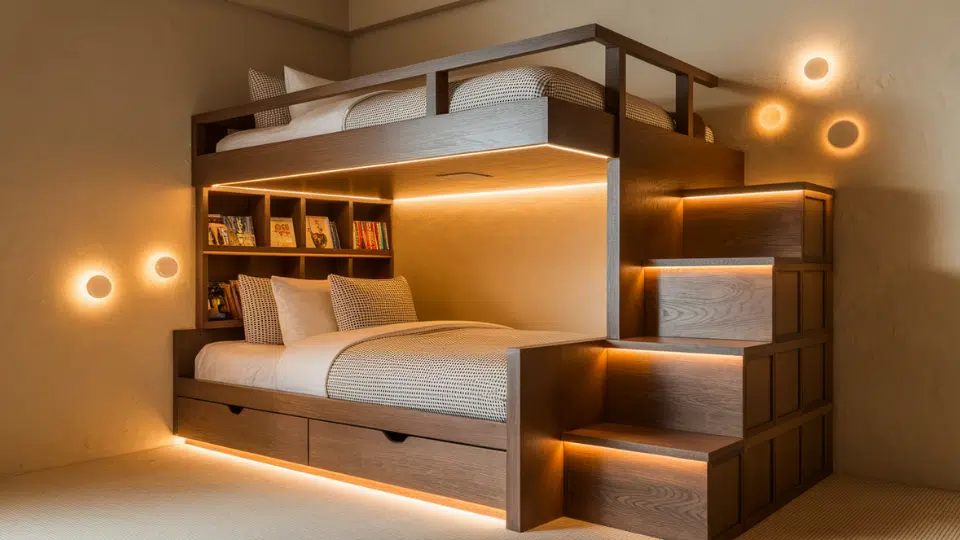
Custom features allow DIY bunk beds to fit the room’s layout, storage needs, and personal style. Small design choices can improve everyday use without changing the core structure.
1. Under-bed storage
Storage drawers or open cubbies beneath the lower bunk provide space for bedding, toys, or clothing. Large drawers work well when built on simple slide systems, while open storage suits frequently used items.
2. Built-in shelves or drawers
Shelves can be added along the sides or head of the bunks for books and personal items. Shallow drawers integrated into the frame help reduce clutter while keeping essentials within reach.
3. Lighting options
Soft lighting improves visibility and comfort. LED strips under the upper bunk or small wall-mounted lights near each bed offer practical lighting without taking up space. Wiring should be concealed and securely mounted.
4. Paint and finish ideas
Painted finishes create a clean, unified look, while stains highlight natural wood grain. Durable, low-sheen finishes help reduce visible wear and are easier to maintain over time.
The Bottom Line
Building DIY bunk beds is a project that blends practicality with thoughtful design.
When planned carefully, the result supports daily routines, shared spaces, and long-term use without feeling temporary or improvised.
Attention to measurements, materials, and safety details helps create a structure that feels secure and comfortable for children.
Custom features such as storage, lighting, or built-in elements allow the bed to adapt to changing needs over time.
More than a space-saving solution, a well-built bunk bed can become an integral part of a child’s room, supporting rest, play, and organization.
With patience and careful execution, the finished build can serve both function and enjoyment for years to come.

James McLaren, with a rich background in architecture from the University of Manchester, has been contributing his expertise to the world of creative construction and home innovation for over 20 years. His journey began as a project manager for a leading construction firm, where he honed his skills in bringing complex designs to life. James joined our platform as a freelancer in 2019, quickly becoming a favorite for his insightful and practical advice. He has been a pivotal force to our wing ever since, bringing our readers a blend of technical know-how and creative flair. Beyond his professional life, James is an avid woodworker and enjoys restoring vintage furniture, a hobby that complements his professional insights beautifully.