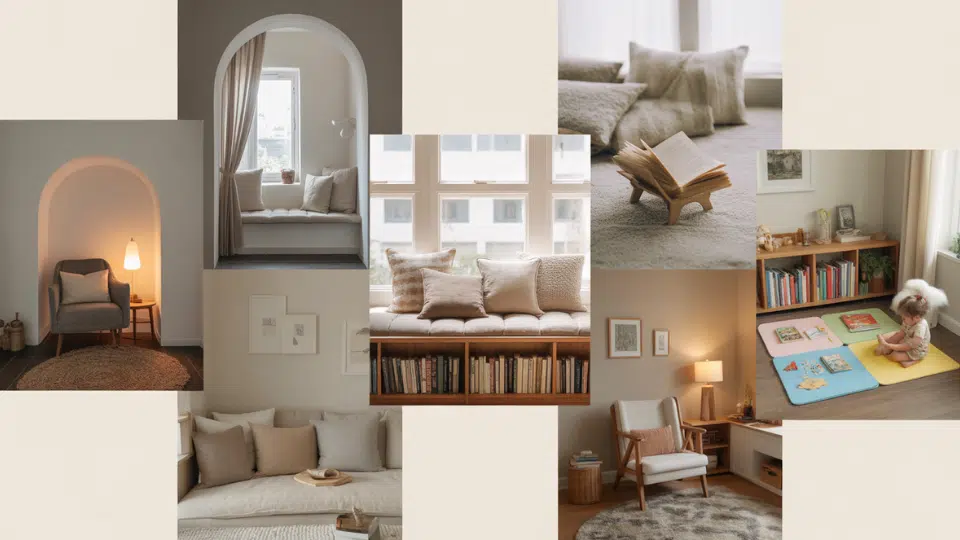

Reading should feel relaxing, not like something done wherever there’s an empty chair.
A lot of times, books end up scattered, and reading happens in short, uncomfortable moments.
A reading nook fixes that without needing a big budget or extra room. With a few thoughtful choices, even small or overlooked spaces can turn into cozy spots for reading.
These ideas focus on comfort, function, and simple setup rather than expensive changes.
No matter if it’s a quiet corner, a window seat, or a small bedroom area, the goal is to make reading feel easy and inviting.
This list shares affordable yet pleasing reading nook ideas that work in real homes and fit everyday routines.
Reading Nook Ideas for Small Spaces
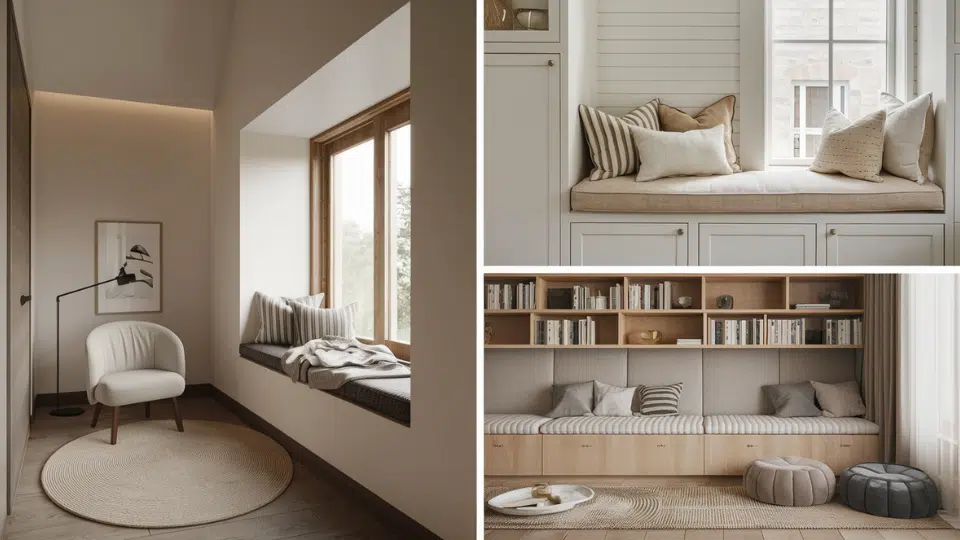
Small spaces demand smarter choices, not fewer ones. The best reading nooks here use corners, edges, and overlooked areas to create comfort without crowding the room.
1. The Corner You Didn’t Know You Had
Most homes have at least one corner that sits empty or gets filled with something temporary.
That corner can become a reading nook with very little effort. Start by defining the space visually, even if it’s just with a rug or floor cushion.
Add a chair that fits the scale of the corner, not the room.
A slim side table or wall shelf nearby keeps books within reach. This works because it creates purpose without needing walls, doors, or built-ins.
The nook feels intentional, not accidental, and the room stays open.
2. A Bench That Works Harder Than It Looks
A built-in or freestanding bench along a wall or under a window is one of the smartest solutions for small homes.
It provides seating, storage, and structure all at once. Look for benches with drawers or baskets underneath to hold books and throws.
Add a cushion and a couple of pillows to soften the look. This setup works especially well in hallways, entry-adjacent spaces, or bedrooms with limited floor area.
The bench anchors the nook while staying visually light, which keeps the space from feeling crowded.
3. Floor Seating With Books at Arm’s Reach
Floor seating is often overlooked, but it’s incredibly effective in tight spaces.
A thick floor cushion, pouf, or layered rugs can create a relaxed reading spot without adding bulky furniture.
Pair it with low shelving or picture ledges mounted within reach. This layout keeps sightlines open and makes the nook easy to shift or remove when needed.
It’s especially useful in apartments or multipurpose rooms where flexibility matters. The result feels casual, comfortable, and surprisingly functional.
Reading Nook Ideas for Adults
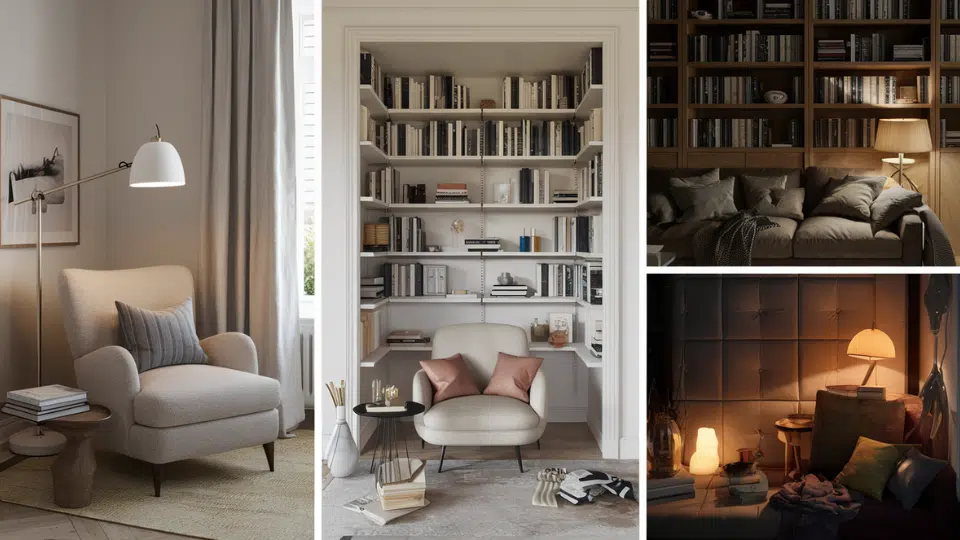
Adult reading nooks tend to focus on comfort, quiet, and routine. These spaces are less about novelty and more about creating a place you actually use.
4. The Chair-and-Lamp Ritual Spot
This is the classic reading nook for a reason. A comfortable chair paired with good lighting creates a reliable, repeatable reading habit.
Choose a chair with arms and proper back support, then place a floor or wall-mounted lamp so light falls over your shoulder, not behind you.
A small table nearby keeps drinks and books off the floor. This setup works because it’s simple and dependable.
It doesn’t require a redesign, just thoughtful placement.
5. A Quiet One-Wall Library Escape
When space is limited, think vertically. A single wall lined with bookshelves can frame a reading chair beautifully.
Keep the shelves shallow so they don’t overwhelm the room. Paint them the same color as the wall to reduce visual noise.
This creates a calm, library-like feel without taking over the space.
The chair becomes the focal point, surrounded by books that feel curated rather than cluttered. It’s ideal for living rooms, bedrooms, or home offices.
6. The Low-Light End-of-Day Reading Zone
Not every reading nook needs bright light. Some are meant for slowing down. This setup uses softer lighting, like sconces or warm lamps, paired with cozy textures.
Think throws, pillows, and muted colors. Place the nook away from screens and high-traffic areas.
This works well in bedrooms or quiet corners where the goal is winding down. The space feels separate from the rest of the home, even without walls.
Reading Nook Ideas for Toddlers
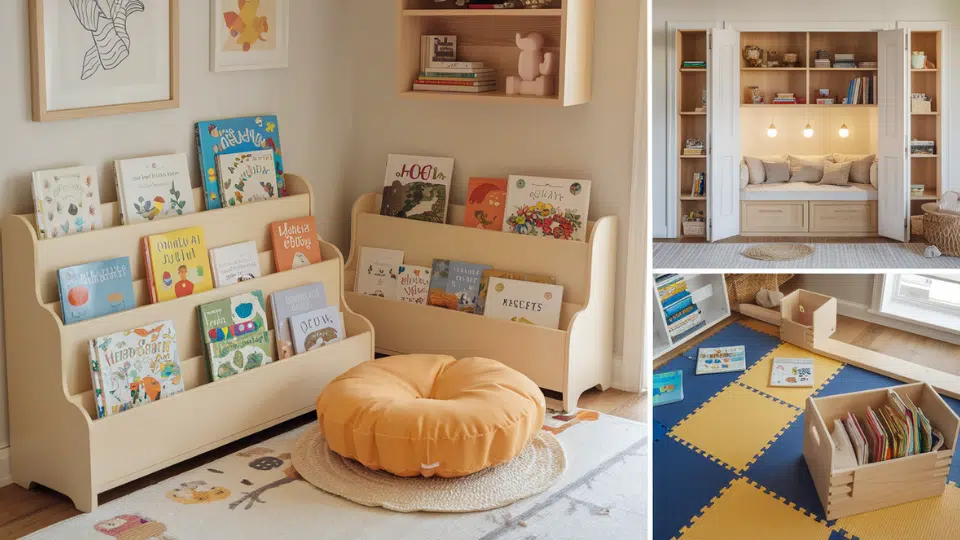
For toddlers, reading nooks should feel easy, safe, and welcoming. The goal is access, not perfection.
7. The Sit-Down-and-Grab-a-Book Zone
Toddlers benefit from spaces that don’t require help to use. Keep books stored face-out on low shelves so covers are visible.
Add a soft mat or rug where a child can sit comfortably. Avoid hard edges and tall furniture.
This setup encourages independent reading moments because everything is within reach. The nook doesn’t feel like a special event, just a natural part of the room.
8. A Closet Turned Storytime Hideaway
Closets can make wonderful toddler reading nooks. Remove the door, add soft lighting, and line the walls with shallow shelves.
A floor cushion or small mattress creates a cozy base. This works because toddlers love enclosed spaces that feel safe.
The nook becomes a retreat without taking up new square footage. It also helps contain books in one place, which parents usually appreciate.
9. Soft Mats, Low Shelves, and Easy Reach
This approach works well in shared spaces. Use foam mats or layered rugs to define the nook.
Place books in baskets or bins that are easy to pull out and put away.
Keep everything low and flexible. The space can adapt as the child grows, which makes it a long-term solution rather than a short-term phase.
Reading Nook Ideas in the Living Room
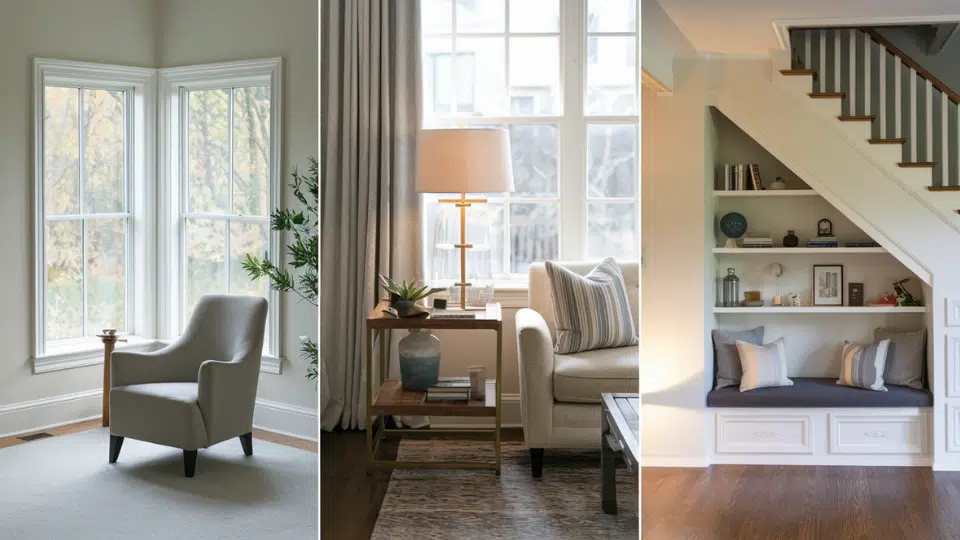
Living rooms often have unused edges that can support a reading nook without disrupting the main layout.
10. The Window-Side Lounge Corner
A chair placed near a window naturally invites reading. Add a small table and light to make it functional at all hours.
This nook benefits from daylight during the day and layered lighting at night. It feels connected to the room but still slightly removed.
The window acts as a natural backdrop, making the nook feel intentional.
11. A Reading Spot That Lives Beside the Sofa
Not every nook needs separation. Sometimes, the end of a sofa paired with a lamp and a small shelf is enough.
This works well for casual reading moments. The key is consistency. Keep the same chair, light, and storage so the spot always feels ready.
It blends into the living room while still offering purpose.
12. The Under-Stairs Reading Hideout
Under-stairs spaces are often wasted. Adding a bench, light, and shelves turns that awkward zone into a standout feature.
The sloped ceiling adds character rather than limitation.
This looks exceptionally well for quiet reading because the space feels naturally enclosed.
Reading Nook Ideas Near Window
Windows bring light, structure, and mood. When used well, they do most of the design work for you.
13. The Built-In Window Seat Moment
A window seat with storage underneath is a classic solution that works in many homes.
It provides seating without blocking light and adds hidden storage.
Cushions and pillows soften the look and invite lingering. This nook feels permanent and polished, even in small rooms.
14. A Dormer Nook That Feels Purpose-Built
Dormers often create awkward geometry. Turning them into reading nooks gives them a function.
Use the shape of the dormer to guide bench depth and shelf placement.
The result feels custom, even if it isn’t. Light from the window keeps the nook from feeling closed in.
15. Layers of Pillows Framed by Light
Sometimes simplicity works best. A few well-chosen pillows and a cushion on a wide sill can create a relaxed nook.
Add a nearby shelf or basket for books. This setup feels casual and flexible, perfect for short reading sessions.
Keeping fabrics light and breathable helps the space stay bright while still feeling comfortable, especially during daytime reading.
Bedroom Reading Nook Ideas
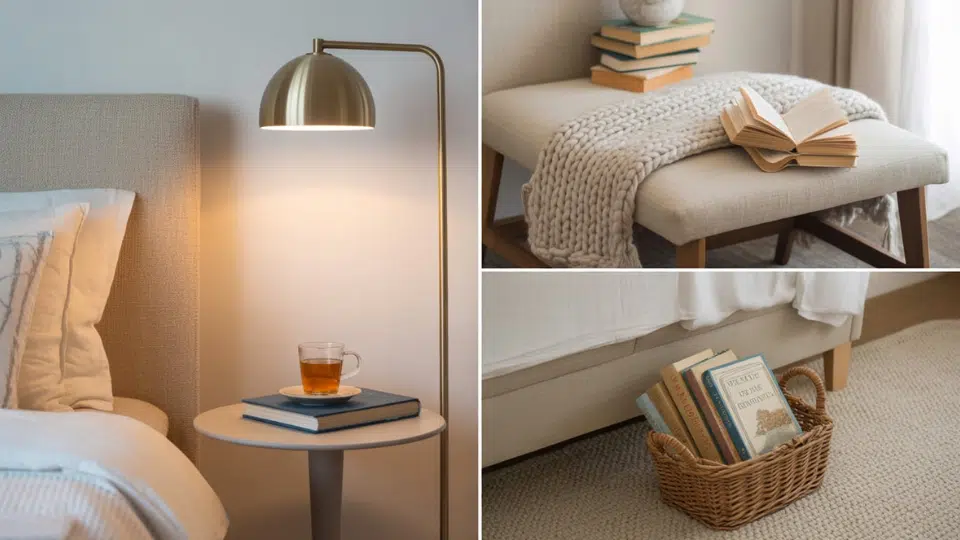
Bedrooms are ideal for reading nooks because they already support rest and quiet.
16. A Bedside Setup That Replaces the Nightstand
Swapping a traditional nightstand for a small chair or narrow bench can completely change how the bedroom feels.
This setup creates a clear reading zone that feels intentional rather than accidental. A floor lamp or wall-mounted light nearby keeps the surface clear and avoids clutter.
This works especially well in bedrooms with extra floor space, where separating sleep and reading helps with winding down.
Keeping books in a slim basket or wall shelf nearby makes the setup functional without crowding the area.
17. The Foot-of-Bed Reading Pause
A chair or bench at the foot of the bed naturally becomes a transition space between rest and activity.
Adding a soft throw and a small basket of books turns it into a simple reading pause without blocking walkways.
This type of nook works because it doesn’t compete with the bed or storage areas.
It’s easy to sit, read a few pages, and move on with the day. Choosing low-profile furniture keeps the space open and balanced.
Conclusion
Reading nooks work best when they feel natural to the home and the people using them.
They don’t need to be perfect or large to be meaningful. A good nook supports comfort, access, and routine.
It gives reading a place to happen instead of being something that floats between rooms.
By working with existing corners, windows, and walls, even small homes can support thoughtful reading spaces.
The key is choosing layouts that fit your habits, not just the room.
If you’ve created a reading nook or are planning one, share what space you’re working with or which idea spoke to you most in the comments.

Alex Guerrero, a graduate with a Fine Arts degree from the Rhode Island School of Design, has been a visionary in the world of color and design for over 15 years. His professional journey began in the heart of the fashion industry in Milan, where he developed an acute sense for color harmonies and trends. Alex joined our team in 2018, offering fresh and innovative perspectives on color utilization in various spaces. Renowned for his ability to blend contemporary trends with timeless elegance. Outside of work, Alex is an accomplished painter and a volunteer art therapist, his artistic talents further enriching his professional insights.