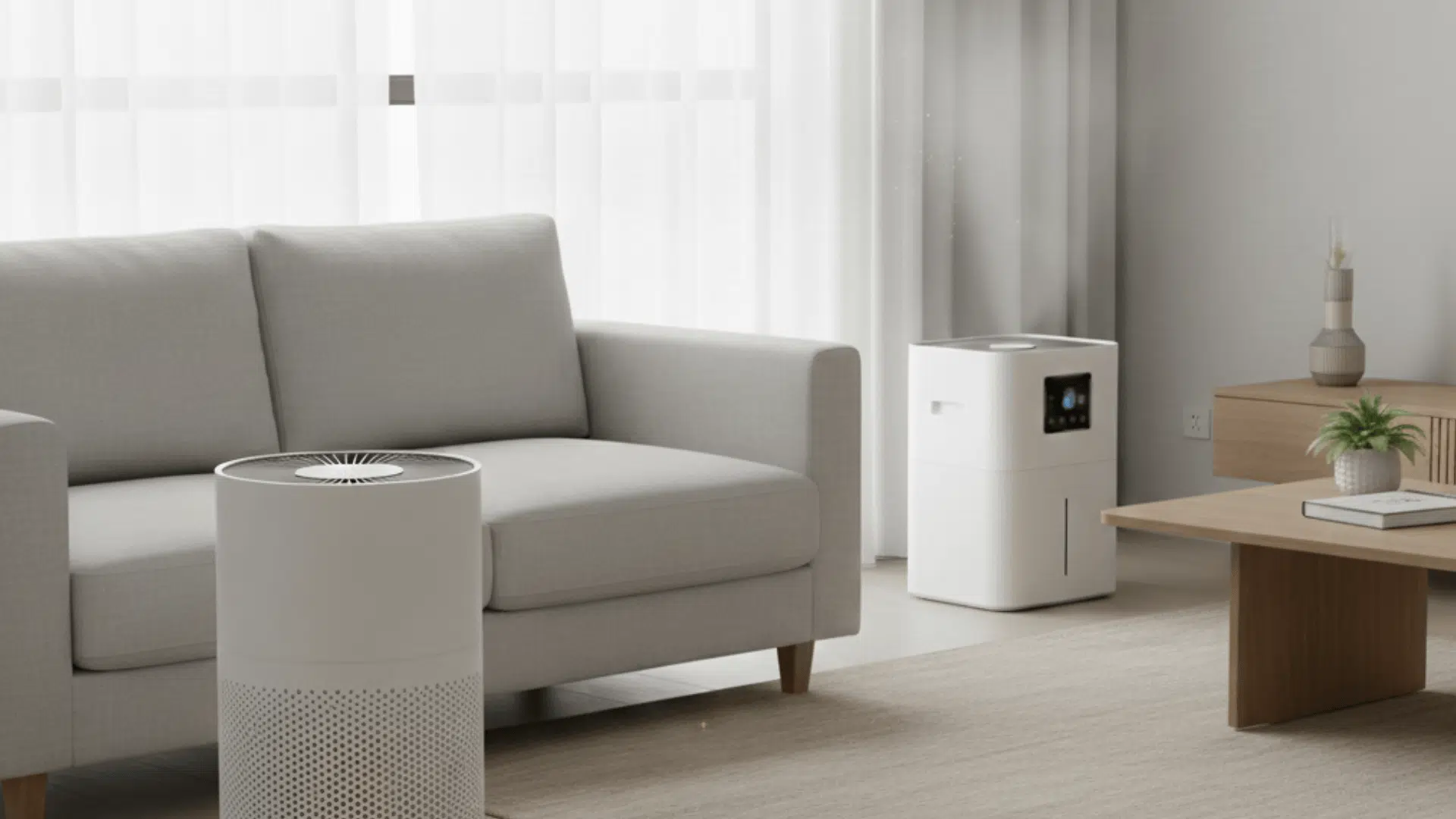

If you’ve been shopping for home air quality solutions, you’ve probably noticed that air purifiers and dehumidifiers are often mentioned in the same breath.
That’s because both promise to improve the environment inside your home, but they tackle completely different problems.
Choosing the wrong one means wasting money on a device that won’t solve your actual issue. An air purifier cleans the air by removing particles like dust, pollen, and smoke.
A dehumidifier controls moisture levels by pulling excess humidity out of the air. Understanding this fundamental difference is the key to making the right purchase.
What Is an Air Purifier?
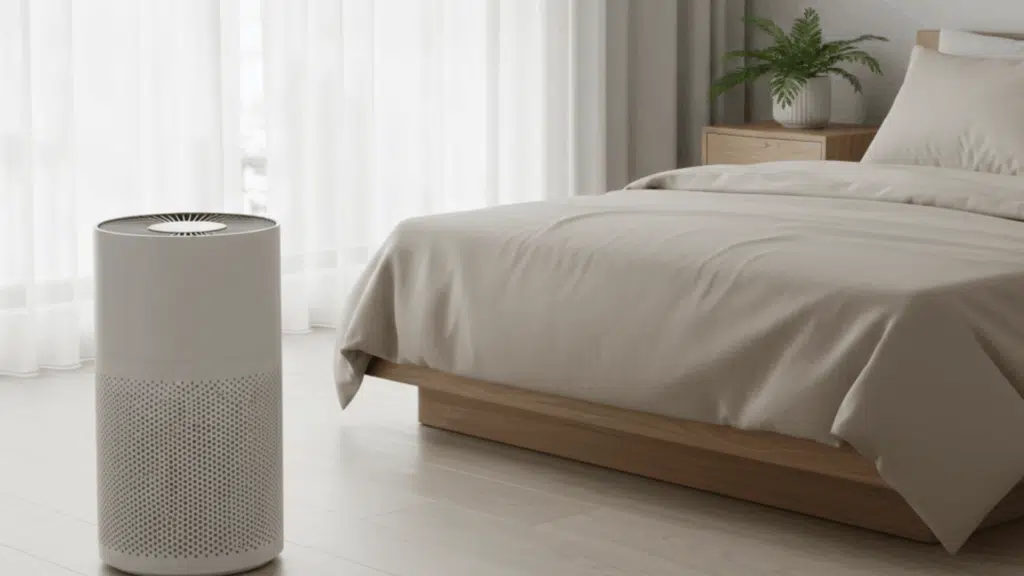
An air purifier is a device designed to remove airborne particles and pollutants from indoor air.
It works by pulling air through a series of filters that trap contaminants before releasing cleaner air back into the room.
The goal is to reduce exposure to irritants, allergens, and harmful particles that can affect respiratory health and overall comfort.
Air purifiers don’t control humidity, temperature, or moisture. They focus solely on filtering out what’s floating in the air.
How an Air Purifier Works
The process is straightforward: air enters the purifier, passes through one or more filters, and exits cleaner than it came in.
Most air purifiers use HEPA (High-Efficiency Particulate Air) filters, which capture at least 99.97% of particles as small as 0.3 microns. This includes dust, pollen, pet dander, and mold spores.
Many models also include activated carbon filters to absorb odors, smoke, and volatile organic compounds (VOCs).
Some units add a pre-filter to catch larger particles like hair and lint before they reach the main filter. Together, these layers work to significantly reduce indoor air pollutants.
When Should You Use an Air Purifier?
Air purifiers are most effective in homes where airborne particles are the main concern.
- If you or someone in your household suffers from allergies or asthma, an air purifier can reduce triggers like pollen, dust mites, and pet dander.
- It’s also helpful for homes with pets, where fur and odors accumulate quickly.
- Smoke, from cooking, cigarettes, or wildfire pollution drifting indoors, is another major reason people invest in air purifiers.
- Homes with poor ventilation, older buildings, or rooms that feel stuffy also benefit from continuous air filtration.
Air purifiers work well in bedrooms, living rooms, and any shared space where people spend significant time.
What Is a Dehumidifier?
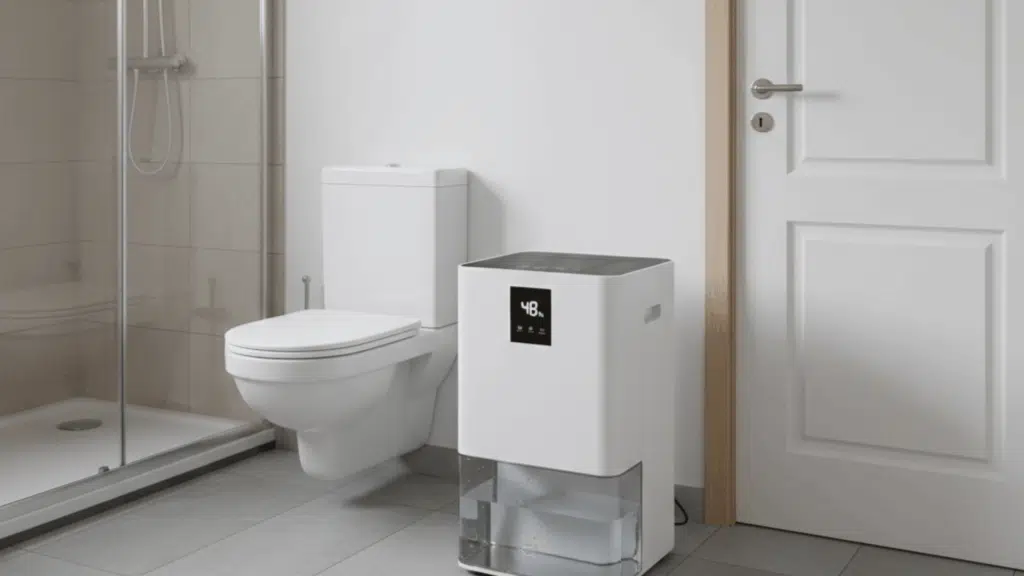
A dehumidifier is a device that removes excess moisture from the air. Its job is to lower humidity levels, making indoor spaces less damp and more comfortable.
High humidity creates conditions where mold, mildew, and dust mites thrive. A dehumidifier helps prevent these issues by keeping moisture in check.
Dehumidifiers don’t filter out dust, allergens, or odors. They only address the water content in the air.
How a Dehumidifier Works
A dehumidifier draws in moist air, cools it down to condense the water vapor, and collects the liquid in a tank or drains it through a hose.
The now-drier air is then released back into the room. This process lowers the relative humidity, which is the amount of moisture present in the air compared to the maximum it can hold at a given temperature.
Ideal indoor humidity levels range between 30% and 50%. Anything above that can make a space feel sticky and create conditions for mold growth.
A dehumidifier keeps humidity within this healthy range.
When Should You Use a Dehumidifier?
Dehumidifiers are essential in damp environments. Basements, crawl spaces, and bathrooms are common trouble spots where moisture accumulates.
- If you notice condensation on windows, peeling paint, or water stains on walls, those are signs of excess humidity.
- Mold and mildew are direct consequences of high moisture levels. A dehumidifier prevents these growths by removing the humidity they need to survive.
- People living in humid climates or regions with heavy rainfall often run dehumidifiers year-round to maintain comfort.
Seasonal use is common in other areas, particularly during summer months when humidity spikes.
Air Purifier vs Dehumidifier: Key Differences
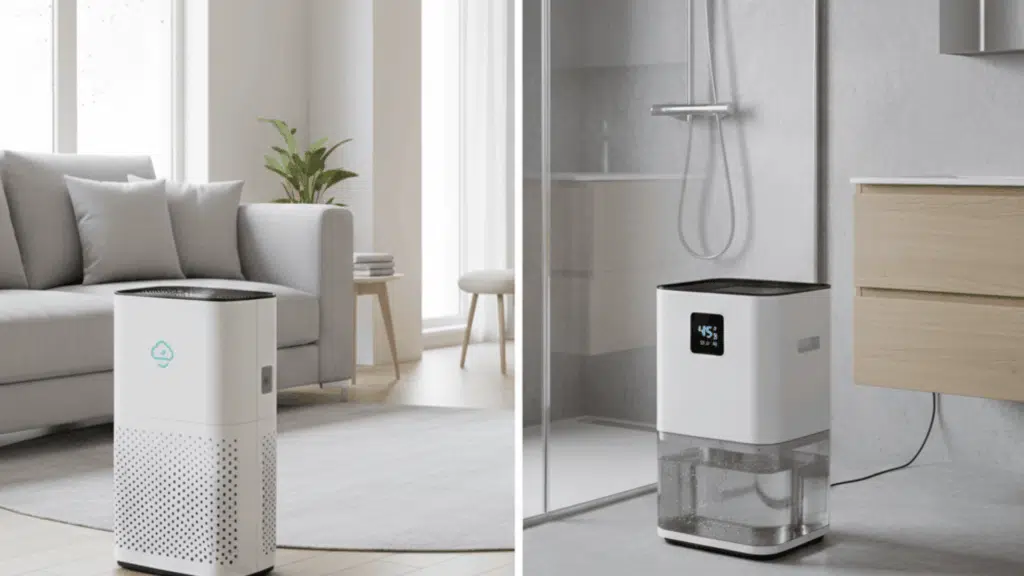
The primary difference is purpose. An air purifier improves air quality by removing particles. A dehumidifier improves comfort by reducing moisture. Here’s how they compare side by side:
| Feature | Air Purifier | Dehumidifier |
|---|---|---|
| Primary Purpose | Removes airborne particles and pollutants | Reduces excess moisture in the air |
| What It Removes | Dust, pollen, pet dander, smoke, odors, mold spores | Water vapor and humidity |
| Best For | Allergies, asthma, smoke, pet odors | Damp spaces, mold prevention, musty smells |
| Effect on Mold | Captures airborne spores | Prevents growth by removing moisture |
| Maintenance | Filter changes every few months | Empty water tank, occasional coil cleaning |
| Energy Use | Generally lower | Higher due to the cooling process |
| Ideal Placement | Bedrooms, living rooms, shared spaces | Basements, bathrooms, humid areas |
Which One Is Better for Your Specific Needs?
The right choice depends entirely on your main issue.
- For allergies or asthma: An air purifier is the better option since it removes airborne irritants like pollen, dust mites, and pet dander that trigger symptoms.
- For mold concerns: A dehumidifier is more effective at prevention by eliminating the moisture mold needs to grow, though you’ll need to address any existing mold first.
- For pet owners: Air purifiers capture dander and reduce odors, but if your home also has a damp basement or high humidity, add a dehumidifier to the mix.
- For basement or crawl space issues: A dehumidifier is almost always necessary since these areas tend to be damp and poorly ventilated.
- For high-humidity climates: A dehumidifier maintains comfort and prevents mold, though you may want to add an air purifier if outdoor pollution or allergens are also concerns.
- For smoke or urban pollution: An air purifier with a carbon filter is the clear choice since smoke particles and odors require filtration, not moisture control.
In many cases, one device is enough. But if you’re dealing with both poor air quality and excess moisture, using both together provides the most complete solution.
Can You Use an Air Purifier and Dehumidifier Together?
These devices complement each other because they address different problems. Running both simultaneously won’t cause interference.
In fact, the combination can be highly effective in homes with multiple environmental issues.
For example, a damp basement with poor ventilation benefits from a dehumidifier to control moisture and an air purifier to filter out dust and musty particles.
Homes in humid regions with seasonal allergies often need both to maintain comfort and air quality.
Placement matters. Keep devices in areas where they’re most needed and ensure adequate airflow around each unit. Avoid placing them too close together to prevent restricted air circulation.
What to Consider Before Buying
Room size is critical. Both air purifiers and dehumidifiers are rated for specific square footage. Choosing a unit that’s too small for your space reduces effectiveness.
Maintenance requirements vary. Factor in the cost and frequency of filter replacements for air purifiers, or the hassle of emptying water tanks for dehumidifiers. Some dehumidifiers offer continuous drainage options, which reduce upkeep.
Noise levels can be a dealbreaker, especially for bedrooms. Check decibel ratings and user reviews before purchasing.
Energy consumption impacts long-term costs. Energy-efficient models may cost more upfront but save money over time.
Consider climate and seasonal use. Some homes need year-round operation, while others only require a device during specific months.
Making the Right Choice
The decision between an air purifier and a dehumidifier comes down to one simple question: are you dealing with airborne particles or excess moisture?
If allergies, smoke, odors, or dust are your main concerns, an air purifier is the answer.
If dampness, mold, or high humidity is the problem, a dehumidifier is what you need. Understanding this core difference ensures you invest in the right tool for the job.
Assess your home’s specific issues before making a purchase, and remember that in some cases, using both devices together provides the most complete solution for a healthier, more comfortable indoor environment.

Holding a Master’s in Library and Information Science from the University of Illinois, Josh Clarke has dedicated more than 15 years to managing and disseminating information across various platforms. His professional journey includes significant experience as a research librarian, where he developed an expertise in sourcing and providing accurate and comprehensive answers to diverse questions. In 2018, Josh brought his rich experience to our platform, quickly establishing himself as a reliable source for general FAQs. He has been overseeing our information curation since then, combining his research skills with a flair for engaging content delivery. When not involved in information management, Josh enjoys exploring digital photography and participating in local quiz competitions, hobbies that complement his inquisitive nature and love for learning.