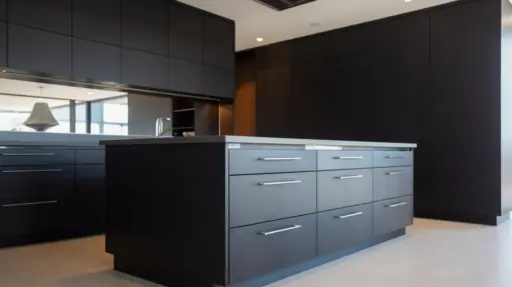

An all-black kitchen stands out because it feels bold, clear, and well-defined.
It does not rely on bright colors or heavy decoration. Instead, a black kitchen depends on layout, texture, and lighting to shape the space.
When planned well, a modern black kitchen can feel organized rather than dark. Every choice matters.
Cabinet finishes, flooring, storage placement, and lighting zones all work together to control how the room looks and functions.
Small design decisions make a big difference here. This list brings together practical all-black kitchen ideas that show how dark kitchens can stay balanced, usable, and visually consistent while supporting everyday cooking and movement.
All Black Kitchen Ideas for a Modern and Functional Black Kitchen
An all-black kitchen combines layout planning, material selection, and lighting design to create a modern black kitchen that remains practical, cohesive, and visually balanced across different space sizes.
1. Matte Black Cabinets with Minimal Hardware
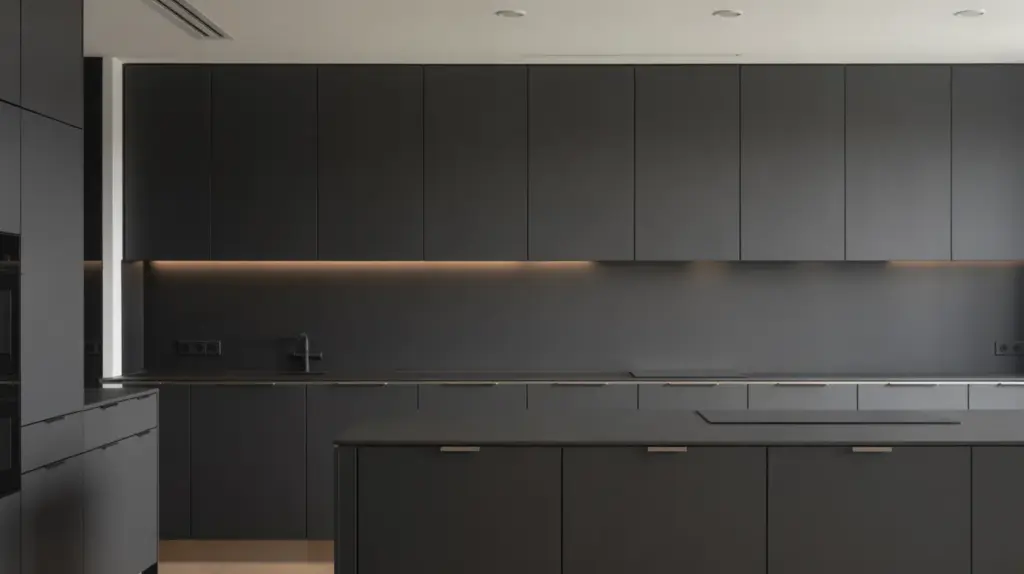
Matte black cabinets create a grounded base for an all-black kitchen.
The soft finish absorbs light rather than reflecting it, which helps reduce glare from overhead lighting.
Minimal or concealed hardware allows cabinet fronts to appear continuous.
This design choice supports a calm and structured black kitchen layout. It also helps keep attention on form rather than decorative detail.
2. Glossy Black Cabinets for Light Interaction
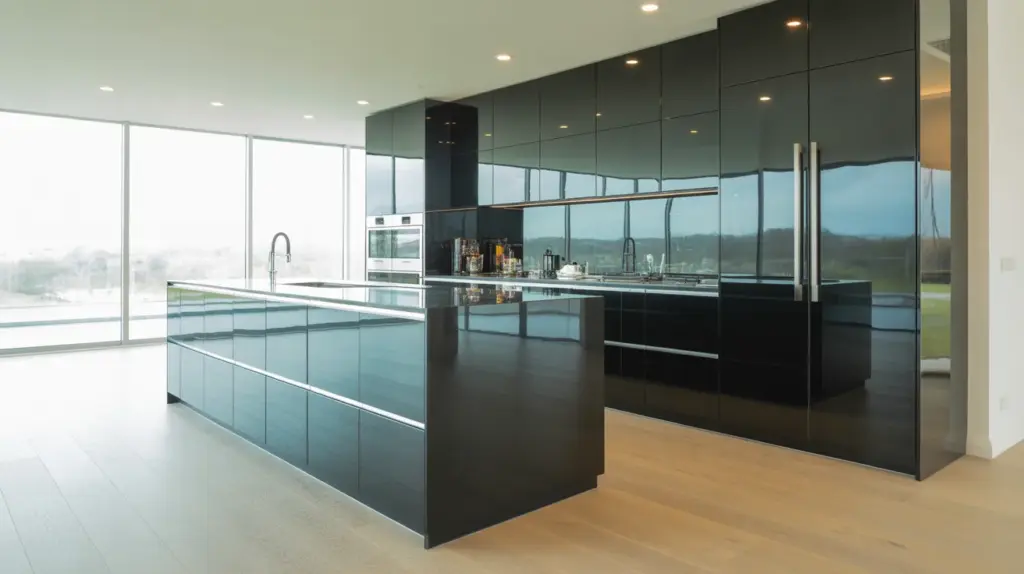
Glossy surfaces reflect surrounding light sources, helping darker kitchens feel more open. In a modern black kitchen, this finish adds visual movement without introducing contrasting colors.
Reflections from windows and lighting fixtures prevent the space from appearing flat. The finish works best in well-lit areas. Cleaning routines often become part of the design consideration.
3. Black Cabinets with Seamless Black Countertops
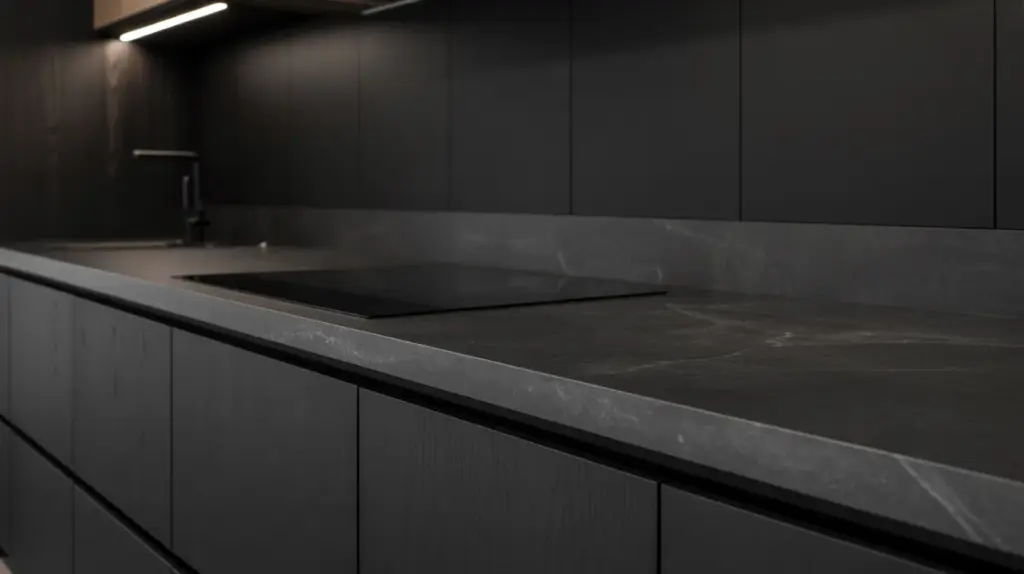
Matching black cabinets with black countertops creates a unified surface across the kitchen.
This approach emphasizes shape and proportion over color separation.
Material texture becomes the primary source of variation. Stone, quartz, or composite materials help define edges subtly. The result is a controlled and cohesive black kitchen environment.
4. Integrated Appliances Black Kitchen
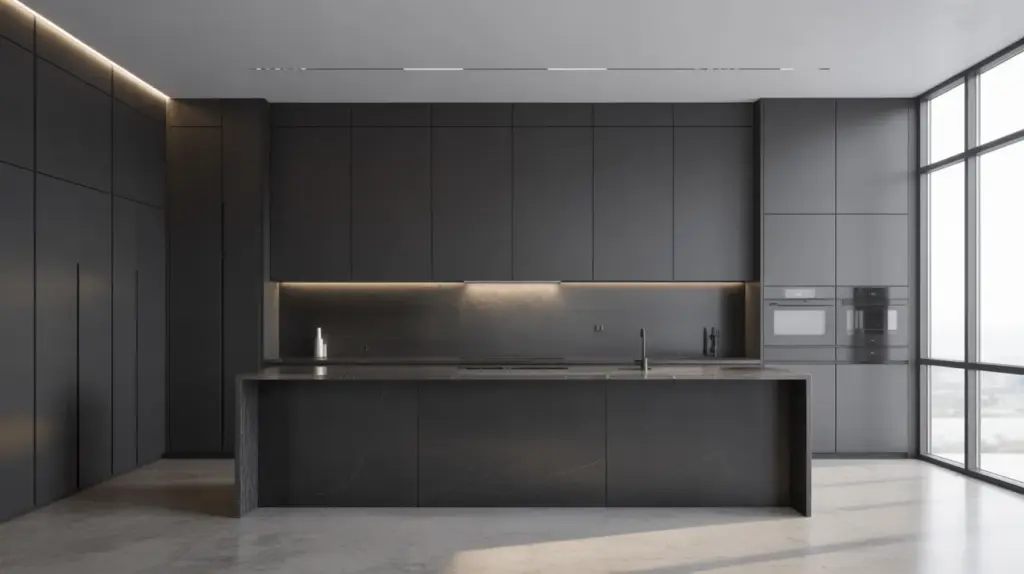
Integrated appliances support uninterrupted cabinet lines. Black appliances blend into surrounding panels, reducing visual clutter.
This design approach reinforces balance in an all-black kitchen. It also allows appliances to function without becoming focal points.
The kitchen maintains a furniture-like appearance.
5. Layered Lighting Strategy
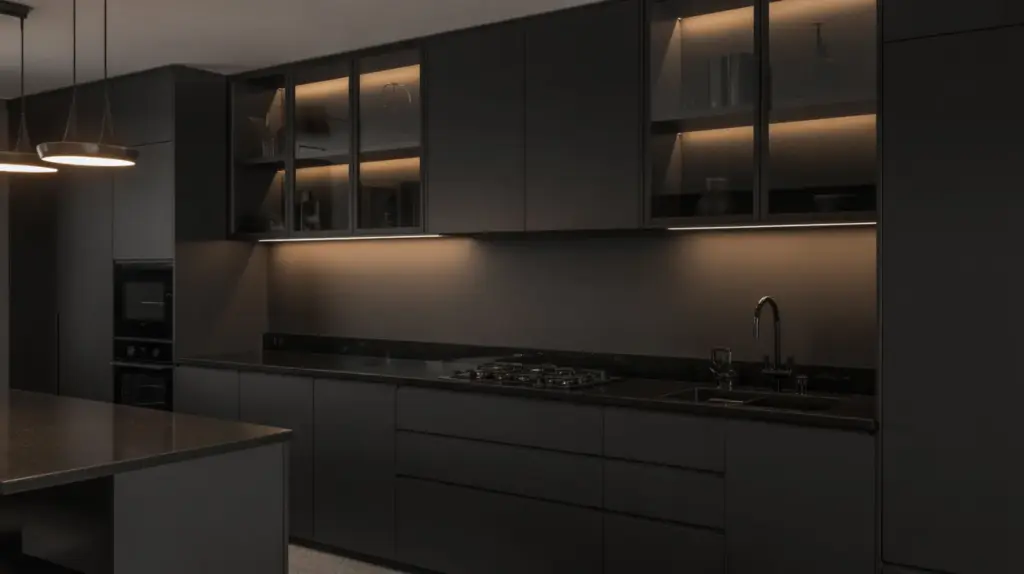
Lighting defines usability in an all-black kitchen. Task lighting ensures work surfaces remain visible.
Ambient lighting establishes overall brightness. Accent lighting highlights architectural features and storage areas.
Together, these layers prevent the space from feeling heavy. Lighting placement becomes as important as fixture selection.
6. Handleless Cabinet Designs
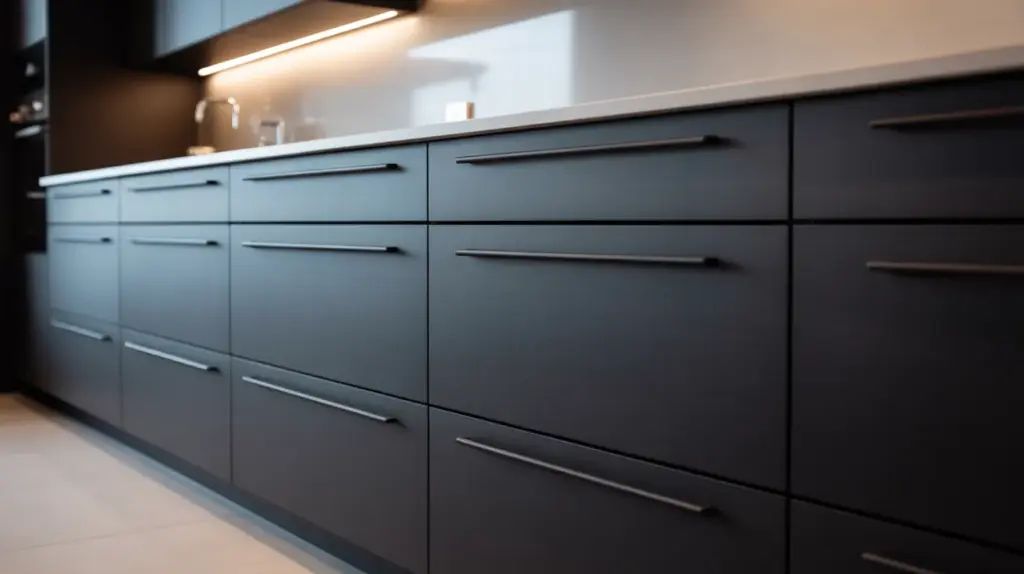
Handleless cabinets support clean geometry. Recessed channels or push mechanisms allow surfaces to remain flat.
This design works especially well in a modern black kitchen focused on simplicity. Visual interruptions are minimized. The cabinetry reads as a single structured unit.
7. Black Marble Countertops with Depth
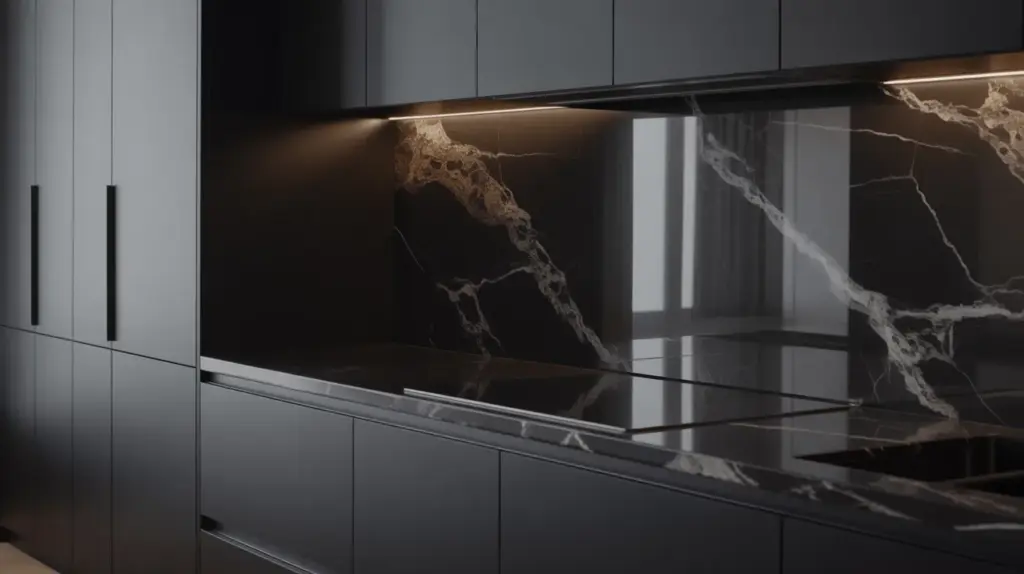
Black marble adds natural movement through veining patterns.
Each slab introduces variation without breaking the color theme. This material suits an all-black kitchen that values subtle detail.
The surface often becomes a focal element through texture alone. Proper sealing helps preserve appearance.
8. Open Shelving in Black Kitchens
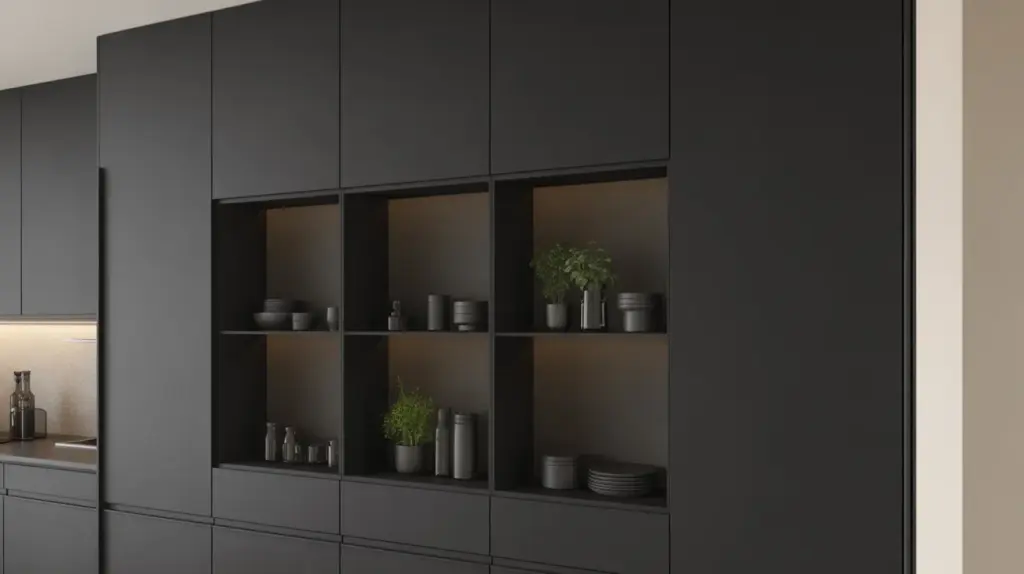
Open shelving introduces breathing space between cabinets. Black shelves maintain tonal consistency while allowing negative space.
This helps prevent the kitchen from feeling enclosed. Items placed on shelves should remain intentional. Balance is key in this setup.
9. Industrial Influences in Black Kitchen Design
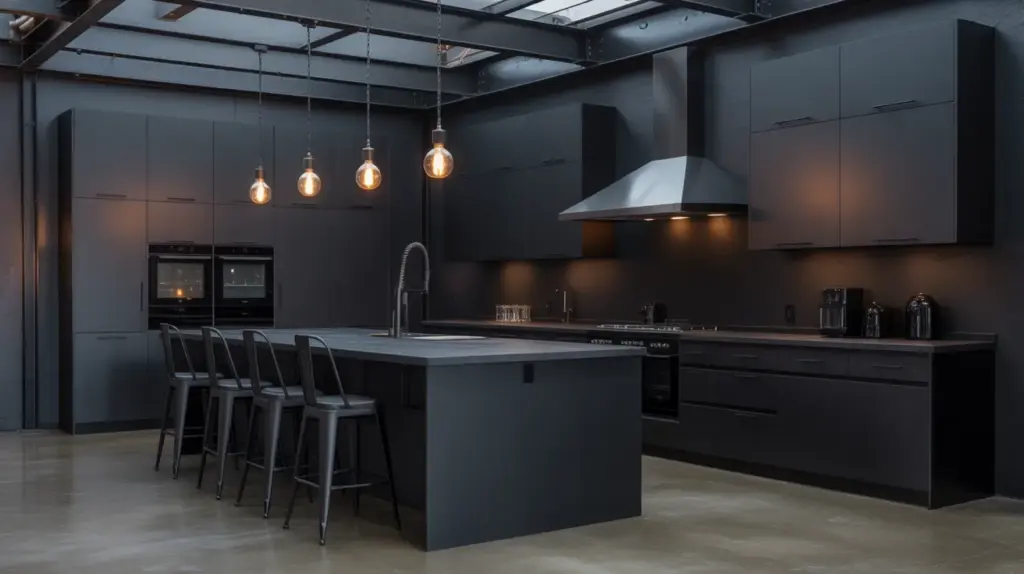
Industrial elements add strength to black kitchen interiors. Concrete, steel, and exposed fixtures pair well with dark cabinetry.
These materials add contrast through texture. The overall layout remains structured and practical.
Industrial details support durability and function.
10. Waterfall Island as a Central Feature
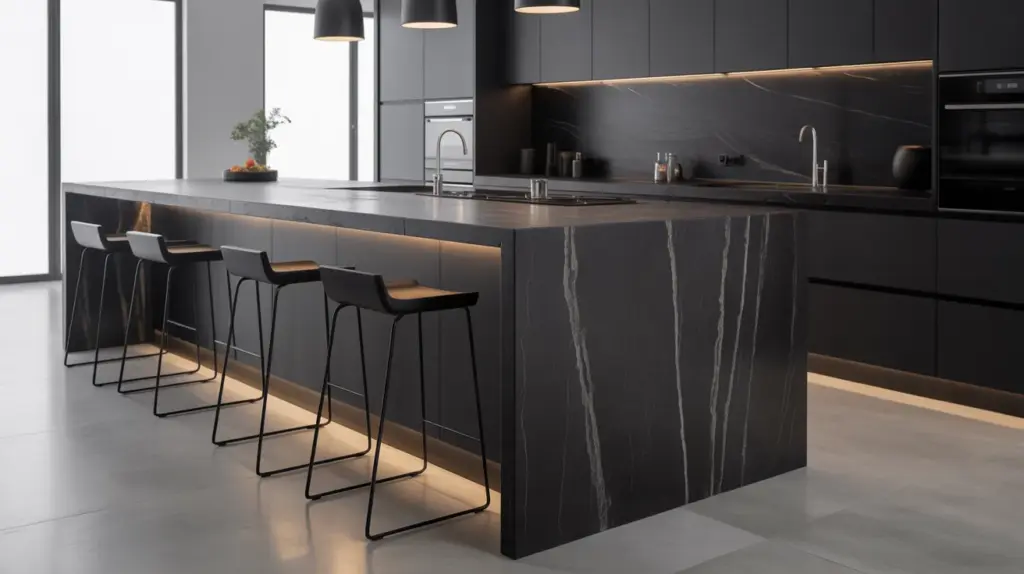
A waterfall island extends the countertop vertically. This creates a solid block-like presence in the kitchen.
Black stone enhances the architectural effect. Storage and seating integrate seamlessly.
The island often becomes the visual anchor of the modern black kitchen.
11. Textured Cabinet Surfaces

Texture prevents large black surfaces from appearing flat. Wood grain, ribbed panels, or brushed finishes add dimension.
These details remain subtle yet effective. Texture becomes the main design feature.
The all-black kitchen stays visually engaging without added color.
12. Statement Lighting Fixtures
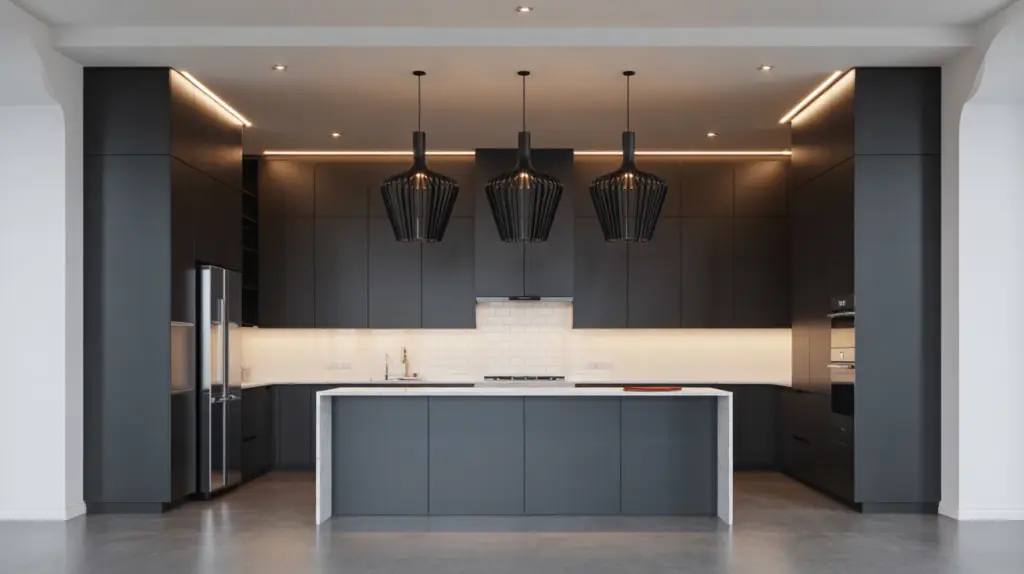
Lighting fixtures help define zones within the kitchen. Black metal or linear designs maintain consistency.
Placement influences both function and appearance. Fixtures often serve as visual markers above islands or dining areas. Scale and proportion remain important.
13. Floor-to-Ceiling Cabinetry
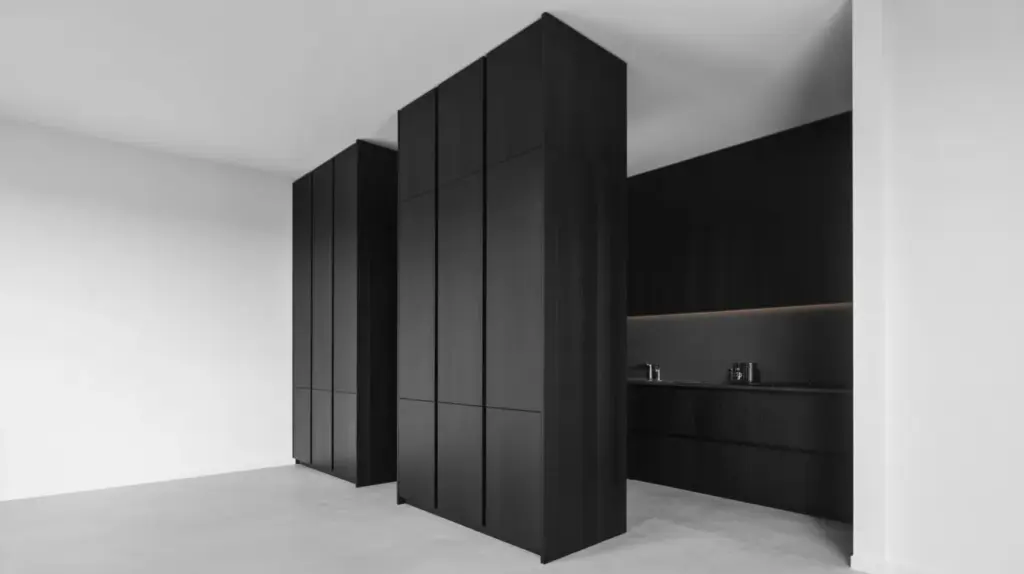
Tall cabinets maximize storage and reduce visual breaks.
This design emphasizes vertical lines. In an all-black kitchen, continuous cabinetry creates a clean envelope.
Upper storage remains discreet. The kitchen feels organized and efficient.
14. Hidden Pantry Integration
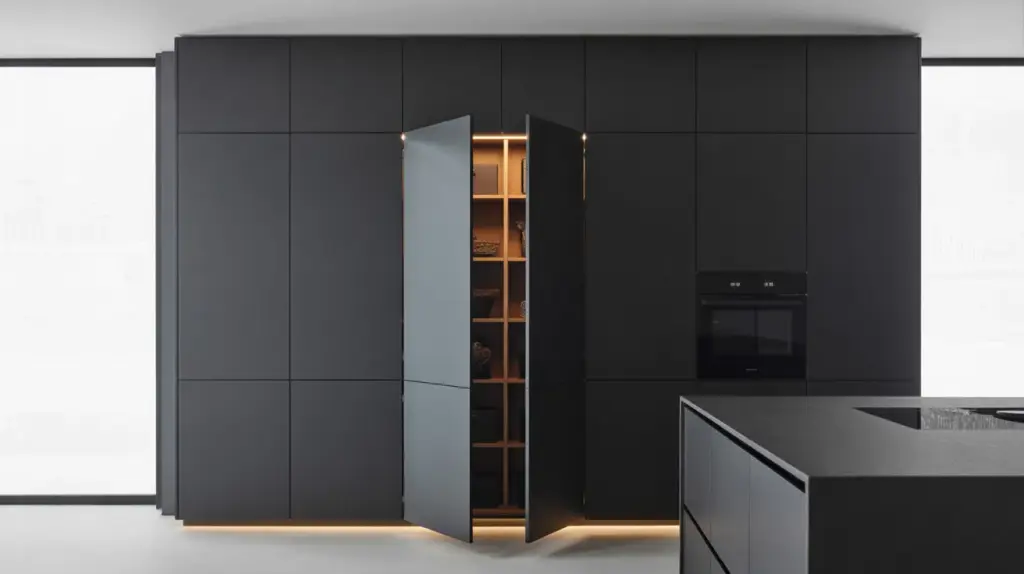
A concealed pantry blends into surrounding cabinetry. Flush doors preserve uniformity.
Storage remains accessible without altering the visual layout. This feature supports a modern black kitchen focused on order.
Interior organization enhances usability.
15. Coordinated Black Sinks and Faucets
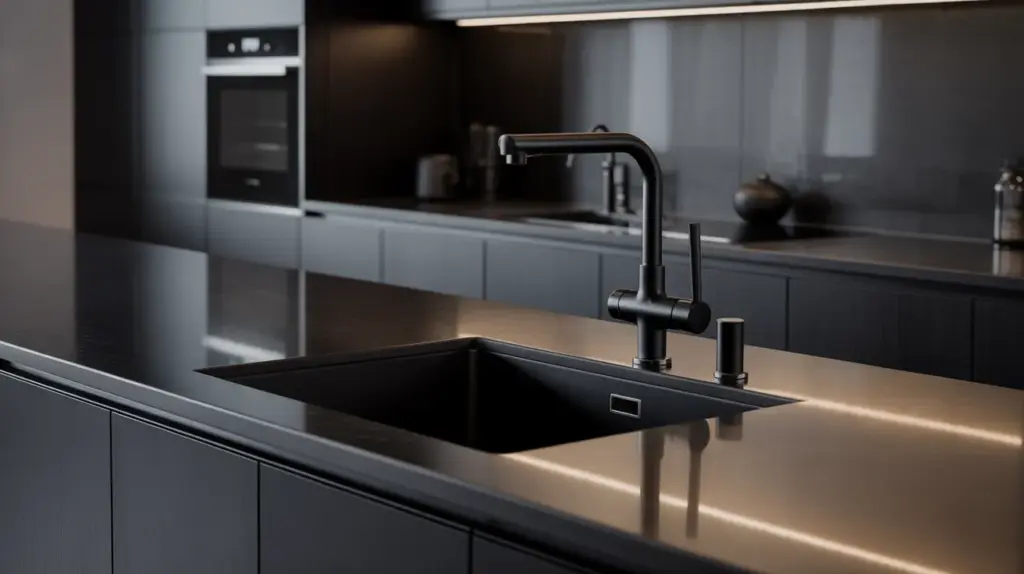
Black sinks and faucets reinforce color consistency. Matte finishes reduce reflections and marks.
These fixtures blend naturally with countertops and cabinetry. Functional elements remain visually quiet. Durability influences long-term performance.
16. Minimal Black Backsplash
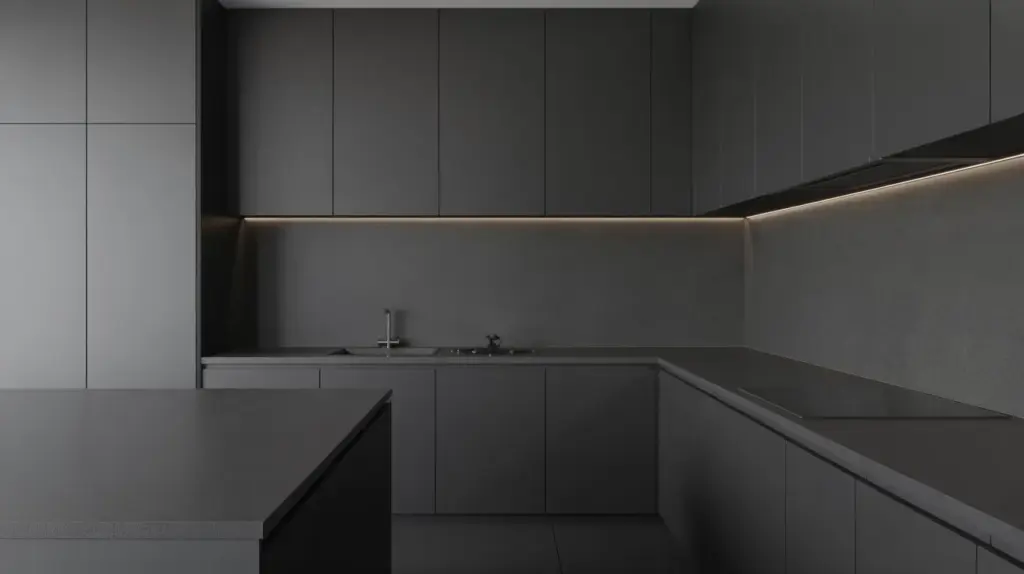
A minimal backsplash supports continuity. Slab stone or seamless panels reduce visual noise.
The backsplash acts as a backdrop rather than a feature. This suits an all-black kitchen where structure leads design.
Grout lines are often minimized or removed.
17. Mixed Materials in a Black Palette
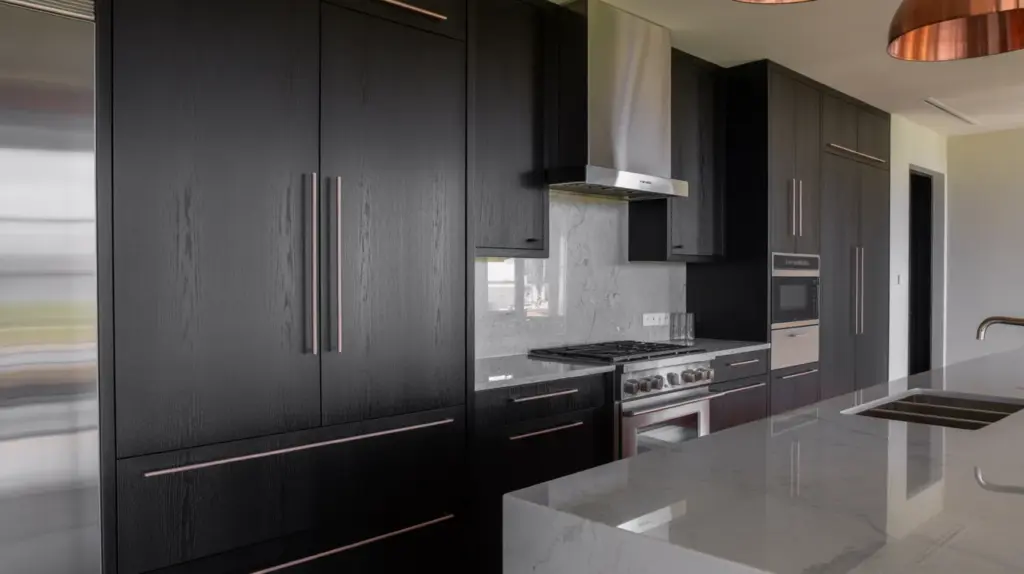
Combining materials adds depth within a single color scheme.
Wood, metal, and stone reflect light differently. This variation prevents monotony. Material contrast replaces color contrast.
The black kitchen remains layered and intentional.
18. Built-In Seating Solutions
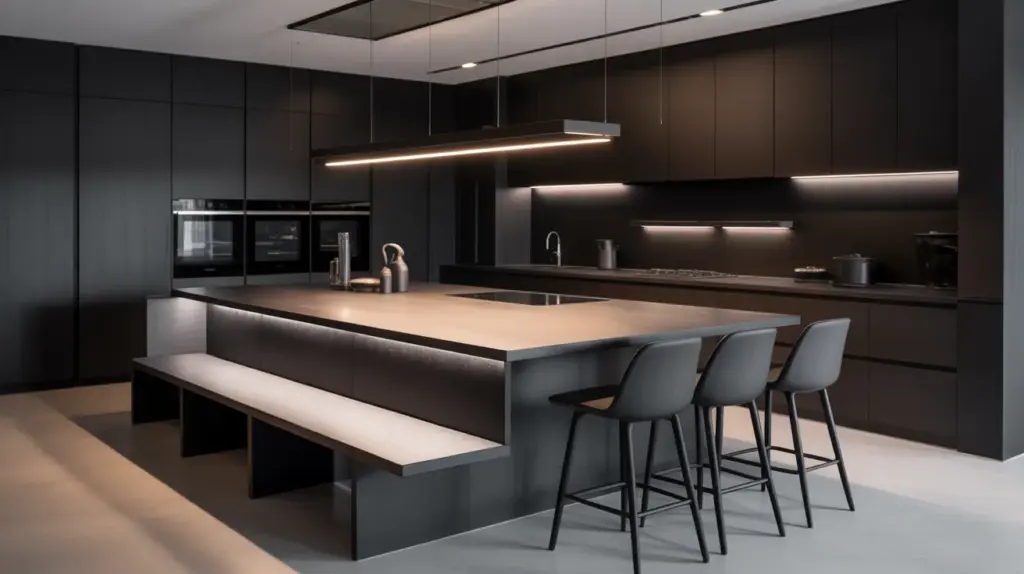
Integrated seating supports open-plan kitchens. Black benches or stools align with cabinetry.
This keeps transitions smooth between zones. Upholstery textures soften hard surfaces. Seating remains functional and cohesive.
19. Smart Storage Planning
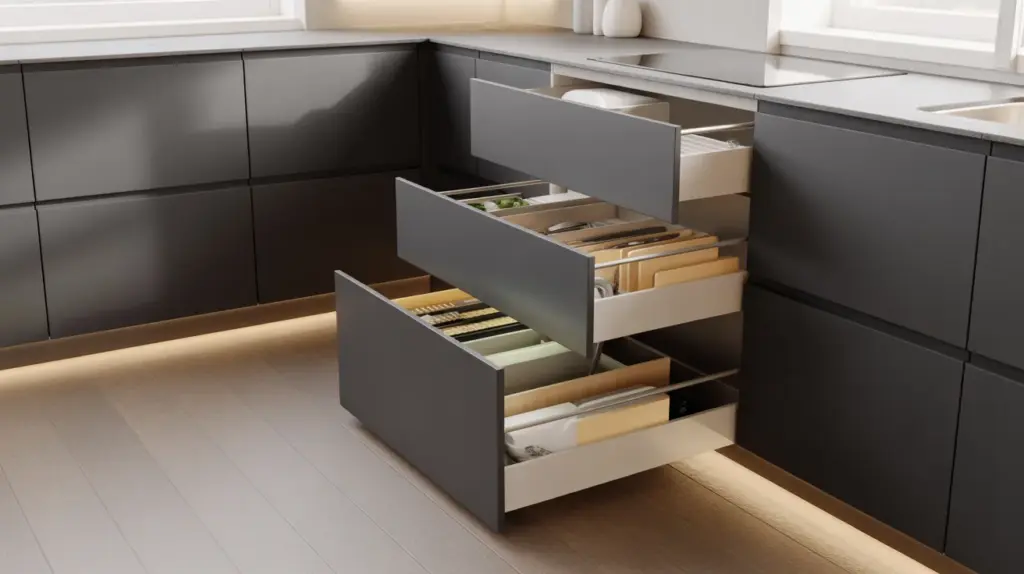
Efficient storage enhances everyday use. Drawer systems, pull-outs, and corner units improve access.
Organization remains hidden behind clean surfaces. A functional black kitchen balances design and practicality. Internal fittings support workflow.
20. Matte Flooring Choices
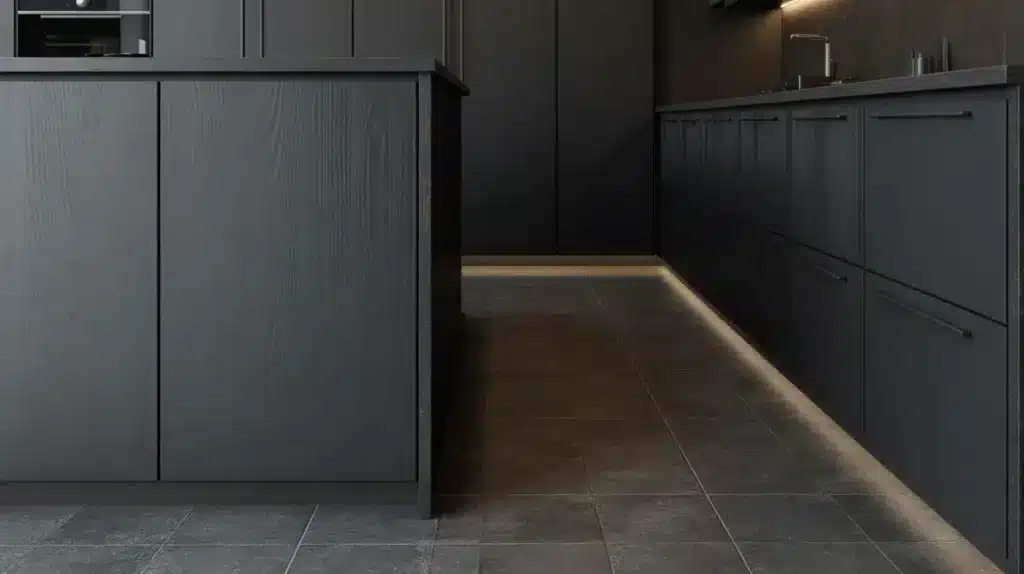
Matte flooring anchors the space visually and prevents excessive reflection. Dark tones support the all-black kitchen theme without competing with the cabinetry.
A matte surface helps ground the overall layout. Texture adds grip and definition, especially in high-use zones.
Flooring connects cabinetry and islands into a single visual plane. It also supports smooth transitions across open layouts.
Durability remains a priority, particularly in kitchens with heavy daily use.
21. Glass Cabinet Doors
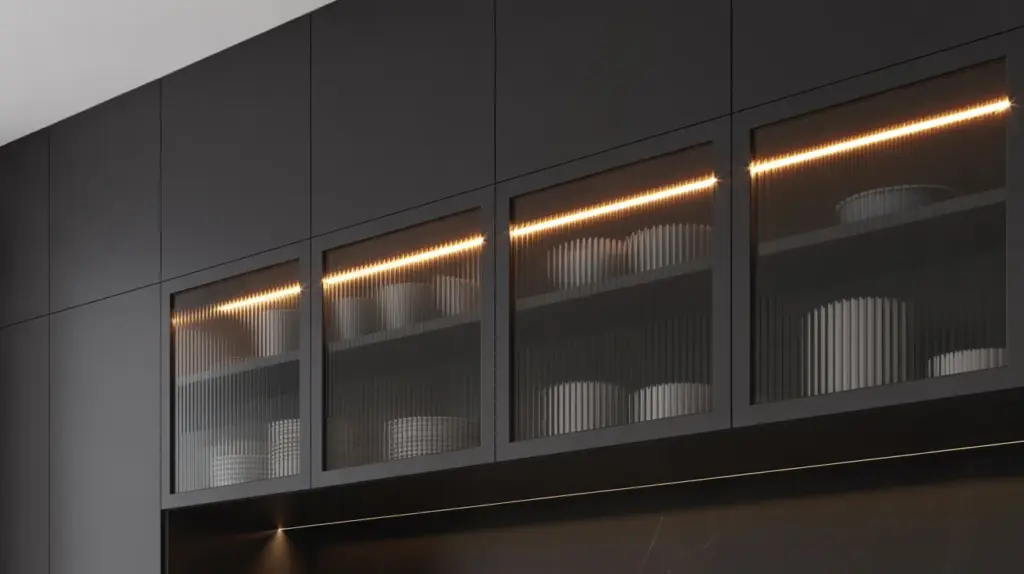
Dark-tinted glass introduces controlled transparency within a black kitchen. This reduces visual weight across large cabinet walls.
Interior lighting highlights stored items subtly without turning them into focal points.
Glass doors work well for display sections or upper cabinets. They help break up solid surfaces while maintaining tonal consistency.
The all-black kitchen remains cohesive and balanced. Placement is often limited to avoid overexposure.
22. Linear Kitchen Layouts
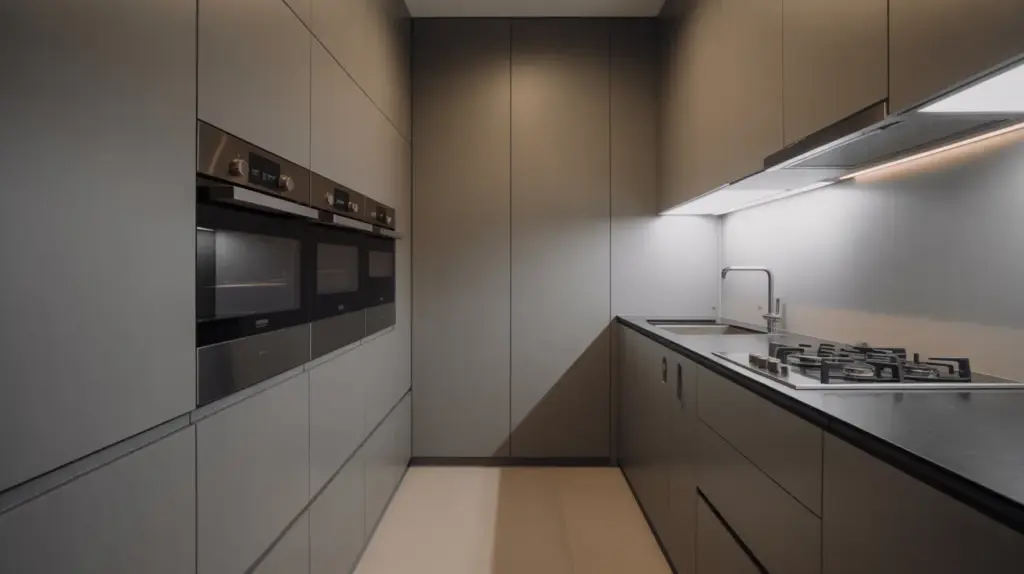
Straight-line layouts simplify movement and improve efficiency. Appliances and storage align along one wall, creating a clear workflow.
This layout suits compact spaces and narrow floor plans. The black kitchen feels controlled and intentional.
Visual flow remains uninterrupted across surfaces. Linear layouts also reduce visual clutter. Storage planning becomes essential to maintain functionality.
23. Concealed Ventilation Systems
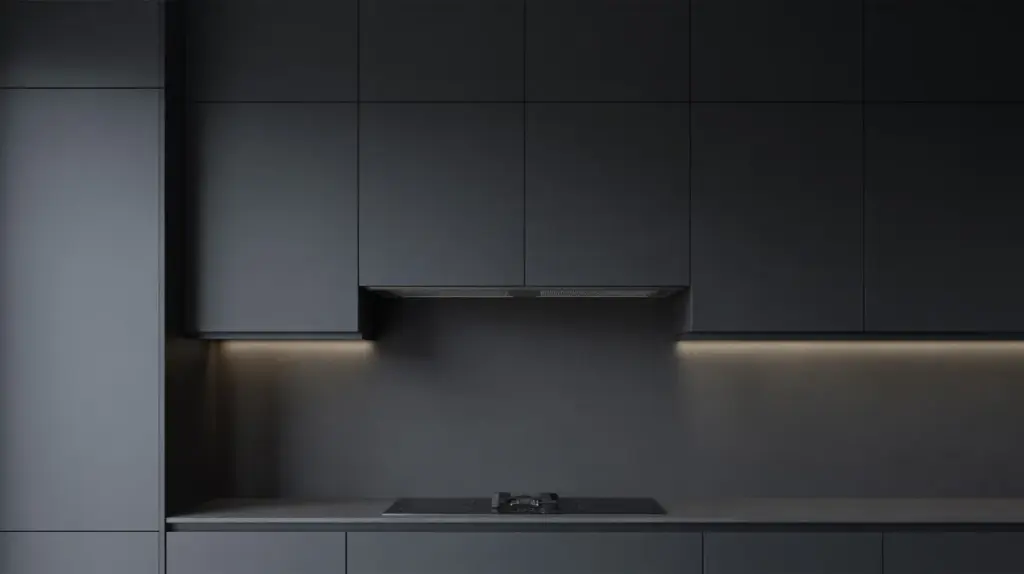
Hidden range hoods maintain cabinet symmetry across cooking zones. Integrated designs avoid bulky elements interrupting the layout.
Ventilation remains effective without becoming visually dominant. This approach supports minimalist black kitchen designs.
Cabinet lines stay continuous. Performance requirements are addressed discreetly. Function supports form without compromise.
24. Monochrome Decorative Elements
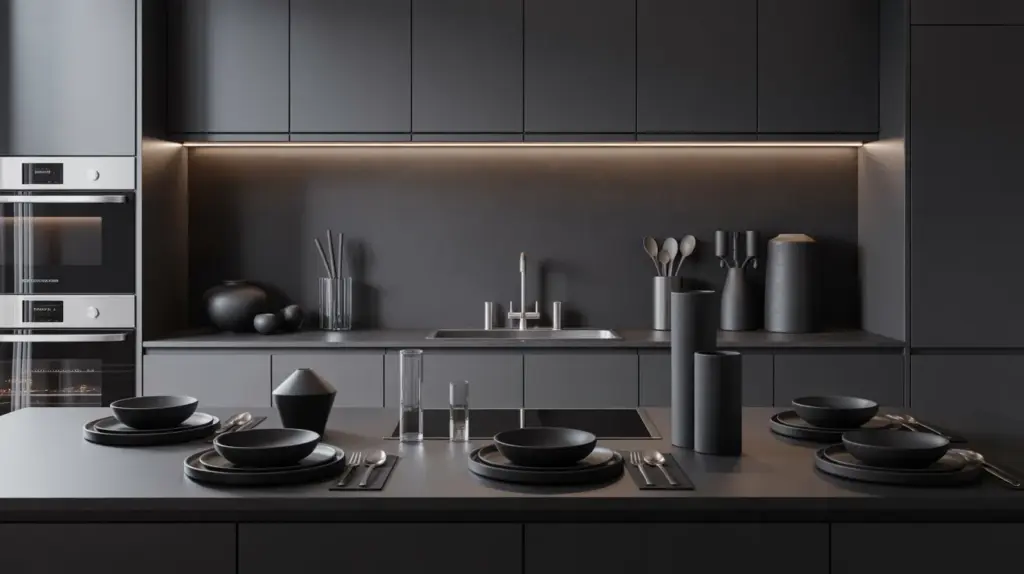
Accessories remain within the black spectrum to preserve consistency. Variations in sheen introduce subtle contrast without color change.
Decorative restraint maintains balance throughout the space. The focus stays on materials and layout rather than ornamentation.
Small details, such as trays or containers, support cohesion. Placement remains intentional. Overuse is generally avoided.
25. Island-Based Storage
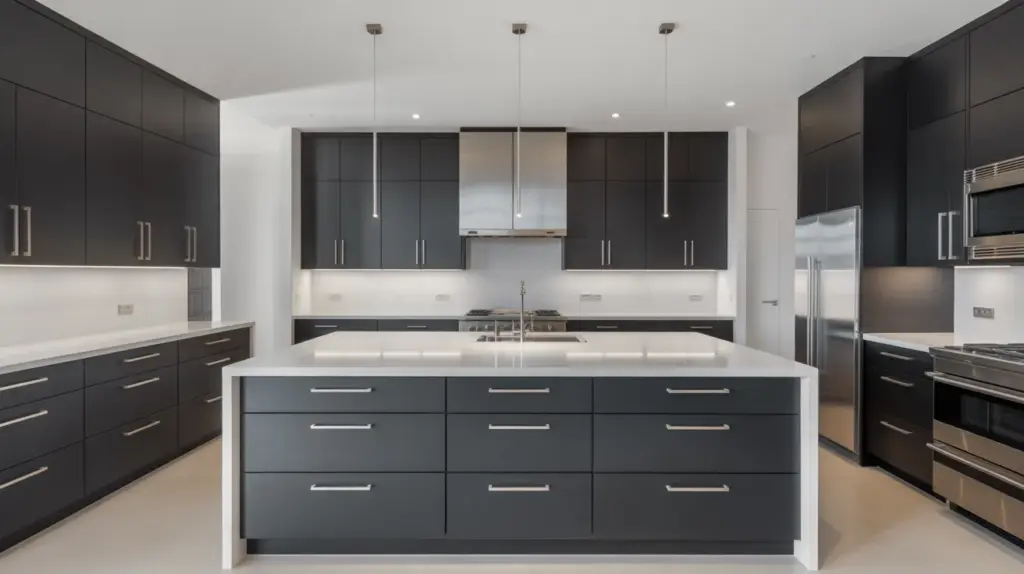
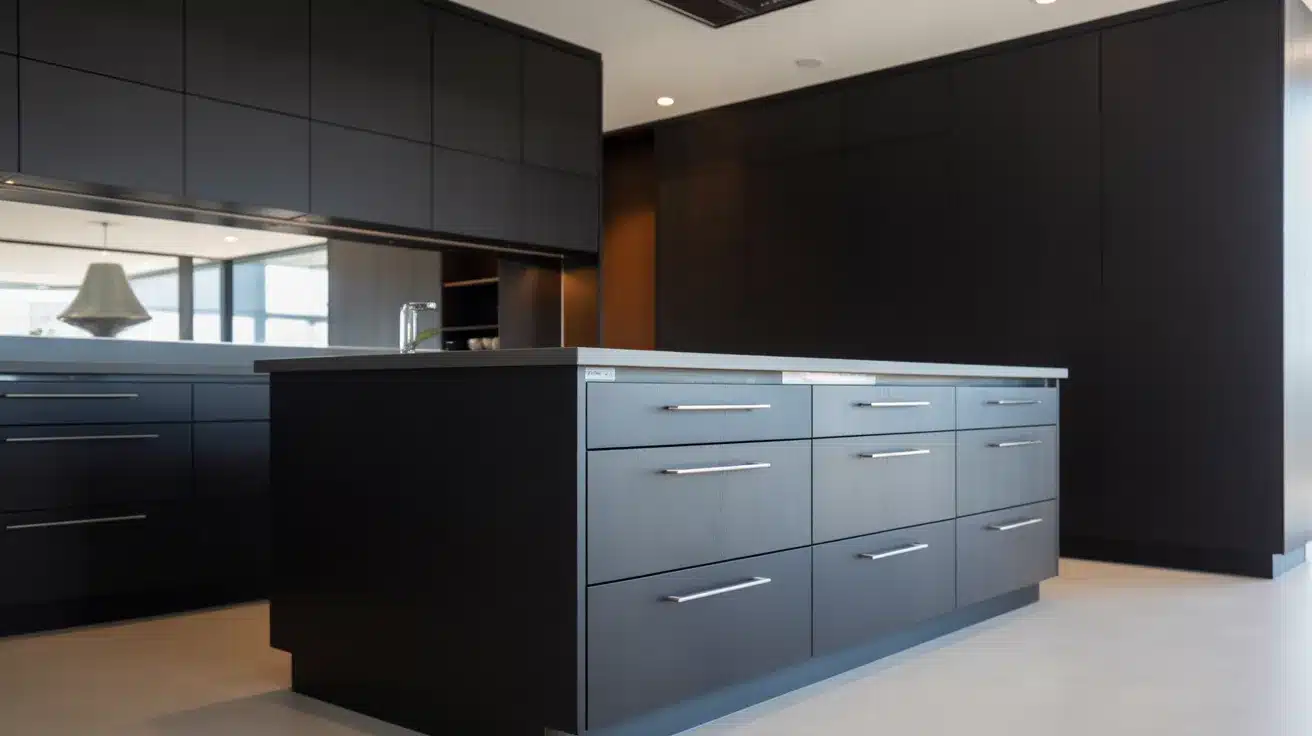
Islands often replace upper cabinetry in modern layouts. Storage built into the island reduces wall clutter and opens up sightlines.
This keeps the black kitchen visually lighter. Drawers improve accessibility and organization.
Islands support preparation, seating, and storage simultaneously. They act as a central functional zone. Proper planning ensures efficiency.
26. Flush Toe Kick Design
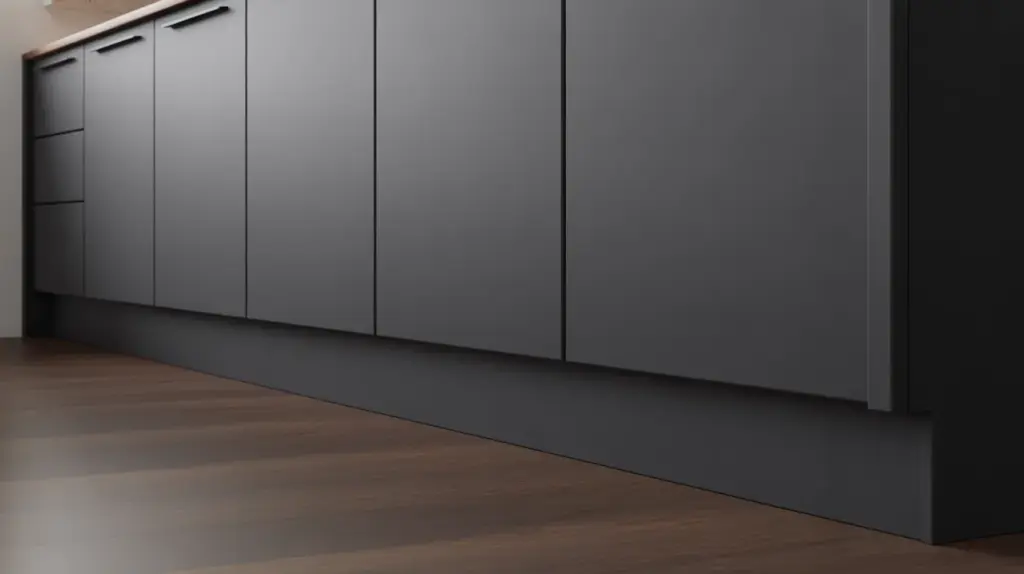
Flush toe kicks align cabinetry directly with the floor plane. This detail enhances continuity across base units.
Shadows are minimized, creating a cleaner baseline. The cabinetry reads as a single block. This supports a modern black kitchen aesthetic.
Small alignment details contribute to overall cohesion. Consistency becomes noticeable over time.
27. Built-In Beverage Stations
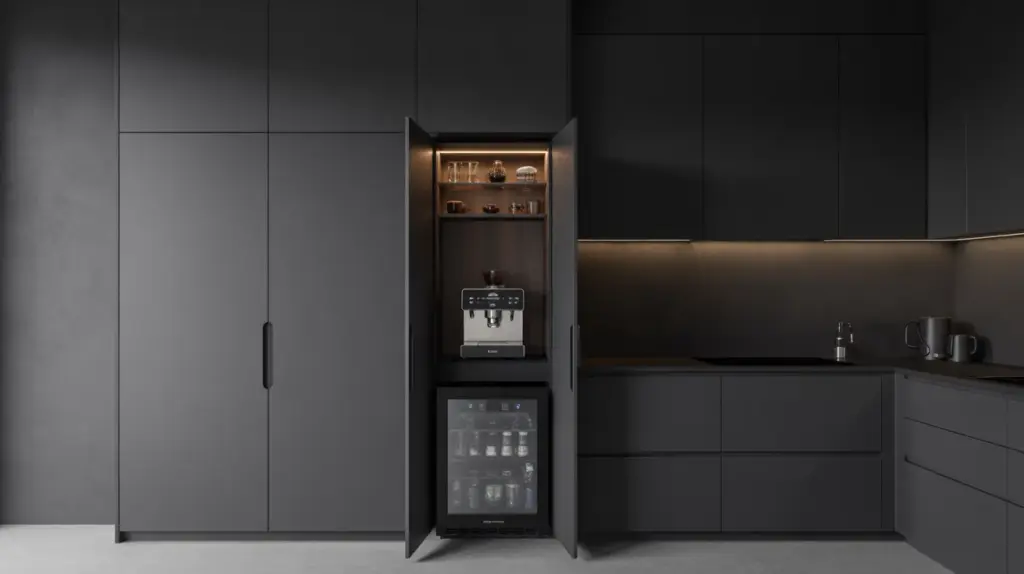
Dedicated beverage stations improve daily workflow. Concealed designs allow these areas to blend into surrounding cabinetry.
Coffee and beverage equipment remain accessible without disrupting the layout. Lighting supports visibility and ease of use.
The all-black kitchen remains uncluttered. These stations often sit outside main prep zones. Functionality remains discreet.
28. Vertical Panel Accents
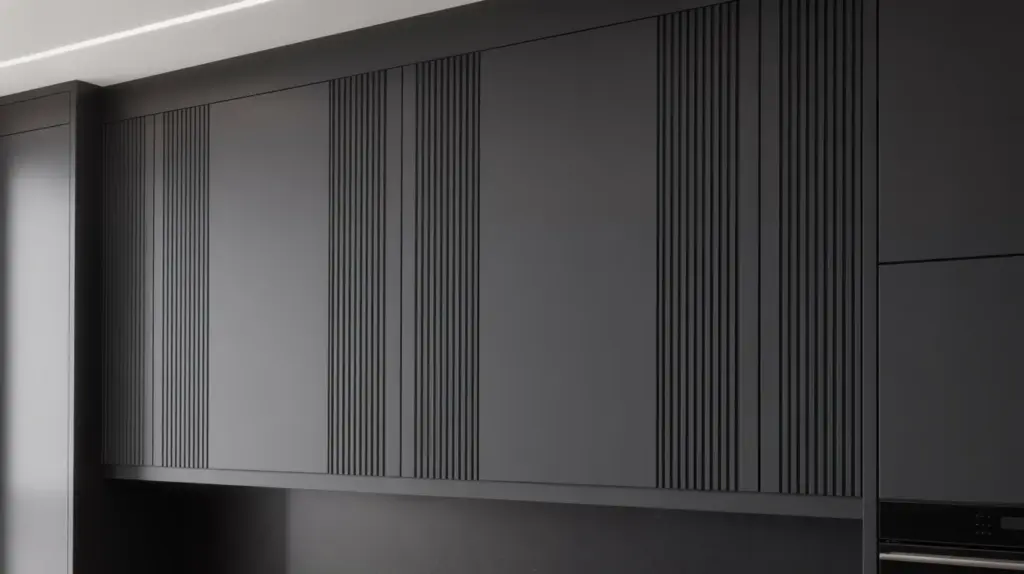
Vertical paneling adds height perception to cabinet walls. It introduces rhythm and structure across large surfaces.
Panels remain subtle to avoid visual overload. This approach suits tall kitchens with expansive cabinetry.
Texture defines space without adding contrast colors. Panel spacing influences the final appearance. The effect remains understated.
29. Dark Metallic Accents
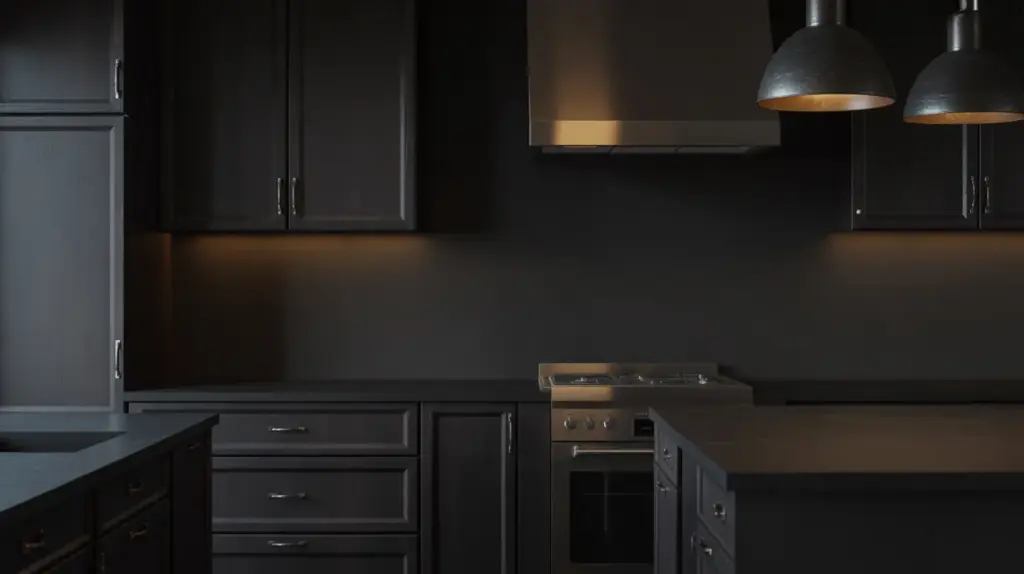
Dark metallic finishes add controlled contrast within the black palette. Black steel or iron introduces strength and durability.
Accents remain limited to key touchpoints. Hardware and lighting often feature this finish.
Subtle sheen adds depth without distraction. Balance prevents the space from feeling industrial. Placement remains selective.
30. Balanced Lighting Zones
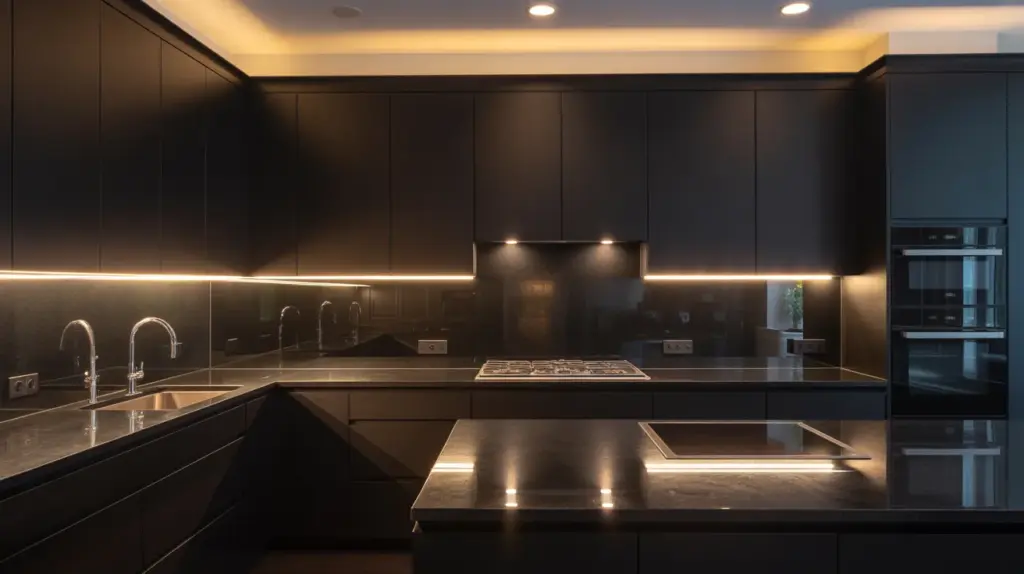
Balanced lighting completes the all-black kitchen. Task lighting ensures safety and clarity in work areas.
Ambient lighting establishes overall brightness. Accent lighting highlights structure and depth. Each zone serves a specific role.
Lighting placement supports usability. Functionality is maintained without altering the core color identity.
Conclusion
An all-black kitchen works best when design decisions focus on balance, proportion, and practicality rather than contrast alone.
From cabinetry finishes and flooring choices to lighting zones and storage planning, every element contributes to how the black kitchen functions and feels over time.
A modern black kitchen benefits from thoughtful material selection, layered lighting, and efficient layouts that prevent the space from appearing heavy or enclosed.
Texture, surface variation, and layout structure play a larger role than color variation in maintaining visual clarity.
When planned carefully, an all-black kitchen offers a cohesive, long-lasting design that supports daily use while maintaining a consistent and refined appearance across different kitchen sizes and styles.

Ava Taylor, holding a Bachelor’s degree in Interior Design from the Pratt Institute, has made her mark in creating engaging and functional living spaces for over 14 years. She began her career with a New York-based design studio, where she gained a reputation for her innovative and user-centric designs. Ava joined our team in 2019, bringing a blend of artistic flair and practicality to our home improvement section. Since the she has been the lead contributor to our room transformation series, inspiring readers with her unique approach to maximizing space utility and aesthetic appeal. Beyond her professional work, Ava is a passionate collector of vintage furniture, a hobby that enriches her design perspective.