
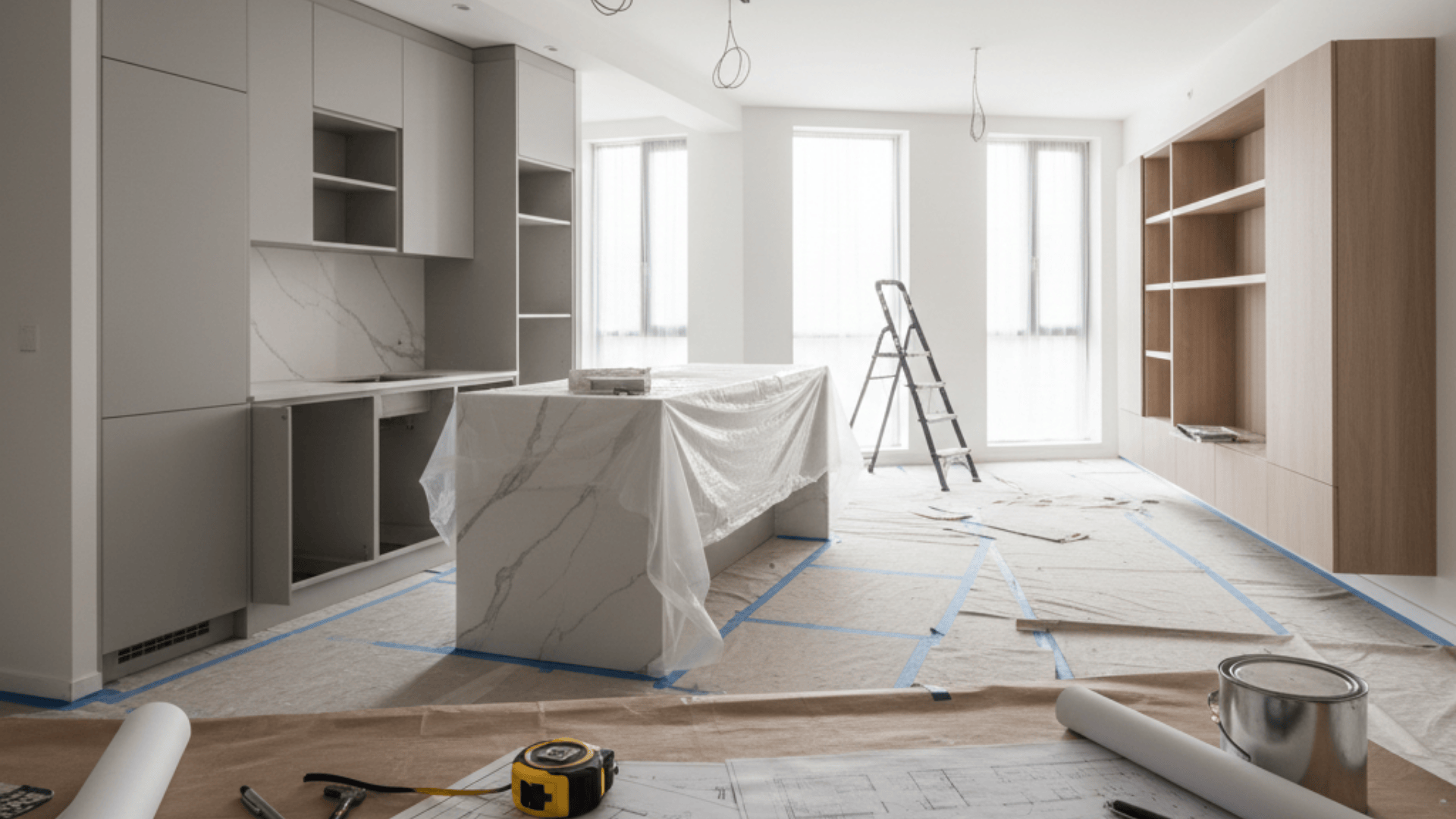

Most apartment renovations fail before the first wall gets painted.
Renters and owners rush into cosmetic fixes without understanding building restrictions, miss permit deadlines, or choose contractors who’ve never worked inside the tight confines of a multi-unit building.
The result: wasted money, frustrated neighbors, and half-finished projects that drag on for months.
That’s why I’ll share with you what actually works, proven transformation strategies, realistic cost breakdowns, and contractor selection criteria that separate qualified professionals from amateurs.
Everything here focuses on practical execution: what to measure, which improvements deliver the highest return on effort, and how to avoid the mistakes that turn a straightforward refresh into a regulatory nightmare.
Your Checklist for Apartment Renovation Planning
Smart renovations start with documentation, not demolition. Measure everything: floor plans, ceiling heights, window and door swing paths, electrical outlet locations, and plumbing access points.
This baseline data prevents costly surprises when cabinets won’t fit or when lighting fixtures require new wiring runs.
Define the scope clearly. A cosmetic refresh involves paint, hardware, and lighting updates. A partial remodel might include new flooring and fixture replacements.
A full renovation tackles layout changes, plumbing moves, and built-in installations. Each tier requires different approvals and budgets.
Set priorities by function first. Storage solutions, layout improvements, and lighting upgrades solve daily problems. Finishes come second.
Create a “no-change” list (elements that stay untouched) to control costs and simplify approvals.
Build a simple schedule: design phase, approval submissions, material ordering, construction work, and final punch list.
How to Fix Common Apartment Problems with Smart Renovations
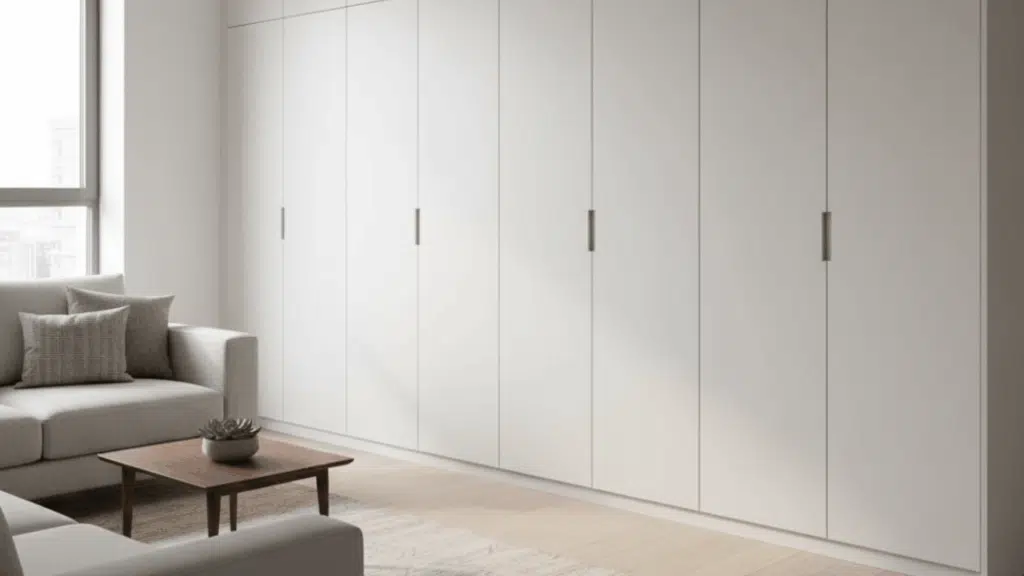
Every apartment has recurring issues that frustrate daily living. These targeted renovation solutions address the most common complaints with practical fixes that improve function without major construction.
1. Limited Storage Solutions
Limited storage remains the top complaint. Floor-to-ceiling built-ins maximize vertical space.
Over-door organizers and bed platforms with integrated drawer systems reclaim wasted areas without requiring structural permits.
2. Dark Room Lighting Fixes
Dark rooms need more than a single overhead fixture. Layered lighting plans (ceiling-mounted general lighting, task lighting at work surfaces, and wall-mounted accent lights) transform dim spaces.
Glass or partial partitions maintain separation while allowing light penetration. Lighter wall finishes reflect available natural light more effectively.
3. Awkward Layout Improvements
Awkward layouts respond well to better zoning. Furniture placement changes create distinct areas without construction. Removing non-structural barriers opens sightlines.
Many apartment renovations improve function simply by rethinking how existing space gets used.
4. Noise Reduction Upgrades
Noise from neighbors requires tactical fixes. Acoustic panels on shared walls, area rugs with quality padding, and insulated window treatments reduce sound transmission.
Check building rules before installing additional soundproofing materials (some require approval).
5. Small Kitchen Renovations
Small kitchens benefit from vertical solutions. Tall pantry cabinets, pull-out organizers, and compact appliances maintain function in tight footprints.
Reorganizing the counter workflow (sink, prep area, cooking surface) often matters more than adding square footage.
6. Tiny Bathroom Remodeling Ideas
Tiny bathrooms gain usable space through wall-mounted vanities, recessed storage niches, and sliding shower doors that eliminate swing clearance.
Many improvements stay within cosmetic categories, avoiding complex permit processes.
7. Outdated Finish Updates
Old finishes age apartments faster than structural problems. Paint updates, hardware replacements, and modern lighting fixtures deliver immediate visual impact at manageable cost.
These changes rarely require approvals beyond standard building notifications.
8. Poor Ventilation Solutions
Poor airflow creates moisture and comfort problems. Upgrading bathroom exhaust fans, adding door undercuts for return air, and improving vent performance (where building systems allow) solve circulation issues without major construction.
Renovation Ideas That Maximize Space
Space limitations define apartment living, but smart renovations turn constraints into opportunities. These strategies combine storage, function, and flexibility to make every square foot work harder.
1. Open Shelving with Closed Base Cabinets
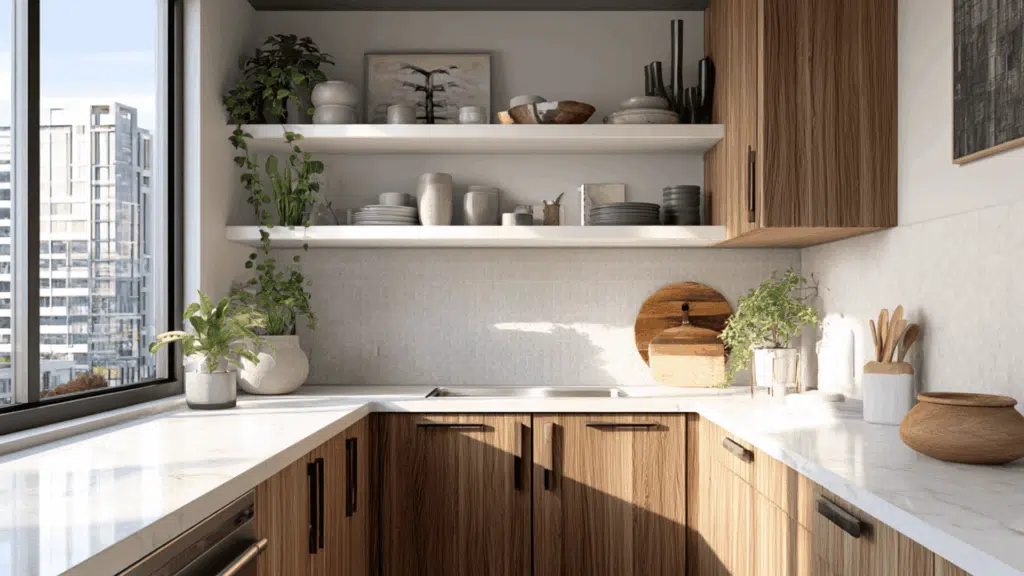
This hybrid approach balances display and concealment in kitchens and living areas. Open upper shelving keeps frequently used items accessible while maintaining an airy feel.
Closed base cabinets below hide clutter and provide solid work surfaces, creating practical storage that adapts to different needs.
2. Built-In Banquettes with Hidden Storage
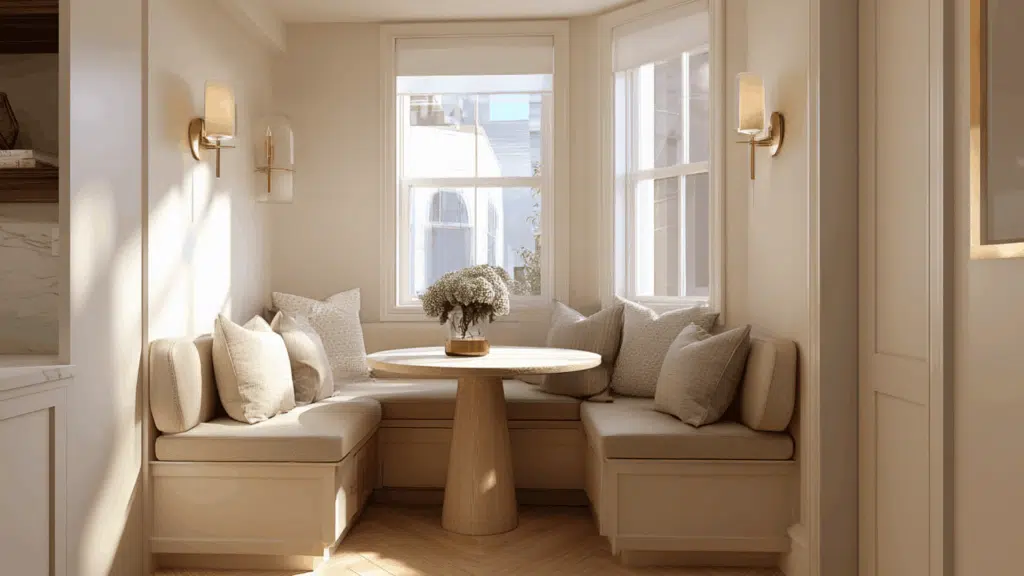
Banquettes create dedicated seating while maximizing storage in breakfast nooks and tight dining areas.
The bench base opens to reveal storage for linens, seasonal items, or rarely used serving pieces.
Custom sizing fits odd spaces that standard furniture cannot accommodate, turning awkward corners into functional zones.
3. Pocket Door Conversions
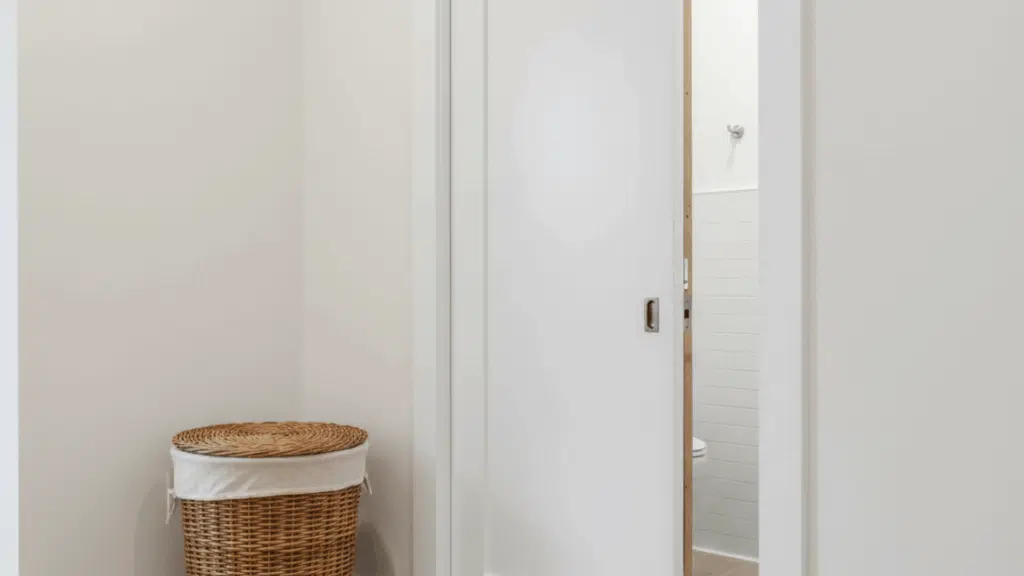
Pocket doors slide into wall cavities, recovering floor space lost to traditional door swings. This conversion works best in bathrooms and closets where standard doors block furniture placement or create tight clearances.
Installation requires opening walls to install tracking systems, but the spatial gain justifies the construction effort in cramped layouts.
4. Half Walls or Glass Partitions
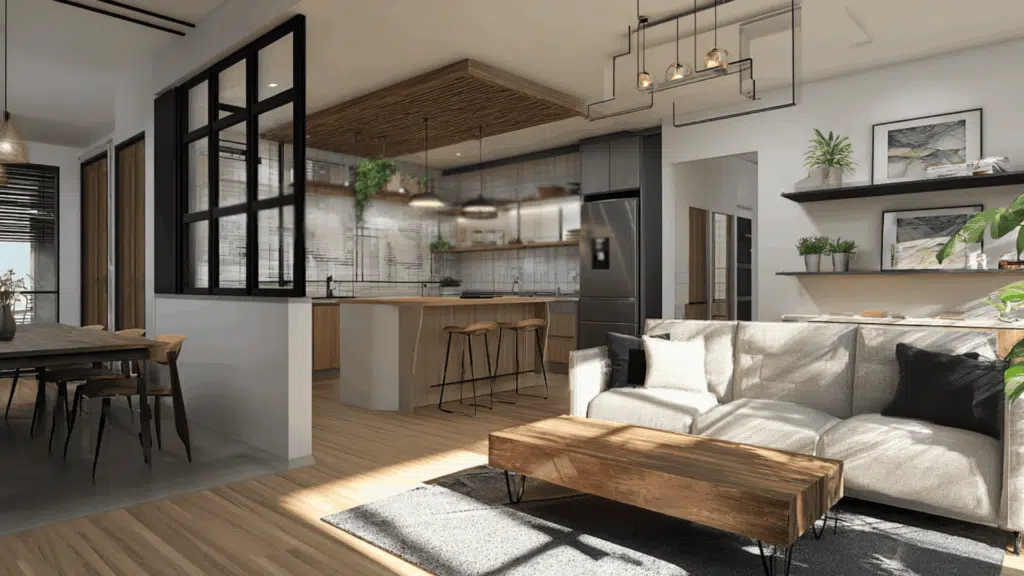
These dividers separate zones without blocking natural light penetration. Common between kitchens and living rooms, they maintain a visual connection while defining distinct areas.
Glass options preserve openness while providing sound dampening.
Half walls at 42 inches high offer separation while allowing conversation and sightlines across spaces.
5. Full-Height Entry Drop Zones
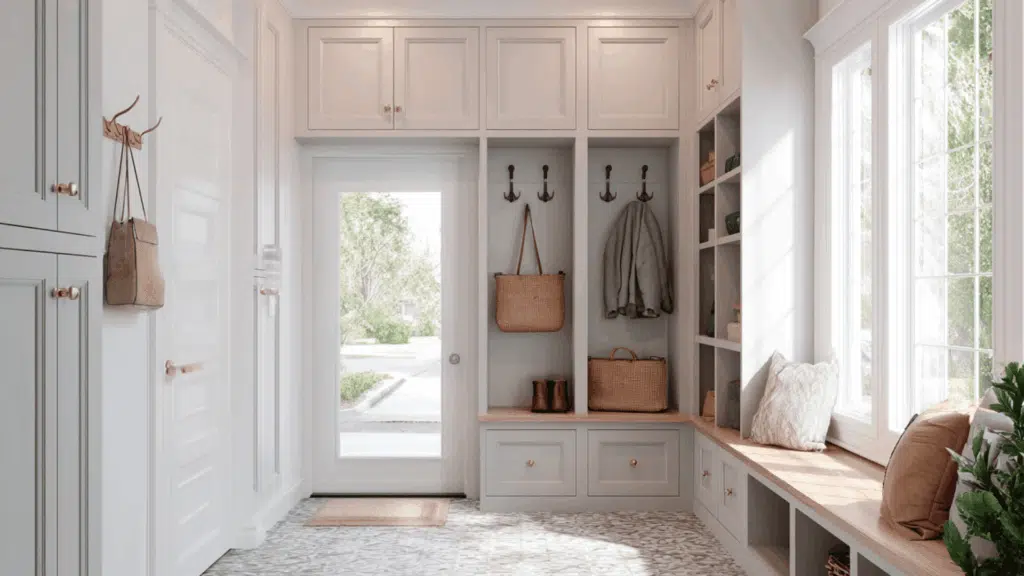
Purpose-built entry systems organize shoes, coats, and bags immediately at the door, preventing clutter migration into living spaces.
Combine hooks at varying heights, bench seating for shoe removal, and closed cabinets for concealed storage.
This vertical approach captures everything needed for daily departures and arrivals in one dedicated location.
6. Ceiling-Height Wardrobes with Integrated Lighting
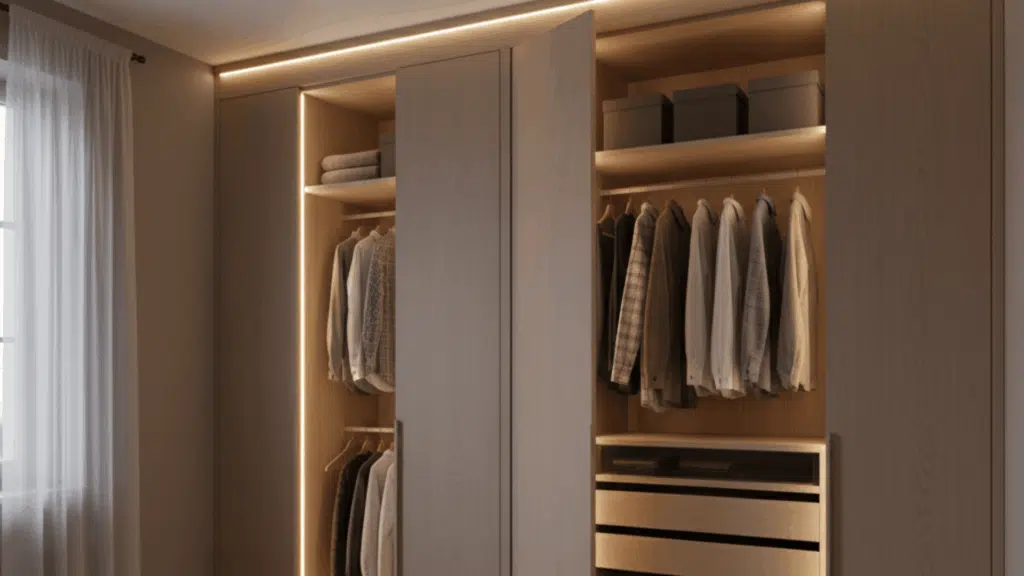
Custom wardrobes extending to the ceiling maximize bedroom storage volume while eliminating dust-collecting gaps above standard furniture. Integrated LED lighting improves visibility and adds ambiance.
These units fit odd dimensions better than freestanding pieces, turning wasted vertical space into organized clothing storage that adapts to specific wardrobe needs.
7. Kitchen Peninsulas
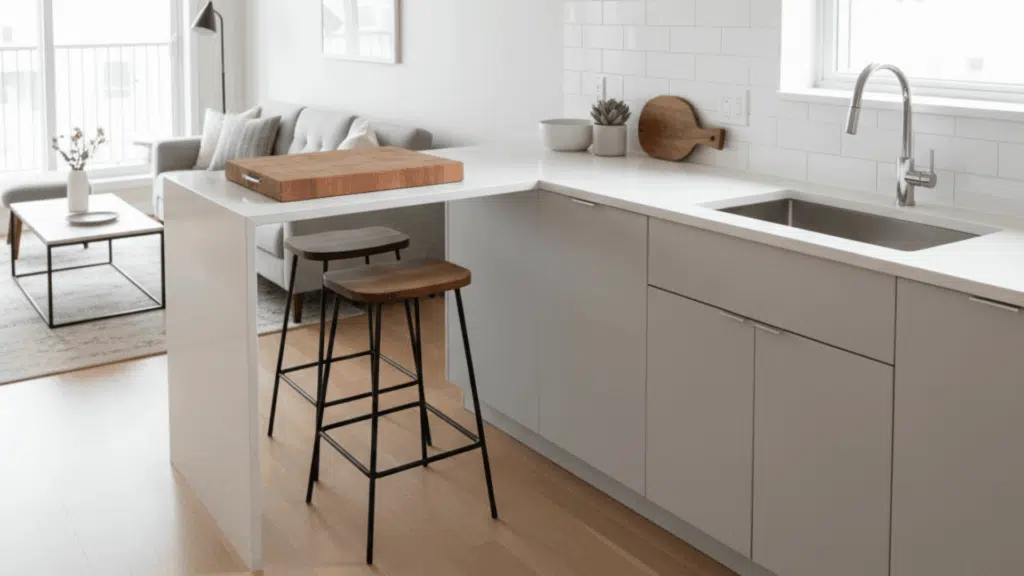
Peninsulas add prep space and casual seating when full islands won’t fit in compact kitchens. Position perpendicular to walls for optimal traffic flow.
The extended counter provides additional work surface during cooking while creating a natural separation between the kitchen and adjacent living areas without requiring walls or major structural changes.
8. Sliding Panels for Work Areas
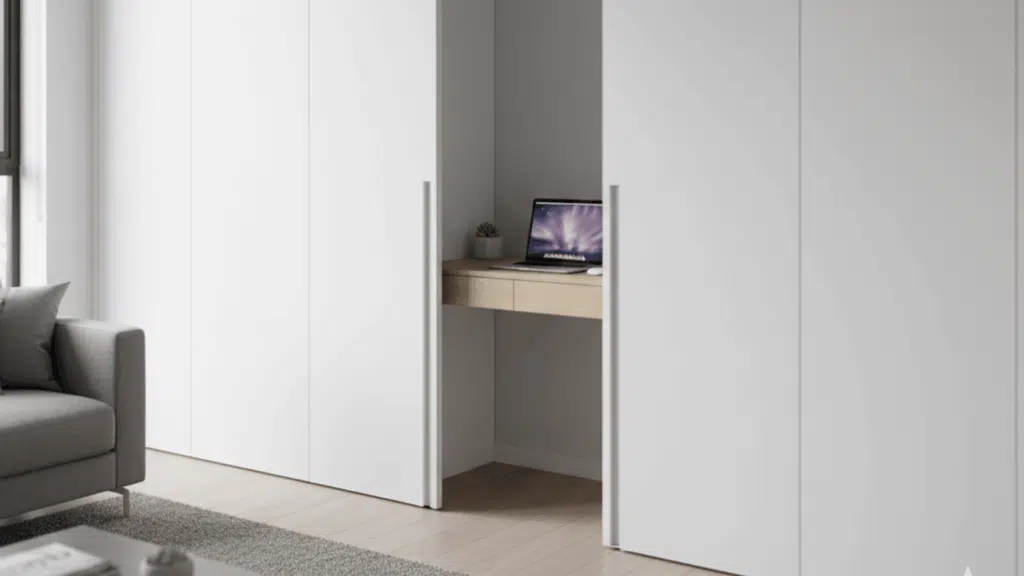
Sliding panels hide work-from-home setups when not in use, maintaining the flexible character that apartments require.
Mount tracks on the ceiling and floor for smooth operation. This approach avoids permanent wall additions while creating visual separation between professional and personal spaces, particularly valuable in studio and one-bedroom layouts.
9. Raised Platform Beds
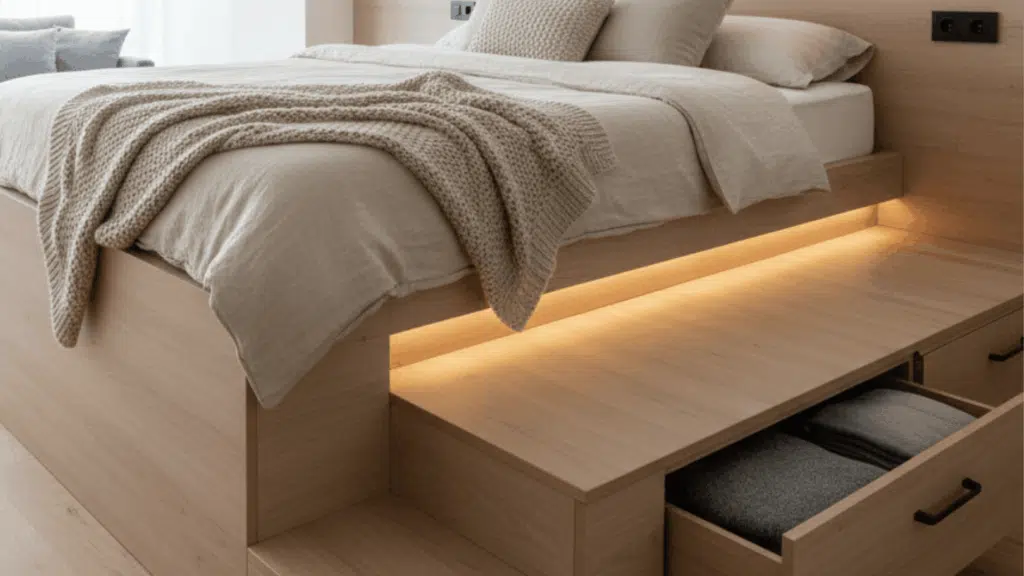
Platform beds incorporate drawer storage underneath while creating defined sleeping zones in studios. Built-in power outlets and USB ports eliminate bedside table clutter.
The raised design also improves airflow and creates psychological separation between sleeping and living areas. Custom builds accommodate odd room dimensions better than standard bed frames.
10. Appliance Garages and Pull-Out Pantries
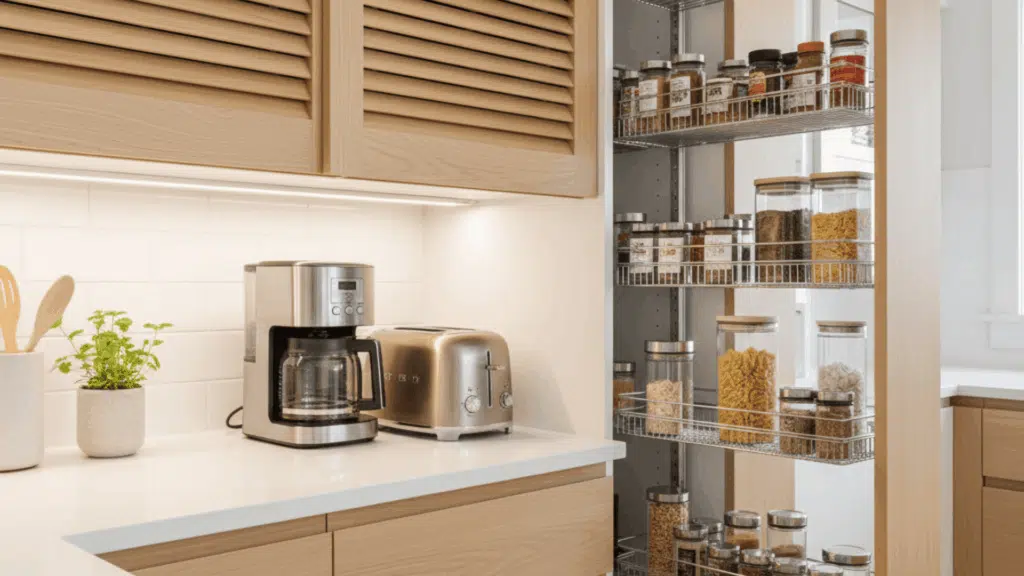
These specialized storage solutions organize small kitchens by keeping counters clear while maintaining easy access to frequently used items.
Appliance garages conceal coffee makers and toasters behind tambour doors.
Pull-out pantries use narrow spaces between appliances, bringing stored items forward rather than requiring reaching into deep cabinets.
11. Bathroom Recessed Niches

Recessed niches utilize wall cavity space between studs for toiletry storage without protruding into the room. Pair with mirrored medicine cabinets for additional concealed storage.
This approach adds function without sacrificing precious floor space in tight bathrooms. Tile the interior to match the shower walls for a cohesive, intentional appearance.
12. Barn-Style Sliding Doors
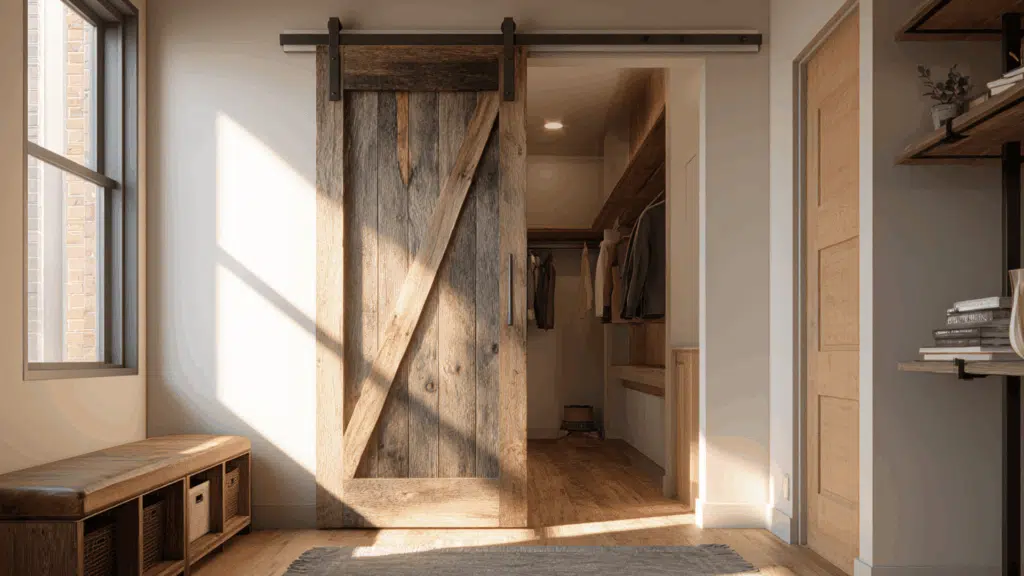
Barn doors replace traditional swing doors in locations where they won’t block storage access or create safety issues.
The sliding mechanism recovers the floor space required for door swing clearance.
Verify building restrictions before installation, as some properties have specific door requirements. Works best for closets and bathrooms with adequate wall space.
13. Layered Lighting Systems
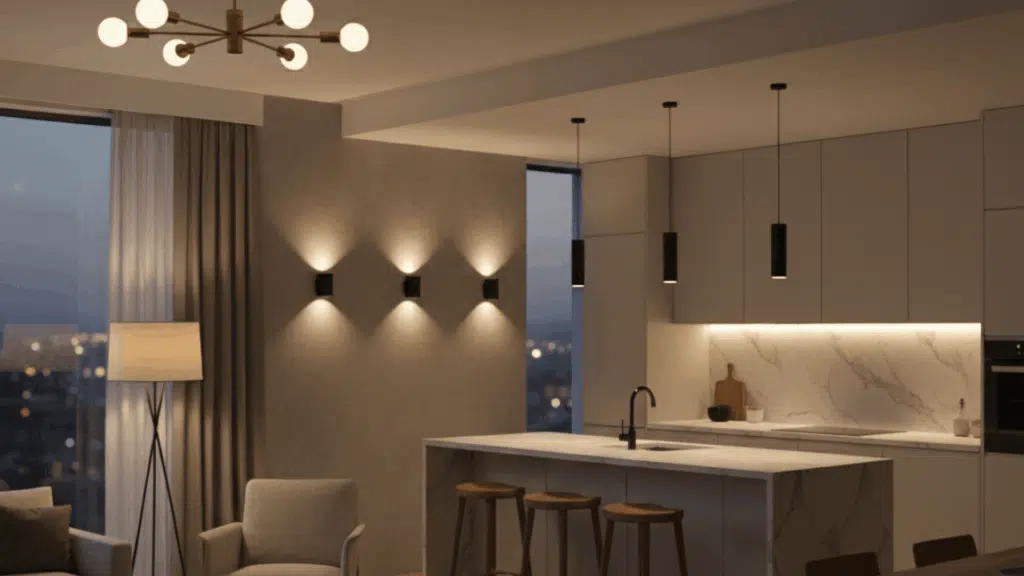
Combining ceiling fixtures, under-cabinet task lighting, and wall sconces changes the room’s character while improving function.
Multiple light sources eliminate shadows, create ambiance, and allow adjustment for different activities.
This system changes dark apartments into a home instantly without structural changes, using only electrical upgrades and strategic fixture placement throughout the space.
14. Continuous Flooring
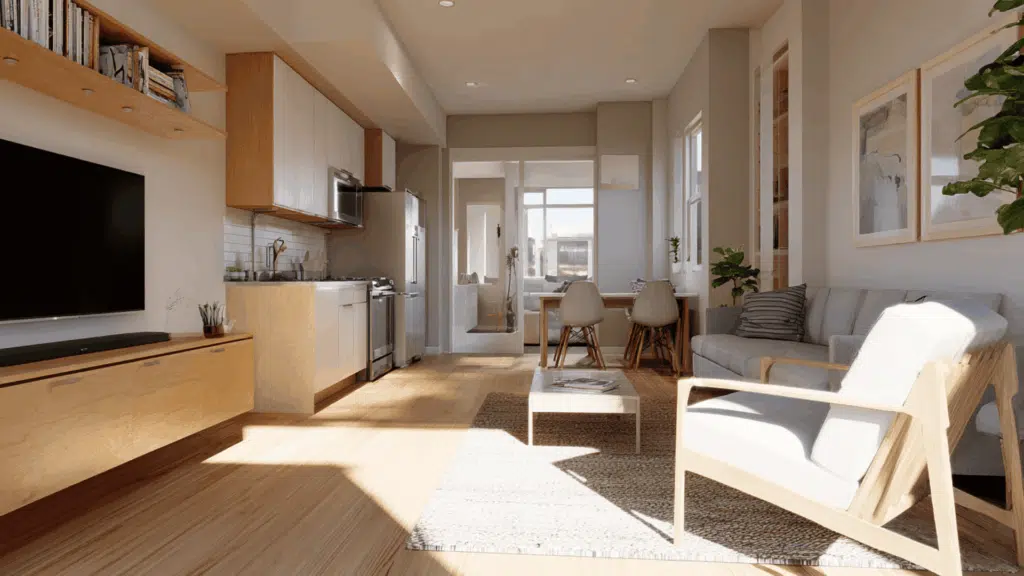
Installing the same flooring throughout eliminates visual breaks that fragment space, making small apartments read as larger.
Remove transitions between rooms where possible. Continuous material creates flow and simplifies maintenance.
This approach works particularly well with luxury vinyl plank, engineered hardwood, or large-format tile that minimizes grout lines.
15. Custom Room Divider Shelving
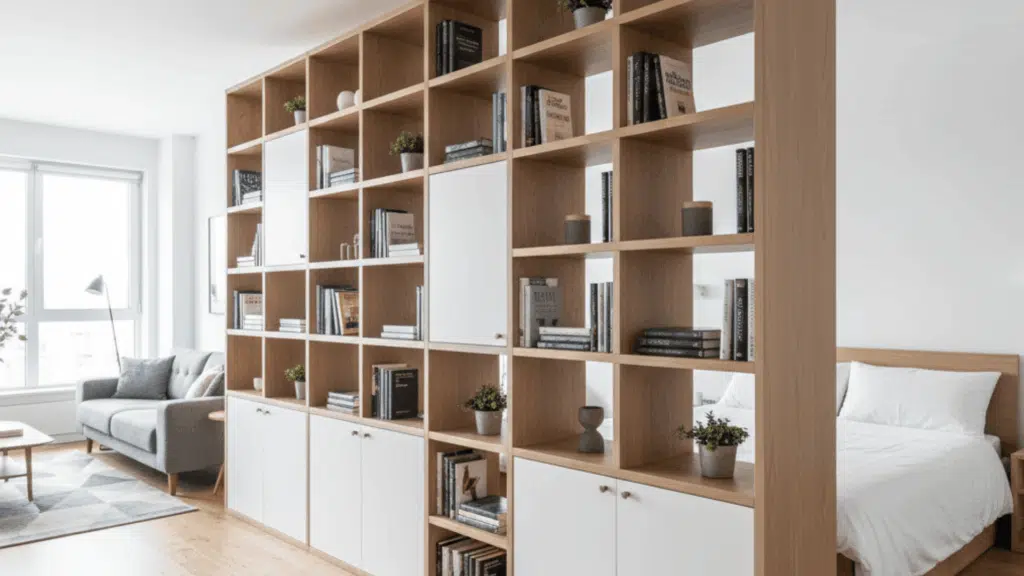
Freestanding or floor-to-ceiling shelving units separate spaces while providing storage on both sides. Particularly effective in studios and one-bedroom units where creating distinct zones matters.
Open shelving maintains light flow while closed sections add privacy. This flexible solution adapts as living needs change without permanent construction or building approvals.
Approvals and Permit Requirements
Navigating approvals and permits determines whether renovations proceed smoothly or face costly delays and violations.
Building rules, local codes, and renovation scope combine to create specific requirements that vary by location and project type.
| Renovation Type | Building Approval Needed | Permit Required | Typical Timeline |
|---|---|---|---|
| Paint & Hardware | Notice only | No | 1-3 days |
| Flooring Replacement | Yes | Maybe (check local codes) | 1-2 weeks |
| Lighting/Fixture Swap | Notice only | No (unless new wiring) | 1-3 days |
| New Electrical Work | Yes | Yes | 2-4 weeks |
| Plumbing Relocation | Yes | Yes | 3-6 weeks |
| Kitchen Remodel (cosmetic) | Yes | No | 1-2 weeks |
| Kitchen Remodel (full) | Yes | Yes | 4-8 weeks |
| Bathroom Remodel (cosmetic) | Yes | No | 1-2 weeks |
| Bathroom Remodel (full) | Yes | Yes | 4-8 weeks |
| Structural Changes | Yes | Yes | 6-12 weeks |
| HVAC Modifications | Yes | Yes | 4-8 weeks |
| Window Replacement | Yes | Yes (in most regions) | 3-6 weeks |
Every building operates under specific renovation rules. Condo and co-op boards, HOAs, and landlords maintain guidelines covering work hours, noise restrictions, elevator reservations, and debris removal procedures. Request these documents before planning begins.
Cost Expectations and Timelines
Understanding realistic budgets and schedules prevents financial surprises and sets achievable expectations.
Different renovation types require varying investments of time and money, with complexity driving both factors.
|
Pro tip: Add 20-30% to contractor timeline estimates and 15-20% to budget projections. Material delays, inspection scheduling, and hidden conditions regularly extend both timeframes and costs beyond initial projections.
Finding the Right Contractor
Apartment renovations require specialized experience. Shortlist contractors familiar with building rules, elevator reservations, and common area protection requirements.
Verify credentials: active licenses, current insurance coverage, permit history in the local area, and references from recent apartment projects. Contact references directly to confirm on-time completion and budget adherence.
Request itemized estimates breaking down labor, materials, and timeline expectations. Establish clear payment milestones tied to completion stages, not calendar dates. Define the change-order process before work begins.
Confirm logistics understanding: delivery protocols, debris removal scheduling, common area protection methods, and daily cleanup responsibilities. Buildings often fine contractors for violations.
Use written contracts specifying scope, materials, timeline, warranty terms, and responsibility assignments. Verbal agreements create disputes when problems arise.
Common Mistakes to Avoid
Even well-planned renovations encounter preventable problems that extend timelines and inflate budgets.
These mistakes appear repeatedly in apartment projects, and avoiding them separates successful renovations from frustrating experiences.
- Starting demolition before receiving final approvals violates building rules and risks stop-work orders. Wait for written permission before beginning construction.
- Underestimating material lead times creates expensive delays. Order cabinets, tile, appliances, and windows early, as custom elements require 8-12 weeks.
- Moving plumbing without validating building constraints leads to failed inspections. Validate feasibility with licensed plumbers before committing to layout changes.
- Ignoring sound control and floor underlayment requirements creates neighbor complaints. Review building specifications before purchasing materials to avoid non-compliant installations.
- Choosing finishes before finalizing layout and electrical plans results in rework. Establish fixture locations and lighting positions before selecting tile or paint.
- Planning storage as an afterthought delivers suboptimal results. Storage belongs in the initial design phase when framing and electrical decisions occur.
Avoiding these mistakes requires discipline during the planning phase, but the payoff appears in smoother execution and better outcomes.
Conclusion
Successful apartment renovations balance ambition with constraints. Building approvals, permit requirements, and property rules establish the framework.
Within those boundaries, storage planning, lighting improvements, and space-efficient built-ins deliver the highest impact.
The projects that finish on time and within budget start with clear scope definitions, realistic timelines accounting for approval waiting periods, and contractors experienced in multi-unit residential work.
Most renovation failures trace back to inadequate planning, not construction problems.
These fundamentals prevent the budget overruns and timeline extensions that turn straightforward improvements into prolonged disruptions.

Veronica Lee holds a Master’s degree in Landscape Architecture from Cornell University and has dedicated more than 15 years to transforming outdoor areas into artistic and sustainable spaces. Her career took off in a renowned landscape design firm, where she excelled in creating visually stunning and environmentally responsible designs. In 2019, Veronica brought her expertise to our platform, quickly becoming a key contributor to our outdoor design and sustainability sections. As the lead of our landscape innovation series ever since joining, she has inspired readers with her forward-thinking and practical approach. When not drafting designs, Veronica enjoys pottery and participates in local conservation efforts, activities that complement her professional ethos of blending art with nature.