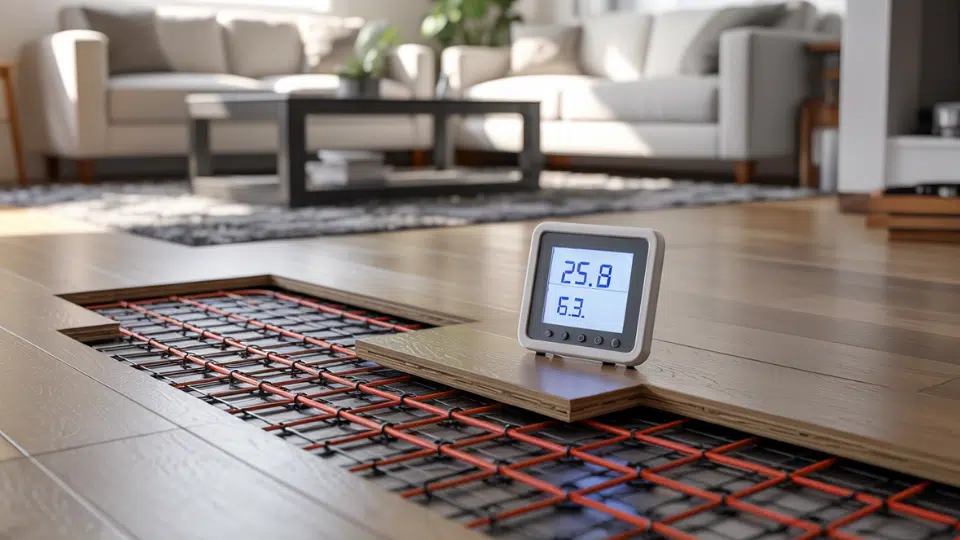

Radiant floor heating has become a popular option for homeowners looking for steady warmth without noisy vents or uneven temperatures.
If you’ve ever stepped onto a cold tile floor on a winter morning, you know why the idea sounds appealing.
Many people ask whether radiant heated floors are worth the cost, how efficient they are, and what trade-offs come with this type of system.
This guide explains what radiant floor heating is, how it works, its lifespan, its advantages and disadvantages, and whether it’s expensive to run.
By the end, you’ll have a clear idea of this system, if it fits your home and budget.
What is Radiant Floor Heating?
Radiant floor heating is a system that warms a room by heating the floor surface instead of using forced air.
It works by sending heat upward through the flooring, creating a gentle, even layer of warmth across the entire space.
This method spreads heat more evenly than traditional systems and reduces cold pockets around the home.
The purpose of radiant floor heatingis to create a consistent indoor temperature that feels comfortable from the ground up.
Instead of relying on warm air that rises quickly to the ceiling, radiant systems place the heat source directly under your feet.
This allows the room to stay warm longer and reduces frequent cycling of a furnace or baseboard heater.
Homeowners often choose radiant floors for areas like bathrooms, basements, and living spaces where cold flooring is common.
How Does Radiant Heat Work?
Radiant heat works by sending warmth through cables or water-filled tubing beneath the floor.
The heat then rises slowly through the flooring material and into the room, creating a steady temperature without blowing air.
Basic function of radiant floor systems:
All radiant floor systems follow the same basic idea: they heat the floor surface so the warmth can move upward.
Instead of warming the air first, the system warms objects in the room, including furniture and flooring.
This creates a comfortable environment without the drafts you might feel from vents or baseboards.
Advantages and Disadvantages of Radiant Floor Heating

Radiant floor heating comes with several strengths that improve comfort, but it also has practical drawbacks.
The points below help you see both sides clearly so you can decide whether this system fits your home.
Pros of Radiant Floor Heating
Radiant heating offers several comfort benefits that many homeowners appreciate. Each advantage below highlights what makes this system appealing.
1. Even and Steady Warmth
Radiant floors spread heat across the entire room, so the space feels warm without sudden changes in temperature.
This creates a comfortable environment, especially in rooms with cold flooring.
The heat stays low in the room instead of rising quickly to the ceiling. Many people find this steady warmth more pleasant than forced-air systems.
2. Quiet Operation
Radiant floor heating works without fans or moving air. This means no blowing noise, rattling vents, or clicking sounds.
The quiet operation makes bedrooms, bathrooms, and living spaces feel calm.
It adds comfort without drawing attention to the system.
3. Cleaner Indoor Air
Because radiant heat doesn’t push air around, it also doesn’t spread dust or allergens.
This helps keep indoor air clearer and more stable.
Homes with pets or sensitive family members often notice a difference. It creates a healthier environment without extra effort.
4. Hidden System Design
Everything sits under the floor, so there are no vents or radiators taking up space.
This gives you more freedom with furniture placement and room layout.
You don’t have to plan around large heating units. The system also stays out of sight, keeping the room looking clean.
Disadvantages of Radiant Floor Heating
Radiant floor heating also has limitations that may affect cost, installation, and long-term use.
1. Higher Installation Cost
Radiant floor heating is more expensive to install than many traditional systems.
Costs rise even more when existing floors must be removed or rebuilt.
This makes the system less suitable for quick updates. Many homeowners wait for major remodels to reduce extra labor.
2. Difficult Repairs
Since the system sits under the floor, repairs take more time and can interrupt daily routines.
Accessing a damaged line or cable usually means opening the floor above it.
Even small repairs may become larger projects. Quality installation helps prevent issues later.
3. Slow Temperature Response
Radiant floors warm the space slowly.
They cannot provide the fast, immediate heat that some forced-air systems offer. This can be noticeable during sudden temperature drops.
Once the room reaches the set point, the heat stays steady and comfortable.
4. Flooring Compatibility Limits
Not all flooring works well with radiant heat.
Thick carpets, certain hardwoods, and some laminates can reduce heat flow.
This limits design choices in some rooms. Tile and stone tend to give the best results with this type of system.
5. System-Specific Issues
Hydronic systems may face moisture problems if a leak occurs.
Electric radiant floor heating systems can be more costly to operate in regions with high energy rates.
Each system type has its own maintenance needs and long-term considerations. Knowing these differences helps with planning.
6. Longer Installation Time
Installing radiant heat takes more time than setting up most traditional heating systems.
Floors may need leveling, reinforcement, or added insulation.
These steps slow the process, especially in older homes. Homeowners should plan for extra downtime during installation.
7. Added Floor Height in Some Setups
Some radiant systems raise the floor level slightly.
This can affect door clearance, trim height, and transitions between rooms.
In tight spaces, even a small height increase can create challenges. Planning ahead helps prevent uneven floor lines.
8. Limited Ability to Cool the Home
Radiant floor heating only provides heat. It cannot cool rooms during warmer months.
Homes in hot climates still need a separate cooling system, which increases total costs. Managing two systems adds more long-term maintenance.
9. Reduced Performance with Heavy Furniture and Rugs
Large rugs or heavy furniture placed directly on heated floors can block heat from rising.
This reduces comfort in those areas and may make the system work harder. Lighter rugs or open layouts usually help maintain even warmth.
10. Slower Heat Loss Control
Just as radiant floors warm slowly, they also cool down slowly.
This means the system may hold extra warmth when you need the temperature to drop. Some homeowners find this less flexible than systems that adjust quickly.
Is Radiant Floor Heating Expensive to Run?

Yes, radiant floor heating can be cost-effective to run over time.
It is generally not expensive to run, and it can cost around $6 to $25 per square foot when the system is installed correctly and the home is well insulated.
It uses steady, low-temperature heat, so it doesn’t need to cycle on and off the way many traditional systems do.
This steady output helps control energy use and keeps monthly costs predictable.
Your actual cost depends on local energy rates, the size of the room, and how often you use the system.
A small, well-insulated space usually costs very little to heat, while a large room with poor insulation can use more energy over time.
The cost of Hydronic radiant heated floor systems often falls between $6 and $20 per square foot, while electric radiant floor heating systems generally range from $8 to $15 per square foot.
Costs may rise in older homes where floors must be removed.
Many homeowners find that radiant floor heating feels comfortable while still keeping monthly bills manageable.
Is Radiant Heat Efficient?
Yes, radiant heat can be very efficient because it warms the floor and nearby surfaces directly instead of pushing warm air through vents.
This gentle, steady heat often uses less energy since the system doesn’t need high temperatures to keep a room comfortable.
Radiant floor heating also avoids the heat loss that happens with ducts, which helps the warmth stay where you need it.
Efficiency can drop in spaces with weak insulation or flooring that blocks heat movement.
Large rooms that need quick heating can also use more energy because radiant floors warm slowly.
When the system is installed well and paired with good insulation, radiant heat usually offers strong long-term efficiency.
Considerations Before Installation: Radiant Floor Heating System

Before installing radiant heat, it’s important to review your home layout, flooring choices, budget, and long-term heating goals.
1. Upfront Budget
Radiant heat costs more to install than most traditional systems. If you’re remodeling or building new, the cost is easier to manage.
Retrofitting an existing home may require removing flooring, which adds labor and material expenses.
It’s smart to plan for both installation and potential future maintenance.
2. Home Layout and Flooring
Open floor plans and rooms with tile or stone work best with radiant heat. These materials transfer warmth quickly and evenly.
If your space includes thick carpeting or floating floors, radiant heat may not perform as well.
Floor height can also increase slightly depending on the system used.
3. Maintenance of Radiant Heated Floors
Because the system sits under the floor, repairs require more effort.
Hydronic systems may need occasional checks for leaks, while electric systems need stable electrical connections.
Choosing durable materials and a qualified installer helps reduce long-term problems.
4. Long-Term Heating & Comfort Goals
Radiant heat works best for homeowners looking for steady comfort rather than quick temperature changes.
If you prefer a system that warms the room slowly and holds warmth well, radiant heat is a strong option.
Many homeowners value the quiet operation, comfort, and clean indoor air it provides.
What is the Life Expectancy of Radiant Floor Heating?
Radiant floor heating systems usually last 25 to 35 years, though some last even longer, up to 50 years, depending on how well they were installed and maintained correctly.
Hydronic radiant floor heating systems often run the longest because the tubing is strong, flexible, and built to handle decades of use.
An electric radiant floor heating system tends to have a shorter lifespan, closer to 20 to 30 years, since the heating cables can weaken over time.
Installation quality plays a big role. A poorly installed system may fail early.
Moisture problems can shorten the life of hydronic systems, and flooring that traps heat can strain both types.
Good insulation and proper thermostat use help the system stay reliable for many years.
Conclusion
Radiant floor heating offers a unique mix of comfort, quiet operation, and steady warmth that many homeowners appreciate.
It creates an inviting environment, especially in rooms where cold flooring is common.
While the system has higher upfront costs and a longer installation process, the long-term comfort can make it a practical choice for the right home.
Considering insulation, flooring type, and room layout helps you understand how well the system will perform.
If you prefer gentle, consistent heat and value a clean, quiet indoor setting, radiant floor heating can be a strong fit.
Feel free to share your questions or thoughts below.

Tommy Hardy, an alumnus of the Georgia Institute of Technology with a degree in Mechanical Engineering, has been a go-to figure in residential upkeep and innovation for over 18 years. His career commenced in a leading home appliance manufacturing company, where he mastered the intricacies of household systems. Joining our platform in 2020, Tommy quickly became a reader favorite for his practical and easy-to-follow guides. He took the helm of our DIY section in 2019, consistently delivering content that empowers homeowners. Beyond his professional pursuits, Tommy is a passionate gardener and enjoys woodworking, skills enhancing his hands-on approach to home care.