
Art Nouveau architecture feels less like something built and more like something grown.
Rising at the turn of the 20th century, this style challenged rigid design rules with flowing lines, natural forms, and carefully crafted details that appear to move across walls and spaces.
Buildings were no longer treated as plain structures but as complete artistic statements, where exteriors, interiors, and decoration spoke the same visual language.
From curved façades to light-filled staircases, every element was designed with intention.
This article looks at what defines Art Nouveau architecture, how it emerged, the places where it thrived, and the buildings that continue to make the style instantly recognizable.
What is Art Nouveau Architecture?
Art Nouveau, French for “new art,” was not just another historic revival; it was a conscious break from classical and Victorian forms.
Architects and designers sought to create environments where structure and ornament worked in harmony rather than as separate elements.
Artists and theoreticians of the time viewed architecture as a “total work of art,” where interior detail, exterior sculptural forms, and artistic flourishes cohere into a unified whole.
At its core, Art Nouveau architecture features:
Organic, flowing lines that mimic growth patterns found in nature
Integration of decorative art and structure, so that ornamentation is part of the building’s visual logic
Nature-inspired motifs, such as plant tendrils, blossoms, and sinuous shapes
Origins and Historical Background
Art Nouveau arose during a moment of profound cultural and industrial change.
As the Industrial Revolution expanded manufacturing and urban growth, many artists felt disconnected from mass-produced design and historical styles that looked backward rather than forward.
Instead, they turned to contemporary life and the natural environment as sources of innovation.
The movement took particular hold in cities like Brussels, Paris, Vienna, and Barcelona, where artists, architects, and patrons saw an opportunity to move beyond traditional ornament and to lift everyday design from architecture to furniture and interior décor to fine art.
Major international exhibitions at the end of the 19th century helped disseminate these ideas across borders.
Notable Examples of Art Nouveau Architecture
The following buildings highlight how Art Nouveau architecture was expressed across different regions, with each example revealing distinct design choices, materials, and artistic priorities that define the movement.
1. Hôtel Tassel, Brussels
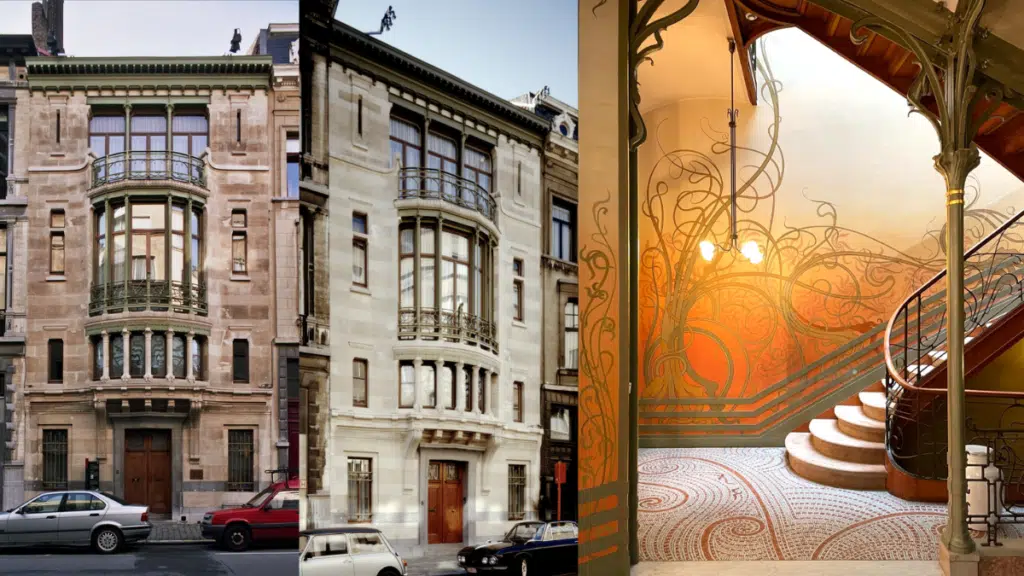
Hôtel Tassel stands out for how seamlessly structure and decoration are merged.
What makes this building particularly notable is its interior layout, which departs from traditional room divisions in favor of open, light-filled spaces.
Iron columns and railings are not hidden but deliberately exposed, shaped into flowing forms that visually echo plant stems.
The staircase is especially telling, as its curves guide movement naturally upward while maintaining visual continuity across floors.
2. Casa Batlló, Barcelona
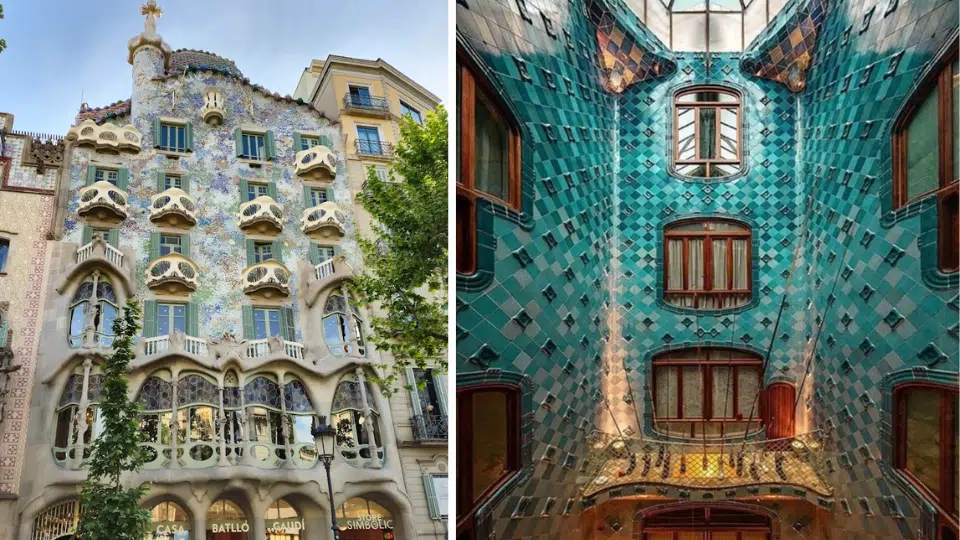
Casa Batlló draws attention through its façade, which avoids straight lines almost entirely.
The surface appears in constant motion, with balconies shaped like masks and window frames that resemble softened bone structures.
A closer look reveals that even functional elements, such as ventilation openings and structural supports, are treated as part of the overall visual language.
Inside, the gradual shift in tile color across walls subtly manages light distribution, showing careful consideration beyond surface decoration.
3. Paris Métro Entrances, Paris
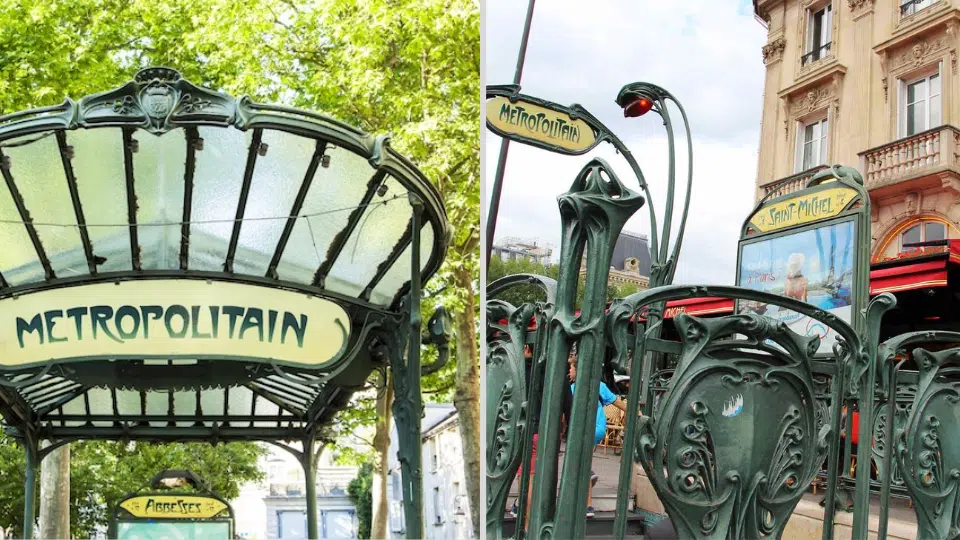
The Paris Métro entrances are notable for how Art Nouveau principles were applied to public infrastructure.
Their iron frameworks resemble plant growth rather than engineered components, with curves that seem to rise naturally from the ground.
Typography, lighting fixtures, and structural supports all follow the same visual rhythm, creating a unified design despite the modular construction.
These entrances demonstrate how the style adapted to mass production without losing artistic intent.
4. Stoclet Palace, Brussels
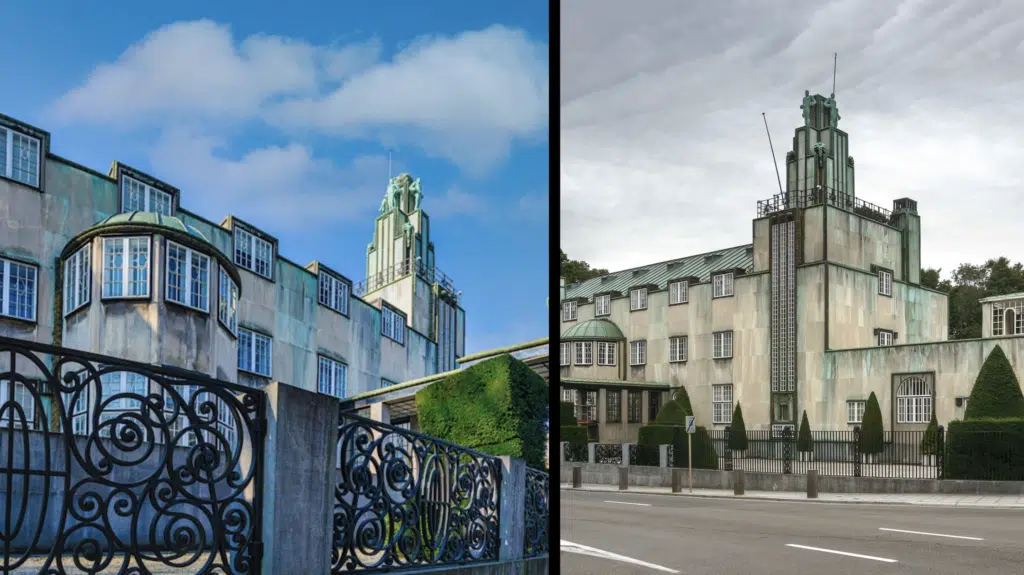
Stoclet Palace is distinctive for its disciplined structure paired with artistic unity.
Unlike more fluid Art Nouveau buildings, this design relies on strong vertical and horizontal lines while maintaining decorative consistency throughout.
What sets it apart is the coordination between architecture, interior design, and artwork, particularly in how wall surfaces, lighting, and spatial proportions align.
Every design decision appears measured, resulting in a controlled yet expressive architectural statement.
5. Secession Building, Vienna
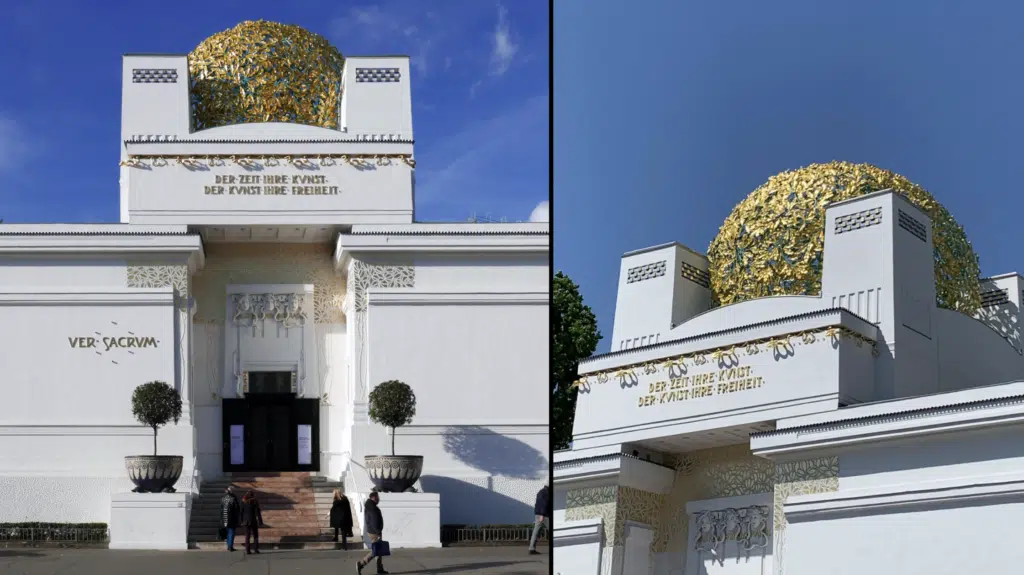
The Secession Building is immediately recognizable due to its restrained form contrasted with symbolic detailing.
Its clean white exterior is intentionally minimal, allowing the gilded dome of laurel leaves to become the focal point.
This contrast highlights a shift within Art Nouveau toward abstraction and symbolic expression.
The building’s design reflects a clear intention to separate itself from historical imitation while still maintaining a strong artistic identity.
Key Features of Art Nouveau Buildings
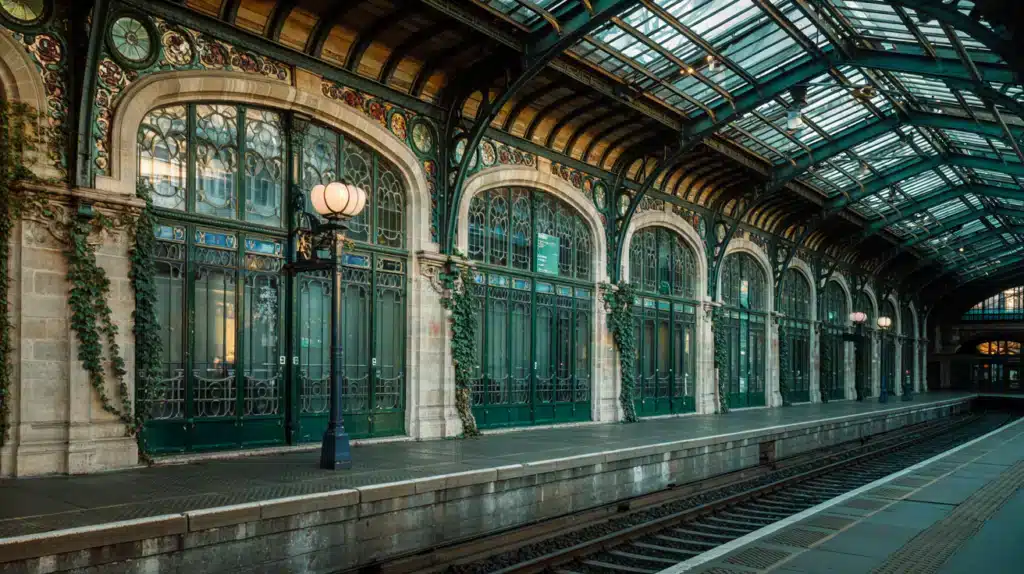
Art Nouveau buildings are identified by a combination of structural innovation and artistic expression, with design choices that emphasize fluidity, craftsmanship, and natural inspiration.
Exterior Characteristics of Art Nouveau Architecture
The exterior design of Art Nouveau buildings establishes the style’s visual identity, using form and material to create a strong first impression rooted in organic design.
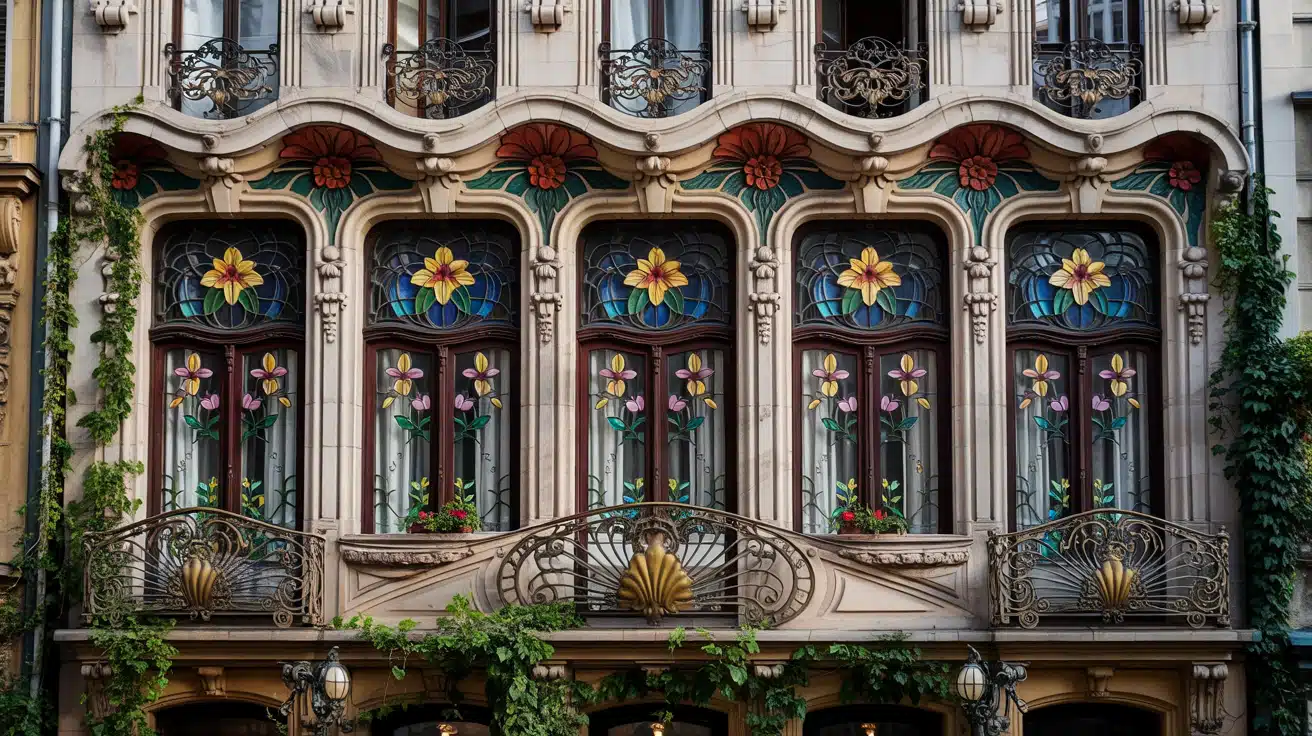
1. Curved Facades and Asymmetry: Art Nouveau buildings favor curved lines and asymmetrical layouts that move away from rigid architectural balance. These flowing forms reflect natural movement rather than formal structure.
2. Decorative Ironwork and Metal Design: Wrought iron is widely used in balconies, railings, and entrances, shaped into organic patterns inspired by plants. Metalwork serves both functional and artistic purposes within the design.
3. Integrated Sculptural Ornamentation: Sculptural details are built directly into façades using stone, ceramics, and molded materials. These elements create a unified appearance rather than applied decoration.
Interior Elements in Art Nouveau Buildings
Interior spaces extend the same design principles found on the exterior, ensuring continuity between architectural structure and interior detail.
1. Flowing Staircases and Spatial Movement: Staircases often act as visual anchors, using curved lines to guide movement through interior spaces while maintaining a sense of continuity.
2. Stained Glass and Natural Light: Stained glass windows and skylights soften incoming light and introduce natural motifs, enhancing the atmosphere without overpowering the space.
3. Custom Furniture and Interior Detailing: Furniture and fixtures are usually custom-designed to match the building’s architectural language, ensuring visual consistency across interiors.
Art Nouveau Architecture vs Other Styles
Art Nouveau architecture stands apart because it prioritizes movement, surface expression, and artistic unity rather than strict rules or historical imitation.
Its visual language feels fluid and intentional, making it immediately distinguishable from both earlier and later architectural approaches.
Comparison With Victorian and Classical Architecture
Victorian and classical buildings followed strict design rules. Let’s see the difference:
| Aspect | Victorian and Classical Architecture | Art Nouveau Architecture |
|---|---|---|
| Overall style | Follows strict rules and balanced designs | Uses flowing shapes and uneven layouts |
| Design inspiration | Looks like older historical styles | Focuses on new ideas and natural forms |
| Decoration | Added on top of the building | Built into the structure |
| Visual feel | Formal and structured | Soft, expressive, and natural |
| Shape and lines | Straight lines and clear symmetry | Curved lines and gentle movement |
| Use of materials | Stone and brick are used traditionally | Iron, glass, and stone are used creatively |
| Design goal | Order and tradition | Artistic unity and visual flow |
Art Nouveau and Art Deco
Art Nouveau and Art Deco are often compared because they appeared close in time, but they look very different.
Art Nouveau uses curved lines, soft shapes, and details inspired by nature. Buildings feel flowing and handmade.
Art Deco developed later and focuses on straight lines, bold shapes, and smooth surfaces. It reflects a growing interest in machines, industry, and modern life.
Conclusion
Art Nouveau architecture remains memorable because it treats buildings as expressive works rather than static structures.
Its flowing lines, natural references, and careful craftsmanship show a period when design focused on harmony between form and function.
Even today, these buildings stand out within urban landscapes, offering visual softness amid rigid construction.
From private homes to public spaces, the style demonstrates how architecture can communicate emotion without excess.
While its active period was brief, its influence continues through preservation efforts and design inspiration.
Art Nouveau serves as a reminder that thoughtful detail and artistic intent can leave a lasting mark on how spaces are experienced and remembered.
Frequently Asked Questions
What Time Period Is Art Nouveau Architecture Associated With?
Art Nouveau architecture developed between the 1890s and early 1910s, reaching peak popularity just before World War I, primarily across Europe and parts of North America.
How Can Art Nouveau Architecture Be Identified in Buildings Today?
Art Nouveau buildings are identified through curved lines, nature-inspired decoration, decorative ironwork, stained glass, and integrated ornamentation that forms part of the structure rather than surface decoration.
Is Art Nouveau Architecture the Same Across All Countries?
Art Nouveau architecture varies by region, reflecting local materials and cultural influences, while maintaining shared traits such as organic forms, artistic unity, and rejection of historical architectural imitation.
Why Did Art Nouveau Architecture Decline in Popularity?
The style declined as design preferences shifted toward simpler forms, economic practicality, and modernist approaches, leading to movements that favored geometry, efficiency, and reduced ornamentation.

Veronica Lee holds a Master’s degree in Landscape Architecture from Cornell University and has dedicated more than 15 years to transforming outdoor areas into artistic and sustainable spaces. Her career took off in a renowned landscape design firm, where she excelled in creating visually stunning and environmentally responsible designs. In 2019, Veronica brought her expertise to our platform, quickly becoming a key contributor to our outdoor design and sustainability sections. As the lead of our landscape innovation series ever since joining, she has inspired readers with her forward-thinking and practical approach. When not drafting designs, Veronica enjoys pottery and participates in local conservation efforts, activities that complement her professional ethos of blending art with nature.