
Slow-draining water and lingering puddles often point to a problem that starts quietly beneath the surface.
A bathtub drain clogging issue rarely appears overnight, yet it can disrupt comfort and routine when ignored for too long.
What begins as a minor slowdown may signala buildup forming deep inside the plumbing system.
From subtle warning signs to practical ways of restoring flow, each section ahead uncovers what commonly causes these blockages and how they progress.
Clear methods, preventive habits, and moments when professional support becomes necessary are addressed, helping shed light on a household issue that is easy to overlook but difficult to ignore once it takes hold.
Bathtub Drain Clogged: Meaning and Common Signs
A bathtub drain clogged condition occurs when materials inside the drainpipe restrict the normal flow of water.
These blockages usually develop gradually as debris collects along the inner walls of the pipe, reducing the space available for water to pass through.
While some clogs remain minor at first, untreated buildup can worsen over time and affect overall drainage performance.
Common signs of a clogged bathtub drain include:
- Slow drainage: Water takes longer than usual to leave the tub after bathing or showering
- Standing water: Pools of water remain in the bathtub for extended periods
- Gurgling sounds: Air trapped in the pipes creates bubbling or gurgling noises during drainage
- Unpleasant odors: Trapped hair, soap residue, and organic matter produce smells that rise from the drain
- Water backing up: In more severe cases, water may return to the tub after partially draining
Recognizing these signs early helps prevent more stubborn clogs. It reduces the risk of pipe damage or recurring drainage problems, especially in tubs built to match the average bathtub size, where water volume can worsen slow drainage.
What Causes a Bathtub Drain to Get Clogged?
Bathtub drain clogs usually form over time as everyday materials collect inside the drainpipe, one of the most used parts of a bathtub.
These materials reduce the space available for water to flow, eventually leading to slow drainage or standing water.
Below are the most common causes:
1. Hair Buildup
Hair is the leading cause of a bathtub drain clogging issue. During showers, loose hair washes down the drain and catches on rough pipe surfaces or the drain stopper.
Over time, this hair binds with soap residue and oils, forming thick clumps.
These clumps trap additional debris, gradually narrowing the pipe and slowing water flow until a blockage forms.
2. Soap Scum and Residue
Soap residue develops when soap mixes with minerals commonly found in hard water.
This mixture creates a sticky film that coats the inner walls of drainpipes.
As the layer thickens, it reduces the pipe’s diameter and makes it easier for hair and dirt to cling to the surface.
This slow buildup often goes unnoticed until drainage problems become frequent.
3. Dirt, Oils, and Bath Products
Natural body oils, along with shampoos, conditioners, and body washes, rinse into the drain during bathing.
These substances leave behind a slick residue that lines the pipe interior.
Fine dirt and skin particles washed off the body stick to this residue, creating a dense buildup.
Over time, this combination restricts water flow and contributes to stubborn clogs.
4. Small Objects Entering the Drain
Small items can accidentally slip into the bathtub drain, especially when drain covers are loose or damaged.
Objects such as bottle caps, broken stopper parts, or children’s bath toys may become lodged inside the pipe.
Unlike gradual buildup, these objects often cause sudden drainage issues and can block water almost completely, requiring targeted removal.
How to Unclog a Bathtub Drain?

A clogged bathtub drain can disrupt daily routines and cause water to collect in the tub after bathing.
Addressing the issue early helps prevent heavier buildup inside the pipes and reduces the chance of repeated drainage problems.
The methods below target both minor and more persistent clogs, with steps listed in order where a sequence is required:
1. Remove Hair and Surface Debris
Hair and residue often collect just below the drain cover, making this one of the most effective first steps.
Clearing surface-level buildup allows water to flow more freely and prevents debris from moving deeper into the pipe.
- Remove or unscrew the drain cover carefully.
- Use a drain hook, bent wire, or similar tool to pull out hair and residue.
- Dispose of the debris and rinse the area with water to check drainage.
Tip: Installing a snug-fitting hair catcher after cleaning helps stop loose hair from entering the drain, reducing frequent surface buildup and limiting how often manual removal is needed during regular bathtub use.
2. Flush with Hot Water
Hot water helps soften and loosen soap residue and product buildup that coats the inside of drainpipes.
This method works best for early-stage clogs that have not fully blocked the drain.
- Heat water until hot but not boiling.
- Slowly pour the water directly into the drain in stages.
- Wait a few minutes and test drainage to see if water flows freely.
Tip: Pouring hot water through the drain once a week after cleaning helps prevent residue from hardening inside the pipe and supports consistent drainage without relying on tools or chemical cleaners.
3. Baking Soda and Vinegar Method
This method relies on a natural reaction that helps break down organic matter inside the drain.
It is useful for moderate clogs caused by soap residue, oils, and light debris.
- Pour baking soda directly into the drain opening.
- Add vinegar slowly and allow the mixture to foam.
- Let it sit for 10 to 15 minutes.
- Flush the drain with hot water to clear loosened residue.
Tip: Using this method occasionally as part of routine drain care can limit residue buildup over time, especially in households where bath products and conditioners are used frequently.
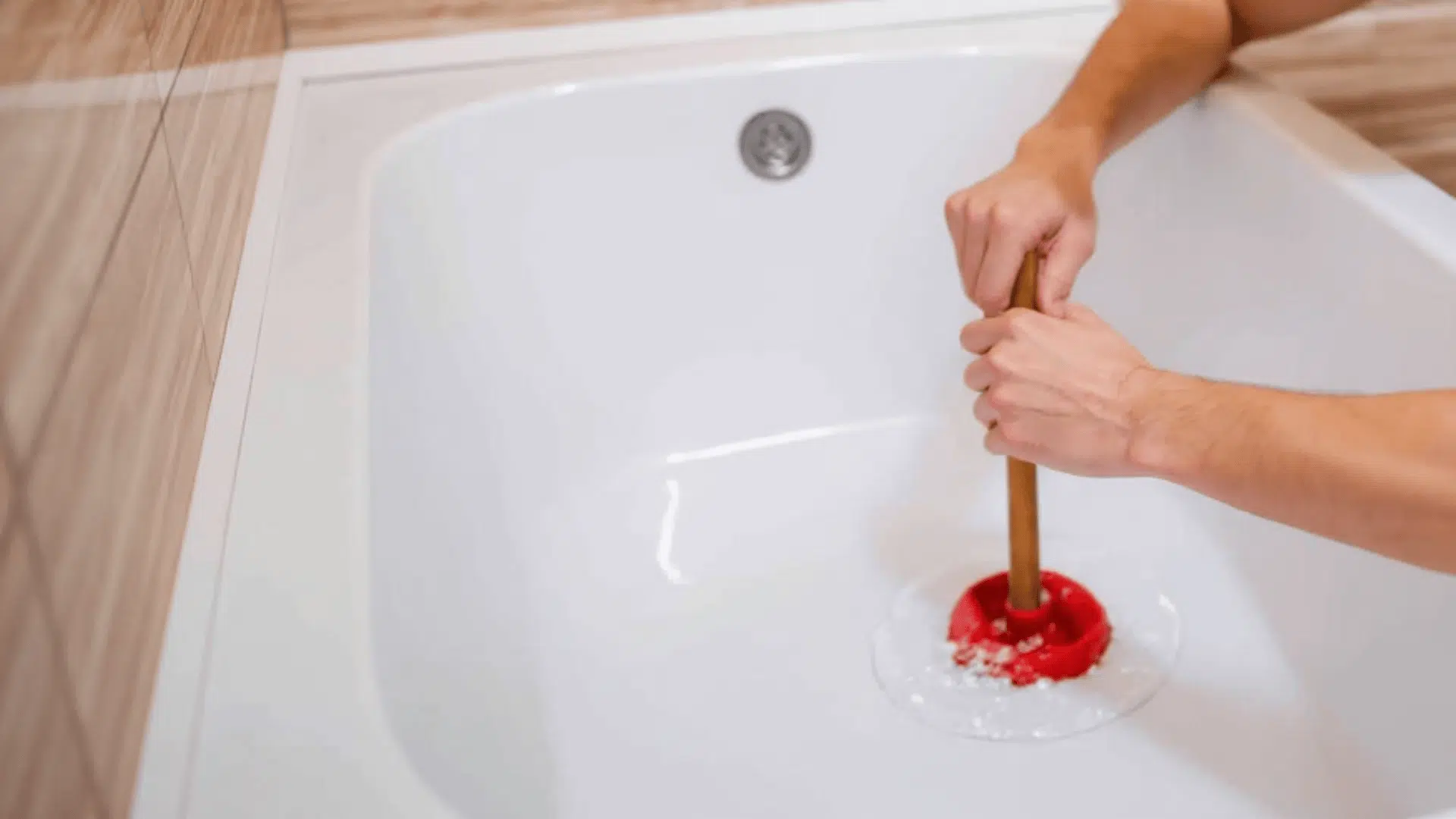
4. Use a Plunger Correctly
Plunging creates pressure inside the pipe that can shift clogs stuck beyond the drain opening. This approach is helpful when water drains slowly but does not remain fully blocked.
- Cover the overflow opening with a damp cloth to improve suction.
- Place the plunger firmly over the drain opening.
- Push and pull in short, controlled motions several times.
- Remove the plunger and check if drainage improves.
Tip: Keeping a dedicated plunger for bathtub use ensures a better seal and reduces the chance of spreading debris, making plunging more effective when slow drainage first appears.
5. Drain Snake or Auger Method
A drain snake or auger is designed to reach deeper clogs that surface methods cannot remove. It works well for dense hair clogs or compacted debris lodged further down the pipe.
- Insert the snake into the drain until resistance is felt.
- Rotate the handle to hook or break apart the clog.
- Slowly pull the tool out, removing debris as it comes up.
- Rinse the drain with water to confirm proper flow.
Tip: Using a drain snake carefully and stopping when resistance feels unusual helps avoid pipe damage, especially in older plumbing systems where aggressive force can cause unnecessary issues.
Signs a Clogged Bathtub Drain Needs a Plumber
Some bathtub drain clogs extend beyond surface buildup and indicate deeper plumbing concerns.
Professional help is often needed when clogs return frequently, drainage remains slow after multiple attempts, or water backs up into nearby fixtures.
Persistent odors, unusual sounds from pipes, or moisture around drains may also signal internal blockages or pipe damage that requires specialized tools and inspection to resolve safely and effectively.
Related Read: How Can You Paint a Bathtub
Ways to Prevent a Clogged Bathtub Drain Issue
Preventing a bathtub drain clog helps maintain steady water flow and reduces the need for frequent cleaning or repairs.
Small habits practiced consistently can limit buildup inside the drain and support long-term plumbing performance.
- Use a drain hair catcher: Traps loose hair before it enters the drain and combines with residue.
- Clean the drain cover regularly: This removes surface buildup that can move into the pipe over time.
- Flush the drain periodically: Helps clear light residue before it hardens inside the drain.
- Limit heavy bath products: Reduces the amount of residue left behind on pipe walls.
- Keep small items away from the tub: Prevents objects from slipping into the drain and causing blockages.
Consistent drain care and simple preventive steps help avoid recurring clogs, protect plumbing components, and keep bathtub drainage working smoothly with minimal effort.
Conclusion
A bathtub drain clogged situation often develops quietly, yet its impact becomes clear once water starts lingering in the tub.
Throughout this blog, the focus has been on identifying early warning signs, understanding what causes clogs, and using practical methods to clear them before they worsen.
Simple maintenance habits, combined with timely unclogging steps, can prevent repeated drainage problems and protect internal plumbing.
Knowing when a blockage needs professional help is crucial as deeper issues require expert attention. With consistent care and awareness, bathtub drains can remain clear and functional for extended periods.
Have you faced a clogged bathtub drain or found a method that worked well? Share your experience or favorite tips in the comments below.

Tommy Hardy, an alumnus of the Georgia Institute of Technology with a degree in Mechanical Engineering, has been a go-to figure in residential upkeep and innovation for over 18 years. His career commenced in a leading home appliance manufacturing company, where he mastered the intricacies of household systems. Joining our platform in 2020, Tommy quickly became a reader favorite for his practical and easy-to-follow guides. He took the helm of our DIY section in 2019, consistently delivering content that empowers homeowners. Beyond his professional pursuits, Tommy is a passionate gardener and enjoys woodworking, skills enhancing his hands-on approach to home care.