
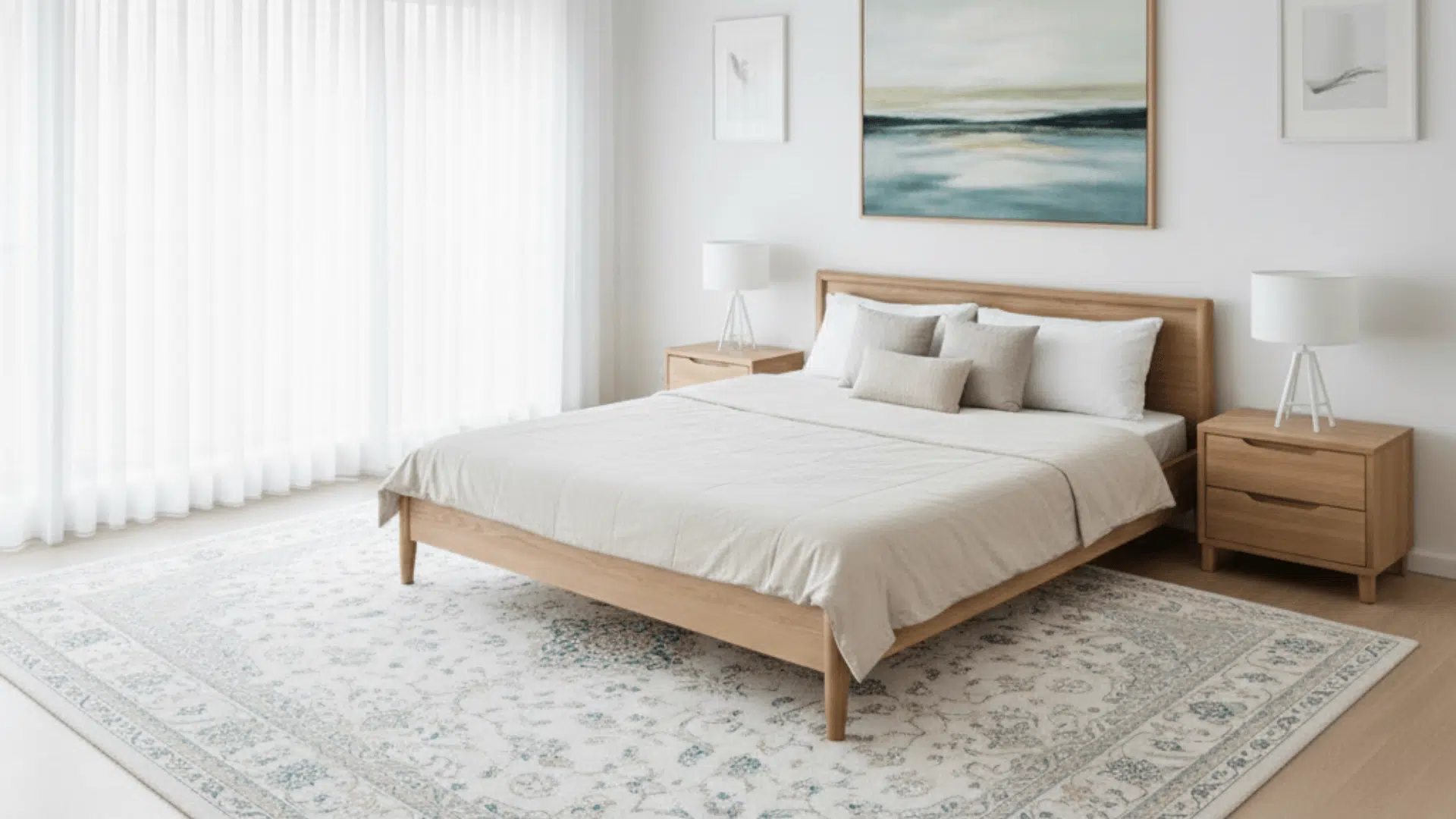

Rug placement can make a room feel finished or entirely off.
In bedrooms especially, the wrong rug size or position can throw off proportions, make the space feel smaller, or leave you stepping onto cold floors every morning.
The same is true in living rooms, where rugs anchor furniture and define how the space is used.
Understand exactly how to get rug placement right. How to choose the correct rug size for your bedroom based on bed type, how to place a rug under or around the bed, how living room rug placement works, and the rules for placing a rug under a couch.
Why Rug Placement Matters More Than Rug Style
Most rug mistakes aren’t about color or pattern. They’re about size and placement. A beautiful rug that’s too small will make a room feel disconnected.
A rug placed slightly wrong can make furniture look like it’s floating instead of grounded.
Good rug placement does three things at once:
- It visually anchors furniture
- It defines zones within a room
- It adds comfort exactly where your feet land
Once size and placement are correct, style becomes much easier.
Choosing the Right Rug Size for Your Bed
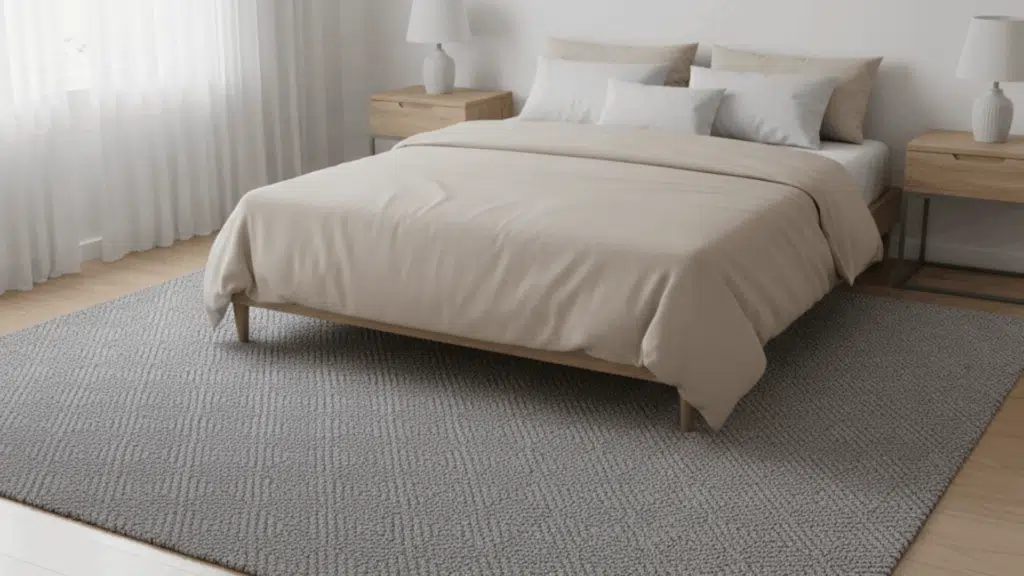
In bedrooms, the rug should relate to the bed first, not the room walls. The bed is the visual and functional anchor, and the rug should extend beyond it enough to feel intentional and comfortable.
1. Twin Bed Rug Sizes
For twin or single beds, a 5×7 or 6×9 rug works well. The rug should extend at least 18–24 inches beyond the sides and foot of the bed. This provides a soft landing when getting in and out without overwhelming a smaller room.
If space is tight, runners on each side of the bed are a practical alternative.
2. Full / Double Bed Rug Sizes
A full bed pairs best with a 6×9 or 8×10 rug. The goal is to have a visible rug on both sides and at the foot of the bed so the rug feels centered, not tucked underneath.
Anything smaller usually looks undersized once nightstands are added.
3. Queen Bed Rug Sizes
For queen beds, 8×10 is the most reliable option. It allows the rug to sit comfortably under the bed while extending enough on all sides to be functional.
In larger bedrooms, a 9×12 can create a more expansive, hotel-style look, especially if nightstands sit fully on the rug.
4. King Bed Rug Sizes
King beds require larger rugs to stay proportional. A 9×12 is typically the minimum, while a 10×14 works beautifully in spacious rooms.
The rug should extend well beyond the bed’s width and foot so the scale feels balanced, not crowded.
How to Use an Area Rug in a Bedroom
Rug placement in bedrooms isn’t one-size-fits-all. The right approach depends on room size, layout, and how much floor coverage you want.
1. Placing a Rug Under the Bed
This is the most common and visually cohesive option. The rug should sit under the lower two-thirds of the bed, extending out on both sides and at the foot.
Nightstands can either sit on the rug or off it; both work as long as the rug is large enough. This placement grounds the bed and makes the room feel calm and intentional.
2. Rugs Beside the Bed
In smaller rooms where a large rug isn’t practical, placing runners or small area rugs on each side of the bed is a smart alternative.
It delivers comfort exactly where needed without forcing an oversized rug into a tight space. This option works especially well in narrow bedrooms.
2. Rug at the Foot of the Bed
A rug placed horizontally at the foot of the bed adds texture and softness without dominating the room. It’s best used as a complement to other rugs or when the bed already sits on carpet.
This approach is more decorative than functional but adds visual interest.
Living Room Rug Placements for The Perfect Look
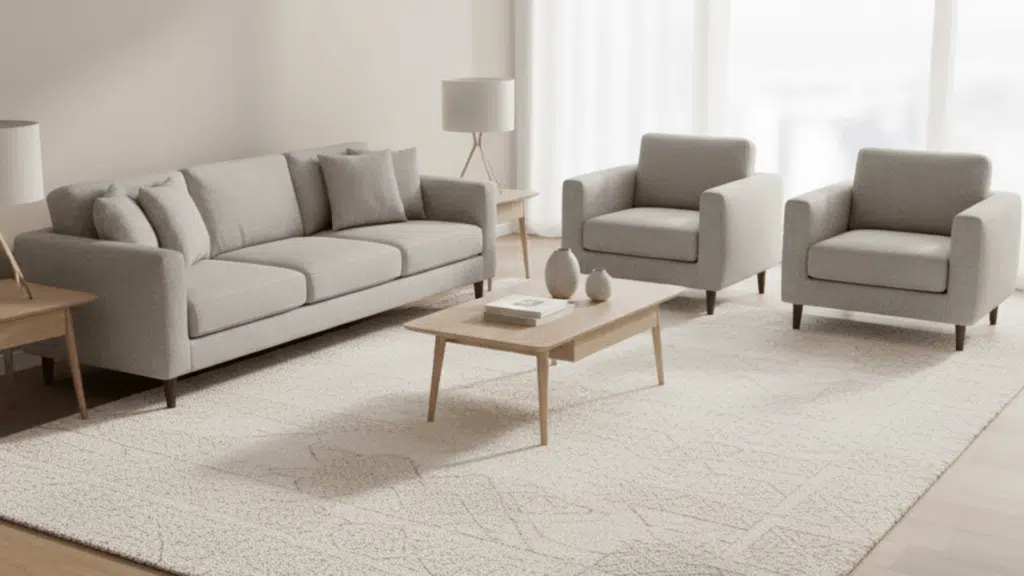
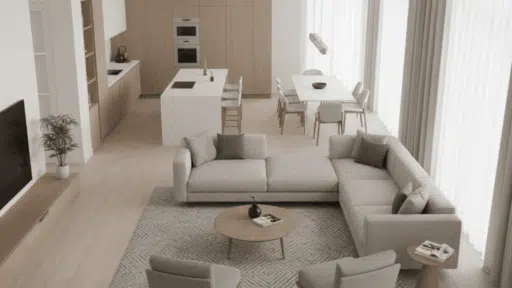
Living room rug placement follows a different logic. Here, the rug’s job is to anchor seating and create a defined conversation area.
| Layout Style | How the Rug Is Placed | Best For |
|---|---|---|
| All Furniture Legs on the Rug | The rug extends fully under the sofa, chairs, and coffee table | Large living rooms, open layouts |
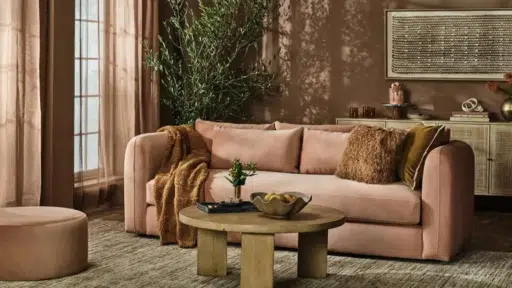
| Front Legs on the Rug | Only the front legs of the sofa and chairs rest on the rug | Most living rooms are medium-sized spaces |
| Floating Rug (Centered) | The rug sits between the furniture without touching the legs | Small rooms, apartments with tight layouts |
| Sectional with Rug Under Chaise | The rug extends under the chaise portion of a sectional | Sectional sofas |
The biggest mistake in living rooms is choosing a rug that’s too small and placing it in the center of the floor without touching any furniture. This makes the space feel disconnected. A rug should always relate to the sofa and chairs.
Some Simple Rules for Keeping a Rug Under the Couch
There are three proven ways to place a rug under a couch. The right choice depends on room size and furniture layout.
1. All Legs on the Rug
This is the most polished option and works best in larger living rooms. The rug sits fully under the sofa and chairs, creating a unified seating zone. It visually expands the space and feels intentional.
2. Front Legs on the Rug
This is the most common and versatile rule. The front legs of the couch and chairs sit on the rug, while the back legs stay off.
It anchors the furniture without requiring an oversized rug. If you’re unsure, this is usually the safest choice.
3. Floating Rug (Small Spaces Only)
In compact rooms, a rug can float between furniture pieces without touching them, but it must still be proportional.
This works best with smaller rugs and tight layouts, though it’s generally less visually grounding.
Rug Size and Placement Based on Different Situations
Every room has constraints, and rug placement should respond to them.
In open-plan spaces, rugs are excellent for defining zones. A living room rug should sit fully within the seating area, while a separate rug can define a dining or reading space nearby.
In small apartments, avoid rugs that run wall-to-wall. Leaving 12–18 inches of visible floor around a rug helps the room feel larger and less crowded.
For rooms with heavy furniture, choose rugs large enough that furniture doesn’t perch awkwardly on the edges. Partial contact looks intentional; barely touching does not.
Design Tips for Perfect Rug Placement
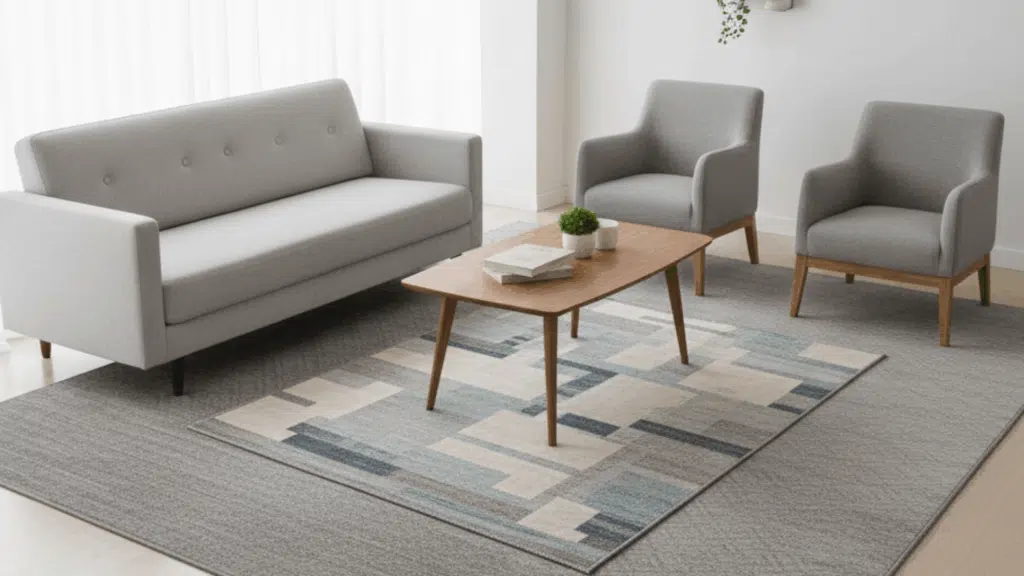
Thoughtful rug placement anchors furniture, defines zones, and improves how a room functions.
Small spacing and proportion choices make the difference between a room that feels balanced and one that feels unfinished.
- Leave a visible border of floor around the rug whenever possible. This frames the rug and keeps the room from feeling wall-to-wall heavy.
- Layering rugs can add depth. A large neutral rug under the bed or sofa paired with a smaller patterned rug adds texture without clutter.
- Matchrug material to function. Bedrooms benefit from softer, plusher rugs. Living rooms perform better with low-pile or flatweave rugs that allow furniture to sit evenly.
- Keep proportions consistent. A large bed or sectional needs a rug that visually supports its size.
When rug size, placement, and material align with the room’s layout, the space feels grounded, comfortable, and intentionally designed.
What to Consider Before Buying a Rug
Before buying a rug, it’s important to think beyond color and pattern. Size, function, and long-term upkeep determine whether a rug truly works in your space or becomes a regret.
| Factor | What to Consider | Why It Matters |
|---|---|---|
| Room & Furniture Size | Measure the full furniture layout, not just empty floor space | Prevents rugs from looking too small or disconnected |
| Room Function | High-traffic rooms need durability; bedrooms need softness | Ensures the rug matches daily use and comfort needs |
| Material & Pile Height | Low-pile for easy cleaning, plush pile for comfort | Affects maintenance, furniture stability, and longevity |
| Color & Pattern | Lighter colors show wear faster; patterns hide stains | Impacts how quickly the rug looks worn or dated |
| Maintenance Needs | Vacuuming, spot cleaning, and deep cleaning frequency | Prevents buying a rug that’s difficult to care for |
| Budget & Longevity | Invest in the correct size over trend-driven styles | A properly sized rug looks better and lasts longer |
Choosing a rug with these factors in mind ensures it fits your space, supports daily use, and maintains its appearance over time.
Final Thoughts
Bedroom rug placement works best when comfort, proportion, and flow are treated as priorities rather than afterthoughts.
A correctly sized rug that extends beyond the bed creates warmth underfoot and visually anchors the room, making the space feel calm and intentional.
The same approach applies to living rooms, where proper rug placement connects seating, defines zones, and prevents furniture from feeling scattered.
Size should always come first, followed by thoughtful placement and then style.
If you have a rug layout that works well, or a placement challenge you’re trying to solve, share it in the comments to help others make confident choices.

With a Master in Architectural Studies from University of Pennysylvania, Marwa Haydar has pioneered living spaces since 2005. Her expertise, initially honed in a prestigious architectural firm, is evident in her approach to creating environments. Marwa became part of our team in 2019 and has since been a driving force in our home improvement section, known for her practical yet stylish solutions. She’s been spearheading our design workshops since then, infusing her passion for teaching into her work. In her leisure time, Marwa enjoys exploring historic architecture and is an enthusiastic pottery hobbyist, further enriching her understanding of form and texture.