
Cucumbers rarely grow alone in thriving gardens, and the plants around them often play a quiet but essential role.
When chosen carefully, nearby crops can influence growth, soil balance, and overall plant health in subtle ways.
This is where companion planting for cucumbers becomes especially useful.
Thoughtful plant pairings can shape how cucumbers develop through the season, affecting everything from pest activity to space use.
Some plants offer protection, others provide support, and a few can cause problems if planted too close.
Understanding these relationships helps create garden beds that work together naturally, setting the stage for steady growth and dependable harvests.
What is Companion Planting?
Companion planting is a simple gardening practice where different plants are grown close together to help each other grow better.
Some plants help keep pests away, while others support pollination or improve how nutrients are used in the soil.
This method is based on observing how plants interact when planted nearby.
Instead of growing a single crop on its own, companion planting focuses on creating plant combinations that work well together.
When the right plants are paired, they can support healthier growth, reduce common garden problems, and make better use of space.
With basic planning, companion planting can help maintain steady plant growth and more consistent harvests.
Best Companion Plants for Cucumbers

The best companion plants for cucumbers are those that help manage pests, encourage pollination, and reduce plant stress without competing for nutrients or space.
These plants grow well alongside cucumbers and contribute to balanced garden beds:
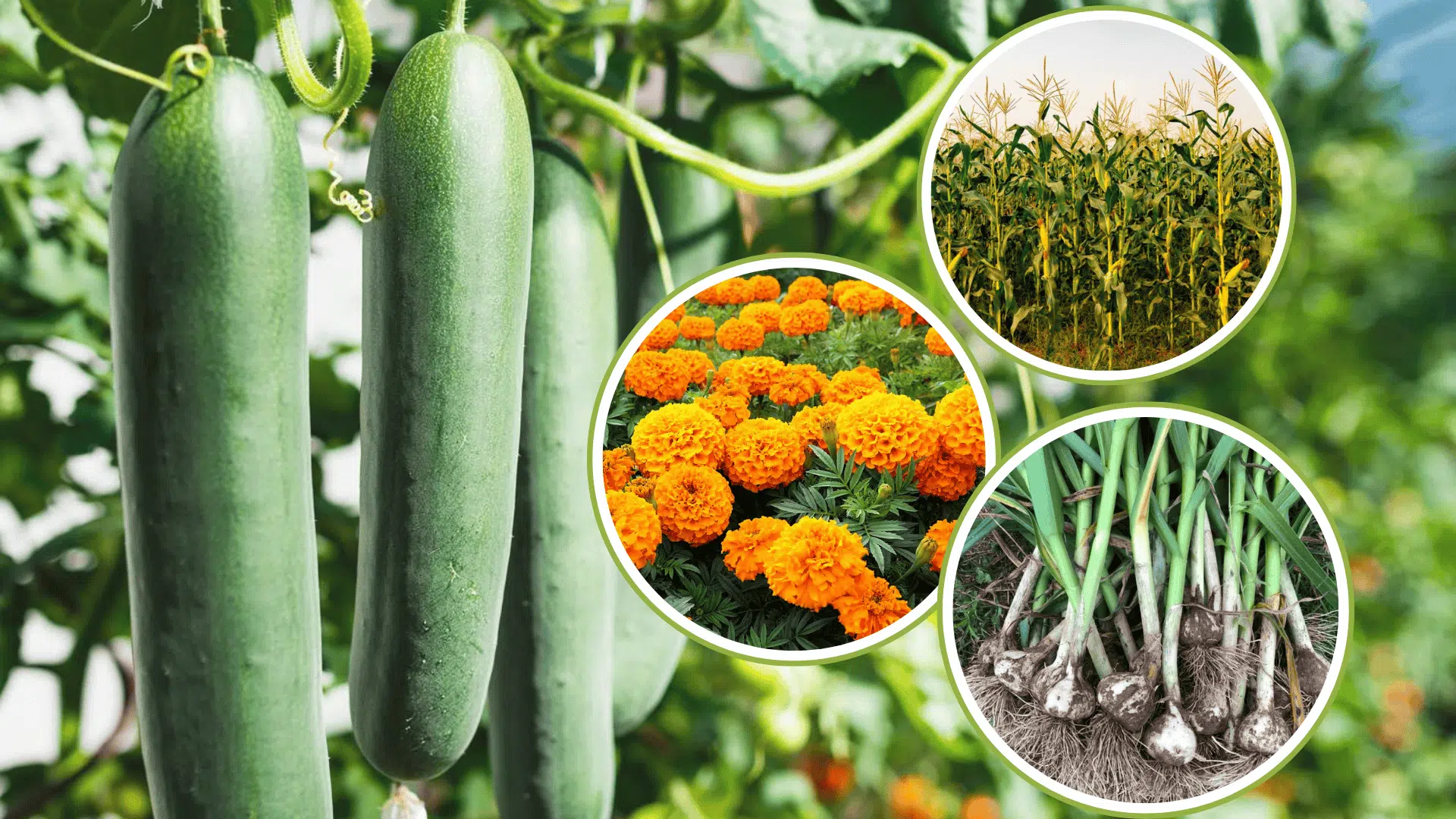
1. Marigolds
Marigolds support cucumber plants by limiting pest pressure in the surrounding area. Their scent helps reduce the presence of insects that commonly damage cucumber leaves and stems.
These flowers also encourage beneficial insects, which helps maintain balance in garden beds.
Marigolds grow well under conditions similar to cucumbers and don’t compete much for nutrients or moisture.
They can be planted along borders or between rows without affecting vine growth.
2. Nasturtiums
Nasturtiums act as a protective plant when grown near cucumbers by attracting pests away from the main crop.
Aphids and beetles often prefer nasturtium leaves, which reduces stress on cucumber plants.
Their spreading growth helps cover bare soil, limiting weed development and reducing moisture loss.
Nasturtiums tolerate similar sunlight and watering conditions, allowing them to grow alongside cucumbers without conflict.
This pairing helps manage common garden issues naturally while supporting steady vine growth and better use of planting space.
3. Dill
Dill contributes to a healthier cucumber bed by attracting insects that feed on harmful pests.
Ladybugs and hoverflies are commonly drawn to dill flowers, which helps control aphid populations.
Dill grows upright, making it easy to place near cucumber plants without crowding vines.
When planted with proper spacing, it does not compete for nutrients or water.
Dill also adapts well to similar soil and sunlight needs, making it suitable for mixed planting areas focused on long-term balance.
4. Basil
Basil supports cucumber growth by helping manage insects and improving overall plant conditions nearby.
Its scent discourages pests and attracts pollinators that aid flowering plants. Basil thrives in warm, similar soils, making it suitable for cucumber beds.
Its compact growth habit makes it easy to position near vines without limiting airflow.
Basil also helps maintain garden diversity, which can reduce the spread of common plant problems across a single crop area.
5. Oregano
Oregano functions as a low-growing companion that supports cucumbers through pest reduction and ground coverage.
Its aroma discourages insects that often affect vegetable crops. Oregano spreads slowly, helping cover exposed soil while allowing cucumber vines enough space to grow freely.
It requires minimal maintenance and adapts well to the same watering schedule as cucumbers.
When planted along edges or between rows, oregano contributes to healthier growing conditions without interfering with root development or sunlight access.
6. Chives
Chives pair well with cucumbers by helping reduce insect activity near young plants. Their strong scent limits pest presence and supports balanced growth in mixed beds.
Chives have shallow roots, which prevents competition with cucumber plants for deeper soil nutrients.
They grow upright and compact, making them easy to place near vines.
Chives also tolerate similar light and moisture conditions, allowing them to remain productive throughout the cucumber growing period without affecting plant spacing.
7. Radishes
Radishes are useful companions during the early stages of cucumber growth.
They mature quickly and can be harvested before cucumber vines spread across the bed.
Radishes help deter beetles and loosen surface soil, which improves water movement and root access.
Their shallow roots prevent nutrient competition, making them suitable for close planting.
This combination allows better space management early in the season while supporting healthier soil conditions as cucumbers continue to develop.
8. Beans
Beans benefit cucumbers by improving soil fertility over time. As legumes, beans help add nitrogen to the soil, which supports steady plant growth.
Their growth pattern allows them to coexist without interfering with cucumber vines when spaced correctly.
Beans also attract different insects, reducing pest concentration in one area.
This pairing helps maintain soil balance while supporting healthy foliage development and consistent growth across the planting area.
9. Peas
Peas support cucumber plants in a similar way to beans by contributing to soil health. They help enrich the soil without competing aggressively for nutrients.
Peas grow early in the season and can be removed as cucumber plants expand, allowing smooth transitions in bed use.
Their root systems remain shallow, reducing interference with cucumber roots.
This pairing works well in gardens focused on efficient planting cycles and steady soil improvement.
10. Corn
Corn works well with cucumbers when used as a natural support structure.
Its tall stalks provide light shade during hotter periods, which helps reduce stress on cucumber vines. Corn roots grow deep, minimizing competition for surface nutrients.
When spaced properly, this combination allows both plants to grow without restriction.
Corn also helps break wind flow, creating a more stable growing environment for climbing cucumber plants.
11. Sunflowers
Sunflowers act as a vertical companion plant that benefits cucumbers through shade control and insect activity.
Their height helps protect cucumber vines from excessive sun exposure during peak heat.
Sunflowers attract pollinators, which supports overall garden productivity. Their deep root systems prevent competition for surface nutrients.
When planted along the edges of cucumber beds, sunflowers contribute to structural balance without interfering with vine spread.
12. Lettuce
Lettuce grows well near cucumbers due to its shallow roots and short growth cycle.
It benefits from partial shade provided by cucumber vines, which helps prevent early bolting.
Lettuce does not compete heavily for nutrients and can be harvested multiple times throughout the season.
This pairing supports efficient use of space while helping maintain soil moisture and reducing weed growth between cucumber plants.
13. Spinach
Spinach functions as a suitable companion by growing quickly beneath cucumber vines.
It prefers cooler soil conditions, which are supported by cucumber leaf cover later in the season.
Spinach roots remain shallow, allowing cucumbers to access deeper nutrients without conflict.
This combination supports productive planting cycles and allows multiple harvests without disturbing cucumber growth patterns.
14. Beets
Beets grow well alongside cucumbers because they use different soil layers.
Their roots develop deeper without interfering with cucumber vines when spaced properly.
Beets do not attract the same pests, which helps limit insect buildup. They also tolerate similar watering routines, making maintenance easier.
This pairing supports soil diversity and balanced nutrient use across the garden bed.
Beets also work well in shared beds, especially when growing beets from seed with proper spacing and timing.
15. Carrots
Carrots support cucumber beds by loosening deeper soil layers as they grow. Their roots improve soil structure, allowing better water movement and aeration.
Carrots do not compete for surface nutrients and grow well under similar conditions.
This combination helps maintain soil health while allowing both crops to develop without overcrowding.
16. Onions
Onions help reduce pest activity near cucumber plants due to their strong scent.
They grow upright and compact, making them easy to place without limiting vine spread.
Onions have shallow root systems that avoid competition for deeper nutrients.
This pairing supports balanced plant spacing and contributes to healthier growing conditions throughout the season.
17. Garlic
Garlic functions as a protective companion by helping deter insects and soil-based issues. Its growth pattern allows it to fit easily between cucumber plants without crowding.
Garlic requires minimal maintenance and adapts to similar soil conditions.
Growing garlic fits well between cucumber plants.
This pairing helps reduce stress on cucumber plants while maintaining steady growth across the planting area.
18. Calendula
Calendula supports cucumbers by attracting beneficial insects and improving garden diversity. Its flowers help draw pollinators while limiting harmful insect populations.
Calendula grows well in similar sunlight conditions and does not interfere with cucumber vines.
When planted around the edges of beds, it helps maintain balance and supports long-term plant health.
19. Borage
Borage benefits cucumbers by encouraging pollination and attracting helpful insects. Its deep roots help improve soil structure without competing for surface nutrients.
Borage grows quickly and adds organic matter to the soil as it matures.
This pairing supports more vigorous flowering activity and contributes to a healthier growing environment for cucumber plants.
After selecting suitable companion plants, it is equally important to know which plants should not be grown near cucumbers, as certain combinations can interfere with growth and increase garden issues.
Plants to Avoid Near Cucumbers

Keeping these plants away from cucumber beds helps reduce growth issues, limits disease risk, and supports steady development throughout the season.
- Potatoes: Potatoes and cucumbers compete heavily for nutrients and water. They are also prone to similar diseases, which can spread quickly when planted nearby.
- Sage: Sage prefers dry soil, while cucumbers need consistent moisture. This difference can affect growth conditions and reduce plant performance.
- Fennel: Fennel releases natural compounds into the soil that can slow the growth of nearby plants, including cucumbers.
- Melons: Melons and cucumbers attract the same pests and compete for space, which can increase pest pressure.
- Squash: Squash vines spread aggressively and can crowd cucumbers, limiting airflow and increasing disease risk.
- Pumpkins: Pumpkin plants grow large and compete for sunlight, space, and nutrients, which may affect cucumber development.
Layout Tips for Companion Planting with Cucumbers
A thoughtful layout helps cucumbers grow alongside companion plants without competition.
Proper placement supports airflow, balanced sunlight, and steady moisture levels.
When spacing and plant height are planned in advance, garden beds remain organized and easier to manage throughout the season.
Key layout practices to follow:
- Allow enough spacing so cucumber vines can spread without crowding nearby plants
- Position taller companions where they will not block direct sunlight
- Use vertical supports to keep vines off the ground
- Place low-growing plants near the base without restricting air movement
- Group plants with similar water and soil needs together
A well-arranged planting layout reduces stress on cucumber plants and helps maintain stable growing conditions, leading to healthier vines and more consistent growth over time.
Conclusion
Companion planting is not just about placing plants side by side; it is about creating balance within the garden.
Using the right combinations of flowers, herbs, vegetables, and root crops can promote healthier vines, more consistent growth, and reduce common issues.
At the same time, knowing which plants to keep away from helps protect cucumbers from competition and disease.
Layout planning is crucial since spacing and plant height affect airflow, light, and moisture.
When these elements come together, companion planting for cucumbers becomes a practical approach for building stronger garden beds.
Have certain plant pairings worked well, or caused issues? Share experiences or favorite combinations in the comments below.

With a Master’s in Landscape Architecture from the University of Virginia, Sophia Stephenson has dedicated the last 20 years to creating and maintaining vibrant outdoor spaces. Her professional journey started in landscape design, where she gained a reputation for innovative and sustainable approaches. Sophia became a part of our editorial team as a freelancer in 2019, offering a fresh perspective on outdoor living. Since 2020, she has been the chief for our outdoor design content, blending aesthetic appeal with environmental stewardship. In her leisure time, Sophia is a keen photographer, capturing the beauty of natural landscapes, a hobby that complements her professional expertise.