
Air plants have become wildly popular for their sculptural forms, zero soil requirements, and flexibility in home décor.
These unusual plants from the Tillandsia genus attach to trees in their native habitats, absorbing moisture and nutrients through specialized leaf structures rather than roots.
Their ability to thrive without traditional potting makes them perfect for creative displays, from hanging glass globes to driftwood mounts to minimalist wire holders.
The proper care covers air plant basics, light, watering and drying, temperature and humidity, fertilizing, common problems, blooming, and easy display ideas.
What Are Air Plants?
Air plants belong to the Tillandsia genus within the bromeliad family. Unlike most houseplants, they don’t need soil to survive. In nature, they’re epiphytes that grow on trees, rocks, and other surfaces, using their roots mainly for anchoring rather than nutrient uptake.
These plants “eat and drink” through specialized structures called trichomes, tiny scales covering their leaves that absorb moisture and nutrients directly from the air.
The density and appearance of trichomes vary between species, creating the silvery or fuzzy coating you see on many air plants.
Air plants fall into two general categories based on their native habitats. Xeric types come from drier environments and typically have more pronounced trichomes, giving them a silvery, fuzzy appearance.
They tolerate brighter light and need less frequent watering. Mesic types originate from humid forests and have smoother, greener leaves with fewer visible trichomes. They prefer filtered light and more regular moisture.
How to Water Air Plants?

The most important rule for air plant care is this: water them thoroughly, then ensure they dry completely afterward. Trapped moisture causes rot, which kills air plants faster than underwatering.
1. Soaking as Your Primary Method
Submerge air plants completely in room-temperature water for 20–30 minutes once per week. Use a bowl, sink, or container large enough to fully immerse the plants.
After soaking, shake off excess water vigorously and place plants upside down or at an angle in a spot with good air circulation to dry for 2–4 hours.
2. Misting to Supplement
Misting between soaks can help in arid environments, but it’s not a replacement for proper soaking in most homes.
Misting only wets the leaf surface without penetrating to the base, where the plant absorbs water most effectively. If you mist, do it in the morning so the leaves dry before evening.
Frequency Framework
Adjust watering based on your conditions:
- Standard indoor conditions: Soak once per week
- Dry climates or winter heating season: Soak twice per week or add misting between soaks
- High humidity environments: Soak every 10–14 days
- Xeric types: Can go longer between waterings
- Mesic types: May need slightly more frequent watering
Drying Your Air Plants
Shake plants firmly after soaking to remove water trapped between leaves. Turn plants upside down or place them at an angle so water drains away from the base.
Set them in a location with good air circulation, near a fan, open window, or naturally airy spot.
Never put wet air plants in enclosed containers, tight terrariums, or flat on solid surfaces where water can pool.
Proper Light Conditions for An Air Plant

Bright, indirect light keeps air plants healthy and growing well.
In practical terms, this means placing them near east or west-facing windows where they receive several hours of gentle morning or evening sun.
Or a few feet back from south-facing windows where sheer curtains filter direct sun. North-facing windows usually don’t provide enough light intensity.
- Signs of too much light: Bleached or yellowing leaves, brown scorched patches, dried-out appearance even with regular watering.
- Signs of too little light: Stretched, elongated growth, dull leaf color, weak or floppy leaves, slow or no growth.
Avoid harsh direct midday sun, which can scorch leaves and cause brown, crispy patches. However, some gentle morning sun or late afternoon rays won’t harm most air plants and can actually improve their coloring.
Air Plant Temperature and Humidity Needs

Air plants thrive in typical indoor temperatures between 50–90°F, with the sweet spot being 60–80°F. They prefer stable conditions without dramatic temperature swings.
Keep them away from heating vents, air conditioning blasts, drafty windows, and radiators that create hot or cold spots.
Humidity helps air plants absorb moisture between waterings. Most homes provide adequate humidity, but if you live in an arid climate or run heating systems that dry the air significantly.
Consider grouping air plants together to create a more humid microclimate or placing them in naturally humid rooms like bathrooms (provided there’s good airflow).
Airflow is just as critical as humidity. Stagnant air around wet plants creates perfect conditions for rot. This is why tightly sealed terrariums often fail with air plants.
Air Plant Fertilizer Needs
Air plants don’t strictly require fertilizer to survive, but feeding them supports stronger growth, more vibrant colors, and better blooming.
Use fertilizers specifically formulated for bromeliads, air plants, or orchids, diluted to quarter or half strength. Regular houseplant fertilizers can be too strong and damage delicate leaf tissues.
Add diluted fertilizer to your soaking water once per month during the growing season (spring and summer).
Simply mix the fertilizer into the water before submerging your plants, then proceed with normal soaking and drying steps. Reduce or eliminate feeding during fall and winter when growth naturally slows.
How to Take Care of Pests and Other Problems
Most air plant problems stem from watering issues rather than pests or disease. Recognizing symptoms early and adjusting your care routine prevents small issues from becoming fatal.
1. Rot

Caused by trapped moisture and insufficient drying time after watering. Rot typically starts at the base where leaves connect and appears as darkening, mushy, or slimy tissue.
Once rot sets in, it’s usually fatal. Prevention is key: always dry plants completely after watering, ensure good airflow, and avoid leaving plants in standing water or enclosed, humid spaces.
2. Dehydration

Shows up as curled, rolled, or crispy leaf tips and edges. Severely dehydrated plants feel lightweight and papery.
Increase soaking frequency or duration, check that your environment isn’t too dry, and ensure plants are actually absorbing water during soaks (very dehydrated plants may need longer initial soaks to rehydrate).
3. Pests

Air plants occasionally attract mealybugs, scale insects, or aphids, especially if kept near other infested houseplants.
Check leaf bases and crevices regularly for cottony white masses (mealybugs) or small brown bumps (scale). Isolate affected plants immediately. Rinse thoroughly under running water to dislodge pests.
For persistent infestations, spot-treat with rubbing alcohol on a cotton swab or use diluted insecticidal soap. Improve air circulation and inspect other nearby plants.
Life Cycle and Blooming Stages
Air plants bloom once during their lifetime, producing colorful flower spikes that can last several weeks to months, depending on the species.
The bloom often involves dramatic color changes; leaves may flush pink, red, or purple as the flower stalk develops. While beautiful, blooming signals the beginning of the end for the mother plant.
After flowering, the plant begins producing “pups”. Small offset plants that grow from the base of the mother plant.
These pups are genetic clones that will eventually mature into full-sized plants capable of blooming themselves.
Pups typically appear within a few months of flowering and can be separated once they reach about one-third the size of the mother plant, or left attached to form clumps.
How to Display Air Plants
Display methods must allow for adequate airflow, access to light, and easy removal for watering.
Avoid permanently gluing or fixing plants in ways that prevent you from taking them out for their weekly soak.
1. Glass Globes

Open or partially open glass orbs create modern, minimalist displays that showcase air plants beautifully. Choose globes with large openings (3+ inches) to allow airflow and easy plant removal.
Hang at various heights for visual interest, ensuring plants can be lifted out easily for their weekly soaking sessions.
2. Wire Holders and Macramé

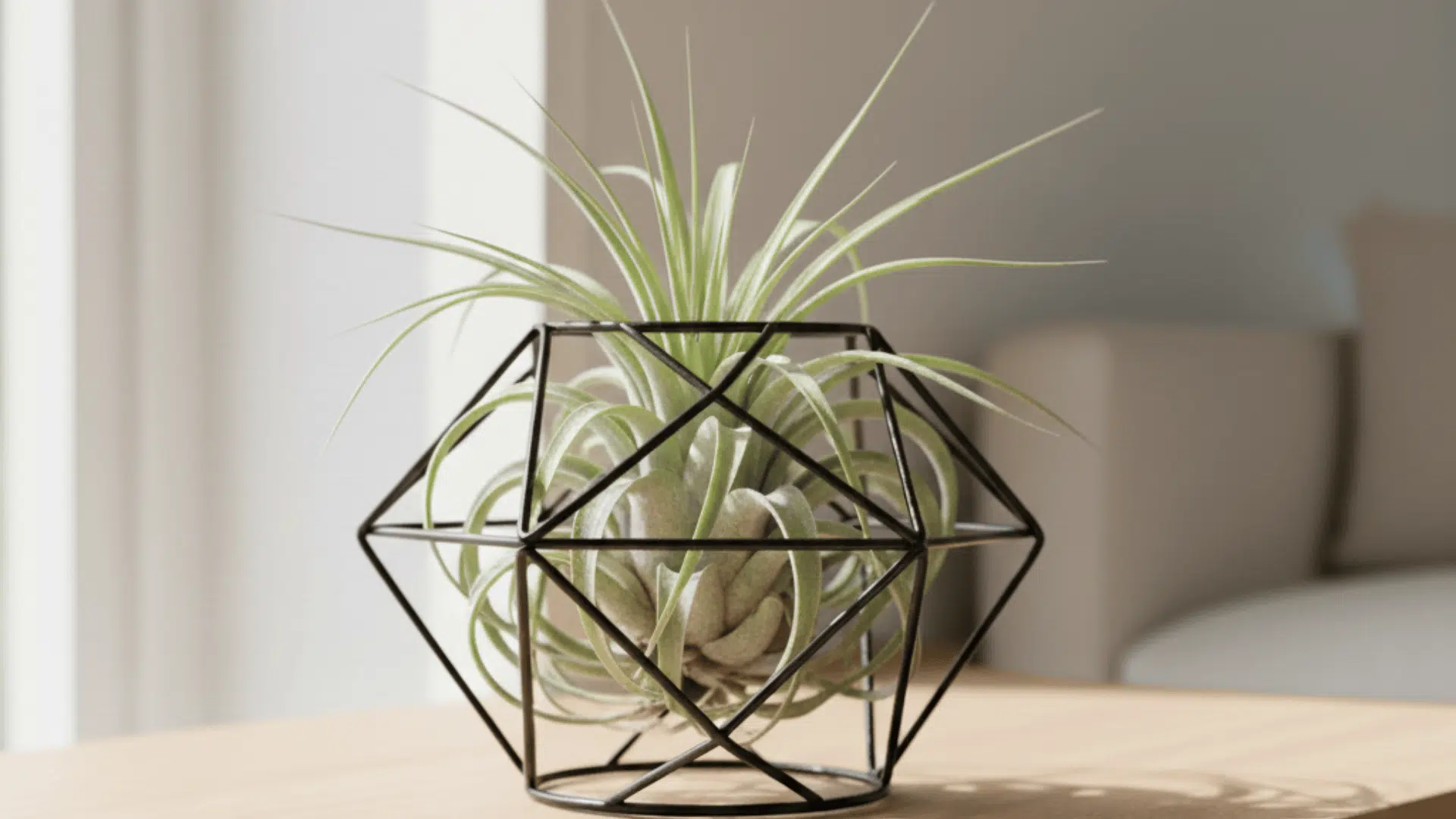
Wire cradles, cages, or macramé plant hangers showcase air plants while maintaining excellent airflow on all sides. These work exceptionally well for larger specimens and provide 360-degree light exposure.
The open structure makes watering access simple: unhook the plant, soak it, dry it completely, and return it to the holder.
3. Driftwood Mounts

Attach air plants to driftwood pieces using wire, fishing line, or plant-safe adhesive applied only to the root area.
Driftwood provides natural aesthetics and can be hung on walls or propped on shelves as living art.
For easiest maintenance, use removable wire attachments that let you take plants off for soaking without damaging the mount or plant.
4. Ceramic Rings and Stands

Simple ceramic or metal stands elevate individual air plants on desks, shelves, or side tables for focused display.
Look for designs that hold plants at an angle to prevent water pooling at the base after watering.
These minimalist holders work well for showcasing specimen plants and fit seamlessly into modern home décor while ensuring proper drainage.
5. Stone and Wood Trays

Arrange multiple air plants on decorative trays filled with sand, pebbles, or small stones to create cohesive groupings. This approach works well for coffee tables or console displays where you want varied textures and forms together.
Keep plants elevated above any moisture, and group different species to showcase the diversity within your collection while maintaining easy access for care.
Conclusion
Air plants offer incredible flexibility for creative displays while requiring surprisingly simple care.
Master the basics, proper soaking and complete drying, bright indirect light, and good airflow, and these architectural plants will thrive for years, blooming and producing pups that expand your collection.
Their soil-free nature makes them perfect for unconventional displays that would be impossible with traditional potted plants, from hanging glass globes to mounted wall art to minimalist desktop arrangements.
With weekly watering sessions and attention to drying, your air plants will reward you with healthy growth and the occasional spectacular bloom that signals new generations to come.

Jordan Mathews, who has a degree in horticulture from Texas A&M University, has been a guiding force in plant health and sustainable gardening for over 16 years. His career began with a role at a renowned botanical garden, where he deepened his understanding of plant physiology and eco-friendly cultivation methods. Jordan joined our website as a freelancer in 2020, becoming a go-to expert for readers seeking advice on nurturing diverse plant species apart from offering insights grounded in scientific knowledge and practical experience. Beyond his professional achievements, Jordan is a keen nature photographer, capturing the beauty of flora in its immensely diversified forms.