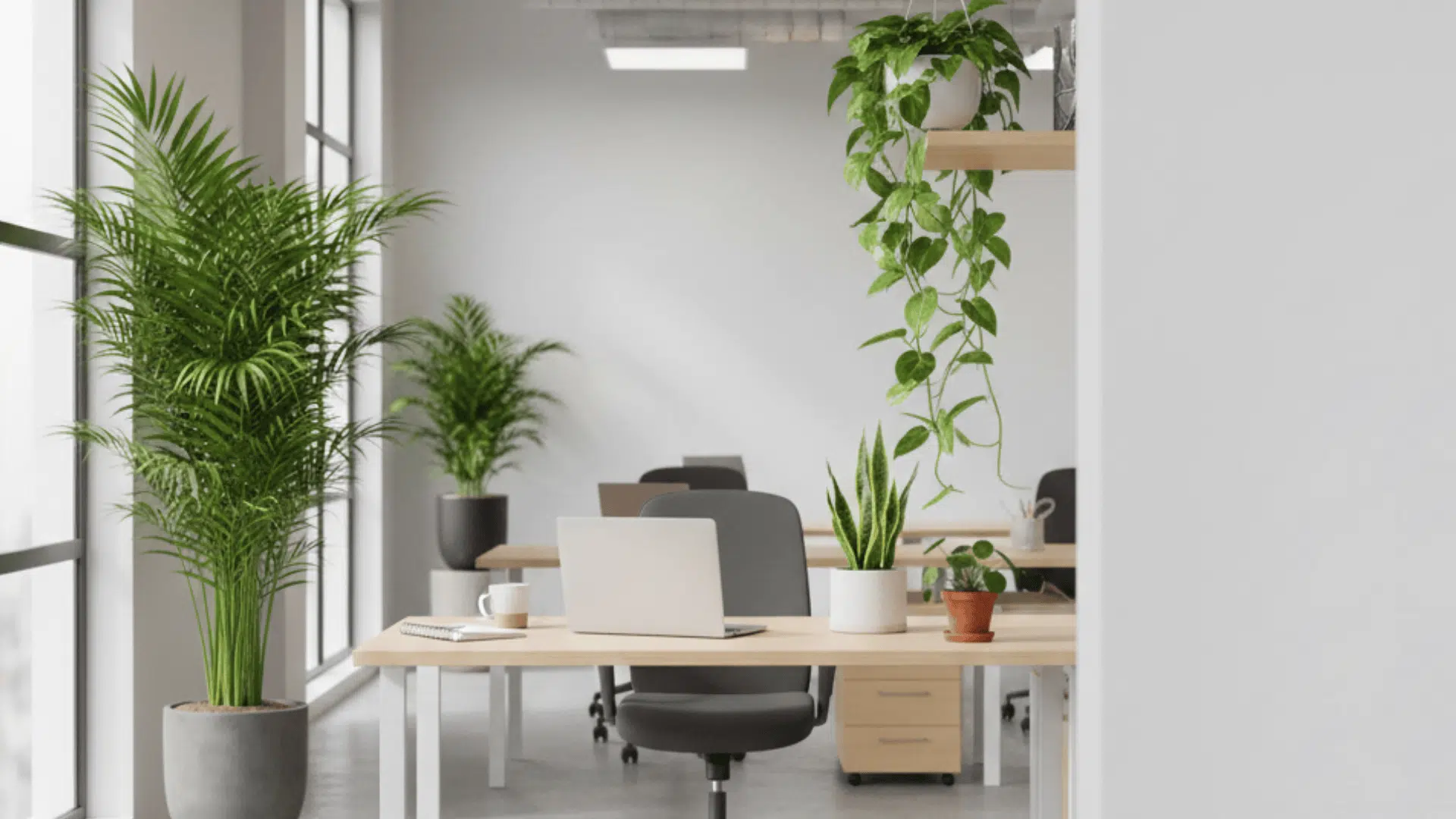

Looking for the best office plants that survive real workdays, low light, AC dryness, and the occasional “I forgot to water”?
The search is over. People across office forums keep recommending the same few winners because they look good on Zoom, stay tidy, and bounce back from mistakes.
You’ll find practical, community-backed picks for desks and floor corners, plus a quick way to choose based on your lighting and schedule.
We’ll also set realistic expectations about “air quality” benefits, plants boost comfort and vibe, but they won’t replace proper ventilation.
How to Decide on the Best Plant for Your Office
Choosing the best office plants is easier when you match the plant to your workspace, not the other way around. Focus on these factors first to know which one to go for.
Check your light: No window means you need to pick low-light need plants like snake plant or ZZ; bright window = try monstera or areca.
Match your watering style: If you forget often, choose drought-tolerant plants (snake, ZZ, dracaena).
Pick the right size: Small desk means compact plants (pilea, peperomia); open corners = taller floor plants.
Think about mess: If you hate cleanup, avoid heavy leaf-drop plants and choose tidy, upright growers.
Consider pets + people: If pets visit or coworkers snack near plants, prioritize non-toxic options where possible.
One smart match beats three “pretty” plants that struggle and keep failing. Remember, its a well-cared-for plant that actually livens up the place.
Low-Light Set-and-Forget Office Plants
Need plants that survive dim corners and missed waterings? These low-maintenance picks stay healthy with minimal care, perfect for busy schedules and low-light offices.
1. Snake Plant (Dracaena trifasciata)
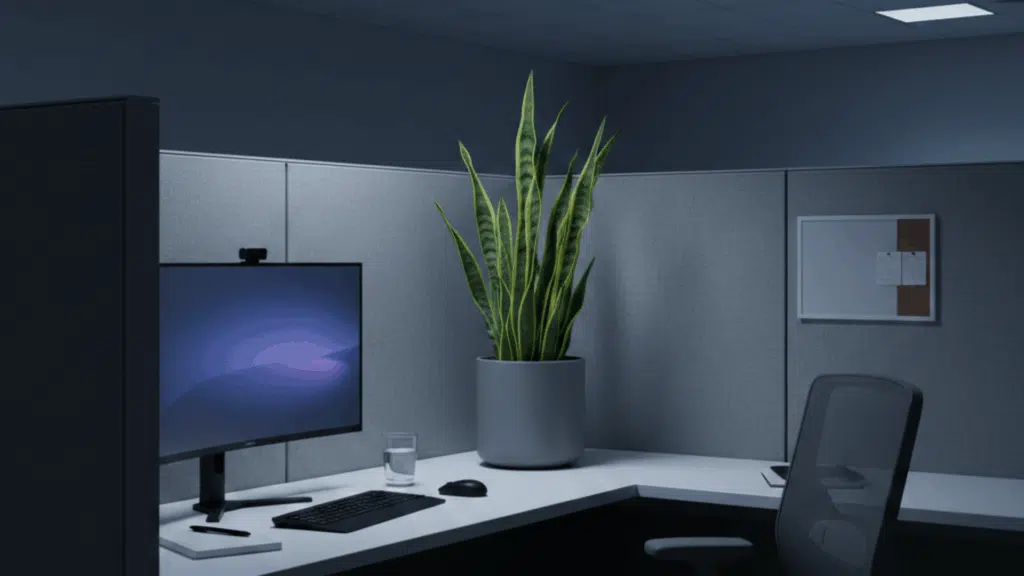
Upright, architectural leaves tolerate low light and missed waterings. Great floor or desk plant that stays tidy and modern, even in dry offices.
Pet note: mildly toxic if chewed.
Size: 1–4 ft (30–120 cm)
Water: Every 2–4 weeks (let soil dry)
Fertilizer: Light, every 6–8 weeks in spring/summer
Avg cost: $15–$40 (4–8″ pot)
2. ZZ Plant (Zamioculcas zamiifolia)
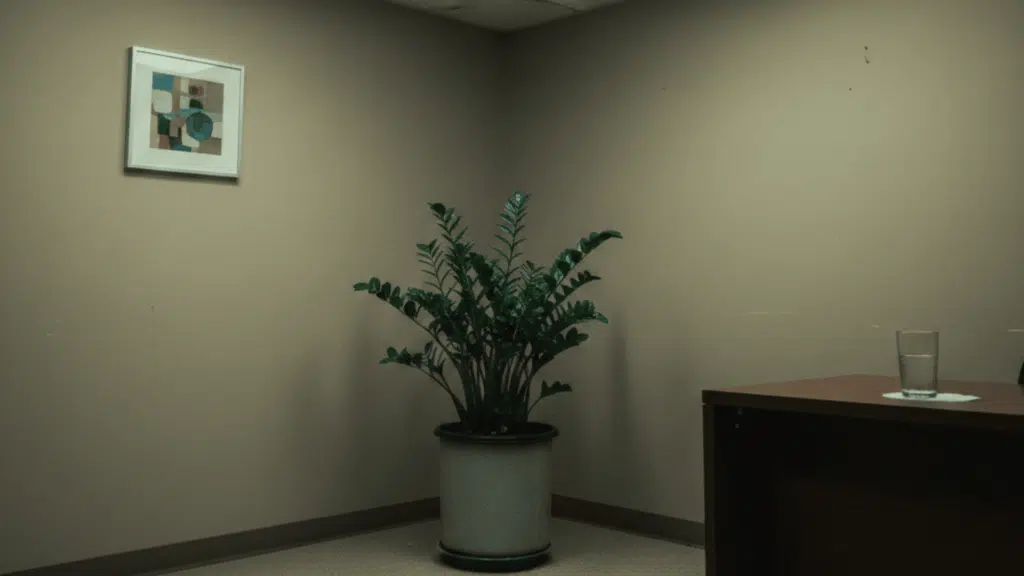
Glossy, upright stems thrive in dim offices and rarely need water. Looks polished with minimal effort and handles inconsistent care well.
Pet note: toxic if ingested.
Size: 2–4 ft (60–120 cm)
Water: Every 2–3 weeks (dry out)
Fertilizer: Monthly, diluted (growing season)
Avg cost: $20–$60
3. Pothos (Epipremnum aureum)
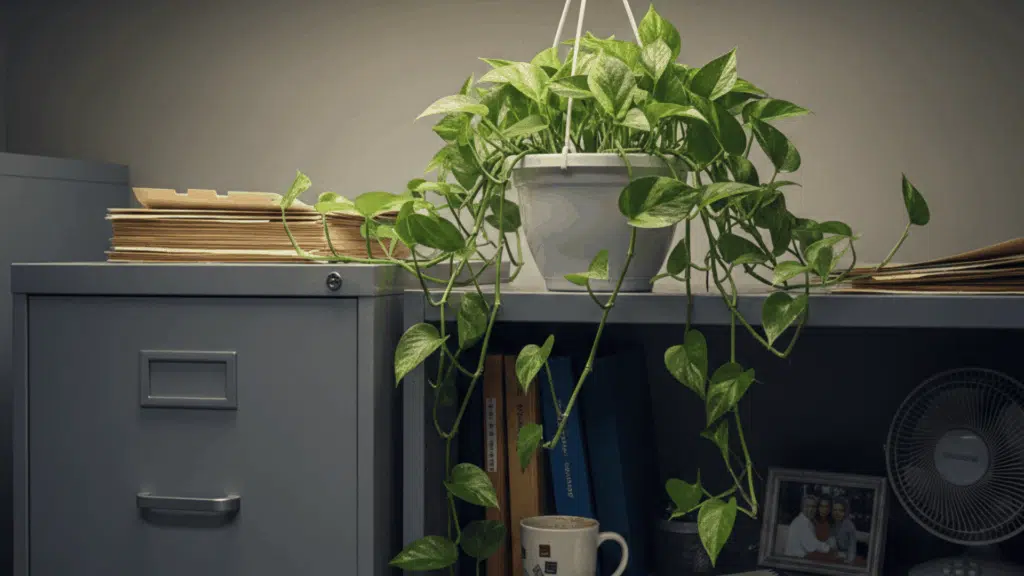
Fast-growing trailing vine that forgives low light and missed waterings. Perfect for shelves and filing cabinets; easy to prune and propagate for a fuller look.
Pet note: toxic.
Size: Trails 3–10+ ft (1–3+ m)
Water: Every 1–2 weeks (when top dries)
Fertilizer: Monthly, diluted
Avg cost: $10–$30
4. Chinese Evergreen (Aglaonema)
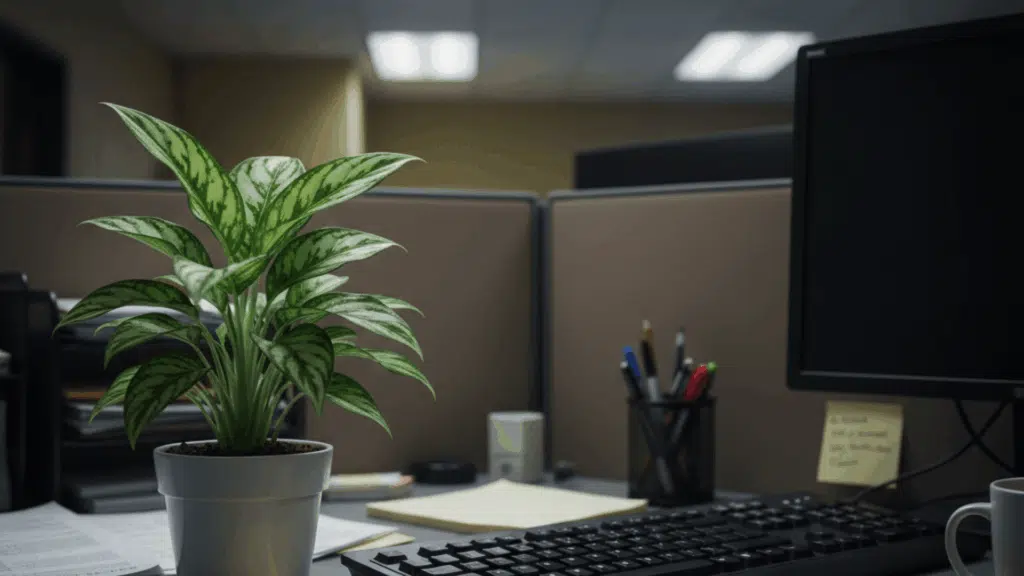
Colorful, patterned leaves brighten dull offices and tolerate low light better than most “pretty foliage” plants. Slow, steady grower with a neat shape.
Pet note: toxic.
Size: 1–3 ft (30–90 cm)
Water: Every 1–2 weeks
Fertilizer: Every 6–8 weeks, diluted
Avg cost: $15–$45
5. Cast Iron Plant (Aspidistra elatior)
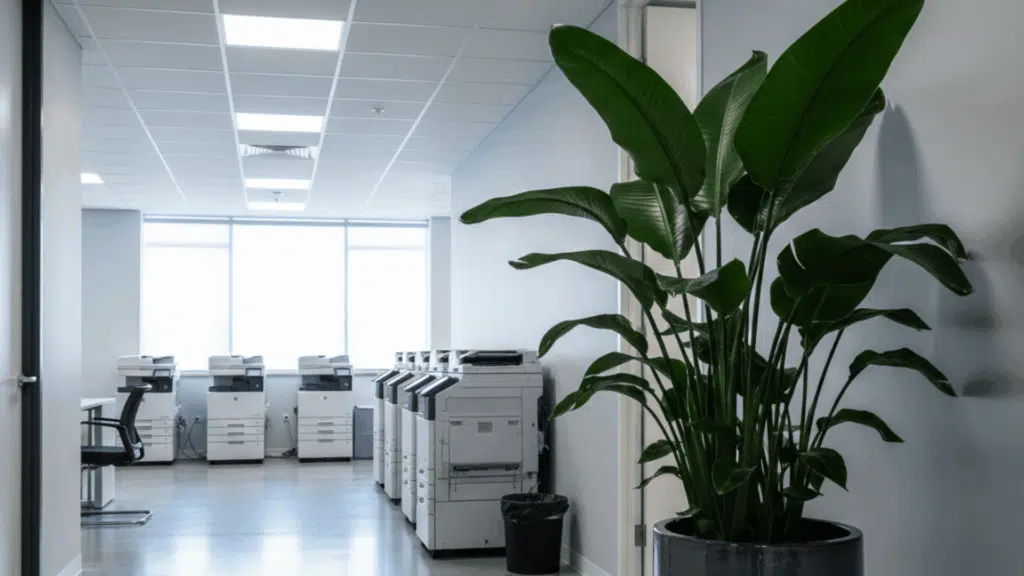
Legendary toughness for dark corners and temperature swings. Broad leaves look lush with almost no fuss, making it ideal for offices with inconsistent care routines.
Pet note: generally pet-safe.
Size: 2–3 ft (60–90 cm)
Water: Every 2–3 weeks
Fertilizer: Light, 1–2× per season
Avg cost: $25–$70
6. Peace Lily (Spathiphyllum)
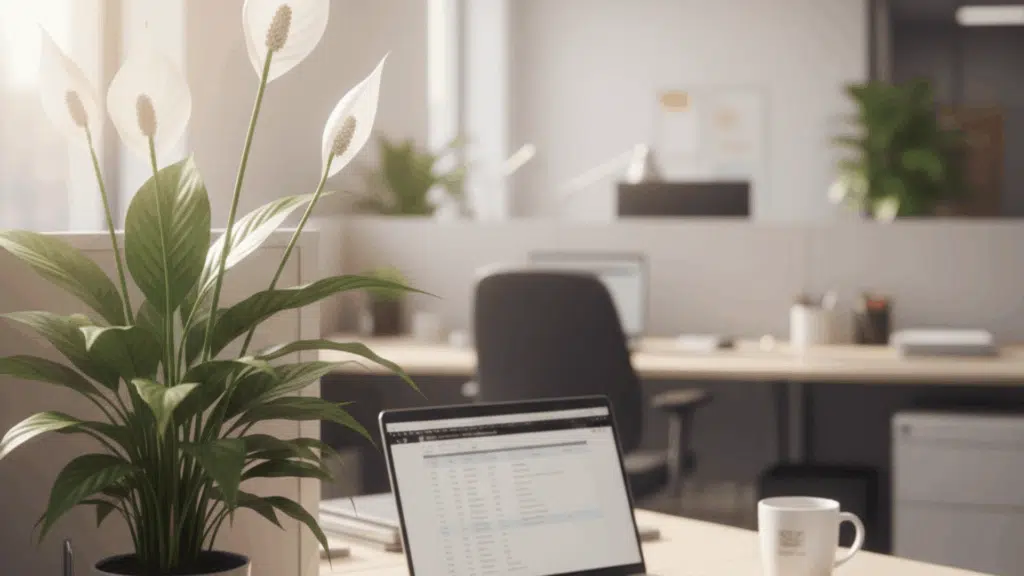
Deep green leaves and occasional white blooms handle low light while clearly “asking” for water when droopy. Great for a softer look.
Pet note: toxic.
Size: 1–4 ft (30–120 cm)
Water: Weekly-ish (keep lightly moist, not soggy)
Fertilizer: Monthly, diluted
Avg cost: $15–$50
7. Lucky Bamboo (Dracaena sanderiana)
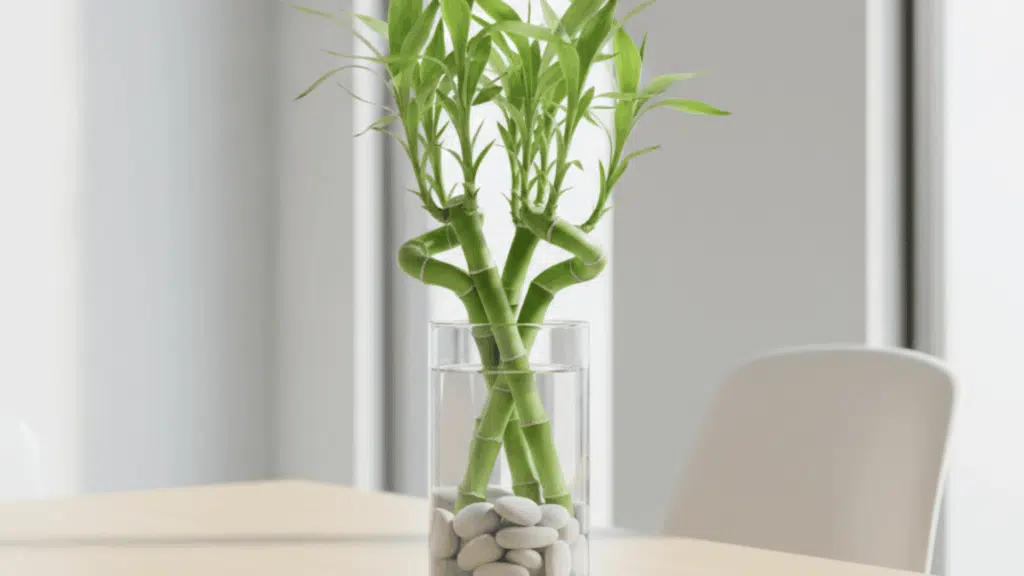
Compact “desk plant” grown in water or soil, tolerates office lighting, and looks clean in minimalist containers. Easy if water is kept fresh.
Pet note: toxic.
Size: 6 in–3 ft (15–90 cm)
Water: Top up weekly (water-grown) / light watering (soil)
Fertilizer: Very light, quarterly
Avg cost: $10–$35
Easy Desk Plants for Offices (Medium light + low effort)
Got a desk near a window or under bright LEDs? These reliable, beginner-friendly plants grow well indoors and still forgive occasional skipped waterings.
8. Spider Plant (Chlorophytum comosum)
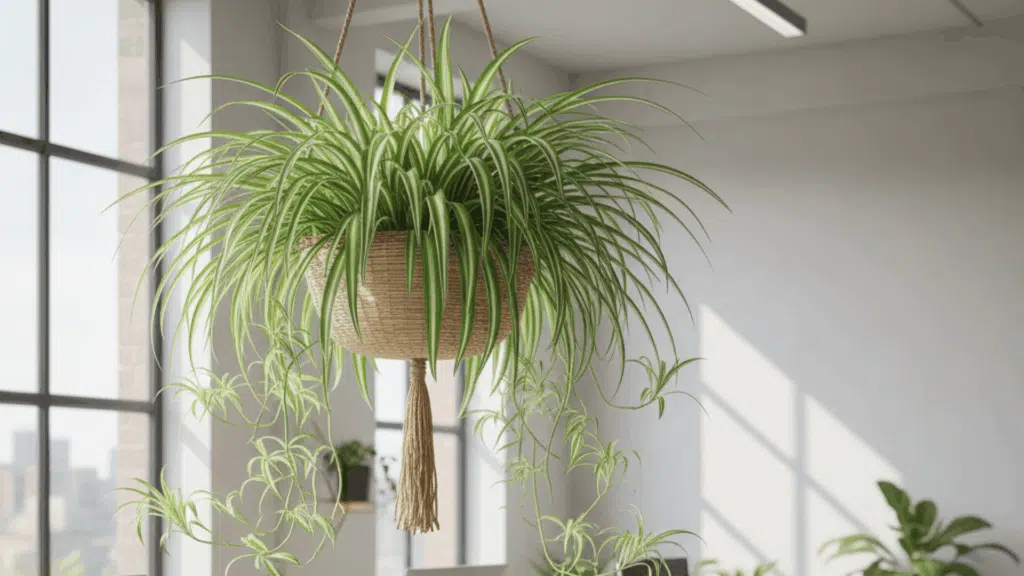
Classic arching leaves, fast growth, and easy “pups” for propagation. Handles office mistakes well and looks great in hanging or high spots.
Pet note: generally non-toxic.
Size: 1–2 ft tall, 2–3 ft wide
Water: Every 1–2 weeks
Fertilizer: Monthly, diluted
Avg cost: $10–$25
9. Heartleaf Philodendron (Philodendron hederaceum)
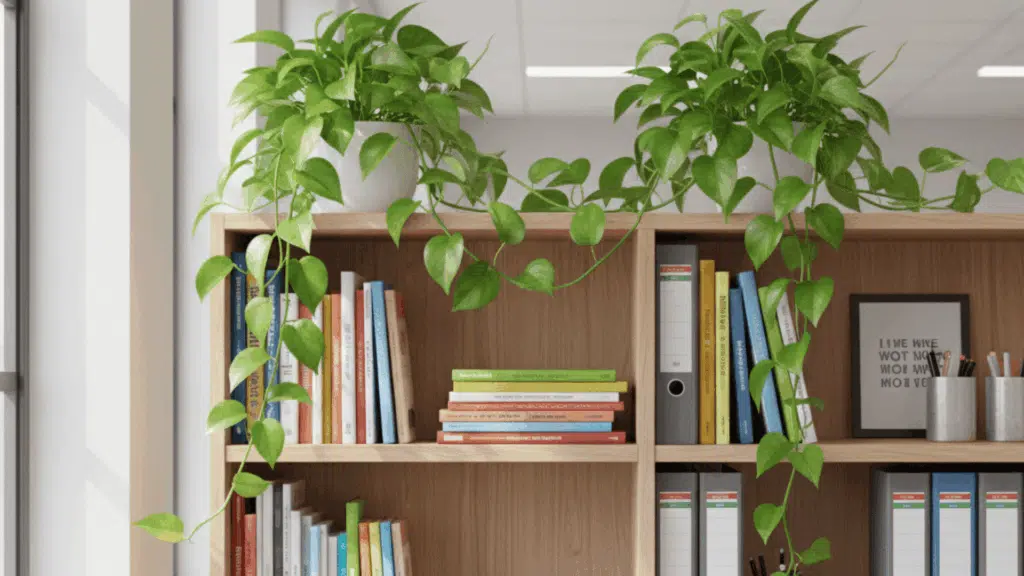
Trailing heart-shaped leaves thrive in offices and stay attractive with simple pruning. Slower than pothos but often looks fuller and more “velvety.”
Pet note: toxic
Size: Trails 3–10 ft (1–3 m)
Water: Every 1–2 weeks
Fertilizer: Monthly, diluted
Avg cost: $12–$35
10. Dragon Tree (Dracaena marginata)
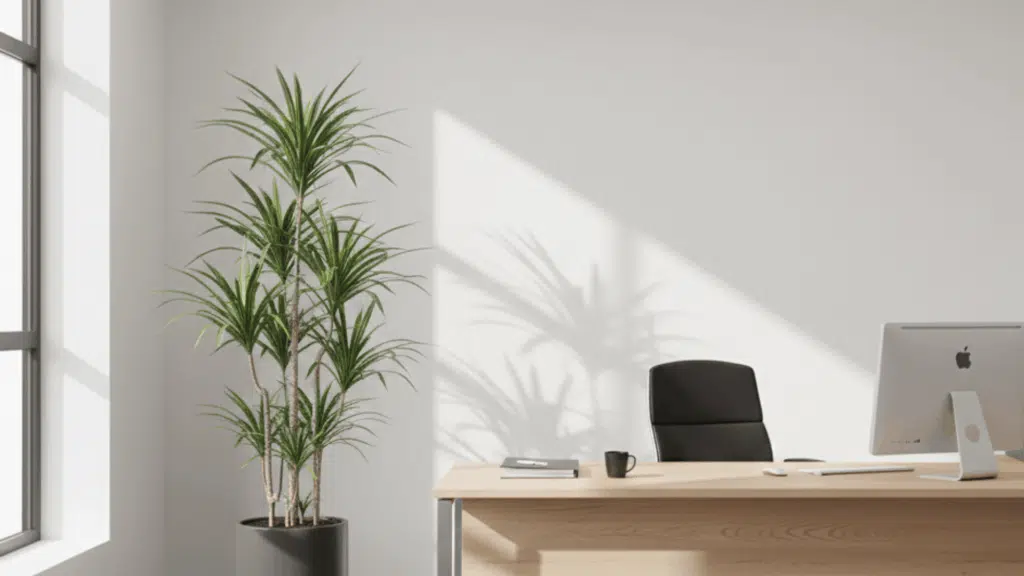
Slim trunk with spiky leaves adds height without taking up desk space. Tolerates office dryness and moderate light; great “corner plant” for reception areas.
Pet note: toxic.
Size: 3–6 ft indoors (90–180 cm)
Water: Every 2–3 weeks
Fertilizer: Every 6–8 weeks
Avg cost: $25–$80
11. Rubber Plant (Ficus elastica)
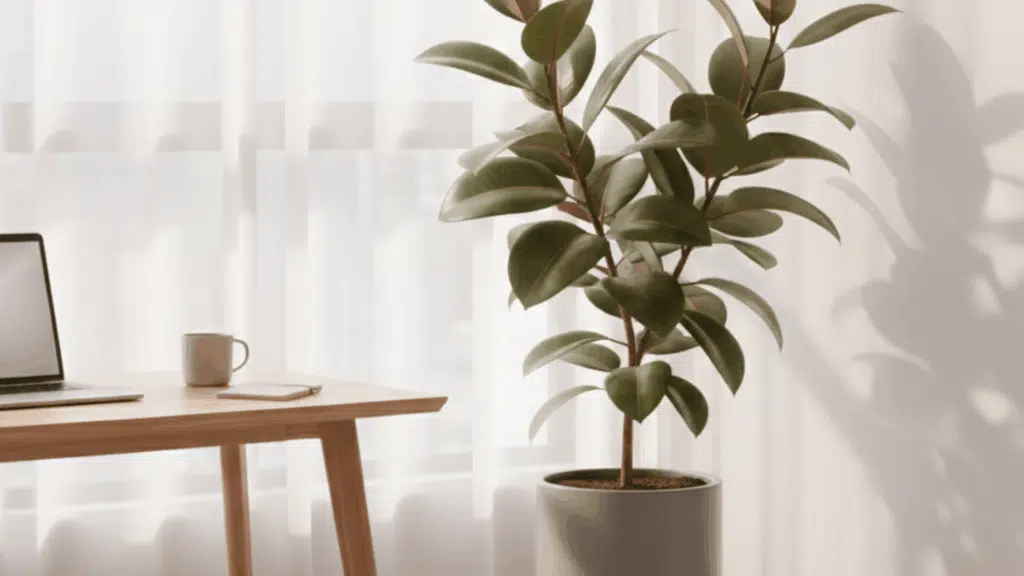
Bold glossy leaves look upscale and photograph well. Grows into a statement plant in bright indirect light; needs steady watering, not extremes.
Pet note: toxic.
Size: 2–8 ft indoors (60–240 cm)
Water: Every 1–2 weeks
Fertilizer: Monthly (growing season)
Avg cost: $20–$70
12. Chinese Money Plant (Pilea peperomioides)
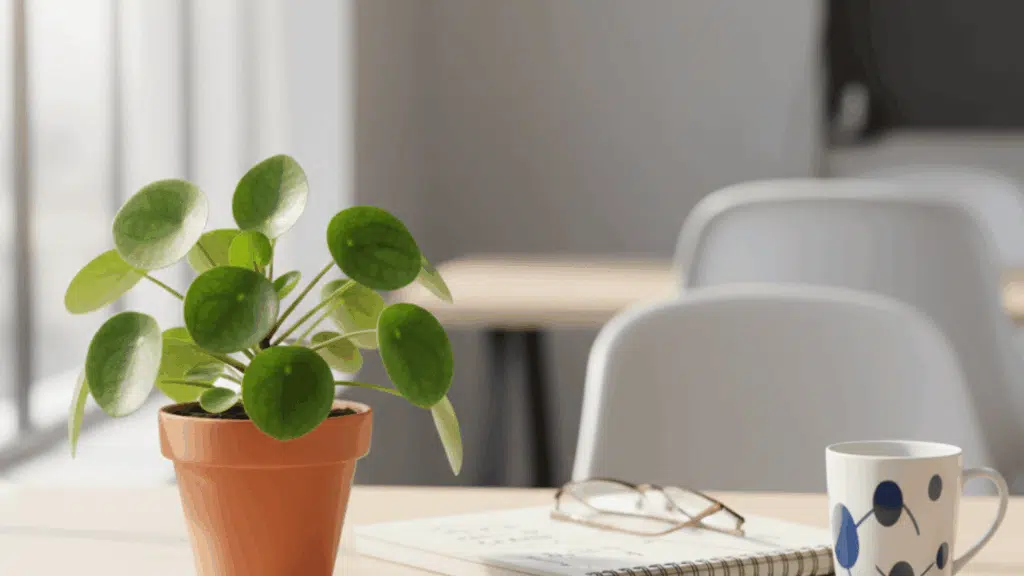
Round “coin” leaves make a cute desk companion. Likes bright indirect light and even watering; easy to share because it produces offsets over time.
Pet note: generally pet-safe.
Size: 8–16 in (20–40 cm)
Water: Weekly-ish
Fertilizer: Monthly, diluted
Avg cost: $15–$40
13. Baby Rubber Plant (Peperomia obtusifolia)
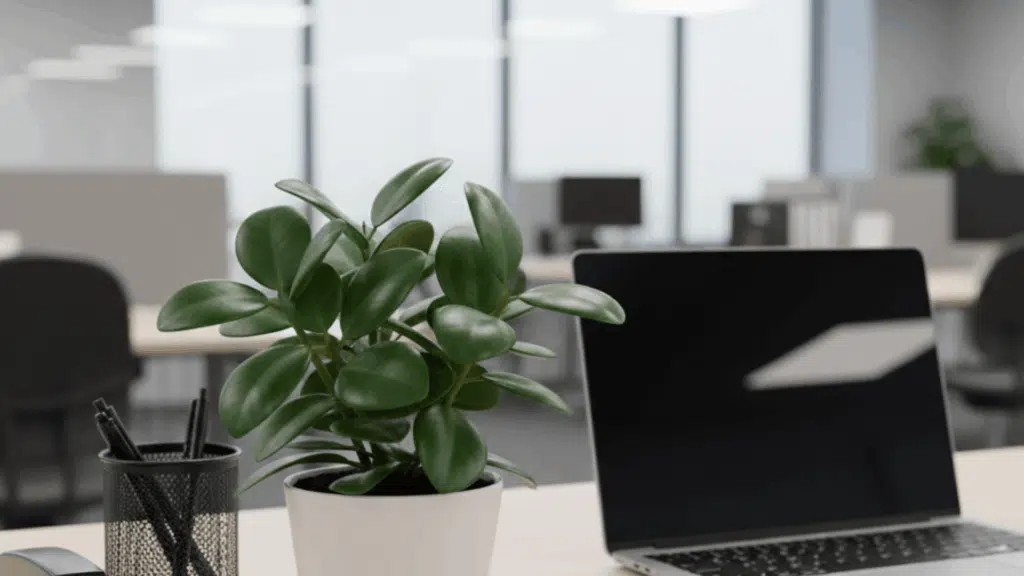
Compact, thick-leaved plant that tolerates office air and missed waterings better than many desk plants. Great for small spaces and clean, modern styling.
Pet note: pet-safe.
Size: 8–12 in (20–30 cm)
Water: Every 1–2 weeks
Fertilizer: Every 6–8 weeks
Avg cost: $12–$35
14) English Ivy (Hedera helix)
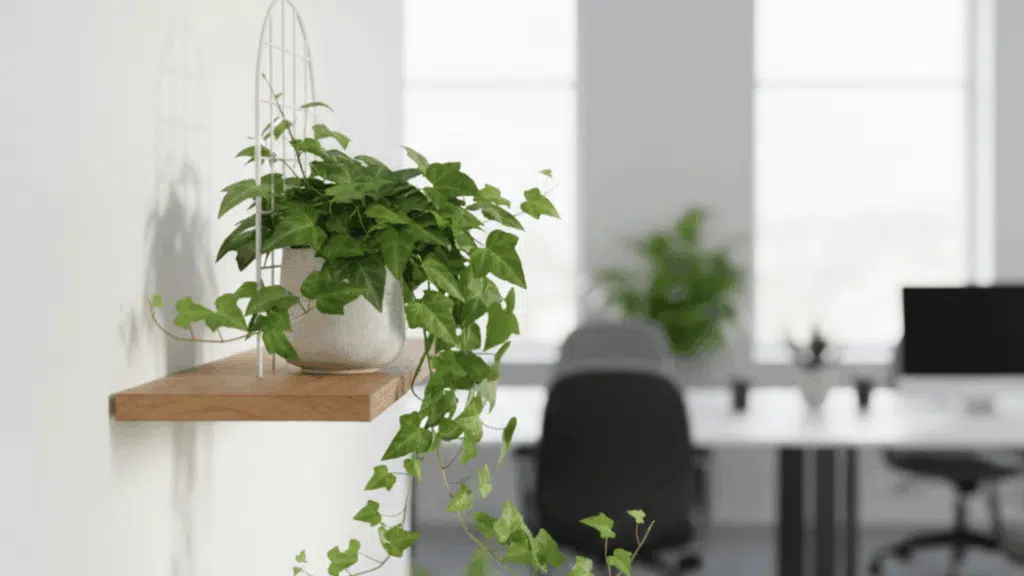
Trailing/climbing vine for shelves and mini trellises. Needs brighter light than “dark-corner” plants and airflow to avoid pests.
Pet note: toxic.
Size: Trails 3–8 ft (1–2.5 m)
Water: Keep lightly moist
Fertilizer: Monthly, diluted
Avg cost: $10–$30
Bright-Light Office Plants That Look Expensive
Want to improve your office instantly? These statement plants thrive in bright, indirect light and deliver maximum visual impact with manageable care, ideal for stylish workspaces and client-facing areas.
15. Monstera (Monstera deliciosa)
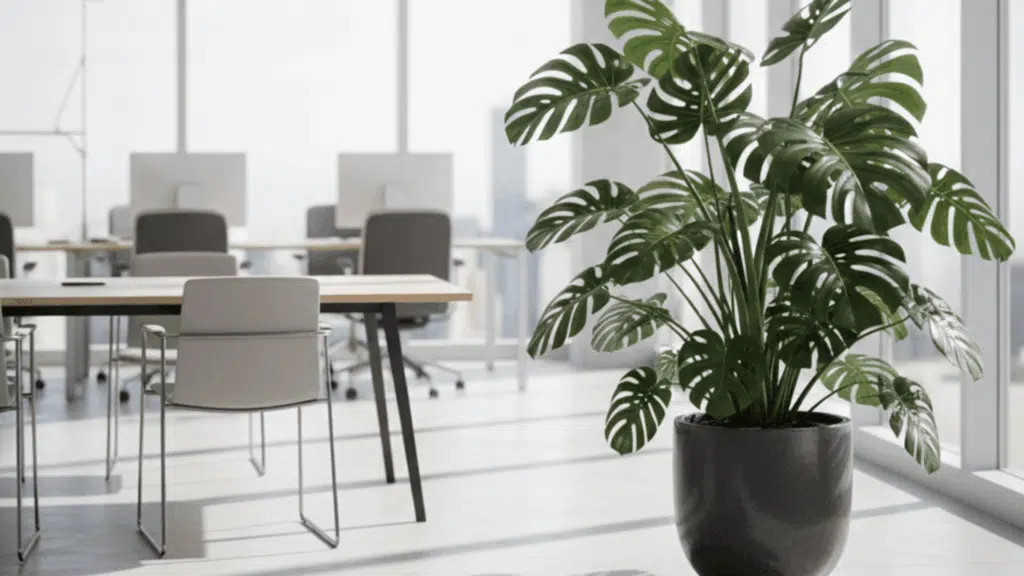
Iconic split leaves instantly upgrade an office. Needs bright indirect light and room to spread; rewards basic care with dramatic foliage that looks designer in a simple pot.
Pet note: toxic.
Size: 3–8 ft indoors
Water: Every 1–2 weeks
Fertilizer: Monthly (growing season)
Avg cost: $25–$120
16. Bird of Paradise (Strelitzia nicolai)
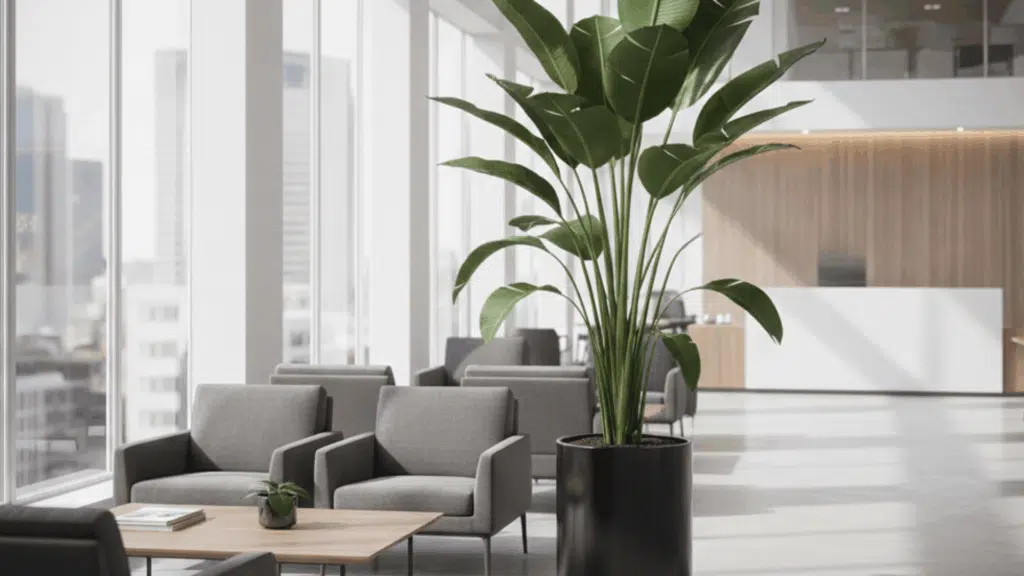
Big, tropical leaves create a lobby-worthy statement. Needs strong light and a bigger pot, but makes any office feel premium and airy.
Pet note: toxic.
Size: 4–8 ft indoors
Water: Weekly-ish (let top dry)
Fertilizer: Monthly (growing season)
Avg cost: $40–$200
17. Areca Palm (Dypsis lutescens)
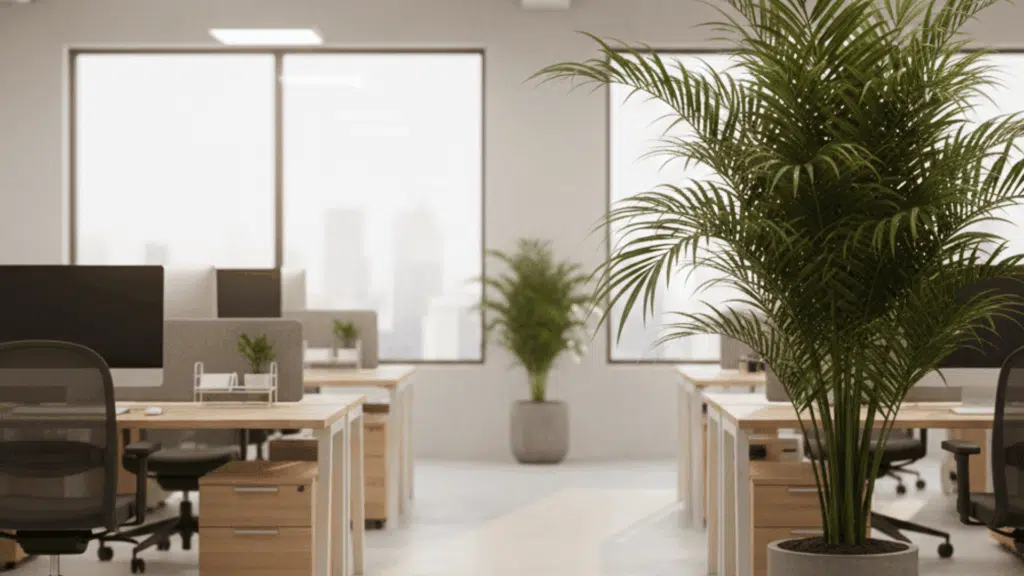
Soft feathery fronds add “hotel lobby” vibes and visually soften harsh office lines. Likes bright light and consistent watering; benefits from occasional humidity help.
Pet note: generally pet-safe.
Size: 4–7 ft indoors
Water: Weekly-ish
Fertilizer: Every 6–8 weeks
Avg cost: $30–$150
18. Boston Fern (Nephrolepis exaltata)
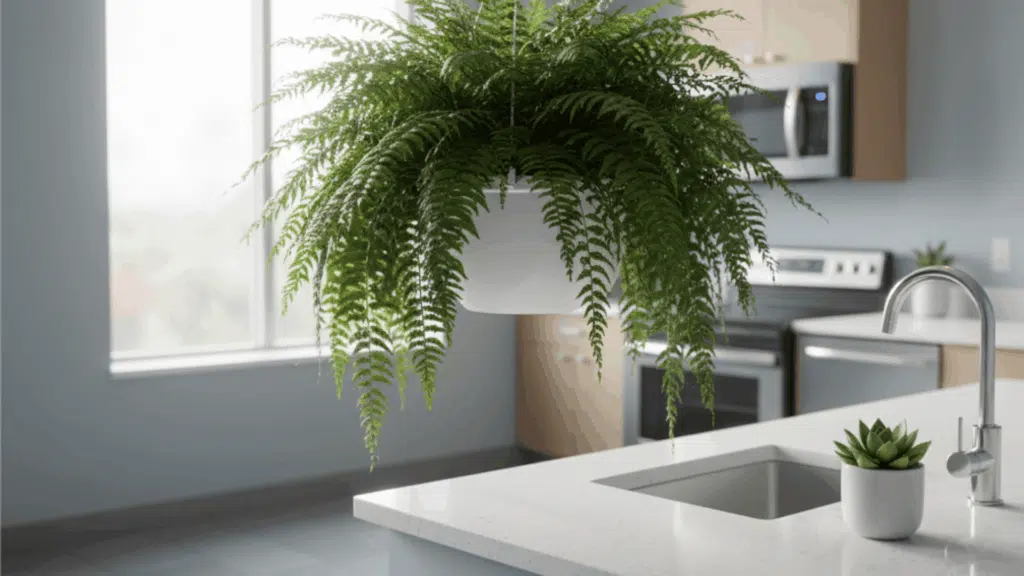
Lush cascading fronds look amazing in hanging baskets but need regular moisture and higher humidity. Best for bright bathrooms or offices with humidifiers.
Pet note: pet-safe.
Size: 1–3 ft (30–90 cm)
Water: Keep evenly moist
Fertilizer: Monthly, diluted
Avg cost: $15–$60
19. String of Hearts (Ceropegia woodii)
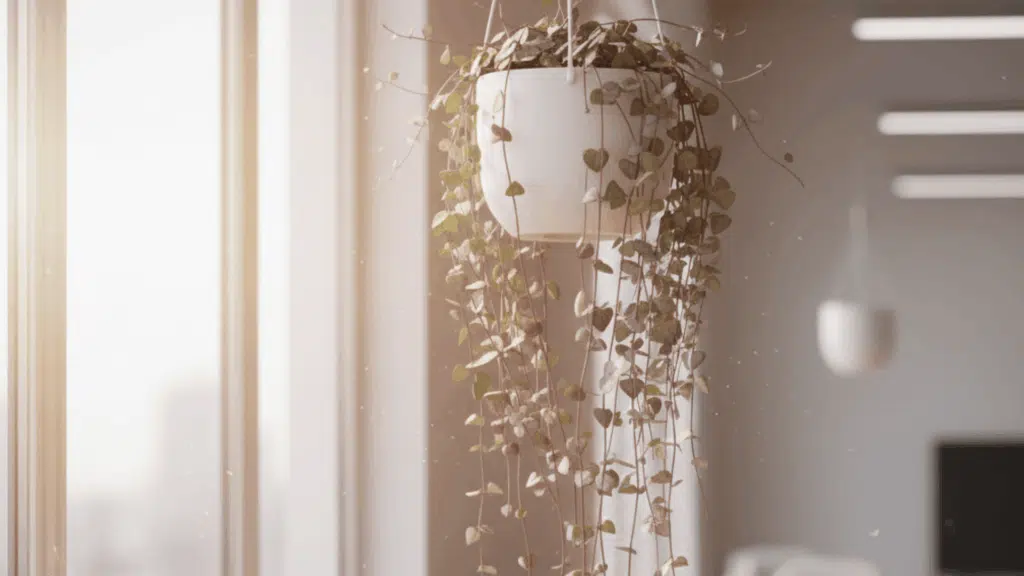
Delicate trailing hearts look high-end on shelves and in hanging planters. Needs bright light and careful watering (let it dry). Great for small desks.
Pet note: generally considered having low toxicity, verify for pets.
Size: Trails 2–6 ft (60–180 cm)
Water: Every 2–3 weeks
Fertilizer: Light, monthly in season
Avg cost: $15–$60
20. Wax Plant (Hoya carnosa)
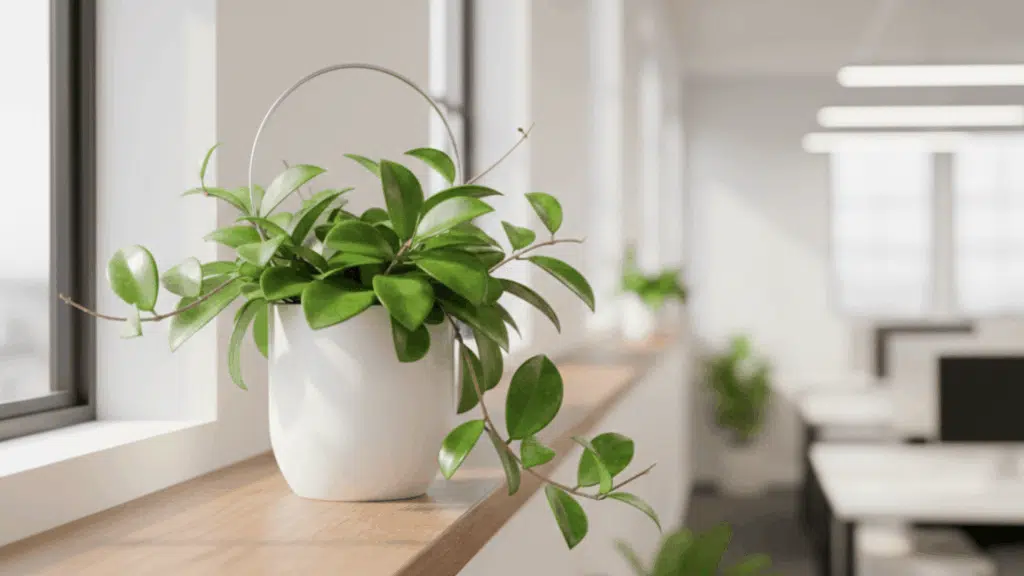
Thick glossy leaves and occasional fragrant flower clusters make this a slow-growing, long-lived office vine. Likes bright indirect light and drying between waterings.
Pet note: generally pet-safe.
Size: Trails 2–6 ft
Water: Every 2–3 weeks
Fertilizer: Monthly, diluted
Avg cost: $15–$70
Office Plant Care Basics
Office plants do best with a few simple rules. Always use a pot with drainage, or keep the plant in a nursery pot inside a decorative cover, and empty any excess water.
Water by group: most desk plants like pothos, philodendron, and Chinese evergreen prefer watering every 1–2 weeks once the top soil dries, while low-maintenance picks like snake plant, ZZ, dracaena, and succulents can go 2–4+ weeks.
Don’t overwater in low light. Rotate plants occasionally so they grow evenly, and wipe dusty leaves monthly; dust blocks light and slows growth under fluorescent lighting.
Skip heavy fertilizer; light feeding in spring/summer is enough.
Conclusion
The best office plants are the ones that match your actual office reality, your lighting, your desk space, and how often you remember to water.
Snake plants and ZZ plants are the most forgiving, pothos gives the fastest visual payoff, and peace lilies are dramatic but resilient.
If you want a premium look near a bright window, monstera, rubber plant, hoya, and areca palm deliver big style without becoming high-maintenance projects.
Keep expectations realistic about air quality, plants improve comfort and ambiance, then follow the basic care rules, and your office will stay greener year-round.

With a Master’s in Landscape Architecture from the University of Virginia, Sophia Stephenson has dedicated the last 20 years to creating and maintaining vibrant outdoor spaces. Her professional journey started in landscape design, where she gained a reputation for innovative and sustainable approaches. Sophia became a part of our editorial team as a freelancer in 2019, offering a fresh perspective on outdoor living. Since 2020, she has been the chief for our outdoor design content, blending aesthetic appeal with environmental stewardship. In her leisure time, Sophia is a keen photographer, capturing the beauty of natural landscapes, a hobby that complements her professional expertise.