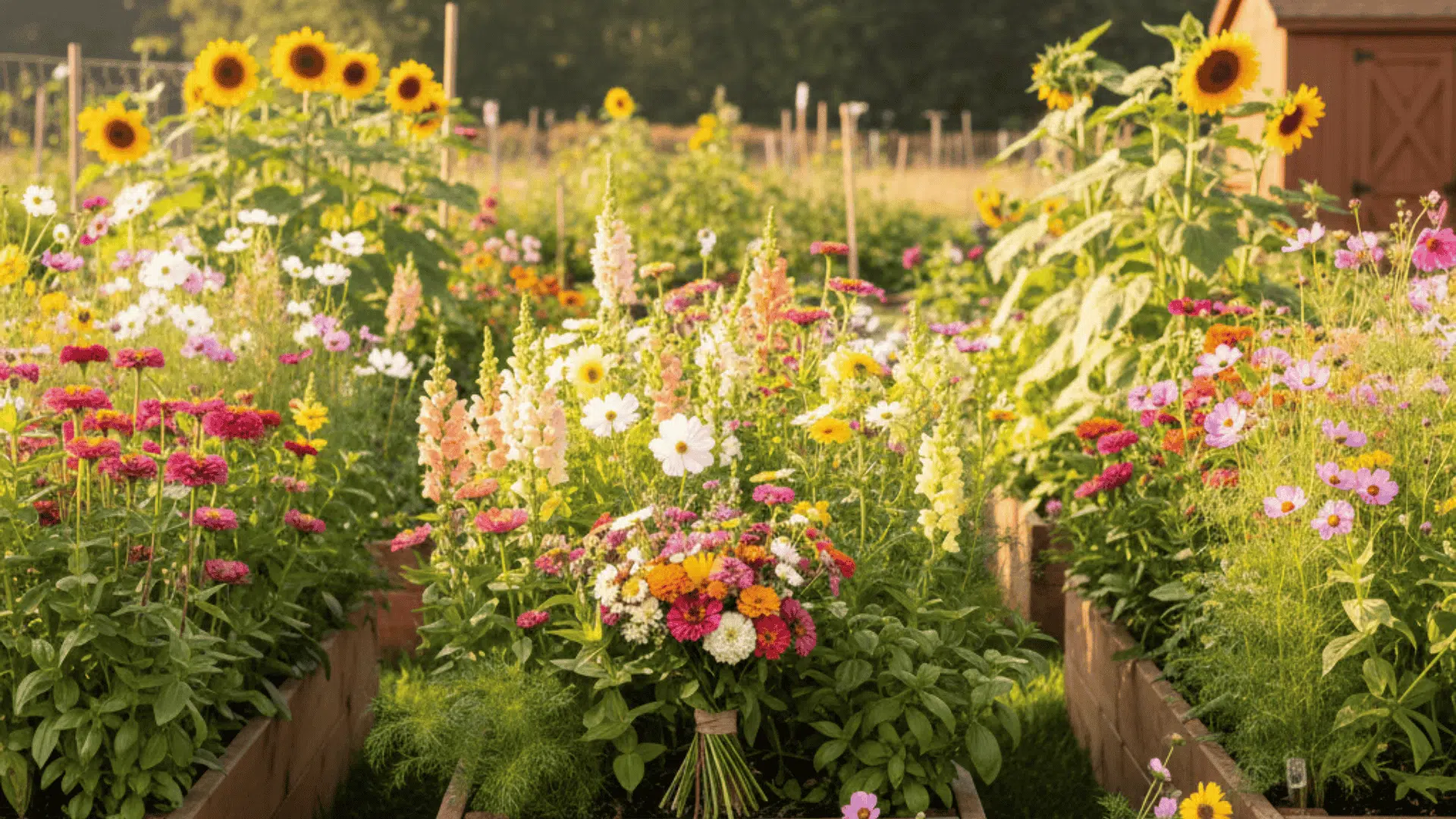

A cut flower garden is different from a typical ornamental bed. Instead of planting flowers to look at in the garden, gardeners grow them specifically for cutting and bringing indoors.
The focus shifts to stem length, vase life, and continuous production rather than just garden display.
For beginners, success means prioritizing easy-to-grow varieties that produce long, sturdy stems, bloom repeatedly after cutting, and work in a simple layout that makes harvesting convenient.
You’ll clearly learn from this blog what to plant, how to plan, and how to keep blooms coming from spring through frost.
What Makes a Flower Good for Cutting?
A beautiful flower isn’t always a good cut flower. The best choices hold up in a vase, produce plenty of stems, and make arranging easier with the right mix of bloom shapes and greenery.
Good cut flowers need sturdy stems (about 12–18 inches) so blooms stay upright in a vase. They should last several days or more after cutting. “Cut-and-come-again” plants matter most because harvesting triggers more blooms, giving better yield than one-time bloomers.
Beginners do best with flowers that sprout reliably from direct-sown seed or simple starts. Choose varieties that resist common issues like mildew or rot to reduce upkeep.
A cutting garden works best when it includes bouquet “jobs”: focal blooms for attention, spikes for height, fillers for softness, and foliage for structure.
Color is easier with a simple palette (pastel, bright, or seasonal). Pollinator-friendly choices add bees and butterflies while still producing great stems.
Categories of Cut Flowers and How to Use Each

Cut flowers look best when they play different roles in an arrangement, not when everything competes for attention.
1. Annuals
Annuals dominate raised-bed cutting gardens because they grow fast, bloom heavily, and produce continuously when harvested regularly. Most beginner gardens should be 70–80% annuals.
Focals: Zinnias, sunflowers, celosia
Fillers: Cosmos, nigella, ammi
Spikes: Snapdragons, larkspur, stock
2. Hardy Annuals vs. Tender Annuals
Hardy annuals like larkspur and nigella can be sown in early spring or even fall in milder zones. They tolerate light frost and provide early-season blooms.
Tender annuals like zinnias and sunflowers need warm soil and should be planted after the last frost date. They fuel summer and fall harvests.
3. Perennials
Perennials take longer to establish but return year after year. They work well along bed edges or in a dedicated corner.
Good beginner perennials include coneflowers, yarrow, and salvia. Most perennials bloom for shorter windows than annuals, so they supplement rather than anchor the garden.
4. Biennials
Biennials such as foxglove and sweet William focus on growth in year one, building roots and leafy rosettes.
They bloom in year two with tall stems and rich color that shine in bouquets. For a first-year cutting garden, they’re optional but rewarding once established.
5. Bulbs, Corms, and Tubers
Spring bulbs like tulips and daffodils provide early color before annuals hit their stride. Summer bulbs like dahlias and gladiolus offer late-season impact. Dahlias, especially, are prized for their productivity and long vase life.
6. Shrubs and Foliage Plants
Foliage plants like eucalyptus, ornamental grasses, and herbs add volume and texture to every bouquet. They also produce repeat harvests without waiting for blooms.
Even small amounts of foliage make arrangements look fuller and more professional.
Best Cutting Garden Flowers for All Purposes
A great cut flower garden needs reliable producers, vase-life workhorses, and blooms that show up before summer and after it fades. These picks cover everyday bouquet needs while helping a garden stay productive from spring through frost.
1. Cut-and-Come-Again Champions
“Cut-and-come-again” means the plant responds to cutting by producing more blooms. These varieties are the most valuable for beginners because they deliver maximum stems per square foot.
- Zinnias: Bloom nonstop from midsummer to frost. Sturdy stems, excellent vase life, and available in every color.
- Cosmos: Airy fillers that bloom prolifically. Tolerate heat and poor soil better than most annuals.
- Snapdragons: Vertical spikes in a rainbow of colors. Prefer cool weather but bloom spring through fall with succession planting.
2. Long-Lasting Vase Life Picks
Vase life depends on the flower variety and how it’s handled after cutting. Clean vases, fresh water, and proper conditioning all help, but starting with naturally long-lasting varieties makes everything easier.
Celosia, strawflower, gomphrena, and statice all hold up for 7–14 days after cutting. Zinnias and sunflowers last 5–7 days with proper care.
3. Shoulder-Season Heroes
Most beginners run out of flowers by late June if they plant only warm-season annuals. Cool-season flowers like sweet peas, stock, and bachelor’s buttons bloom in spring and can be planted again in late summer for fall harvests.
Cut Flower Garden Design for Three 4×8 Raised Beds
These three raised beds might seem simple, but the layout strategy determines whether the garden produces steady weekly bouquets or disappointing gaps.
Bed 1: Summer Workhorses

This bed focuses on cut-and-come-again forage and fillers that produce from July through frost. Zinnias, cosmos, sunflowers, and celosia fill this bed.
What goes where:
- Back/North 1-ft strip (full length): Sunflowers, tallest crop goes in back. Best for consistent bouquet “wow” stems.
- Next 1-ft strip: Cosmos, the airy filler + long stems (adds volume fast).
- Front/South 2-ft area: split into two big blocks
- Front-left: Zinnias (main bouquet focal)
- Front-right: Celosia (texture + color)
Bed 2: Cool Season + Spikes

Maximize the “shoulder seasons” with vertical interest and a built-in succession swap.
What goes where:
- Back/North 1-ft strip (full length): Sweet Peas on a trellis (spring)
- Diagram labels this strip as: Sweet Peas (Spring) → replace with fall spikes
- Middle 2-ft zone: Snapdragons, the main spike crop; plant in blocks for easy harvesting.
- Front/South 1-ft strip: Bachelor’s Buttons (spring)
Bed 3 Layout: Foliage + Specialty + Late Season

Make every bouquet look “finished” with greens + texture, then bring in late-season color.
What goes where:
- Back/North (top half): Dahlias centered, with ornamental grasses in the back corners. Dahlias are labeled “stake + tie” since support is key. Grasses add movement/texture and great filler cuts.
- Front/South (bottom half): split into two harvest-friendly foliage blocks
- Front-left: Basil (bouquet greens)
- Front-right: Dill (airy filler foliage)
How to Start Your Cut Flower Garden: Step-by-Step Guide

Starting a cutting garden feels overwhelming with so many decisions to make. Breaking it down into clear steps makes the process manageable and sets up the garden for success from day one.
Step 1: Pick the Sunniest Spot: Choose an area with 6–8+ hours of direct sun; observe the yard from morning through afternoon to find the most consistent light. Step 2: Prep Raised-Bed Soil for Long Stems: Mix in 2–3 inches of compost (or well-rotted manure) and ensure the soil is rich and well-draining to prevent weak growth and disease. Step 3: Choose Flowers Using the Focal/Spike/Filler/Foliage Method: Include all four bouquet roles so arrangements have structure, height, volume, and greenery. Step 4: Map Bloom Timing So Something Is Always Ready: Create a simple calendar for cool-season sowing, after-frost planting, and expected bloom windows to avoid gaps. Step 5: Plant in Waves (Succession Planting): Sow key annuals (like zinnias and cosmos) every 2–3 weeks from late spring to midsummer for continuous harvests. Step 6: Add Support and Irrigation Before Plants Get Tall: Install netting (8–12 in high) early and set up drip/soaker hoses for even moisture without wet foliage. Step 7: Maintain for Yield: Deadhead, feed with a balanced fertilizer every 3–4 weeks, and weed regularly to extend blooming and increase stem output. Step 8: Harvest Like a Pro: Cut in the early morning, harvest blooms just opening, cut above a leaf node, and place stems immediately in water. |
Spacing and Planting Density
Plant densely enough for a good yield but spaced enough for airflow. Most annuals work well at 9–12 inches apart in blocks.
Closer spacing produces more stems per square foot but increases disease risk if airflow is poor.
Pinching means removing the growing tip when plants are 8–12 inches tall. This encourages branching and more stems. Pinch zinnias, cosmos, basil, and celosia.
Your First Season Roadmap
Knowing what to expect week by week removes the guesswork and builds confidence. This timeline shows how a cutting garden unfolds from soil prep to final fall blooms.
| Timeframe | What’s Happening |
|---|---|
| Weeks 1–4 | Prepare beds, start seeds indoors (if needed), and direct-sow cool-season annuals like larkspur and bachelor’s buttons |
| Weeks 5–8 | Plant warm-season transplants after the frost date passes. Add support structures like netting and stakes |
| Weeks 9–12 | First blooms appear from early plantings. Begin succession sowings of zinnias, cosmos, and sunflowers |
| Weeks 13–20 | Peak harvest period with abundant blooms. Cut regularly to keep plants producing new stems |
| Weeks 21–24 | Late-season blooms from succession plantings. Cool-season flowers can be planted again for fall color |
Keep detailed notes on what worked, what bloomed when, and which varieties produced the most stems. These observations make Year 2 dramatically better because every garden has unique conditions that affect timing and performance.
Bring the Garden Indoors
A cutting garden changes the relationship between gardener and landscape.
Instead of admiring flowers from a distance, they become part of daily life on the kitchen table, by the bedside, shared with neighbors.
The first time a bouquet comes entirely from the backyard, something shifts. Growing flowers for cutting isn’t just gardening; it’s creating beauty that moves freely between outdoor soil and indoor spaces.
Every stem cut is an invitation to slow down and appreciate what hands and patience can grow.
What flowers will you plant first in your cutting garden? Share your plans in the comments below.

With a Master’s in Landscape Architecture from the University of Virginia, Sophia Stephenson has dedicated the last 20 years to creating and maintaining vibrant outdoor spaces. Her professional journey started in landscape design, where she gained a reputation for innovative and sustainable approaches. Sophia became a part of our editorial team as a freelancer in 2019, offering a fresh perspective on outdoor living. Since 2020, she has been the chief for our outdoor design content, blending aesthetic appeal with environmental stewardship. In her leisure time, Sophia is a keen photographer, capturing the beauty of natural landscapes, a hobby that complements her professional expertise.