
Pantry space often looks fine at first glance, but daily use quickly reveals its flaws.
Items get stacked, shelves bend, and food disappears into the back, forgotten.
This is a common problem in many homes that still rely on wire shelving or poorly planned storage.
The result is clutter, wasted space, and frustration during everyday cooking.
DIY pantry shelves offer a practical solution.
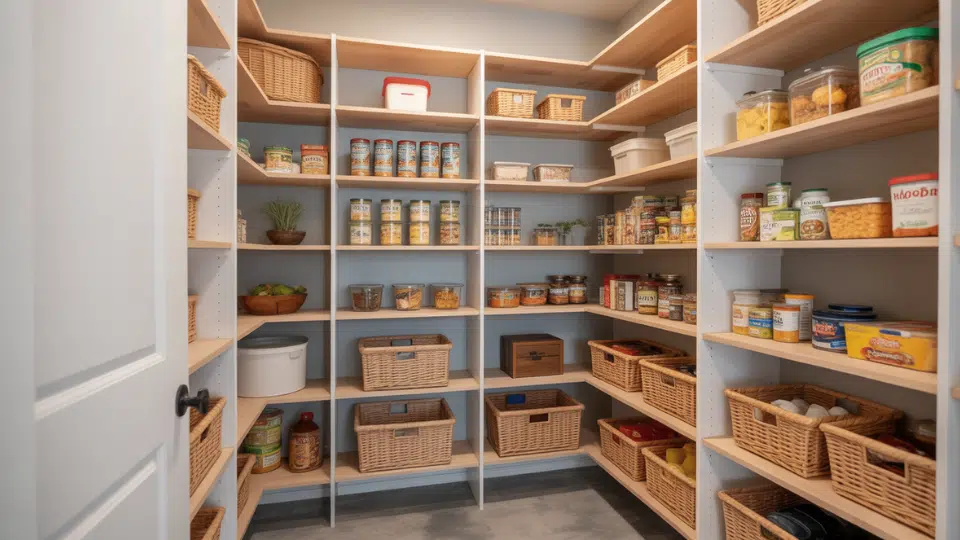
By building custom pantry shelving, storage can be designed around real needs instead of fixed layouts.
This guide walks through a clear, beginner-friendly process to replace wire shelves with sturdy pantry shelves that fit the space properly.
With simple tools and thoughtful planning, this project helps create a pantry that stays organized, durable, and easy to use.
Why DIY Pantry Shelves?
Many modern homes still come with wire pantry shelving, which often wastes space and makes storage harder to manage.
DIY pantry shelves give more control over shelf height and layout, making it easier to organize food and kitchen items.
Custom pantry shelving also creates a cleaner, more finished look that fits better with modern kitchens.
Solid shelves are stronger, easier to clean, and hold weight better than wire systems, making them a practical upgrade for everyday use.
Modern Color Schemes for Pantry Shelves
The color of pantry shelves can affect how clean and organized the space feels.
Light colors help small pantries look brighter, while natural wood tones add warmth.
Modern interior designers choose neutral shades that match nearby cabinets so the pantry blends with the rest of the kitchen.
For DIY pantry shelves, simple finishes also make touch-ups easier over time.
2026 is about to come; you can also try the color of the year 2026 edition as your pantry color.
WGSN and Coloro have named Transformative Teal the 2026 Color of the Year, symbolizing ecological responsibility. Other major 2026 forecasts include Pantone’s minimalist Cloud Dancer and Benjamin Moore’s moody Silhouette.
Tools and Materials Needed: Custom Pantry Shelves
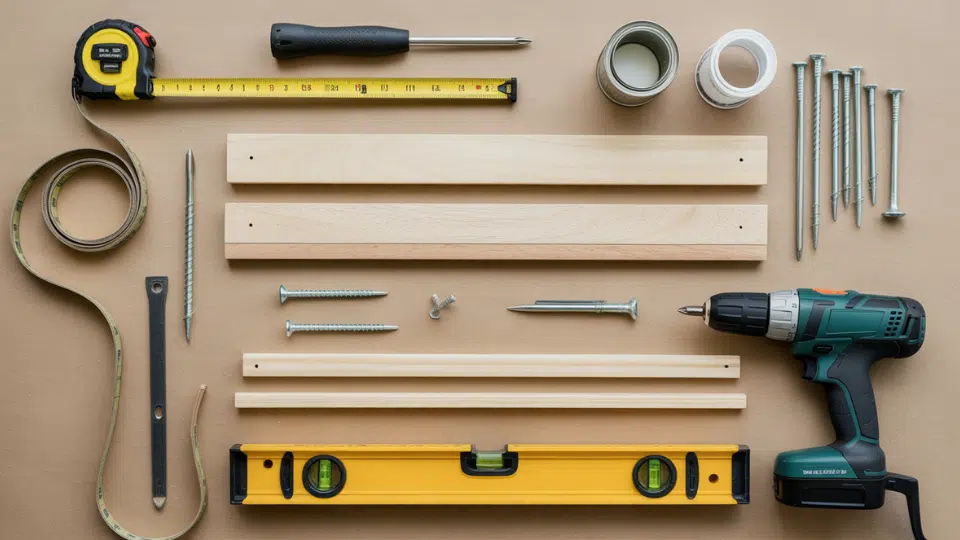
Gather these tools and materials before starting to keep the build moving. Most of these tools are common household items, and everything else is easy to find at a local hardware store.
| Tool | Material |
|---|---|
| Measuring tape | 1×12 wood boards |
| Pencil | 1×2 boards (wood or MDF) |
| Circular saw, or miter saw | Wood screws (1–1¼ inch) |
| Brad nailer | Brad nails |
| Drill/driver | Wall anchors |
| Stud finder | Spackle |
| Level | Paint and primer |
| Pry bar | Wood stain (optional) |
| Sanding block or sander | Polyurethane or clear sealer |
| Clamps |
How to Build DIY Pantry Shelves?
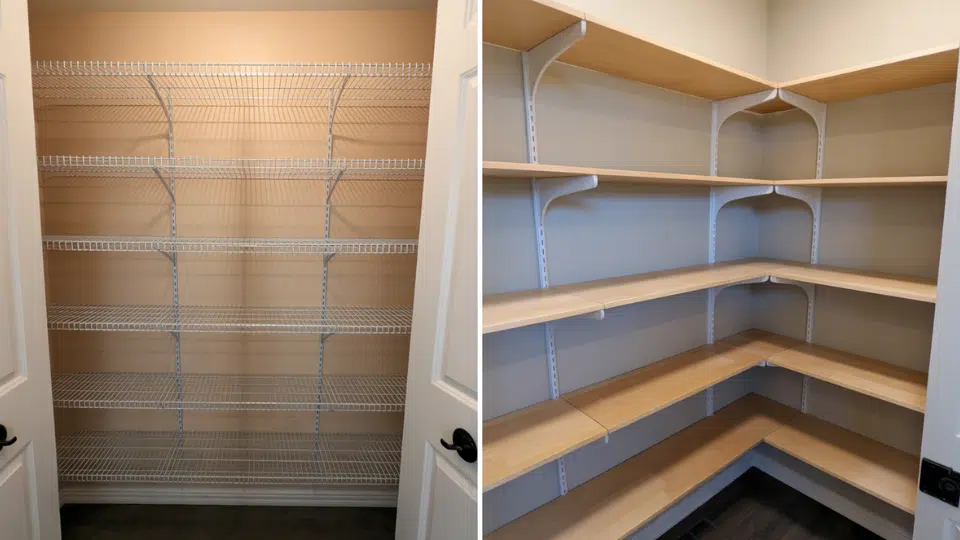
I replaced my wire shelving with sturdy DIY pantry shelves that are easier to use and better suited for everyday storage.
These are the exact steps I followed to create custom pantry shelving that fits my pantry perfectly, and the same approach can be used for most pantry spaces.
Step 1: Remove Old Pantry Shelves and Prep the Walls
Empty the pantry and remove existing shelves using a screwdriver and a pry bar.
Wire shelving often pulls out drywall anchors, so work slowly. If new shelves are to go in the same place, lightly sand holes on the back wall.
Fill and sand any holes on the side walls that will remain visible.
Step 2: Measure and Cut the Shelf Boards
Measure the width of the pantry from wall to wall. Cut 1×12 boards to match that measurement for each shelf.
Sand the boards well to smooth the surface.
Stain the wood if desired, then apply a clear protective finish so the pantry shelves hold up to spills and frequent use.
Step 3: Cut Shelf Supports and Trim
Cut 1×2 boards for the shelf supports. Back supports should match the shelf width, while side supports should match the shelf depth.
Front trim pieces are cut to the same width as the shelves.
These supports form the base of the custom pantry shelving system.
Step 4: Install Wall Supports
Mark shelf locations on the wall with a pencil. Keep spacing consistent so items fit easily.
Attach the side and back supports using a brad nailer to hold them in place.
Secure the supports into the wall studs with screws for strength. Wall anchors can be used if a stud is not available.
Step 5: Paint Supports and Walls
Fill nail and screw holes with spackle and sand smooth once dry.
Paint the pantry walls and shelf supports before installing the shelves. Painting first helps create cleaner edges and a more finished look.
Step 6: Install the Pantry Shelves
Start at the bottom. Place the shelf board on the supports.
Clamp a front trim piece underneath the shelf and secure it with nails.
Then fasten the shelf to the supports.
Repeat the process for each shelf, working upward until all DIY pantry shelves are installed.
Tips for Custom Pantry Shelving That Works
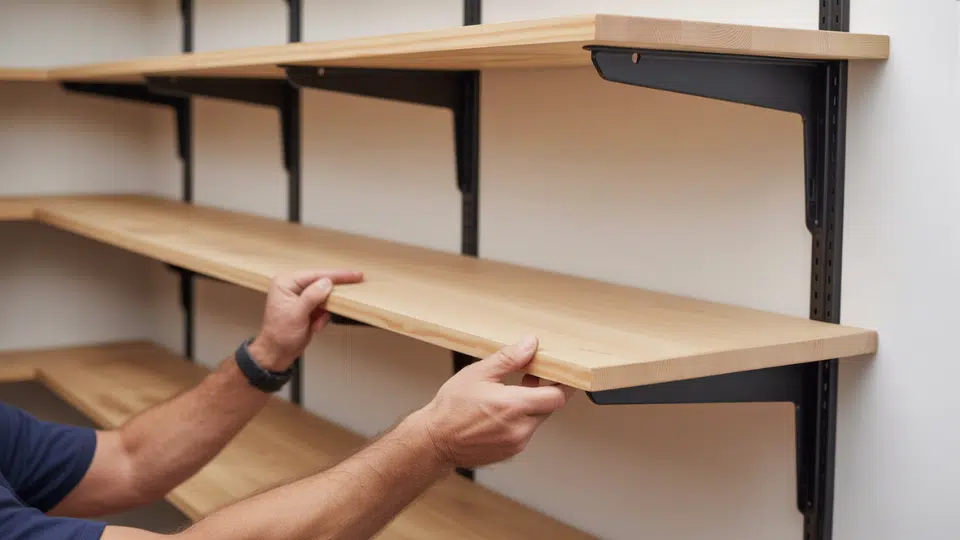
Use full-depth shelves for bulk items. Deeper shelves are better suited for large containers, appliances, and packaged goods that are used less often.
Install shallow shelves at eye level. Shallow upper pantry shelves improve visibility and reduce forgotten items pushed to the back.
Wrap shelves around corners. Corner shelving helps use wall space that often goes unused in standard pantry layouts.
Add pull-out shelves for deep pantries. Pull-out shelves make it easier to reach items stored in the back without unloading the front.
Vary shelf heights based on item size. Mixing shelf heights prevents wasted vertical space and keeps pantry shelves adaptable.
These tips help improve access, reduce clutter, and make custom pantry shelving easier to maintain over time.
Conclusion
DIY pantry shelves offer a practical way to improve storage without relying on one-size-fits-all solutions.
By replacing wire shelving with solid, custom-built pantry shelves, storage becomes easier to manage and better suited for daily use.
Thoughtful planning, simple materials, and careful installation help create shelves that are strong, clean-looking, and easy to maintain.
Custom pantry shelving also allows flexibility in layout, spacing, and finish, making it easier to adapt the pantry to changing needs over time.
Whether the goal is better organization, improved durability, or a more modern look, this project shows that small upgrades can make a noticeable difference.
With clear steps and basic tools, DIY pantry shelves can be a functional and lasting improvement for any kitchen space.

James McLaren, with a rich background in architecture from the University of Manchester, has been contributing his expertise to the world of creative construction and home innovation for over 20 years. His journey began as a project manager for a leading construction firm, where he honed his skills in bringing complex designs to life. James joined our platform as a freelancer in 2019, quickly becoming a favorite for his insightful and practical advice. He has been a pivotal force to our wing ever since, bringing our readers a blend of technical know-how and creative flair. Beyond his professional life, James is an avid woodworker and enjoys restoring vintage furniture, a hobby that complements his professional insights beautifully.