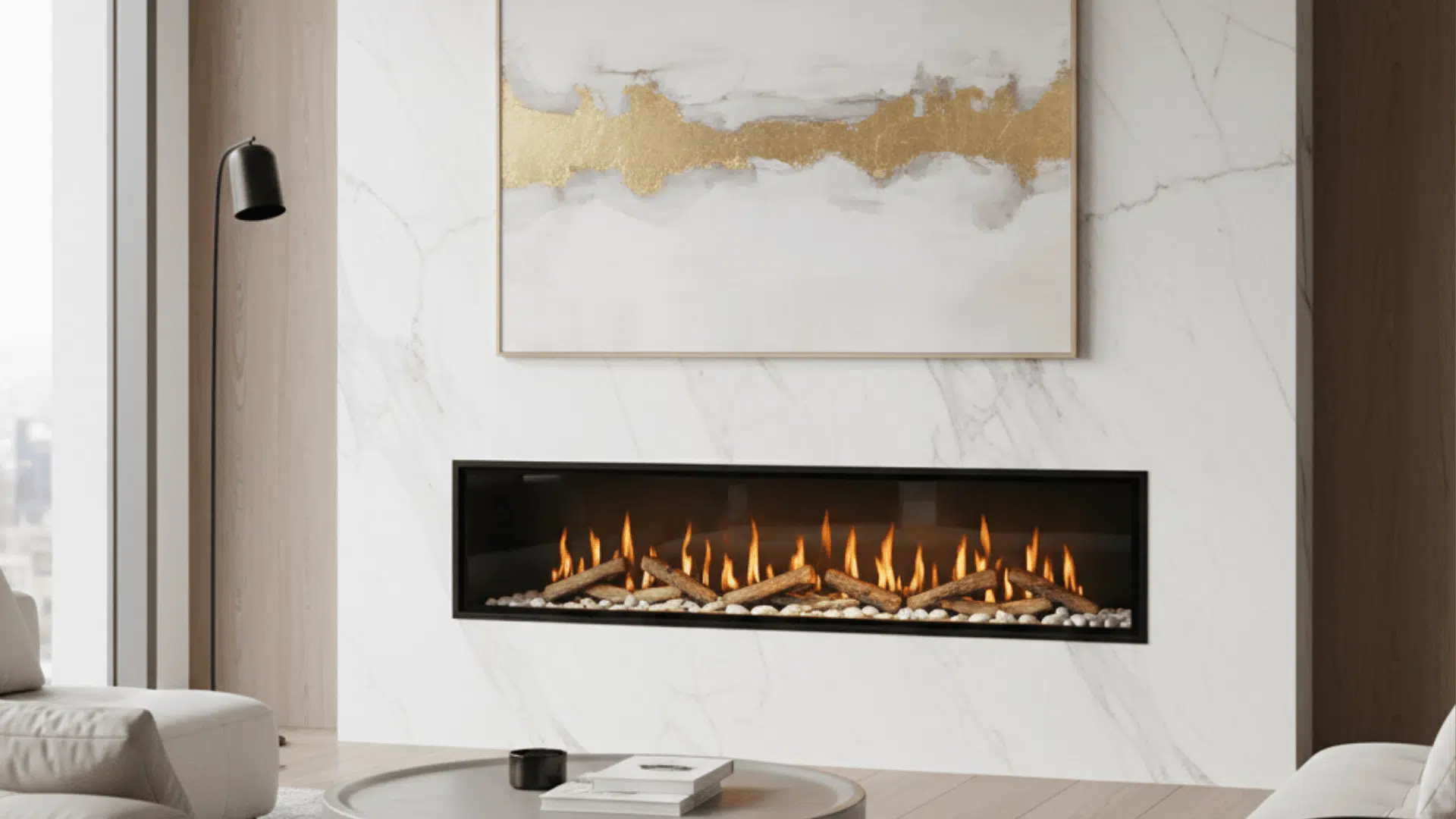

Electric fireplaces offer the warmth and ambiance of traditional fireplaces without the complexity of gas lines or chimney maintenance, making them naturally suited for home repairs.
Most common issues (from non-responsive controls to flame effects that won’t light) stem from simple causes like tripped breakers, dirty components, or loose connections that homeowners can address without specialized tools or electrical expertise.
Walk through diagnosing problems, performing safe repairs, maintaining your unit for reliable performance, and recognizing when professional help becomes necessary together.
Understanding how your electric fireplace works and what you can safely fix yourself saves time and money while keeping your home comfortable throughout the heating season.
Safety First Before Your Electric Fireplace Repair
Always unplug your electric fireplace before attempting any repair or inspection.
Even after unplugging, wait 15 to 20 minutes for internal components to cool completely, as heating elements retain heat long after shutdown.
Electric fireplaces are inherently safer than gas units since they don’t involve combustible fuel or carbon monoxide risks, but they still carry standard electrical hazards.
Never attempt repairs if you smell burning plastic, see visible wire damage, or notice scorch marks on the unit or outlet.
These signs indicate serious electrical problems requiring professional assessment. Similarly, hardwired units built into walls need licensed electricians for any work beyond basic cleaning and maintenance.
If your fireplace is under warranty, check the terms before opening the unit, as unauthorized repairs often void coverage.
How to Check What’s Wrong With Your Electric Fireplace
Start the diagnosis by confirming power delivery. Check that the unit is plugged in firmly, the outlet works (test with a phone charger or lamp), and the circuit breaker hasn’t tripped.
Many electric fireplaces connect to GFCI outlets that trip easily; press the reset button on the outlet itself.
Next, test both remote and manual controls separately. If the remote fails but the manual buttons work, the problem lies with the remote or the control board reception.
If neither responds, the issue involves the power supply or the main control board. Listen carefully when you attempt to turn on the unit (fan whirring indicates the motor works, while clicking sounds often point to relay switches attempting to engage).
Determine whether your problem affects flame effects, heat output, or both systems.
Flames working without heat suggest heating element failure, while heat without flames indicates flame motor or LED issues.
Finally, inspect visible components: check vents for dust buildup, examine the power cord for fraying, and look inside the flame chamber for obvious obstructions or disconnected wires.
Common Electric Fireplace Problems and How to Fix Them
Most electric fireplace failures trace back to a handful of recurring issues that follow predictable patterns.
These are the most common problems homeowners encounter and the specific steps to resolve each one.
1. Electric Fireplace Not Turning On
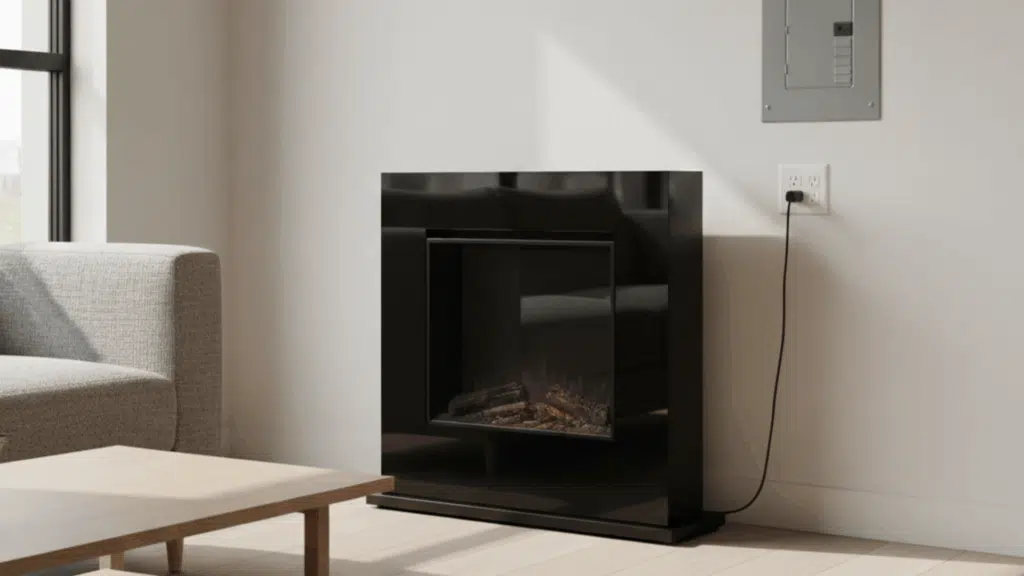
Complete power failure typically stems from tripped circuit breakers, faulty outlets, or loose connections rather than major component failure.
This problem affects the entire unit, preventing both flame effects and heating functions from operating.
Steps to fix it:
- Reset the circuit breaker by flipping it fully off, then back on
- Press the reset button on GFCI outlets (typically red or black button on outlet face)
- Test the outlet with another device to confirm it’s providing power
- Bypass the remote control and try the manual switches on the unit itself
- Open the access panel and check that all wire connections are firmly seated
- Inspect the power cord for damage or loose plug connections
2. Flame Effect Not Working
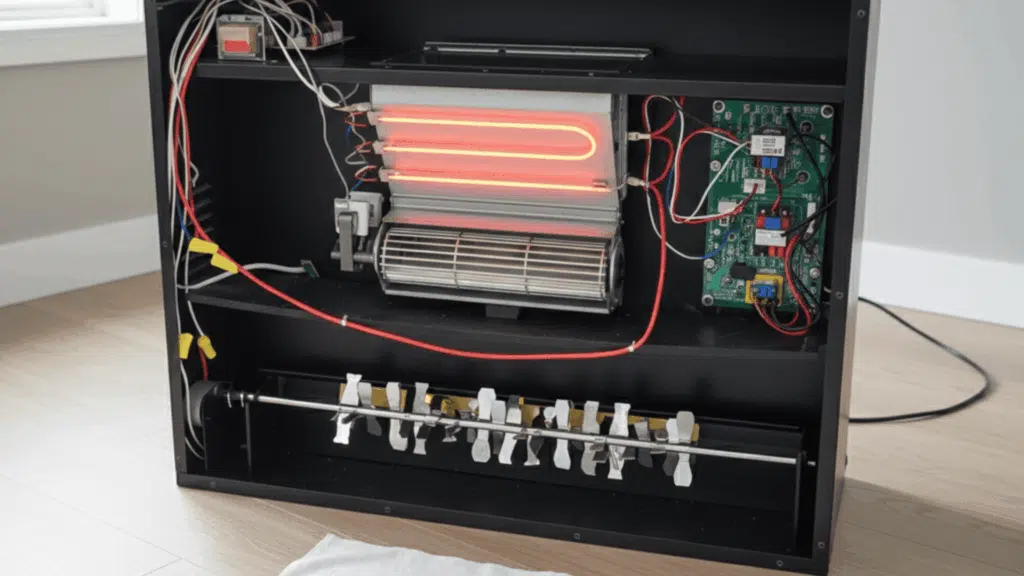
The flame effect system operates independently from heating, using LED lights and a rotating spindle or mirror to create flickering visuals.
Burnout bulbs, jammed motors, or disconnected wiring prevent the flame display while other functions may continue working normally.
Steps to fix it:
- Remove the front glass panel and decorative logs to access the flame chamber
- Replace burned-out LED bulbs with manufacturer-specified replacements
- Clean dust from the flame spindle area using compressed air
- Manually rotate the spindle to check for obstructions or jamming
- Trace and reseat any loose wire connections between flame components and the control board
- Disconnect and reconnect modular flame assemblies if your unit has them
3. No Heat but Fireplace Turns On
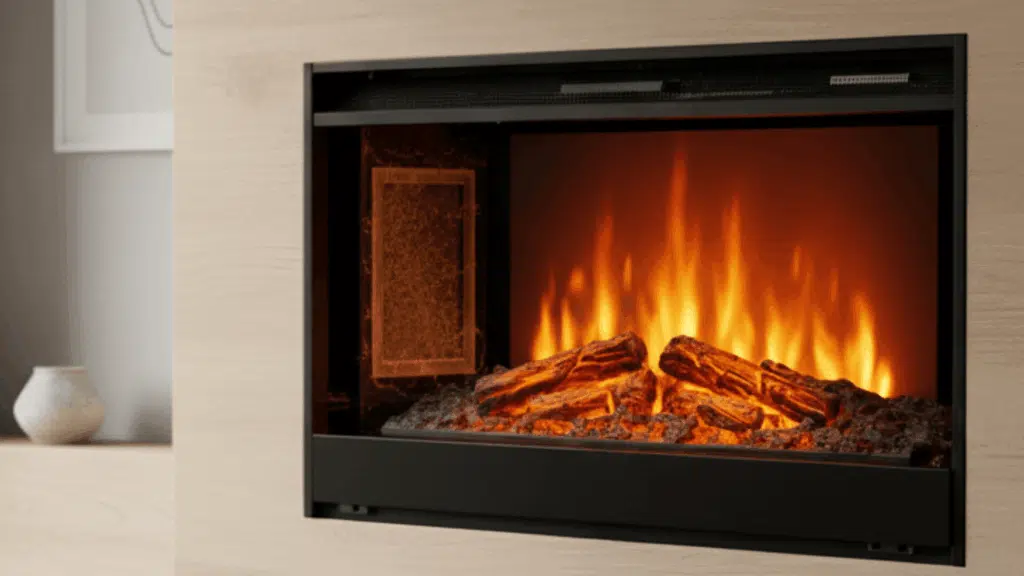
When flames work, but no heat comes out, the heating element has either failed or safety shutoffs have triggered due to overheating.
Blocked vents and dirty fans cause false overheat detection, while actual heating coil failure requires component replacement.
Steps to fix it:
- Unplug the unit and let it cool for 30 minutes before inspection
- Clean all air intake and exhaust vents thoroughly with a vacuum
- Locate and press the manual reset button near the heating element
- Remove dust buildup from fan blades and the surrounding chamber
- Verify thermostat settings and switch to manual heat mode for testing
- Replace the heating element if accessible, and all other solutions fail
4. Fan Runs but No Heat Output
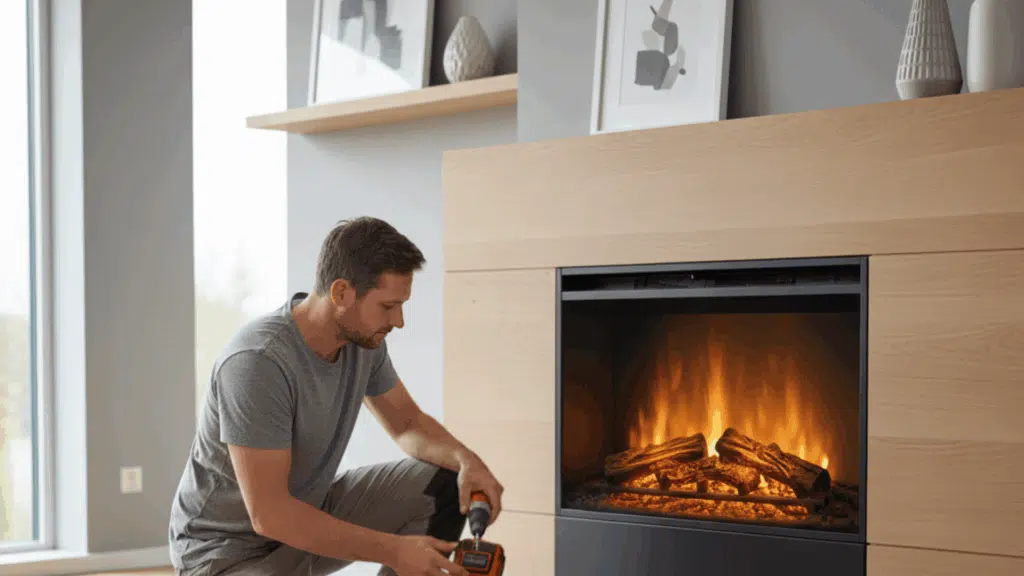
Hearing the fan operate without feeling any warmth indicates heating coil failure while the fan motor continues functioning.
The control board correctly activates the fan, but the heating element no longer generates heat due to burned-out coils or a disconnected power supply.
Steps to fix it:
- Run the heater on maximum setting and check the exhaust vent for any warmth
- Inspect all wiring connections to the heating element for loose or disconnected wires
- Test different heat settings to rule out control board communication issues
- Order a replacement heating assembly from the manufacturer if the coil has failed
- Remove mounting screws and slide out the modular heating unit for replacement
- Install the new heating assembly and reconnect all wire harnesses
5. Remote Control or Touch Panel Not Responding
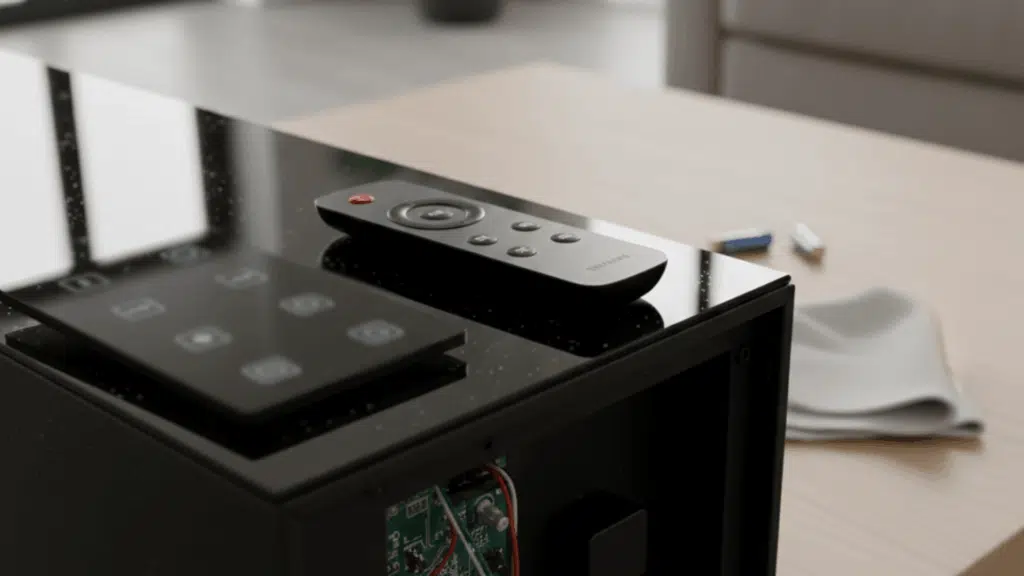
Control failures stem from dead batteries, signal interference, or desynchronization between the remote and receiver.
Manual controls often continue working when remotes fail, helping you identify whether the problem lies with the remote itself or the control board receiver.
Steps to fix it:
- Replace remote batteries with fresh ones and test immediately
- Re-pair the remote with the unit, following the manufacturer’s instructions in your manual
- Turn off nearby electronics that might cause signal interference
- Test manual controls on the unit to confirm that the fireplace itself responds
- Clean touch panels with a slightly damp microfiber cloth, then dry completely
- Replace the remote or control panel if re-pairing and cleaning don’t restore function
6. Fireplace Turns Off Unexpectedly
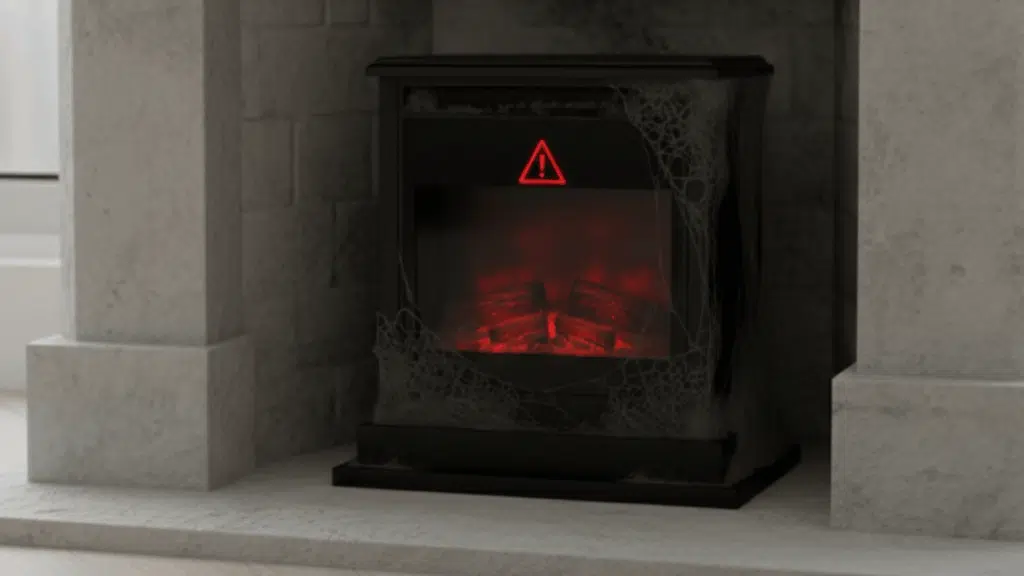
Random shutdowns protect against fire hazards when internal temperatures exceed safe limits.
Dust accumulation, blocked vents, or insufficient clearance around the unit trigger overheat sensors, causing the fireplace to shut down automatically until temperatures drop and you manually restart it.
Steps to fix it:
- Unplug the unit and remove all accessible panels for thorough cleaning
- Vacuum the fan, heating area, and air passages with a brush attachment
- Ensure three feet of clearance in front and six inches on all sides
- Remove furniture, curtains, or storage items blocking airflow
- Reduce the heat setting to decrease thermal stress on components
- Contact a professional if shutdowns continue after cleaning and clearance adjustments
Maintenance and Care to Prevent Future Problems
Regular maintenance prevents most electric fireplace failures before they occur and extends your unit’s lifespan significantly. Follow these simple care routines to keep your fireplace running reliably season after season.
Monthly cleaning during active use: Vacuum internal components with a soft brush attachment and wipe the exterior and glass panel with a microfiber cloth to prevent dust accumulation that restricts airflow and causes overheating.
Quarterly cord and plug inspection: Check the power cord and plug for signs of wear, heat damage, or loose connections; discolored plugs or warm outlets indicate electrical problems requiring immediate attention.
Annual pre-season testing: Run both flame and heat functions for 15-20 minutes at the start of each heating season to confirm everything operates correctly before you actually need the warmth.
Proper remote storage: Store remote controls in designated spots and remove batteries if the fireplace won’t be used for extended periods to prevent battery leakage that damages remotes and control boards.
Adequate clearance maintenance: Maintain at least three feet of clearance in front and six inches on all sides, moving furniture or storage items that gradually creep closer over time and restrict ventilation.
Documentation accessibility: Keep your user manual and warranty information in an accessible location for quick reference during troubleshooting or when ordering manufacturer-specific replacement parts.
When to Call a Professional
If your fireplace continues tripping breakers after cleaning, or if certain functions never work despite all troubleshooting steps, internal component failure requires diagnostic equipment and expertise you likely lack.
Burning smells, smoke, or visible damage to internal components signal potentially dangerous conditions.
Never continue operating a fireplace exhibiting these symptoms. Professional evaluation determines whether repair is possible or if replacement becomes necessary for safety.
While overheat protection is essential for safety, malfunctioning sensors create frustrating false alarms. Technicians can test and replace these sensors properly.
Keep warranty status in mind throughout the decision-making process. Warranty-covered repairs cost nothing or very little, making professional service the obvious choice.
Cost Comparison: DIY Repair vs Professional Service
Understanding repair costs helps you decide whether to fix the problem yourself or call a technician. Here’s how DIY and professional service costs compare across common repairs.
| Repair Type | DIY Cost | Professional Cost | Best Choice |
|---|---|---|---|
| LED bulb replacement | $10-$25 | $100-$150 | DIY (simple swap) |
| Cleaning and maintenance | $5-$15 | $100-$200 | DIY (basic skill) |
| Heating element replacement | $50-$150 | $200-$400 | DIY if modular, professional if hardwired |
| Control board replacement | $75-$200 | $250-$450 | Professional (technical expertise needed) |
| Remote/switch replacement | $15-$40 | $125-$250 | DIY (plug-and-play) |
| Full diagnostic and repair | N/A | $150-$350 | Professional (complex troubleshooting) |
Consider replacement when repair costs exceed 50% of a new unit’s price—a $300 repair on a $400 fireplace makes little sense, while the same repair on a $1,500 unit preserves significant value.
Conclusion
Most electric fireplace issues stem from simple causes that homeowners can address with basic tools and careful attention to safety protocols.
Power interruptions, dirty components, and loose connections account for the majority of problems, while more serious failures typically announce themselves clearly through burning smells or visible damage.
Successful DIY repair starts with accurate diagnosis (identifying whether flames, heat, or control systems are malfunctioning before ordering parts or disassembling the unit).
Regular maintenance, particularly cleaning dust from fans and vents, prevents most failures before they occur.
Understanding your fireplace’s basic operation and recognizing your repair limits keeps your unit running reliably for years while maintaining safety throughout your home.
Frequently Asked Questions
Can I Use My Electric Fireplace With a Broken Heating Element?
Yes, you can safely run the flame effects without the heating element working since these systems operate independently, though you won’t get any warmth from the unit.
How Long Do Electric Fireplaces Typically Last?
Electric fireplaces last 10 to 20 years with proper maintenance, though individual components like LED bulbs and heating elements may need replacement every 5 to 10 years, depending on usage.
Is It Worth Repairing an Old Electric Fireplace?
Repair makes financial sense if the cost is under 50% of a replacement unit’s price and the fireplace is less than 10 years old with no other major issues.

Stephanie Grace, a graduate with a degree in Fine Arts from the Savannah College of Art and Design, has been inspiring DIY enthusiasts with her creative and practical guidance for over 14 years. Her career in design and crafting began in a small artisan workshop, where she developed a passion for transforming everyday materials into beautiful and functional items. Stephanie joined our website in 2018, rapidly gaining popularity for her easy-to-follow DIY tutorials and innovative project ideas. Since then, she has been the creative mind behind our DIY section, helping readers bring their artistic visions to life. Outside her professional pursuits, Stephanie enjoys pottery and urban gardening, hobbies that showcase her love for hands-on creativity and nature.