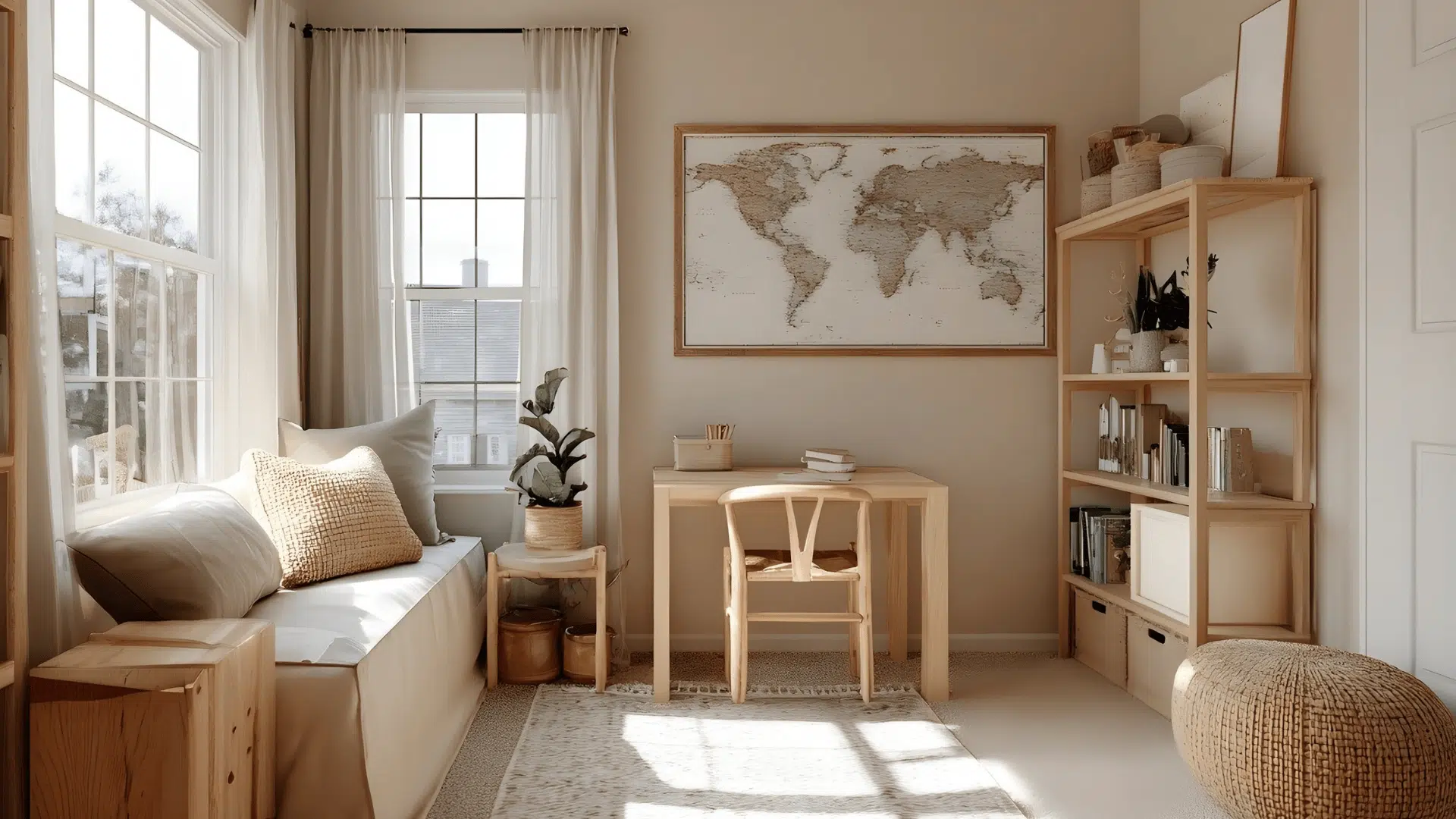

Designing a homeschool space doesn’t mean starting from scratch or buying a room full of furniture. With the right approach, even small corners can become calm, inspiring places to learn.
Today, in this guide, I walk through practical homeschool room ideas that help you use your space wisely while keeping things simple and comfortable.
You’ll find creative setup ideas and little touches that make learning feel enjoyable instead of stressful.
As you move through each section, you’ll see how easy it can be to build a space that truly fits your family’s daily rhythm.
Homeschool Room Ideas for Homes
Creating a homeschool space doesn’t mean you need a perfect Pinterest classroom. What you really need is a cozy, organized area that fits your home, your kids, and your budget.
1. Window Bench Reading Bay

Turn a sunny window into a cozy reading bay by adding a simple bench with cushions and a few pillows. Use drawers or baskets underneath to store books, blankets, and quiet toys.
This makes reading feel like a treat, not a chore. It saves floor space while giving kids a bright, calm place to relax and learn.
2. World Map & Geography Corner

Choose a wall or corner for a giant world map or large globe and surround it with geography books. Add pins, yarn, or stickers to mark places you read about, visit, or dream of going.
Keep atlases and travel guides in a nearby basket. This turns geography into a living story instead of just memorizing country names.
3. Ceiling-Hung Rail for Supplies

Install a curtain rail or hanging bar above your table or desk and use hooks with cups, small buckets, or baskets for pens, scissors, and glue.
This keeps the surface clear while keeping everything within reach. It’s especially helpful in small rooms where clutter builds quickly. Plus, it adds a fun, creative, studio-style look to your homeschool space.
4. Sensory Calming Corner

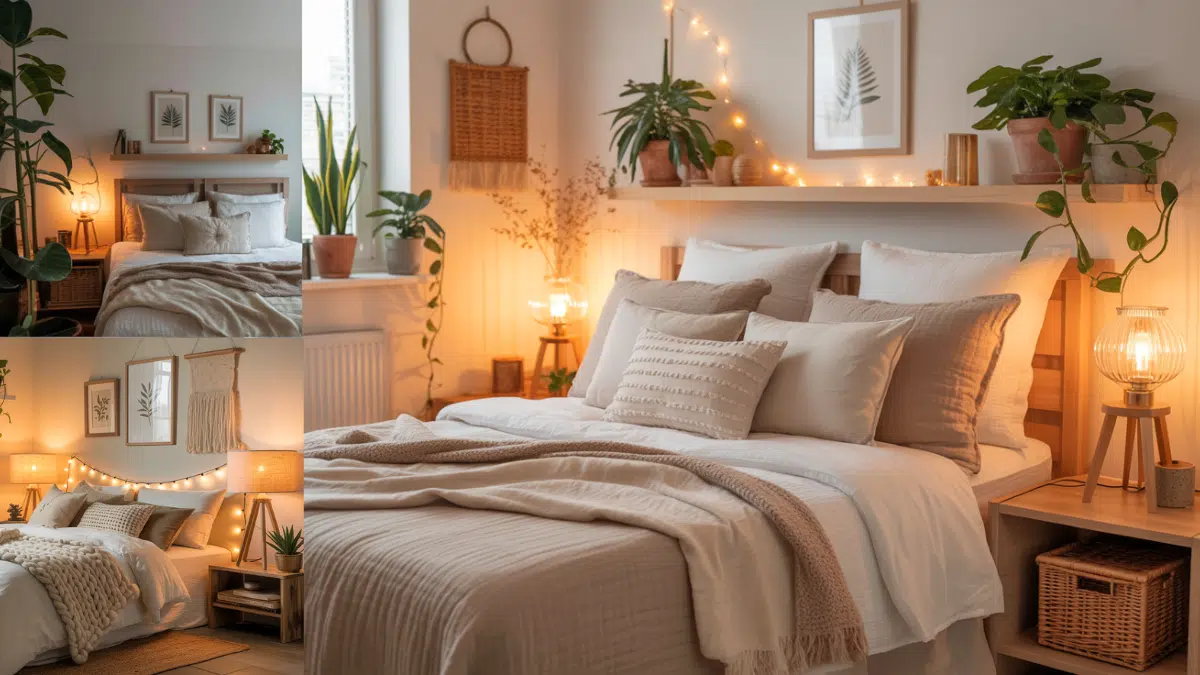
Create a calming corner with a soft rug, cushions, and a gentle lamp or string lights. Add a basket with fidgets, a weighted blanket, and noise-canceling headphones.
This space is for kids to use when they feel overwhelmed or distracted. It gives them a safe, quiet spot to reset, breathe, and practice managing emotions during busy homeschool days.
5. “Center of the Week” Station

Set up a small table or shelf that changes theme each week or month. One week it could focus on space, another on insects, oceans, or ancient Egypt.
Include related books, simple hands-on activities, and interesting objects. This rotating “center” keeps learning fresh without redoing your whole room and lets you highlight topics in a fun, focused way.
6. Entryway Command Center for School

Turn your hallway or entry into a command center by adding hooks for backpacks, a calendar, and clipboards with daily checklists. Use a mail sorter for folders, permission slips, and important papers.
Kids grab and return items as they enter or leave. This reduces morning chaos, keeps school work from getting lost, and makes your homeschool day smoother from the start.
7. Converted Garage Homeschool Studio

If you have a garage, transform part of it into a homeschool studio with a long workbench, open shelves, and sturdy storage bins. This space can handle paint, clay, and big building projects without worrying about mess.
Add rugs, heaters, or fans for comfort. It becomes your family’s creative workshop, separate from your main living areas.
8. Attic Loft Learning Hideout

Use an attic or loft as a quiet hideout schoolroom, especially for older or easily distracted kids. Add low shelves, a small desk, comfortable floor cushions, and strong lighting.
Consider a fan or small heater if temperatures change. The tucked-away feeling makes it easier to focus, read, and study, while also feeling like a special, grown-up learning zone.
9. Balcony or Porch Nature School Spot

On a balcony, patio, or porch, set up a small outdoor table with chairs or a bench. Keep nature journals, pencils, binoculars, and a simple weather chart nearby.
Use this spot for reading, sketching plants, tracking clouds, or birdwatching. Fresh air and natural light can calm kids and make lessons feel like an adventure instead of sitting at a desk.
10. “School in a Box” Trunk or Chest

Store your main homeschool supplies in a large trunk, chest, or lidded storage box. In the morning, open it to pull out books, binders, and a pencil caddy.
At the end of the day, everything goes back inside and disappears. This is perfect when you study in the living room or small apartments where you can’t leave materials out.
11. Wall-Length Chalkboard or Whiteboard Strip

Mount a long chalkboard or whiteboard strip across one wall at kid height. Use it for math problems, spelling practice, drawing, brainstorming, and daily routines.
Kids can stand, move, and work side by side, which helps energy and focus. It also reduces paper waste and keeps key information visible instead of buried in notebooks or stacks.
12. Guest Room + School with Murphy Bed

Combine a guest room and homeschool room by installing a Murphy bed that folds into the wall. When it’s up, you have space for a desk, shelves, or a whiteboard.
When guests visit, fold away school items and pull the bed down. This flexible setup maximizes space, especially in smaller homes, while still giving visitors a comfortable place.
13. Kitchen Science Lab Counter

Reserve part of your kitchen counter as a science lab area. Store goggles, trays, measuring cups, and experiment kits in a cabinet or basket nearby.
Do messy projects there where water, sinks, and easy-to-clean surfaces already exist. This helps science feel like everyday life, not just special occasions, and makes clean-up less stressful for you.
14. Music & Rhythm Corner

Create a music corner with a keyboard, ukulele, small drum, and rhythm sticks, plus a music stand. Keep songbooks and biographies of composers or musicians on a nearby shelf.
Kids can practice, play rhythm games, or listen and follow along. This space invites them to find sound, beat, and melody, making music a regular, joyful part of homeschooling.
15. Maker / Engineering Station

Set up a dedicated maker zone with LEGO, K’NEX, cardboard, tape, simple tools, and building kits. Use labeled bins for pieces like wheels, gears, bricks, and connectors.
Provide a sturdy table for building, testing, and redesigning creations. This station encourages problem-solving, creativity, and engineering thinking, giving kids a hands-on way to apply math and science concepts.
16. Language Wall with Daily Words

Reserve a section of the wall for language learning and vocabulary. Use cards, mini whiteboards, or pockets to display “word of the day,” spelling lists, and new phrases.
Label furniture items around the room if you’re learning another language. Seeing words daily helps them stick and turns your home into a living language lab that kids interact with naturally.
17. Overhead Pot-Rack Style Organizer

Hang a pot rack or strong bar above a table, at a safe height, and add hooks for clipboards, art supplies, and light storage baskets.
Kids can pull down what they need and easily hang it back up. This frees tabletop space for work and projects, which is especially useful in small rooms where every inch of surface counts.
18. Couch-Side Morning Basket Zone

Place a large basket or low shelf beside the couch and fill it with morning-time items like read-aloud books, poetry, a devotional or story Bible if you use one, and quiet activities.
Start the day there with snuggles and reading before moving to more structured work. It sets a calm tone and helps kids ease into learning instead of rushing.
19. Binder Library Shelf

Use binders instead of piles of loose papers to organize your homeschool materials. Give each child or subject its own binder, labeled clearly on the spine.
Inside, use dividers for units and pockets for worksheets, notes, and printables. Store them on a shelf like library books. This makes planning, tracking progress, and finding past work simple and organized.
20. Picture Book Ledge Wall

Install shallow wall ledges so books face forward, cover-out, like a mini bookstore. Rotate picture books and early readers by season, theme, or child interest.
Because covers are visible, kids are more likely to choose books independently. It looks beautiful, keeps books off the floor, and turns reading choices into an inviting, visual part of your room.
21. History Gallery Wall

Pick one wall to act as a history gallery with portraits, maps, and a long timeline. Print pictures of historical figures and events, then add short fact cards or kids’ summaries underneath.
Arrange everything in order as you move through time. This helps children see connections between people and events and remember history as one big story.
22. Foldable Testing Cubicles

Use tri-fold display boards to create foldable cubicles on a shared table. During tests or quiet independent work, set them up so each child has a mini “office” with fewer distractions.
You can even clip checklists or schedules inside. When finished, fold the boards flat and slide them behind a cabinet or sofa, keeping your space flexible and tidy.
23. Plant & Nature Window Classroom

Turn a bright window into a mini plant classroom by adding shelves or a narrow table. Place labeled pots with herbs, flowers, or easy houseplants, plus spray bottles and a small watering can.
Kids can track growth in notebooks, measure leaves, and sketch changes. This creates a living science display that gently teaches responsibility and observation skills.
Step-By-Step Plan to Design Your Homeschool Space
It’s easier to set up a homeschool space when you follow clear steps. Use this simple plan, so you do not buy random stuff you don’t need.
- Clarify Your Style and Ages: Note whether your homeschool uses table work, hands-on projects, or online lessons. List each child’s age and learning needs to know how much space and storage you truly need.
- Audit Your Home: Walk through your space and look for unused corners, wall areas, closets, or nooks. Mark realistic spots for a desk, cart, or shelf based on your home’s layout.
- Choose Your Layout: Pick one shared table, individual desks, or a mix. In small homes, consider closet desks, wall-mounted setups, or hallway stations.
- Pick Core Furniture: Start with a sturdy table or desk, good seating, and basic storage. Use shelves, bins, carts, or file boxes. Add a whiteboard or pegboard for visibility.
- Add Decor, Lighting, and Routines: Use helpful decor like maps or charts. Improve lighting with lamps. Set simple cleanup routines to keep the space tidy.
When you finish these steps, you’ll have a clear plan instead of random ideas. You’ll know what to keep, what to skip, and how to shape a space that truly works.
Smart Storage & Proper Homeschool Organization
Good storage makes your homeschool space easier to use and much easier to clean. These simple ideas keep materials organized and easy for kids to manage.
| Category | What to Do | Why It Helps |
|---|---|---|
| Curriculum & Books | Sort by child or subject using magazine files, baskets, or shelves; rotate books by term/season | Keeps materials easy to grab and prevents overload |
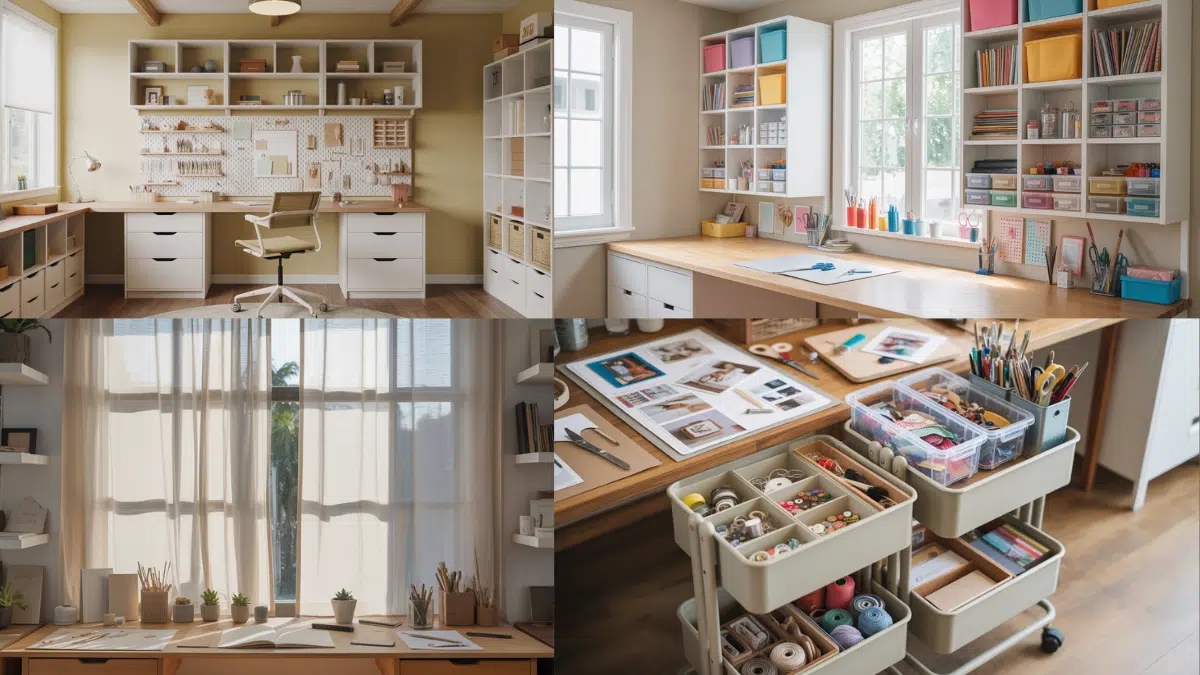
| Art & Craft Supplies | Use clear labeled bins; keep kid-safe items low and messy tools high; use a portable art caddy | Reduces clutter and keeps supplies accessible and safe |
| Paper & Projects | Use in-progress trays and done/grade/keep bins; review each term to recycle or save work | Prevents paper piles from taking over the room |
| Vertical Storage | Add wall shelves, hooks, and pegboards for tools and gear | Saves floor space and keeps daily items organized and visible |
These ideas keep your space tidy and make it easier for kids to find what they need without creating extra mess.
Homeschool Rooms for Different Kids & Families
Different families have different needs. These ideas help you adjust your homeschool space so it works for your home, your kids, and your daily routines.
1. One Child vs Big Family Setups
For one child, you have more flexibility and can work with a much smaller footprint. A single desk, a small shelf, and a rolling cart may be enough.
For a large family, use color-coding for each child, create shared zones for common supplies, and add simple noise-management tools like headphones or soft seating when kids need quiet.
2. Toddlers in the Homeschool Room
Set up a safe toddler shelf with simple toys your toddler can reach on their own. Use a small “toddler basket time” for quiet play while older kids work.
Add a messy play zone with a washable mat so toddlers can be busy without disrupting lessons.
3. ADHD & Sensory-Friendly Homeschool Spaces
Keep visual clutter low by limiting wall decorations and using simple colors. Offer fidget tools and alternative seating like wobble stools or floor cushions.
Use visual schedules to show the day at a glance and create a clear work zone vs play zone so kids know where each activity belongs.
4. Renter-Friendly & Budget-Friendly Hacks
Use no-drill solutions like Command hooks, tension rods, and freestanding shelves to avoid wall damage. Reuse what you already have, such as an old bookcase, a kitchen cart, or even shoe organizers, for supplies.
Save money with thrift finds, Facebook Marketplace deals, and simple IKEA hacks that make storage affordable and flexible.
Daily Routines to Keep Your Homeschool Room Organized
A tidy space is easier to use and less stressful for everyone. These small daily habits keep your homeschool room under control without a big clean-up day.
- Do a 5-minute end-of-day reset: Clear the table, put books away, and toss any trash so surfaces are empty. This quick reset makes the room feel fresh and saves you from a messy start tomorrow.
- Return supplies to their “home”: Put pens, scissors, paper, and manipulatives back in the same labeled bin or drawer. When everything has a clear spot, kids can find and put away items on their own.
- Plug in and charge devices: Place laptops, tablets, and headphones at a set charging station each afternoon. This prevents low-battery surprises and keeps cords from spreading all over the room.
- Set out tomorrow’s books and materials: Make a small “next day” stack for each child or subject before you finish. Having everything ready cuts down on morning delays and “Where’s my book?” moments.
- Do a quick floor and surface check: Pick up items on the floor, push in chairs, and wipe obvious spills or crumbs. A clear floor and neat surfaces make the room feel calm and ready for learning.
These tiny routines take only a few minutes but add up fast. They help your homeschool room stay organized without you feeling overwhelmed.
Conclusion
Creating a space that supports relaxed, meaningful learning doesn’t have to be complicated.
With the right homeschool room ideas, you can shape a room or small corner that feels calm, organized, and truly connected to your family’s rhythm.
The best setups are the ones that make daily learning smoother, spark curiosity, and give your kids a place where they feel comfortable and capable.
Start small, build slowly, and enjoy the process of making a learning environment that feels good to be in. Ready to design your own homeschool space? Choose one idea you love and start today.

Ava Taylor, holding a Bachelor’s degree in Interior Design from the Pratt Institute, has made her mark in creating engaging and functional living spaces for over 14 years. She began her career with a New York-based design studio, where she gained a reputation for her innovative and user-centric designs. Ava joined our team in 2019, bringing a blend of artistic flair and practicality to our home improvement section. Since the she has been the lead contributor to our room transformation series, inspiring readers with her unique approach to maximizing space utility and aesthetic appeal. Beyond her professional work, Ava is a passionate collector of vintage furniture, a hobby that enriches her design perspective.