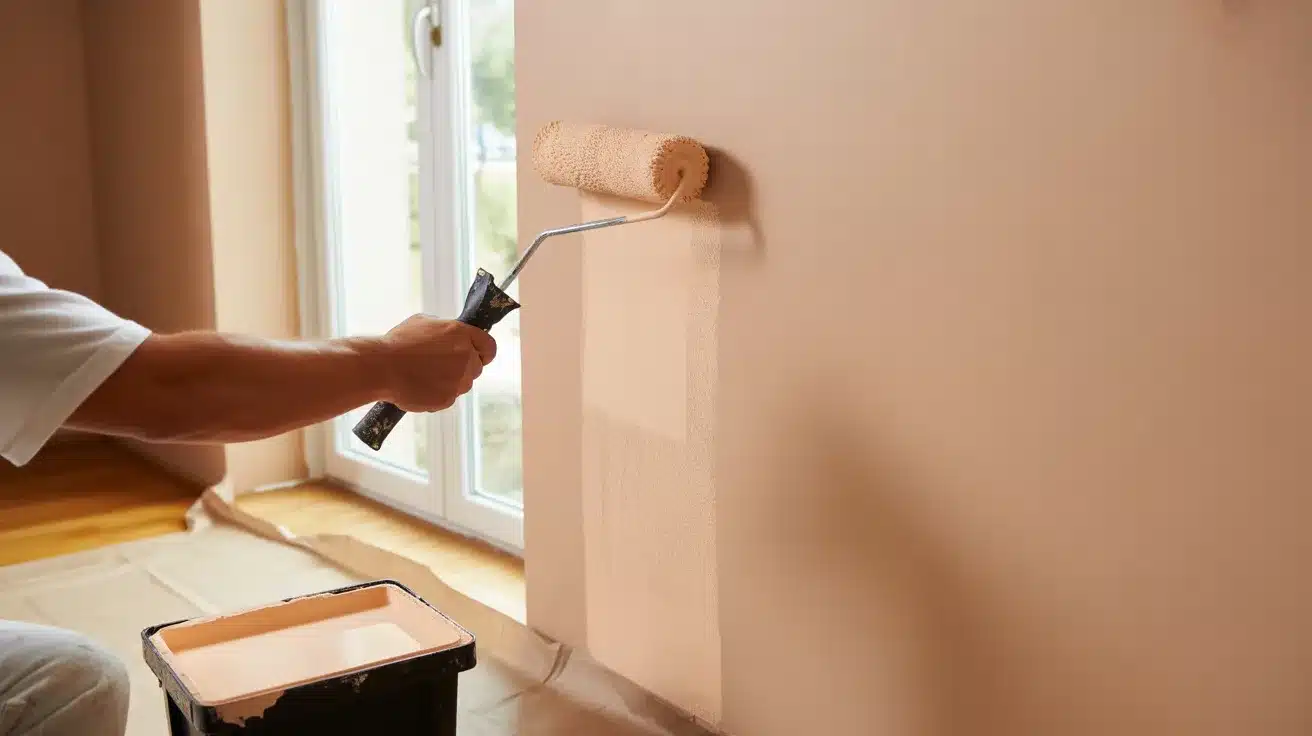

Wondering about the exact number of gallons of paint that generally covers when applied to a smooth, properly prepared surface.
This range is the industry standard published by most major paint manufacturers and is widely used by contractors and professionals for estimating paint quantities.
However, actual coverage often varies. Surface condition, paint type, application method, and color changes all influence how far a gallon of paint will go.
Knowing these factors helps prevent underbuying or wasting unused paint.
This article explains standard coverage rates, variables that affect coverage, and how to calculate the correct amount of paint for any project.
Standard Paint Coverage Per Gallon
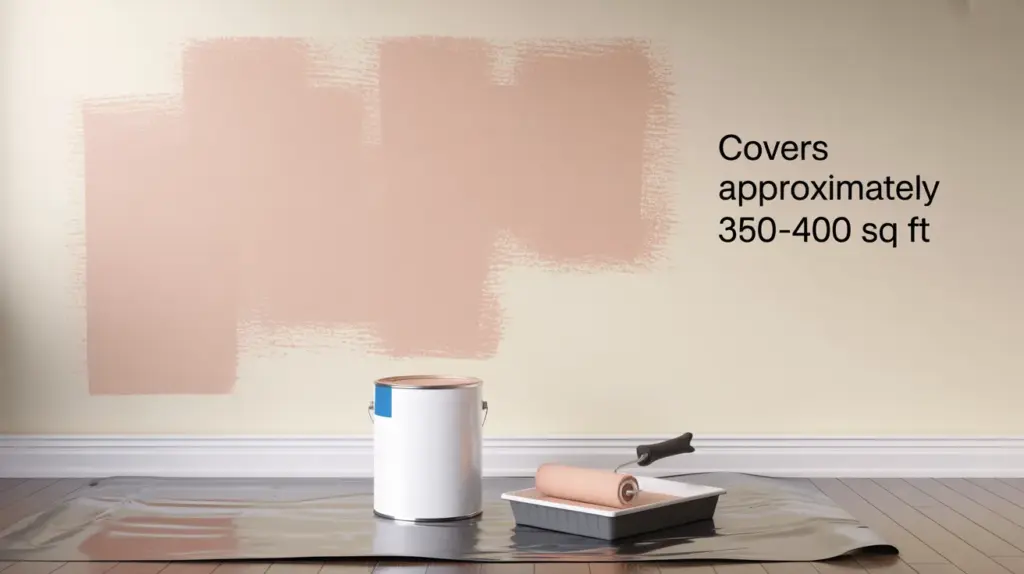
Under normal conditions, one gallon of interior or exterior paint typically covers between 350 and 400 square feet for a single coat.
When two coats are applied, which is common for most painting projects, the coverage is effectively reduced to around 175 to 200 square feet per gallon.
This coverage range is based on painting smooth, previously painted surfaces where the wall is clean, dry, and properly prepared.
It also assumes there is no drastic color change and that the paint is applied evenly using a brush or roller. These conditions allow the paint to spread consistently without excessive absorption.
Most paint manufacturers list coverage figures within this range on the can.
In some projects, however, using the lower end of the estimate is usually more reliable, especially when working with textured, porous, or unsealed surfaces that tend to absorb more paint.
Why Paint Coverage Is Not Always Exact?
Paint coverage is an estimate, not a guarantee. Several practical factors affect how much surface area a gallon can cover.
1. Surface Texture and Porosity
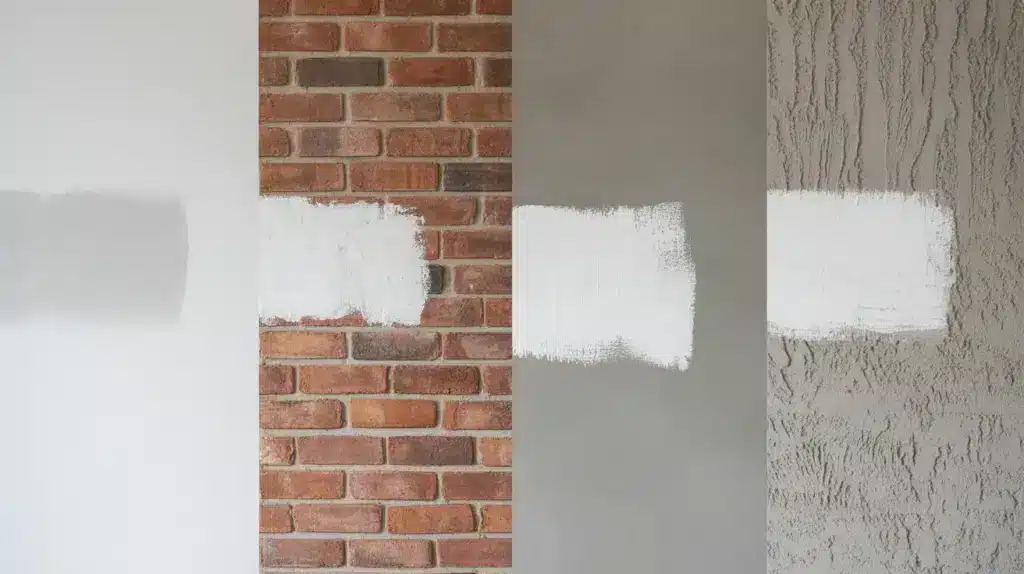
Rough or porous surfaces absorb more paint, reducing coverage. These surfaces may reduce coverage to 250–300 sq ft per gallon.
Smooth, sealed surfaces allow paint to spread evenly and reach the higher end of the coverage range.
Examples include:
|
2. Paint Type and Finish
Different paint formulations spread differently.
Finish Impact on Coverage:
Flat and matte: Slightly higher coverage due to less sheen
Eggshell and satin: Moderate coverage
Semi-gloss and gloss: Slightly lower coverage due to thicker formulas
Paint quality also matters. Higher-quality paints often contain more pigment, which improves coverage and reduces the number of coats needed.
3. Primer Use
Primer has a direct impact on how efficiently paint covers a surface.
When a surface is properly primed, paint spreads more evenly and usually requires fewer coats to achieve a consistent color and finish.
Without primer, surfaces tend to absorb more paint, which reduces coverage and increases the total amount needed.
This is especially common when painting over dark colors, stained areas, or new drywall.
Skipping primer in these situations often results in uneven coverage and the need for additional coats, leading to higher paint usage overall.
4. Color Change
Color transitions affect coverage significantly. In these cases, coverage may drop closer to 300 sq ft per gallon.
Light to dark: Usually manageable in one to two coats
Dark to light: Often requires primer and two full coats
Bold colors: May need additional coats due to pigment density
How to Calculate Paint Coverage Accurately?
Getting the paint quantity right starts with understanding the actual size of the space being painted.
Instead of relying on rough guesses, measuring the walls gives a clear picture of how much surface area needs coverage and helps avoid both waste and last-minute shortages.
Begin by measuring the width and height of each wall, then multiplying those numbers to find the square footage.
Once this is done for every wall in the room, the individual measurements can be added together to get the total paintable area.
For example, a wall that is twelve feet wide and eight feet tall comes out to ninety-six square feet. Repeating this calculation across all walls creates a realistic estimate of the surface size.
Doors and windows should be taken into account as well, since these areas are not painted.
Subtracting them slightly refines the total, which becomes especially helpful in smaller rooms where every square foot matters.
After the full area is calculated, factoring in the number of coats planned gives a final number that can be divided by the average coverage per gallon.
This approach keeps the estimate grounded in the actual space rather than assumptions, making the paint-buying decision far more reliable.
Interior Paint Coverage Examples
To make paint coverage easier to picture, it helps to see how a gallon performs in common interior spaces. These examples show how wall size and coat count directly affect the amount of paint needed.
| Space | Approximate Wall Area | Coats Applied | Paint Needed |
|---|---|---|---|
| Small bedroom | Around 350 sq ft | Two coats | About 2 gallons |
| Living room | Around 600 sq ft | Two coats | About 3.5–4 gallons |
| Single accent wall | Around 120 sq ft | One coat | About 0.5 gallon |
How Many Coats Are Usually Required?
Most professional standards recommend two coats for durability, even when one coat appears sufficient.
Single-coat coverage claims often rely on ideal conditions and are less reliable for long-term results.
Reasons include:
- More even color
- Better surface protection
- Longer lifespan
- Improved washability
Common Paint Coverage Mistakes
Several errors lead to underestimating paint needs:
Skipping primer on new surfaces
Ignoring surface texture
Assuming one coat is enough
Not accounting for color change
Relying only on label claims
Avoiding these mistakes reduces rework and uneven finishes.
Conclusion
A gallon of paint may come with a standard coverage estimate, but real results depend on how and where the paint is used.
Smooth, prepared surfaces make the most of each gallon, while texture, color shifts, and missing primer can quickly reduce coverage.
Taking time to measure accurately and planning for two coats leads to more consistent results and fewer interruptions mid-project.
Instead of relying only on the number printed on the can, using practical calculations helps align expectations with reality.
With the right preparation and realistic estimates, paint projects stay efficient, finishes look even, and unnecessary expense from excess or shortage is avoided.

Holding a Master’s in Library and Information Science from the University of Illinois, Josh Clarke has dedicated more than 15 years to managing and disseminating information across various platforms. His professional journey includes significant experience as a research librarian, where he developed an expertise in sourcing and providing accurate and comprehensive answers to diverse questions. In 2018, Josh brought his rich experience to our platform, quickly establishing himself as a reliable source for general FAQs. He has been overseeing our information curation since then, combining his research skills with a flair for engaging content delivery. When not involved in information management, Josh enjoys exploring digital photography and participating in local quiz competitions, hobbies that complement his inquisitive nature and love for learning.