
A bathroom mirror sets the tone at the sink. You use it every day, so the size, height, and light matter. If the vanity wall feels busy or bare, the mirror often drives that feeling.
In this guide, you will learn how to choose a wall mounted vanity mirror that fits your vanity and suits your space. You will measure the wall, set a comfortable height for real users, and pick a shape and frame that handle moisture. You will also plan lighting that supports grooming, mount the mirror with safe hardware, and follow simple care habits that help it stay clear.
Keep reading to map out the mirror wall before you drill, so the result feels balanced and works well over time.
Plan the Size and Placement First
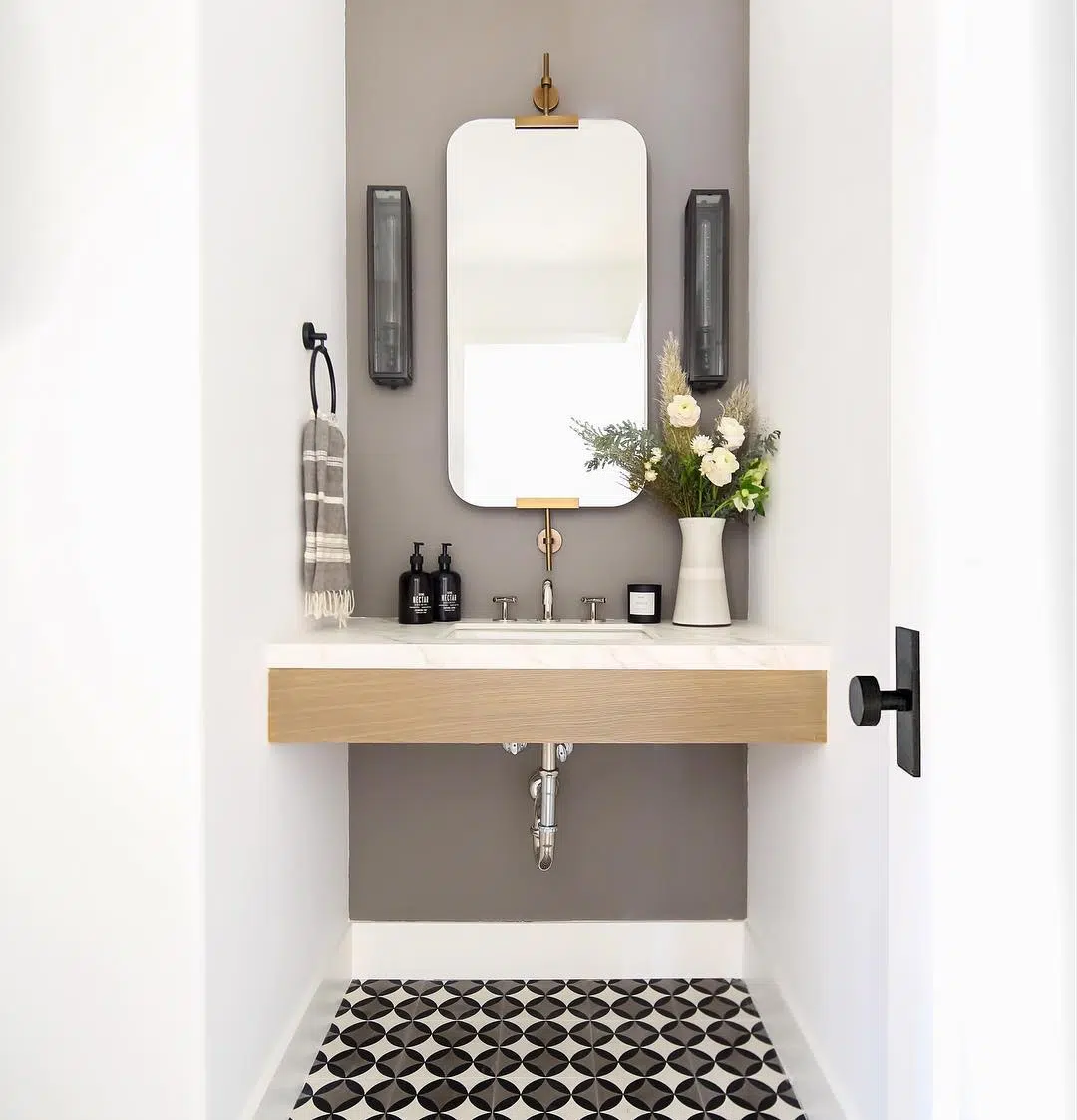
The vanity area pulls attention, so the mirror needs to fit the scale of the sink and the wall. Start with the vanity width. Many bathrooms look balanced when the mirror matches the vanity width, or runs a little smaller. This keeps the mirror tied to the sink area and leaves some wall on each side for trim, paint, or lights.
Measure the open wall height above the faucet. Check for items that could limit the mirror, like a shelf, a cabinet, or a window trim. Record the clear height and the clear width. These two measurements set a safe range for the mirror size.
Set the height based on real use. Place the mirror so most users can see their face without bending. The ADA mirror height requirements set the bottom edge of the reflecting surface at 40 inches max above the floor when the mirror sits above a lavatory or countertop. A helpful approach is to aim the mirror center near the average eye level of the people who use the sink. In a shared bathroom, choose a taller mirror so it serves more heights.
Leave a small gap between the bottom of the mirror and the faucet. This gap helps limit water spray on the frame and keeps cleaning easier around the sink.
Choose a Style That Matches the Room
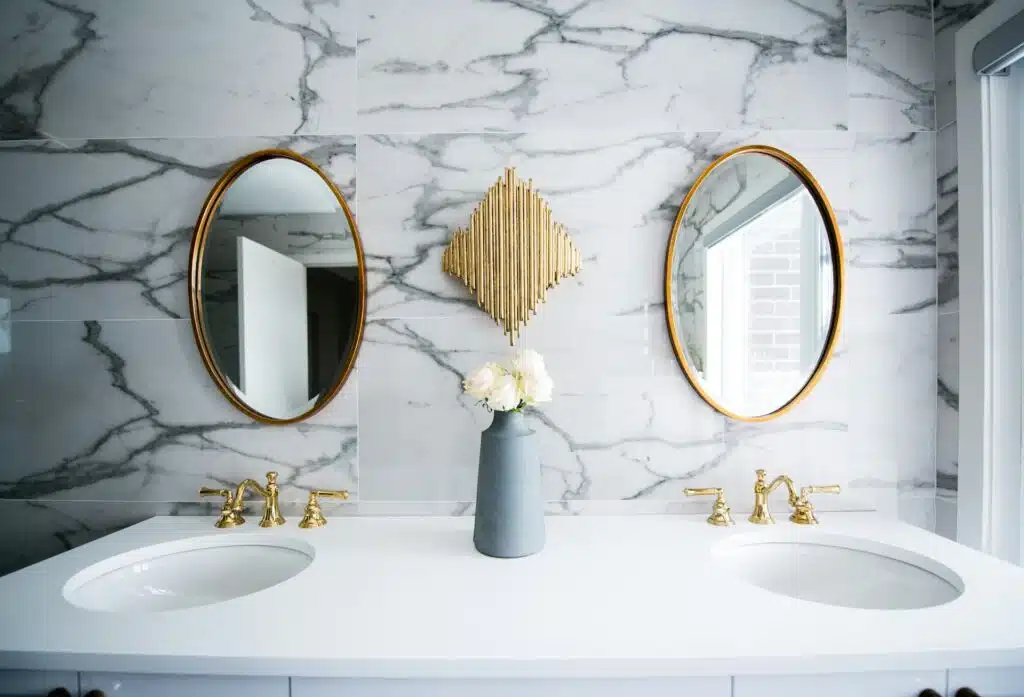
Shape and frame do a lot of work in a bathroom. A rectangular mirror fits many vanities because it follows the counter line and aligns with cabinet doors. A round or oval mirror can soften sharp tile lines and square cabinets. In a narrow bathroom, a wider shape can help spread light across the wall. In a small powder room, a round mirror can feel light and clean.
Pick a frame that suits a humid space. Bathrooms bring steam and splashes, so the frame needs a finish that holds up. Sealed wood can work when the room has good ventilation. Metal frames also work well in moist air. A thin frame keeps the look simple. A wider frame adds weight and can act like wall decor.
Match finishes with the fixtures you already have. If your faucet and lights share a finish, the mirror frame can match that finish. If you mix finishes, keep them in the same warmth. Pair warm brass with warm wood, and pair cool nickel with cool grey tones.
Think about lighting before you commit to the mirror width. Overhead light can cast shadows on the face. Wall sconces at the sides can reduce shadows and support grooming tasks. If you want sconces, make sure the mirror leaves space on both sides. If the wall feels tight, a light bar above the mirror can work.
Choose bulbs that feel warm to neutral. This helps skin tones look natural and makes the room feel comfortable.
Hang It Safely and Keep It Looking Clear
Start with the mirror weight and the wall type. Heavy mirrors need strong support. The safest method is to fasten into studs. NC State Extension recommends you anchor mirrors to wall studs when you secure heavy items. If studs do not land where you need them, use anchors rated for the mirror weight and for your wall material. Drywall needs different anchors than tile or plaster.
Find the center of the vanity and mark it with a small pencil mark. Use a level to guide your layout lines. If the mirror has a hanging rail, measure the distance from the top of the mirror to the rail. Transfer that distance to the wall so the mirror lands at the height you planned.
If you drill into tile, use a tile bit and drill at a steady pace. Keep the bit cool and avoid tile edges when you can. After you hang the mirror, press on each corner to check for movement. If the mirror shifts, adjust the hardware before you walk away.
For daily care, clean the glass with a soft cloth. Spray cleaner onto the cloth, then wipe the mirror. This helps keep liquid out of the frame seams. Dry the frame edges after you wipe the glass.
Use the bath fan during showers and let it run after. Good airflow helps slow rust, peeling finishes, and dark spots along the frame.
What to Do Before You Start
Get some distance and examine the wall in its entirety. Examine the position of the mirror, the lighting, and the distance that separates the mirror from the ceiling line that is there. Check to see that the mirror does not interfere with the space of a shelf, a cabinet door, or a sconce. If you intend to switch lighting, you should first think it out, as the placement of the wiring and the box can have an effect on the size of the mirror.
Next, compile everything you require, and design a detailed plan. Make sure to make use of a level, a tape measure, the appropriate drill bit for the wall surface, and hardware that is proportional to the weight of the mirror. You should use a pencil to mark your lines so that you can erase them later.
When you finish, the best result feels quiet and functional. The mirror sits at a useful height, the wall looks balanced, and the light supports the sink area. With careful measuring and secure mounting, you get a mirror that fits your space and stays stable through years of daily use.

With a Master in Architectural Studies from University of Pennysylvania, Marwa Haydar has pioneered living spaces since 2005. Her expertise, initially honed in a prestigious architectural firm, is evident in her approach to creating environments. Marwa became part of our team in 2019 and has since been a driving force in our home improvement section, known for her practical yet stylish solutions. She’s been spearheading our design workshops since then, infusing her passion for teaching into her work. In her leisure time, Marwa enjoys exploring historic architecture and is an enthusiastic pottery hobbyist, further enriching her understanding of form and texture.