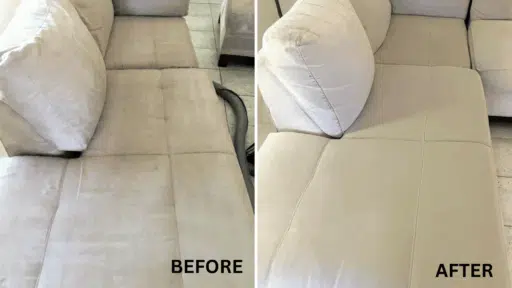
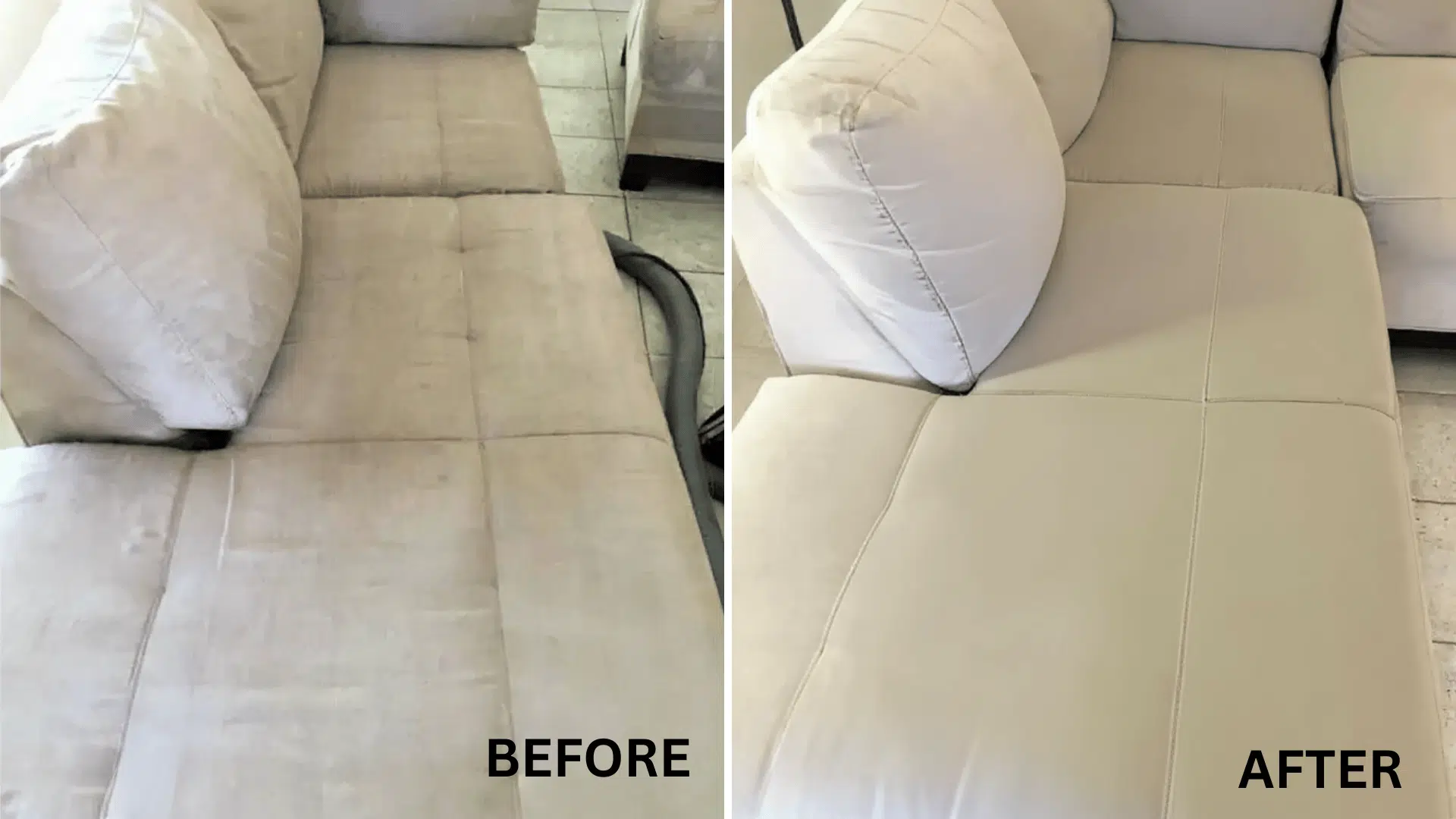

A suede couch adds warmth and character to any living space, but keeping it clean often feels uncertain.
The soft surface reacts differently to stains, moisture, and everyday use, making the wrong cleaning choice costly.
Knowing how to clean suede couch surfaces properly helps prevent lasting marks while protecting texture and color.
From routine care to handling spills and stubborn spots, small details matter more than expected.
The sections ahead break down safe methods, suitable household options, and clear limits on what should never touch suede.
With the right approach, maintaining a suede couch becomes less stressful and far more manageable over time.
What Is Suede Material?
Suede is a type of leather known for its soft, velvety surface and matte finish.
It is made from the underside of animal hide, which gives it a smooth texture but also makes it more delicate than other leather types.
Common Characteristics of Suede
- Soft texture: Feels smooth and slightly fuzzy to the touch
- Matte appearance: Lacks the shine seen in finished leather
- Porous surface: Absorbs liquids easily, making stain control important
- Sensitive to moisture: Water can leave marks if not handled properly
- Flexible feel: Bends easily and offers a comfortable seating surface
How to Clean a Suede Couch at Home?
Safe at-home cleaning methods help remove dirt and stains from a suede couch while preserving the fabric’s texture, color, and overall condition when handled with proper care.
1. Check the Suede Care Label First
Before starting any cleaning process, the care label should be reviewed carefully.
This label explains which cleaning methods are safe for the suede material and helps prevent color fading, texture damage, or permanent stains caused by incorrect products.
- W: Water-based cleaners are permitted
- S: Solvent-based cleaners only
- WS: Water-based or solvent-based cleaners may be used
- X: Vacuuming or professional cleaning only
Ignoring the care label may result in discoloration or texture damage, so this step should always come first.
2. Remove Loose Dirt and Dust
Dry debris on a suede couch can settle into the fabric and worsen stains if ignored.
Removing loose dirt first creates a clean surface, making stain treatment more effective while helping maintain the couch’s original texture and appearance.
- A suede brush or soft microfiber cloth works best
- Brushing should follow one direction to protect the nap
- Light pressure helps maintain the fabric’s natural finish
Regular dust removal keeps the couch looking clean and reduces long-term buildup.
3. Spot Cleaning Light Stains
Light stains on suede often respond best to dry cleaning methods.
Acting early and using gentle techniques reduces the chance of marks spreading or becoming permanent, especially on delicate suede surfaces that react poorly to excess moisture.
- A suede eraser or dry cleaning sponge can lift surface marks
- Gentle rubbing is recommended instead of firm scrubbing
- For water spots, lightly dampening the surrounding area and allowing even drying may reduce visible rings
Stains should always be treated as soon as possible for better results.
4. Cleaning Grease and Oil Marks
Oil-based stains require a different approach since liquid cleaners can spread grease further.
Absorbing the oil slowly helps lift the stain from the suede fibers without pressing it deeper into the couch material.
- Cornstarch or baking soda can be applied directly to the stain (e.g. powder-based absorbers)
- The powder should sit for several hours to absorb oil
- Afterward, the area can be brushed gently to remove residue
Repeating the process may be necessary for older or heavier stains.
Cleaning a Suede Couch Using Household Remedies
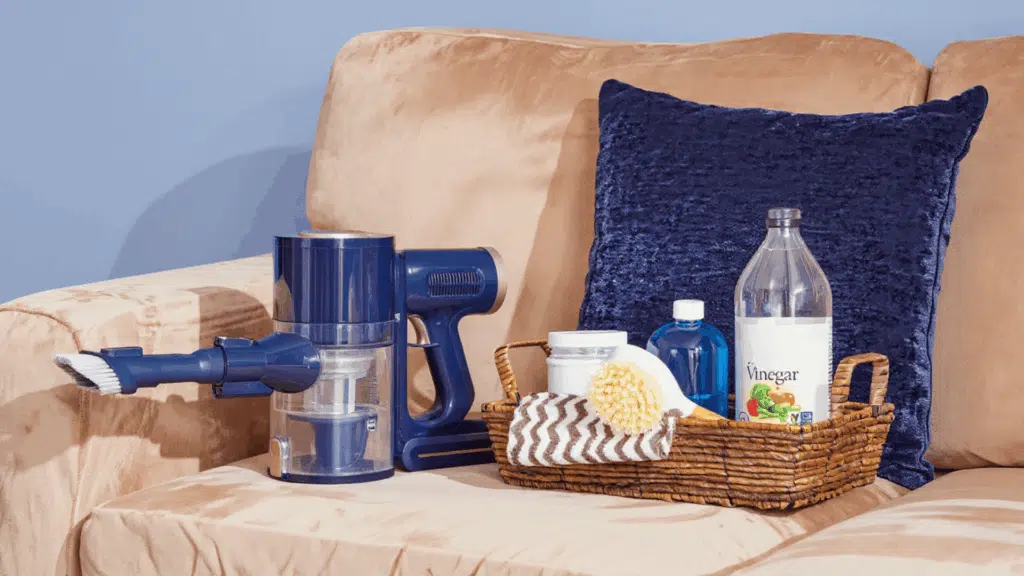
Some household products can be used on suede with caution and only for specific purposes.
These methods are suitable for light stains or odor control but should never replace proper suede-safe cleaning practices or professional care:
1. Vinegar
White vinegar can be used on suede in limited situations, mainly for small stains or odor-related marks.
It should be applied carefully and only as a spot treatment, as too much liquid can affect the fabric’s texture and color.
- Dilute white vinegar with an equal amount of water
- Lightly dampen a clean cloth with the solution
- Gently dab the stained area without rubbing
- Allow the spot to air dry completely
- Brush lightly with a suede brush to restore texture
This method is best for minor marks and should not be used for full-surface cleaning.
2. Baking Soda
Baking soda is mainly used on suede to absorb grease and reduce odors.
It works best on fresh stains and areas that hold smells, but it does not remove embedded dirt or heavy discoloration.
- Sprinkle a light layer of baking soda over the affected area
- Let it sit for several hours to absorb oil or odor
- Gently brush off the powder using a suede brush
- Vacuum lightly if residue remains
- Brush again to even out the surface
3. Suede Eraser
A suede eraser is one of the safest tools for removing dry stains, scuff marks, and surface dirt. Famous suede eraser include Kiwi Suede & Nubuck Eraser and Shacke Suede & Nubuck Cleaning Eraser.
It works without moisture, making it suitable for routine suede couch maintenance.
- Ensure the suede surface is completely dry
- Gently rub the eraser over the stained area
- Use light, even pressure to avoid flattening the nap
- Brush the area afterward to restore texture
4. Dry Cleaning Sponge
A dry cleaning sponge, also known as a chemical sponge, removes dirt using friction rather than liquid.
It is useful for general surface cleaning and refreshing suede upholstery.
- Press the sponge lightly against the suede surface
- Rub gently in one direction to lift dirt
- Avoid aggressive scrubbing
- Brush the area once finished to even out the texture
For sofas with woven or upholstered surfaces, fabric cleaning requires methods that differ from suede care.
What Not to Use on a Suede Couch?
Certain cleaning products and methods can damage suede by altering its texture or leaving permanent marks.
Avoiding these items helps maintain the couch’s appearance and prevents issues that are difficult to correct later.
- Excess water: Water can soak into suede fibers, leading to dark patches, stiffness, and uneven drying marks.
- Steam cleaners: High heat and moisture may flatten the nap and cause shrinkage or discoloration.
- Harsh chemical cleaners: Strong detergents, bleach, or ammonia-based products can strip color and weaken the fabric.
- Alcohol-based solutions: These may leave visible rings or cause the suede to dry unevenly.
- Regular upholstery cleaners: Products made for fabric sofas are often too aggressive for suede and may leave residue.
How to Restore the Texture After Cleaning?
The texture of a suede couch can be brought back after cleaning if the right steps are followed.
Gentle handling and proper drying allow the nap to lift again, helping the surface look even and soft. Below are the steps that can help:
1. Brush the Suede to Lift the Nap
After the couch is completely dry, brushing helps realign the suede fibers that may have flattened during cleaning.
A suede brush or soft-bristled brush should be used with light pressure. Brushing in one direction first, then gently back and forth, helps loosen compacted areas.
This step improves the overall feel of the fabric and reduces stiff or shiny patches left behind after stain treatment.
2. Allow the Couch to Air Dry Fully
Proper drying plays a key role in texture recovery. The couch should be left to air dry naturally, away from direct heat, sunlight, or fans.
Forced drying can harden suede fibers and create uneven surfaces.
Allowing enough drying time helps the material relax back into its natural form, making brushing more effective and reducing the chance of water marks or stiffness.
3. Apply a Suede Protection Spray
Once the texture is restored, a suede protection spray can help maintain the finish.
These sprays create a light barrier that reduces moisture absorption and future staining.
The product should be applied evenly from a distance and allowed to dry fully.
While not a cleaning step, protection helps keep the nap intact and makes routine maintenance easier over time.
How Often a Suede Couch Should Be Cleaned?
A suede couch does not need frequent deep cleaning, but regular care helps prevent stains and texture damage.
Cleaning frequency depends on usage, household conditions, and how quickly spills are addressed.
| Cleaning Type | How Often | Purpose |
|---|---|---|
| Weekly light maintenance | Once a week | Removes surface dust and prevents dirt from settling into suede fibers |
| Immediate spot cleaning | As needed | Treats spills quickly to reduce the risk of permanent stains |
| Monthly surface refresh | Once a month | Maintains overall appearance in frequently used areas |
| Occasional deep cleaning | Every few months | Addresses visible stains, odors, and buildup |
When Professional Cleaning Is the Better Option
Professional cleaning becomes the better option when stains are large, deeply set, or have spread across multiple areas of the suede couch.
Strong odors, long-term buildup, or noticeable texture damage may also require expert handling.
Suede furniture with high value or delicate finishes benefits from professional care, as specialists use controlled methods and suitable products.
Choosing professional services helps reduce the risk of color loss, uneven texture, or permanent fabric damage.
Also Read: Can I Put Shoes in the Washer? How to Avoid Damage
Conclusion
Keeping a suede couch in good condition depends on careful choices and consistent care.
Knowing how to clean suede couch surfaces properly helps prevent stains, texture changes, and unnecessary wear.
Gentle tools, limited household remedies, and proper drying methods all support safe maintenance. Clear boundaries around what should not be used reduce the risk of permanent damage.
With regular upkeep and professional cleaning when required, suede furniture can remain comfortable and visually pleasing for years.
Small habits make a noticeable difference over time.
Share personal cleaning experiences or preferred methods in the comments below.
Frequently Asked Questions
How to Clean Suede Couch Cushions?
Remove cushions and brush away loose dirt first. Treat stains using a suede eraser or dry sponge, then allow the cushions to air dry thoroughly before brushing gently to restore texture.
How to Clean a Suede Couch from Dog Pee?
Blot the area immediately using a dry cloth. Apply a small amount of suede-safe cleaner, neutralize odor with baking soda, allow drying, then brush lightly once dry.
Can You Use Baby Wipes on Suede?
Baby wipes are not recommended for suede. They contain moisture and additives that may cause staining, discoloration, or uneven texture on the fabric.

Tommy Hardy, an alumnus of the Georgia Institute of Technology with a degree in Mechanical Engineering, has been a go-to figure in residential upkeep and innovation for over 18 years. His career commenced in a leading home appliance manufacturing company, where he mastered the intricacies of household systems. Joining our platform in 2020, Tommy quickly became a reader favorite for his practical and easy-to-follow guides. He took the helm of our DIY section in 2019, consistently delivering content that empowers homeowners. Beyond his professional pursuits, Tommy is a passionate gardener and enjoys woodworking, skills enhancing his hands-on approach to home care.