
You want a wine room that feels right – not stiff, not overdesigned, not engineered to death by someone who doesn’t live in your house. And because you’re making a serious investment, you want to be sure every detail works in the real world, not just on Pinterest.
So let me walk you through this exactly the way I’d talk to a friend I respect: direct, honest, slightly messy, but packed full of the numbers and specs that actually matter.
The First Big Question: Showcase or Sanctuary? (This Changes Everything)
Before anything else, ask yourself the real question – the one people avoid: Do you want this room to be a flex, or a refuge?
Most folks want both, and that’s why they get tangled.
If you go “showcase”, you’re essentially signing up for:
- Large glass surfaces that need real engineering support (glass = thermal leakage).
- Cooling systems working 10-15% harder anytime you entertain.
- Cleaning glass every 2-4 weeks and refreshing LEDs every 18-24 months to keep color within ±150K.
Glass looks amazing, but it’s like installing a luxury fish tank – beautiful, but every edge and seam matters.
If you go “sanctuary”, then you’re after that hush, that low-light, cool-air feeling. But you have to treat the room like a living system. If airflow isn’t right, corners drift 3-4% RH. Too much wood without prep gives you 1-3 mm cupping. Experts keep the air turning over every 20-30 minutes so nothing goes stale.
Quick gut-check: imagine yourself walking in. Do you puff your chest a bit? Or do your shoulders drop? That’s your answer.
Where Should This Wine Room Actually Live? (The House Will Fight You on This)

Once you’re clear on the “showpiece vs. sanctuary” thing, location becomes the next fork in the road. And location is physics, not aesthetics.
Basement (the low-drama choice… usually)
Basements are naturally cool and stable – 2-3°F seasonal swings. But only if the concrete behaves. You want wall moisture under 4-5% and slab vapor under 3 lbs/1,000 sq ft/24 hrs. Miss that, and you’ve basically built a mold incubator. Warm up the vibe with layered lighting and tactile materials.
Main Floor (the Instagram favorite, the engineering headache)
Stunning, accessible… high maintenance. You’ll be spraying 2-3 inches of closed-cell foam (R-14-R-21) and doubling vapor barriers. One uninsulated cavity can spike the wall 3-5°F, and yes, bottles age faster.
Upper Floor (luxury retreat, big load)
Romantic, private. But cooling load jumps 20-40%, ducts must be R-8-R-12, and total weight can hit 1,200-1,500 lbs fast. Doable, gorgeous, but not casual.
Cooling Systems: The Heart of the Room (And Where Projects Live or Die)
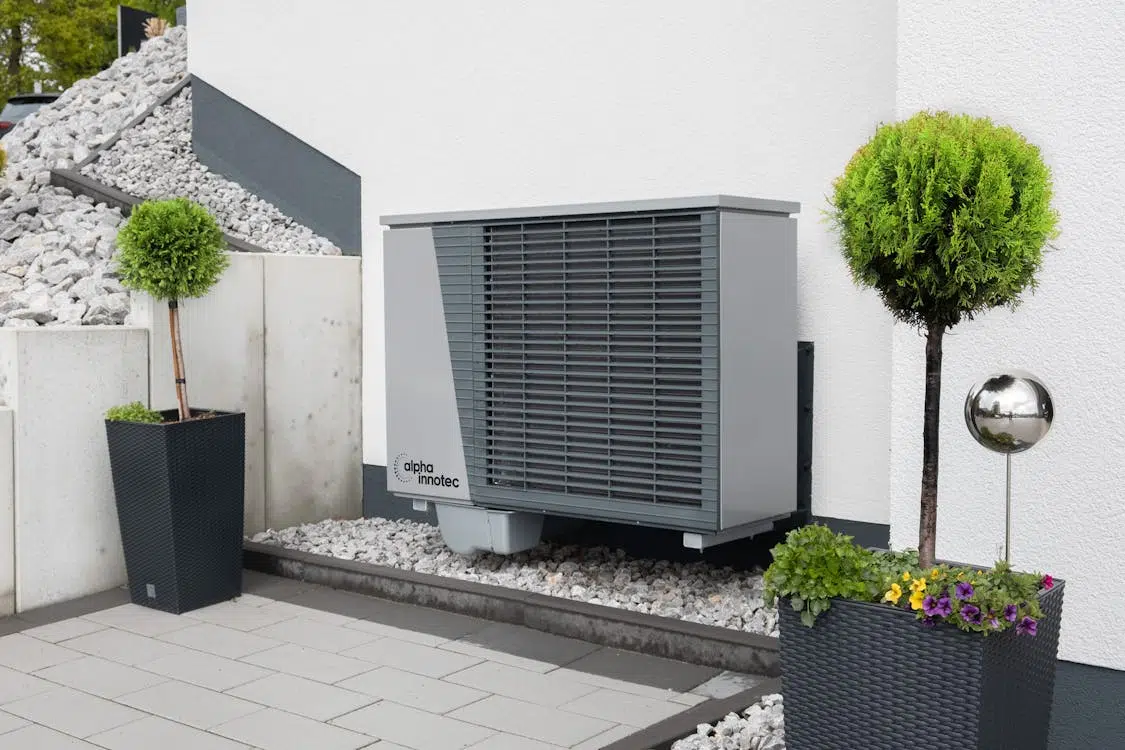
This is the part no one wants to think about until they have to replace 10,000 dollars’ worth of spoiled wine.
Self-Contained Units
Great for fast installs and smaller rooms (150-250 cu ft, 800-1,000 bottles). But they dump heat. Indoors, you need a space 5-7x bigger to absorb it. Outdoors, above 95°F, performance drops 15-25%. Below freezing, the compressor needs a low-ambient kit.
Door swings spike temps unless you build a vestibule with a 5-7°F buffer and a slow-close (about 2 seconds).
Split Systems
Quiet (28-32 dB), stable (±2-3% RH variance), elegant. Just remember line sets must stay under 50 ft and pressure test at 300-350 psi for 24 hours.
Fully Ducted Systems
The dream setup: invisible, silent (<25 dB), museum-level vibe. But airflow has to be right. Ducts are 6-10 inches, airflow 350-450 CFM, supply/return ratio around 1:1 or 1.2:1. Oversize ducts and temps stratify 2-4°F. Undersize and you hear whooshing.
Choosing Materials: This Is Where the Room Gets a Personality (And a Maintenance Plan)
Wood (classic warmth)
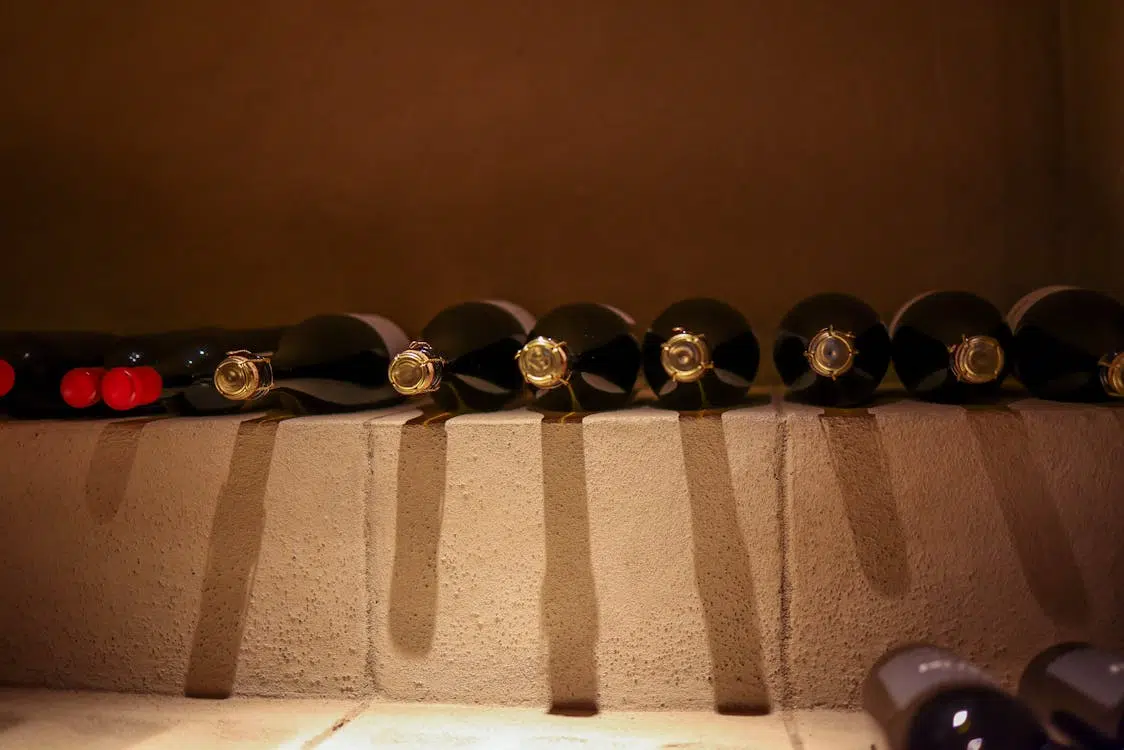
Wood is the most traditional material for a wine rack construction. Redwood, mahogany, walnut – solid performers at 55-70% RH. Minimal movement: ±0.5 mm/m. But you must acclimate for 48-72 hours at 55-58°F and seal end-grain to avoid 1-2% swelling.
Metal (clean, modern)
Powder-coated steel, aluminum, stainless. Cold to the touch (5-8°F colder than the room), reflective. Keep LEDs 1.5-2 inches away or labels glare like car headlights.
Acrylic (gallery vibes)
Must be cell-cast, 1/2 inch thick. Anything else scratches or yellows. Clean with sub-50 GSM microfiber while wearing nitrile gloves.
Mixed Materials (the “I want both” solution)
Warm plus futuristic. Perfect for indecisive geniuses.
Lighting: The Fastest Way to Ruin or Transform the Entire Room

Lighting makes the whole room emotional, and also affects temperature (source).
Backlighting (dramatic, museum-like)
Keep heat low: ≤3 BTUs/hr per linear foot. Brightness at 80-150 lumens/ft. LEDs 1-1.5 inches off racks. Diffuser 1/8-1/4 inch to avoid tiger-striping.
Perimeter Wash (calm, cocoon)
Use 2700-3000K. Aim lights at 15-30 degrees. Small adjustments of 2-4 inches can totally change the mood. Runs at 40-70 lumens/ft.
Spotlights (special bottles only)
One per 40-50 bottles, ≤3W, 10-25° beam. Avoid direct hits on varnish.
Display vs. Storage Density: Show More or Store More?
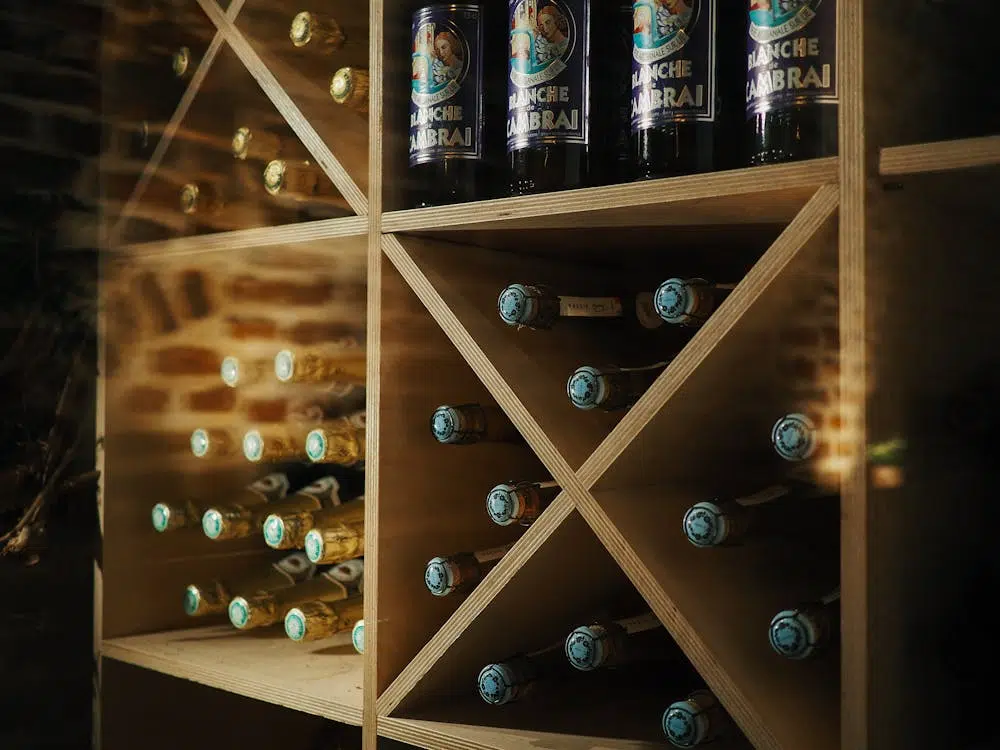
Your collection habits decide this. If you buy 100-150 bottles/year and drink 30-50, you need 300-500 bottles of growth space for the next 3-5 years.
Display-Forward Layouts
Beautiful but costly in space – you lose 20-40% capacity. Angles above 15° risk cork drying unless supported. Go 5-7° in dry climates, 12-15° in humid.
High-Density Storage
Double the capacity. But airflow suffers. Hidden spots can hit 2-4°F hotter. Use sensors every 3-4 ft and fans at 20-40 CFM.
Hybrid (the smart middle)
Display at eye level, storage above/below. Stagger columns 1-2 inches to avoid visual crowding.
Seating or No Seating? (A Surprisingly Emotional Choice)

Seating changes the function of the room.
If You Add Seating
You need 36-42 inches walkway clearance, low-back chairs (high backs trap heat by 1-3°F), dual-mode temps (tasting at 58-60°F, storage at 55-57°F), and a dehumidifier oversized by 5-10% because humans add 2-4% RH within minutes.
If You Skip Seating
You get more storage, less climate drift, and no condensation spikes (0.5-1°F every 10 minutes per person).
Doors and Enclosures: The Boring Decision That Makes or Breaks the Whole Room
This is physics disguised as décor.
Glass
Use 1/2-1 inch dual- or triple-pane low-E. Gaskets compress 1-2 mm. Sweeps prevent 1-2°F drift from even a 1/16-inch gap. Drip rails 1/4-1/2 inch for humid climates.
Solid Walls
6-mil vapor barrier on warm side, studs 16 inches on center, great reliability.
Hybrid
Three solid walls plus one glass viewing axis. Cuts cooling load by 20-25%.
Finishing Touches: The Quiet Signals of a Well-Built Cellar
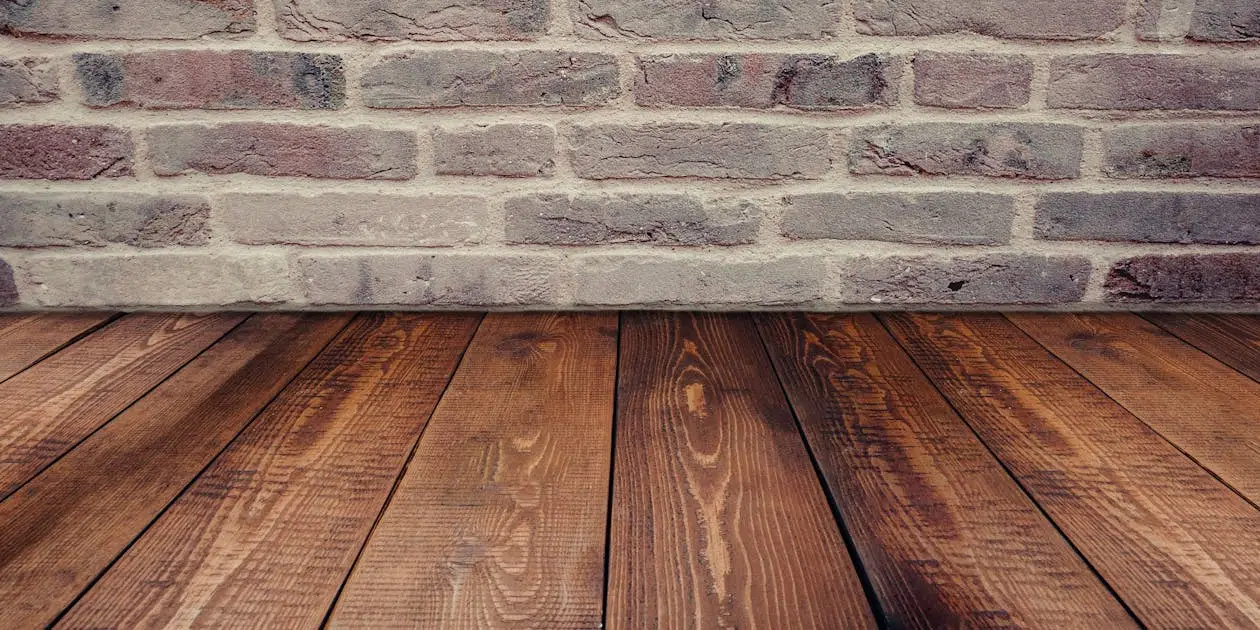
Flooring: engineered hardwood, porcelain, sealed concrete. Hardwood expands 0.2-0.4% per 10% RH shift. Floor must be level within 1/8 inch over 10 ft. Rack legs shimmed to ±1 mm.
Shelving: soapstone, quartzite, honed marble. Seal with 2 coats, curing 20-30 minutes each.
Accessories: cabinet ventilation 3-5 CFM, alcove lights 1-2W, soft-close everything.

Iris Delgado, BA in Interior Styling from SCAD, has spent a decade staging holiday and special-event interiors for hotels and film sets. She joined us in 2025 to offer theme-ready palettes, prop lists, and timeline checklists that simplify celebratory makeovers at any budget. She also co-hosts community parade-float workshops and collects vintage ornaments.