
Every garden holds a delicate web of life, and slugs are part of it.
The problem isn’t slugs themselves but rather when populations spiral out of control and devour tender seedlings overnight. The solution isn’t warfare; it’s working with nature.
The most effective approach stacks multiple methods: protect young seedlings with barriers, remove hiding spots, encourage natural predators, and use targeted controls only when truly needed.
Skip salt, harsh chemicals, and the “eradicate everything” mindset. Slugs feed birds, frogs, and beetles. The goal is balance, not elimination, a thriving garden where plants and wildlife coexist.
What Are Invasive Slugs?
Invasive slugs are non-native species that spread aggressively and disrupt local ecosystems. The Spanish slug (Arion vulgaris) is one well-known example.
It’s considered invasive in parts of Europe and has become a major garden pest in invaded areas.
But you should know that “invasive” depends on where a gardener lives. A slug species that causes problems in one region might be harmless elsewhere.
Check with local extension offices or garden authorities to find out which species are considered invasive in a specific area.
Why and When Are Slugs Harmful?
Slugs become harmful when their numbers rise, and food is easy to reach, especially during cool, damp weather.
They prefer seedlings and soft new growth, and a single night of feeding can strip leaves, chew stems, and wipe out young plants, forcing you to replant.
In some regions, invasive slugs can outcompete native species and disturb the local balance. Heavy infestations also push gardeners toward harsh chemical controls.
Misused baits or sprays can harm beneficial insects, soil organisms, and wildlife that eat slugs, which can make slug problems worse over time. Watch for slime trails and ragged holes.
How to Tell You Have a Slug Problem
Before taking action, confirm that slugs are actually causing the damage. Many gardeners blame slugs when other pests might be responsible, so accurate identification saves time and protects beneficial garden creatures.
Check for these common signs first:
- Irregular holes in leaves, especially on tender plants
- Shredded seedlings that seem to vanish overnight
- Silvery slime trails on soil, pots, or plant stems
- Feeding damage that appears after dark
Try a quick inspection routine at dusk. Look under pots, boards, and along mulch edges. Slugs are night feeders, so evening checks reveal the most activity.
How to Get Rid of The Slugs in Your Garden?
These methods work best when combined. Try several at once for the strongest results.
1. Hand-Pick at Dusk or Dawn

Walk through the garden when slugs are most active and drop them into a container of soapy water.
This sounds simple, but consistent hand-picking makes a real difference, especially during spring when seedlings are most vulnerable, and slug populations are building up.
2. Night Flashlight Patrol

Focus on areas with seedlings and damp edges to catch slugs while they’re actively feeding. This method works well for small gardens or problem spots where damage is concentrated.
Check under leaves and along stems where slugs hide between bites.
3. Hide-Board Trapping

Place wet cardboard or wooden boards in the garden at dusk so slugs will gather underneath for daytime shelter. Lift the boards each morning and remove the slugs you find.
This works particularly well when placed near vulnerable plants or known slug pathways.
4. Upside-Down Citrus Rinds

After using oranges or grapefruits, place the empty rinds upside-down near affected plants so slugs crawl inside overnight. Collect them in the morning and dispose of the slugs.
Replace rinds every few days to keep them fresh and attractive to slugs looking for shelter.
5. Beer Traps

Sink a jar or container level with the soil surface and fill it partway with beer to attract slugs with the yeast smell.
Note that these can also catch beneficial beetles, so use them carefully and only in problem areas. Empty and refill traps regularly for best results.
6. Copper Tape or Mesh Around Pots and Raised Beds

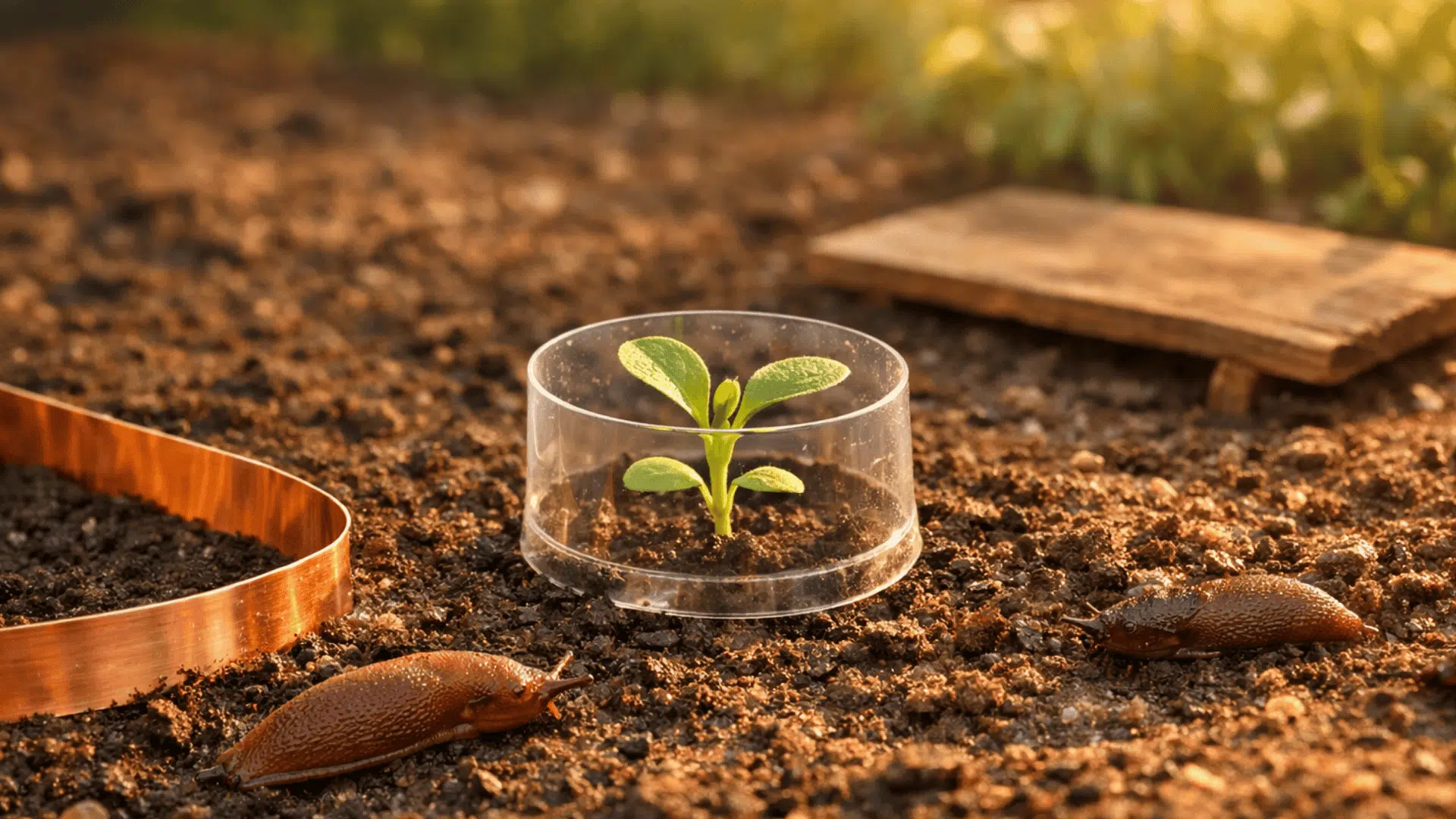
Slugs get a mild electric shock from copper, which keeps them away from protected areas.
Apply tape around the rim of containers or along the edges of raised beds for a long-lasting barrier. Replace when it gets dirty or oxidized to maintain effectiveness.
7. Collars for Seedlings

Cut plastic bottles into rings and press them into the soil around young plants to create a physical barrier.
Clear plastic cloches work too and offer additional protection from the weather. These stop slugs from reaching tender stems during the most vulnerable growth stage, when damage can kill plants.
8. Fine Netting or Fleece Over Vulnerable Rows

Cover seedling rows with garden fleece or fine mesh netting to protect plants during their most vulnerable weeks when they’re just emerging.
Remove once plants grow sturdier and can tolerate some nibbling. This also protects from other pests and harsh weather while allowing light and water through.
9. Wool Pellets or Wool Mulch Rings

Place wool pellets or wool waste in a ring around plant stems because the dry, scratchy texture deters slugs from crossing.
Wool also breaks down slowly and adds organic matter to soil, providing a dual benefit. Reapply after heavy rain when wool gets compacted or washes away.
10. Dry “No-Hide Zone” Around Stems

Keep a bare, dry ring about three to four inches wide around each seedling with no mulch or dense growth, just exposed soil.
Slugs avoid crossing dry, open ground because they need moisture to move comfortably. This simple change significantly reduces slug access to young plants at their most vulnerable stage.
11. Water in the Morning, Not Evening

When plants get watered in the morning, soil and foliage dry out by nightfall, reducing the moist conditions slugs need for nighttime feeding.
This timing change alone can reduce slug activity without any additional effort. It also helps prevent fungal diseases that thrive in overnight dampness on plant leaves.
12. Thin Dense Groundcover Near Seedlings

Dense, low-growing plants create a damp shelter for slugs throughout the day, giving them easy access to nearby vegetables.
Pull back or thin any heavy groundcover within a foot of young vegetables or flowers. This removes slug highways and hiding spots while improving air circulation around vulnerable plants.
13. Lift Pots and Boards Off the Soil

Anything sitting directly on soil creates a damp hiding pocket that slugs love for daytime shelter. Use pot feet or bricks to create air circulation underneath containers, eliminating these perfect slug habitats.
Check underneath periodically to make sure slugs haven’t found a way to squeeze into remaining gaps.
14. Keep Mulch Pulled Back From Seedlings

Mulch is great for established plants, but creates a perfect slug habitat when placed right next to sprouting seedlings.
Wait until plants are four to six inches tall before mulching close to stems. This gives seedlings a chance to toughen up before facing slug pressure from nearby hiding spots.
15. Tidy Edges and Remove Slug Hotels

Check for rotting boards, packed leaf piles, or other debris right next to garden beds because these are slug hotels.
Move them away from growing areas or remove them entirely to reduce daytime slug populations near vulnerable plants. Keep pathways and edges clear and dry for best results.
16. Grow Slug-Resistant Plants Near High-Value Crops

Some plants naturally resist slug damage, such as fennel, rosemary, and plants with tough or fuzzy leaves that slugs find unappetizing.
Use these as a buffer around more vulnerable crops like lettuce or young beans. This creates a protective zone that slugs are less likely to cross.
17. Start Seedlings in Modules and Transplant When Sturdier

Seeds started in trays or modules can grow stronger before going into the garden, where slug pressure is higher.
Larger, more established seedlings handle slug nibbling better than tiny sprouts emerging from the soil. This head start often means the difference between survival and total loss for tender vegetables.
18. Use Sacrificial “Trap Plants”

Plant a few hostas, lettuces, or other slug favorites in a designated zone away from main crops to draw slugs away.
Slugs will gather there first, making them easy to find and remove. Check that area regularly and remove the slugs you find before they move on to more valuable plants.
19. Iron Phosphate Slug Bait

This is approved for organic gardening in many regions and is safer than metaldehyde baits, but should still be used sparingly.
Follow label directions carefully and scatter small amounts only where slug damage is severe. Avoid routine use across the whole garden to minimize impact on non-target species and soil life.
How to Maintain a Balanced Garden Ecosystem
The healthiest gardens aren’t slug-free; they’re balanced. Here’s how to support that balance.
1. Encourage Natural Slug Predators
Many creatures eat slugs: birds (especially thrushes and blackbirds), frogs, toads, ground beetles, hedgehogs, and slow-worms. Create a habitat that supports them:
|
These predators do the slug control work naturally, with no effort from the gardener.
2. Build Resilient Soil and Plant Health
Healthy plants can withstand some slug damage. Build soil with compost and organic matter—but don’t pile it as a wet shelter right next to seedlings.
Avoid over-fertilizing plants with high-nitrogen fertilizer. This creates soft, lush growth that slugs find irresistible. Slow, steady growth produces tougher leaves.
3. Use “Targeted Protection” Instead of Eradication
Focus protection efforts on seedlings and high-value plants. Once plants grow larger and tougher, they can tolerate some background feeding. There’s no need to chase down every slug in the garden.
Rotate tactics by season. Spring requires intensive seedling defense with collars and barriers. Summer might just need occasional monitoring and hand-picking.
Conclusion
Slugs belong in a healthy garden, but when their numbers surge, they can wipe out seedlings overnight.
The best fix isn’t harsh chemicals, it’s a balanced plan: protect young plants with collars and barriers, remove damp hiding spots, water in the morning, and hand-pick or trap in problem areas.
Encourage natural predators like birds, frogs, and ground beetles, and save targeted options like iron phosphate bait for severe outbreaks only.
With a few consistent habits, you can reduce damage while keeping your garden ecosystem thriving.
What’s worked best for you against slugs? Drop your tips (or questions) in the comments!

Jordan Mathews, who has a degree in horticulture from Texas A&M University, has been a guiding force in plant health and sustainable gardening for over 16 years. His career began with a role at a renowned botanical garden, where he deepened his understanding of plant physiology and eco-friendly cultivation methods. Jordan joined our website as a freelancer in 2020, becoming a go-to expert for readers seeking advice on nurturing diverse plant species apart from offering insights grounded in scientific knowledge and practical experience. Beyond his professional achievements, Jordan is a keen nature photographer, capturing the beauty of flora in its immensely diversified forms.