



A well-made bed often looks effortless, yet comfort rarely happens by accident.
The way each layer is placed can change how the bed feels, how heat moves, and how easy it is to rest through the night.
Learning how to layer bedding brings clarity to something many people do on habit alone.
From the foundation beneath to the final top layer, each step plays a quiet role in airflow, warmth, and balance.
This guide breaks down the order, materials, and seasonal adjustments that make bedding feel right without overthinking it.
What follows is a simple approach that turns everyday bedding into a setup that truly works.
Choosing the Right Materials for Layering
The materials used in each bedding layer affect warmth, airflow, weight, and how the bed feels throughout the night:
- Cotton, linen, and bamboo: Soft, breathable fabrics that work well close to the skin and help control heat and moisture.
- Wool and microfiber: Insulating materials that add warmth without making the bed feel heavy or stiff.
- Down and down-alternative fills: Lightweight fills that provide warmth and softness while keeping the top layer comfortable.
How to Layer Bedding?
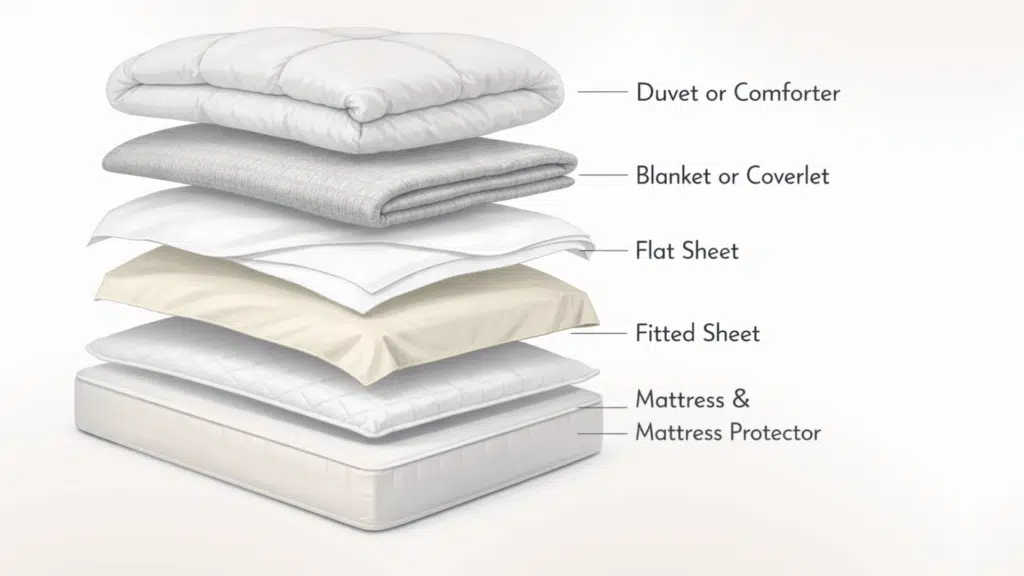
A clear overview of the correct bedding order from mattress to top layer, written for everyday use rather than seasonal styling.
Bedding works best when layers are added in a specific sequence that supports comfort and airflow:
Layer 1: Start with The Mattress and Mattress Protector
The base of a well-layered bed begins with the mattress itself. A clean, supportive mattress helps every layer above it perform better.
Adding a mattress protector is a smart first step, as it shields against spills, sweat, and everyday wear without changing how the bed feels.
Protectors also make cleaning easier and help extend mattress life.
This layer stays hidden, but it quietly improves hygiene, comfort, and long-term durability.
Layer 2: Add the Fitted Sheet
The fitted sheet creates the first surface that comes in contact with skin, so fabric choice matters.
A snug fit keeps the sheet from shifting during sleep and prevents uncomfortable wrinkles.
Elastic corners should sit flat and tight around the mattress for a smooth finish.
Breathable materials help regulate temperature and keep the bed feeling fresh.
This layer sets the tone for comfort, making it an important step rather than just a routine task.
Layer 3: Layer the Flat Sheet
The flat sheet sits between the sleeper and heavier layers, adding comfort and flexibility. It helps control warmth and makes nightly temperature adjustments simple.
When placing it, the finished side should face downward so it shows when folded over.
Some prefer to skip this layer, but it can reduce the frequency of washing blankets and duvets.
A properly placed flat sheet adds structure while keeping the bed easy to manage.
Layer 4: Place the Blanket or Coverlet
This middle layer provides gentle warmth without feeling heavy. Blankets or coverlets work well as adaptable pieces that can stay on the bed year-round.
They add texture and balance, helping the bed look complete even when the top layer is folded back.
Choosing a lighter option keeps layering flexible, especially for changing temperatures.
This layer also helps distribute warmth evenly, making sleep more comfortable without adding unnecessary bulk.
Layer 5: Finish with The Duvet or Comforter
The final layer brings everything together, both visually and functionally.
A duvet or comforter provides the main source of warmth and gives the bed its finished look.
The size should allow for enough drape on the sides without touching the floor.
Folding it slightly at the top creates a relaxed appearance and makes the bed inviting. This layer is easy to remove or adjust, keeping the setup practical for daily use.
How to Layer Bedding for Different Seasons?
Bedding layers can stay mostly the same year-round, with small changes based on temperature and airflow needs.
Spring Layering
Spring temperatures often change from day to night, so bedding should stay adaptable.
Layers need to feel light while still providing enough comfort during cooler evenings.
Using breathable fabrics helps maintain balance without frequent changes.
The goal is to keep the bed comfortable as the season gradually shifts toward warmer weather.
- Lightweight fitted and flat sheets
- Thin blanket or coverlet
- Breathable duvet insert
Summer Layering
Summer bedding focuses on keeping the bed cool and easy to adjust. Fewer layers help reduce heat buildup and improve airflow during sleep.
Fabrics that release warmth quickly work best, making it easier to stay comfortable throughout the night.
The setup should feel uncluttered and straightforward while still offering flexibility for changing temperatures.
- Cooling fitted sheet
- Flat sheet as the top layer
- Optional light throw for occasional use
Fall Layering
Fall brings cooler nights, making it a good time to reintroduce warmth without adding heavy layers.
Bedding should start to feel cozier while remaining breathable.
Middle layers play a bigger role during this season, helping the bed transition smoothly from warmer months to colder ones.
- Standard sheets with better insulation
- Medium-weight blanket
- Duvet folded halfway
Winter Layering
Winter bedding prioritizes warmth while keeping the bed easy to manage.
Multiple layers help trap heat, but balance remains important to avoid discomfort.
Choosing insulating materials and stacking layers correctly keeps the bed warm without feeling bulky, making it easier to stay comfortable through colder nights.
- Flannel or warmer sheets
- Insulating blanket
- Full-weight duvet or comforter
Common Bedding Layering Mistakes to Avoid
Simple mistakes in bedding order and material choice can reduce comfort and make daily use less practical.
- Too many heavy layers: Traps heat and makes the bed hard to adjust
- Poor airflow at the base: Causes warmth and moisture to build up
- Wrong duvet or comforter size: Leads to shifting and uneven coverage
- Incorrect layer sequence: Affects warmth distribution during sleep
- Ignoring regular care: Reduces freshness and overall comfort
The Final Touch
Layering bedding is less about rules and more about creating a setup that feels comfortable, balanced, and easy to live with.
Starting from a supportive base, adding breathable sheets, building gentle warmth through mid-layers, and finishing with a well-sized top layer helps the bed work as a whole.
Material choices play a quiet but important role, while small seasonal adjustments keep things comfortable year-round.
Once the layers are placed with intention, the bed becomes easier to manage and better suited for rest.
Feel free to share what works best, personal preferences, or favorite bedding combinations in the comments below.

Ava Taylor, holding a Bachelor’s degree in Interior Design from the Pratt Institute, has made her mark in creating engaging and functional living spaces for over 14 years. She began her career with a New York-based design studio, where she gained a reputation for her innovative and user-centric designs. Ava joined our team in 2019, bringing a blend of artistic flair and practicality to our home improvement section. Since the she has been the lead contributor to our room transformation series, inspiring readers with her unique approach to maximizing space utility and aesthetic appeal. Beyond her professional work, Ava is a passionate collector of vintage furniture, a hobby that enriches her design perspective.