
Laundry detergent is used every single week, yet few people stop to think about what’s actually inside the bottle or whether there’s a simpler option.
Long ingredient lists, heavy scents, plastic jugs, and rising prices have made many households pause.
DIY laundry detergent offers another way.
One that focuses on fewer ingredients and more control.
Homemade options come together quickly, use easy-to-find supplies, and can be adjusted for sensitive skin or fragrance preferences.
This guide explains how to make laundry detergent at home, covers safety and effectiveness, and points out when store-bought options still make sense.
With a clear understanding of the process, it becomes easier to decide if DIY laundry detergent fits into a modern, practical laundry routine.
Can You DIY Laundry Detergent at Home?
Yes, laundry detergent can be made at home using a few basic ingredients.
DIY laundry detergent has been used for decades and is still common in households that prefer simple, low-waste cleaning methods.
The process does not require special equipment and can be adjusted based on personal needs, such as scent preference or skin sensitivity.
Homemade laundry detergent is often chosen for better control over ingredients, reduced packaging, and lower long-term cost.
When mixed correctly and used in the right amounts, it can clean everyday laundry effectively.
Is It Safe to Use DIY Laundry Detergent?
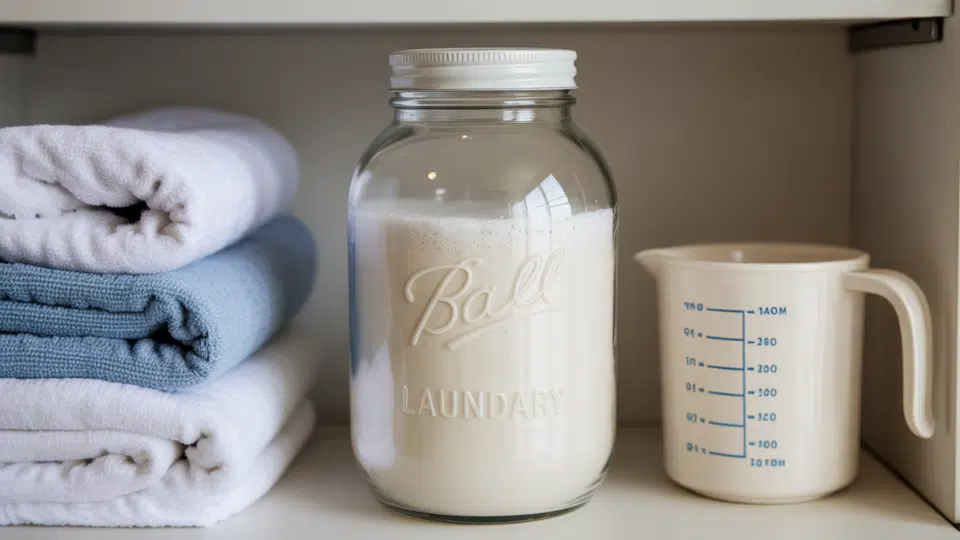
DIY laundry detergent is often considered non-toxic when made with simple ingredients and used correctly.
It can be a safer option for people with sensitive skin, especially when fragrance-free soap is used.
Because homemade formulas avoid synthetic dyes and strong perfumes, they may reduce irritation for some users.
However, proper rinsing and correct dosage are important to avoid residue buildup.
Pros and Cons of Using Homemade Laundry Detergent
| Pros | Cons |
|---|---|
| Fewer ingredients to manage | May not remove heavy stains as easily |
| Lower cost over time | Incorrect ratios can leave residue |
| Can be gentler on sensitive skin | Not all recipes suit every washing machine |
| Reduced plastic waste | May require occasional machine cleaning |
How to Make Laundry Detergent: Recipe
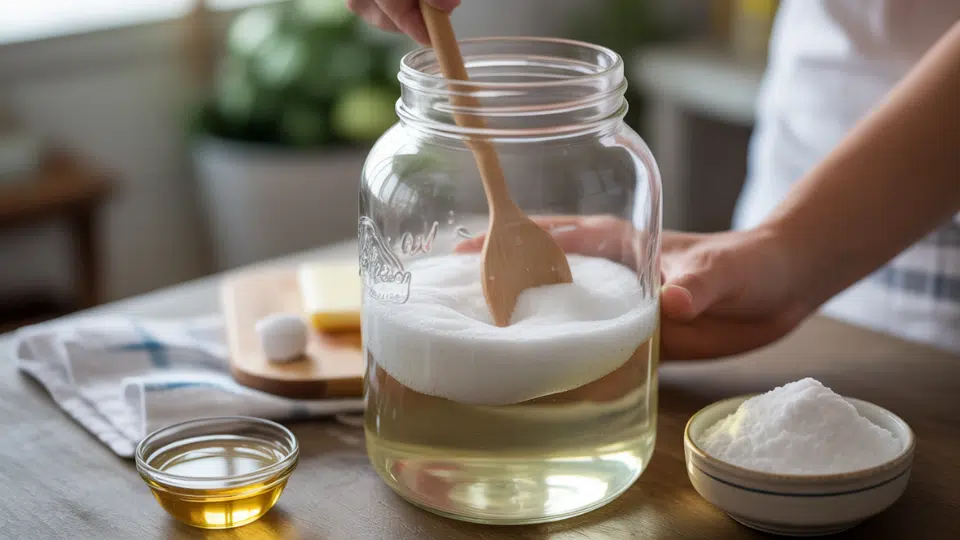
This homemade laundry detergent is quick to make, borax-free, and uses simple ingredients. It comes together in just a few minutes and works well for everyday laundry.
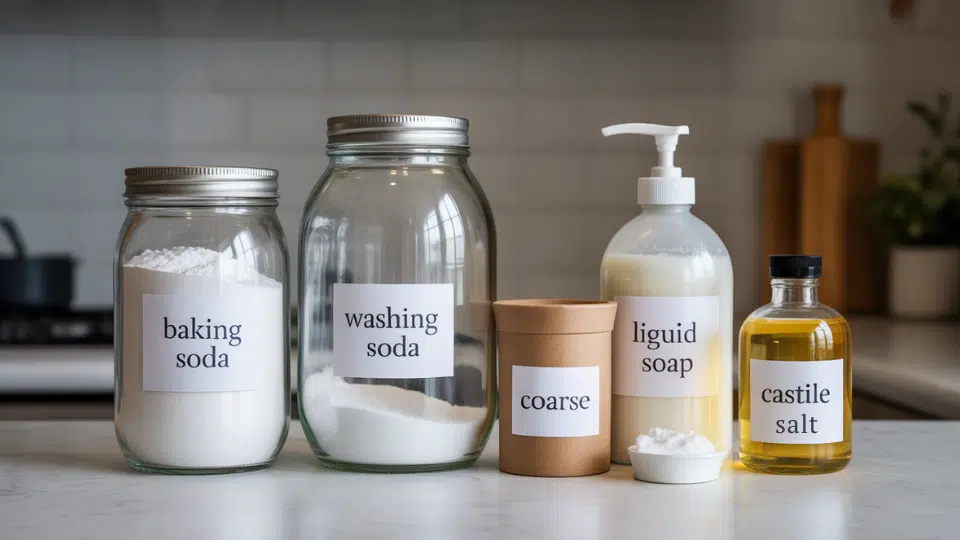
Ingredients
|
Instructions to Make Homemade Laundry Detergent
Bring 8 cups of water to a boil in a pot.
In a heat-safe gallon jar or container, add the washing soda, baking soda, and coarse salt.
Pour the boiling water into the container and stir well until all powders dissolve.
Add the liquid Castile soap and optional essential oils.
Pour in the remaining hot water and stir again until fully combined.
Let the mixture cool. Stir or shake it a few times over the next 24 hours to reduce separation.
Some separation is normal. Shake the container before each use if needed.
How to Use This DIY Laundry Detergent?
Use about ¼ cup per load
For large or heavily soiled loads, use up to ⅓ cup
Safe for standard and high-efficiency washing machines
This is Borax-Free Option
This recipe does not use borax.
If washing soda is unavailable, it can be made by heating baking soda in the oven at 400°F for about one hour, which changes it into washing soda.
This method is often shared as one of the best homemade laundry detergent recipes because it is affordable, simple, and easy to adjust based on personal needs.
Tips for Using Homemade Laundry Detergent for Best Results
Use small amounts to avoid residue
Run warm water occasionally to reduce buildup
- Store detergent in a dry container
Pair with a vinegar rinse if clothes feel stiff
Clean the washing machine regularly
When to Use Store-Bought Instead of Homemade Detergent?
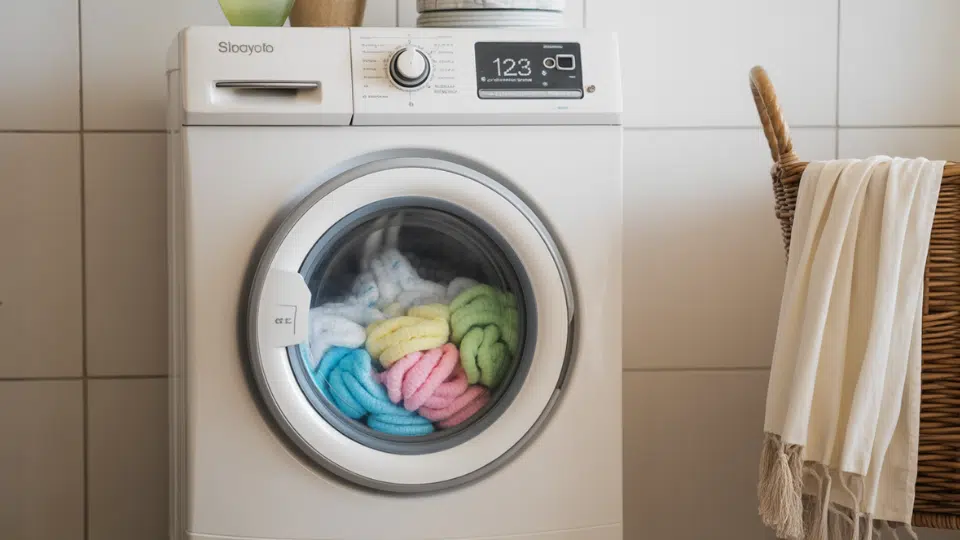
Store-bought laundry detergent may be a better choice for certain situations.
Heavily soiled work clothes, greasy fabrics, or items with strong odors often need the added cleaning power found in commercial detergents.
These products are also helpful for mold, mildew, or buildup that homemade recipes may not fully address.
In shared laundry spaces or machines used by multiple households, store-bought detergent can offer more consistent results.
Using homemade laundry detergent for regular loads and switching to store-bought options when needed helps maintain both fabric quality and washing machine performance.
Conclusion
Making laundry detergent at home is a small change that can have a big impact on daily routines.
DIY laundry detergent gives more control over what goes into each wash, how much is used, and how often it is needed.
With a simple recipe and a few basic ingredients, homemade laundry detergent can handle most everyday loads without extra effort.
It is not about replacing store-bought detergent in every situation.
Heavily soiled clothes and tough stains may still need commercial formulas.
But for regular washing, homemade options offer a flexible and cost-aware solution.
When used correctly, this approach supports cleaner laundry, fewer unnecessary additives, and a routine that feels both practical and intentional.
Frequently Asked Questions
Is DIY Laundry Detergent Worth It?
DIY laundry detergent can be worth it for everyday laundry. It is usually lower in cost, uses fewer ingredients, and works well for lightly to moderately soiled clothes when used correctly.
How to Make Old-Fashioned Laundry Detergent?
Old-fashioned laundry detergent is often made by dissolving grated bar soap into hot water, then mixing it with washing soda. The mixture is stored and used in small amounts per load.
How Did Ancient Humans Clean Clothes Before Modern Detergent?
Ancient people relied on natural materials like wood ash, clay, sand, and certain plants that produced lather when mixed with water to remove dirt and odors from fabrics.

James McLaren, with a rich background in architecture from the University of Manchester, has been contributing his expertise to the world of creative construction and home innovation for over 20 years. His journey began as a project manager for a leading construction firm, where he honed his skills in bringing complex designs to life. James joined our platform as a freelancer in 2019, quickly becoming a favorite for his insightful and practical advice. He has been a pivotal force to our wing ever since, bringing our readers a blend of technical know-how and creative flair. Beyond his professional life, James is an avid woodworker and enjoys restoring vintage furniture, a hobby that complements his professional insights beautifully.