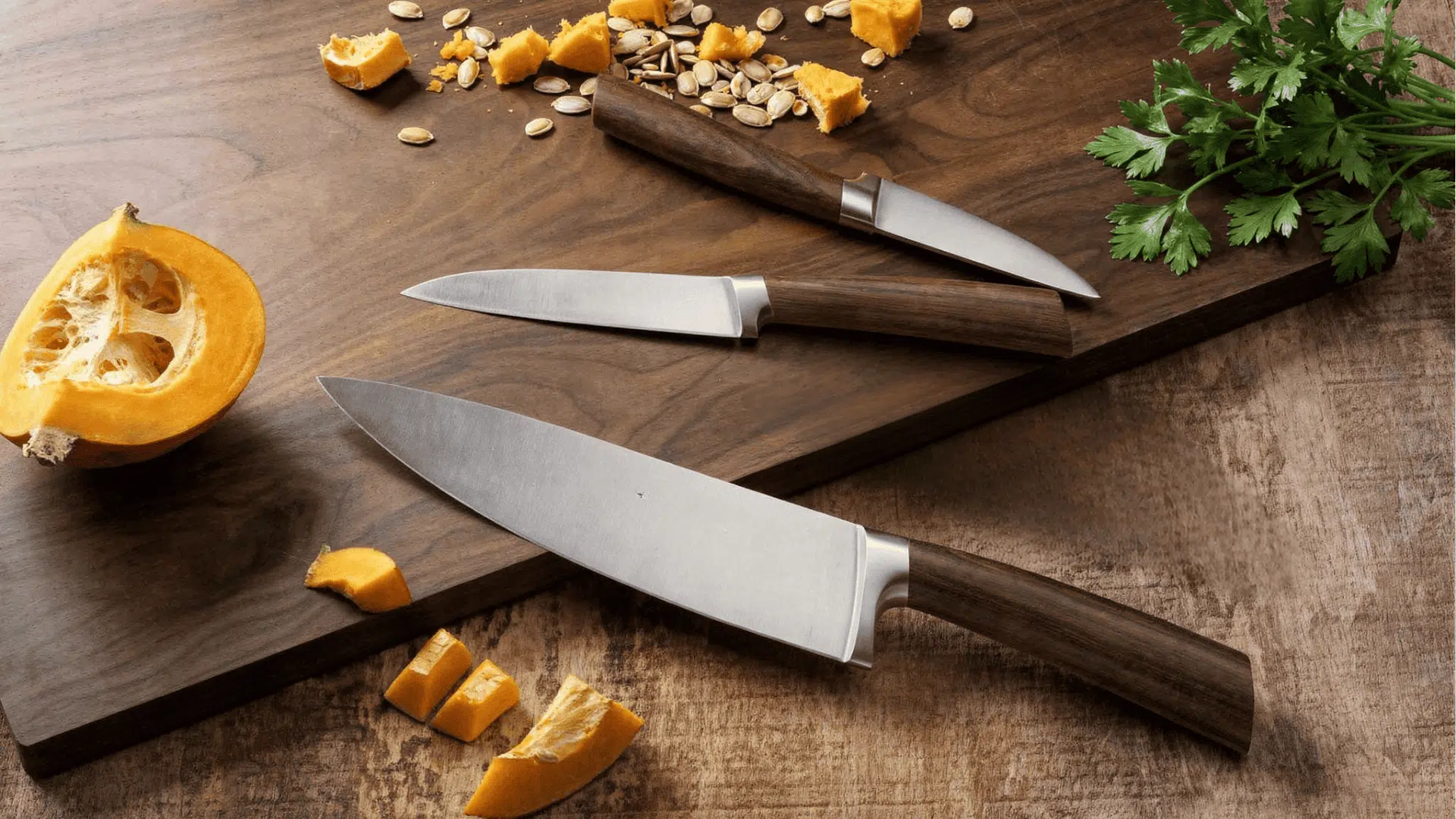

A knife left at the end of its life raises an unexpected question: what happens next can matter more than expected.
While knives are common household tools, discarding them carelessly can lead to injuries, damaged waste bags, or problems with local disposal rules.
Knowing how to throw away knives is not as straightforward as placing them in the trash, especially when sharp edges, materials, and regional regulations are involved.
Small choices made during disposal can affect sanitation workers, recycling systems, and personal safety.
The sections ahead quietly unpack safe methods, overlooked alternatives, and how rules and shared practices shape responsible knife disposal.
How to Throw Away Knives Safely?
Safe knife disposal reduces the risk of cuts and protects waste handlers during collection and sorting.
Discarding knives requires preparation. Loose blades in household trash can cause serious injuries.
The steps below outline a safe and widely accepted method:
1. Wrap the Blade Securely
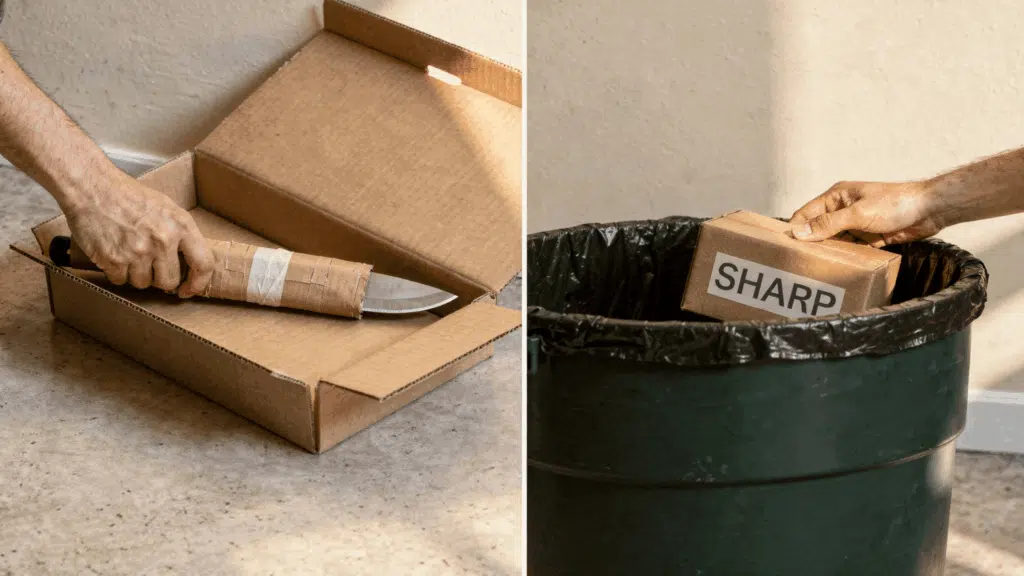
The sharp edge must be fully covered before disposal to prevent cuts. Use thick cardboard, folded paper, or bubble wrap, and tape it tightly so the blade cannot move.
- Use thick cardboard, folded paper, or bubble wrap
- Cover the entire blade, including the tip
- Secure the wrapping tightly with strong tape so it cannot shift
2. Place the Knife in a Rigid Container
After wrapping, place the knife inside a sturdy box or plastic container that cannot be punctured, adding another layer of protection during handling and waste collection.
- Use a sturdy box, plastic container, or original knife packaging
- Ensure the blade cannot puncture the container
- Seal the container with tape
3. Label the Package Clearly
Clearly marking the container alerts anyone handling the waste. Write “sharp object” on the outside using a visible marker to reduce the risk of accidental injury.
- Mark the container as “sharp object”
- Use a visible marker on the outer surface
4. Dispose According to Local Waste Rules
Once secured, dispose of the knife based on local waste guidelines. Some areas allow household trash disposal, while others require drop-off at designated facilities.
- Some areas allow knives in household trash when properly secured
- Others may require drop-off at designated facilities
- Loose disposal in trash bags should always be avoided
Following these steps helps ensure knives are discarded responsibly and safely, minimizing harm during waste handling and disposal.
Can You Recycle Knives?
Knife recycling depends on the blade material, handle type, and local recycling rules.
Recycling knives is possible in limited cases, but most household recycling programs do not accept them due to safety risks and mixed materials. Understanding the knife’s construction helps determine the correct option.
Metal Knives
Metal knives are made entirely from steel or similar alloys, without bonded handles.
These knives are sometimes accepted by scrap metal facilities rather than curbside recycling.
Blades must be wrapped securely, and facilities may require clean, separated metal for safe handling.
Knives with Mixed Materials
Many household knives combine metal blades with plastic, wood, or composite handles.
These bonded materials are difficult to separate, making recycling impractical.
Most recycling centers reject them due to processing limits and safety concerns, requiring disposal through regular waste channels instead.
Ceramic Knives
Ceramic knives feature blades made from hardened zirconium oxide rather than metal.
They cannot be recycled through metal or glass programs.
Their brittle nature causes unpredictable breakage, so they are typically treated as non-recyclable waste and require careful, secure disposal.
Why Curbside Recycling is Not Recommended? Loose knives pose serious injury risks to sorting staff and equipment. For this reason, knives should never be placed in household recycling bins unless a facility explicitly allows it. Checking local recycling guidelines or contacting a scrap facility helps determine whether recycling is possible or if safe disposal is the better option. |
Safer Alternatives to Throwing Knives Away
When knives are still usable, alternatives to disposal reduce waste and lower the risk of injuries during handling.
Before discarding a knife, its condition should be assessed. Many knives that seem unusable can still serve a purpose or be passed on safely.
1. Donate Usable Knives
Knives that remain functional and undamaged may be suitable for donation.
Community kitchens, shelters, and thrift stores sometimes accept kitchen tools.
Before donating, clean the knife thoroughly, wrap the blade securely, and confirm the organization’s acceptance rules to ensure safe handling during transfer and storage.
2. Sharpen or Repair Dull Knives
Dull knives are often discarded even though the blade structure remains intact.
Professional sharpening services or basic repairs can restore cutting ability and extend usability.
This option is convenient for higher-quality knives made from durable materials designed to withstand repeated sharpening over time.
3. Repurpose for Non-Kitchen Tasks
Some knives can serve secondary purposes outside food preparation, such as gardening, workshop use, or utility tasks.
Repurposing should only be considered when the blade is stable and the handle is secure, reducing the likelihood of breakage or injury during use.
4. Return Knives (Retailer or Manufacturer Programs)
Certain retailers and manufacturers offer take-back or disposal programs for knives and sharp tools.
These programs are designed to handle sharp objects safely and responsibly.
Participation often requires following packaging instructions and using designated drop-off locations or return procedures.
How to Dispose of Broken or Rusted Knives?
Damaged knives require extra precautions to prevent injuries during handling and disposal.
Broken or rusted knives should never be discarded loosely, as cracks, sharp fragments, and weakened metal increase the risk of injury.
If a knife has snapped or is falling apart, each piece should be wrapped separately using thick cardboard or folded paper to prevent the edges from cutting through the packaging.
Rusted blades may break unexpectedly, so securing the blade tightly and placing it inside a rigid, sealed container adds necessary protection.
Clearly labeling the container as a sharp object helps alert anyone handling the waste.
Disposal should always follow local waste guidelines, as some areas require damaged sharp objects to be taken to designated drop-off locations rather than placed in household trash.
Differences in Knife Disposal Rules Around the World
In the U.S., including California, knives are generally treated as household sharp objects.
Disposal focuses on safety rather than restriction, with guidance emphasizing secure wrapping, rigid containers, clear labeling, and compliance with local waste management rules.
| Country / Region | How Knives Are Seen | Disposal Approach |
|---|---|---|
| California (USA) | Household sharp object | Allowed in trash if securely wrapped and labeled |
| United Kingdom | High-risk item | Casual disposal discouraged; council guidance preferred |
| Australia | Everyday tool | Must follow local council disposal rules |
“The way knives are discarded reflects each country’s safety regulations and waste management policies, not cultural or symbolic beliefs.”
How to Throw Away Knives: Reddit Discussion
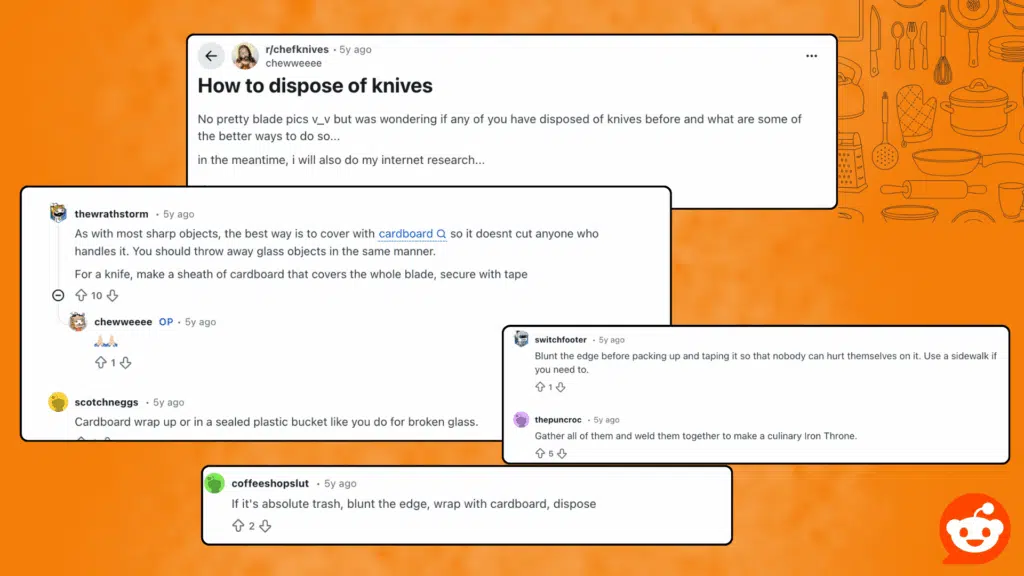
xMany people are unsure about how to throw away knives, so they turn to others’ experiences to avoid making a mistake.
Online discussions on Reddit show that knife disposal is rarely treated casually. Instead, most people rely on practical, safety-focused habits learned through shared advice.
A common theme is protecting anyone who might handle the waste, from family members to sanitation workers. Wrapping blades in cardboard, sealing them in rigid containers, and adding clear labels appear repeatedly as trusted steps.
Some people dull blades first, while others look for donation or recycling options when knives remain usable.
These shared approaches highlight an unspoken understanding: how knives are discarded matters, and learning from what others already do helps reduce risk and uncertainty.
Key Takeaways
Throwing away knives is rarely as simple as it seems. Sharp edges, material types, local rules, and safety concerns all shape the right approach.
Whether the focus is secure wrapping, recycling limits, reuse options, or regional practices, each step plays a role in preventing harm.
Shared experiences and official guidance point to the same outcome: careful disposal protects people and waste systems alike.
If you’ve handled knife disposal in a way that worked well, share your experience or preferred method in the comments below.

Holding a Master’s in Library and Information Science from the University of Illinois, Josh Clarke has dedicated more than 15 years to managing and disseminating information across various platforms. His professional journey includes significant experience as a research librarian, where he developed an expertise in sourcing and providing accurate and comprehensive answers to diverse questions. In 2018, Josh brought his rich experience to our platform, quickly establishing himself as a reliable source for general FAQs. He has been overseeing our information curation since then, combining his research skills with a flair for engaging content delivery. When not involved in information management, Josh enjoys exploring digital photography and participating in local quiz competitions, hobbies that complement his inquisitive nature and love for learning.